
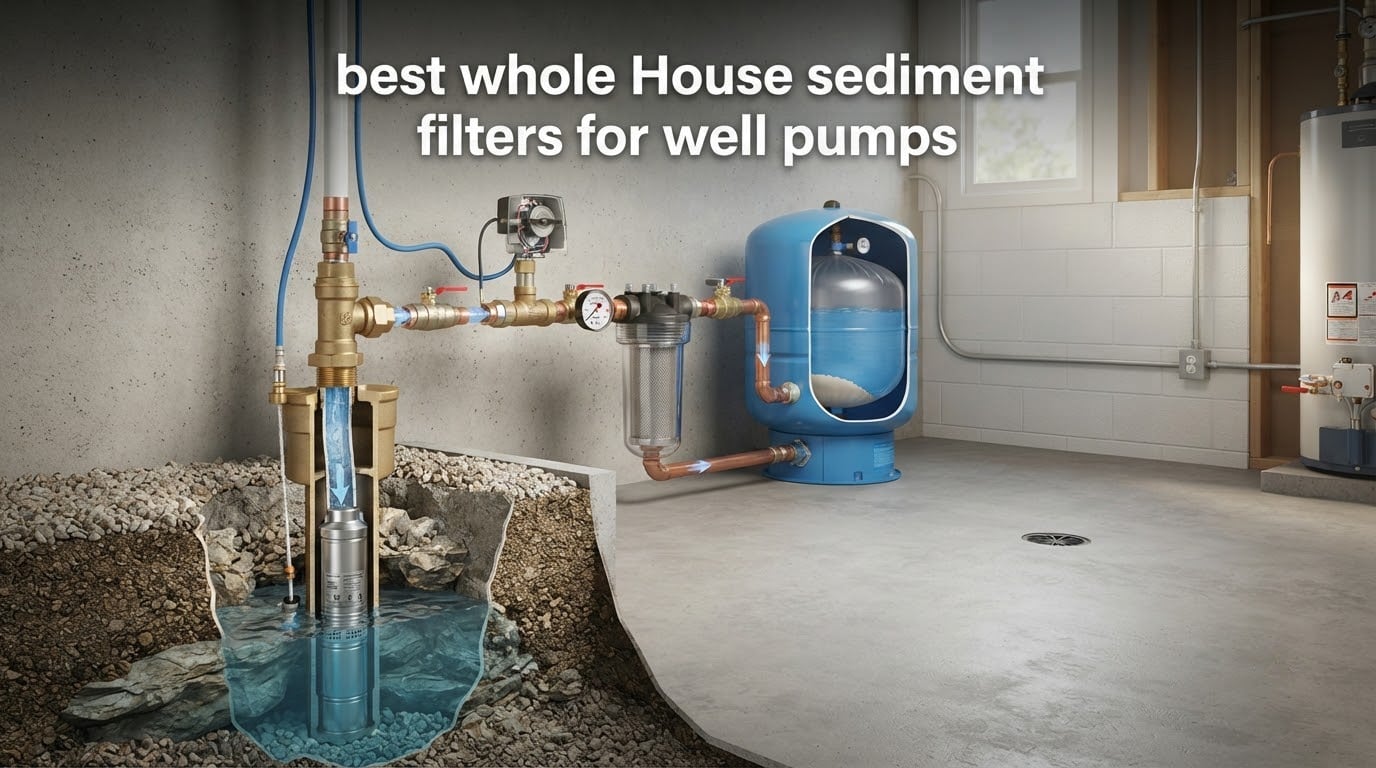
A well pump does not treat water. It just lifts it, pushes it into a pressure tank, and sends it into the house. Anything the aquifer hands up comes with it: sand, silt, rust flakes, grit from a failing well screen, and the fines that follow every heavy storm. A whole house sediment filter is the cheapest piece of equipment you can add to stop that load from reaching your pressure switch, softener, UV unit, faucet aerators and dishwasher inlet valve.
That is the filter category we spent the most time on for this guide to the best whole house sediment filters for well pumps. Ten units, mostly spin-down prefilters and a couple of cartridge and multi-stage setups, all sized for point-of-entry duty rather than under-sink use. We compared them on micron rating, rated flow, port size, certification, service interval and the real complaints owners write about, not the marketing copy.
The part almost every competitor skips is placement. Whether the filter goes before or after the pressure tank changes how much sediment reaches the tank, the switch and every downstream component, and it is the single question that comes up most often on plumbing forums. We have a dedicated section on it below, and it is worth reading before you pick a model. If you are still mapping out the rest of your treatment train, our guide to whole house filtration systems for well water covers where the sediment stage sits relative to softeners and UV.
Table of Contents
What Is the Best Whole House Sediment Filter for Well Water?
The best whole house sediment filter for well water is a reusable spin-down unit with a 50 micron stainless steel screen, installed after the well pump and ahead of the pressure tank. On most wells a spin-down outlasts and outperforms disposable cartridges, because sediment is flushed out of a collection chamber instead of being trapped forever in fiber. If your well runs visibly sandy, step up to a coarse 200 or 500 micron screen first.
Top 3 Whole House Sediment Filters for 2026

iSpring WSP-50 Spin Down
- 50 micron reusable mesh
- Lead-free brass head
- Flushable cleanout valve

All 10 Filters at a Glance
Every unit below is listed in the order we rank them. Scan the micron rating and flow rate columns first, since those two numbers rule most purchases in or out before anything else matters.
| Product | Specifications | Action |
|---|---|---|
| iSpring WSP-50 Spin Down Sediment Filter |
|
Check Latest Price |
| PUREPLUS 5 Micron 10 x 4.5 Whole House 2-Pack |
|
Check Latest Price |
 Waterdrop RPFK Spin Down Sediment Filter Waterdrop RPFK Spin Down Sediment Filter |
|
Check Latest Price |
 iSpring WSP50ARB Big Spin Down with Auto Flush iSpring WSP50ARB Big Spin Down with Auto Flush |
|
Check Latest Price |
 Waterdrop BG103 Mega Spin Down Filter Waterdrop BG103 Mega Spin Down Filter |
|
Check Latest Price |
 Aquaboon 3/4 inch Spin Down Dual Screen Filter Aquaboon 3/4 inch Spin Down Dual Screen Filter |
|
Check Latest Price |
 Turboyhood 50 Micron Spin Down Sediment Filter Turboyhood 50 Micron Spin Down Sediment Filter |
|
Check Latest Price |
 Whirlpool WHKF-DWHBB 10 x 4.5 Filter Housing Whirlpool WHKF-DWHBB 10 x 4.5 Filter Housing |
|
Check Latest Price |
 Rusco 34-100-F Polyester Spin Down Filter Rusco 34-100-F Polyester Spin Down Filter |
|
Check Latest Price |
 PUREPLUS 2-Stage Whole House Well Water Filter PUREPLUS 2-Stage Whole House Well Water Filter |
|
Check Latest Price |
How We Picked These Filters
We did not rank on star averages alone. A 4.8 from a few hundred reviews tells you less than a 4.6 from a few thousand, so rating and review volume were the first filter we applied, and that is how the top three slots were decided.
From there we scored five things, in this order:
1. Sediment load match. The screen has to be coarse enough for the water your well actually produces. A 50 micron screen on a visibly sandy well is a weekly chore, not a solution.
2. Rated flow against your pump. We compared each unit’s stated flow ceiling to typical whole house demand. Undersized housings create a pressure drop across the whole house, which is the most common complaint in the reviews.
3. Service interval and what servicing actually involves. A flushable screen with a bottom valve costs nothing to maintain. A 5 micron cartridge on silty water is a recurring purchase, and we note where that lands.
4. Certification and materials. We looked for NSF/ANSI 42, NSF/ANSI 372, IAPMO or equivalent listings, plus lead-free brass or BPA-free housings, since this water runs through drinking taps.
5. Build quality at the fittings. Thread quality, housing threads and O-ring design decide whether an install ends with a wipe-tight system or a drip.
Two things we did not do: we did not measure flow ourselves in a lab, and we did not test any of these on a live well. Every specification below comes from the manufacturer listing, and every performance claim about real conditions comes from owner reviews, which is also where the clogging complaints come from. Where the two disagree, we say so.
1. iSpring WSP-50 Spin Down Sediment Filter – Best Overall for Well Pumps
iSpring WSP-50 Spin Down Sediment Filter, Whole House Prefilter, 50 Micron
50 micron mesh screen
Lead-free brass head
1 inch MNPT and 3/4 inch FNPT
15-115 psi, indoor only
Pros
- Reusable stainless steel mesh that survives years of service
- Flush valve cleanout without full disassembly
- Clear housing shows how much debris is loading the screen
- Proven prefilter ahead of carbon and softener stages
- Responsive replacement screen support
Cons
- 50 micron screen blinds fast on sandy or silty wells
- Short housing means more frequent manual cleaning
- Screen o-rings are not sold separately
- Some installs need extra thread seal tape
This is the unit most well owners end up with, and for a straightforward reason: the brass head and stainless mesh combination has been in service long enough that there is a large body of real install reports behind it. It screws into a standard plumbing tee, the clear housing lets you watch the sediment load build, and the bottom valve lets you purge it in seconds without cracking the housing open.
What we like most is how it behaves in front of other equipment. Owners running a carbon stage or a softener behind it report that downstream cartridge life stretches noticeably, because the spin-down catches the heavy stuff before the finer media ever sees it. That is the staged approach plumbing forums keep recommending: coarse first, fine second.
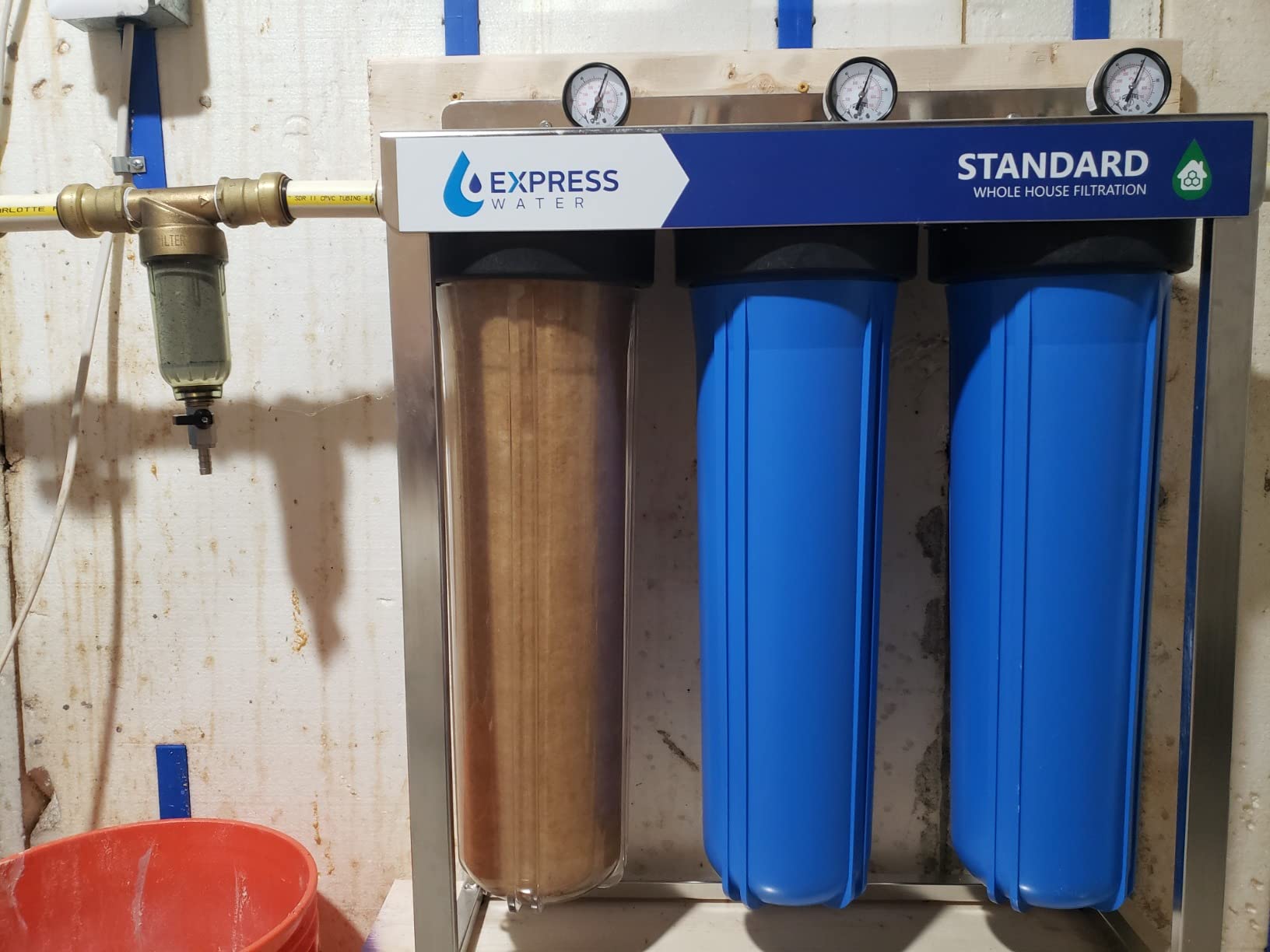
The honest weakness is the 50 micron figure itself. A 50 micron screen is finer than many wells need, and on high-silt or high-sand water it will blind in days rather than months. The manufacturer says so directly in the listing, and it is the single most repeated caveat in the reviews. The good news is that iSpring will send a 100 or 200 micron screen free of charge, and multiple owners say that swap solved their pressure loss without buying a new housing.
Fit and installation are unremarkable in the best way. Dual 1 inch MNPT and 3/4 inch FNPT threads on both ends mean it adapts to most existing tees, the operating range of 15 to 115 psi covers a typical pump curve, and the supplied wrench is enough for routine service. It is indoor rated only, so keep it out of an unheated pit in freezing climates.
When 50 Micron Is the Wrong Screen for Your Well
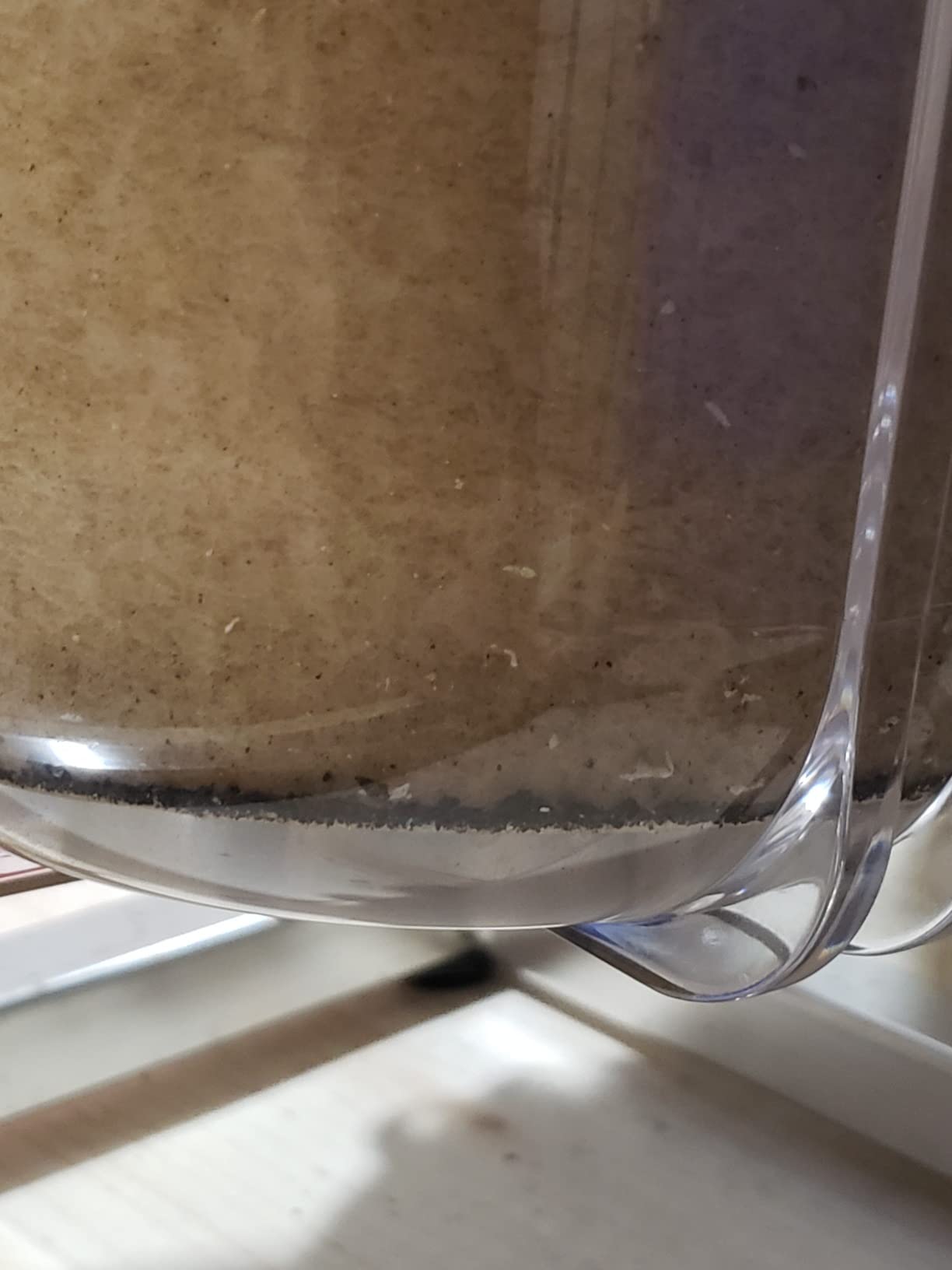
If you can pour a glass of well water and see a sandy layer on the bottom within an hour, this screen is too fine. That is a coarse-sand well, and the right answer is a 200 or 500 micron stage first, then a finer cartridge behind it.
The opposite problem is common too. Plenty of owners report pulling out a screen that looks barely tinted, which means the well is clean and the 50 micron rating is leaving capture quality on the table. A 100 micron screen with a 5 micron cartridge behind it will polish better in that situation.
What You Give Up Compared With the Bigger Housings
The WSP-50 housing is short, and that shows up as a smaller collection chamber. On a moderate well you will flush it every few months. On a dirty well the interval shrinks to weeks, and the manual work adds up over a year.
There is also no bypass valve in the box, so changing a screen means shutting off the pump and draining the tank. Budget a few minutes and a bucket for every service, and keep a spare screen on the shelf since the o-rings are not sold as a separate part.
2. PUREPLUS 5 Micron 10 x 4.5 Whole House Filter 2-Pack – Best Rated Fine Polish Stage
PUREPLUS 5 Micron 10 x 4.5 Whole House Water Filter for Well Water 2 Pack
5 micron string wound media
2 cartridges at 10 x 4.5 inch
Up to 2.5 GPM
Rated to 30000 gallons
Pros
- Highest average rating in the group at 4.8
- Consistently pulls rust and iron particles out of well water
- Holds flow better than costlier cartridges near end of life
- A spare cartridge is always on hand
- Drop-in fit in standard 10 x 4.5 housings
Cons
- Media winding is coarse next to premium cartridges
- Cartridge can seat off-center in a clear housing
- Very silty wells still clog it in about a month
- Disposable format means recurring cost and waste
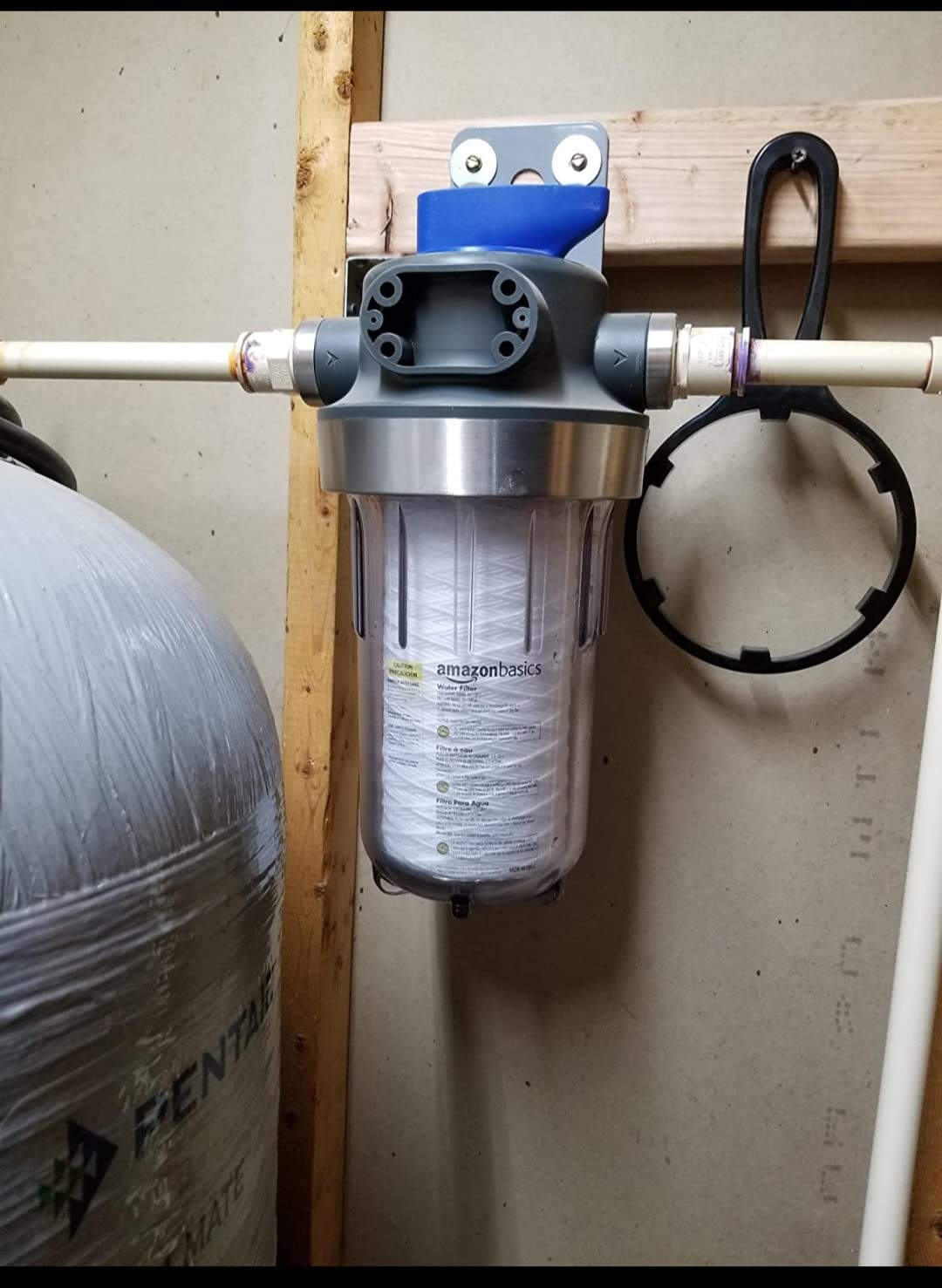
This is a cartridge, not a spin-down, and it earns its place in the ranking as a second stage rather than a first. At 5 micron it captures the fine silt and clay that a 50 micron screen passes straight through, and the 4.8 average across more than 2500 reviews is the highest in this group.
Owners on well water talk about rust and iron particles specifically. That is worth being precise about: this media pulls out suspended iron particulate, not dissolved iron, which is a different problem needing a different filter. But for staining sediment and orange flecks that come off pipe and well screen, owners report visible results.
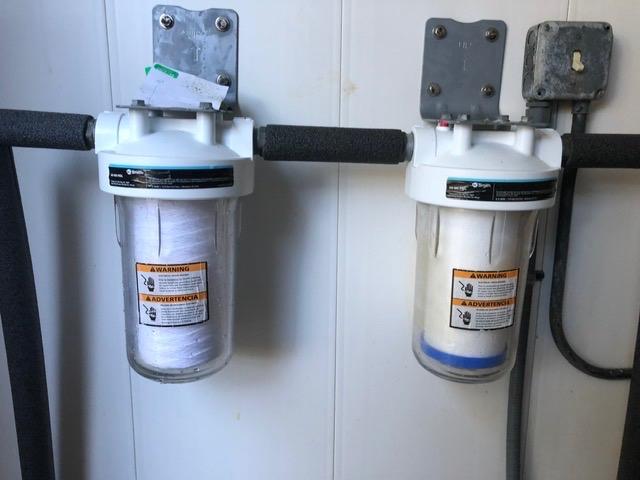
Capacity is quoted at up to 30000 gallons depending on water quality, and the manufacturer suggests replacement every three to six months. On a typical family well using a few hundred gallons a day that works out to a few cartridges a year, which is the ongoing cost you accept in exchange for not flushing anything. The two-pack format is genuinely useful because you always have the second one ready rather than ordering in a pinch.
At up to 2.5 GPM, this cartridge is sized for low flow. That is fine as a polish stage behind a spin-down, since the spin-down is already doing the heavy lifting, but running it as your only whole house filtration on a larger home will show up as pressure drop.
Why This Belongs Behind a Spin-Down
A 5 micron depth cartridge placed directly on well water becomes the first line of defense, and it will load with sand long before it reaches the end of its rated capacity. Behind a 50 to 200 micron prefilter, it stays on task and its rated gallon figure becomes believable.
That staging is also the answer to the recurring forum complaint that whole house filters clog within weeks. The fix is rarely a better cartridge. It is giving the cartridge a prefilter so it is not doing two jobs at once.
Fit Issues Worth Knowing Before You Order
It fits standard 10 x 4.5 heavy duty housings and a long list of common OEM models, which is the main reason we like it. Two mechanical quirks do come up: the media winding is described as coarse next to premium cartridges, and in a clear housing the cartridge can seat slightly off-center as it tightens rather than sitting flat against the gasket.
The seal matters more than the centering, so check that the rubber gasket seated properly all the way around before you screw the housing down. It also means you need a separate housing, which is not included.
3. Waterdrop RPFK Spin Down Sediment Filter – Best Value 20 GPM Spin Down
Waterdrop RPFK Spin Down Sediment Filter, 40-50 Micron, BPA Free
50 micron 316L steel screen
20 gpm maximum flow
14.5-72 psi
300 ppm TDS ceiling
Pros
- PA12 housing tested above 600 psi bursting pressure
- 20 gpm flow suits typical whole house demand
- Four connection fitting types included
- NSF/ANSI 372 certified and lead-free
- Backwash flush clears sediment without disassembly
Cons
- Small bowl fills quickly on sediment heavy wells
- 316 liter capacity is modest for the flow rating
- Fittings often weep and need thread sealant
- 300 ppm TDS limit restricts hard mineralized water
The RPFK is the one we would look at first if a 20 gpm rating matters to you, because most compact spin-downs in this category are undersized for a house with three or more bathrooms. Rated to 20 gpm, it has headroom above typical household demand, and the 14.5 to 72 psi operating window sits neatly inside a common well pump curve.
Build is the other selling point. The housing is German-made PA12 tested to more than 600 psi bursting pressure, the screen is 316L food grade stainless, and the unit carries NSF/ANSI 372 certification for lead-free materials. The clear bowl lets you judge when a backwash is due instead of guessing on a calendar.
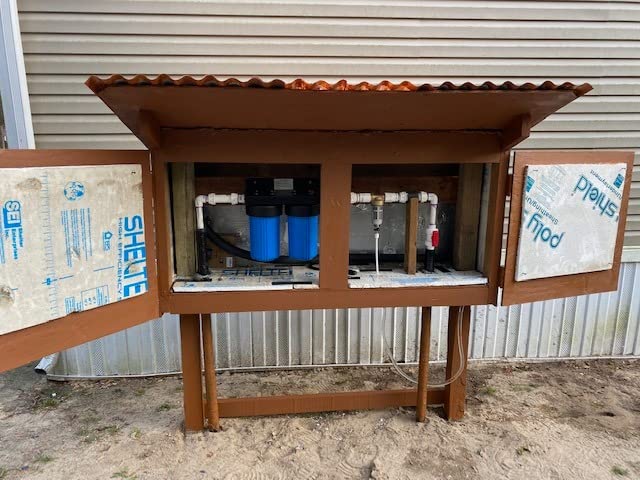
Flushing is straightforward. You run the backwash function to clear trapped sediment, and the four included connection fitting types, 1 inch MNPT, 3/4 inch MNPT, 3/4 inch FNPT and 3/4 inch push-fit, mean it adapts to most existing plumbing without hunting for the right adapter. Note that it is not compatible with a 3/4 inch garden hose, which matters if you were planning to plumb it to an outdoor spigot.
Two constraints are worth reading twice. The stated maximum supported TDS of 300 ppm is lower than several competitors here, so on heavily mineralized well water it is not the right choice. And the 316 liter bowl capacity is modest against a 20 gpm rating, which is why owners on dirty wells report a short cleanout cycle.
How 20 GPM Changes the Pressure Picture
Flow rating is the number that separates this from the smaller units. A spin-down sized well below your pump’s actual output adds measurable pressure drop across the whole house every time you run a shower and a faucet together, and that is the leading cause of the complaints we read about smaller housings.
For a one to two bathroom home, 20 gpm is comfortable. For a three to four bathroom property with a larger pump, look at the mega spin-down further down this list instead, or pair this with a second parallel unit.
Where the Fittings Cause Trouble
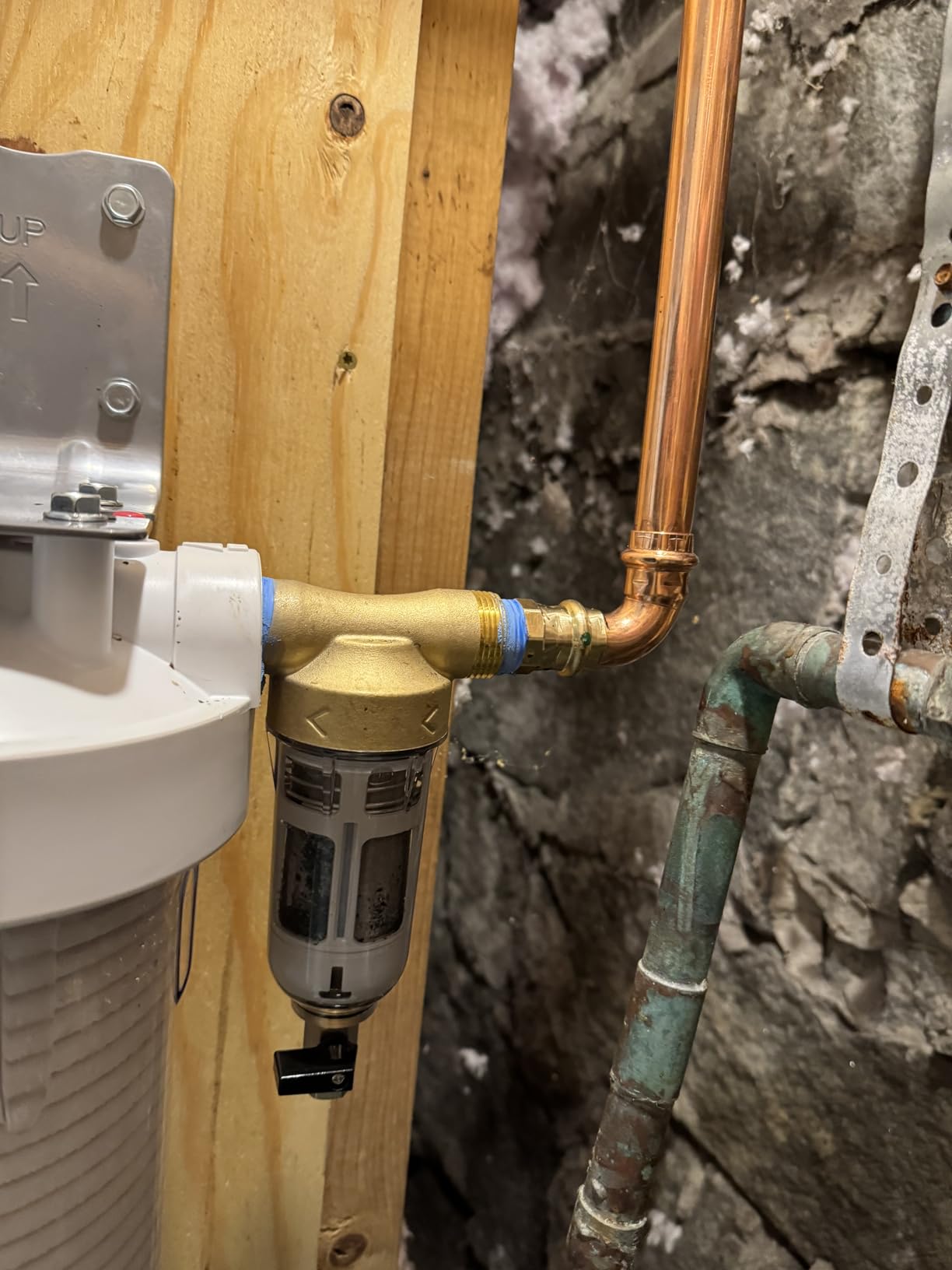
Owners report that the included aluminum and plastic fittings often weep at the threads, which means thread sealant or PTFE tape is a realistic part of the install rather than an optional extra. Wrap every male thread properly and snug the fittings without over-torquing the housing threads.
The TDS ceiling is the other real limit. Above 300 ppm dissolved solids, this unit is operating outside what the manufacturer supports, and on that water you will want the 1000 ppm-rated options in this roundup instead.
4. iSpring WSP50ARB Big Spin Down with Auto Flush – Best Set and Forget Option
iSpring WSP50ARB Big Spin Down Sediment Filter, Sediment Buster, 50 Micron
Auto flush touch screen control
Built-in scraper
25 to 35 gpm flow
Dual power supply
Pros
- Automatic flushing removes the manual cleanout chore
- Large 25 gpm flow avoids noticeable pressure drop
- Scraper helps shift larger debris chunks
- Dual power supply keeps flushing on AA backup batteries
- Downstream cartridge life stretched from monthly to quarterly
Cons
- 50 micron screen plugs several times a day on heavy wells
- Flush electronics can fail in damp utility spaces
- Scraper gap is too wide for fine sediment
- Clay sediment still needs a manual clean about monthly
This is the unit to consider if the reason your previous filters failed was simply that you forgot to flush them. The integrated auto flushing module runs a scheduled cycle with auto, semi-auto and manual modes from an HD touch screen, and the built-in scraper sweeps across the screen as part of the cycle.
Capacity is the other differentiator. Rated at 25 to 35 gpm with a multi-layer gradient mesh design, it is the largest spin-down in this roundup by a wide margin, and the multi-layer approach is what allows a fine-ish 50 micron screen without blinding as fast as a single-layer one.
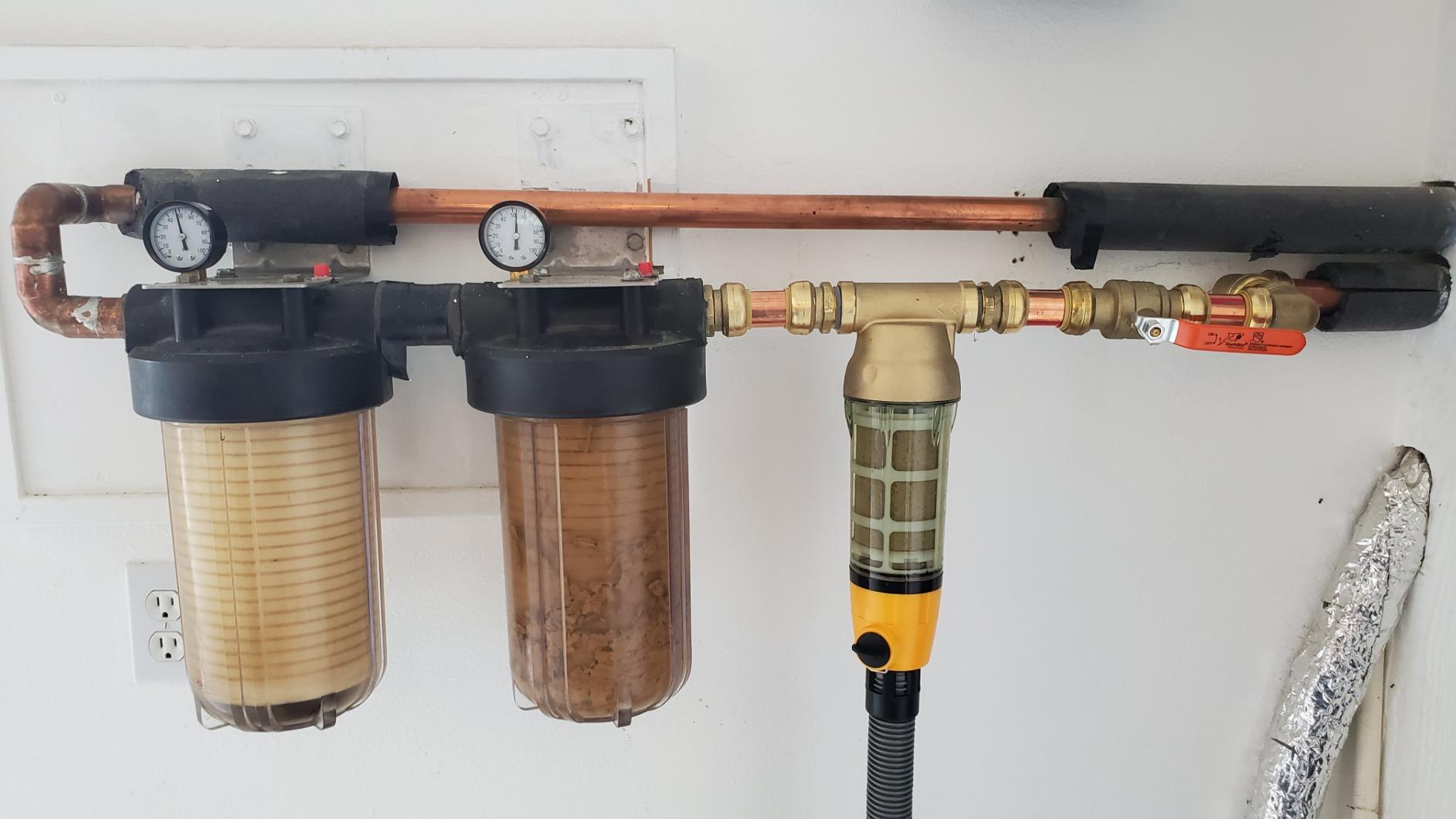
The reported downstream effect is the part owners care about most. Several describe going from replacing a fine string filter every few weeks to every few months once this went in, which is the single strongest argument for staging that we found in any of the review sets. The dual power supply, an AC adapter with three AA batteries as backup, means a failed adapter does not leave you with a unit that never flushes.
Installation is friendly for a homeowner: 1 inch MNPT and 3/4 inch FNPT on both connectors, and it works with copper, PEX and CPVC without welding or glue. A one-year warranty is included. The control module uses a two-pin US power plug, so it is not directly usable on UK or other three-pin sockets without an adapter.
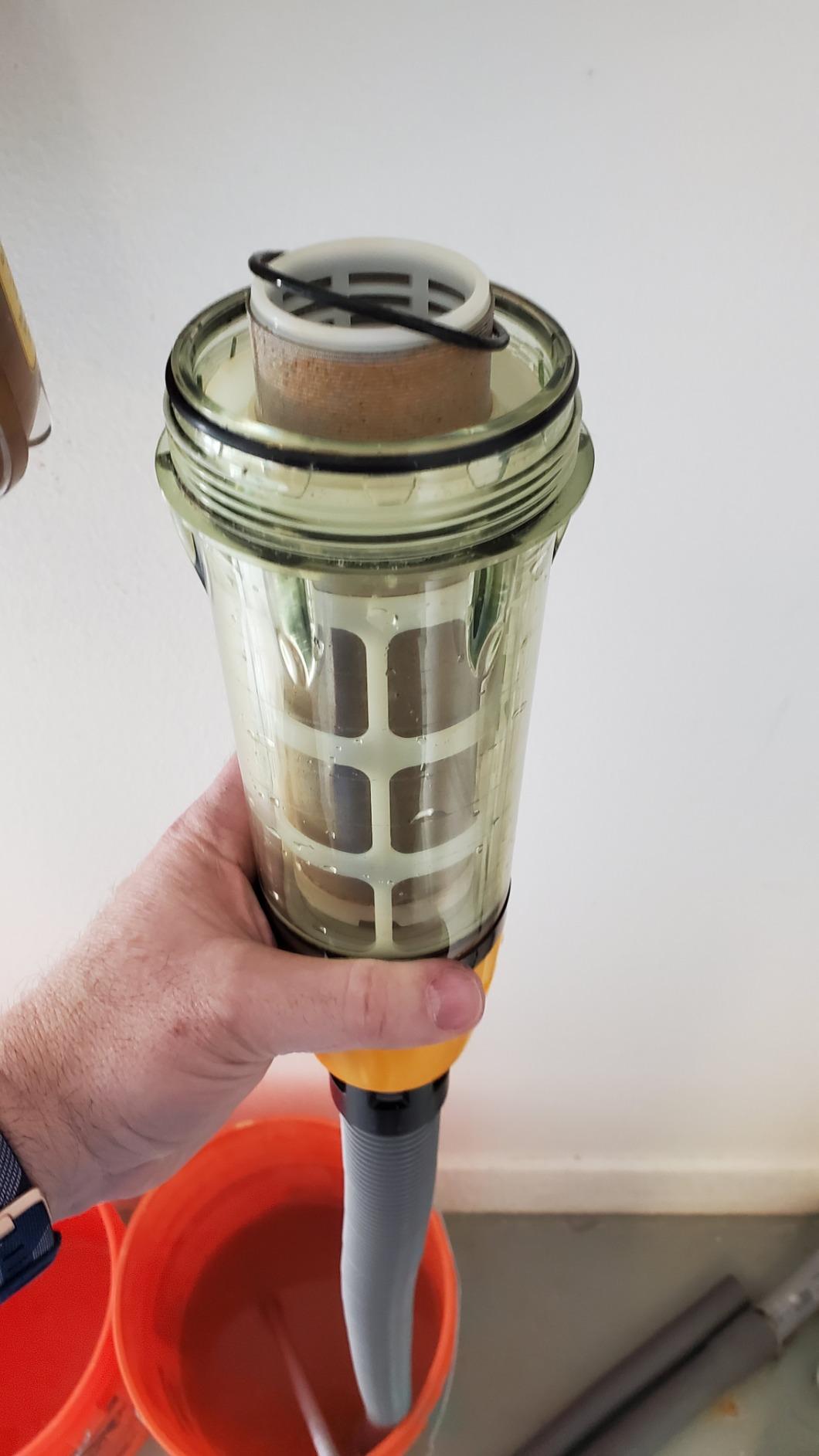
Automatic Flushing in a Damp Utility Room
The auto flush is the reason to buy this and also the reason to think about where you put it. A small number of owners report the control module failing after months when water reached the electronics in a humid or damp utility space. Mount it somewhere dry with clearance for service access, not down in a pit or an unheated crawlspace.
Also consider the flush schedule honestly. On a clean well, set it long and let the touch screen modes handle it. On a well that puts heavy debris through the pump, a scheduled cycle may not keep up and you will still be flushing by hand more often than you expect.
The 50 Micron Screen Is Still the Weak Link
Despite the larger chamber, the 50 micron rating catches owners out on sandy wells, with reports of the screen plugging several times a day. As with the WSP-50, the fix is switching to a coarser ARJ model screen at 100 or 200 micron rather than living with it.
And if your sediment is clay and fines rather than chunks, the built-in scraper gap is too wide to do much. Clay still needs the periodic manual clean, and the scheduled flush is what makes that clean manageable rather than eliminating it.
5. Waterdrop BG103 Mega Spin Down Filter – Best for Muddy and Sanding Wells
Waterdrop BG103 Mega Spin Down Sediment Filter, 500 + 200 Micron
500 and 200 micron dual mesh
20x larger chamber
25 GPM sustained flow
360 degree power flush
Pros
- Coarse 500 and 200 micron pair suits muddy sandy wells
- Oversized chamber stretches cleanout intervals
- Owners report no measurable pressure drop
- Heavy forged brass head with nano coating
- Forward and reverse flush clears the mesh thoroughly
Cons
- Wall bracket does not really hold the unit in place
- Union reducer fittings are awkward to make leak-proof
- Included wrench struggles with the filter ring
- Bypass valve does not stop downstream backflow
Every other spin-down in this roundup filters at 50 micron or finer. This one runs a 500 micron outer mesh paired with a 200 micron inner mesh inside a chamber advertised as twenty times larger than a standard spin-down bowl, which makes it the right unit for the well that keeps delivering visible sand and grit.
It handles the full debris list, from pebbles and leaf matter through coarse sand, fine sand, rust flakes, silt and algae. The outer mesh is quoted at seven times larger and the inner at 4.2 times larger than a standard spin-down, and sustained flow is 25 gpm, so you get capacity and flow at the same time.
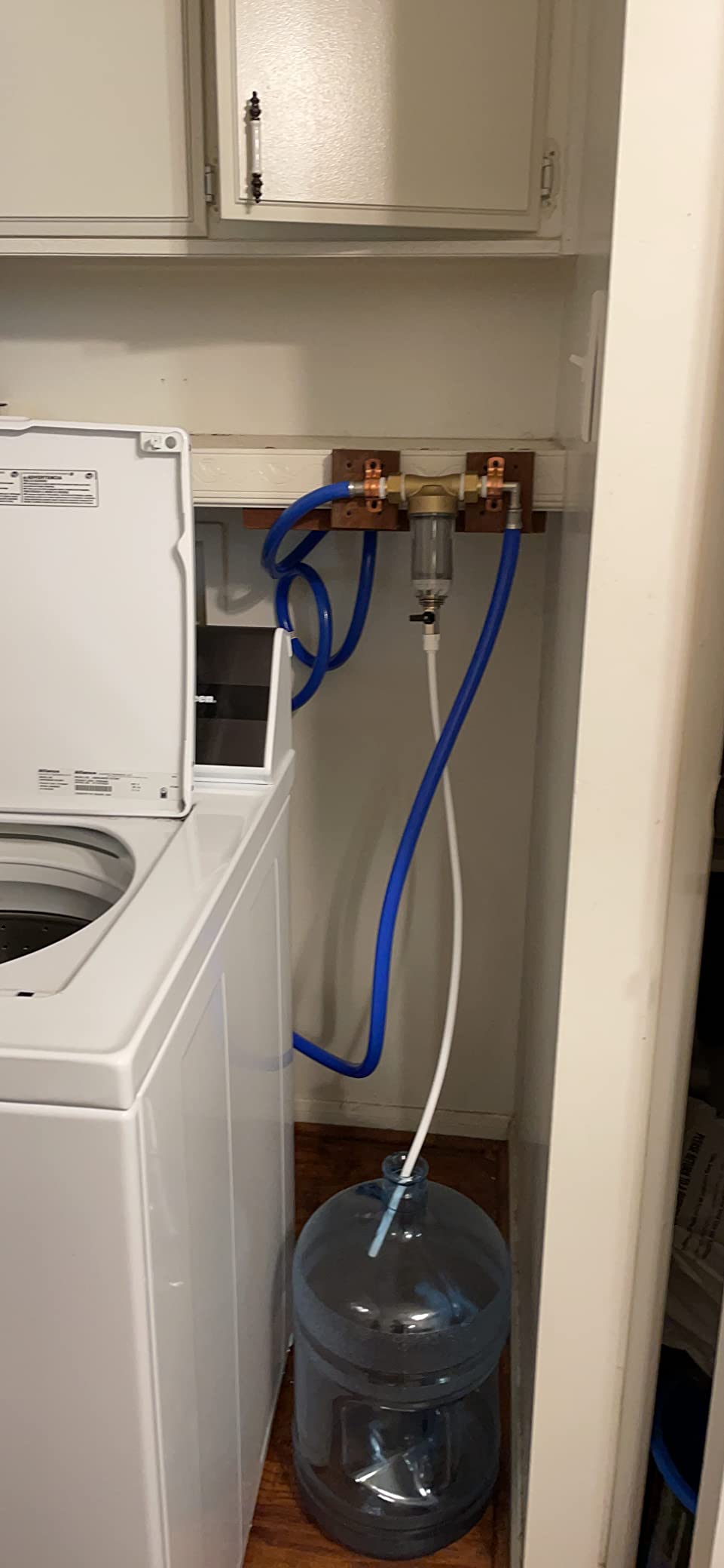
The 360 degree flush is a manual two-way bypass valve that drives water inward and outward through the mesh, which is far more effective on a coated screen than a one-direction purge. The suggested routine is a cleanout every two weeks with a deeper clean monthly, and the magnetic scale prevention is a sensible extra on iron-bearing wells. Operating range is 14.5 to 72 psi with a 1000 ppm TDS ceiling, and it is tested to 200,000 water hammer cycles, twice the NSF standard requirement, plus freezing tests to -22F.
That durability record is real, and it is the reason this unit shows up on wells where cheaper spin-downs have failed. Owners on muddy wells say their clogging problem effectively stopped once this went in, and several report no measurable pressure drop across the filter.
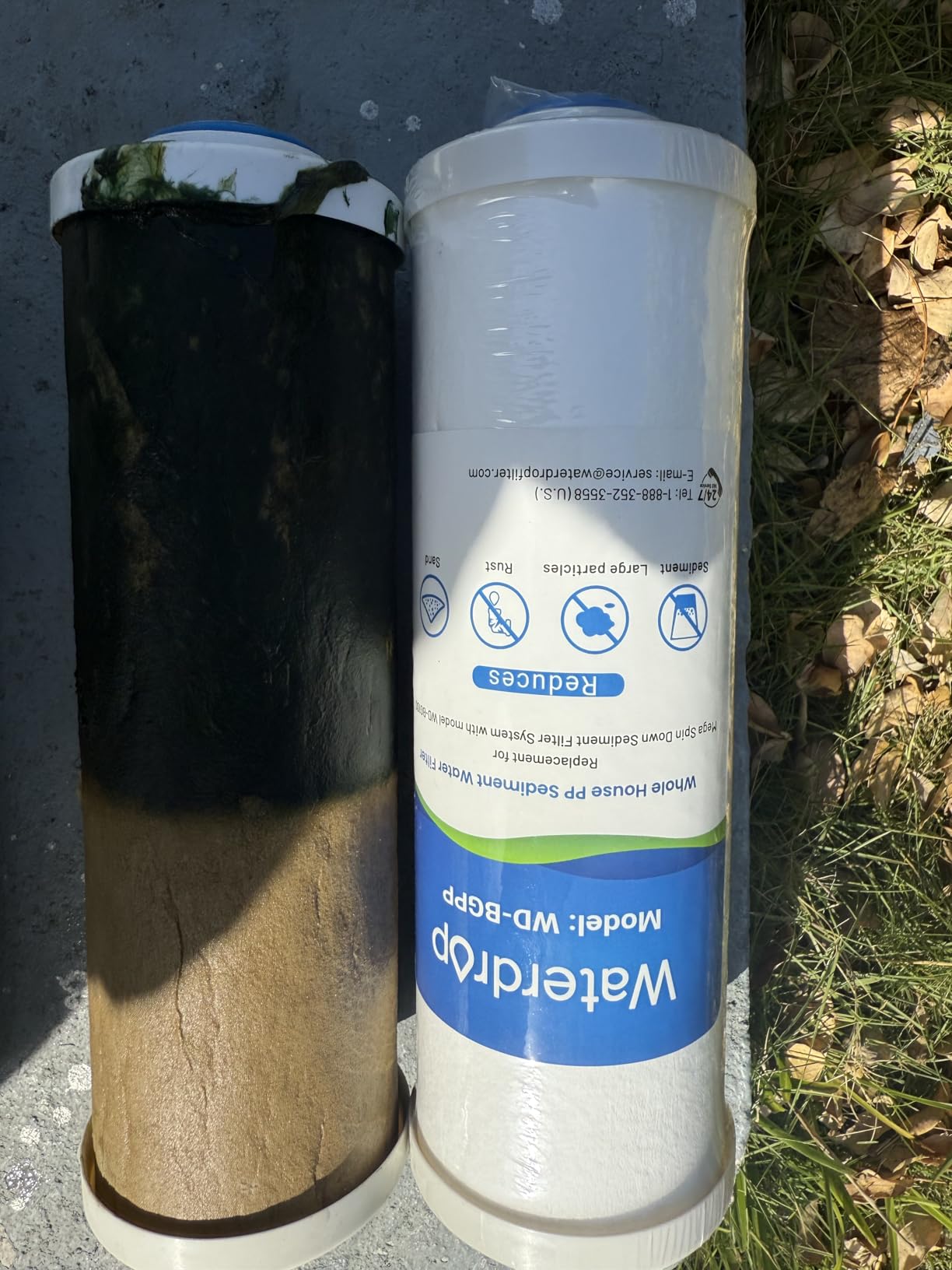
Why Coarse Mesh Wins on a Bad Well
Filtration is a trade. A 200 or 500 micron screen passes fine silt straight through, which is fine if you are not trying to polish water, and a problem if you are the only filter in the house. On a muddy well, the correct sequence is this unit first and a 5 to 20 micron cartridge behind it.
The large chamber is the real advantage, not the mesh. A bigger collection chamber means the sediment has somewhere to go before it reaches the screen, which is exactly what determines how many weeks you get between cleanouts on a bad well.
Mounting and Fitting Problems to Plan Around
Owners are consistent about the hardware. The supplied wall bracket is reported to support the unit rather than actually hold it in place, so the filter can spin or walk on the wall over time. Build a simple shelf or use a proper strap and check it after the first week.
The 1-1/4 inch to 1 inch union reducer fittings are described as awkward to make leak-proof, the included wrench is hard to use on the filter ring without removing the unit from the wall, and the bypass valve in the off position does not isolate the filter from downstream gravity backflow. Budget extra care at the install and expect to service this one with the unit accessible.
6. Aquaboon 3/4 Inch Spin Down Dual Screen Filter – Best for Matching Screen Size to Load
Aquaboon 3/4″ Spin-Down Sediment Filter for Well Water, Reusable Pre-Filter, 50 & 200 Micron, Heavy-Duty for Home & Commercial Use, Easy to Clean, Extends Unit Life
50 and 200 micron screens
Stainless steel construction
Clear housing
Fits 3/4 and 1 inch plumbing
Pros
- Two screen sizes let you match the element to your load
- Heavy stainless construction with clear housing
- Easy to flush and reinstall with no new parts
- Fits 3/4 and 1 inch plumbing without adapters
Cons
- Wall mount is reported to be flimsy
- 50 micron element loads fast on dirty wells
- Clear housing is not frost proof in unheated spaces
- Modest review base means a thinner durability record
The design idea here is simple and genuinely useful: one housing, two screen sizes. You run the 200 micron element while your well is throwing heavy sediment, swap to the 50 micron element when the load settles, and you have not bought a second unit to make the change.
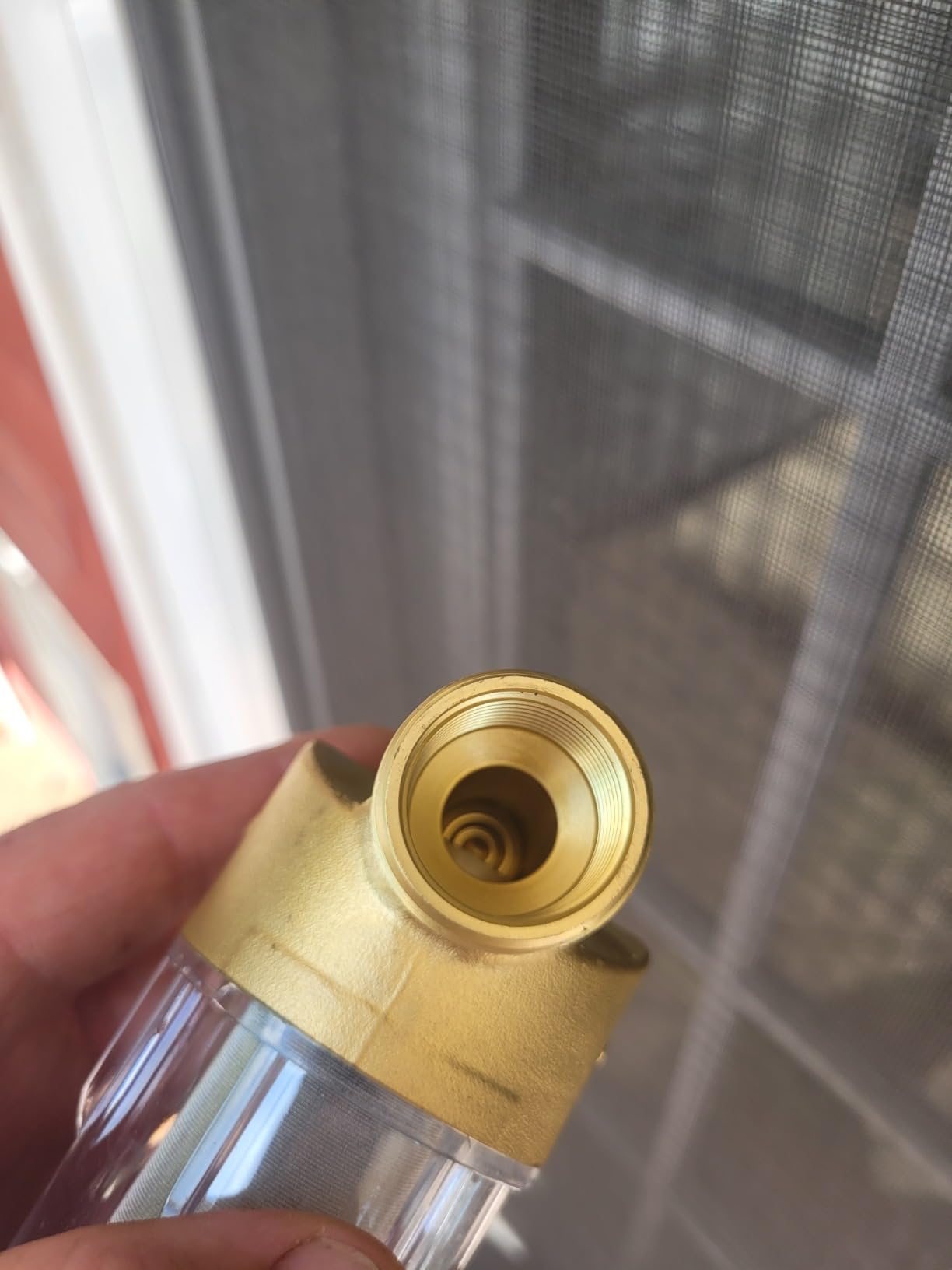
Construction is solid for the class, with stainless steel media and a transparent housing you can look through to see the water color and judge when a flush is due. It fits both 3/4 inch and 1 inch plumbing without adapters, which removes a common install snag, and it carries NSF external testing certification.
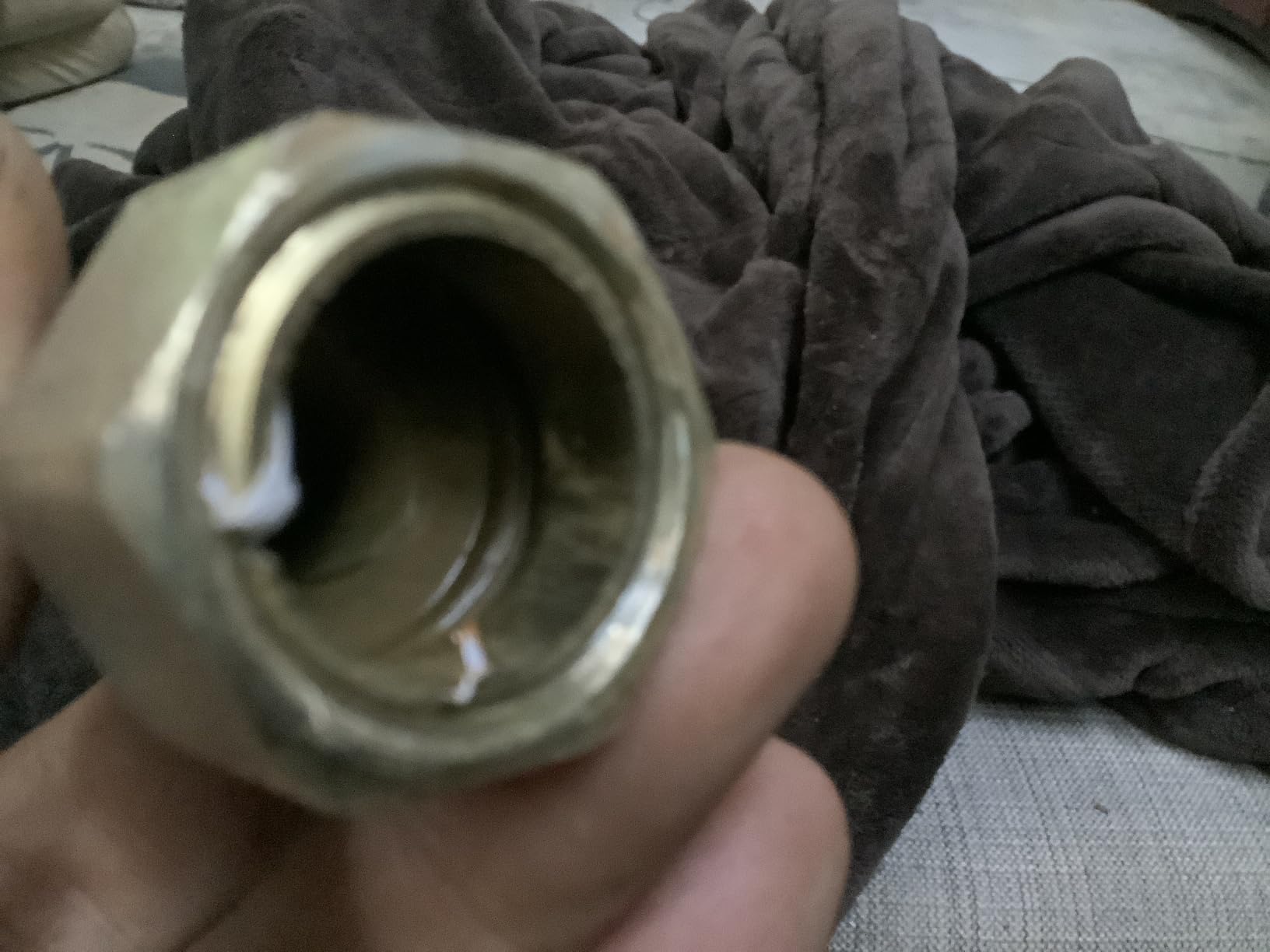
Because the screen is reusable and flushable, there is no cartridge to keep buying, and owners report the easy flush and reinstall noticeably extends the life of the filters downstream. That is the same staging benefit as the larger units, at a simpler level of automation, with no electronics, no power and nothing to fail except the housing threads.
The ratings sit at 4.3 across 232 reviews, and the five-star share is the second lowest in this group, so treat the long-term durability picture with a little caution. Review volume is modest, which means fewer years of real-world data behind the design than the higher-reviewed models have.
When Two Screens Beat One Bigger Housing
If you are unsure how dirty your well is, the flexible element is a reasonable hedge. Run the coarse screen, flush it on a schedule, and when the water starts coming through clean and clear you have your answer about which screen your well actually needs.
That is also the answer to the common forum question of whether to start at 50 or 100 micron. Starting coarse and stepping down once the load is understood costs you one element swap and removes the guesswork.
Limitations to Know About
The wall mount is the most repeated physical complaint, so mount it on solid framing or a shelf rather than drywall alone. The 50 micron element is the one that loads quickly on dirty wells, which is precisely when you will want it out and the 200 micron in.
And the clear housing is not frost proof. In an outdoor pit or unheated space in a climate that drops below freezing, either insulate it or keep the whole assembly indoors where the rest of your treatment equipment lives.
7. Turboyhood 50 Micron Spin Down Sediment Filter – Best Budget Reusable Prefilter
Turboyhood 50 Micron Spin Down Sediment Filter for Whole House and Well Water, Reusable Washing Machine Water Filter, BPA-Free Pre-Filter
50 micron food grade mesh
Brass head and clear housing
Rated to 725 psi
NSF and SGS certified
Pros
- Heavy brass head and housing rather than painted plastic
- Good flow for washing machine and irrigation hookups
- Easy flush drain handles light sediment
- Lowest cost reusable spin-down in the group
- NSF and SGS certified materials
Cons
- Threads are not standard NPT and will not mate well
- Persistent leaks even with heavy thread tape
- Loose housing threads may need soldering to seal
- Not compatible with standard garden hose threads
This is the value entry in the roundup, and the spec sheet is more serious than the rating suggests. A brass valve head with a transparent housing rated to 725 psi is a better pressure envelope than several higher-rated units, and the mesh is food grade stainless at 50 micron with NSF and SGS certification behind it.
The listed use cases go beyond drinking water. Owners point to washing machine supply lines, irrigation and small business applications, and the flow rate works for those, where a full house spin-down would be more capacity than the job needs.
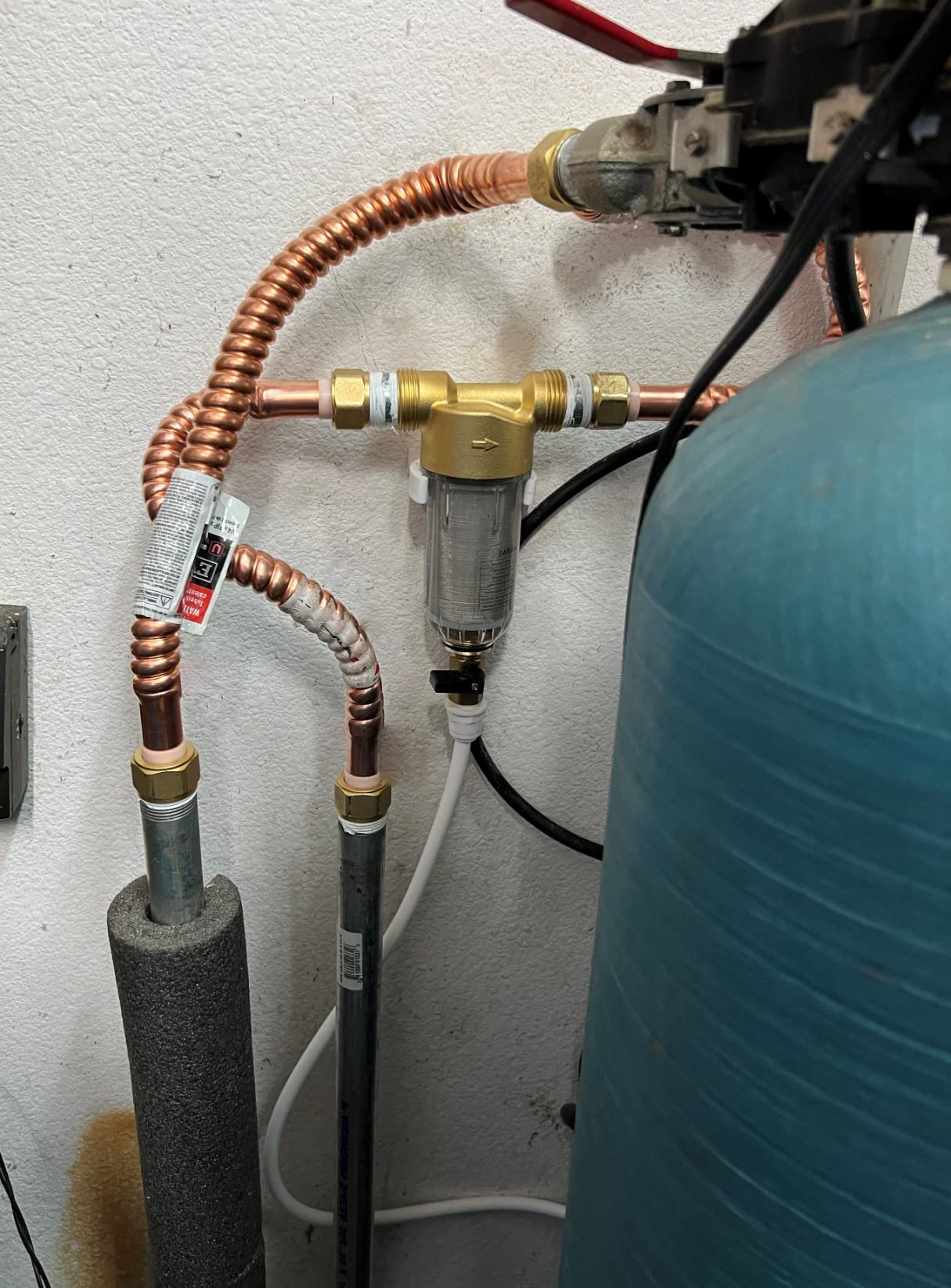
At 4.1 across 230 reviews, this is the lowest rated unit here, and the reason is not filtration. It is fittings. The threads are repeatedly described as not matching standard NPT, so adapters from an ordinary hardware store will not seat properly and will leak even after several wraps of thread tape. Some owners only achieved a seal by soldering the connections directly.
Adapters are not included, so you also need to buy fittings matched to whether you are connecting copper, PEX or CPVC. Buyers who came pre-plumbed report good well water performance and solid heavy-duty construction, and the seller is credited with a responsive refund on a difficult connection complaint.
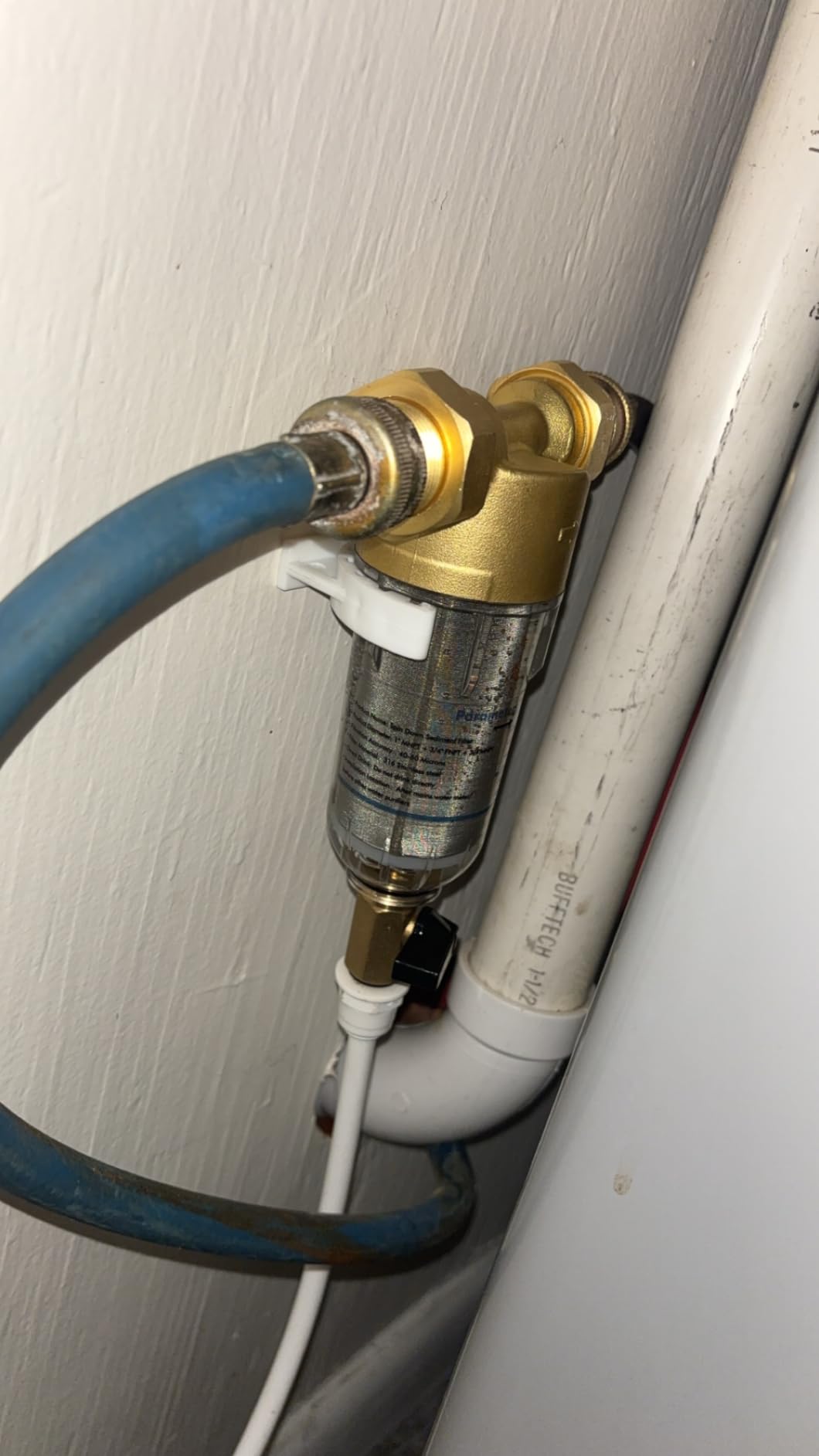
When This One Fits the Job
It makes sense when you are filtering a washing machine supply, an irrigation line or a small shop, where moderate flow is enough and the lowest purchase price matters. A 50 micron reusable screen on a low-flow line is a genuinely cheap way to keep grit out of a washer inlet valve.
It also makes sense if you enjoy plumbing and have the fittings already sorted. The hardware is capable; the risk is entirely in how the threads interface with what you already have.
Why the Lowest Rating Is About Connections
Nearly all of the one-star and two-star reviews describe leaking, not failed filtration. Threads that are not true NPT will not compress evenly against a standard fitting gasket, and more tape only adds resistance without fixing the geometry. Loose housing threads can be the same problem one step further up.
If you are soldering copper anyway, the complaints largely disappear. If you are connecting to existing PEX or CPVC with push-fit connectors, buy your reducers and adapters first, confirm they mate, and expect to spend more time on this install than on any other unit in the roundup.
8. Whirlpool WHKF-DWHBB 10 x 4.5 Filter Housing – Best NSF 42 Certified Cartridge Housing
Whirlpool 10″ x 4.5″ Large Capacity Whole House Water Filter System WHKF-DWHBB, 1″ Metal Port, Home Water Pre-Filtration for Well and City Water, Clear Housing, Timer Included for Replacement Filter
10 x 4.5 inch housing
1 inch stainless steel ports
NSF/ANSI 42 certified
25-125 psi range
Pros
- Metal 1 inch port sleeves outlast plastic inlets
- Clear housing shows filter condition at a glance
- Standard format accepts common replacement cartridges
- Filter change reminder timer included
- No port leaks after proper taping and moderate tightening
Cons
- Housing threads can strip and resist opening
- Replacement cartridge is sold separately
- Water spills out when the pressure release button is pressed
- Cap is plastic even though the ports are metal sleeves
- Manufacturer support is reported as very hard to reach
This one is a housing, not a filter, and that distinction matters. If you already plan a staged setup with a spin-down in front, you need a second vessel for the fine cartridge, and this is the certified one to build that stage around.
It is certified to NSF/ANSI Standard 42 for material safety and structural integrity, and it runs in a 25 to 125 psi range at 40 to 100 degrees F for cold water use. The 1 inch inlet and outlet use stainless steel sleeves rather than plastic, which is the detail that sets it apart from most housings at this size and the one owners praise most consistently.
Two included accessories are genuinely practical. The clear housing lets you see the water turn latte-colored as the cartridge loads, which is the simplest replacement signal you can get without a gauge. And a filter change reminder timer is included, though note that the supplied wrench only functions if the housing is actually mounted, since it relies on the housing position.
The cartridge itself, whether you use the general purpose pleated, carbon or resin versions in the same format, is sold separately. That is normal for a housing, and it is also how you choose the media your well actually needs, but it does mean two purchases rather than one.
Why Metal Ports and Certification Matter Here
On a well, the inlet and outlet are where pressure cycling hits hardest, and plastic threads crack or strip under repeated thermal and pressure movement over years. Stainless steel sleeves in the ports, with a 25 to 125 psi operating range, are what you want at the connection that sees every pump start and stop.
NSF/ANSI 42 certification for material safety and structural integrity means the materials in contact with your drinking water have been independently evaluated, and you can verify the listing rather than taking the box’s word for it. On a whole house system that feeds every tap, that verification is worth the ten minutes it takes.
Weak Points to Work Around
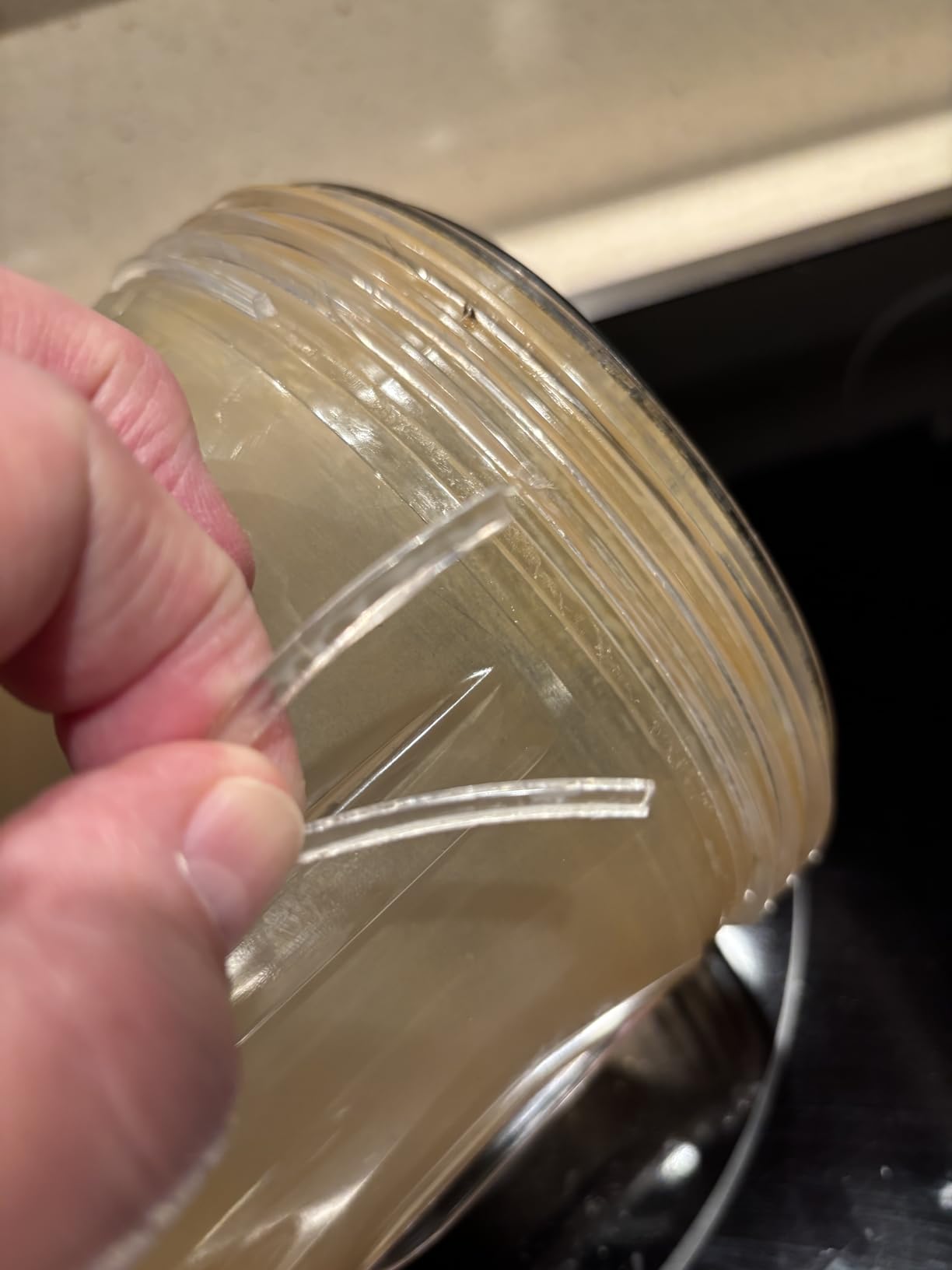
The housing threads are the dominant complaint. Several owners report them stripping or the canister simply refusing to open, forcing them to reach for a pipe wrench or abandon the unit, and re-threading the housing back into the cap takes repeated attempts. If you are comfortable with a pipe wrench this is manageable, but it is not a beginner-friendly housing.
Also expect water to spill when you press the pressure release button, so have a drain or a low tub under it during changes. The cap itself is plastic even though the ports are metal, and Whirlpool’s own support is described as very hard to reach, which matters if you need a replacement part.
9. Rusco 34-100-F Polyester Spin Down Filter – Best for Coarse First Stage
Rusco 34-100-F 34-100-F Rusco 3/4-100-F Polyester Screened Spin-Down Filter System
Centrifugal separation design
Reusable polyester screen
20 gpm flow rate
3/4 inch connections
Pros
- Most consistent satisfaction spread in the group
- Centrifugal separation spins sediment outward to purge
- High impact polymer cover and PVC body
- Reusable screen with no cartridges to keep buying
- Handles up to 20 gpm for whole house duty
Cons
- 100 micron screen is a coarse first stage only
- Lowest review count here so the long-term record is thin
- 3/4 inch sizing needs reducers for 1 inch lines
- Manual flush only with no automatic option
This design has been around a long time, and that shows in the ratings distribution rather than the average. At 4.5 it sits mid-pack, but 70 percent five-star with only 2 percent one-star is the most consistent spread of any unit here, meaning very few buyers regret the purchase.
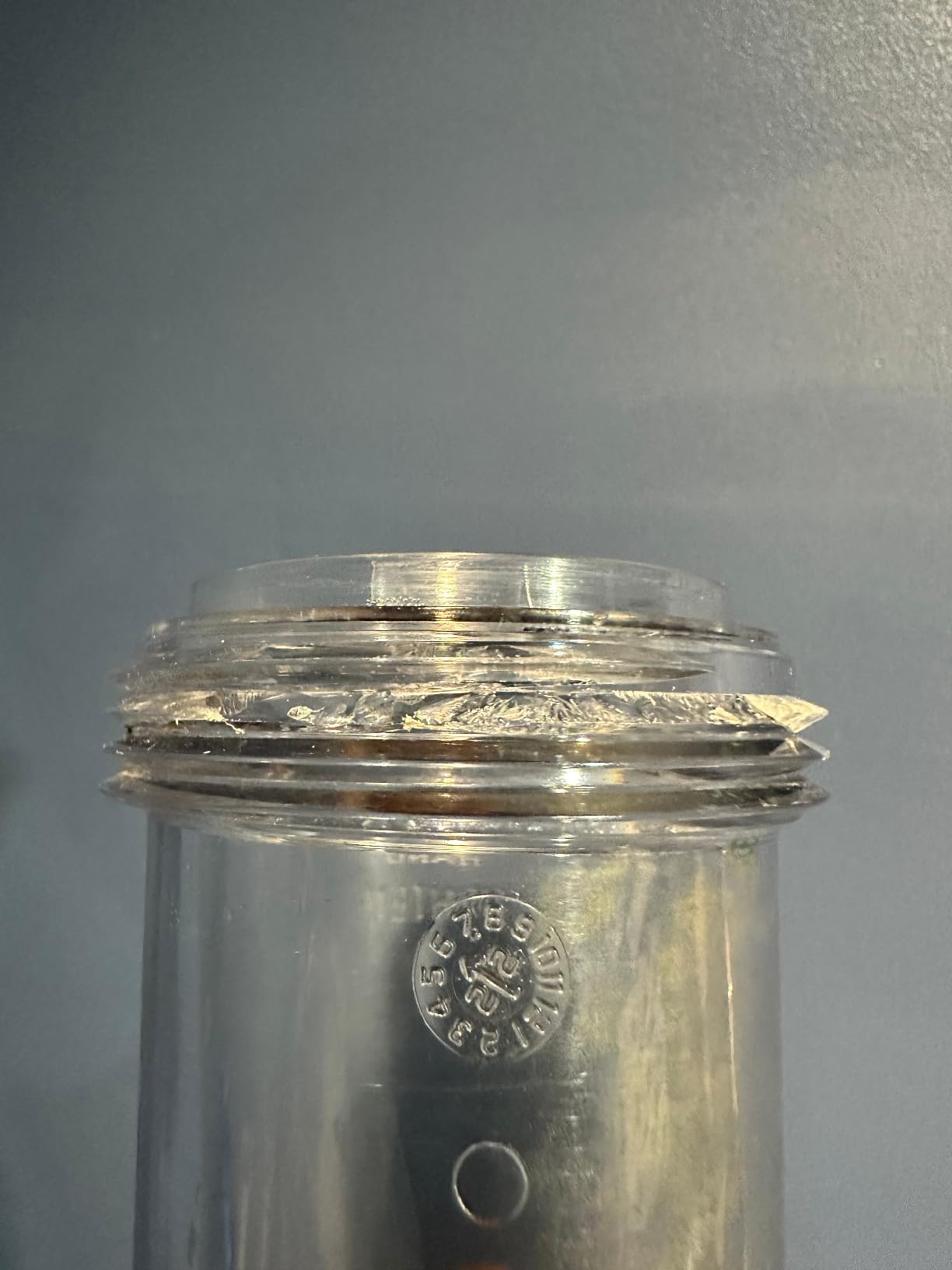
It works by centrifugal separation. Water enters, spins, and heavier sediment is thrown outward into the clear housing where you purge it, with a reusable polyester screen doing the fine work. There are no cartridges to buy, and the clear cover in high impact polymer resin lets you see how loaded the chamber has become.
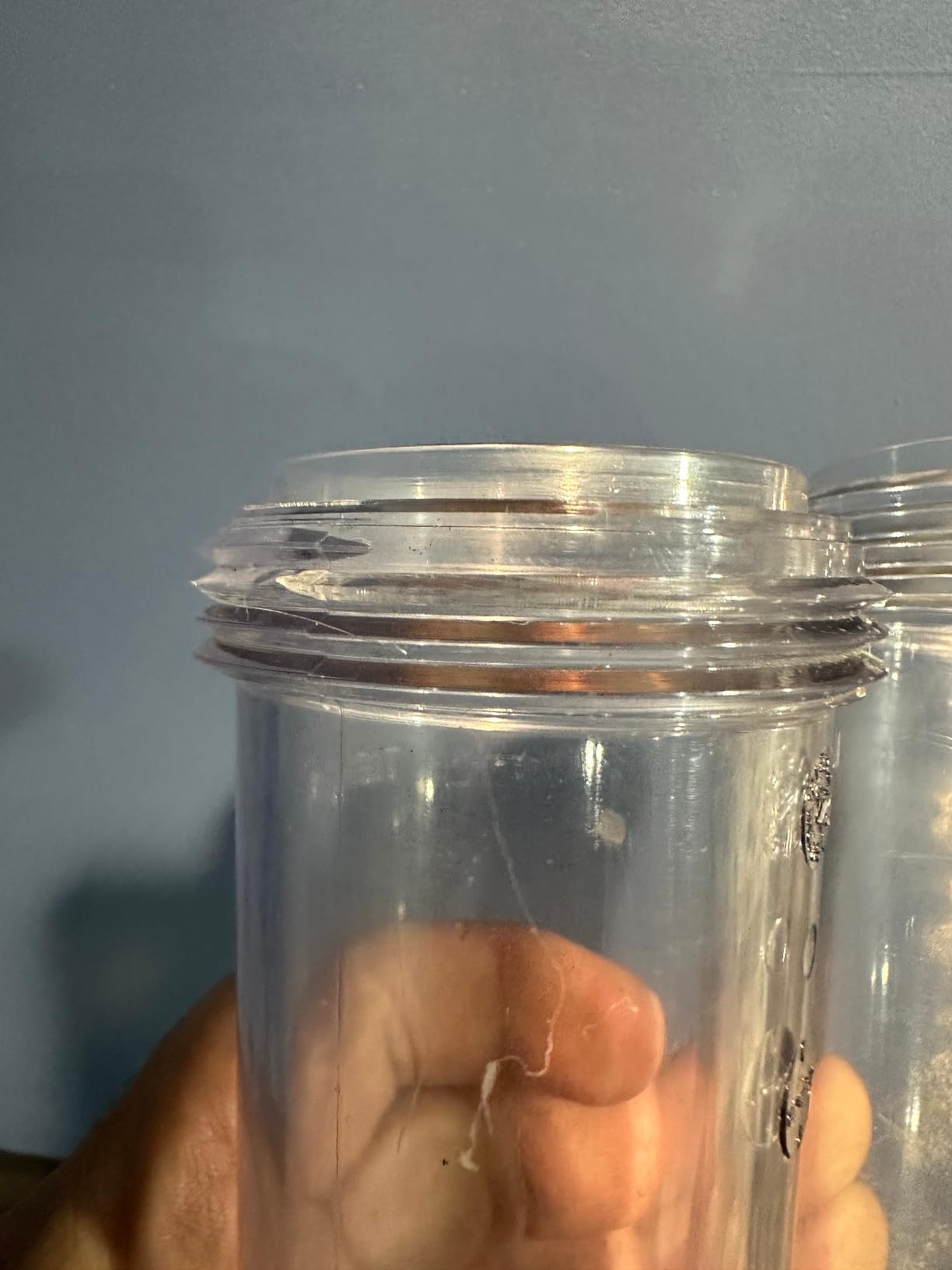
The 20 gpm flow rating is genuinely useful and matches the best of the compact units in this roundup. The design is also straightforward to plumb, with a PVC head and a 3/4 inch connection configuration per the model designation.
The important caveat is the micron class. At 100 micron this is strictly a coarse prefilter. It captures larger sand and grit, which is what protects downstream equipment, but it will not polish water on its own and it needs a finer stage behind it to do anything visible at the tap.
What 100 Micron Does and Does Not Catch
At 100 micron you are catching particles roughly a tenth the width of a human hair, which covers sand grains, grit, rust flakes and anything with visible size. That is the sediment that causes wear and clogging downstream, and it is the sediment you want gone before a softener or a carbon stage.
What passes straight through is fine silt and clay, which is exactly the material that clouds water and settles in faucet aerators. If your complaint is orange staining and grit, this stage helps. If your complaint is cloudy water, you need a cartridge stage behind it.
Sizing and Installation Notes
The 3/4 inch sizing is the practical constraint. If your well plumbing is 1 inch, you need reducers at both ends, and that is worth budgeting into the install rather than discovering mid-job.
Flush operation is manual with no automatic option, so the maintenance rhythm is whatever you set it at. And with 116 reviews, this is the smallest evidence base in the roundup, so the satisfaction spread is encouraging but the long-term durability record is thinner than the higher-reviewed models.
10. PUREPLUS 2-Stage Whole House Well Water Filter – Best Multi-Stage Setup in One Footprint
PUREPLUS 2-Stage Whole House Water Filter, Clear Housing, for Well Water
Two 10 x 4.5 inch housings
Iron removal plus carbon block stage
Integrated pressure gauge
30000 gallon rating
Pros
- Two stages cover sediment iron and chlorine in one footprint
- Pressure gauge gives an objective replacement signal
- Clear housings show how loaded the filters are
- Standard cartridges are easy to source
- Fits in a tight mechanical room
Cons
- Disposable cartridges instead of a reusable flushable screen
- Listed 3 month cartridge life is short for whole house use
- Replacement interval shortens sharply on sediment or iron wells
- Bulkier and heavier than a spin-down unit
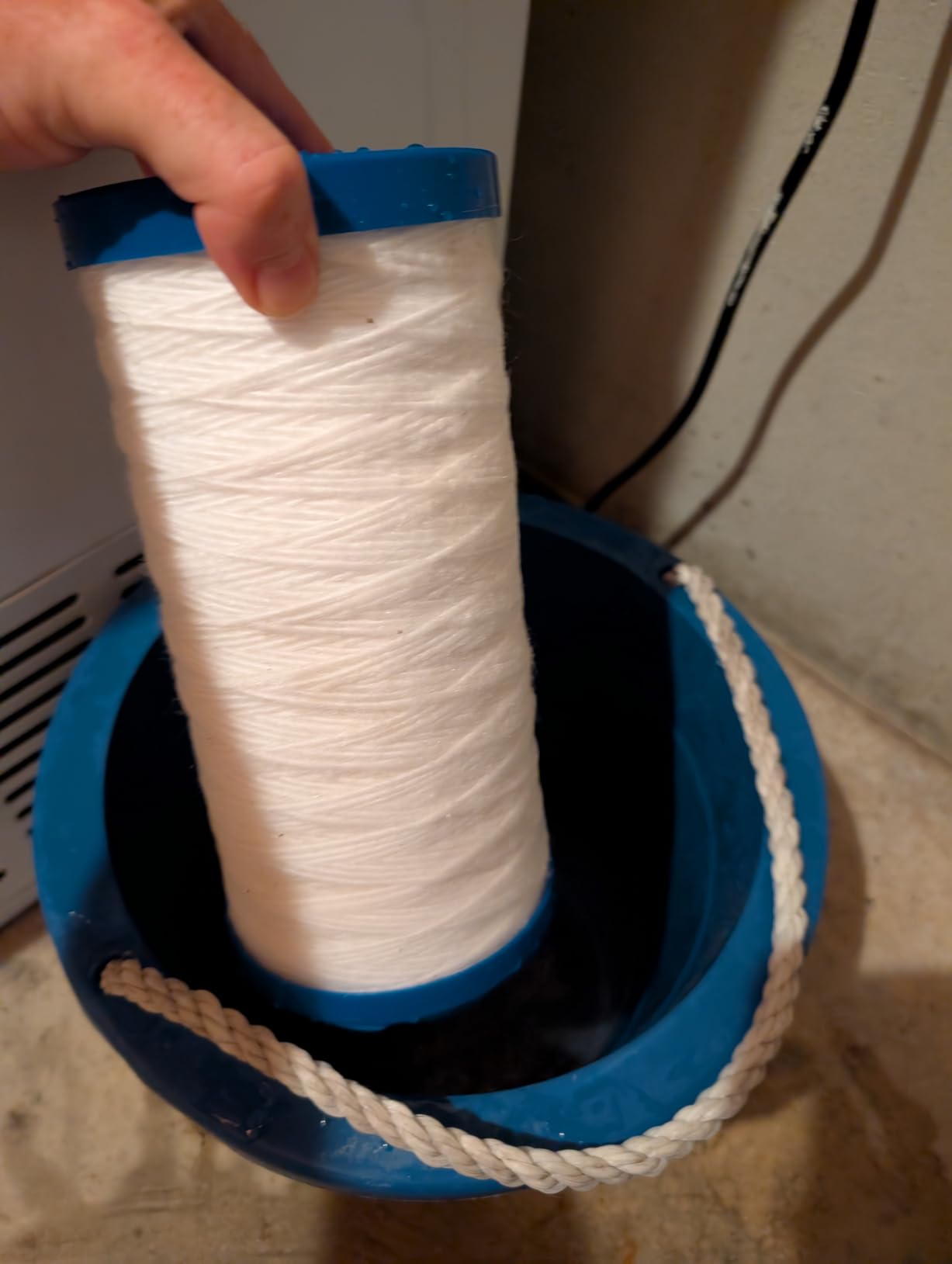
This is the only genuinely multi-stage system in the roundup, and it does more per installed inch than anything else here. Stage one is a composite cartridge combining polypropylene sediment filtration with iron removal media. Stage two is a natural coconut activated carbon block for chlorine, taste and odor.
Both stages use standard 10 x 4.5 inch cartridges in clear housings with 1 inch inlet and outlet connections, which is the format most replacement cartridges are sold in. Rated capacity is 30000 gallons with a listed cartridge replacement interval of three months, and maximum supported TDS is 1000 ppm at 40 to 100 degrees F.
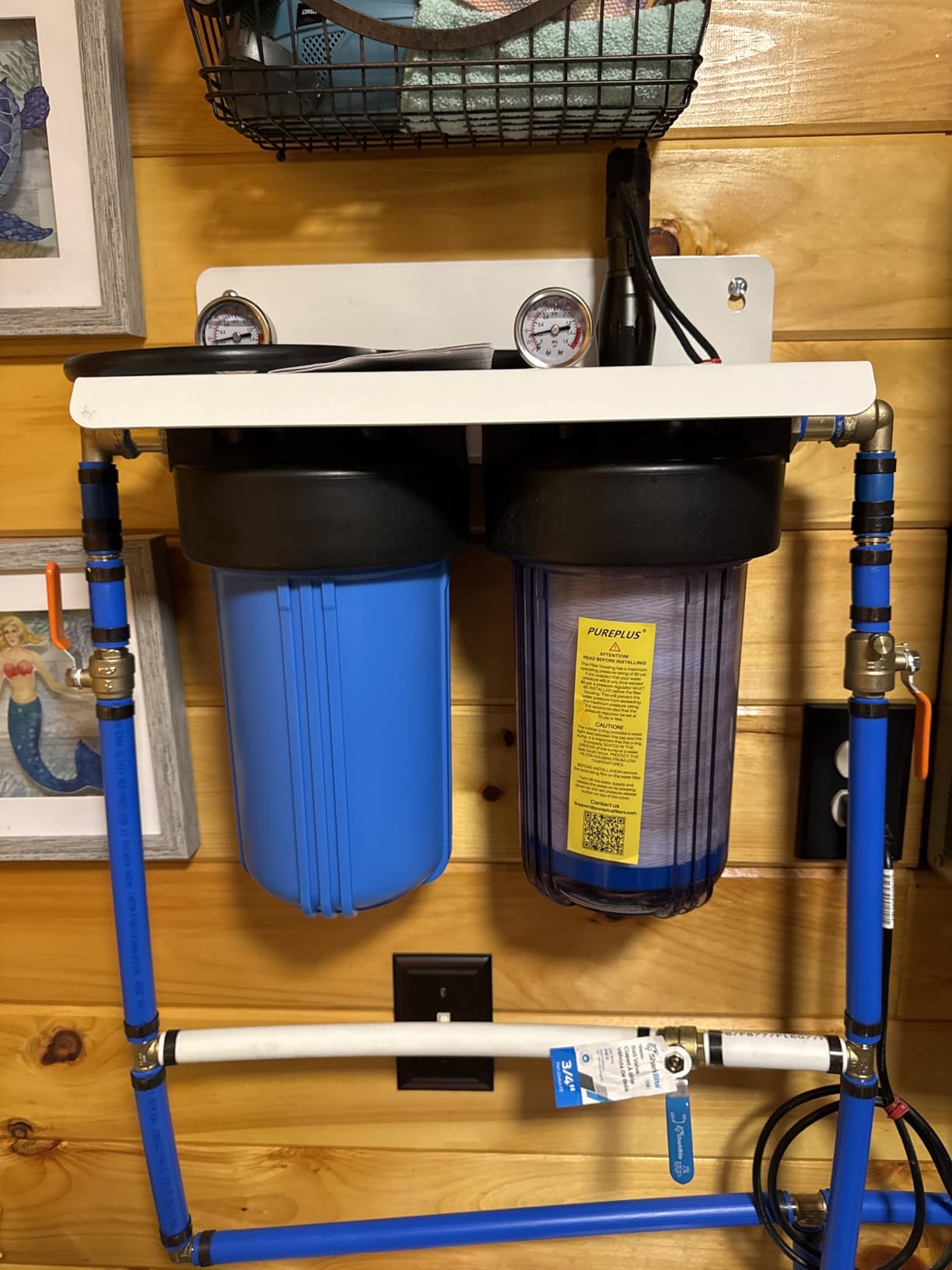
The integrated pressure gauge is the feature owners value most. Instead of guessing at a date, you watch the gauge and swap when the pressure differential tells you to, which is a more honest signal than a calendar on high-load wells. The clear housings fill in the picture by showing how loaded each stage has become.
It is also the natural second half of a staged system. If you install one of the spin-downs from this roundup in front of these two housings, the first cartridge stops being a sand trap and starts doing what it is meant to do.
When Two Disposable Stages Beat One Reusable Screen
The case for this setup is coverage. A spin-down removes sand, but it does nothing about chlorine, taste, odor or iron. These two cartridges do all three while still handling sediment, so for a well with iron staining and an odor problem, this covers more ground in one install than any reusable screen in the roundup.
The case against is running cost. Two disposable cartridges on a three-month interval is a permanent line item, and the review pattern is that the interval shortens considerably once you add sediment or iron load. Budget cartridges as an annual cost, not an occasional one.
Space, Weight and Clearance
At 16.3 by 7.5 by 15.7 inches with two full housings, this needs more mounting space and more support than a single spin-down. That is the trade for having both stages in one footprint, and it is manageable in a utility room but tight in a small crawlspace.
Leave clearance below the pressure release buttons for cartridge changes, because you will need a drain or pan under both housings. Review volume is modest at 116 reviews, so treat the long-term record as shorter than the higher-reviewed options here.
Where to Install a Sediment Filter on a Well System
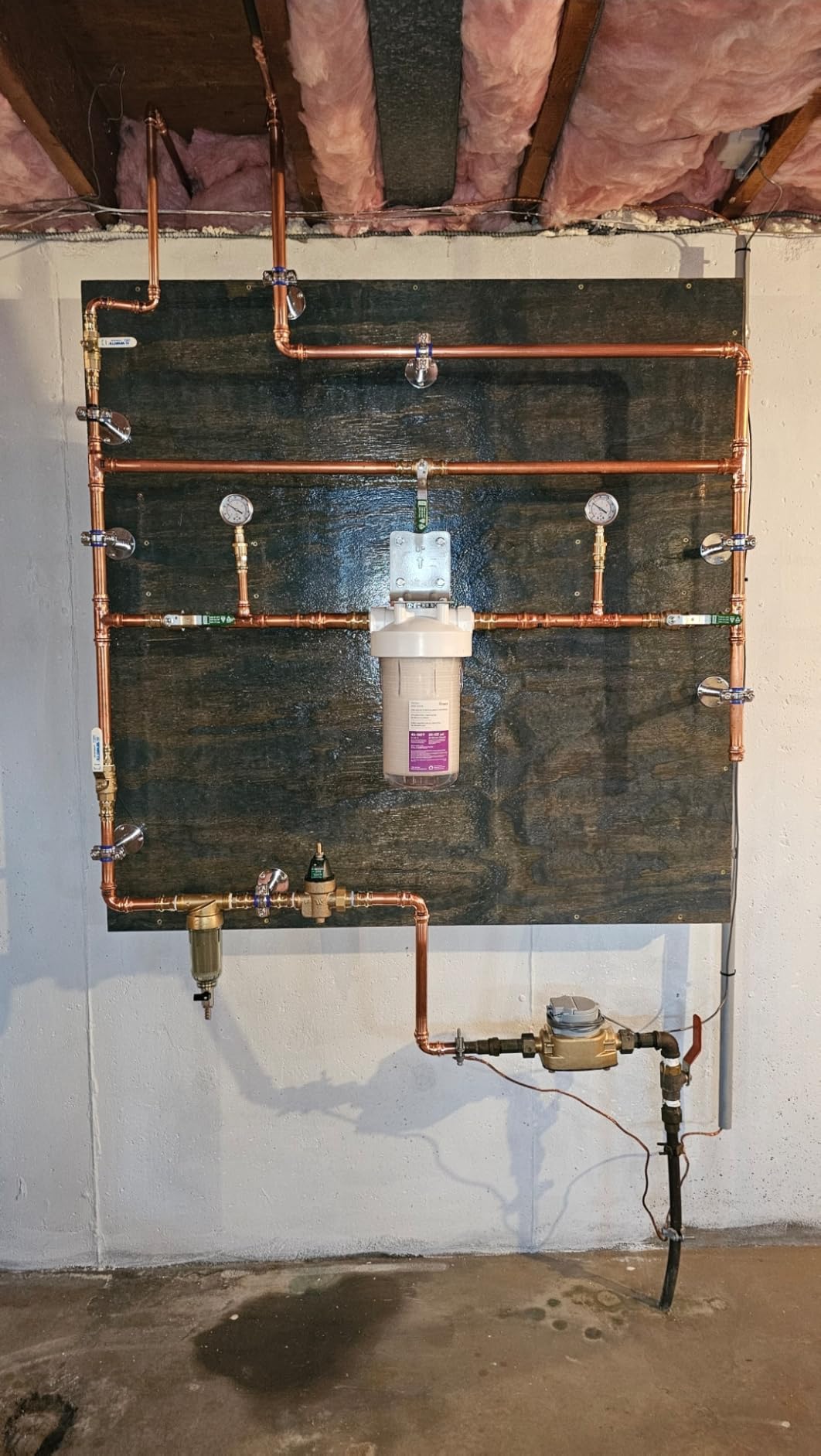
The direct answer: install it after the well pump and before the pressure tank. That placement is what makes a sediment filter protect your pump discharge line, the pressure switch, the tank bladder and every downstream component, rather than only protecting the faucets.
The order of a typical well system with sediment filtration looks like this:
Submersible pump to shutoff and check valve to spin-down sediment filter with flush valve to pressure tank to pressure switch to fine cartridge or multi-stage filtration to softener, UV or carbon stage to household plumbing.
Why before the tank rather than after? Because a pressure tank fills and draws repeatedly, and every cycle pulls water through the filter. Putting the sediment stage ahead of the tank means the tank, the switch and the downstream equipment never see the sand at all. Installing after the tank is a common choice because it is closer to where the water enters the house, but it means the tank, the switch diaphragm and the pump discharge line have already been exposed to the sediment load.
One caution on the other end of the system: do not put a restrictive filter directly on the pump inlet. A submersible pump depends on a steady, unrestricted column of water at the intake. A screen that clogs there restricts flow, the pump works harder and runs hotter, and cavitation damage is the result. Sediment filters belong on the discharge side, never the intake side.
Add a real bypass valve if you can. It lets you isolate the filter for service without shutting off water to the whole house, which is the single most requested feature in the trust signals we found across homeowner discussions. It also gives you a way to keep water running during a cartridge change.
If you are running iron removal, carbon or a softener, the sediment stage goes ahead of all of them. Media-based stages are expensive and fouling sediment ruins them, which is why our guide to sulfur and iron treatment on well water assumes prefiltered input.
Spin-Down vs Cartridge: Is the Spin-Down Worth It?
Yes, on almost any well that produces visible sediment. A spin-down filter is worth it because sediment is flushed out of a collection chamber you purge in seconds, instead of being trapped in fiber that can only be thrown away. Over a year, that difference is one flush valve and a garden hose against four to eight replacement cartridges.
The case for a spin-down is straightforward. It costs money once, it has no consumables beyond occasional screen replacement, and the clear housing tells you when it is time to flush. It also acts as a buffer for everything downstream, which is why owners of staged systems report their fine cartridges lasting several times longer.
The case against is real too. Spin-downs do not polish water. A 50 micron or 100 micron screen passes fine silt and clay, so on its own it will not clear cloudy water or fix orange staining. If your only problem is very fine sediment on an otherwise clean well, a cartridge setup may be simpler, and a technician who believes your well produces almost nothing has a point.
Forum consensus on this question lands in the same place from multiple directions: if a whole house filter is clogging within weeks, the answer is to add a spin-down rather than to change cartridges. Start coarse at 100 micron, add a 50 micron stage once the coarse one is keeping up, and only then consider a fine polish cartridge.
Our own view after working through these ten: the best whole house sediment filter for well pumps is a reusable spin-down, and the second piece of gear worth adding is a certified 10 x 4.5 housing for a fine cartridge behind it.
Match the Micron Rating to Your Sediment Load
Micron rating is the most misused spec in this category, partly because labels are not comparable across brands. A nominal rating means most particles of that size are captured. An absolute rating means 99.9 percent are. Manufacturers use both, and few listings tell you which one you are reading.
So judge by the water, not the label. Here is how the tiers map:
Clear water, no visible debris. You need protection more than polish. A 100 micron spin-down first stage plus a 5 to 20 micron cartridge is plenty, and this is the setup our list handles best.
Slight haze, settles slowly, no grit. Fine silt or clay. Go straight to a pleated or string-wound cartridge at 5 to 20 micron, since a spin-down at that range would blind quickly. A higher surface area cartridge holds more of this material per dollar.
Visible sand in a glass. Coarse sediment. Start with a 200 micron spin-down to protect everything downstream, then a 50 micron stage behind it once the coarse stage is keeping up.
Grit, pebbles, constant debris. A damaged or undersized well screen. Start at 500 micron, or choose one of the mega spin-downs built for this load, and plan on cleaning every one to two weeks. Fine cartridges alone will not survive this.
On flow rate, match the filter to your household. One to two bathrooms typically runs around 10 to 12 gpm of demand, three to four bathrooms push 15 to 20 gpm, and larger properties can exceed that. Pick a spin-down rated comfortably above your peak, and remember that a backwashing media unit downstream may need roughly twice its service flow in available supply.
What a Sediment Filter Does Not Remove
Sediment filters remove particles. They do not remove dissolved contaminants, and this is the most common misunderstanding in the category, so it is worth being blunt about the limits.
Not removed by any unit in this roundup:
Dissolved iron and manganese. These are dissolved in the water, not suspended in it, and they need oxidation and filtration or air injection. An orange-stained bathtub after a shower means iron, and a 5 micron cartridge will not fix it. It will only catch the rust flakes that flake off later.
Bacteria, including coliform. Sediment filters provide no disinfection. If bacteria are a concern on a private well, a UV sterilizer after the sediment stage is the standard answer.
Nitrate, arsenic, fluoride and PFAS. These are dissolved chemical contaminants that require activated carbon, ion exchange, reverse osmosis or a certified media specific to each one. No sediment filter on this list touches them.
Dissolved minerals and hardness. Cartridges do not lower total dissolved solids, and sediment filtration has no effect on hardness. That is a softener’s job.
If you want one filter instead of a whole treatment train, the multi-stage PUREPLUS system in this roundup is the closest thing here because it pairs sediment media with iron removal media and a carbon block. But even it does not address bacteria or PFAS. Testing your water first is the step that prevents buying the wrong equipment, and our sediment filter buyer’s guide covers the cartridge side in more detail.
How to Choose: 7 Specs That Decide the Match
1. Screen micron rating. 500 and 200 micron for muddy wells, 100 micron for general coarse protection, 50 micron for moderate sediment, 5 to 20 micron for fines and polish. Match it to the load you measured, not the load you fear.
2. Rated flow against your pump. Choose a housing rated above your peak household demand. Undersized filters are the top cause of whole-house pressure complaints we read in the reviews.
3. Nominal versus absolute. Absolute ratings are the stricter claim and cost more media. For well sediment, either works once the micron class is right for the water.
4. Head loss and pressure drop. A filter that adds meaningful pressure drop at your flow rate will show it as lower shower and faucet pressure. This is the main objection to fine filters and the reason staging works.
5. Port size and physical footprint. Most units here are 1 inch MNPT with 3/4 inch FNPT options, but the Rusco is 3/4 inch only. Check clearance for service, especially for the auto-flush models that need dry mounting space and room to open the bowl.
6. Certification. NSF/ANSI 42 for material safety and structural integrity, NSF/ANSI 372 for lead-free compliance, IAPMO R&T as another route. Verify the listing for the exact model number rather than trusting the box.
7. Service interval and what servicing costs. Flushable screens cost nothing but time. Cartridges cost money on a schedule that shortens on dirty water. Whichever you pick, add a real bypass valve so servicing does not mean shutting off the house.
Maintenance and Replacement Schedule
Most whole house sediment filters are forgotten until something fails, and the failure is usually a pressure drop you notice as low shower pressure. A five-minute check twice a year catches it earlier.
For spin-down units, look through the clear housing, and if the screen is visibly coated or the water downstream is cloudy, flush it. A two-week cleanout is the suggested routine on the largest chamber, and a monthly manual clean on clay-heavy wells is common even with an auto-flush module. Screen replacement on reusable stainless units is typically measured in years rather than months.
For cartridge systems, the listed interval is three to six months depending on water quality, and shorter in practice on sediment or iron heavy wells. Watch the pressure gauge on multi-stage systems, or the water color in a clear housing, rather than trusting the calendar alone.
Two signals justify immediate service: a visible drop in household pressure that returns to normal after a flush or cartridge change means the filter is loaded, not that your plumbing is failing. And air or sputtering at fixtures shortly after servicing usually means a housing is not sealing, which is a gasket seating problem rather than a pump problem.
After heavy rain or flooding, expect the load to spike. Check the filter earlier than your schedule says, and if a cartridge clogs within weeks every time, that is a signal to add a coarser prefilter rather than to keep buying cartridges.
Frequently Asked Questions
What is the best whole house sediment filter for well water?
A reusable spin-down unit with a 50 micron stainless steel screen, installed after the well pump and before the pressure tank. It flushes sediment out instead of trapping it, costs nothing per service, and protects everything downstream. Add a 5 to 20 micron cartridge behind it for fine silt, or step up to a 200 or 500 micron screen first if your well runs visibly sandy.
What type of sediment filter is best for well water?
Match the type to sediment load. Coarse 200 or 500 micron spin-downs for gritty wells, 50 or 100 micron spin-downs for general protection, and pleated or string-wound cartridges at 5 to 20 micron for fine silt and clay. Wells with visible sand need the coarse stage first, because fine cartridges blind quickly on grit.
Is a spin-down sediment filter worth it?
On most wells, yes. A spin-down has no consumable cartridges, cleans in seconds with a flush valve, and its clear housing shows you when service is due. A cartridge has to be thrown away on a schedule that shortens on dirty water. The exception is a very clean well with only fine sediment, where a cartridge alone may be simpler.
What micron rating should I use for well sediment?
Use 500 to 200 micron for grit and pebbles, 100 micron for general coarse protection, 50 micron for moderate sand, and 5 to 20 micron for fine silt and clay. Note that labels are not comparable across brands because some are nominal ratings and others are absolute, so judge the micron class against what you actually see in a glass of your water.
Does a sediment filter remove bacteria, iron or PFAS?
No. Sediment filters trap particles only. Dissolved iron and manganese need oxidation and filtration, bacteria need a UV sterilizer, and nitrate, arsenic and PFAS need carbon, ion exchange or reverse osmosis. A sediment filter is the protective first stage that keeps those downstream systems working, not a treatment for them.
Can you use reverse osmosis on well water?
Yes, but never on sediment-loaded water. A reverse osmosis membrane fouls fast on suspended solids, so whole house sediment filtration has to come first, ideally a coarse spin-down ahead of a fine cartridge. You also need a tank, a dedicated faucet and a drain line, which is why most well owners treat with carbon and softener at the point of entry and use reverse osmosis only at one drinking tap.
Final Verdict
The iSpring WSP-50 is the best whole house sediment filter for well pumps in 2026 because it combines the highest review volume in the group with a proven brass and stainless build, a fast flush valve and a clear housing, and its support will swap you to a coarser screen if your well runs sandier than the 50 micron rating can handle.
Take the Waterdrop RPFK instead if your home runs above 10 to 12 gpm and you want a 20 gpm rating in a compact body. Take the iSpring WSP50ARB if the reason filters failed before was that nobody remembered to flush them. Take the Waterdrop BG103 if the well is genuinely muddy. And pair whichever you choose with a 5 to 20 micron cartridge in a certified housing for the fine stage.
Whatever you install, put it after the pump and before the pressure tank, give it a real bypass valve, and test your water before you add anything downstream. The filter that keeps your softener, UV unit and appliances alive is the cheapest return on a well system you will ever make.