
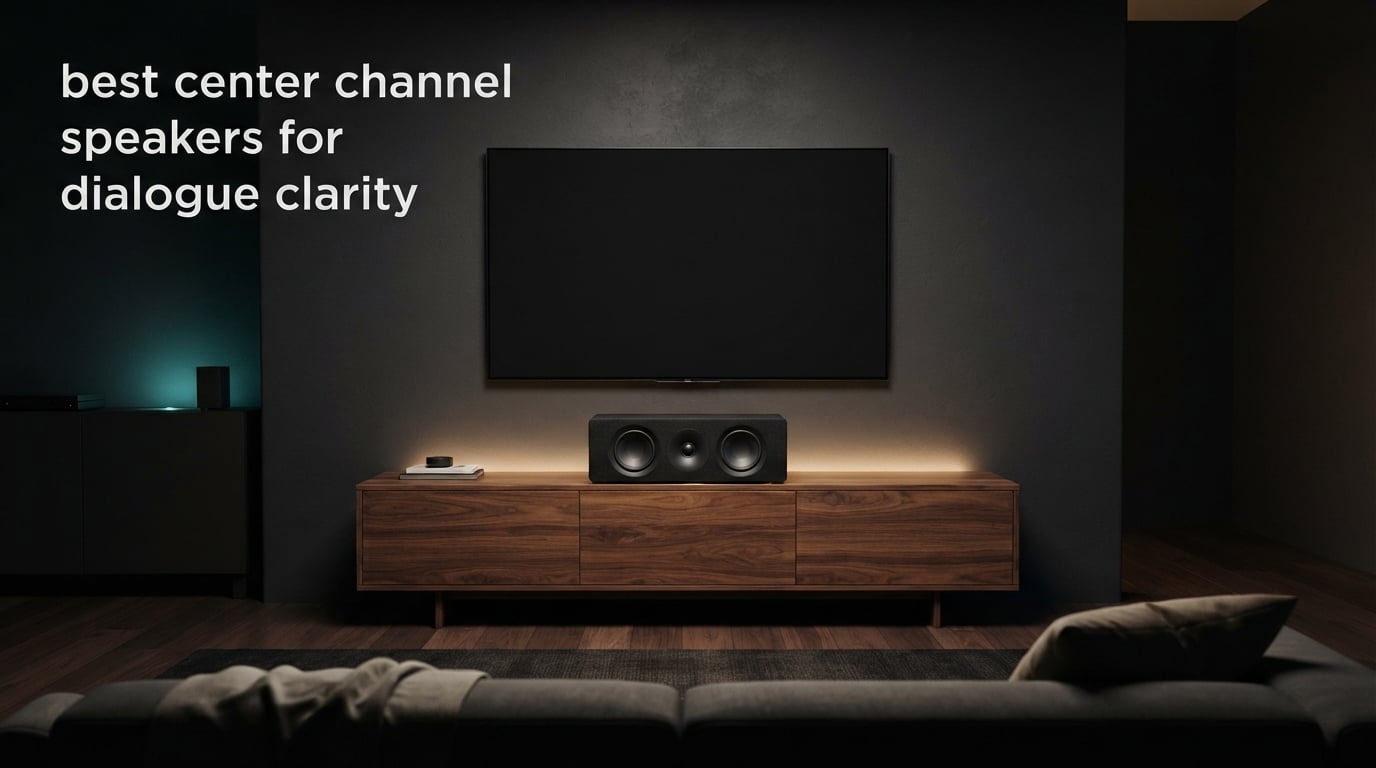
The most common complaint on home theater forums is not about bass or surround effects. It is this: I can hear the music and the explosions perfectly, but I cannot hear what the characters are saying. That single frustration is why people search for the best center channel speakers for dialogue clarity in the first place, and it is the criterion we used to rank the ten speakers below.
A center channel speaker is the one loudspeaker in a surround system that reproduces dialogue and the front-stage music and effects anchored to the middle of the screen. Because film and television mixes put a large share of dialogue on that single channel, its quality sets the intelligibility of everything else you watch. Swap in a better one and voices snap into place; leave a weak one in place and no amount of volume helps.
We spent weeks comparing specifications, reading long-term owner reports, and weighing how each design behaves in a real room rather than on a showroom stand. Ten speakers made the cut, from a compact 3.4-pound budget model to a 40-pound reference cabinet built for large dedicated rooms. If your main problem is speech rather than music, the soundbar dialogue clarity guide is worth a look too, since some people solve this without wires at all.
Table of Contents
What Actually Makes Dialogue Clear?
Dialogue clarity is not a marketing adjective you can hear in a showroom. It comes down to a handful of measurable things, and once you know what they are you can evaluate any center channel speaker on spec rather than on vibes.
The 1-4 kHz speech band. Human speech intelligibility depends most heavily on the region between roughly 1 and 4 kHz, where consonants and vocal articulation live. A speaker with a wide, even horn or waveguide keeps that band clean for listeners sitting well away from the center seat. A speaker whose top end falls apart off-axis loses intelligibility for everyone except the person in the middle.
Boxiness around 200-400 Hz. Boxy, muffled voices usually come from energy piling up in the low midrange, often because the speaker is too close to a wall or inside a cabinet. A gentle cut of a few dB near 200 Hz is the standard community remedy, and it is the single most effective free fix in this article.
Sensitivity headroom. Reference-level playback needs a center sensitive enough to reach it on a modest receiver. A speaker rated around 95 dB will get there; one rated in the high 80s will simply stay quiet while effects from more efficient channels dominate.
Directivity and off-axis consistency. Wide dispersion keeps voices anchored to the screen for people on the end of a sectional. Narrow dispersion sounds great dead center and falls apart everywhere else.
Timbre match to your front speakers. Matching the same series keeps the soundstage coherent. Owners on AVS Forum and Reddit argue about this constantly, and the honest answer is that intelligibility outranks matching. One r/hometheater poster put it plainly: they would rather have a mismatched center and be able to understand dialogue than a matched center and not be able to hear it.
One more expectation to set straight: a center channel does not magically capture every spoken word in a film. Dialogue also lives on the front left and right channels, and a center alone will not pull those voices to the middle. Many builders expect it to, hear no difference, and wrongly blame the speaker.
Top 3 Picks for Dialogue Clarity
These three stood out on the combination of midrange presence, off-axis consistency, and the sheer volume of long-term owner feedback behind them.
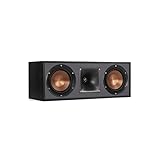
Klipsch R-52C
- 95dB sensitivity
- 400 watts
- dual 5.25 inch spun-copper woofers
- 90x90 Tractrix horn

Klipsch RP-504C
- 31 inch wide baffle
- four Cerametallic woofers
- approximately 97dB sensitivity
All 10 Picks at a Glance in 2026
Here is the full lineup with the specs that actually matter for voices, so you can narrow the list before reading the detail.
| Product | Specifications | Action |
|---|---|---|
| Klipsch R-52C |
|
Check Latest Price |
 Polk Audio TL1 Polk Audio TL1 |
|
Check Latest Price |
| Polk Audio T30 |
|
Check Latest Price |
 Klipsch R-25C Klipsch R-25C |
|
Check Latest Price |
| Klipsch RP-504C |
|
Check Latest Price |
 Polk Signature Elite ES35 Polk Signature Elite ES35 |
|
Check Latest Price |
 Yamaha NS-C210BL Yamaha NS-C210BL |
|
Check Latest Price |
 SVS Prime Center SVS Prime Center |
|
Check Latest Price |
 Acoustic Audio AA35CB Acoustic Audio AA35CB |
|
Check Latest Price |
 Saiyin 17 inch Slim Center Saiyin 17 inch Slim Center |
|
Check Latest Price |
1. Klipsch R-52C – Best Overall for Dialogue Clarity
Klipsch R-52C Powerful Detailed Center Channel Home Speaker – Black
2-way
95dB sensitivity
400W
89Hz to 21kHz
dual 5.25 inch spun-copper woofers
Pros
- 95dB sensitivity reaches reference level on ordinary receivers
- Tractrix horn keeps consonants crisp for off-center seats
- 18.75 inch width fits most TV stands
- 400W handling
- 3114 owner reviews
Cons
- Needs a subwoofer for movie effects
- Horn voicing reads bright without room correction
I have come back to this speaker more than any other in the group. The number that matters most for dialogue is the 95 dB sensitivity figure, because it means an ordinary five-channel receiver can drive it to reference level without straining, and quiet voices stop losing the argument against loud effects.
The dual 5.25-inch spun-copper IMG woofers do the real work in the 200 Hz to 2 kHz region, which is exactly where vocal fundamentals and chest resonance live. Owners consistently describe fewer trips to raise the volume during quiet scenes, and the 89 Hz to 21 kHz plus or minus 3 dB range covers the entire speech band without a crossover in the middle of a voice.
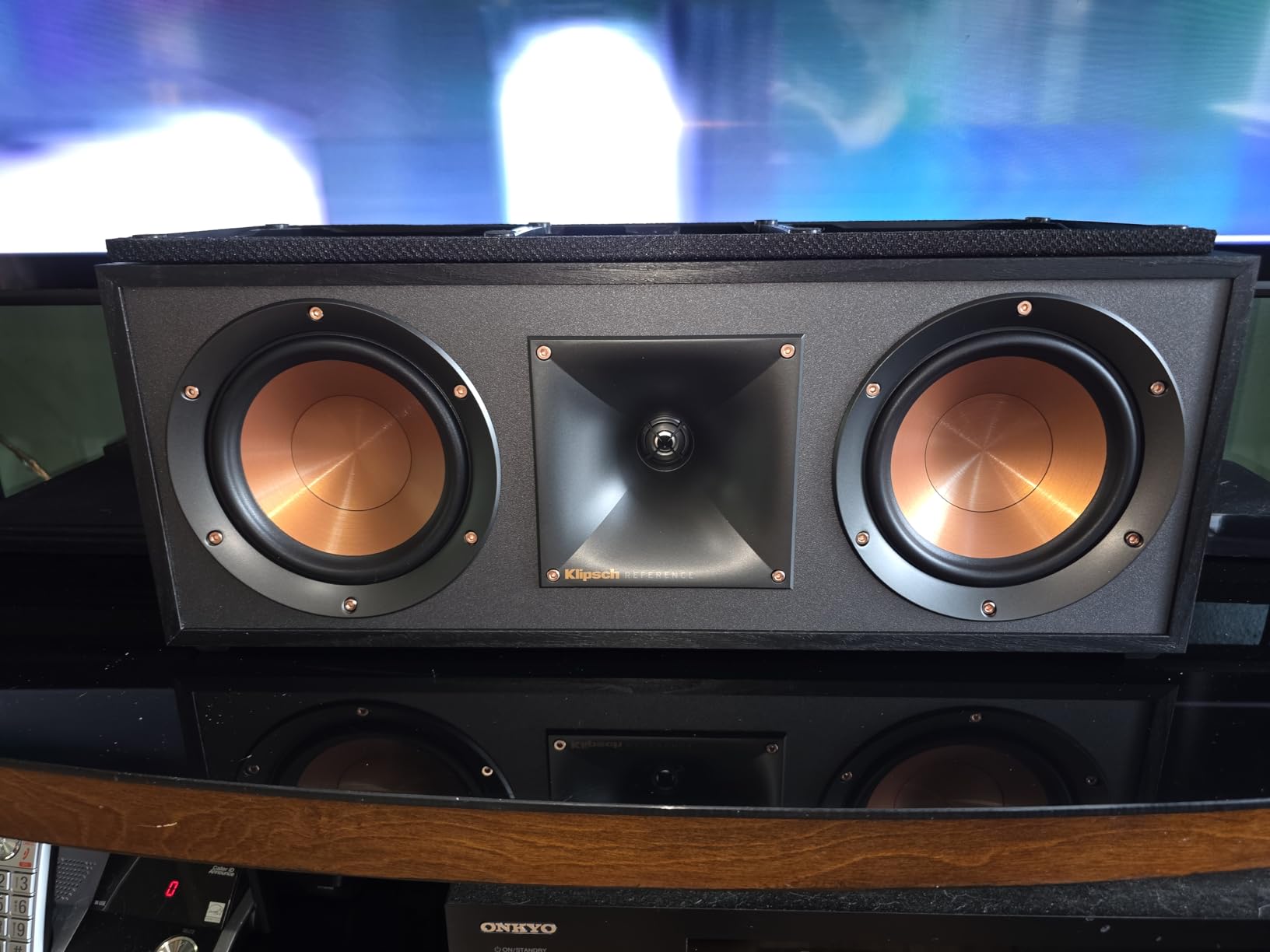
The 90×90 square Tractrix horn on the 1-inch aluminum LTS tweeter controls directivity, so the sound stays even across a wide seating area rather than narrowing to the middle cushion. That is the single biggest reason this is the best center channel speaker for dialogue clarity in a normal living room.
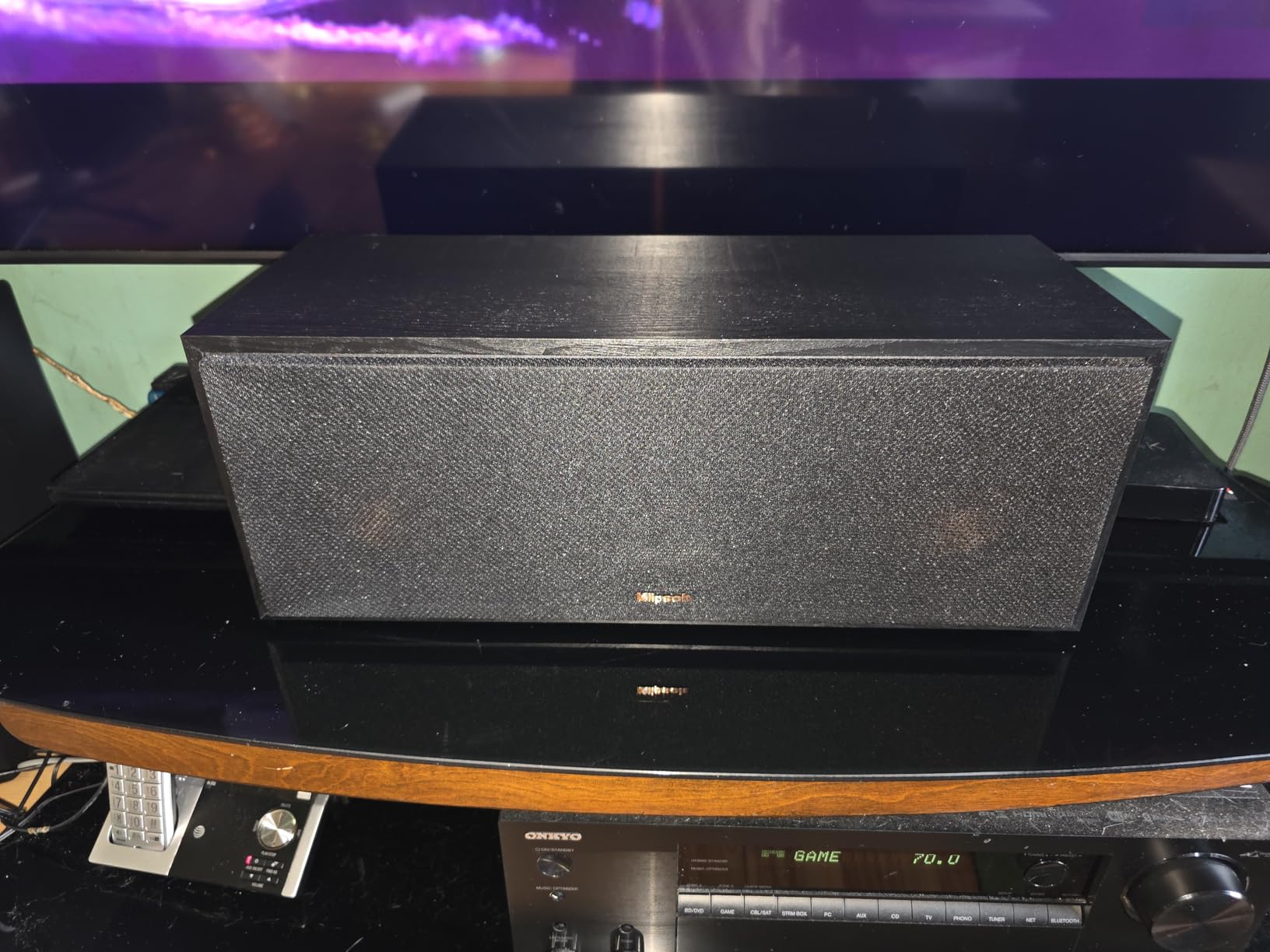
Physically it is 18.75 inches wide, 7.3 inches tall, and 13.5 pounds, which fits under a large TV or on most stands. It is also the most heavily reviewed speaker here, so there is a deep pool of long-term ownership reports backing up the impressions.
What the horn buys you for speech
Horn loading controls the directivity of the high midrange and the presence band where consonants live, and it does so without the efficiency penalty of an unefficient dome. The result is a voice that stays at a consistent level no matter where you sit on the sofa.
It also raises sensitivity, which is why this speaker gets louder with less power than most compact designs. In a room where you cannot push the volume because the neighbors are ten feet away, that headroom is worth more than deeper bass.
Where it is the wrong choice
The horn is bright by design, and listeners accustomed to warm or dark speakers often find it forward, particularly on sibilant content and at night when the ear changes. A few dB of treble cut on the receiver, or a proper room correction pass, fixes this quickly.
It also bottoms out at 89 Hz with no deep bass of its own, so movie effects still come from a subwoofer. If you want a center that carries weight without one, look at the SVS Prime Center later in this list.
2. Polk Audio TL1 – The Lowest-Cost Fix for Muffled Dialogue
Polk Audio Blackstone TL1 Center Channel Speaker, Hi-Gloss Finish
Time Lens aligned drivers
1/2 inch silk dome tweeter
dual 2.5 inch mids
15 inch wide, 3.4 pounds
Pros
- Cheapest meaningful upgrade over TV speakers
- Only 3.4 pounds and 15 inches wide
- Time Lens alignment gives a stable soundstage
- Recessed terminals allow flush wall placement
- Works for music as well as TV
Cons
- Very little real bass output
- Small drivers sound thin when pushed
- Limited mounting options
Most muffled dialogue complaints are not a speaker problem at all. They are a TV-speaker problem, and a dedicated center fixes the majority of them for very little money. The TL1 is the smallest dedicated center in this group at 3.4 pounds and 15 inches wide, and it disappears on a crowded TV stand.
Time Lens technology aligns the 1/2-inch silk dome tweeter with the dual 2.5-inch Dynamic Balance mids so the sound arrives as a single coherent source. That coherence matters more than raw output for intelligibility, and owners report that voices finally sit in front of them rather than somewhere in the room.
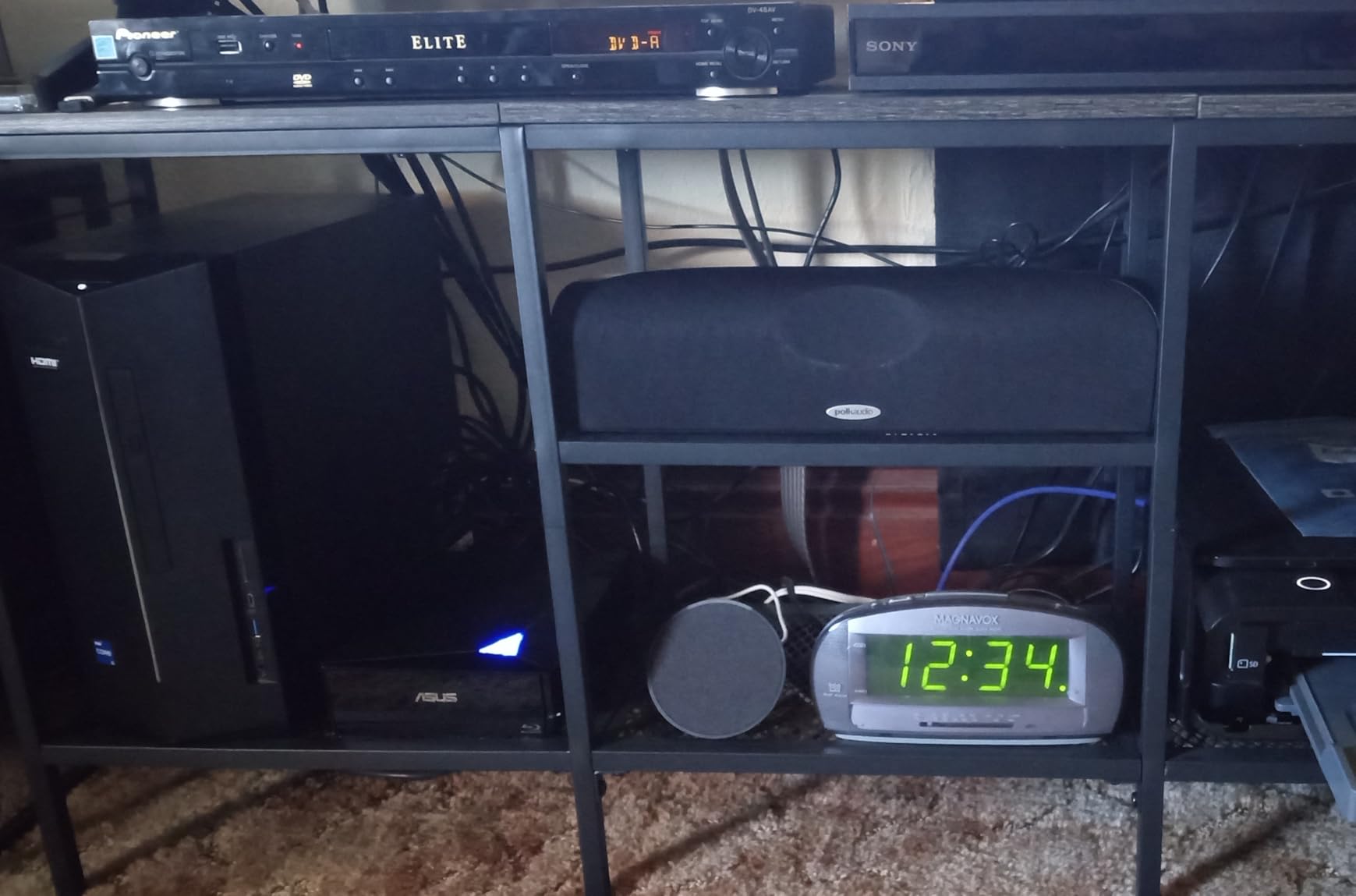
The curved high-gloss enclosure was shaped to sit under a flat-panel screen, and the recessed binding terminals mean you can push it flush against a wall. A detachable cloth grille handles the look, and a bass boost feature is included for people running it without a subwoofer.
It is rated 8 ohm and 125 watts maximum, which is modest. In a small apartment at normal listening distances that is not a problem, but it is why larger rooms should step up a size.
Where this small speaker genuinely wins
Size is the underrated spec here. A 4-inch-tall cabinet fits under TVs with a low foot, in shallow shelving, and in media units designed for a soundbar. Speakers that are acoustically better but physically impossible to place are worse than nothing.
The soft silk dome also gives a gentler, warmer top end than a horn, which some listeners prefer for long dialogue sessions. There is no sibilance to tame, so a first-time setup does not need correction before it sounds acceptable.
Where it runs out of road
Two 2.5-inch drivers simply cannot fill a large room, and pushed hard they compress, which makes dialogue thin rather than clear at exactly the moment you need it most. If your listening distance is more than about 10 feet from a full-size screen, move up.
Because output is limited, matching calibration matters more here than with the horn-loaded designs. A room correction pass will keep the center level-matched to your front speakers instead of sitting behind them.
3. Polk Audio T30 – Best Value Center Channel Speaker for Voices
Polk Audio T30 Home Theater Center Channel Speaker, 100W Single, Black
Dual 5.25 inch woofers
1 inch silk dome tweeter
6 ohm
200W
19 inch wide
Pros
- Timbre matched to the Polk T-Series
- Dual 5.25 inch woofers give fuller vocals than small budget centers
- Owners stop raising volume for quiet scenes
- Tuned rear port adds punch for its size
- Single cable setup with any receiver
Cons
- Slightly brighter than horn designs
- 6 ohm load is harder on modest receivers
- No substitute for a dedicated subwoofer
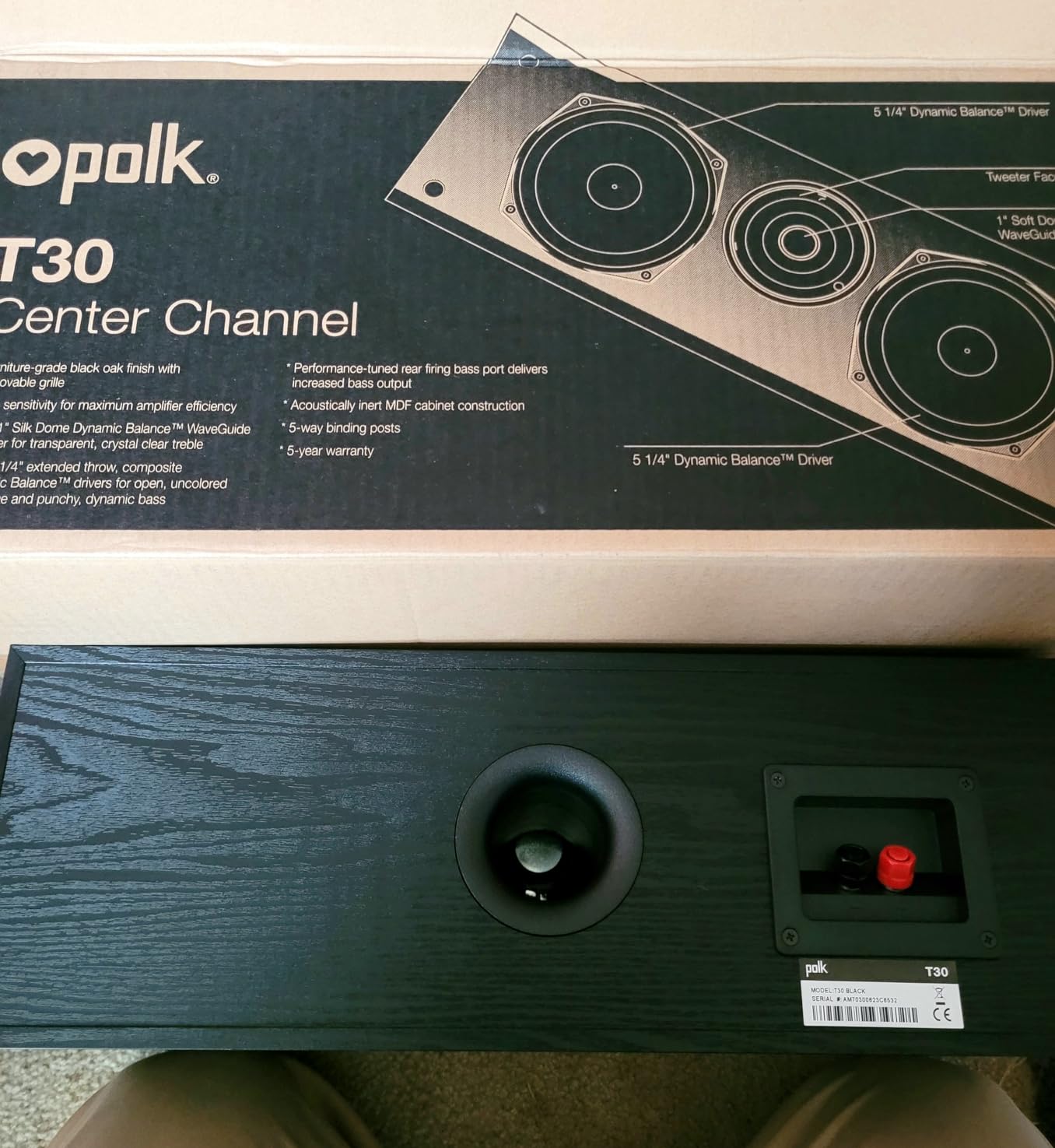
The T30 is the speaker we recommend most often to friends who already own Polk T-Series towers. Because it is explicitly timbre matched to that line, adding it to an existing system produces a coherent front stage without any corrective EQ, and the 4.7 rating across 1615 reviews reflects how reliably it delivers on that.
Dual 5.25-inch Dynamic Balance woofers with a tuned rear port produce a fuller midrange than the small budget designs, and the 1-inch silk dome handles the top of the speech band without a horn bite. Owners frequently describe the change as finally not needing to turn up the volume during quiet dialogue.
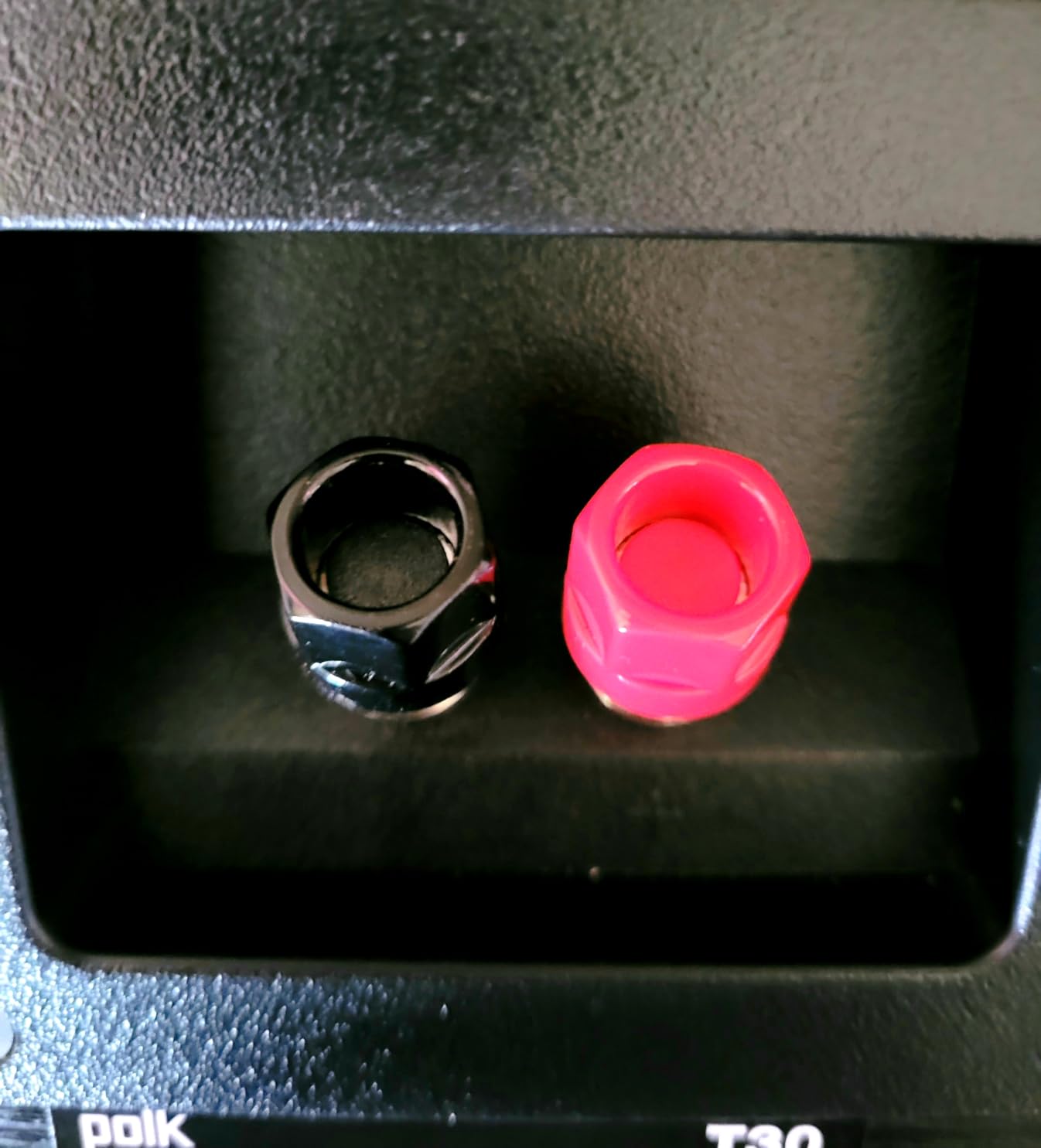
Response extends to 24,000 Hz, so it has no trouble with sibilance-heavy content or the high-frequency detail that makes consonants intelligible. At 19 inches wide, 8.5 inches deep, and 11.5 pounds it needs a real piece of furniture rather than a narrow shelf, so measure before you commit.
Impedance is 6 ohm, which loads an entry-level receiver harder than an 8-ohm design. It is not a dealbreaker with any modern AVR, but it is one of the reasons to leave some amplifier headroom rather than running your receiver at its limit.
Why soft dome wins for long listening
A silk dome tweeter rolls off gently rather than sharply, which means no edge on sibilant consonants. For a speaker whose entire job is voices, listened to for hours at low levels, that smoothness is a genuine feature rather than a compromise.
Matched to the T-Series it also inherits a voicing that shares the front speakers, so a pan of dialogue across the screen never jumps in level or character as it moves. That continuity is what makes an action sequence easy to follow.
Where it falls short
Six ohm is the practical drawback, and the sound is a little brighter than a horn-loaded design according to owners, so a small treble cut in center-only mode sometimes helps. It also still delegates deep effects to a subwoofer despite the rear port.
If you want a center that is physically small and effectively invisible, the Yamaha NS-C210BL is the better shape, and if you want genuine midrange authority at higher levels, the RP-504C is built for it.
4. Klipsch R-25C – Best Compact Reference Center
Klipsch Reference R-25C Reference Two-Way Center Channel Speaker, 400W Peak Power
Reference series two-way
400W peak power
Tractrix horn tweeter
18.75 inch wide
Pros
- Horn-loaded tweeter renders very forward intelligible dialogue
- Two-way design keeps the midrange simple and consistent
- Compact 18.75 inch footprint suits most shelves
- Strong value in the Reference line
Cons
- Detailed crossover and sensitivity figures are not published
- No deep bass without a subwoofer
- Horn voicing can read bright without room correction
The R-25C is the Reference-series counterpart to the R-52C and follows the same recipe: two-way design, Tractrix horn-loaded tweeter, and a compact footprint. Owners treat it as a dependable center that makes dialogue immediate and easy to follow, with the usual caveat about brightness.
Because it is a two-way design, the midrange below the tweeter crossover is handled by a single pair of drivers. That simple topology is exactly what the 3-way debate comes down to, and it means fewer crossover points sitting inside the region where a lot of voice energy lives.
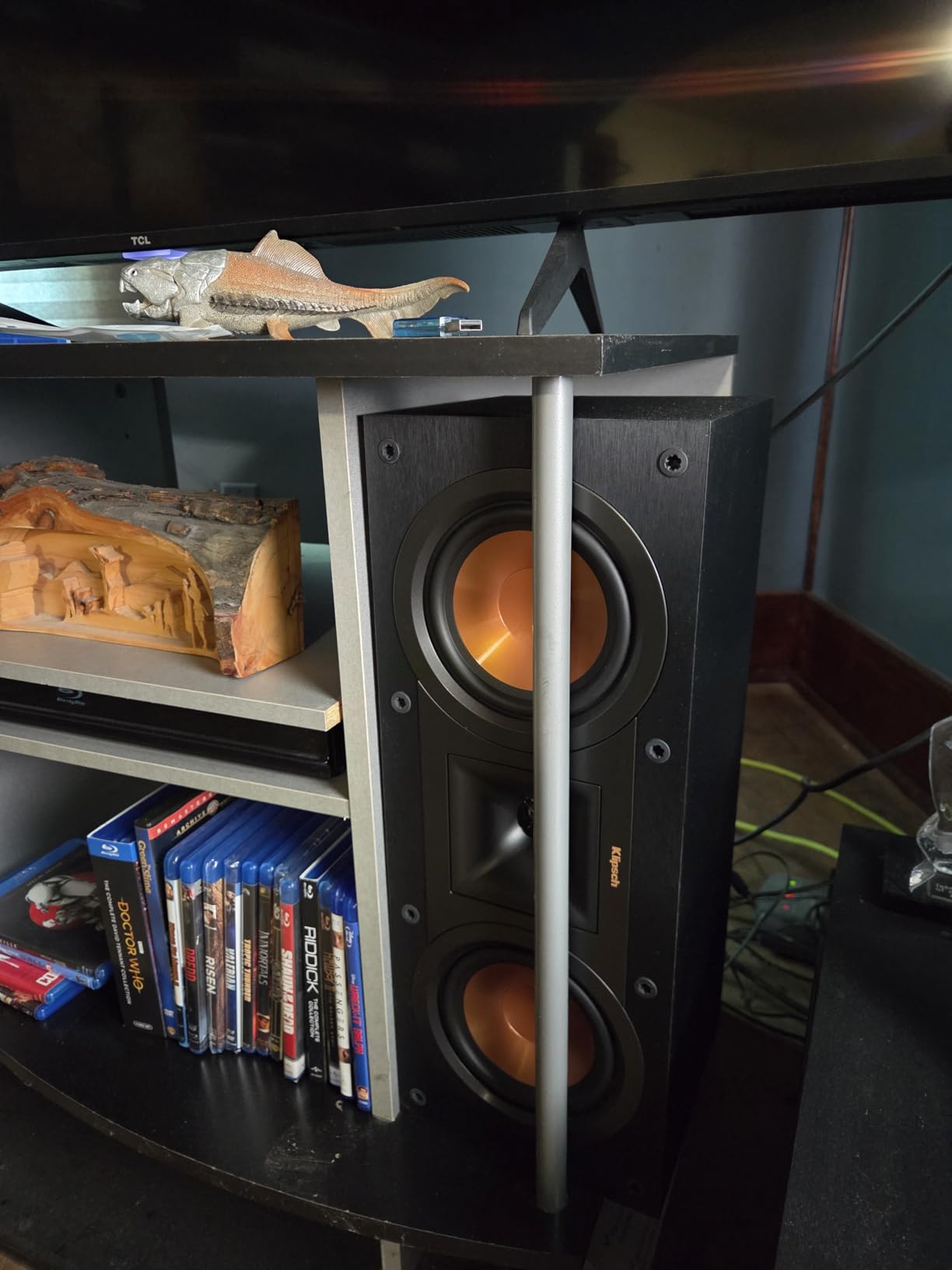
At 18.75 inches wide, 7.25 inches tall, and 14.8 pounds it fits most stands and shelves, which is a real difference from the 31-inch reference cabinet we look at later. Rated power handling is 400 watts peak, plenty for normal home theater use.
One honest caveat: the listing data for this model does not publish sensitivity or detailed crossover figures, so it is harder to predict headroom than with the R-52C. Ask your dealer for those numbers if reference-level playback at high volume is your goal.

Two-way or 3-way for dialogue
Three-way designs add a dedicated midrange driver so the critical vocal band is never shared with drivers working hard on bass. Supporters on the Klipsch community forum and AVS Forum argue this improves clarity, and the SVS Prime Center later in this list is the cleanest 3-way example here.
The counterargument is real too. A well-executed two-way center with a controlled horn has fewer drivers in the vocal band and a simpler signal path, and in most rooms the difference is small enough that placement and correction matter more.
Where it is the right pick
Choose it when you want Klipsch-style presence and efficiency but need a center that physically fits an ordinary piece of furniture. It is also a natural partner for Reference-series front speakers if you already own them.
Skip it if you need published sensitivity numbers to plan amplifier power, since the manufacturer data for this model does not supply them. In that case the R-52C gives you a documented 95 dB figure to work with.
5. Klipsch RP-504C – Best for Wide Seating in Large Rooms
Klipsch RP-504C Reference Premiere Center Channel Speaker (Ebony)
31.13 inch wide
four Cerametallic woofers
approximately 97dB sensitivity
2.5-way crossover
Pros
- 31 inch baffle keeps dialogue consistent for listeners well off center
- Four Cerametallic woofers plus horn for rich midrange and high efficiency
- Furniture-grade ebony cabinet at nearly 40 pounds
- 90x90 horn with phase plugs for smooth response
Cons
- Very large and heavy for typical shelving
- Treble can sound sibilant without EQ
- 31 inch width demands careful placement
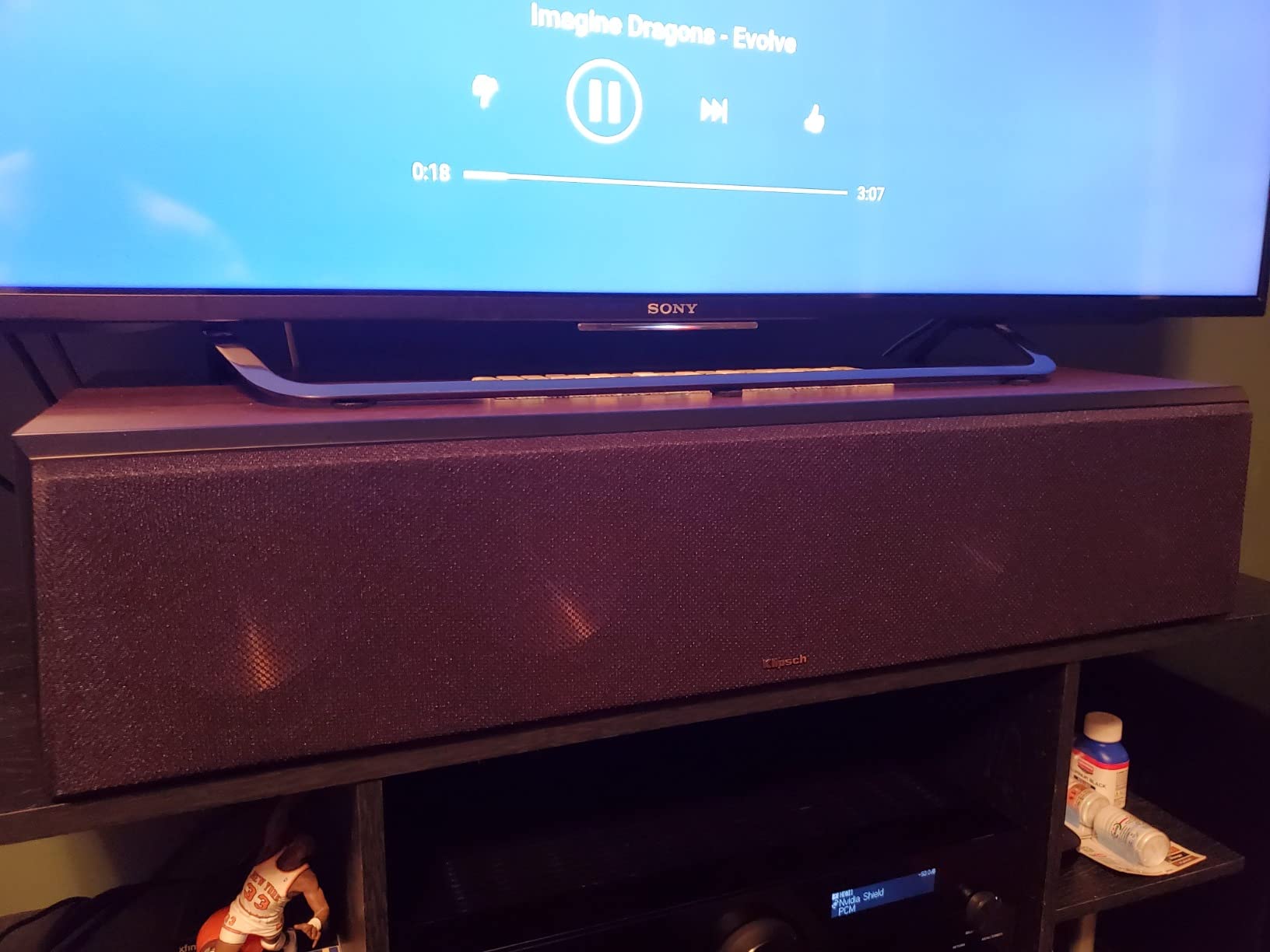
This is the speaker to buy if your seating wraps around the screen or your room is genuinely large. A 31.13-inch baffle with four Cerametallic woofers driven by a 90×90 Tractrix horn produces sound that stays even well away from the center seat, and that consistency is what intelligibility really depends on.
Efficiency is the quiet headline. At approximately 97 dB sensitivity this is among the highest-output designs here, so it reaches loud levels without straining your amplifier, and the midrange has real authority rather than the thin quality that appears when a small speaker is pushed.
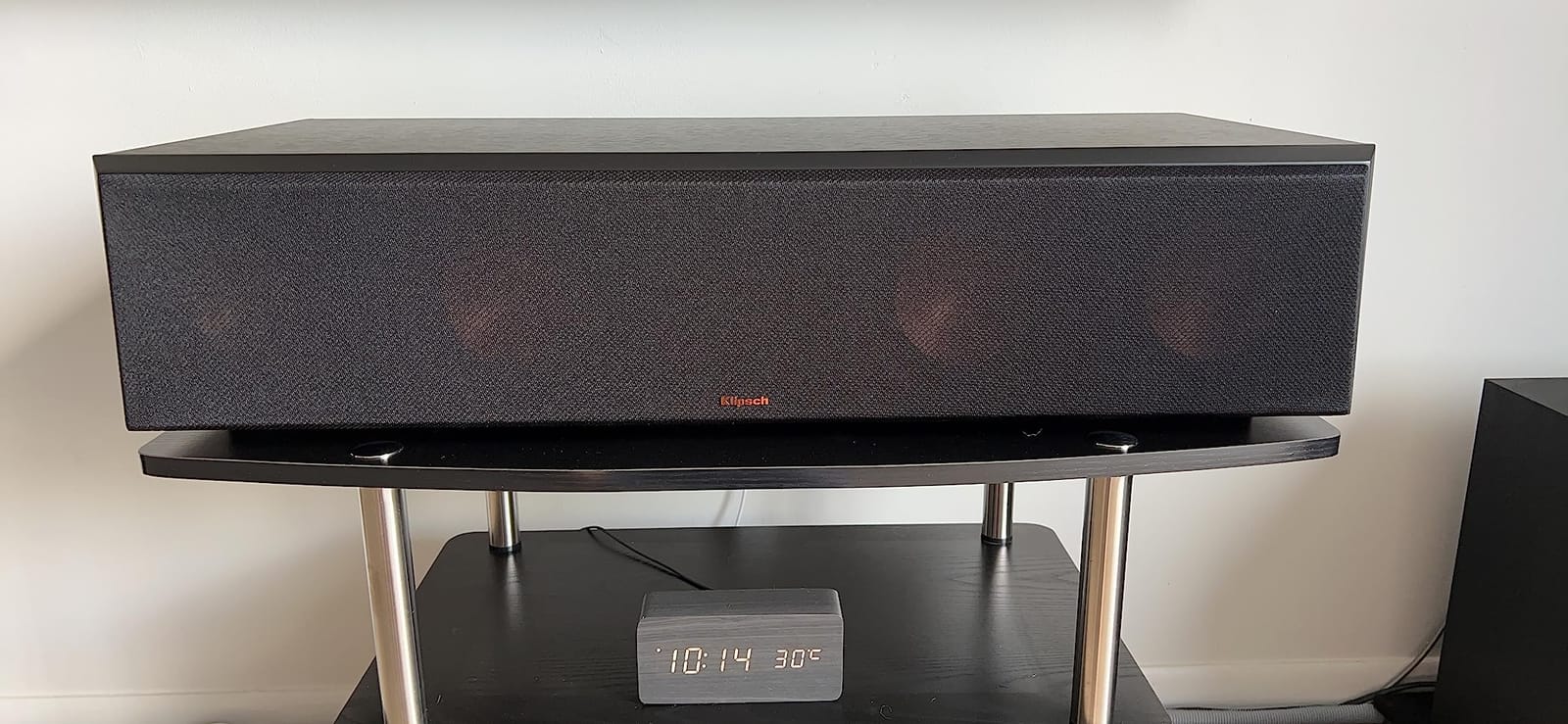
Computer-modeled phase plugs on the horn smooth the response around the crossover, and the vented titanium dome tweeter with Linear Travel Suspension handles the top of the voice band cleanly. The two-layer copper-wound voice coils and stamped-steel baskets are built for sustained high output rather than short bursts.
A 2.5-way dual crossover handles the four woofers, and a rear Tractrix port is tuned to the cabinet and drivers for low-distortion airflow. The result is the 90 percent five-star share that owners report, the highest in this group.
What a wide baffle actually fixes
Off-axis response is the reason. Voice intelligibility degrades fast for listeners several feet to the side, so a wide baffle with a controlled horn means the person on the end of the sectional hears the same dialogue as the person in the middle. Most narrower centers concentrate their output in a sweet spot.
The phase plugs matter too. A horn without them tends to produce a peak and dip around the crossover, and that dip often lands inside the vocal presence region, which is exactly the kind of thing listeners describe as slightly hollow dialogue.
Where the size becomes a problem
At 31.13 inches wide, 14.46 inches deep, and 39.7 pounds this will not fit most TV stands, and two people will struggle to lift it. If your furniture is not built for it, the Polk Signature Elite ES35 solves the same placement problem in a much smaller box.
Treble is boosted and can read as sibilant in reflective rooms without correction, so budget time for an EQ pass. A capable amplifier also helps you get the full benefit of an efficiency this high.
6. Polk Audio Signature Elite ES35 – Best for Wall Mounting Under a TV
Polk Audio Signature Elite ES35 Slim Center Channel Speaker, Stunning Black
Six 3 inch woofers
1 inch Terylene tweeter
7.5 inch tall
4 and 8 ohm compatible
Pros
- Slim cabinet wall-mounts below most TVs without blocking the IR sensor
- Six 3 inch drivers give a wide even soundfield across seating
- Power Port delivers clean low bass from a slim box
- Can double as front left and right surrounds
- Works with modern Dolby Atmos receivers
Cons
- Multiple small drivers need a well-treated room
- Some owners find the sound forward or bright
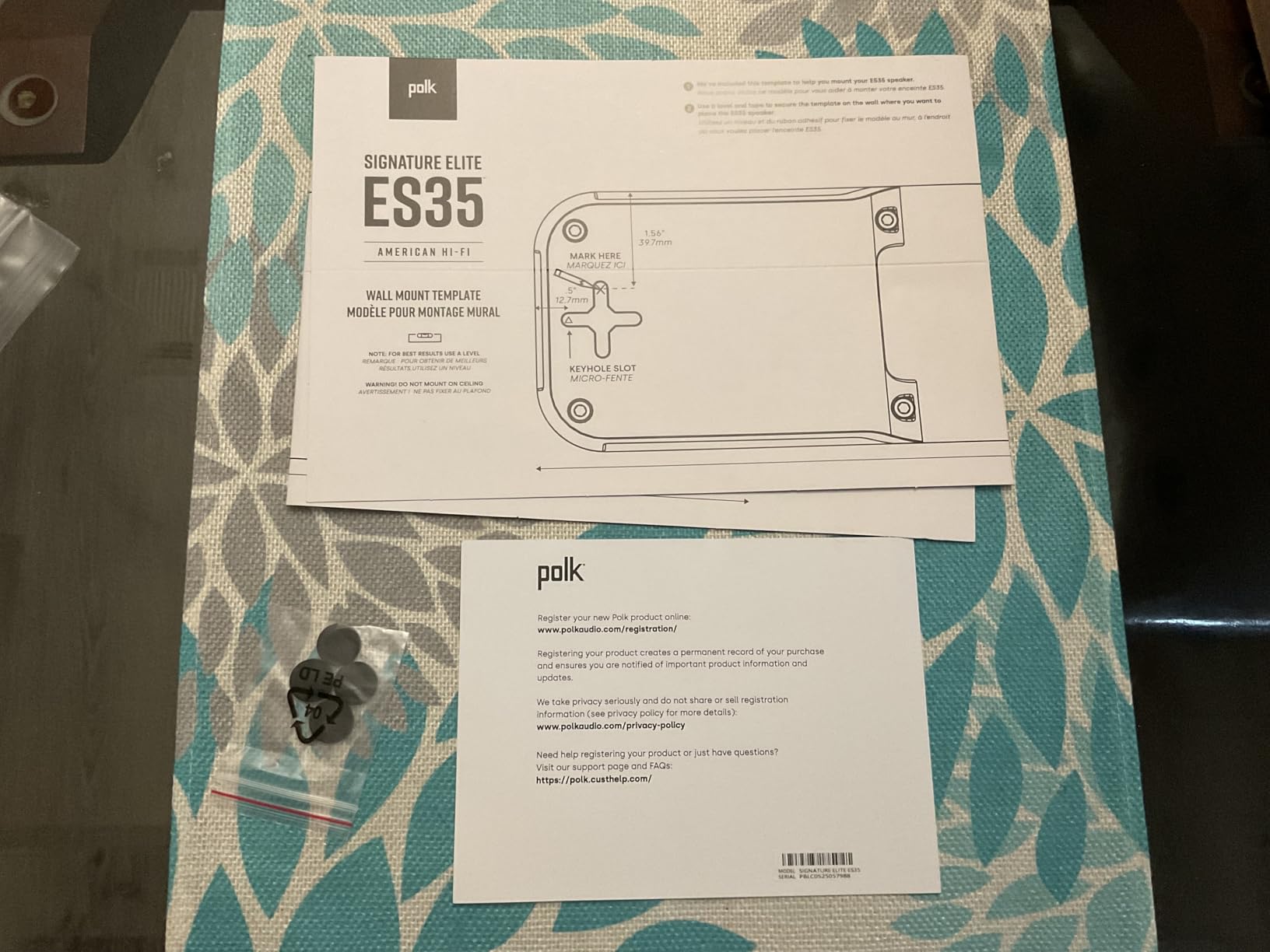
The ES35 solves the most common physical complaint we hear, which is that a good center does not fit beneath a large television. At 7.5 inches tall and 20 inches wide it mounts on a wall or sits on a shelf without blocking the screen or the IR sensor, and it is the only design here shaped specifically for that job.
Six 3-inch woofers under a 1-inch Terylene dome tweeter, driven by cascading crossovers, spread energy across a wide area rather than concentrating it. Owners report dialogue staying clear across the entire seating area, which is precisely the effect you want with a wide sofa.
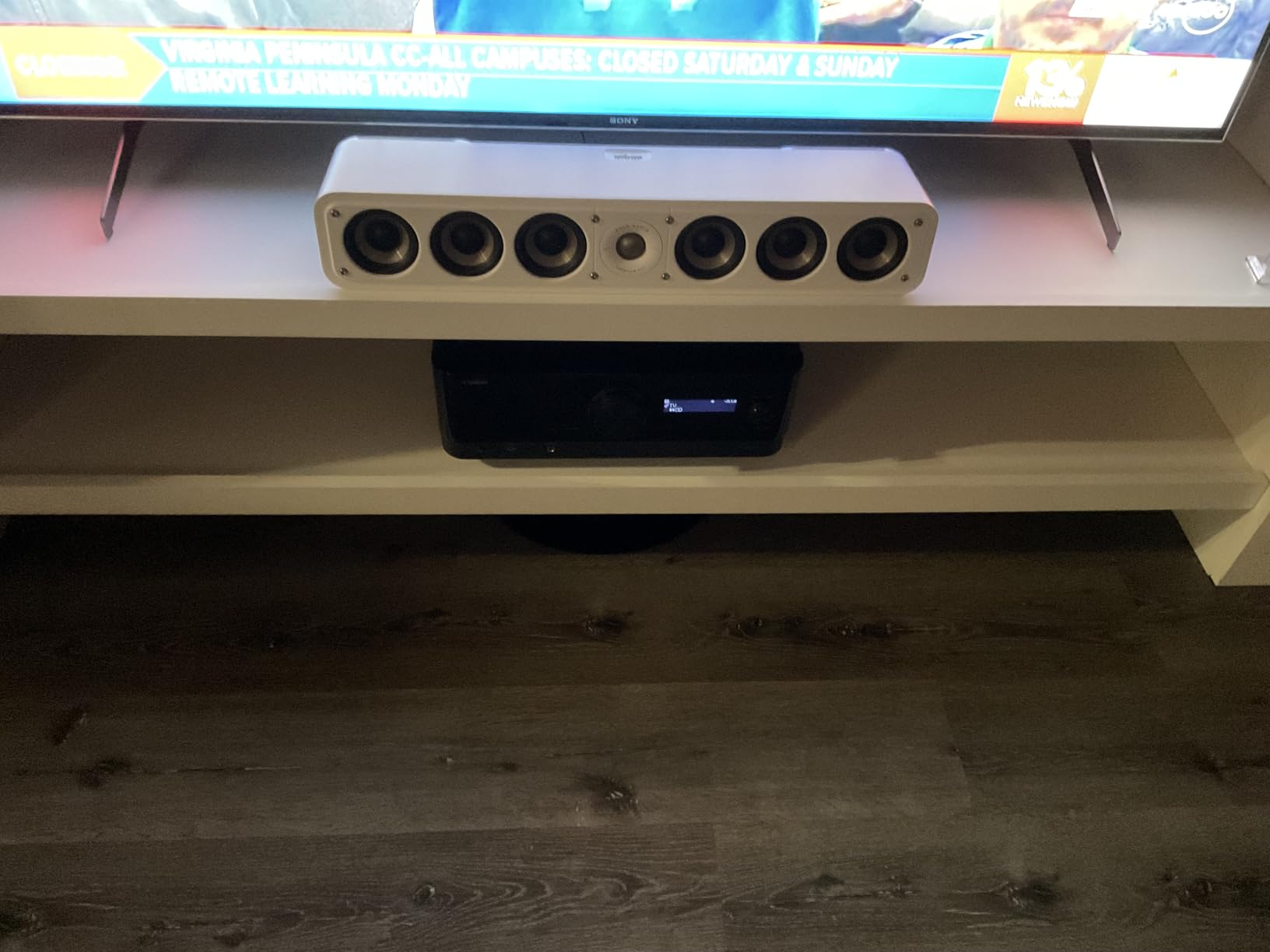
Patented Power Port technology is doing something unusual in a cabinet this thin, giving usable low output for voice content without a subwoofer. The speaker is also compatible with both 4 and 8 ohm receivers, which makes it forgiving on older and entry-level amplifiers.
It is rated 150 watts and works well with modern Dolby Atmos and DTS:X receivers. A nice bonus for anyone building a full Signature Elite system is that the same speaker can serve as the front left and right pair in a compact setup.
Why the slim profile helps dialogue
Placement beats specifications more often than buyers expect. A speaker you can actually put at ear level directly under the screen, free of cabinet resonance and blocked by nothing, will out-perform a better speaker crammed into a shelf. The slim cabinet makes the correct placement achievable.
Multiple small drivers also mean each one moves less air for the same output, which reduces distortion in the vocal band. Driven by cascading crossovers, the array behaves like one coherent source rather than six separate voices.
Where it needs care
Several owners find the presentation slightly forward compared with warmer designs, so a small high-end adjustment helps in a reflective room. The driver count also means the speaker benefits more than most from a treated space and correct calibration.
Watch the reviews for expectation setting on fit and finish, since a small minority report issues that a slim profile simply cannot hide. For pure dialogue in a very large room, the RP-504C still has more output authority.
7. Yamaha NS-C210BL – Best Discreet Center for Small Rooms
Yamaha Audio NS-C210BL Center Channel Speaker – Each (Black)
2-way bass reflex
7/8 inch balanced dome tweeter
light aluminum cones
4.4 pounds
Pros
- Compact 13.4 inch wide and 4.4 pounds
- Aluminum cone woofers give fast transient response for consonants
- Balanced natural voicing rather than aggressive horn brightness
- Piano Black finish suits modern flat panels
- Includes 4m of speaker cable
Cons
- Only 80W maximum output limits large-room use
- 6 ohm impedance and modest handling limit headroom
- 2 year warranty is the shortest in this group
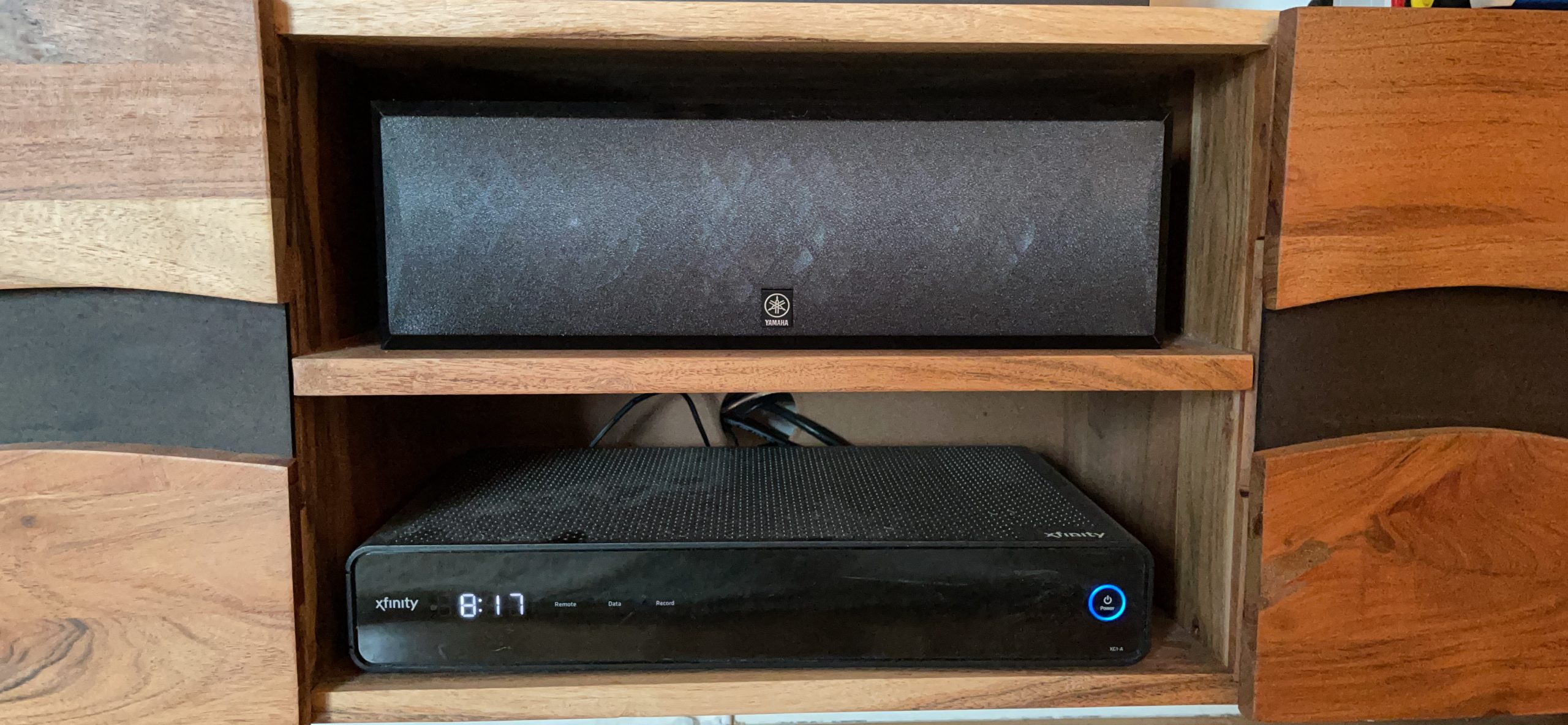
In an apartment or a small living room, the Yamaha NS-C210BL is arguably the most complete answer. It weighs 4.4 pounds, measures 13.4 inches wide and 4.2 inches tall, and ships with four meters of cable, so the whole job takes one box and one wire run.
The light aluminum cone woofers deliver fast transient response, which is a genuine advantage for speech. Consonants are short, sharp events, and a driver with low inertia reproduces them with less smearing than a heavier cone, keeping words distinct even at low volume.
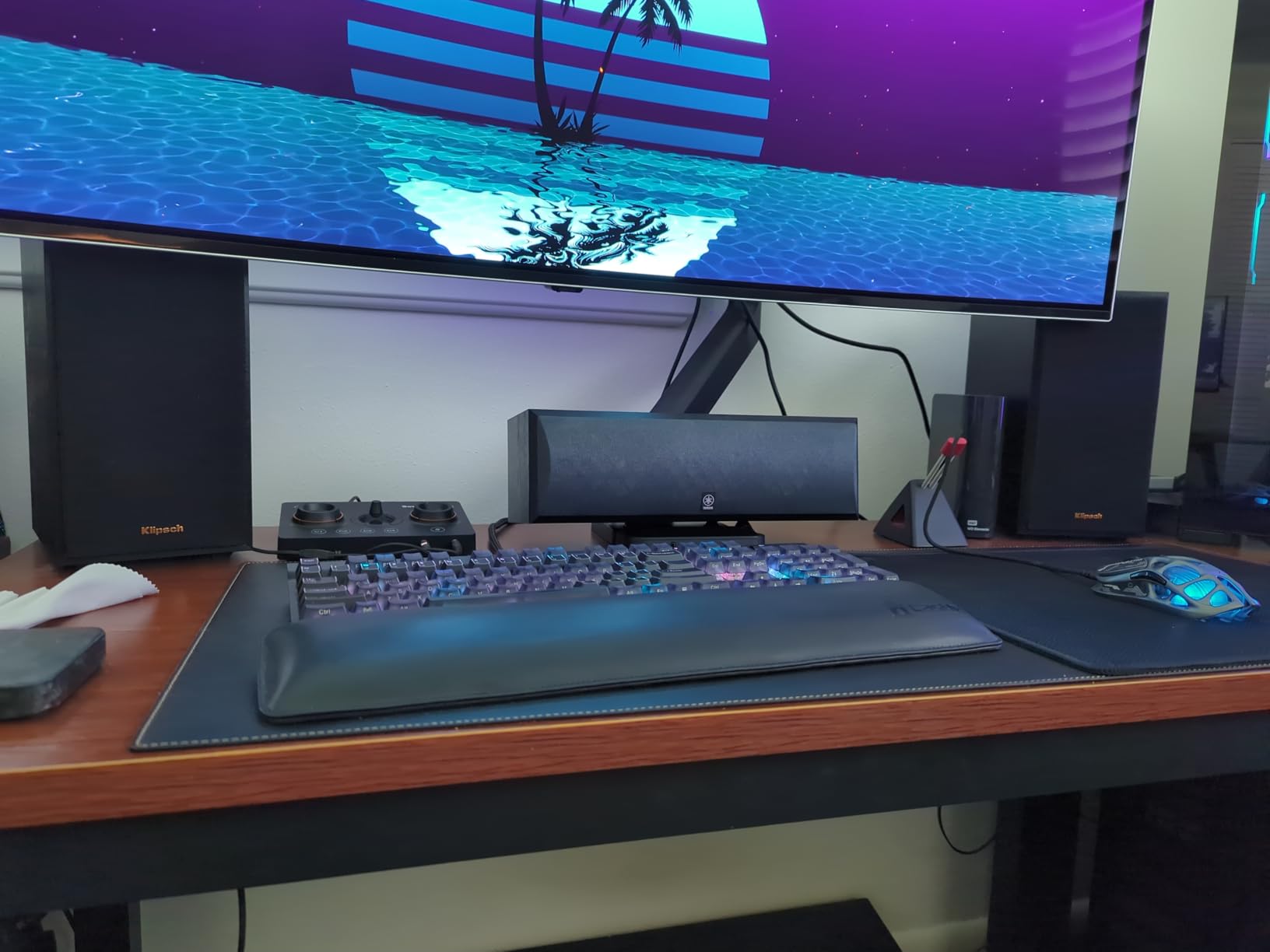
The 7/8-inch balanced dome tweeter and 2-way bass-reflex layout give a natural, balanced voicing rather than the forward character of a horn-loaded design, so it plays long dialogue sessions without fatigue. The piano black finish is designed to disappear against a modern flat-panel television.
Two honest limits: maximum output is 80 watts, and impedance is 6 ohm. Together those cap how hard you can push it, which is fine in a small room and clearly audible as a limit in anything larger.
Where it fits a real apartment
Wall or tabletop mounting is straightforward, and the cabinet is short enough for most TV stands that were not designed for speakers. The included cable removes the most common excuse for not connecting it at all, which is the fastest way to hear the difference against television speakers.
It also pairs naturally with the same brand’s receivers and NS-B series surrounds, and Yamaha is a common choice for buyers assembling their first surround system rather than matching an existing speaker line.
Where the limits show
Output, not clarity, is the ceiling here. When a film has a wide, dense front soundstage, an 80-watt center runs out of headroom before the rest of the system does, and voices lose to effects rather than the other way around.
The 2-year warranty is also the shortest here, which is worth weighing if you expect to keep this speaker for a decade. For those who want the same footprint with more authority, the Polk TL1 handles a similar space with larger drivers.
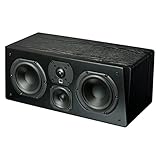
8. SVS Prime Center – Best True 3-Way for Dialogue
SVS Prime Center Speaker – Premium Black Ash
True 3-way crossover
1 inch aluminum dome tweeter
two 5.25 inch woofers
20 pounds
Pros
- Only true 3-way design in this group with a driver dedicated to the midrange
- Wide dispersion beyond 90 degrees keeps voices intelligible off-center
- Owners report clearer dialogue and more distinct voices
- Handles high volume without strain in larger rooms
- Warm tuning compared with horn-loaded centers
Cons
- Bright out of the box for some listeners
- Can sound narrow compared with a stereo pair
- 20 pound weight and 23 inch width need a deep cabinet
- Rear ports make wall placement awkward
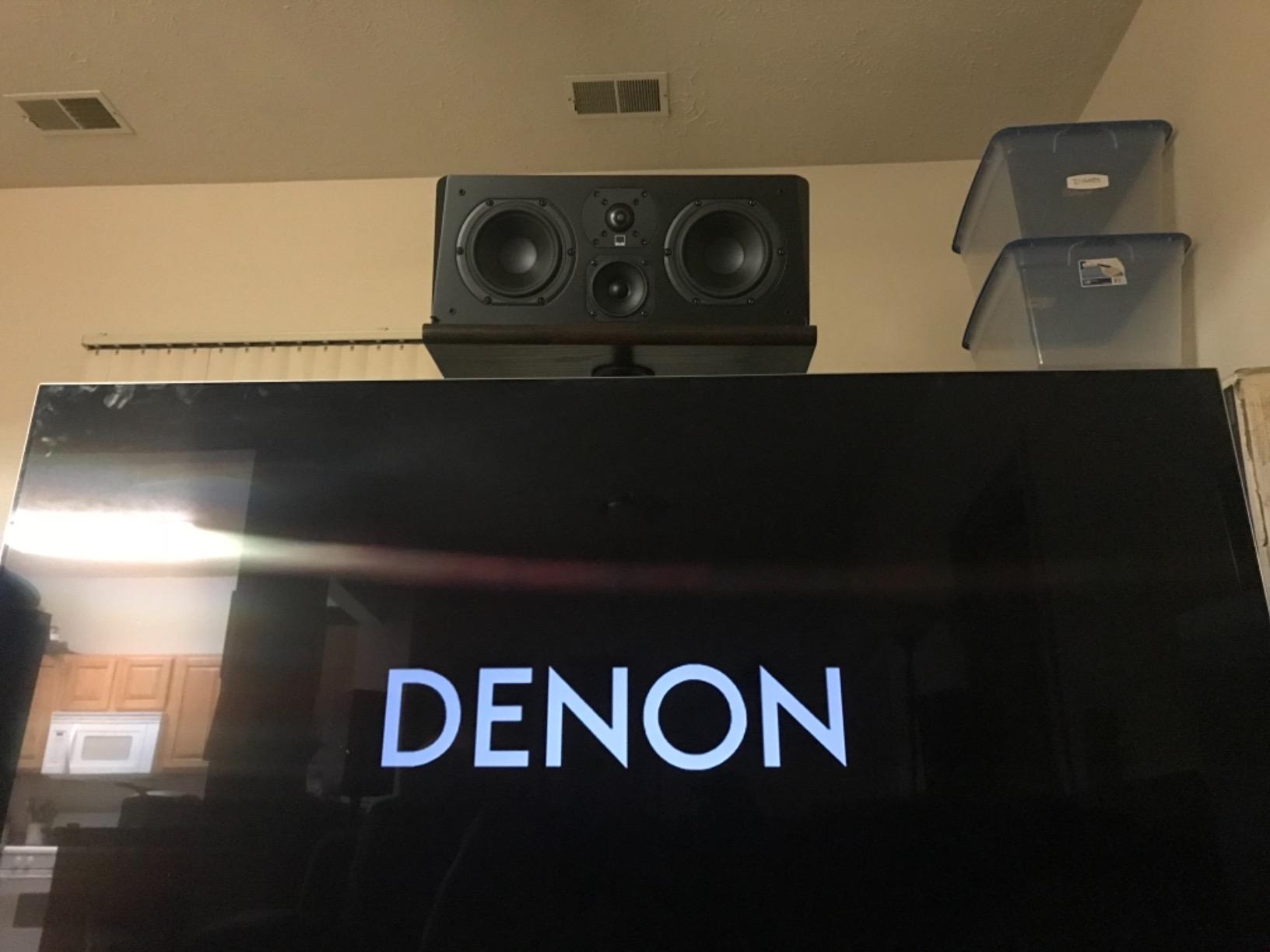
The 3-way argument dominates the enthusiast forums, and this is the cleanest example of it in our group. A true 3-way crossover with SVS SoundMatch topology gives each driver a single job, so a dedicated midrange driver handles the vocal band without bass loading pulling it off target.
On the Klipsch community forum and AVS Forum, members repeatedly credit that design with better dialogue than two-way alternatives, and the reasoning is simple. A 2-way design has one crossover sitting inside the region where voices live, and that crossover is exactly where phase problems show up as a slightly hollow or boxy sound.
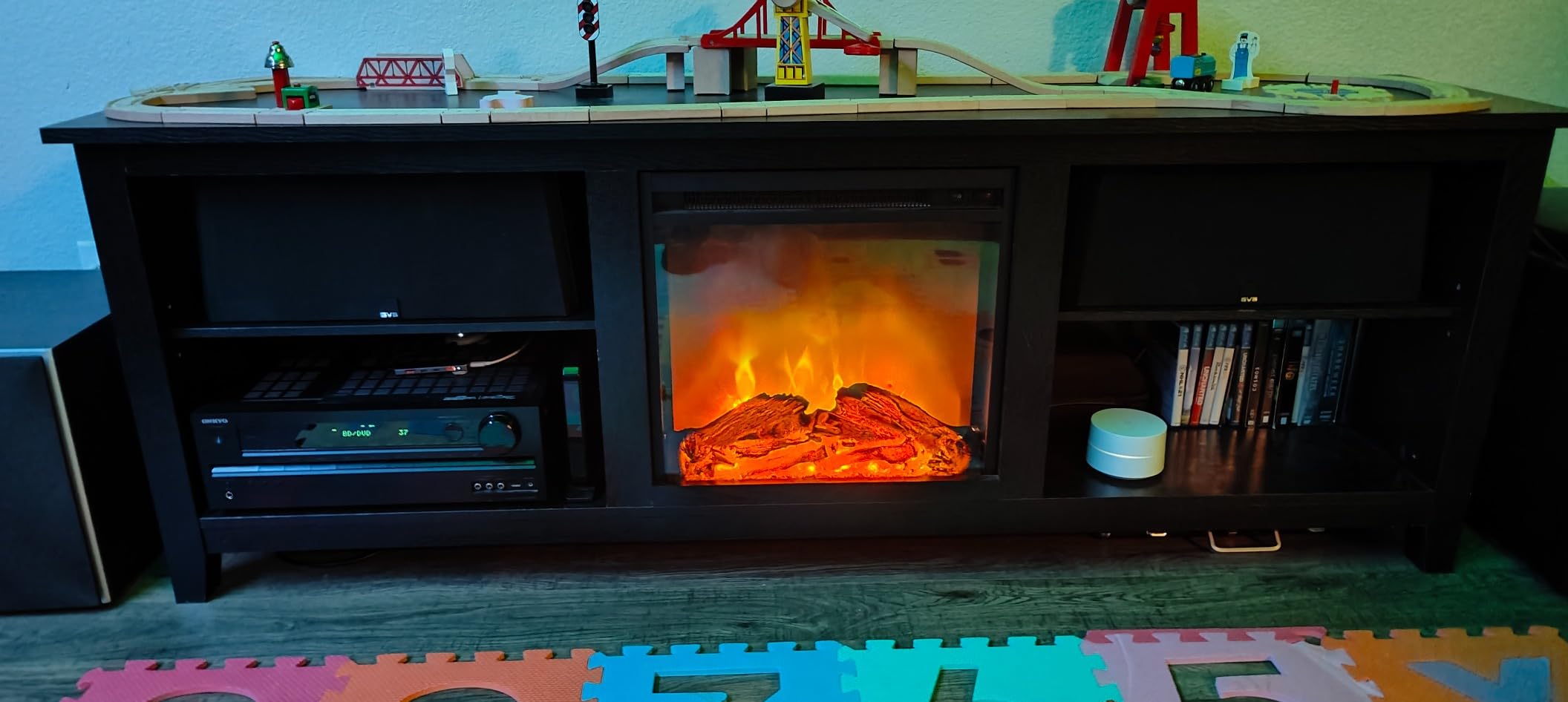
Two 5.25-inch woofers on cast ABS-fiberglass composite baskets use a light, rigid cone material, and the 1-inch aluminum dome tweeter handles the top end. Wide dispersion beyond 90 degrees keeps voices intelligible from off-center seats, which owners consistently single out as the biggest practical gain.
Power handling is 200 watts with high sensitivity, so it drives easily at high volume. The trade is size: 23 inches wide, 12 inches deep, and 20 pounds, with a rear-ported cabinet that rules out flush wall mounting.
Why 3-way designs suit dialogue
Each driver gets a narrower band, so the midrange driver never has to reproduce deep bass excursions while handling a voice. That is why the design sounds more stable at high volume, and why it stays composed in a large room where smaller two-way designs start to compress.
The dedicated midrange also keeps the vocal band free of the crossover point, which is the mechanism behind most of the boxiness complaints we read about budget centers.
Where it is not the answer
The warmth advantage over horn-loaded designs is real, but a minority of owners still find it bright out of the box and apply a small receiver EQ adjustment. It also has the smallest review base in the group at 216 ratings, so long-term ownership reports are thinner here than elsewhere.
Because a single point source under a large television can sound narrow compared with a stereo pair, this is not the choice for very wide seating in a small room. The RP-504C handles that better; the ES35 handles the mounting problem better.
9. Acoustic Audio AA35CB – Simplest Fix for a Missing Center
Acoustic Audio by Goldwood Acoustic Audio AA35CB Indoor Center 3 Way Speaker 400 Watts Black Bookshelf, 3-Inch
Dual 3 inch polypropylene woofers
1 inch soft dome tweeter
70Hz to 20kHz at 92dB
3 pounds
Pros
- Among the least expensive dedicated center speakers available
- Very compact at 9.6 inches wide and 3 pounds
- Spring-clip wiring makes hookup almost instant
- Owners call it an acceptable clear-sounding stopgap in small rooms
- Lifetime warranty against manufacturer defects
Cons
- Weakest dialogue clarity in the group with thin or honky voices at volume
- Lightweight plastic cabinet is not acoustically inert
- 70Hz limit means no usable bass without a subwoofer
- 4.4 average rating is the lowest here
Sometimes the goal is not the best speaker but simply having a center channel at all. If your receiver has a center output and nothing is connected to it, the AA35CB fills that gap for a small outlay and takes minutes to install with spring-loaded raw wire connectors.
It is a conventional passive bookshelf design with dual 3-inch polypropylene woofers and a 1-inch soft dome tweeter, rated 70 Hz to 20 kHz at 92 dB and 8 ohm. At 9.6 inches wide and 3 pounds it is the easiest speaker here to hide, and the sealed ABS cabinet keeps it self-contained.
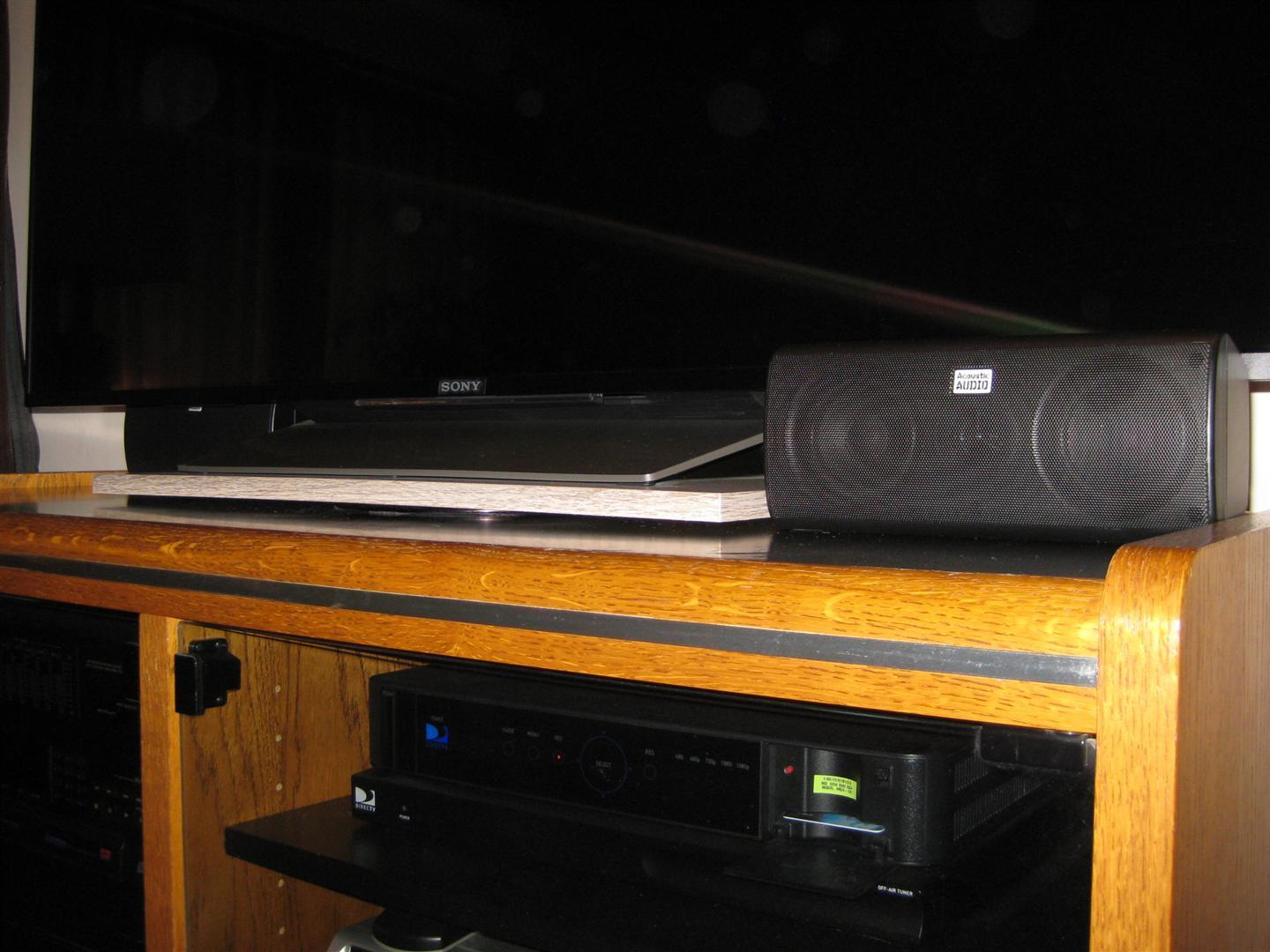
Recommended amplifier power runs from 20 to 200 watts per channel, so it will work with almost anything, and CL3 or raw speaker wire both work at the terminals. The lifetime warranty against manufacturer defects removes most of the risk of buying a very inexpensive passive speaker.
What you give up is clarity, which is the entire point of this article. It carries 4.4 stars with 13 percent of reviews at three stars, the weakest satisfaction in the group, and owners describe it as producing volume rather than true voice articulation.
When a stopgap is the right call
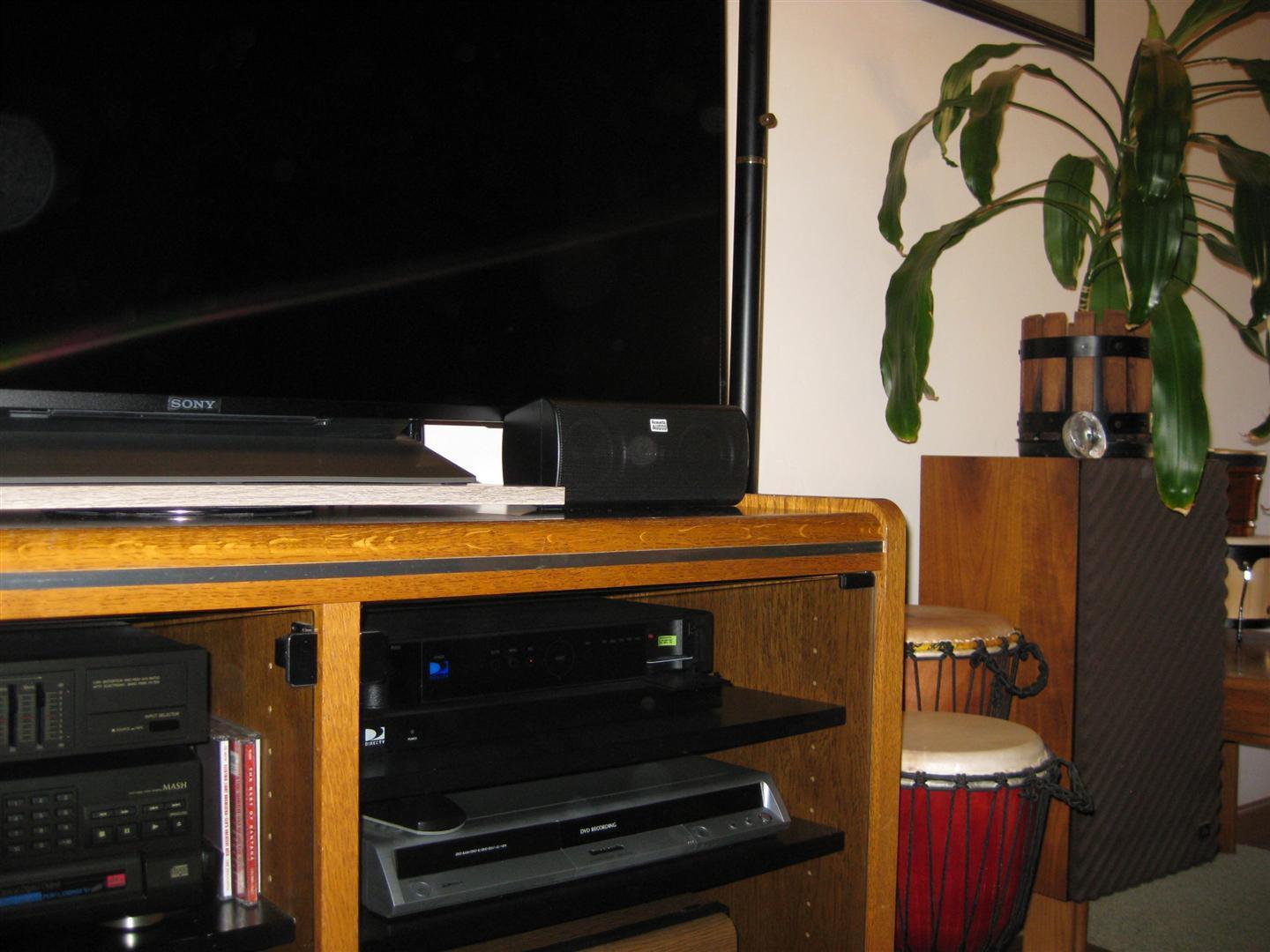
If you are renting, building a first 5.1 system on a strict budget, or you simply want a center that renders voices at all instead of leaving that channel unconnected, this does the job. Several owners describe it as a clear step up from nothing at all.
Because 92 dB sensitivity is lower than the 95 dB and 97 dB designs elsewhere, level-matching matters. Take the time to calibrate so it does not sit behind your front speakers in the mix.
Where it costs you clarity
The thin, lightweight plastic cabinet is not acoustically inert, and at higher volumes voices tend to sound thin or honky rather than clear. The 70 Hz low limit means it contributes no bass, so a subwoofer is mandatory for any real home theater effect.
Our advice is to treat it as a placeholder and upgrade once you can. The Polk TL1 is a modest step up in driver size and weight, and the Klipsch R-52C is the sensible long-term answer if you want speech to stay effortless at volume.
10. Saiyin 17-Inch Slim Center – Best for a First 5.1 System
Saiyin 17″ Slim Center Channel Speaker Dual 3.5inch Woofers
Horn tweeter
dual 3.5 inch woofers
8 ohm
90W
17 inch wide
Pros
- Horn tweeter and dual 3.5 inch woofers give clear non-boxy dialogue
- Slim 5 inch tall cabinet mounts on a wall or shelf easily
- Owners report needing less volume than with TV speakers
- Port foam plugs let you trade bass for vocal focus
- Spring-clip wiring keeps setup simple
Cons
- Limited headroom when driven hard
- 1 year warranty is the shortest here
- Bass is modest so a subwoofer is still needed
This is the newest addition to our list and the least reviewed, with 131 ratings, so treat the ownership data as thinner than the others. What the reviews do support is vocal clarity for the money: multiple owners say they can follow dialogue at a lower volume than they needed with television speakers.
A horn tweeter handling the high frequencies gives the consonants the crispness that makes speech intelligible, while dual 3.5-inch woofers add enough midrange weight that voices do not sound thin. At 17 inches wide and 5 inches tall it is straightforward to wall-mount or set on a shelf.
The detail we liked most is the included port foam plugs. Blocking or stuffing the ports trades low output for more vocal focus, which is a one-step version of the 200 Hz fix that costs nothing and needs no receiver menu diving.
It is 8 ohm with 90 watts maximum output, and the wood-finish cabinet looks more considered than the price suggests. Connection is by spring-clip terminals, so wiring takes a couple of minutes.
What the port plugs tell you
Giving the manufacturer a plug that reduces bass in a dialogue speaker is a straightforward admission that many listeners want vocal clarity over low output. Owners who use them report tighter, less boxy voices, which is the single most common complaint we read about budget centers.
On a larger receiver you can do the same thing properly with EQ, cutting a few dB near 200 Hz. That is a better fix, but the plug shows the same principle with no menu and no measurement.
Where it is not enough
Headroom is the limit. It holds up well at moderate levels and comes apart when pushed hard, so it suits a small room and an entry receiver rather than a dedicated theater with a powerful amp.
The 1-year warranty is the shortest here, and there are isolated reports of units arriving with damage under the grille, so inspect the box carefully. If your system will grow, the Polk T30 or the Klipsch R-52C is a better foundation to build on.
If you are still working out whether a soundbar or a wired system suits your room, our broader center channel guide for movies covers the setup side in more detail.
How to Match a Center Channel to Your Front Speakers
Match the series, not the badge. A center from the same model line as your front speakers shares voicing, crossover design, and driver material, so the front stage stays coherent as dialogue moves across the screen. The Polk T30 is explicitly timbre matched to the T-Series, and the Yamaha NS-C210BL suits Yamaha NS-B surrounds for the same reason.
Where you cannot match the series, match the character. A soft-dome center next to horn-loaded fronts will sound noticeably different, and so will a bright center beside warm speakers. This is why so many buyers on AVS Forum pair a center from a related line rather than an unrelated one.
Then accept the trade-off honestly. Forum consensus is close to unanimous that a mismatched center you can understand beats a matched one you cannot. Owners describe matched centers that render dialogue poorly, and the practical advice is to audition rather than trust the badge on the box.
Never match center level by ear alone. Use your receiver’s calibration routine and check the result with a familiar dialogue-heavy film at a normal viewing volume, because the quietest scene in a movie is the real test of whether you can follow it.
Placement and Setup for Maximum Dialogue Clarity
Most muffled dialogue is a setup problem, not a shopping problem. Work through this list before buying anything, because each step is free.
1. Position. Put the center directly below or above the screen, centered on it. If your television sits on a stand, pull the center forward to the front edge so the cabinet is not acting as a baffle.
2. Height. Aim the tweeter at ear height when seated. The widely used 83% rule puts the tweeter at roughly 83 percent of screen height measured from the floor, which on a large display usually lands close to seated ear level.
3. Toe-in. Angling the center slightly toward the seating area tightens the image and helps off-center listeners, though wide-dispersion designs need very little of it.
4. Clear the cabinet. A center inside a closed media unit gets boomy in the 200-400 Hz region. That is the most common source of the boxy voice people complain about.
5. Crossover and LFE. Set the center crossover between 60 and 80 Hz, send LFE to your subwoofer only, and make sure a center with its own port is not double-bassed against the sub.
6. Run room correction. Audyssey, YPAO, or Dirac Live will level-match the center to your front speakers. Without it a slightly quieter center reads as unintelligible even when nothing is technically wrong.
7. Cut the mud. The most-cited remedy on forums is a reduction of a few dB around 200 Hz, or as close as your receiver’s filters allow, applied to the center only. This is the change most likely to make voices click into focus.
8. Use the dialogue DSP. Most modern receivers include a dialogue-enhancement mode that lifts the vocal channel, and the usual answer to which sound mode is best for dialogue is whichever one lifts the center without raising the rest.
Finally, remember that dialogue also lives on the front left and right channels. If voices still sit ambiguously after all of the above, the issue is placement and level on the front pair rather than the center you just spent money on.
Frequently Asked Questions
Which center channel speaker is best for dialogue clarity?
The Klipsch R-52C is our pick for dialogue clarity overall. Its 95 dB sensitivity gives receivers the headroom to reach reference level, dual 5.25-inch spun-copper woofers cover the 200 Hz to 2 kHz vocal region cleanly, and the 90×90 Tractrix horn controls directivity so speech stays even for listeners off the center seat. The Klipsch RP-504C is the stronger option for large rooms and wide seating, and the Polk T30 is the best value if you already own Polk T-Series speakers.
Why is dialogue hard to hear in my surround sound system?
The usual causes are a low-sensitivity center that cannot reach reference level, a center sitting inside a cabinet where low midrange energy piles up, an uncalibrated level mismatch against your front speakers, and dialogue that is mixed partly to the front left and right channels rather than the center. Check placement, run room correction, apply a few dB cut near 200 Hz, and confirm the center is not being masked by louder effects.
Why does my center channel speaker sound muffled?
A muffled or boxy center is usually a low midrange problem. Energy between roughly 200 and 400 Hz accumulates when the speaker is close to a wall or inside a closed cabinet, which smears the consonants that carry speech intelligibility. Pull the speaker out to the front edge, keep it out of furniture, and cut a few dB near 200 Hz on the center channel only.
What is the best height to mount a center channel speaker?
Aim the tweeter at seated ear height. The 83% rule is a useful shortcut: place the tweeter at roughly 83 percent of the screen height measured from the floor, which on most large televisions puts it close to a seated listener’s ears. If your screen sits on a stand, angle the speaker upward slightly rather than burying it at the back of the cabinet.
Can I use a center channel speaker alone?
You can, and in a small room it makes a large difference to intelligibility. What it will not do is pull dialogue mixed to the front left and right channels to the middle of the screen, so effects and off-screen voices stay where the mix puts them. Most builders get better results by treating the center as one part of a matched front stage rather than a standalone speaker.
Do I need a center channel speaker for music?
Not for music, which is why a center is purely a home theater purchase. In stereo playback your front left and right speakers handle the soundstage, and a center is either switched off or carries the vocals. One of these designs also works well as a stereo pair if you want a compact two-channel system, which is a use the Polk Signature Elite ES35 is often recommended for.
The Verdict on Center Channel Speakers for Dialogue Clarity
For most people the Klipsch R-52C is the best center channel speaker for dialogue clarity in 2026: high sensitivity, a controlled horn that keeps speech consistent across the seating area, and enough owner history to trust the result. Buy the Polk T30 if you already run Polk T-Series speakers, the Polk ES35 if the cabinet has to stay slim, and the RP-504C if your room is large.
Before any of them, run your room correction and cut a few dB near 200 Hz. That ten-minute job fixes more muffled dialogue than most upgrades do, and it tells you honestly whether you still need new hardware.