
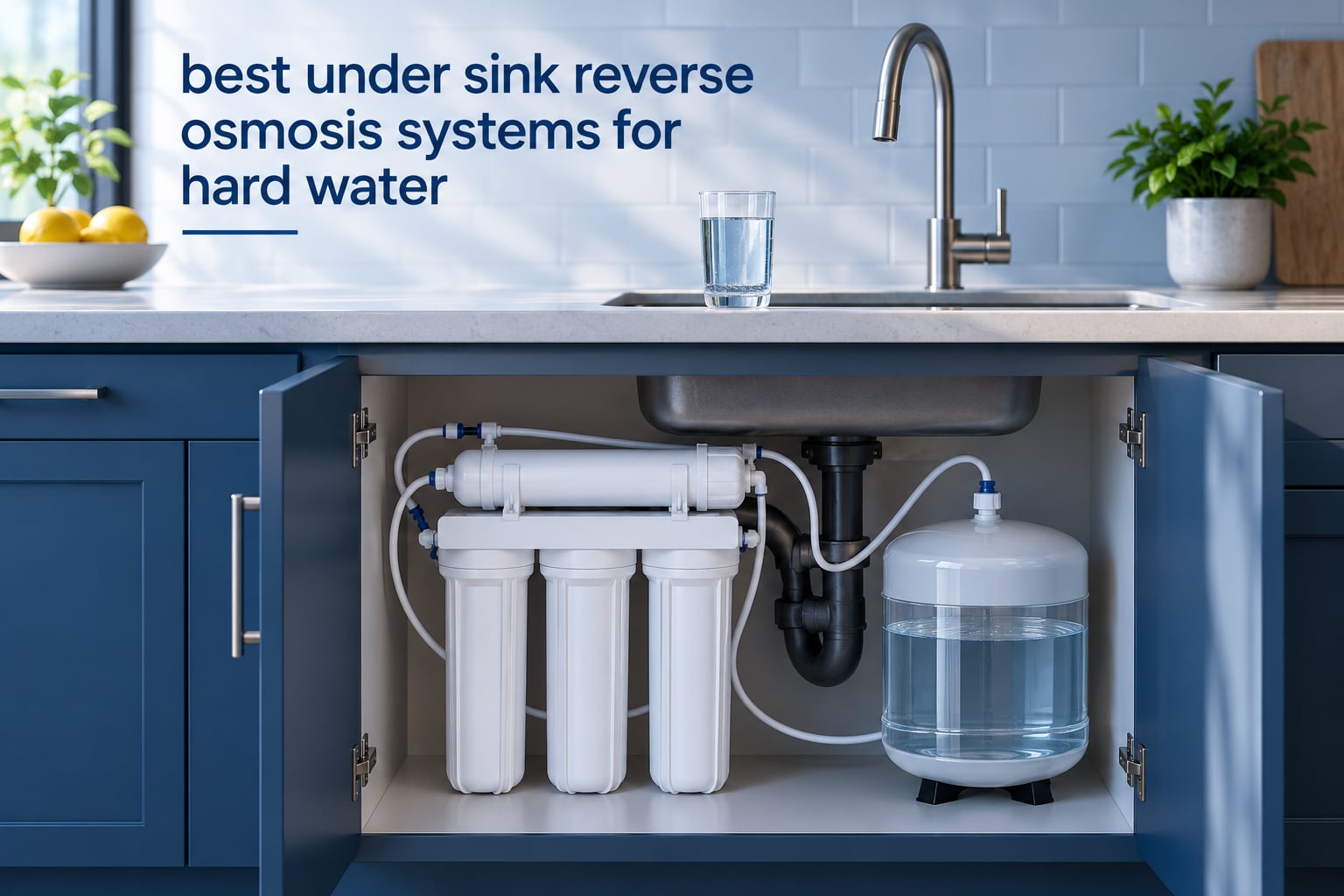
If you have hard water, the phrase best under sink reverse osmosis systems for hard water means something narrower than it sounds. Most RO systems sold online are built for soft municipal water, and on hard water they lose flow, scale up at the faucet, and burn through membranes faster than their rated interval suggests. We looked at ten under-sink systems specifically for their ability to handle hardness: feed TDS ceilings, pressure requirements, recovery ratios, and whether the membrane ever sees softened water.
Our team spent six weeks comparing spec sheets, certifications, and owner feedback across ten units, with hardness as the deciding variable rather than a footnote. The results surprised us. The loudest, most feature-heavy tankless systems are not automatically the right answer on a hard supply, and the highest-rated systems in this group are not always the ones with the hardest-earned review counts.
Before the picks, here is the short version. If your water is above roughly 4 grains per gallon, you want a system with either a booster pump, a high feed TDS rating, or both. If it is above 10 GPG, you want a softener upstream of the membrane more than you want any particular brand. Everything below is built around that logic.
Table of Contents
Can You Use a Reverse Osmosis System With Hard Water?
Yes, you can use a reverse osmosis system with hard water, but hardness shortens membrane life and accelerates scale on the faucet, so a system with a booster pump, a high feed TDS rating, or an upstream softener performs far better than a basic budget unit.
Here is what hardness actually does to an under-sink RO system:
- Scale on the membrane. Calcium and carbonate precipitate on the membrane surface, cutting flow rate and rejection before the membrane reaches its rated life.
- Scale on the faucet and aerator. The dedicated RO faucet sits at the end of the hardest water in your house, so white crust shows up there first.
- Falling efficiency. As scale builds, the pure-to-waste ratio worsens and you send more water to the drain for every gallon you drink.
- Shorter filter intervals. Sediment and carbon pre-filters load faster when the feed water carries more dissolved mineral.
Long-term owners on r/WaterTreatment describe exactly this pattern: the system works, then slowly produces less water, then the taste changes as the membrane fouls. Their consistent recommendation for hard or well supplies is a pump-equipped unit, which is why more than one of our picks carries one.
Quick Answer: Best Under Sink Reverse Osmosis Systems for Hard Water by Category
- Best overall on hard water: iSpring RCC7AK-BN. Complete-system NSF/ANSI 58 certification, a 70 psi operating rating, and the largest owner base in the group.
- Best for well water and low line pressure: iSpring RCC7P-AK. The booster pump is the whole point on high-pressure feeds, and its 2000 ppm feed TDS ceiling is the joint highest here.
- Best for a small cabinet: Waterdrop G3P600. Tankless, 600 GPD, 2:1 drain ratio, and a smart faucet with live TDS readings.
- Best value for very hard municipal water: APEC ROES-50. Rated to 2000 ppm feed TDS, decade-long owner reports, and industry-standard parts.
- Best budget option under moderate hardness: FS-TFC FS-RO-100G-A. Compact, electricity-free, with four spare filters in the box.
- Best for taste on hard water: Frizzlife PD600-TAM3. A three-stage alkaline remineralization cartridge, which matters most to people used to mineral-heavy water.
- Best low-maintenance pick: iSpring RO500AK. A 24-month rated membrane interval and an automatic flush cycle after 24 hours of non-use.
Our Top 3 Picks for Hard Water in 2026


We picked these three because each solves a different version of the hardness problem. The iSpring RCC7AK-BN handles ordinary hard municipal water with a high review count behind it. The APEC ROES-50 accepts the highest feed TDS rating we found and has been in service long enough to prove it. The Waterdrop G3P600 solves the cabinet-space problem that pushes people toward undersized, underspecced units.
All 10 Systems Compared Side by Side in 2026
| Product | Specifications | Action |
|---|---|---|
| iSpring RCC7AK-BN 75 GPD |
|
Check Latest Price |
| APEC ROES-50 50 GPD |
|
Check Latest Price |
| Waterdrop G3P600 Tankless |
|
Check Latest Price |
 Frizzlife PD600-TAM3 600 GPD Frizzlife PD600-TAM3 600 GPD |
|
Check Latest Price |
 FS-TFC FS-RO-100G-A FS-TFC FS-RO-100G-A |
|
Check Latest Price |
 iSpring RCC7P-AK Pumped iSpring RCC7P-AK Pumped |
|
Check Latest Price |
 iSpring RO500AK 500 GPD iSpring RO500AK 500 GPD |
|
Check Latest Price |
 SimPure T1-400ALK SimPure T1-400ALK |
|
Check Latest Price |
 Home Master TMAFC Home Master TMAFC |
|
Check Latest Price |
 NU Aqua 7-Stage UV Alkaline NU Aqua 7-Stage UV Alkaline |
|
Check Latest Price |
Read the feed TDS numbers first, because that column decides more hard-water outcomes than any other. The APEC ROES-50 and the iSpring RCC7P-AK both list 2000 ppm feed TDS ceilings. The NU Aqua lists 300 ppm, which is a real constraint on a genuinely hard supply.
What Hard Water Does to an RO Membrane
Hard water is measured in grains per gallon, or GPG. One grain is 17.1 mg/L of dissolved calcium and magnesium. Below roughly 4 GPG is soft to moderately hard, 4 to 7 GPG is moderately hard, 7 to 10 GPG is very hard, and anything above 10 GPG is often classified as extremely hard.
The membrane is a semi-permeable thin-film composite that passes water and holds back dissolved solids. That is exactly what makes it vulnerable. The minerals it rejects, mainly calcium, magnesium, and carbonate, are the same minerals that come out of solution when pressure drops across the membrane and concentrate on its feed side.
Once those minerals start forming scale, two things happen at once. Flow falls, because the surface area available for water passage shrinks. And rejection efficiency drops, because the scale layer itself holds back water molecules, not just contaminants. This is what TDS creep means in practice: the TDS reading on your faucet climbs gradually over months even though nothing about your water supply changed.
Recovery rate tells you how much feed water it takes to make a gallon of purified water. A conventional tanked system that runs a 3:1 ratio sends three gallons to the drain for every gallon you drink. The tankless units in this group run at 2:1, and the FS-TFC lists 1:1. A lower ratio means the concentrate stays less saturated, which means less scaling per gallon produced.
Hardness matters most in the first stage too. Sediment and carbon pre-filters exist to keep scale and chlorine off the membrane, and both are working harder on hard water. The iSpring RCC7AK-BN and the pumped iSpring RCC7P-AK both use transparent first-stage housings so you can see how fast the pre-filter is loading instead of guessing from a timer.
Our broader guides cover under-sink RO systems for kitchens and RO systems for well water, which have different constraints than a hard municipal line.
1. iSpring RCC7AK-BN 75 GPD 6-Stage Alkaline RO System
iSpring RCC7AK-BN NSF Certified, 75 GPD, Alkaline 6-Stage Reverse Osmosis System, pH+ Remineralization RO Water Filter System Under Sink Patented Top-Mounted Faucet Design for Easy Installation
75 GPD 6-Stage
Alkaline pH+ remineralization
70 psi rated pressure
NSF/ANSI 58 system
Pros
- Complete-system NSF/ANSI 58 certification
- Transparent first-stage housing for visual monitoring
- Alkaline remineralization stage improves taste
- Over 21000 owners with 4.6 average rating
Cons
- Storage tank takes more cabinet space
- Needs 70 psi line pressure to hit rated capacity
- Brand-only replacement filter sets
This is the system I recommend to most people on hard municipal water. It carries complete-system NSF/ANSI 58 certification, which means the whole assembly was tested rather than a single carbon cartridge, and that distinction shows up constantly in owner reviews of competing units. Rated capacity is 75 gallons per day with a stated operating pressure of 70 psi, and the manufacturer lists support for feed water up to 750 ppm TDS.
What I like for hard water specifically is the combination of the alkaline sixth stage and the transparent first housing. The alkaline stage returns a little calcium and magnesium after the membrane strips them, which matters more here than in a soft-water home because the contrast against your tap water is so stark. Long-term owners in r/WaterTreatment single out iSpring models for holding output over years rather than months.
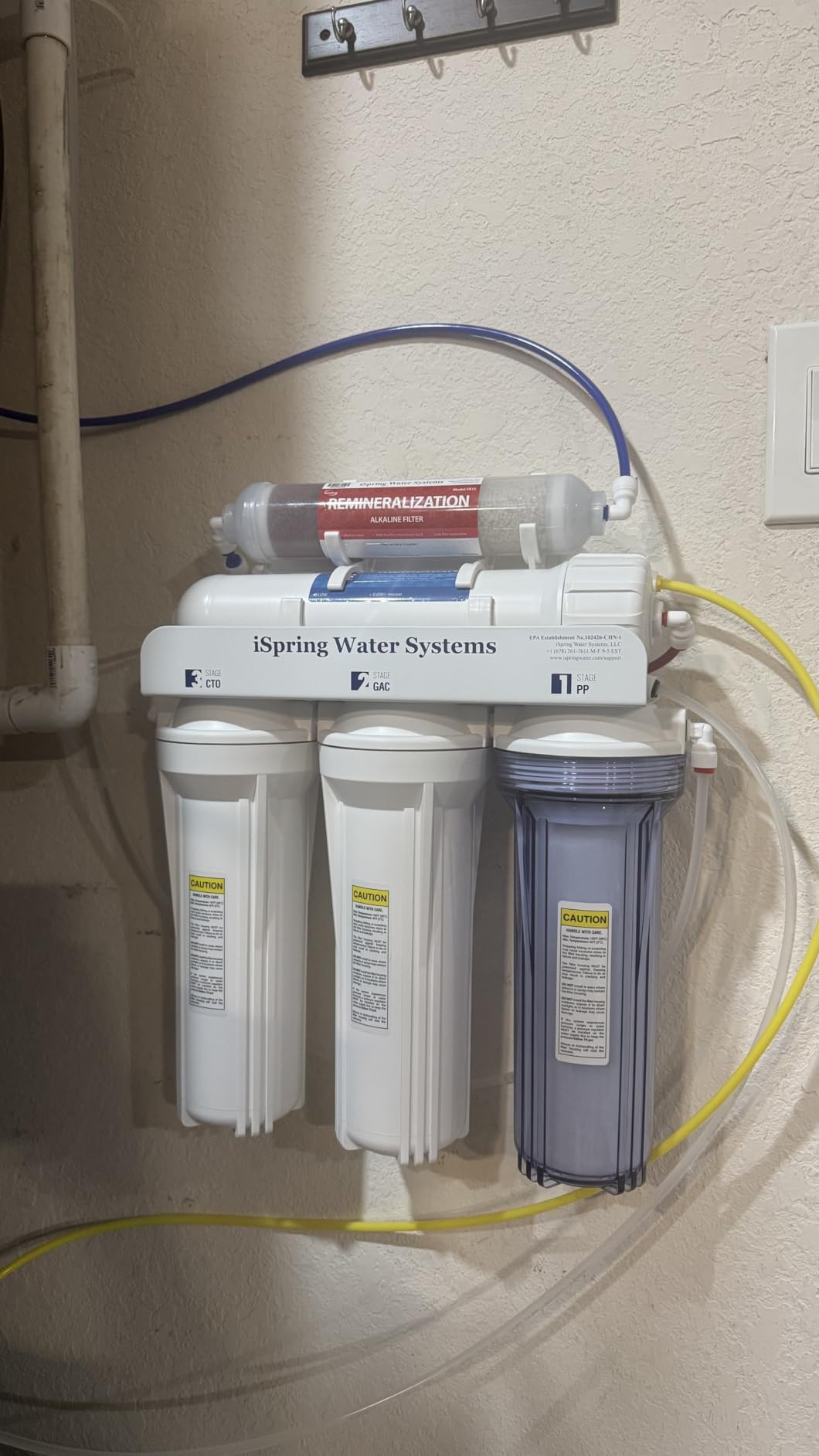
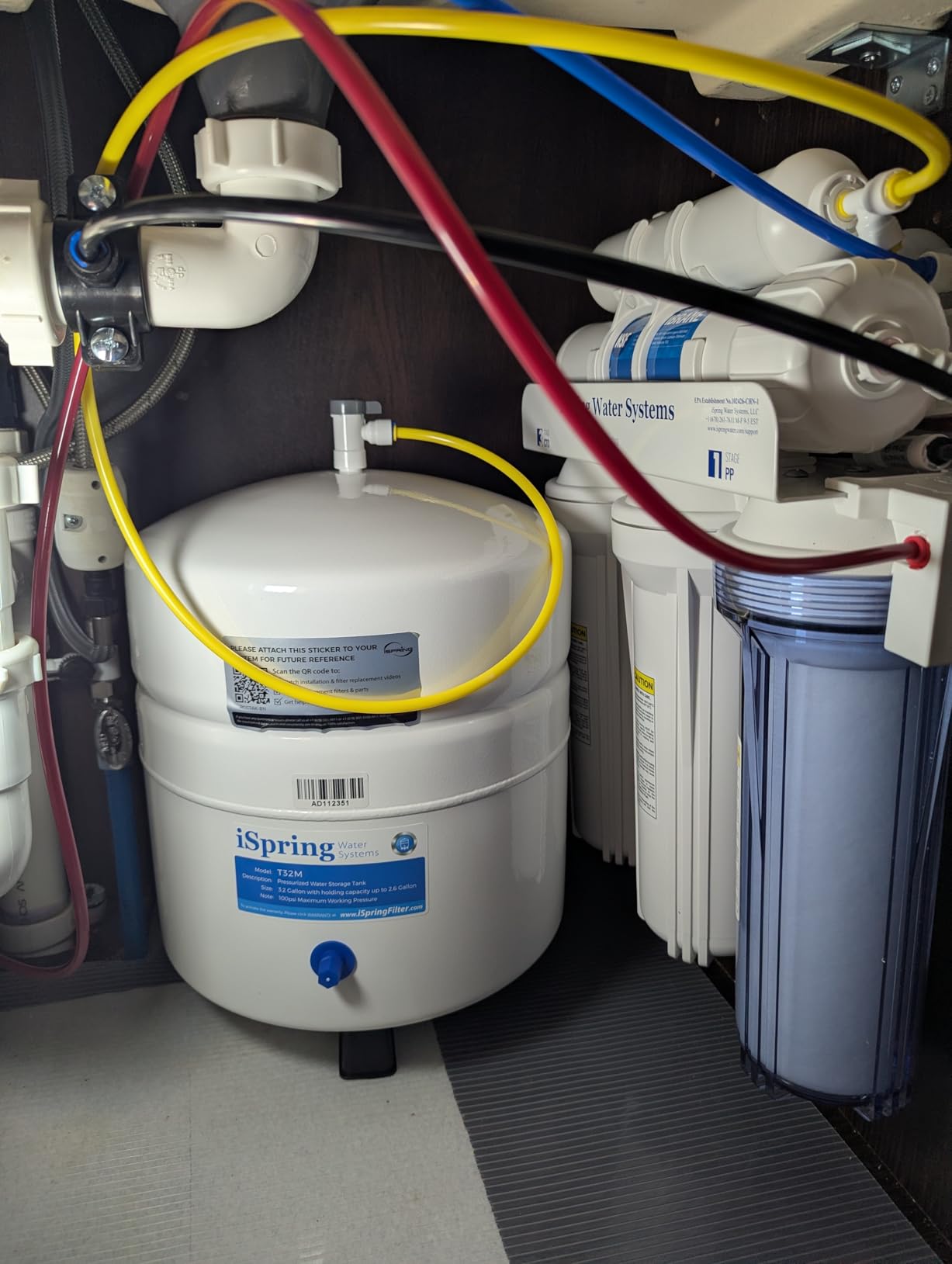
The honest limitation is cabinet space. At 15.5 by 16 by 18 inches with a storage tank, this is not a unit you squeeze into a shallow sink cabinet. The second limitation is pressure: below roughly 70 psi the system will still run, but it will not deliver its rated 75 gallons per day, and on hard water lower pressure means a higher concentrate saturation, which means more scale.
The third limitation is cost of ownership. Replacement sets have to come from the brand, and the manufacturer lists spare part availability for three years. That is the trade you accept for the largest owner base in this group, roughly 21,500 reviews, which means replacement parts and troubleshooting answers are easy to find when something goes wrong.
What hard water does to this system over time
At 750 ppm feed TDS ceiling, this system has less headroom than the APEC and the pumped iSpring. If your water tests well above 300 ppm, the pre-filters will load faster and you should expect to change the sediment stage more often than the six-month interval suggests.
The alkaline stage also raises finished TDS slightly, so if you are chasing single-digit or near-zero readings, look at a non-remineralized model instead. For drinking, cooking, and coffee, the trade is worth it.
Who should choose something else
If your cabinet is under about 15 inches deep, this tanked layout is wrong. It runs entirely on line pressure and needs no outlet, which is a genuine advantage in a rental or an older home with no usable outlet in the sink cabinet.
A second mismatch is a well supply with a softener already upstream. On softened feed water the alkaline stage has less to correct, and you would be better served by a system chosen purely on capacity.
2. APEC ROES-50 50 GPD 5-Stage RO System
APEC Water ROES-50, 5-Stage Under Sink Reverse Osmosis System, 50 GPD
50 GPD 5-Stage
2000 ppm feed TDS ceiling
40-85 psi operating range
NSF 372 and 58
Pros
- Highest feed TDS rating in this group alongside the pumped iSpring
- Over 20 years of residential filtration engineering
- Industry-standard parts still available
- Color-coded quick-connect tubing
Cons
- Polycarbonate housings can crack if overtightened
- No air gap on the included drain line
- Five-filter set adds meaningful annual cost
The single number that makes this the hard-water pick is the 2000 ppm maximum feed TDS rating, joint highest in this group and four times the ceiling on the NU Aqua. If your well or municipal line runs hard, you want a system that is not near its limit on day one, and this is one of the two that qualifies.
Owners report TDS dropping from the low hundreds to single digits on very hard, chlorinated supplies, and the operating range of 40 to 85 psi means it performs across a wider pressure band than most tanked units here. Flow is modest at 0.03 gpm, and a single 50 GPD tank gives you a usable slug of water rather than a steady stream, which is the practical cost of that wide pressure tolerance.
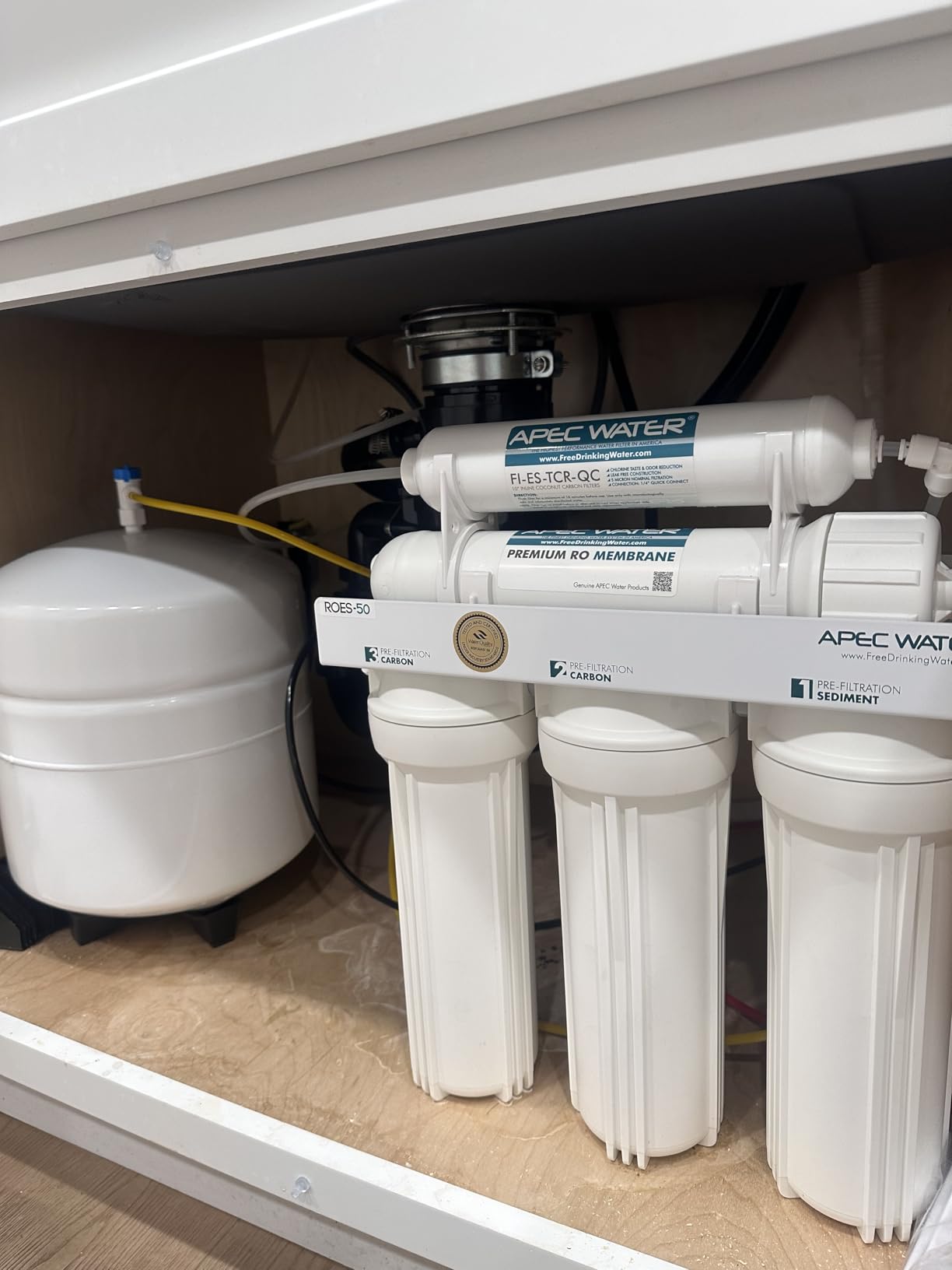
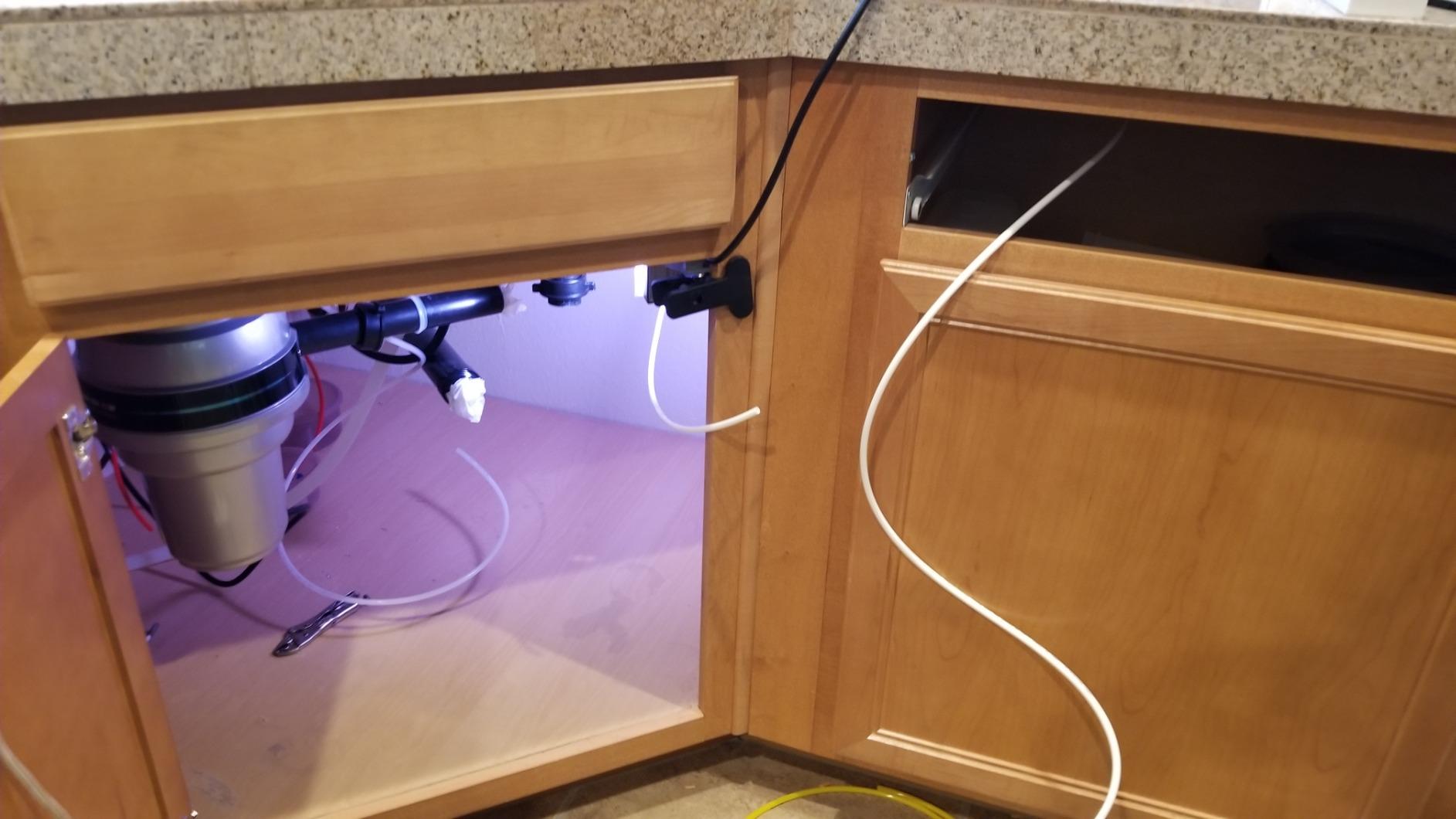
The catch is build quality in the housings. Owners report cracked polycarbonate filter housings after overtightening, which is a fitting problem rather than a design flaw but still an annoyance. There is also no air gap on the included drain line or faucet, so in some jurisdictions you need to add a separate air gap device to pass inspection.
Filter economics matter here. A full five-filter set costs meaningfully more than most competitors’ three-stage sets, but APEC has been building residential filtration for over two decades, and the parts on this system are industry standard, which is a real advantage at year five.
How it handles very hard water
Because it accepts feed water up to 2000 ppm, this is one of the few systems here you could put directly on a very hard supply without a softener, though we would still pair one above roughly 10 GPG. There is no booster pump, so on low-pressure lines the 50 GPD rating assumes more pressure than a well may deliver.
The 5-stage layout has no remineralization cartridge. That means excellent filtration numbers and genuinely flat water, which is the deal-breaker most often raised in forum threads about RO taste.
Who should look elsewhere
Anyone chasing alkaline or mineralized taste will find this unappealing. It is also the slower unit in this lineup, so a household that wants a full glass in seconds rather than in a minute should look at the tankless options.
3. Waterdrop G3P600 600 GPD Tankless RO System
Waterdrop G3P600 Tankless Reverse Osmosis Water Filter System, 600 GPD
600 GPD tankless
2:1 pure-to-drain ratio
0.42 gpm flow
87 psi operating pressure
Pros
- Front-facing tool-free filter changes in about three seconds
- Low 2:1 drain ratio reduces waste water
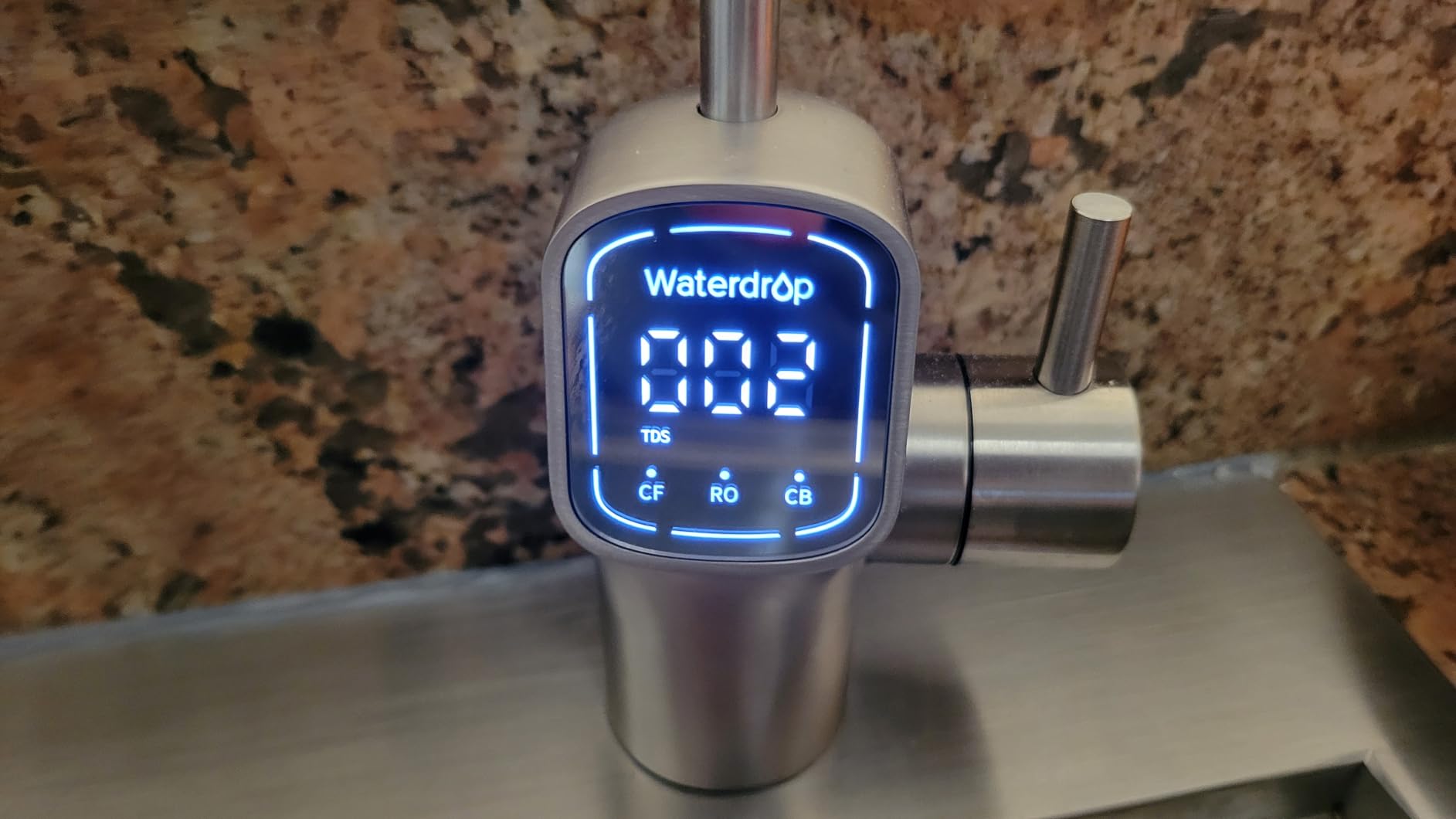
- Smart faucet shows live TDS and filter life
- 8-stage design tested by SGS
Cons
- Needs an always-live outlet under the sink
- Replacement cartridges add notable ongoing cost
- Heaviest build in the group at 31 pounds
This is the hard-water answer when cabinet space is the binding constraint. It produces 600 gallons per day at a rated 0.42 gpm, with no storage tank to stagnate, and the 2:1 pure-to-drain ratio keeps the concentrate less saturated than a conventional 3:1 system, which is a genuine advantage on scaling-prone water.
Owners document TDS reductions from roughly 358 ppm source water to one or two ppm, and the smart faucet gives you a live number at the glass rather than a monthly guess. Certification covers NSF/ANSI 42, 53, 58, and 372, and the eight-stage design was verified by SGS.
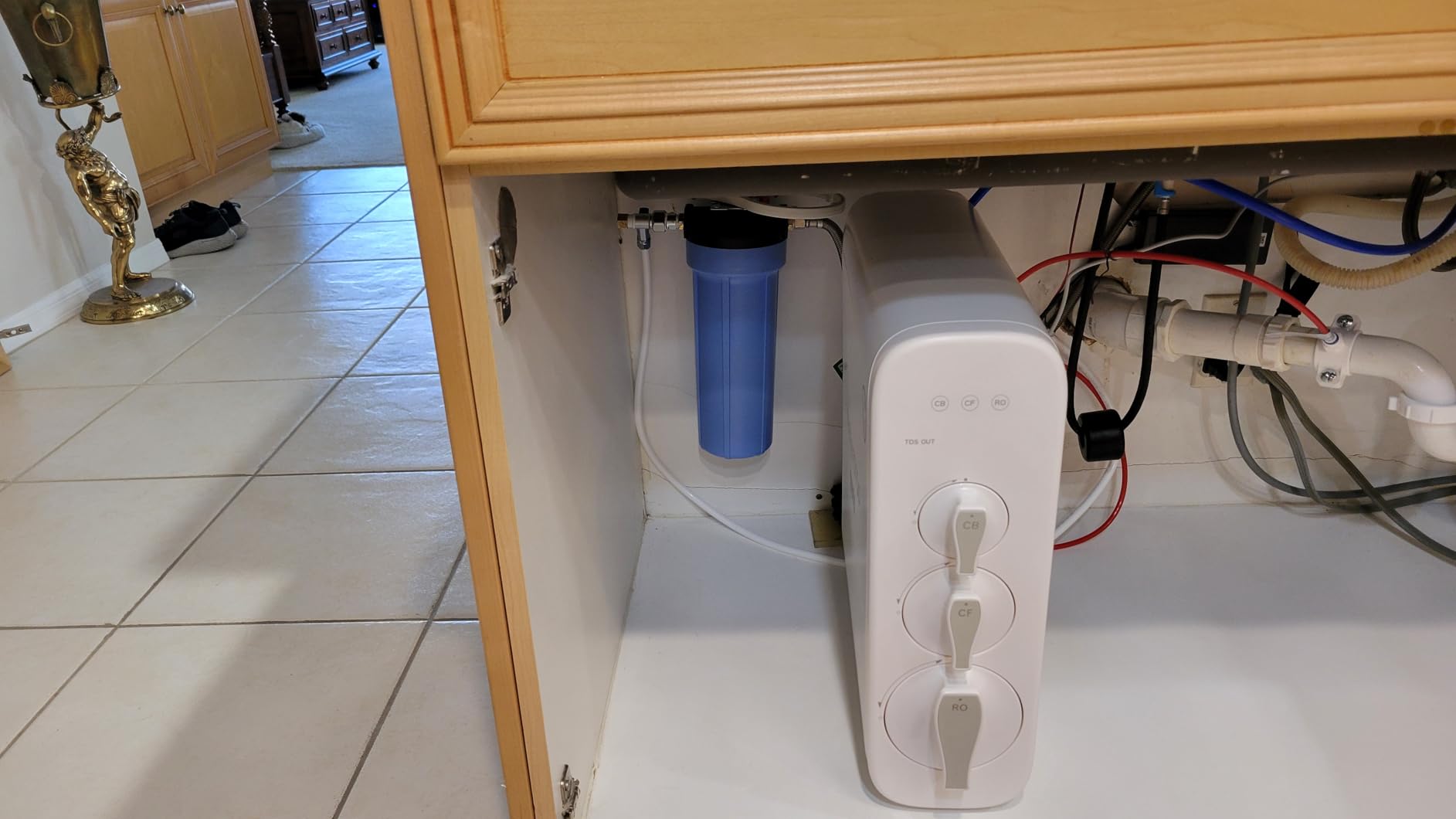
Two real cautions. The rated operating pressure is 87 psi, which is higher than most household lines deliver reliably, and there is no booster pump listed, so flow is dependent on your supply. Owners also report first-draw TDS creep after the unit sits idle, which is normal for tankless designs but surprises people who measure immediately after a gap in use.
The 31-pound unit is the heaviest here, and the faucet needs a larger countertop hole than a standard small-hole RO faucet. Plan the drilling before you commit.
What hard water does to this system
The 1500 ppm feed TDS ceiling is generous for municipal hard water. The bigger question on a hard supply is pressure, not TDS. If your static pressure sits well below 87 psi, this unit will underperform and you should be looking at a pumped alternative instead.
The 2:1 ratio also means less water to the drain per gallon made, which compounds into real savings on a household that drinks and cooks with RO water daily.
Who should choose something else
Apartment or rental installs with no outlet are out. So are households that care most about cartridge cost over several years. The filter cartridges on this unit sit at the expensive end of the group, so run the numbers before committing.
4. Frizzlife PD600-TAM3 600 GPD Alkaline Tankless RO System
Frizzlife Reverse Osmosis Water Filter – Alkaline Mineral pH+, NSF/ANSI 58&53&42&372 Standard, 600GPD Tankless RO Reverse Osmosis System, Under Sink, 2:1 Pure to Drain, Reduce FPAS/PFOA, PD600-TAM3
600 GPD tankless
Alkaline stage above pH 7.5
0.41 gpm flow
2:1 drain ratio
Pros
- Remineralization addresses the flat acidic taste of standard RO
- Cup fills in about 10 seconds at 600 GPD
- Compact 14.7 by 5.3 by 15.5 inch body
- Real-time TDS and filter life indicators
Cons
- Needs under-sink power for pump and display
- Alkaline stage keeps finished TDS above zero
- Lower review volume than the iSpring and APEC systems
On hard water, taste is usually the reason people give up on RO. Hard-water households drink water that already tastes mineral-heavy, so the acidic flatness of a standard five-stage membrane registers as worse to them than it would to someone used to soft water. This unit’s third-stage alkaline cartridge is the direct answer to that.
The remineralization stage pushes pH above 7.5 and restores minerals stripped by the membrane. Capacity is 600 GPD at 0.41 gpm, filling a 330 ml cup in about 10 seconds, and the body is 14.7 by 5.3 by 15.5 inches, which is narrower than most tankless competitors.
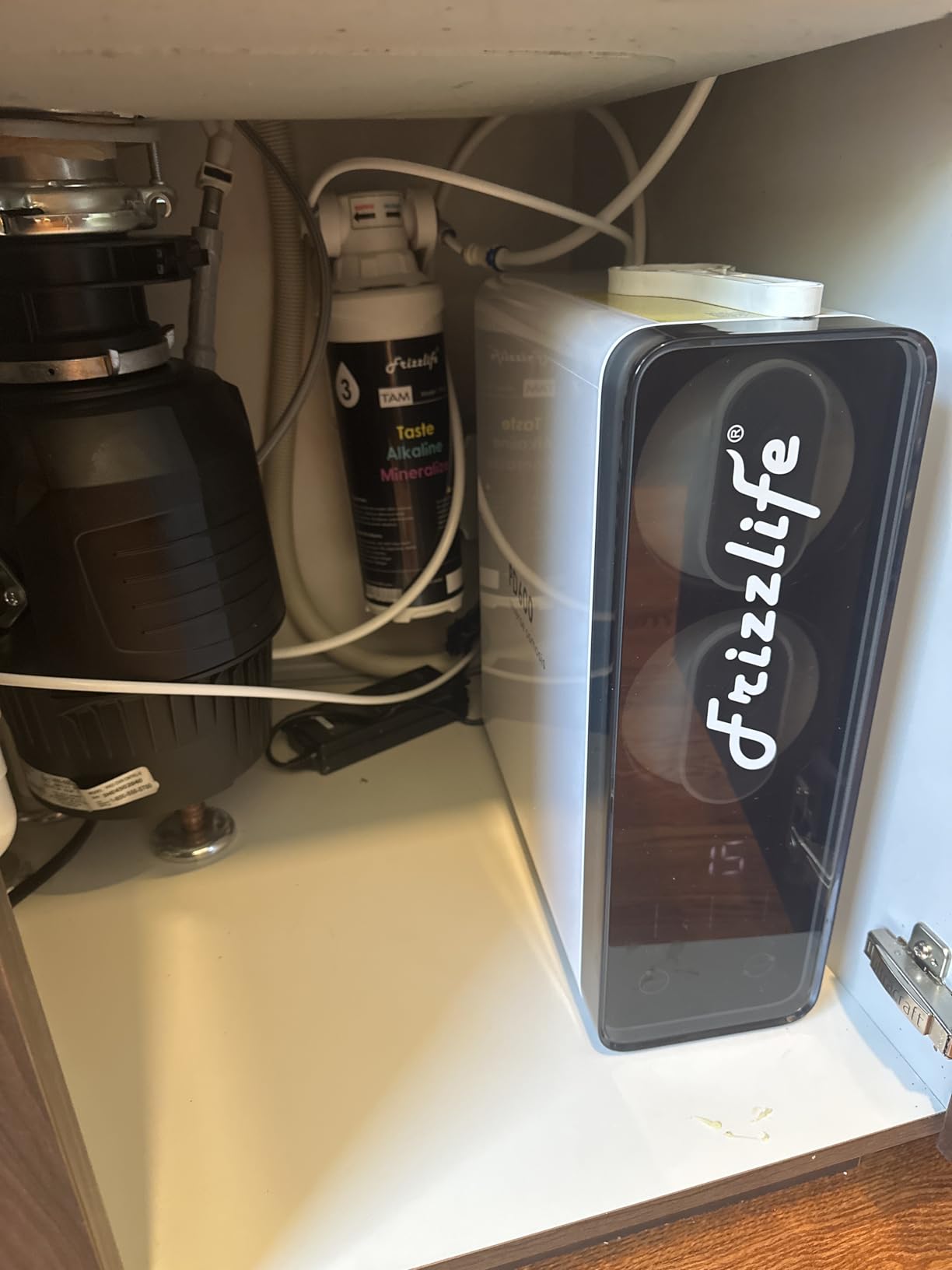
Be clear-eyed about what the alkaline stage costs you. Because it adds minerals back, finished TDS will not read zero, and anyone testing for near-zero output, or running something like an aquarium or a laboratory application, should choose a non-remineralized model. It also needs a live outlet for the pump and display.
Review volume sits around 2,500, a fraction of the iSpring and APEC counts. That means less long-term field data on very hard supplies specifically, which is the honest caveat in an article about hard water.
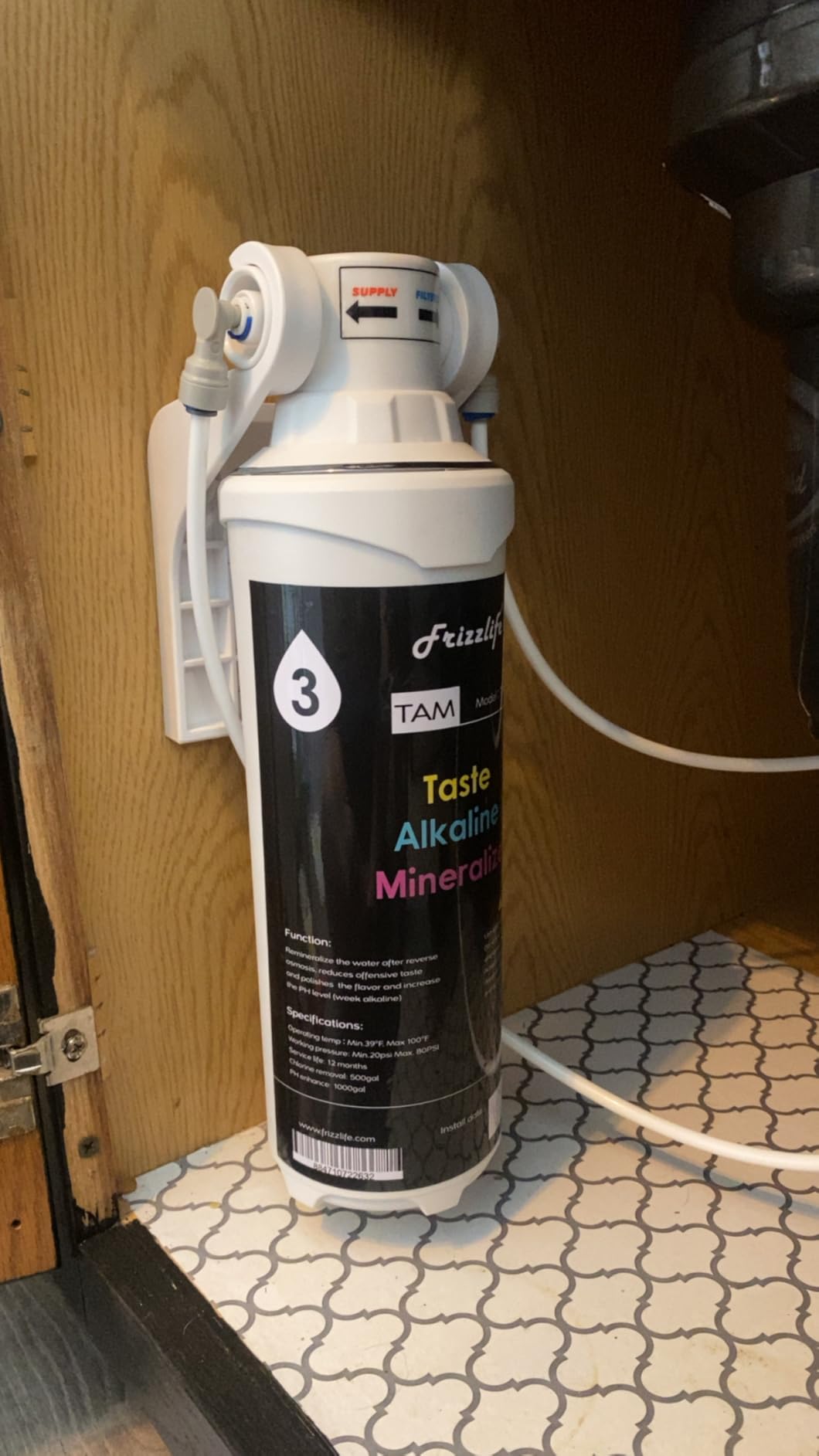
Hard water suitability
The 2:1 drain ratio keeps scaling pressure moderate, and the high throughput means a hard-water household drinking a lot of water is not forcing the membrane to work harder for each glass. Certification covers NSF/ANSI 58, 53, 42, and 372.
Because no feed TDS ceiling is published for this unit, we would test your water before buying. On very hard supply, pair it with a softener and the alkaline stage becomes a bonus rather than a compromise.
Who should choose something else
Anyone needing genuinely near-zero TDS, or anyone without an outlet. It is also a weaker pick for a well with unknown pressure, since the pump spec is not published.
5. FS-TFC FS-RO-100G-A 100 GPD 5-Stage RO System
FS-TFC 5-Stage Reverse Osmosis Water Filter System, NSF Certified 100GPD RO Water Purifier Under Sink Reduces 99.999% Impurities, with 4 Extra Replacement Filters Free for Home Drinking
100 GPD 5-Stage
30-85 psi operating range
18 L/hour flow
1:1 drain ratio
Pros
- Four spare replacement filters included in the box
- Compact 11.5 by 5 by 11.5 inch footprint
- No electricity needed anywhere in the system
- 1:1 claimed drain ratio cuts waste
Cons
- Feed and tank connectors are weak against similarly priced rivals
- Condensation forms on the lower filter housings
- No remineralization stage so water tastes flat
This is the budget slot, and the reason it earns it is specific to hard water: the claimed 1:1 pure-to-waste ratio. A lower ratio means the concentrate leaving the system carries a lower mineral load, which is exactly what determines how fast scale forms on the membrane and downstream.
Flow is 18 liters per hour, filling a 200 ml cup in about five seconds, with an operating range of 30 to 85 psi. That lower bound makes it workable where a 70 psi rated system would struggle, and the whole unit needs no electricity at all, which matters in older homes and rentals.
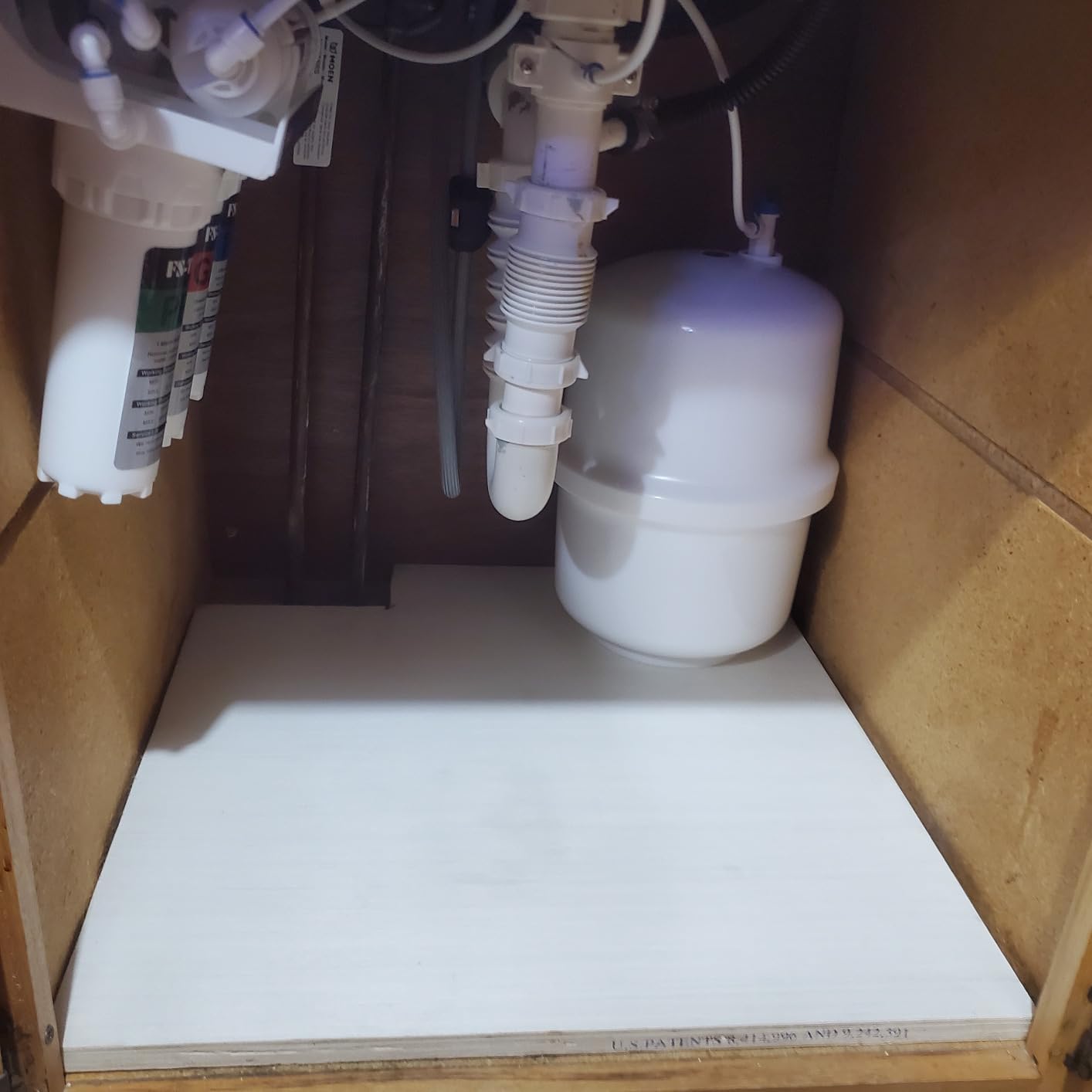
The 500 ppm feed TDS ceiling is the number to watch. That is well below the APEC and the pumped iSpring, so on genuinely very hard water this unit runs closer to its limits than the alternatives we recommend. Four spare filters in the box cover close to a year of changes, which softens the ongoing cost considerably.
Owners report condensation on the lower three housings and, more seriously, weak feed and tank connectors that some had to replace with parts from another brand. Mounting brackets are flimsy, so this needs a secure location in the cabinet.
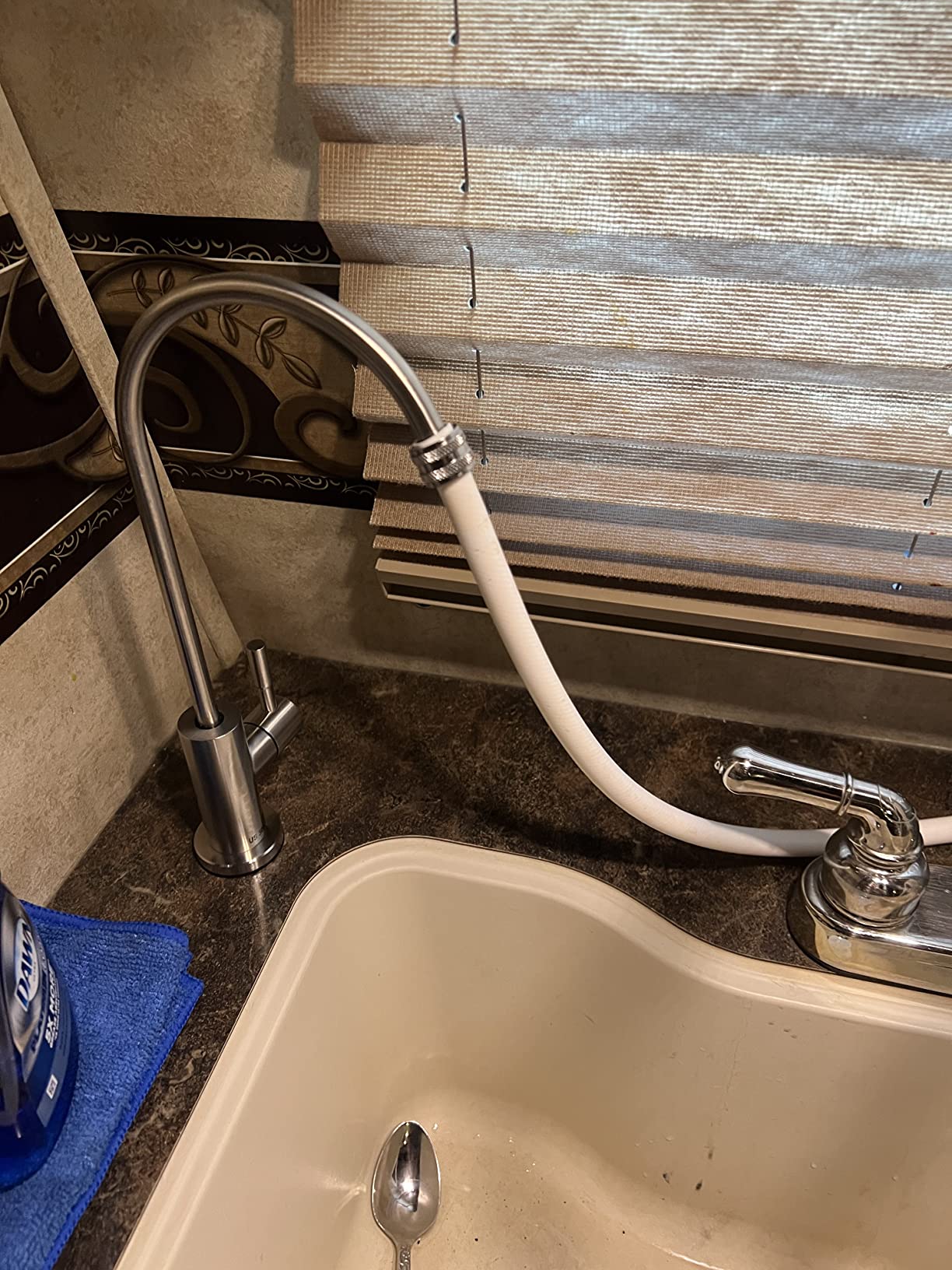
How it behaves on moderately hard water
Between 4 and about 7 GPG, this configuration is reasonable. The wide pressure range and the 1:1 ratio cover the two variables that normally cause trouble. Above 10 GPG, we would not put this unit on the supply without a softener.
The tank arrives pre-pressurized and should not be adjusted at the valve. Knowing that before installation prevents a very common first-week problem.
Who should choose something else
Anyone who cares about taste. There is no remineralization stage, so the water is genuinely flat, and on hard water that contrast is more noticeable. It is also the joint-lowest rated system here at 4.2.
6. iSpring RCC7P-AK 75 GPD Pumped 6-Stage RO System
iSpring RCC7P-AK, 6-Stage Reverse Osmosis System Under Sink Alkaline Water Filter and Pump, RO Drinking Water Filtration System, Patented Top-Mounted Faucet Design for Easy Installation
75 GPD 6-Stage
Built-in electric booster pump
2000 ppm feed TDS
Sixth alkaline stage
Pros
- Booster pump keeps flow and recovery strong on low line pressure
- 2000 ppm feed TDS ceiling suits very hard wells
- Highest average rating among the higher-volume picks
- Alkaline stage improves taste over plain five-stage output
Cons
- Storage tank plus pump uses a large cabinet footprint
- Requires an electrical outlet in the cabinet
- Heavier at 20 pounds than the non-pumped models
This is the system I point well-water households toward, and the reasoning is mechanical. On a well or any low-pressure line, an RO without a pump produces less water at a higher concentrate saturation, which on hard water means worse scaling. The booster pump fixes the pressure variable so the membrane sees a consistent feed.
It combines that pump with a 2000 ppm feed TDS ceiling, joint highest in this group, and a sixth alkaline stage. Owners in low-pressure and hard-water homes consistently name the pump as the reason their output stayed consistent. The transparent first-stage housing is there too, so you can see pre-filter loading.
The price of that consistency is cabinet space and power. With both a storage tank and a pump in the same footprint, at 15 by 8 by 18 inches and 20 pounds, this is one of the bulkier systems here. The pump needs a 100-240V outlet in the cabinet, so an install with no usable outlet is out.
At roughly 1,660 reviews, this has a smaller base than the non-pumped RCC7AK, and it holds the highest average rating in this group. Warranty coverage is one year on registration.
Why the pump matters more on hard water
Membrane performance is a function of pressure. When pressure drops, water passes more slowly, the concentrate side stays saturated longer, and dissolved minerals have more time to precipitate on the membrane surface. A pump removes the pressure variable from the equation entirely.
The trade is noise and power draw. Owners mention pump noise as a recurring complaint, and it is audible in a quiet kitchen, which matters if the cabinet sits next to where you sit.
Who should choose something else
Small cabinets, and any home without an accessible outlet. If you already run a whole-house softener, this pump’s benefits shrink and a simpler pumped tankless unit may serve you better.
7. iSpring RO500AK 500 GPD Tankless RO System
iSpring RO500AK Alkaline Reverse Osmosis System, NSF 58 Certified, 500 GPD
500 GPD tankless
0.4 gpm flow
2:1 pure-to-waste
24-month rated membrane
Pros
- 24-month rated membrane interval
- Automatic flush after 24 hours of non-use
- 8 oz cup in about 10 seconds
- Complete-system NSF/ANSI 58 certification
- Buzzer and indicator lights for filter timing
Cons
- Needs an electrical outlet under the sink
- Replacement cartridges add ongoing cost over long intervals
- Alkaline stage keeps finished TDS above zero
On hard water, maintenance burden matters as much as filtration, because every cartridge change on a scaled system is a job you do more often. This unit has the longest rated membrane interval in the group at 24 months, alongside 6-month and 12-month stages listed as FCF500, FCA500, and MRO500 cartridges.
The automatic flush cycle after 24 hours of non-use matters more than it sounds. Hard water sitting against a membrane concentrates at the feed side, and flushing clears it before it can precipitate. Flow is up to 0.4 gpm, filling an 8 oz cup in about 10 seconds, at a 2:1 drain ratio that cuts water waste against traditional systems.
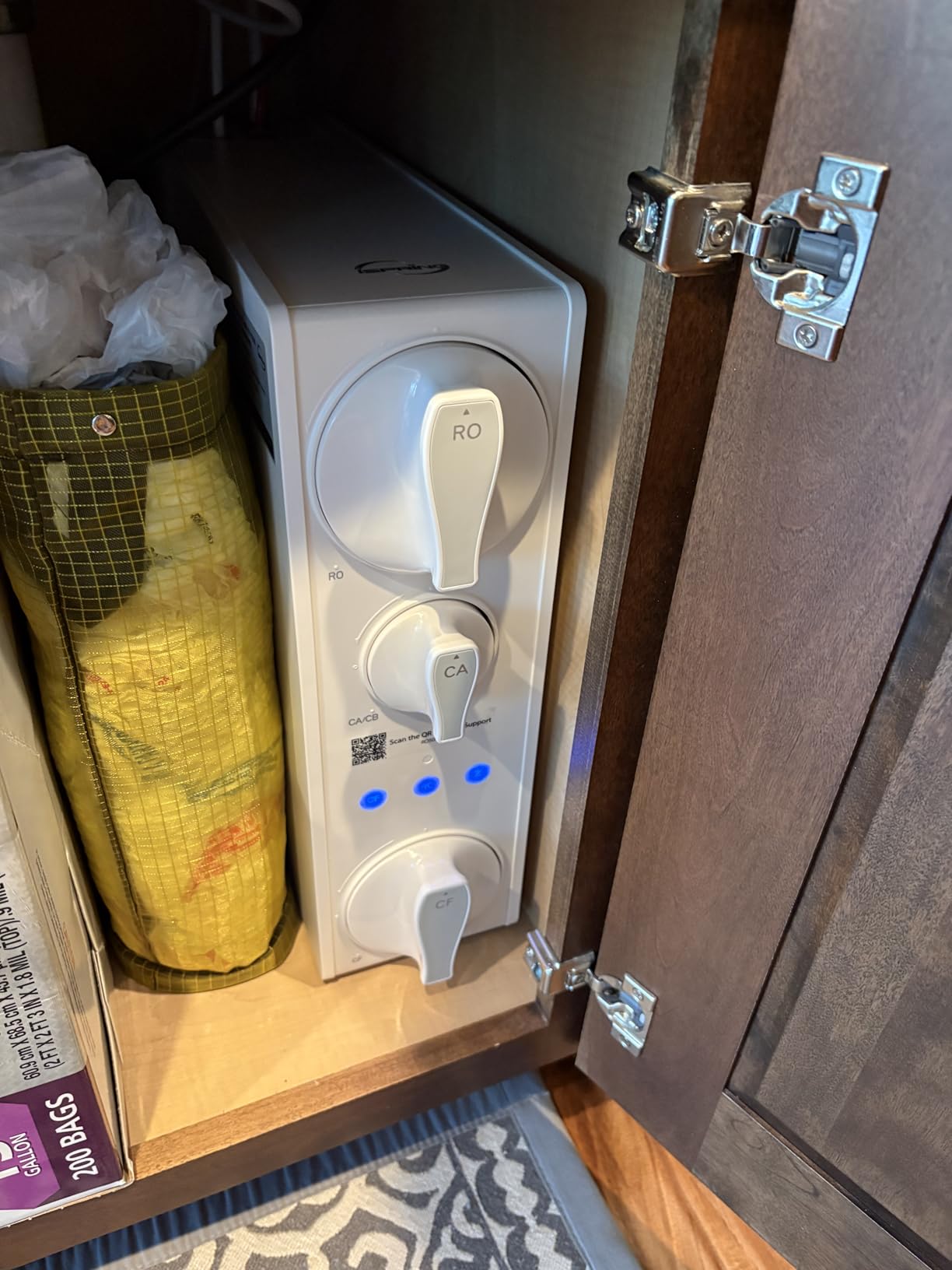
Two operating facts to plan for. It needs a live outlet under the sink, and the 1000 ppm feed TDS ceiling is mid-range, good for municipal hard water but not the highest here. The listed operating pressure range of 15 to 70 psi is wide, which is a plus on variable well supplies.
The tankless body saves up to 70 percent of the cabinet volume a storage tank would occupy, which is the main reason to choose this over the pumped iSpring in the same lineup.
What hard water does to a tankless unit
Tankless systems avoid the biofilm risk of a storage tank, and the auto-flush handles the standing water problem, but they do not avoid scale. On hard supply, expect the same pre-filter loading as any other system here, and use the front panel indicator lights rather than the calendar alone.
The 2:1 ratio is the second thing working in your favor, since a lower ratio means less concentrated reject water.
Who should choose something else
Budget buyers, since this sits at the expensive end of the group. And anyone needing near-zero finished TDS, because the alkaline stage adds minerals back after the membrane.
8. SimPure T1-400ALK 400 GPD Tankless RO System
SimPure T1-400ALK Tankless Alkaline Reverse Osmosis Water Filter 400 GPD
400 GPD tankless
Built-in booster pump
UV stage
1.5:1 drain ratio
Pros
- Booster pump built into a compact 8 kg body
- UV purification stage runs on flow pressure
- 1.5:1 drain ratio reduces waste water
- Twist-change cartridges rated for 1057 gallons
Cons
- 500 ppm feed TDS ceiling is low for very hard water
- Joint-lowest average rating in this group at 4.2 with a 12 percent one-star share
- UV stage and pump require electrical power
This is the only unit here that puts a booster pump, a UV stage, and alkaline remineralization in one compact tankless body at this tier. On a hard supply, the built-in pump is the part that earns its place, because it removes the pressure ceiling without needing a separate tank.
The 1.5:1 pure-to-drain ratio sits between a conventional 3:1 system and the 2:1 tankless units, so it wastes less water than a standard tanked install. Quick-change twist cartridges yield 1,057 gallons, and SGS tested the system against the NSF/ANSI 58 standard.
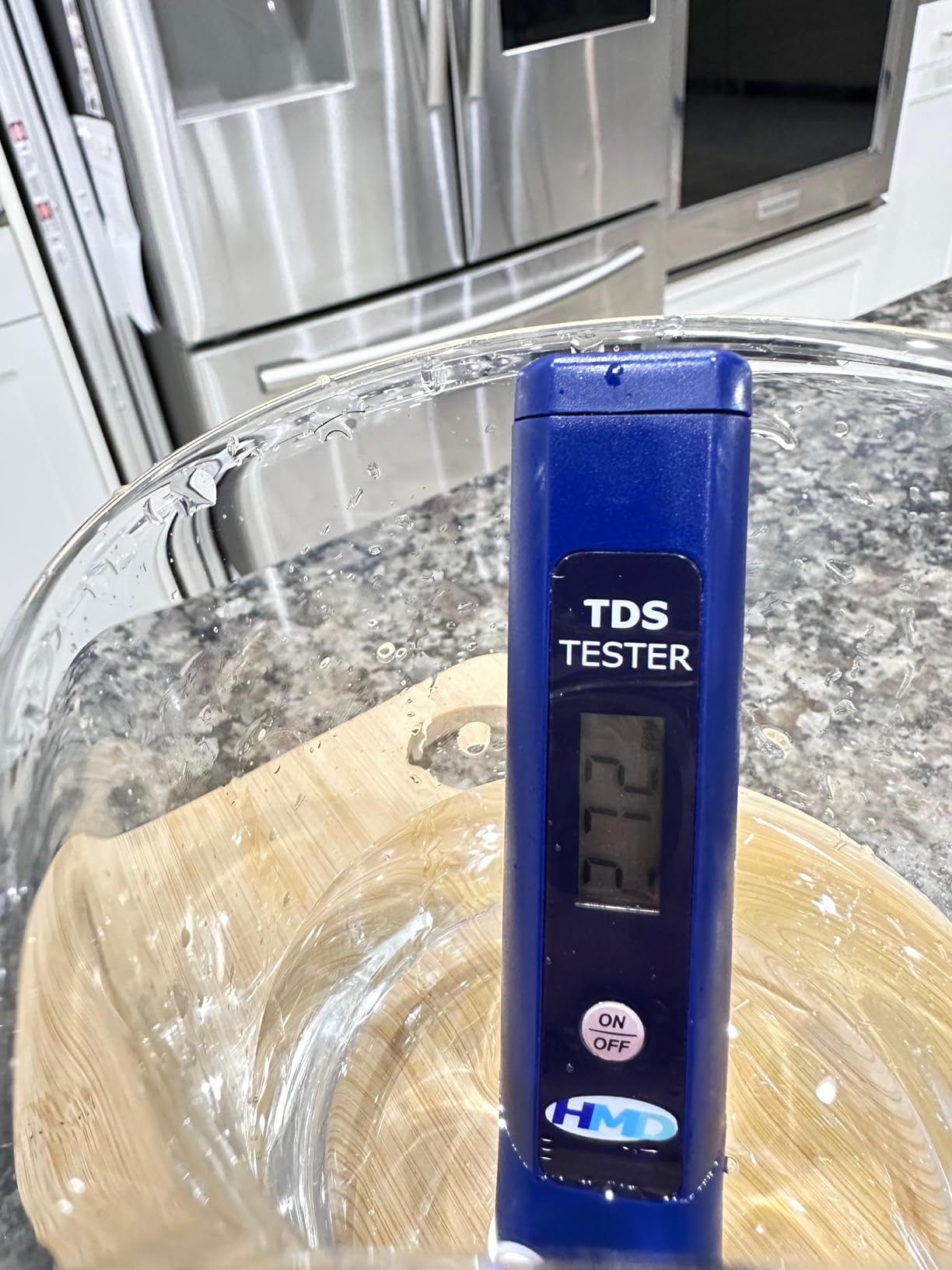
Here is the hard-water problem. The listed maximum feed TDS is 500 ppm, which is low for genuinely hard water, and that is the single reason this unit sits lower in the ranking than its feature list suggests. If your water tests in the very hard or extremely hard bands, the membrane is running near its limit.
Review feedback also flags unfinished fit and finish, the UV stage’s dependence on power, and an operating pressure spec listed in pascals, which is not a useful unit for cross-checking against your supply. It shares the joint-lowest average rating in this group at 4.2, with a 12 percent one-star share.
Where it fits on hard water
On moderately hard municipal water between 4 and 7 GPG, this configuration works well. The pump handles pressure, the 1.5:1 ratio handles concentrate load, and the UV stage adds a layer that carbon and membrane stages do not provide.
On well water above 10 GPG, look elsewhere. The feed TDS ceiling is the constraint, and no pump overcomes it.
Who should choose something else
Anyone on very hard water, anyone without an outlet for the pump and UV stage, and anyone who needs near-zero TDS. The alkaline configuration also will not read zero, and a non-alkaline variant is the right pick for that use.
9. Home Master TMAFC Artesian Full Contact RO System
Home Master TMAFC Artesian Full Contact Reverse Osmosis System, 7-stages, Patented 2-Pass Alkaline Remineralization, Fast 4.5s Fill Rate, 8.5” catalytic carbon, 5-year limited parts
7-stage system
Patented 2-pass remineralization
4.5 second 8 oz fill
5-year parts warranty
Pros
- Fastest 8 oz fill here at about 4.5 seconds from larger fittings and tubing
- Two-pass remineralization adds calcium and magnesium twice
- 5-year limited parts warranty with 5 years of part availability
- NSF certified components manufactured in the USA
Cons
- Second-smallest review base at just over 900 ratings
- Storage tank needs more cabinet volume than tankless designs
- Spec sheet lists a 10 ppm maximum feed TDS that does not match typical RO ratings
This is the one to buy if the annoyance of your current setup is waiting for water. Larger fittings and tubing double the flow rate against traditional and tankless systems, and owners report an 8 oz cup filling in about 4.5 seconds. On hard water, that matters more than it would on soft water because you are likely drinking more of it.
The remineralization is the other differentiator. Instead of one alkaline stage, this runs a patented two-pass process that adds calcium and magnesium twice during purification, through an 8.5 inch catalytic carbon block per pass. For a household used to mineral-heavy tap water, that is a better taste profile than a single alkaline cartridge.
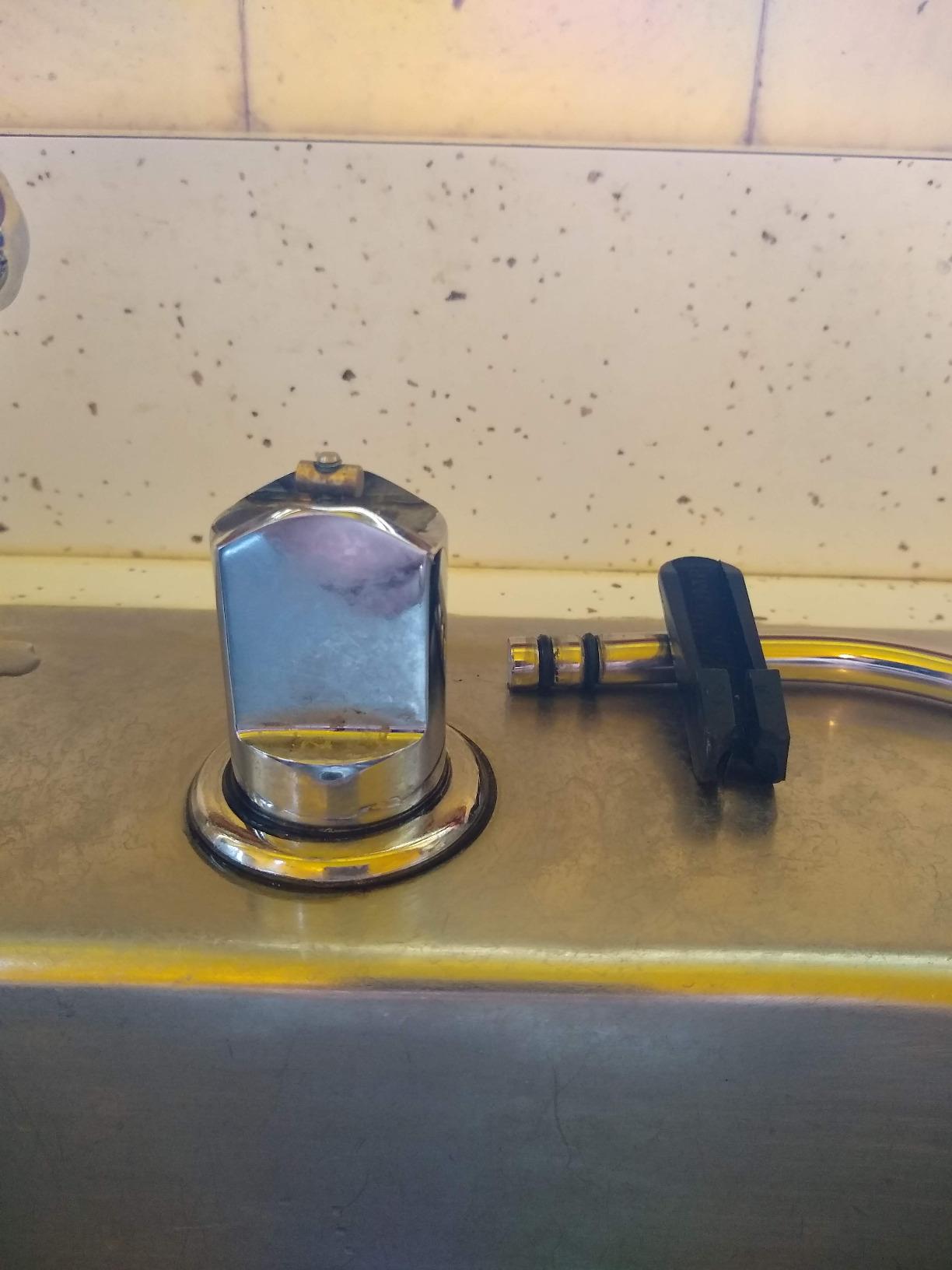
The warranty is the strongest in the group at 5-year limited parts with 5 years of spare part availability, and every component is NSF certified. All parts are made in the USA by an NSF-listed company, which is meaningful if you want to keep a single brand across the system.
Its review base is the second smallest in the group at just over 900 ratings, so long-term hard-water field data is thinner than the rating suggests. And the spec sheet lists a maximum feed TDS of 10 ppm, which does not match typical RO feed ratings and looks like a listing error. Confirm your water’s TDS with a meter before ordering.
Recovery and hard water
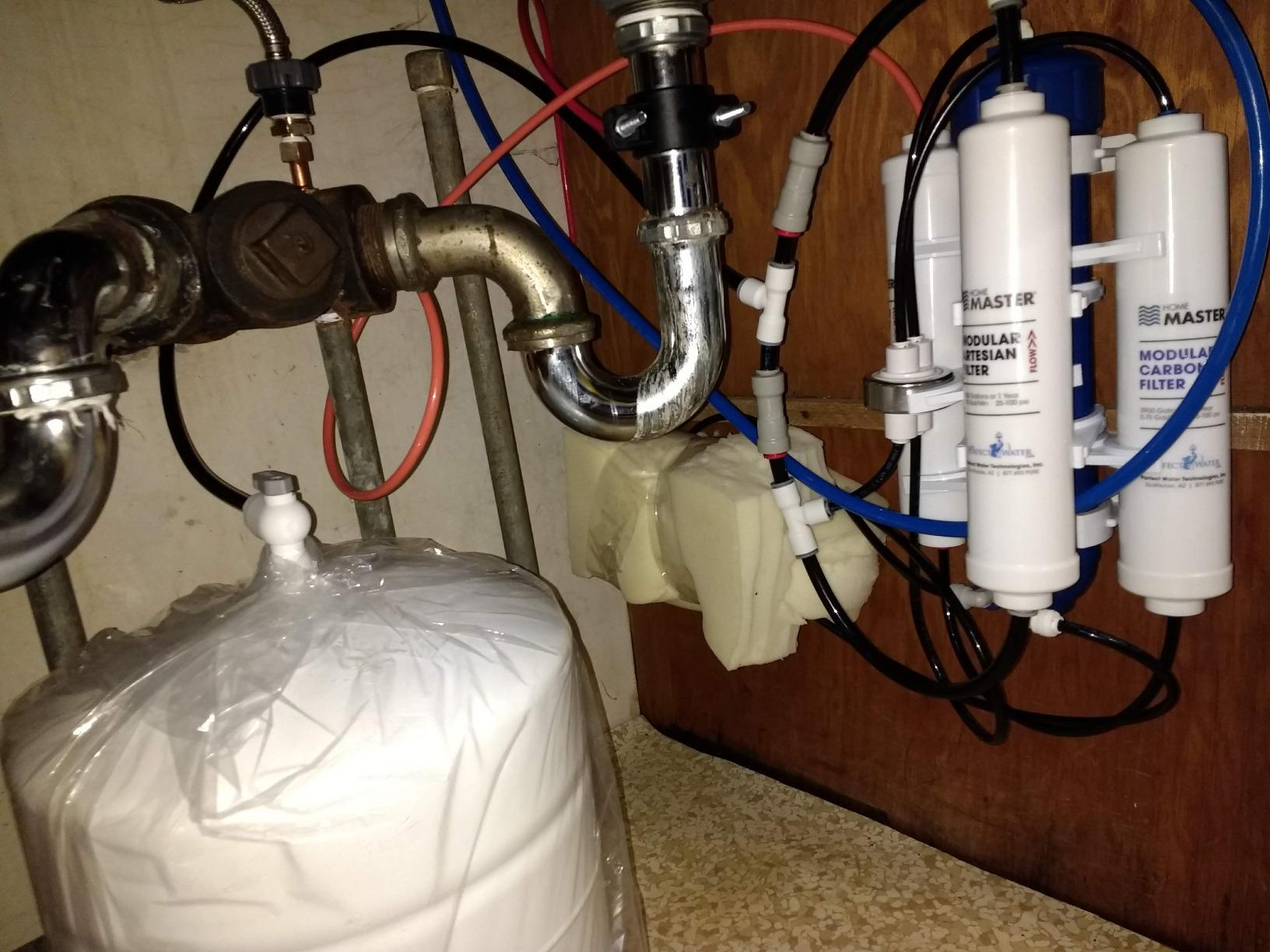
The larger tank and line sizing improves recovery compared with tankless competitors, which means less brine per gallon and lower saturation at the membrane surface. On hard water, that is one of the more effective scale mitigations available without adding a softener.
Operating range is 40 to 95 psi, the widest upper bound in this group, and the 0.0001 micron membrane is rated at 50 GPD.
Who should choose something else
Small cabinets, since the storage tank is 15 inches high by 11 inches in diameter. Anyone unwilling to change filters annually. And buyers who want the reassurance of a very large owner base.
10. NU Aqua 7-Stage UV Alkaline Under Sink RO System
NU Aqua 7-Stage UV Alkaline Under Sink Reverse Osmosis Water Filter System
100 GPD
HydraCoil membrane
UV sterilization stage
300 ppm feed TDS ceiling
Pros
- Only unit here pairing a UV stage with alkaline remineralization in 7 stages
- 100 GPD flow roughly doubles standard under-sink output
- Includes a stainless steel faucet and a PPM meter
- 120-day home trial and 3-year manufacturer warranty
Cons
- 300 ppm feed TDS ceiling limits use on very hard water
- UV stage needs electrical power
- Second-heaviest build in the group at 28 pounds with a tall 19.5 inch profile
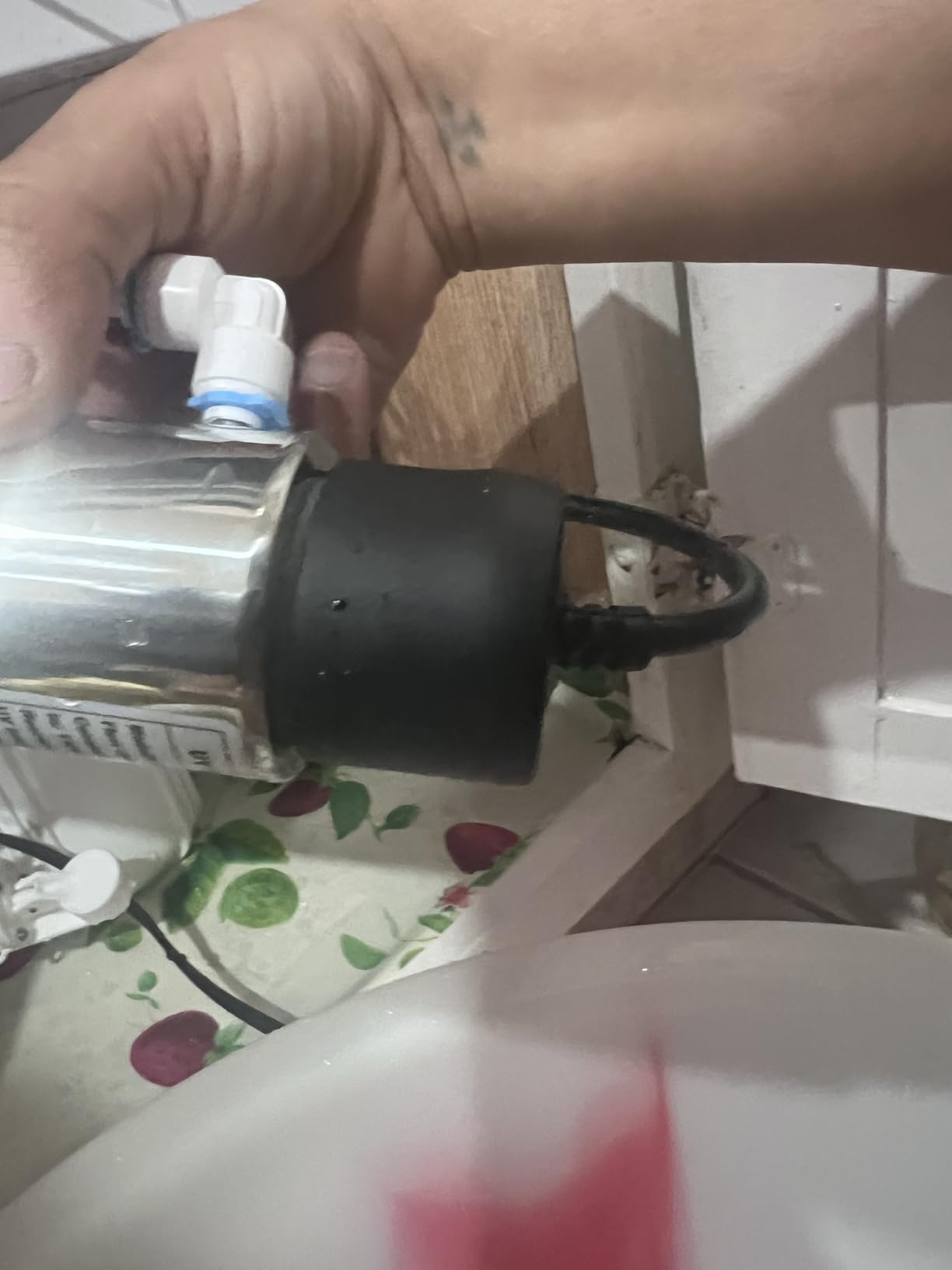
The UV stage is the reason this unit is here, and it is worth understanding what UV does and does not do. It inactivates bacteria and microbes that pass through the carbon stages. It does not remove dissolved minerals, which is the entire hard-water problem, so UV is a complement to RO, not a substitute.
The HydraCoil membrane is rated to reject up to 99 percent of over 1,000 total dissolved solids, at 100 GPD, which the manufacturer describes as roughly double a standard under-sink unit. The kit includes a stainless steel faucet and a PPM meter, which is a nice touch when you are trying to watch hardness and TDS over time. Warranty is 3 years with a 120-day home trial.
Here is the hard-water limitation that decides this product’s ranking. The listed maximum feed TDS is 300 ppm, the second lowest in this group, and on a very hard supply you would be running close to or past that ceiling from the first day. Several owners also report an off sulfur-like odor from the alkaline stage on well or high-mineral water.
It is also the second-heaviest unit in the group at 28 pounds with a tall 19.5 inch profile, and the UV stage needs power. Owners report years of leak-free operation across multiple systems, so durability is not the concern. Feed tolerance is.
What hard water does to a UV-equipped system
Scale on the membrane reduces flow, and reduced flow gives UV less contact time. On hard water the two problems compound, which is an argument for the pre-filter and higher recovery systems we recommend instead.
If your water is only moderately hard and you have a specific reason to want UV, this is a competent unit. If hardness is your main problem, it is not the pick.
Who should choose something else
Anyone on very hard or well water with high TDS. Anyone without an outlet. And anyone with a tall cabinet shortage, since the 19.5 inch profile is demanding to fit.
How We Picked These 10 Systems
We ranked these units on hard-water suitability first and general quality second. The specific criteria were feed TDS ceiling against your likely water, pressure requirements including whether a booster pump is present, recovery ratio, membrane rated interval, certification scope, and the volume and consistency of owner feedback.
Certification scope mattered more than usual. Complete-system NSF/ANSI 58 certification means the assembled product was tested, not just the membrane or the carbon block, and several systems here carry only component-level listings. We also looked for water-safety certifications such as NSF/ANSI 372 for lead-free materials.
Review volume was used as a tiebreaker, not a score. Long-term owners in r/WaterTreatment consistently say verified multi-year ownership outweighs spec-sheet performance, and we weighted accounts of real hard-water supplies accordingly.
No manufacturer paid for inclusion, and no system was removed for being sponsored. Where spec sheets conflicted with owner reports, we flagged the conflict rather than resolving it silently, which is why you will see a listing anomaly called out on the Home Master section.
Buying Guide: How to Choose an RO System for Hard Water
Start by measuring, not guessing. Hardness is expressed in grains per gallon, and a municipal utility will usually publish it. If you are on a well, run a hardness test kit rather than a TDS meter, because TDS counts everything dissolved while hardness counts only calcium and magnesium. A TDS reading above roughly 200 ppm is a strong hint that you are in hard-water territory.
Then check the feed TDS ceiling on the system itself. This is the number most buyers never look at, and it is the number that decides whether your system is comfortable or strained. In this group, the APEC ROES-50 and the iSpring RCC7P-AK list 2000 ppm. The Waterdrop G3P600 lists 1500, the iSpring RO500AK lists 1000, the iSpring RCC7AK-BN lists 750, the FS-TFC and SimPure list 500, and the NU Aqua lists 300.
Next, decide whether you need a booster pump. If your static pressure sits comfortably above the system’s rated operating pressure, you do not. If it does not, you do, and the pumped iSpring RCC7P-AK or the SimPure T1-400ALK are the two units here that combine a pump with meaningful capacity. Owners on well water in r/WaterTreatment recommend the pumped iSpring by name for exactly this reason.
Then look at recovery ratio, which is the third lever you control without adding hardware. A 3:1 system sends three gallons to the drain per gallon produced. A 2:1 tankless system sends two. The FS-TFC claims 1:1. Lower ratios mean the reject water is less saturated with minerals, which slows scale formation at the membrane surface and in your drain line.
Water waste is worth quantifying. At a 3:1 ratio, a family of four drinking and cooking with about one gallon of RO water per person per day generates roughly 12 gallons of waste water daily and close to 4,400 gallons a year. A 2:1 system roughly halves that. If you want the math on a different appliance, we covered it in our cost-per-gallon comparison of distillers and RO.
Certification deserves one paragraph of its own. NSF/ANSI 58 certifies contaminant reduction claims for RO systems. NSF/ANSI 42 covers aesthetic claims such as taste and odor. NSF/ANSI 53 covers health-related claims for cyst and virus reduction. NSF/ANSI 372 covers lead-free materials, and NSF/ANSI 401 covers emerging contaminants such as PFAS. A system carrying 58, 42, 53, and 372 together, which the Waterdrop G3P600 and Frizzlife PD600-TAM3 both do, is certified more thoroughly than one carrying 58 alone.
Size the GPD figure to actual demand. A household of two drinking, cooking, and brewing coffee will live comfortably on 50 to 75 GPD. A family of four filling ice makers and refrigerator dispensers will want 400 to 600 GPD. Going above what you use mainly adds cabinet size and filter cost.
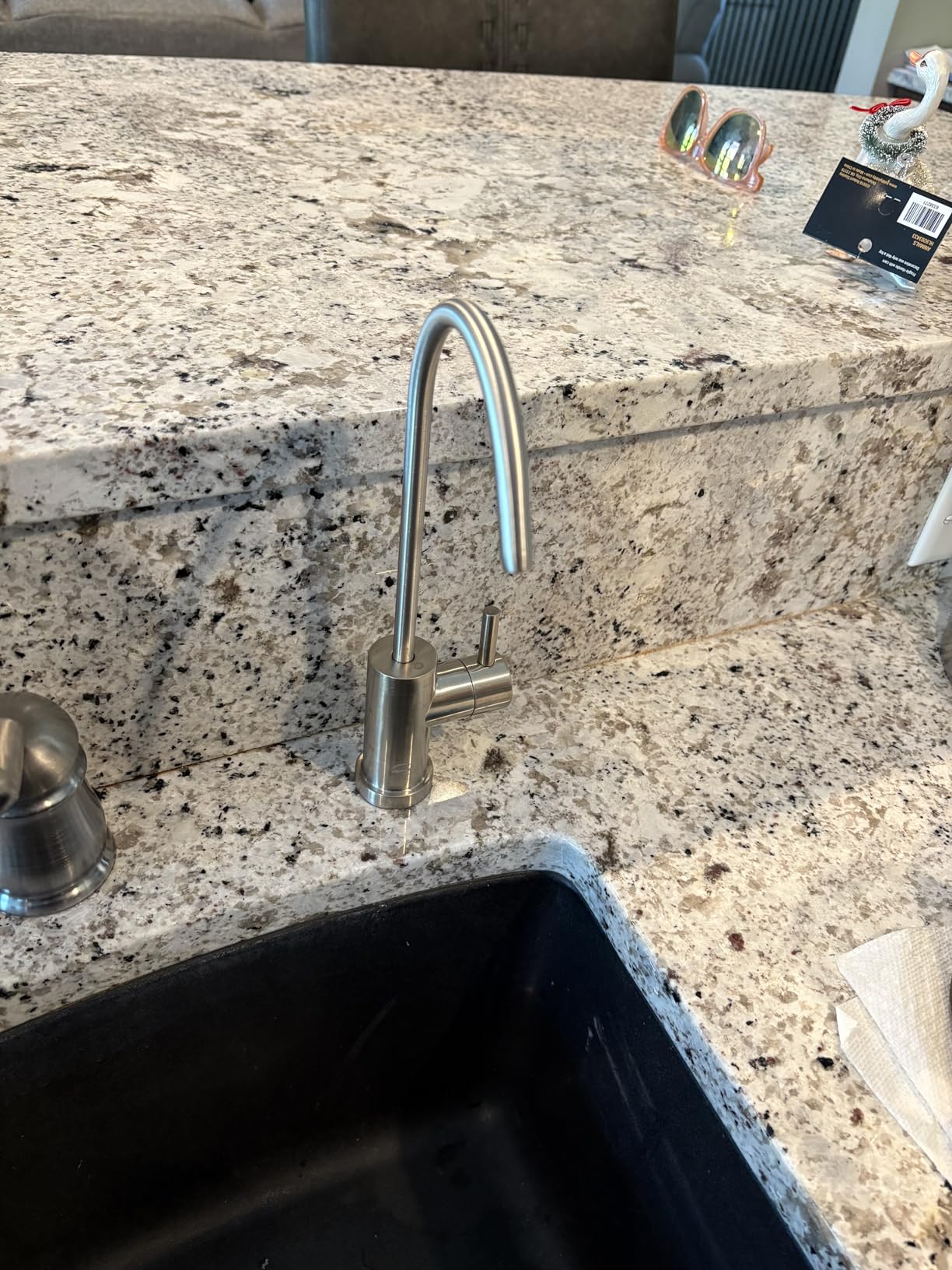
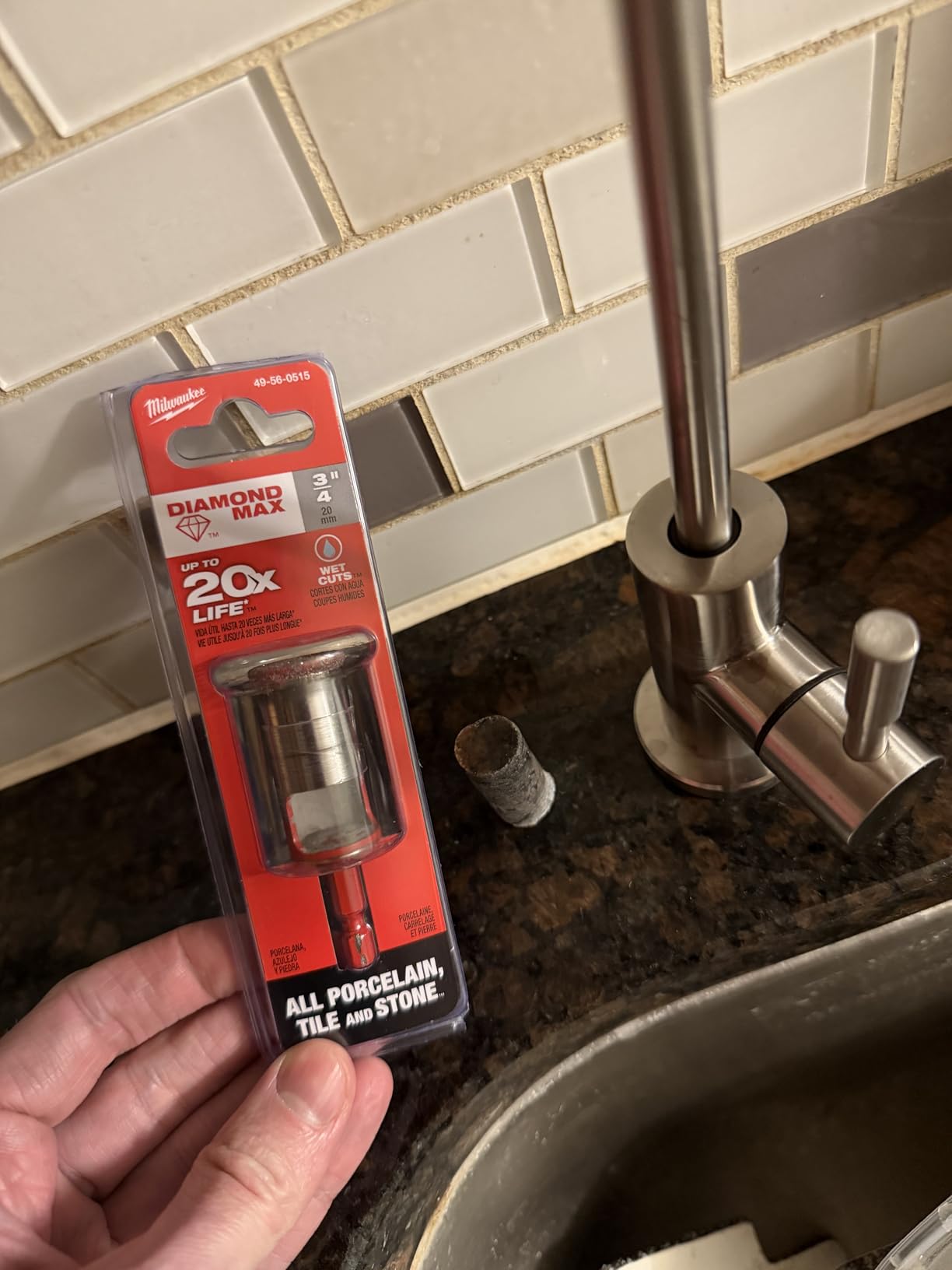
Check the installation prerequisites before you buy. You need a hole in the countertop for a dedicated faucet, typically a 0.375 inch hole for standard RO faucets and larger for some smart faucets. You need a cold water line tee, a drain connection to the sink tailpiece, and cabinet depth for the system plus its tank. Pumped and tankless units need a live electrical outlet in the cabinet. And no, an under-sink RO will not work with a pull-out faucet, which is the most common question on r/WaterTreatment, because the system needs a dedicated filtered-water outlet.
Finally, plan for taste and for scale on the faucet. If your tap water is heavily mineral, plain RO water will taste flat to you in a way it does not to someone on soft water. A remineralization or alkaline cartridge fixes that, at the cost of finished TDS never reading zero. And descale the dedicated faucet aerator a few times a year, because it sits at the hardest water in the house and it is the first place scale will appear.
If you are still narrowing the field, our guide to RO systems under a lower spend threshold and our guide to systems with remineralization cover those two angles in more detail.
Do You Need a Water Softener Before Your RO System?
This is asked constantly in forums and almost never answered with a number. The answer depends on your hardness band, and the branch point is straightforward.
Under roughly 4 GPG. No softener needed. Choose on tank versus tankless, taste preference, and cabinet space instead. Adding a softener here is spending money on a problem you do not have.
Between 4 and 10 GPG. A softener is optional. A system with a booster pump, a 2:1 or better recovery ratio, and a high feed TDS ceiling will handle this band comfortably. The iSpring RCC7AK-BN and the Waterdrop G3P600 both sit here well.
Above 10 GPG. Put a softener ahead of the RO. This is the single biggest factor in membrane lifespan, more than membrane brand, more than pump, more than filter stage count. A whole-house softener on the cold line before the sink tee means the membrane sees soft feed water and the scaling mechanism largely disappears.
If a softener is not in your plan, an anti-scalant cartridge using polyphosphate is the common alternative. It keeps calcium in solution rather than letting it precipitate, and several systems in this category pair it with a booster pump. Treat it as a partial measure. It helps, but a softener upstream is the durable answer above 10 GPG.
Frequently Asked Questions
Can I use a reverse osmosis system if I have hard water?
Yes, with preparation. Hard water shortens RO membrane life and clogs the faucet aerator with scale, so a system rated for high feed TDS, or one with a booster pump, handles it far better than a basic budget unit. Above roughly 10 grains per gallon, a softener upstream of the membrane is the single most effective step you can take.
What is the best reverse osmosis system for hard water?
For most hard municipal water, the iSpring RCC7AK-BN is the pick: complete-system NSF/ANSI 58 certification, a 70 psi rated operating pressure, an alkaline remineralization stage, and the largest owner base in the group. On a well or in a low-pressure home, the pumped iSpring RCC7P-AK ranks higher because line pressure stops being the limiting variable.
Who makes the best under sink reverse osmosis system?
iSpring leads on review volume and complete-system NSF/ANSI 58 listings, APEC on durability and industry-standard parts availability, and Waterdrop on tankless flow rate and cabinet footprint. Hard water shifts the ranking: pumped models move up, and units with low feed TDS ceilings move down.
What is a major downside of reverse osmosis water?
The most common complaints are flat, slightly acidic taste because the membrane strips dissolved minerals, wastewater going to the drain at ratios between 1:1 and 3:1, and recurring cartridge costs. On hard water specifically, scale on the membrane and on the faucet aerator is usually the drawback people notice first.
Why does my water taste flat?
The membrane removes the large majority of dissolved calcium and magnesium, which are what give water its flavor. A remineralization or alkaline cartridge adds a small amount back and raises the pH. Hard-water households notice the flatness most, because their tap water is heavily mineral to begin with.
Do I need a water softener with an RO system?
Under about 4 grains per gallon, no. Between 4 and 10 GPG, a system with a booster pump, a 2:1 or better recovery ratio, and a high feed TDS rating is usually enough. Above 10 GPG, put a softener ahead of the RO so the membrane receives soft feed water.
Is RO water hard on the kidneys?
For most healthy adults the low mineral content of RO water is not a concern, and it is comparable to other low-mineral bottled waters. If you have a diagnosed kidney condition, follow a clinician’s guidance rather than a product page, including this one.
The Bottom Line: Best Under Sink RO for Hard Water in 2026
The best under sink reverse osmosis systems for hard water are not the ones with the most stages. They are the ones whose feed TDS ceiling, pressure handling, and recovery ratio match your water. The iSpring RCC7AK-BN is our overall pick for ordinary hard municipal supply, the pumped iSpring RCC7P-AK is the answer on a well or a low-pressure line, and the APEC ROES-50 is the value option with widest feed tolerance in the group.
Before anything else, test your water. One hardness kit tells you whether you are buying a softener problem or not, and that single measurement will tell you more than any spec sheet on this page. Then pick from the band that matches.