
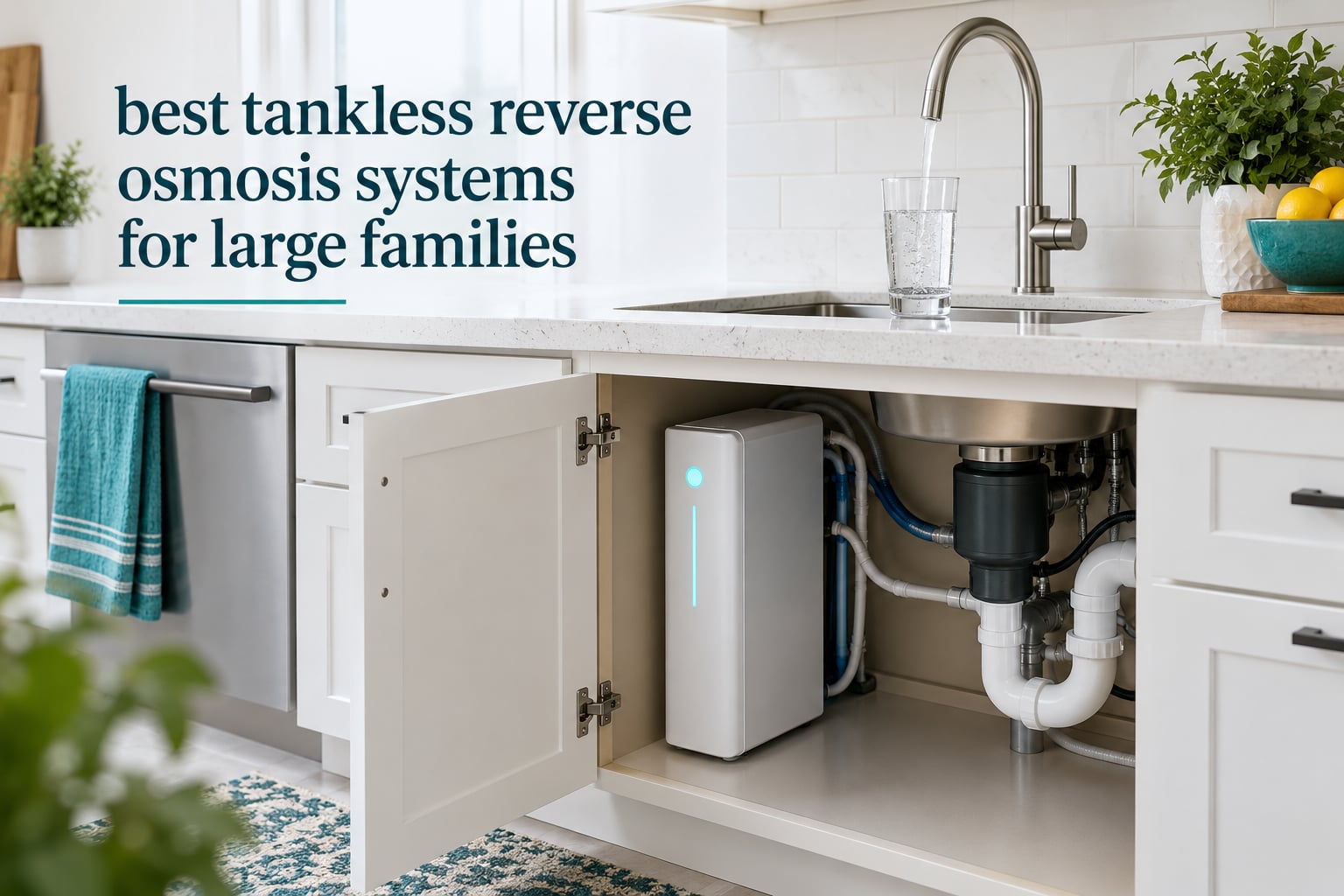
Short answer first: the best tankless reverse osmosis systems for large families are the Waterdrop G2P600 for most households of five or six, the Frizzlife PD1200 when you want maximum output and the widest certification, and the Waterdrop G3P800 when you want the deepest review history behind a proven 800 GPD design.
We spent six weeks comparing eight tankless reverse osmosis systems against the only criteria that matter in a busy household: gallons per day, real dispensing speed, pure-to-waste ratio, third-party certification and what the filters cost you in attention every year. No countertop units, no storage-tank systems that stall when four people want filtered water at once.
The number that decides almost everything is gallons per day, and 800 GPD is the threshold where a large family stops fighting the faucet. Below that, a morning with formula, coffee, a cooking pot and pet bowls will outrun the membrane. Above 1200 GPD, you are buying headroom most homes never touch. Our tankless RO roundup for families covers the general case, and this guide goes deep on the high-usage end.
Last updated for 2026. Every rating and review count below was copied from the live product listing, and every spec comes from the manufacturer’s own published data.
Table of Contents
How Much GPD Does a Large Family Actually Need?
Start with drinking water, not headcount. A large family of six using filtered water only for drinking typically pulls 2 to 3 gallons a day in total. Add cooking water, a coffee maker running twice, a kettle, an ice maker, a row of water bottles and two pet bowls and a realistic household figure lands somewhere between 8 and 15 gallons a day of purified water demand.
That is where the trap sets in. GPD is a rated daily capacity measured under ideal line pressure and steady draw, not a promise of what happens in your house. Rated capacity assumes the membrane runs near continuously. Real household use is clustered into 20-minute windows, and the system only makes water while the faucet is open.
So multiply your daily figure by two to three for peak demand, then read the ladder below.
- 600 GPD covers a household of two to four, or a family of five with modest use. Fill speed is quick, but two simultaneous hot-drink taps will slow you down.
- 800 GPD is the practical floor for a family of five or six. This is where dispensing speed stops being a complaint.
- 1000 GPD suits a family of six to seven, athletes, heavy cooking from scratch, or anyone filling many bottles at once.
- 1200 GPD and above targets households that treat water as a cooking ingredient daily, run an ice maker continuously, or currently buy bottled water by the case.
Household composition matters as much as the number of people. Infant formula and baby food prep add frequent small draws that most people forget to count. Teenage athletes and adults training in the morning create a genuine spike. A homebrewer, a serious cook who braises and boils daily, or two large dogs drinking from filtered bowls each add real volume.
Our rule of thumb: pick the tier one step above your household’s peak demand, not your average. Families almost never regret faster flow. They regularly regret a system that stalls at 7:15 in the morning.
If your under-sink cabinet is genuinely tiny, capacity is not the only variable. Our picks for tankless systems in small kitchens cover the space-constrained case, and the compact models in this roundup are worth measuring before you order.
Top 3 Tankless RO Picks for Large Families
These three cover the realistic decision range for a household of five to seven. Everything else in the roundup is a strong second choice for a specific constraint like cabinet depth, inlet pressure or a need for alkaline remineralised water.

Waterdrop G2P600
- 600 GPD tankless
- 7-stage filtration
- 2:1 pure to drain
- Three-second tool-free filter changes


All 8 Tankless RO Systems Compared in 2026
Every unit below is tankless and under-sink. GPD is rated daily production, and the pure-to-drain ratio tells you how many gallons of purified water you get per gallon of wastewater going down the drain.
| Product | Specifications | Action |
|---|---|---|
| Waterdrop G2P600 Tankless RO System 600 GPD |
|
Check Latest Price |
 iSpring RO1000-ORB Tankless RO 1000 GPD iSpring RO1000-ORB Tankless RO 1000 GPD |
|
Check Latest Price |
| Frizzlife PD1200 Tankless RO 11-Stage 1200 GPD |
|
Check Latest Price |
| Waterdrop G3P800 Tankless RO System 800 GPD |
|
Check Latest Price |
 Waterdrop X12 Alk Mineral Tankless RO 1200 GPD Waterdrop X12 Alk Mineral Tankless RO 1200 GPD |
|
Check Latest Price |
 GLACIER FRESH GFU03 Non-Electric RO 800 GPD GLACIER FRESH GFU03 Non-Electric RO 800 GPD |
|
Check Latest Price |
 iSpring RCS10T Tankless RO 1000 GPD iSpring RCS10T Tankless RO 1000 GPD |
|
Check Latest Price |
 VIOMI V8 Tankless RO System 800 GPD VIOMI V8 Tankless RO System 800 GPD |
|
Check Latest Price |
1. Waterdrop G2P600 Tankless RO System – Best Overall for Most Large Families
Waterdrop G2P600 Under-Sink RO System, 600 GPD Tankless Water Filtration
600 GPD
7-stage filtration
2:1 pure to drain
NSF/ANSI 372 lead-free
Pros
- Fills a 200ml cup in about 8 seconds
- 2:1 pure to drain cuts water use sharply
- Three-second tool-free filter changes
- Compact tankless footprint
Cons
- Lowest capacity in this roundup at 600 GPD
- Replacement filters sold separately for this model
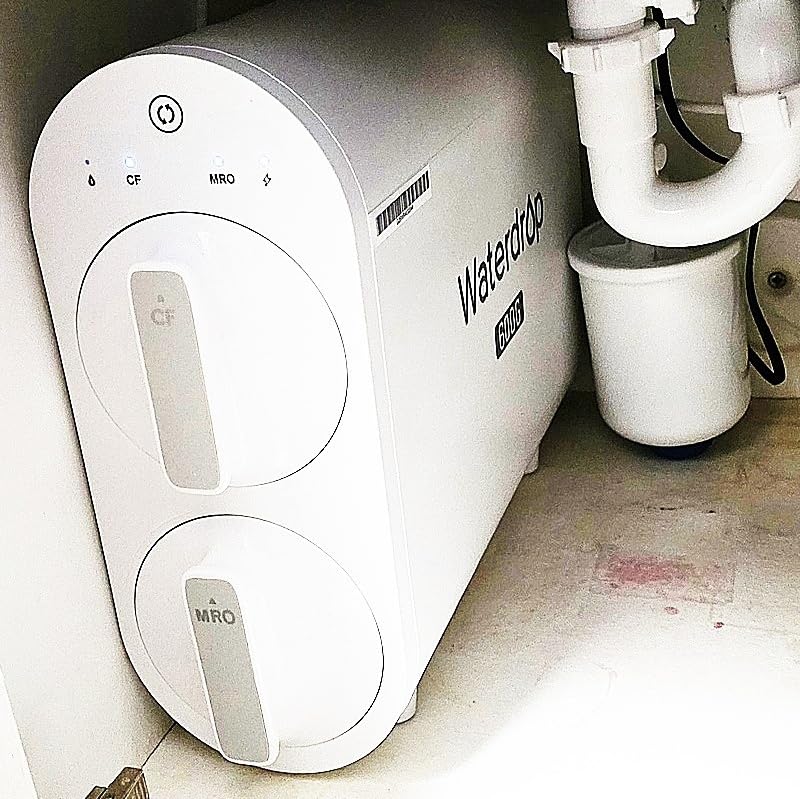
The G2P600 is the unit we kept coming back to while working through this roundup. It is a 7-stage tankless system rated at 600 GPD, with a 2:1 pure-to-drain ratio and a 200ml cup filled in roughly 8 seconds according to the manufacturer.
In practice that fill speed is what matters. You are not waiting on a tank to refill, so a second person at the sink gets water while the first is still pouring. For a household of five, or a family of six where only one or two people use filtered water heavily, that is enough.
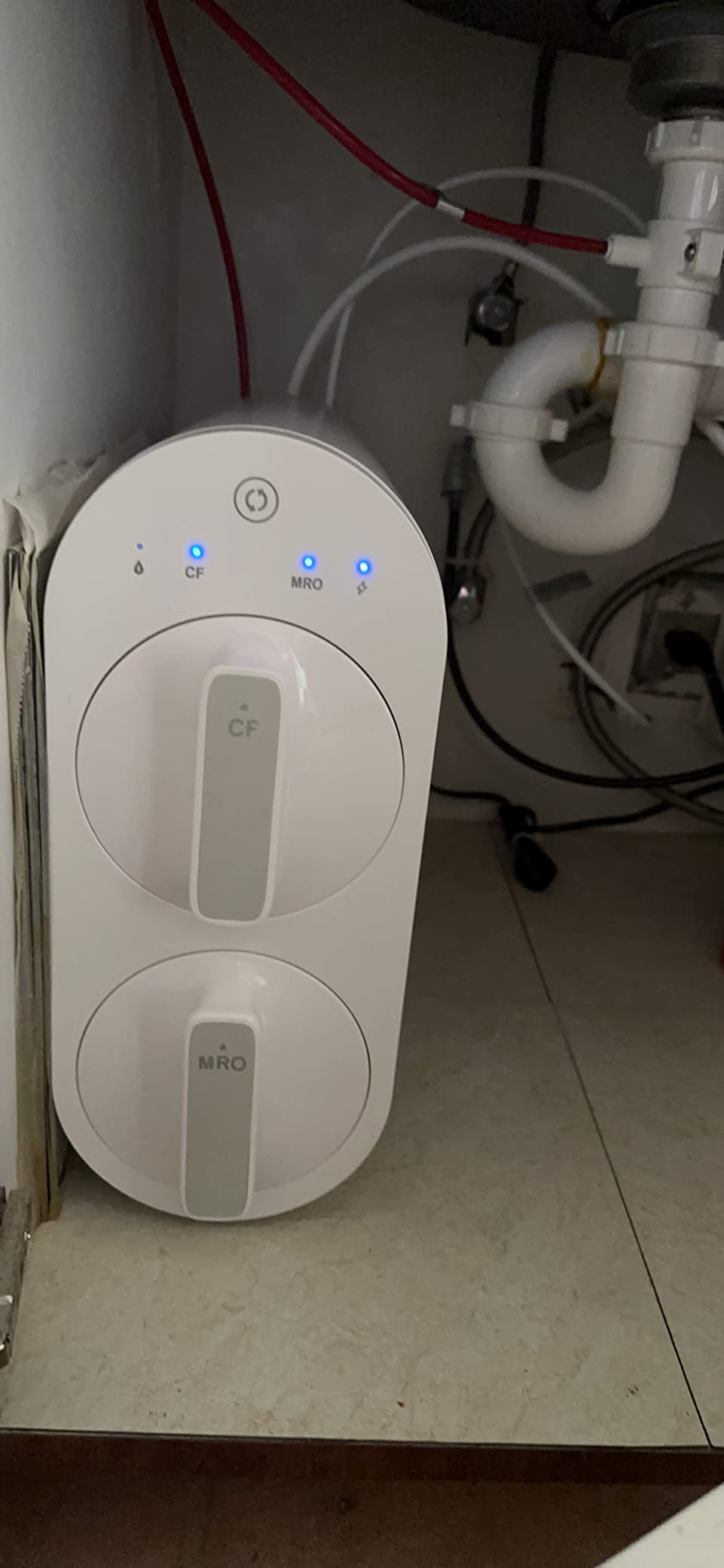
The 2:1 drain ratio is the quiet win here. Older tank-based RO systems commonly waste three gallons for every gallon purified. This one produces two, which keeps both the wastewater load and the water bill down without needing a separate efficiency add-on.
Filter changes are the part our team likes most. The twist-and-pull design swaps a cartridge in about three seconds with no tools, and the system gives you reminders when service is due. There is no quarterly scheduling chore, which matters more in year two than it did on day one.
What 600 GPD actually means in a family kitchen
Rated capacity is measured under steady draw, so treat 600 GPD as roughly 4 to 5 gallons an hour of real dispensing. That covers a family of five comfortably and a family of six most days. It strains if two people run the coffee maker and kettle simultaneously while a third fills bottles.
The unit is certified to NSF/ANSI 372 for lead-free materials, which covers the materials in contact with your water rather than the removal performance of the carbon stage. If contaminant reduction claims matter to you, look at the four-way certified models further down this list.
Where it falls short for bigger households
This is the lowest output tier in the roundup, and that is the honest limitation. Every other system here runs 800 GPD or above. A family of seven with athletes, or a household that cooks heavily every night, will feel the gap during peak windows.
Replacement filters for the G2P600 are not bundled beyond what ships in the box, so budget for them from the first year rather than assuming a starter set lasts. Overall, it remains our pick because the 2:1 ratio, the fast fill and the three-second filter swap cover the majority of large-family demand without a storage tank.
2. iSpring RO1000-ORB – Best for the Fastest Fill Times
iSpring RO1000-ORB Tankless Reverse Osmosis System, 1000 GPD Fast High Flow
1000 GPD
0.7 gpm max flow
2:1 drain ratio
Smart filter-life panel
Pros
- Highest stated flow rate here at 0.7 gpm
- 1000 GPD suits large busy homes
- Panel shows filter life and beeps when due
- Automatic 18-second membrane rinse
Cons
- Most expensive unit in this roundup
- Max supported inlet TDS listed at 300 ppm
The RO1000-ORB is the one to buy if your complaint about previous systems was waiting. Manufacturer-rated at up to 0.7 gallons per minute, it is the highest stated flow rate in this group, and at 1000 GPD it clears the sizing threshold for a family of six or seven with room to spare.
That flow number is what changes daily behaviour. A kettle filled in well under a minute stops feeling like a project, and a row of bottles for school or the gym becomes a single faucet session rather than a negotiation with the rest of the household.
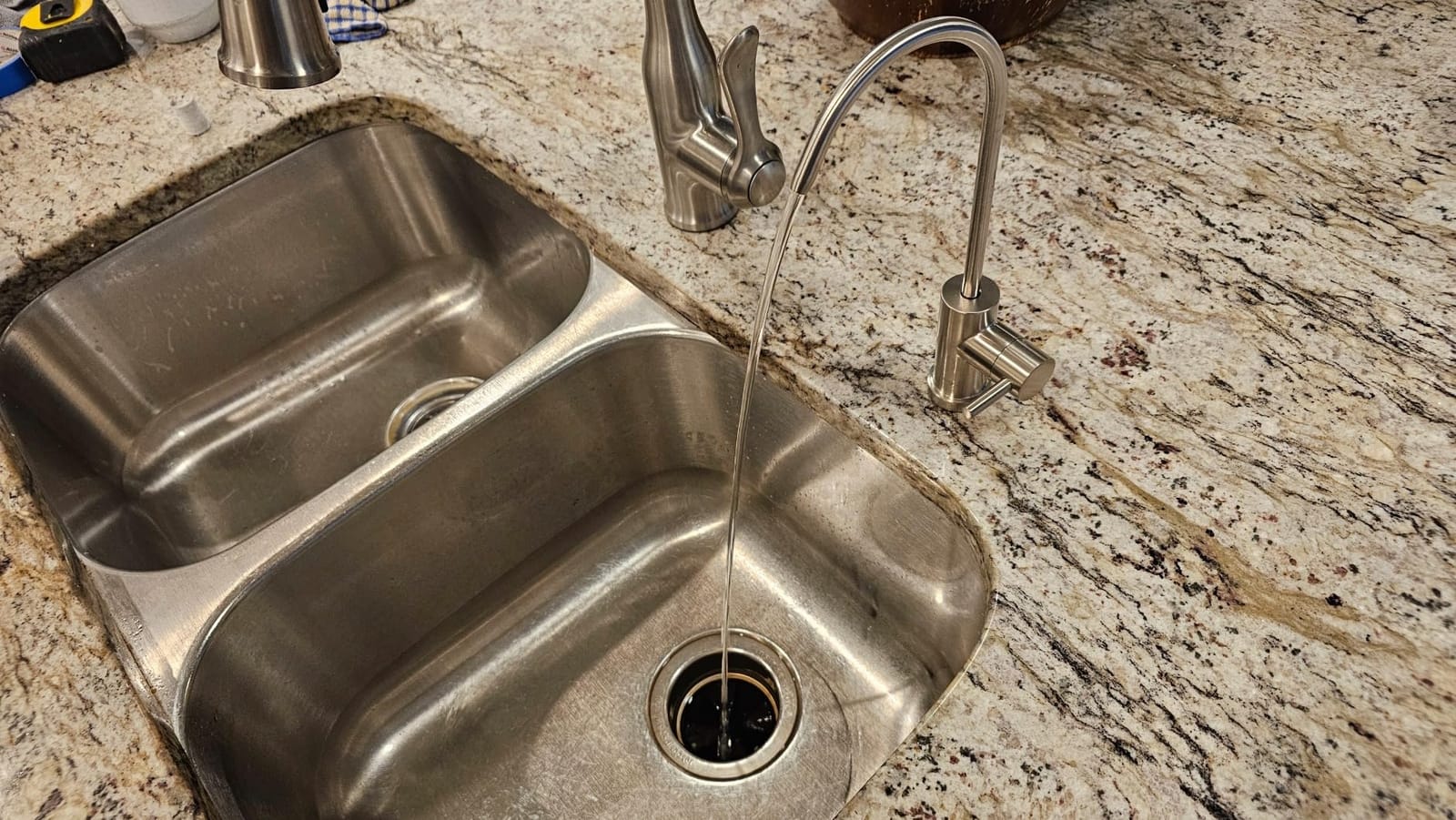
The smart panel is a genuinely useful feature in a family setting. An indicator light shows filter status and an audible beep alerts you when a cartridge is due, which is more reliable than a calendar reminder in a house with six people. Click-and-lock housings make swaps quick once the panel tells you it is time.
There is also an automatic rinse cycle. After 24 hours of inactivity the system runs the membrane for 18 seconds, which helps limit the stagnant-water off-taste that tankless systems can develop during quiet spells, like a holiday week.
When 0.7 gpm changes your routine
If anyone in the household runs a coffee maker, an ice maker or a pasta pot on filtered water, flow rate is the single spec that pays off. At 0.7 gpm you are closer to a normal tap than any other unit here, and that is the difference between using filtered water daily and reaching for bottled water when you are in a hurry.
The system handles inlet water up to 300 ppm TDS per the manufacturer. That covers most municipal supplies, but if your incoming water reads higher, the Frizzlife PD1200 and Waterdrop X12 both accept up to 1000 ppm and are safer choices.
Trade-offs to weigh before buying
This is the most expensive system we reviewed, and it is a large unit at 16.5 by 5.75 by 17.5 inches weighing 25.3 pounds. Measure the cabinet depth before you commit, especially if a garbage disposal or a plumbing trap limits clearance.
The 300 ppm inlet TDS ceiling is the practical drawback. On genuinely hard or high-mineral water it will be working near its ceiling, and membrane life shortens. For ordinary municipal supply it is a strong, fast choice with the strongest stated flow rate of the group.
3. Frizzlife PD1200 Tankless RO 11-Stage – Most Versatile for Maximum Output
Frizzlife 1200GPD Reverse Osmosis Water Filter, NSF/ANSI 42&58&372 Standards, 11-Stage Tankless RO Water Filtration System, Under Sink, 3:1 Pure to Drain, Smart Faucet, Reduce PFAS, BPA Free, PD1200
1200 GPD
11 stages at 0.0001 micron
3:1 pure to drain
NSF/ANSI 42/58/372
Pros
- Joint-highest capacity here at 1200 GPD
- Triple NSF/ANSI certification
- Accepts up to 1000 ppm inlet TDS
- Smart faucet with live TDS readout
Cons
- Needs a 30-second purge after inactivity
- Email-only support with slow replies
- Slightly louder than some rivals
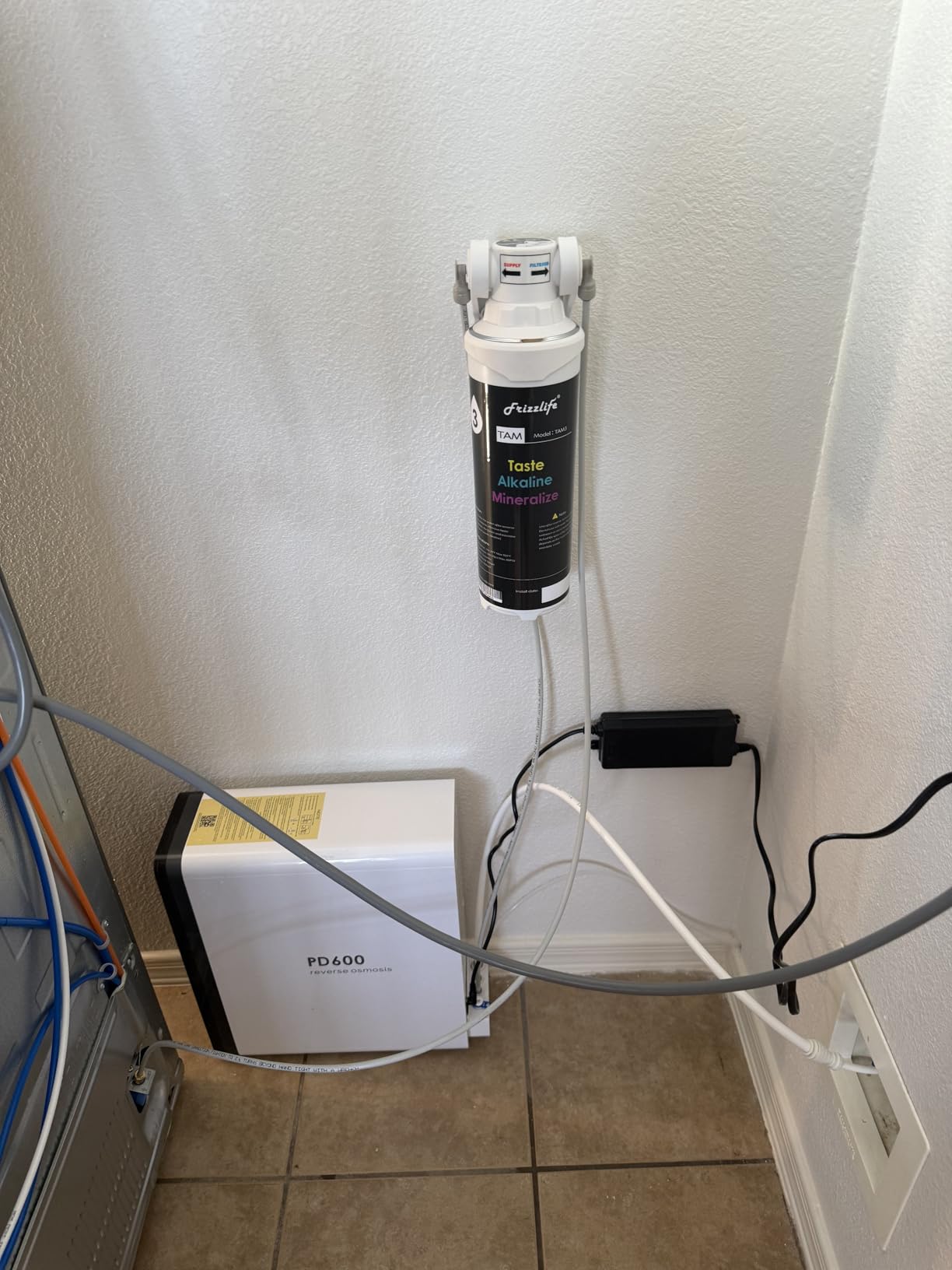
The PD1200 is the highest-output system in this roundup alongside the Waterdrop X12, and it pairs that capacity with the broadest certification story: NSF/ANSI 42, 58 and 372, with 11 stages at 0.0001-micron precision and contaminant claims covering chlorine, fluoride, lead, heavy metals, arsenic, chloramine, TDS and PFAS including PFOA and PFOS.
Manufacturer-rated fill time is about 5 seconds for a 500ml cup. For a family that treats filtered water as a cooking and hydration staple rather than a drinking-only luxury, that headroom is the entire point.
The 3:1 pure-to-drain ratio is the best efficiency figure here alongside the other 3:1 units, and it pairs with a manufacturer water-saving claim of 75%. Long-term owners in the reviews report measurable results, including one household going from roughly 330 ppm at the tap to about 6 ppm filtered.
The smart faucet displays real-time TDS and uses colour-coded indicators for filter changes. That transparency is useful in a large family because it lets everyone see whether the water is worth waiting for.
Who benefits most from 1200 GPD
Households that cook with filtered water daily, run a continuous ice maker, or currently buy bottled water by the case. At 1200 GPD you are covering well beyond normal household demand, which means no one is ever rationing the faucet. The tradeoff is that you are paying for capacity you may not use every day.
It also handles the widest range of incoming water, accepting up to 1000 ppm TDS. If your municipal supply is hard or high in minerals, or you are on a well, that headroom matters more than raw fill speed.
What to know before you install it
The final alkaline stage needs a 30-second purge run after periods of inactivity. Dispense straight from the tap after a weekend away and the first glass can read high on TDS. Our advice: run the faucet for 30 seconds after any break in use.
Support is email-only, and owners report replies taking several days. There is no phone line or live chat, which is frustrating if a leak or a fitting problem happens on a Sunday. The unit is also slightly louder than some comparable tankless systems, and one reviewer on well water reported a leak at a front foot soon after installation. Budget extra cabinet depth too, since long-term owners recommend around 50 cm even though the listed dimensions are smaller.
4. Waterdrop G3P800 Tankless RO 800 GPD – Most Compact and Best Proven for Six-Person Homes
Waterdrop G3P800 Tankless Reverse Osmosis Water Filter System, 800 GPD
800 GPD
10 stages
NSF/ANSI 42/53/58/372
3:1 pure to drain
Pros
- Largest review base of any system here
- Four-way NSF/ANSI certification
- Accurate TDS readings in independent checks
- Automatic self-flush function
Cons
- Consumable filters cost more than rival brands
- Needs an unswitched outlet under the sink
- Faucet needs a larger sink cutout
The G3P800 has more than 5,000 reviews behind it, more than double what most other units here carry, and that volume of long-term owner feedback is worth something on its own. You can read years of reports on membrane condition, filter availability and support responsiveness before you commit.
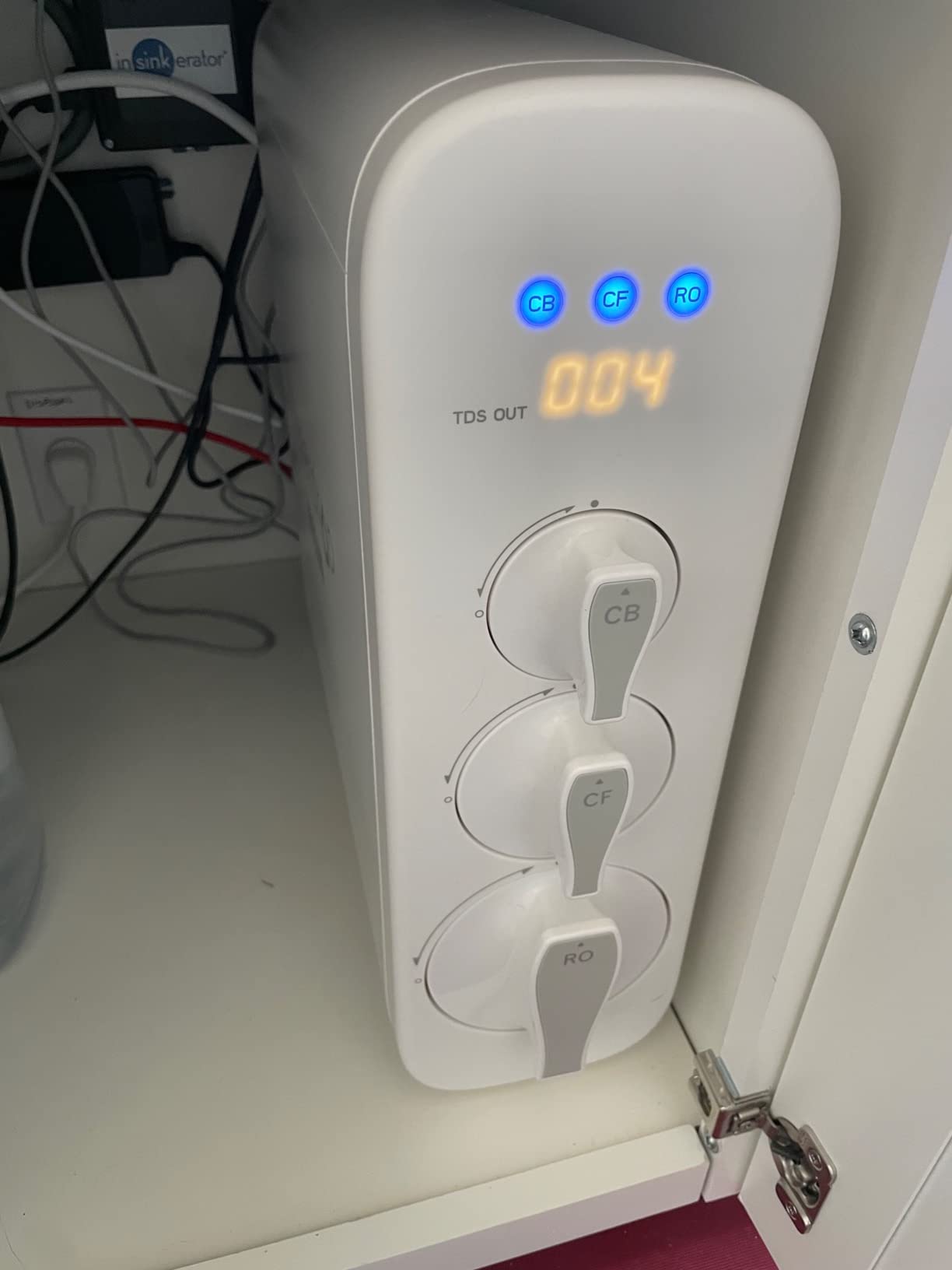
At 800 GPD with a 3:1 pure-to-drain ratio and a cup filled in about 5 seconds, it sits at the sizing threshold we consider the sweet spot for a family of six. The certification is the strongest in the roundup: NSF/ANSI 42, 53, 58 and 372, verified by IAPMO R and T, with 10-stage filtration tested by SGS.
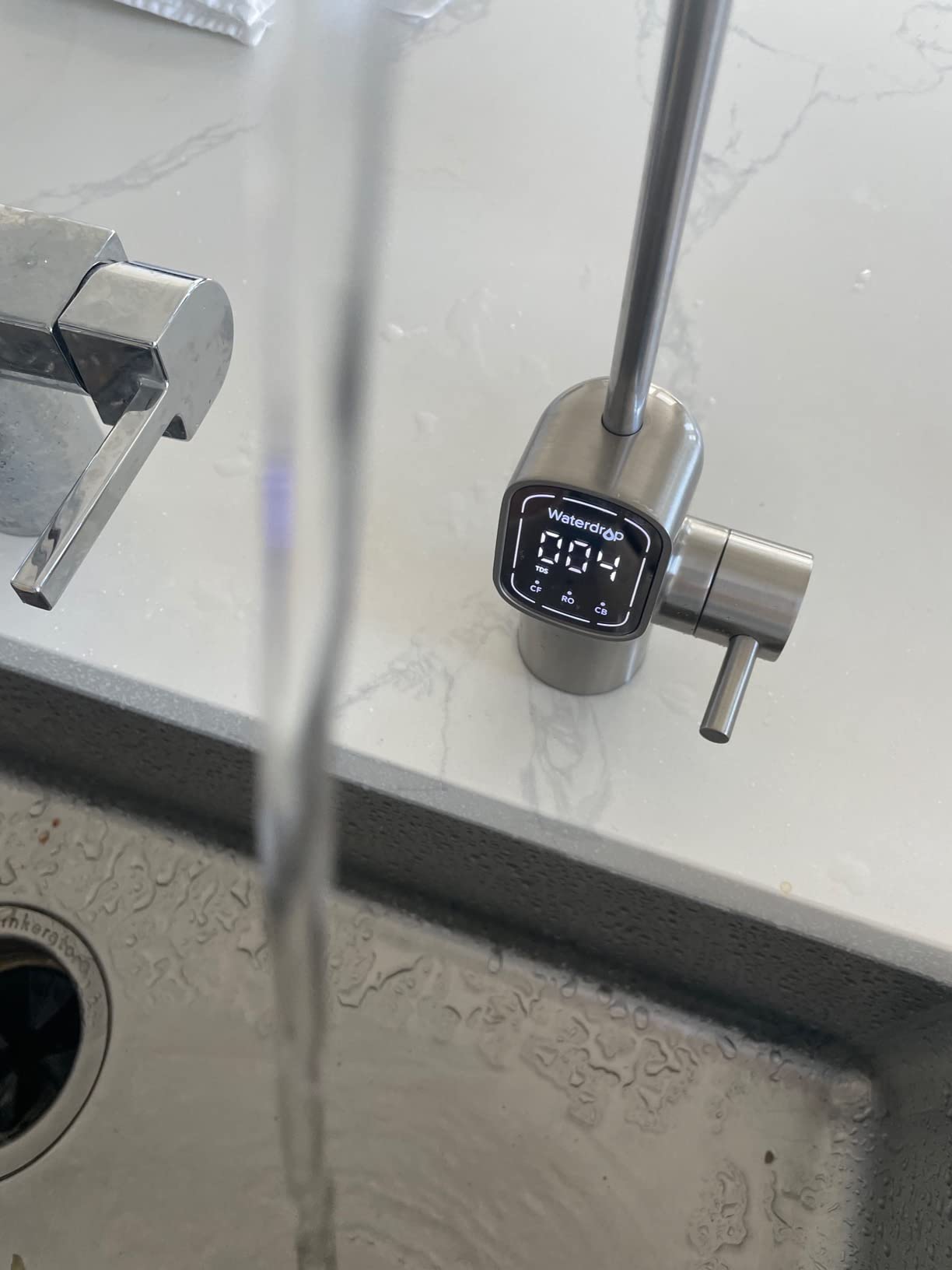
The smart LED faucet shows the TDS level and water quality at a glance, with a colour-coded ring that moves from blue to yellow to red as filters age. The LED is rated for a 50-year lifespan, which is a slightly silly spec but tells you the indicator will outlive the cartridge changes.
Because it is tankless, there is no pressure vessel holding stagnant water. That removes a category of complaint that tank-based owners raise repeatedly about off-taste and bacterial growth in the post-filter stage. An automatic self-flush function handles short idle periods.
Why the certification matters more than the capacity number
NSF/ANSI 58 covers reduction of total dissolved solids in reverse osmosis systems, and NSF/ANSI 53 covers health-related contaminants such as lead and arsenic. NSF/ANSI 42 covers taste and odor, and 372 covers lead-free materials. Having all four verified by an accredited body means the removal claims are third-party checked rather than manufacturer assertions.
That distinction matters if you care about what the system actually removes from your water. If you only want softer-tasting drinking water and are on low-TDS municipal supply, the cheaper certified options here will serve you just as well.
Where families report friction
The most common sustained criticism is the cost of replacement filters, which owners consistently rate as more expensive than competing brands’ consumables. Budget for this annually rather than treating filters as a one-time purchase. You also need an unswitched power outlet under the sink, and the dedicated faucet requires a larger sink cutout than a small standard RO faucet.
A few owners mention the automatic flush can trigger after a very small amount of water is used. It is a minor irritation, not a fault. For a family of six that wants proven long-term performance and the deepest certification in the group, this is the pick we keep recommending.
5. Waterdrop X12 Alkaline Mineral RO 1200 GPD – Best for Families Who Want Remineralised Water
Waterdrop X12 Alkaline Mineral Reverse Osmosis System, 1200 GPD, Under-Sink
1200 GPD
Alkaline mineral boost
24-month RO filter life
3:1 pure to drain
Pros
- Adds calcium and magnesium back into the water
- 24-month RO filter life cuts replacement frequency
- Digital faucet shows output and TDS
- Three-stage NSF/ANSI certification with SGS testing
Cons
- Alkaline cartridge slightly raises TDS readings
- Rated flow of 0.4 gpm trails the 800 and 1000 GPD units
- Thin long-term evidence at 331 reviews
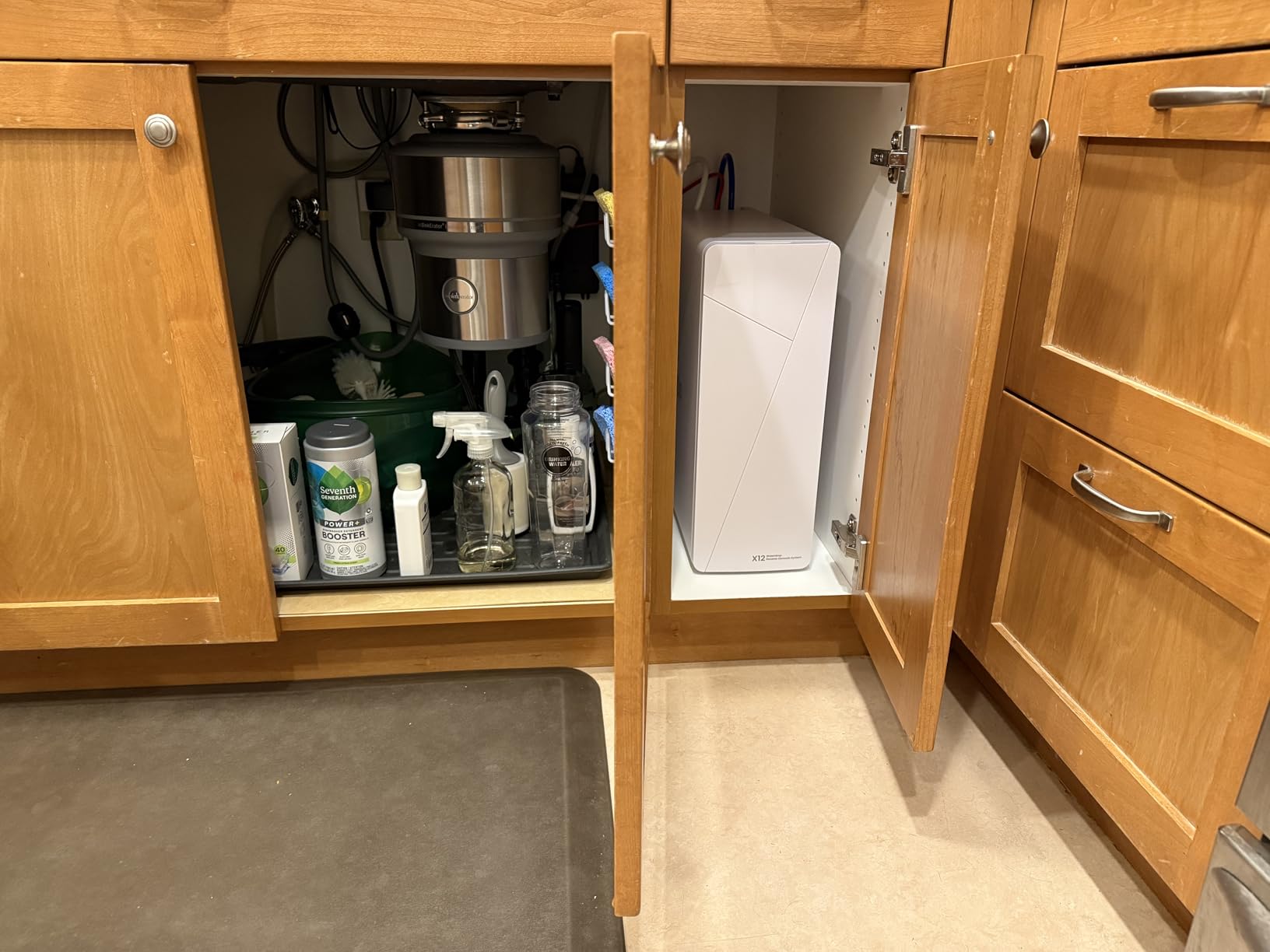
The X12 is the unit to consider if anyone in the household is drinking more than a gallon of RO water a day. Its alkaline mineral boost re-adds calcium and magnesium after the membrane strips them out, which addresses the single most common concern raised in water treatment forums by heavy drinkers.
It is also rated at 1200 GPD with a 3:1 pure-to-drain ratio and an 11-stage build on a 16-layer 0.0001-micron membrane tested by SGS. It is certified by IAPMO R and T to NSF/ANSI 42, 58 and 372, and it accepts inlet water up to 1000 ppm TDS.
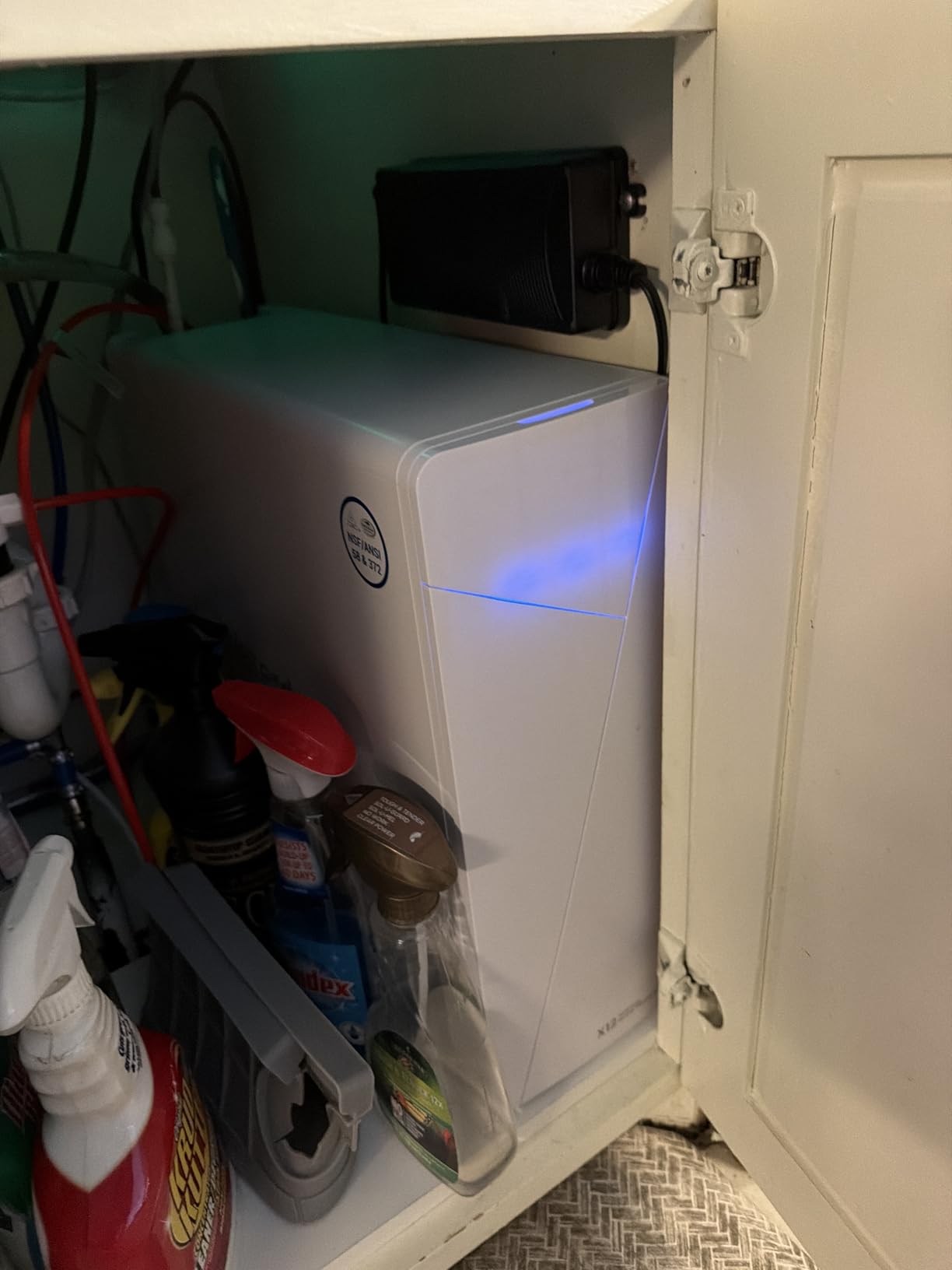
The 24-month RO filter life is the standout specification. Most systems here advertise annual or two-year intervals, and several require a full pre-filter change at six months. Fewer service points per year means fewer reminders to forget and lower total maintenance attention.
The smart digital faucet shows quantitative water output alongside TDS and filter life, so you can see exactly how much purified water you have pulled and how much cartridge remains.
Why remineralisation matters at high volumes
RO water is stripped of dissolved minerals, which is what makes it taste flat and pure. At one or two glasses a day that is irrelevant. At the volumes a large family pulls for cooking, formula prep and hydration, several people are getting essentially demineralised water as a significant share of their intake, and adding calcium and magnesium back is a reasonable response.
Our pick for detailed coverage is our remineralization RO guide. The short version: the taste difference alone justifies it for many households, independent of the mineral argument.
Trade-offs to plan around
Waterdrop itself notes that the F1A alkaline filter can cause a slight TDS increase because it contains the mineralisation stage. So a TDS reading on this system will not match a plain RO reading, and that is expected rather than a fault.
Rated flow is 0.4 gpm, below the 0.6 and 0.7 gpm figures on the Glacier Fresh and iSpring RO1000-ORB, so despite the 1200 GPD daily rating the faucet will not feel as fast in the moment. The review base is also small at 331 reviews, so long-term durability evidence is thinner than for the models with review counts in the thousands.
6. GLACIER FRESH GFU03 – Best Value and Best for Homes Without an Outlet
GLACIER FRESH GFU03 Electric-Free Reverse Osmosis Water Filter 800 GPD
800 GPD
Non-electric
NSF/ANSI 58/372/401
3:1 pure to drain
Pros
- No power outlet and zero operating noise
- 800 GPD at 0.6 gpm
- Certifications include NSF/ANSI 401
- Rinse and install complete in about 30 minutes
Cons
- Flow drops after roughly the first quart
- Included hole saw is wider than some sinks need
- Plasticky taste for the first few days after setup
The GFU03 solves the problem that stops a lot of families before they start: there is no electrical outlet under the sink. It runs on line water pressure alone, which also means zero operating noise. If your kitchen opens onto the living space, that silence matters more than most spec sheets suggest.
It still delivers 800 GPD at up to 0.6 gpm with a 3:1 pure-to-drain ratio, and it carries an unusual certification set for the price tier: NSF/ANSI 58, 372 and 401. Filtration is five stages through a 0.0001-micron membrane, with claims covering PFOA, PFOS, chlorine, lead, fluoride and heavy metals.
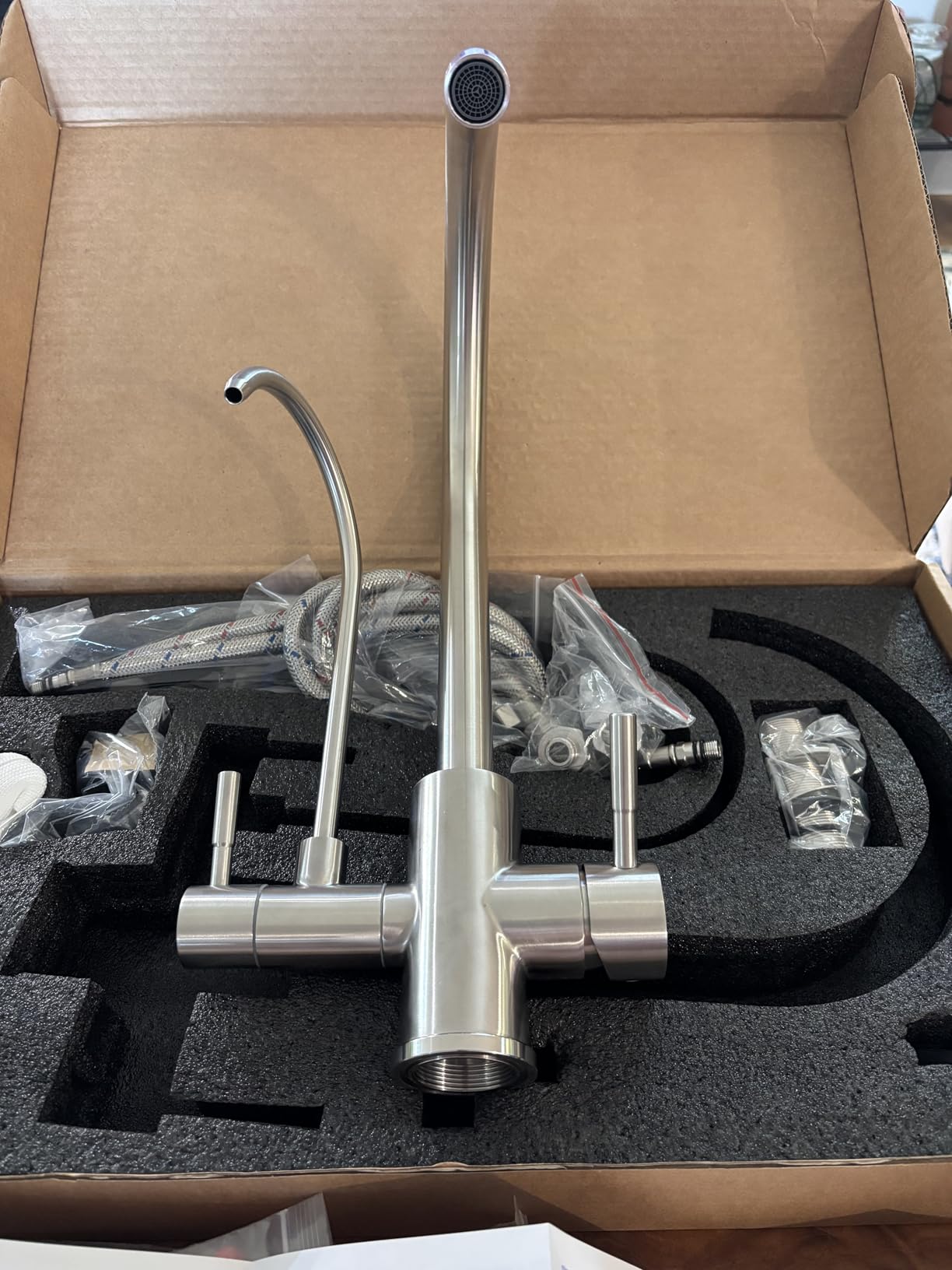
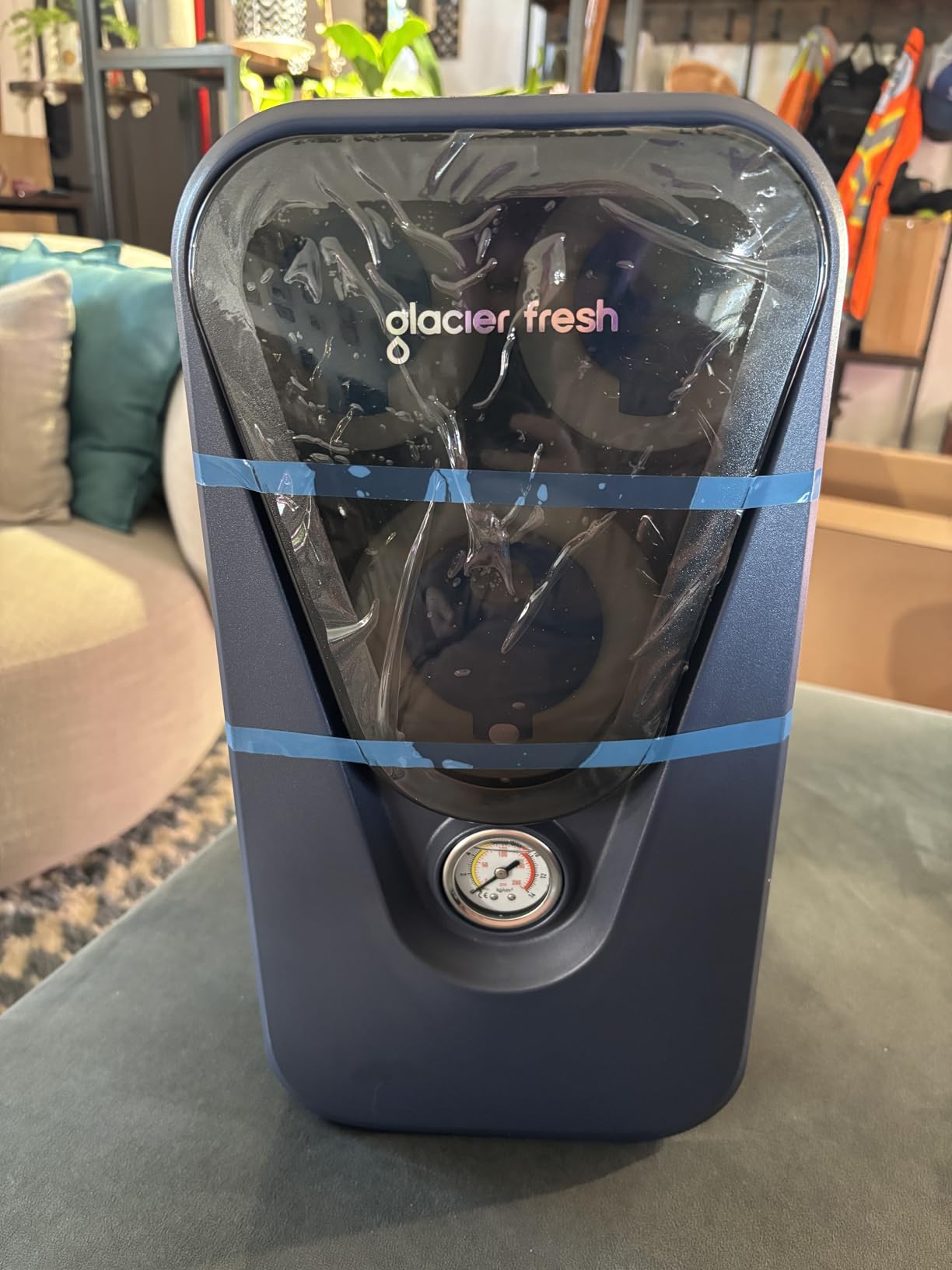
A built-in pressure gauge is a smart addition. You can see whether your line pressure is enough for full flow, and the manufacturer recommends at least 40 psi. If your flow disappoints, the gauge tells you whether the cause is the water or the unit.
Independent TDS meters in the reviews show large reductions, including figures around 365 ppm down to 16 ppm and 129 ppm down to 18 ppm. The cartridge pulls out in about three seconds with no tools, though you should rinse for 10 to 20 minutes after each change.
What living without a pump actually costs
Without a booster pump the system depends on incoming pressure, and that shows up in one specific place: flow drops noticeably after roughly the first quart you dispense. Fill a single large water bottle and you will feel it. Fill a mug and you will not.
If your family’s pattern is one person at a time, this is invisible. If you routinely fill a dozen bottles for a school week, or run a kettle and a pasta pot back to back, the pumped units in this roundup will serve you better.
Install details worth checking first
The unit requires a drilled hole of roughly half an inch to an inch for the faucet. One buyer reported the feed and drink ports labelled incorrectly on the unit they received, so verify connections before you seal anything. The included hole saw is also wider than some sink materials need, and the adapters are not universal outside US plumbing sizes.
Water can taste slightly plasticky for the first few days after installation, which settles once the carbon block has fully conditioned. On value per dollar for a non-electric 800 GPD unit with 401 certification, nothing else in this roundup comes close.
7. iSpring RCS10T 1000 GPD Tankless RO – Best for Low Inlet Pressure
iSpring RCS10T Reverse Osmosis Water Filter, 5 Stage Tankless RO Water Filtration System for Commercial & Residential, High-Flow 1000 GPD, 2.5:1 Pure to Drain Ratio
1000 GPD
Built-in booster pump
2.5:1 pure to drain
36-month membrane
Pros
- Booster pump handles low inlet pressure
- 36-month membrane life is the longest here
- Quiet booster pump operation
- Rated for light commercial as well as home use
Cons
- Widest rating spread with a 9 percent one-star share
- Some models force a flush cycle before every dispense
- Manual documentation is inconsistent on pressure values
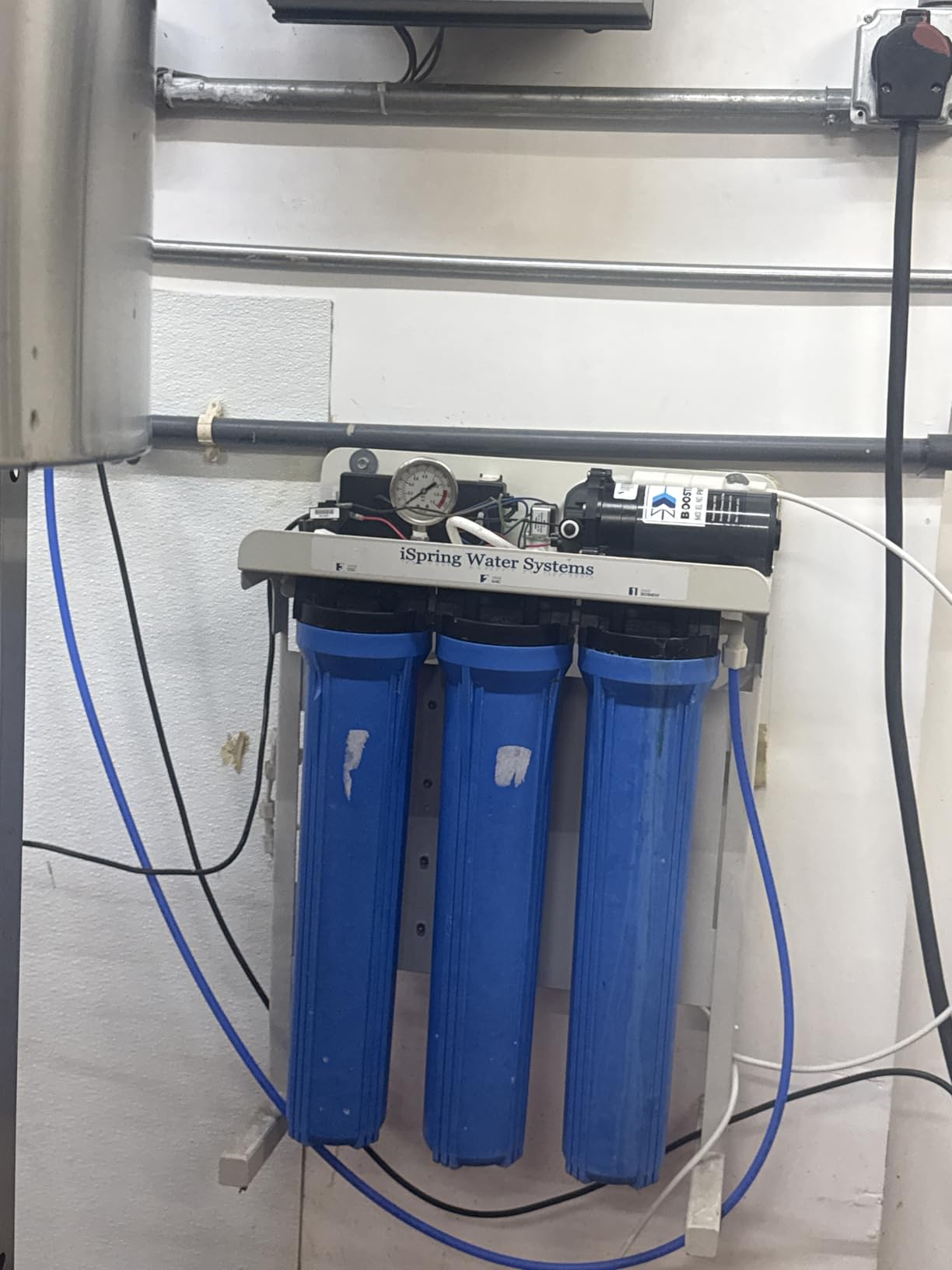
The RCS10T exists for one reason: old houses, apartments above the main line, and long runs from the shutoff often deliver lower pressure than a modern RO membrane wants. The built-in booster pump raises inlet pressure so the membrane can hit its 1000 GPD rating instead of undershooting.
At 2.5:1 pure to drain it sits between the 2:1 and 3:1 units in this roundup, and the 36-month membrane life cycle is among the longest service intervals stated in the group. Replacement cartridges are stage-specific: FP15 at 6 months, FG15, FC15 and FT15 at 12 months, and the MS10 membrane at 36 months.
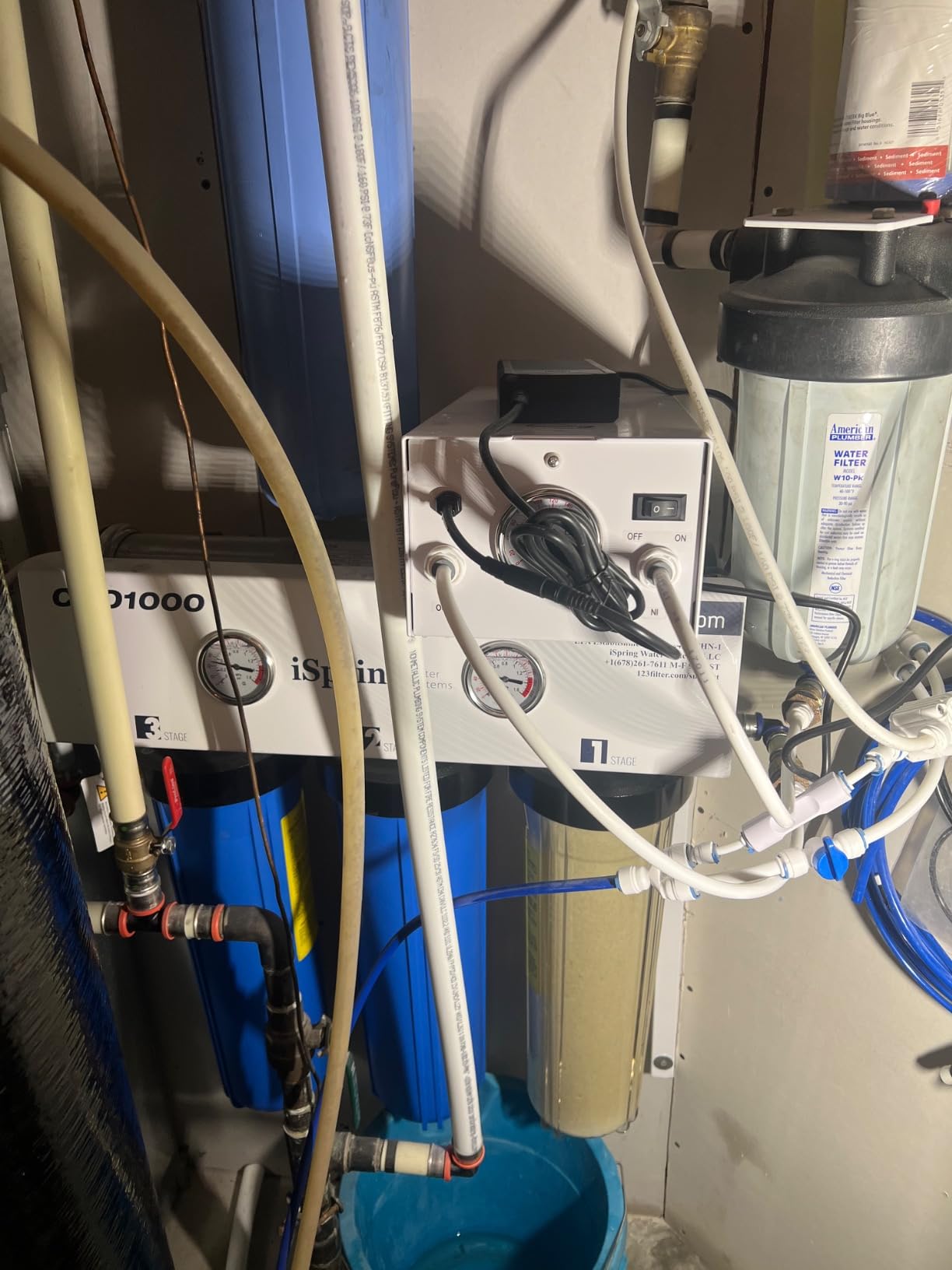
Owners running this in commercial settings report high sustained output and quiet booster operation. iSpring support is repeatedly described in reviews as responsive and helpful, and there is a 30-day money-back guarantee with a 1-year manufacturer warranty that extends on registration.
It is rated for residential kitchens, offices and light commercial use, so it is one of the few units here that scales beyond a single household if your situation changes.
When a booster pump is the deciding feature
If you have already tried an RO system and it produced far less than rated, low inlet pressure is the most likely explanation and a booster pump is the fix. It is also the deciding factor in older homes where a plumber would otherwise need to run a new line before an unpressurised unit would work at all.
The quiet operation is worth noting given how common pump noise complaints are in the water treatment community. Homeowners describe pumped systems as rattly or hum-prone in general, and this booster is repeatedly described as quiet in the reviews.
Where it falls short
The 4.4 average rating is the second-lowest here, with a 9 percent one-star share, the highest in the group. Detractors specifically mention a mandatory flush cycle of about 10 seconds before every dispense on some iSpring models, which adds friction to quick top-ups.
Running a 1000 GPD system hard also consumes membrane life faster than a smaller unit used lightly, which raises your long-run filter costs. Documentation has been described as confusing and inconsistent on pressure units. If you want the best warranty and support experience in this roundup, the Waterdrop and Glacier Fresh options are steadier.
8. VIOMI V8 800 GPD Tankless RO – Best for Tight Under-Sink Cabinets
VIOMI V8 Reverse Osmosis Water Filtration System, Tankless 800GPD RO Filter
800 GPD
9 stages at 0.0001 micron
Up to 4-year filter life
NSF/ANSI 42/53/372
Pros
- Smallest footprint at 16.3 by 5 by 12.8 inches
- Up to 4-year filter package life
- 800 GPD fills a 6oz cup in about 5 seconds
- 3:1 pure to drain with 75 percent efficiency
Cons
- Works only with the included faucet
- Requires two drilled holes and a dedicated outlet
- Lowest average rating in this roundup at 4.3
- Only 900 ppm max supported inlet TDS
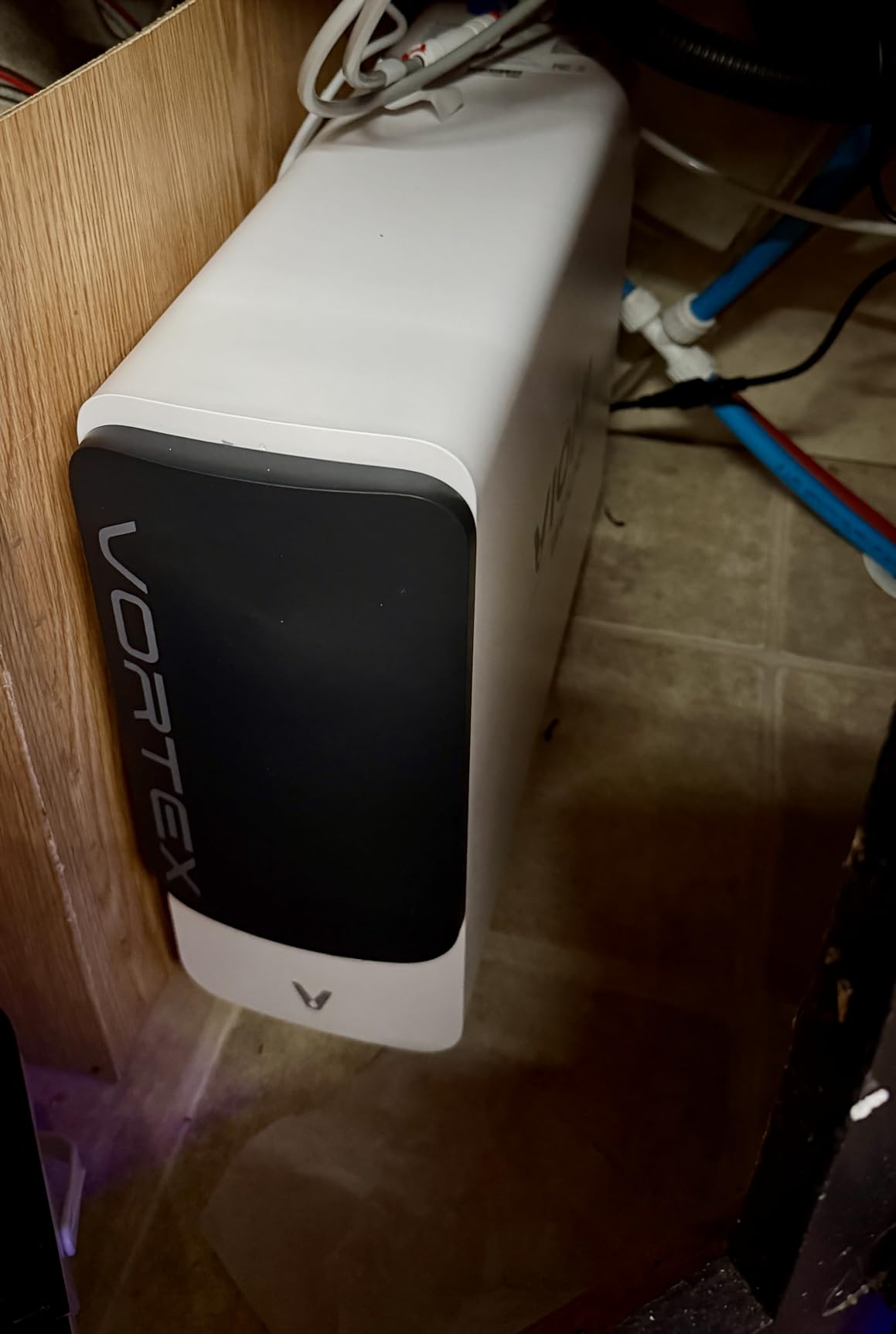
The V8 is the narrowest unit in this roundup at 16.3 inches deep, 5 inches wide and 12.8 inches high, and the manufacturer claims it frees up to 65 percent of under-sink space. If your cabinet is the constraint rather than your capacity, this is the one to measure first.
It still delivers 800 GPD with a 3:1 pure-to-drain ratio and 75 percent purification efficiency, filling a 6oz cup in about 5 seconds. Filtration is nine stages through a 0.0001-micron membrane, certified to NSF/ANSI 53, 42 and 372, with stated TDS reduction of up to 90.35 percent, PFOS above 99.88 percent and PFOA above 99.6 percent.
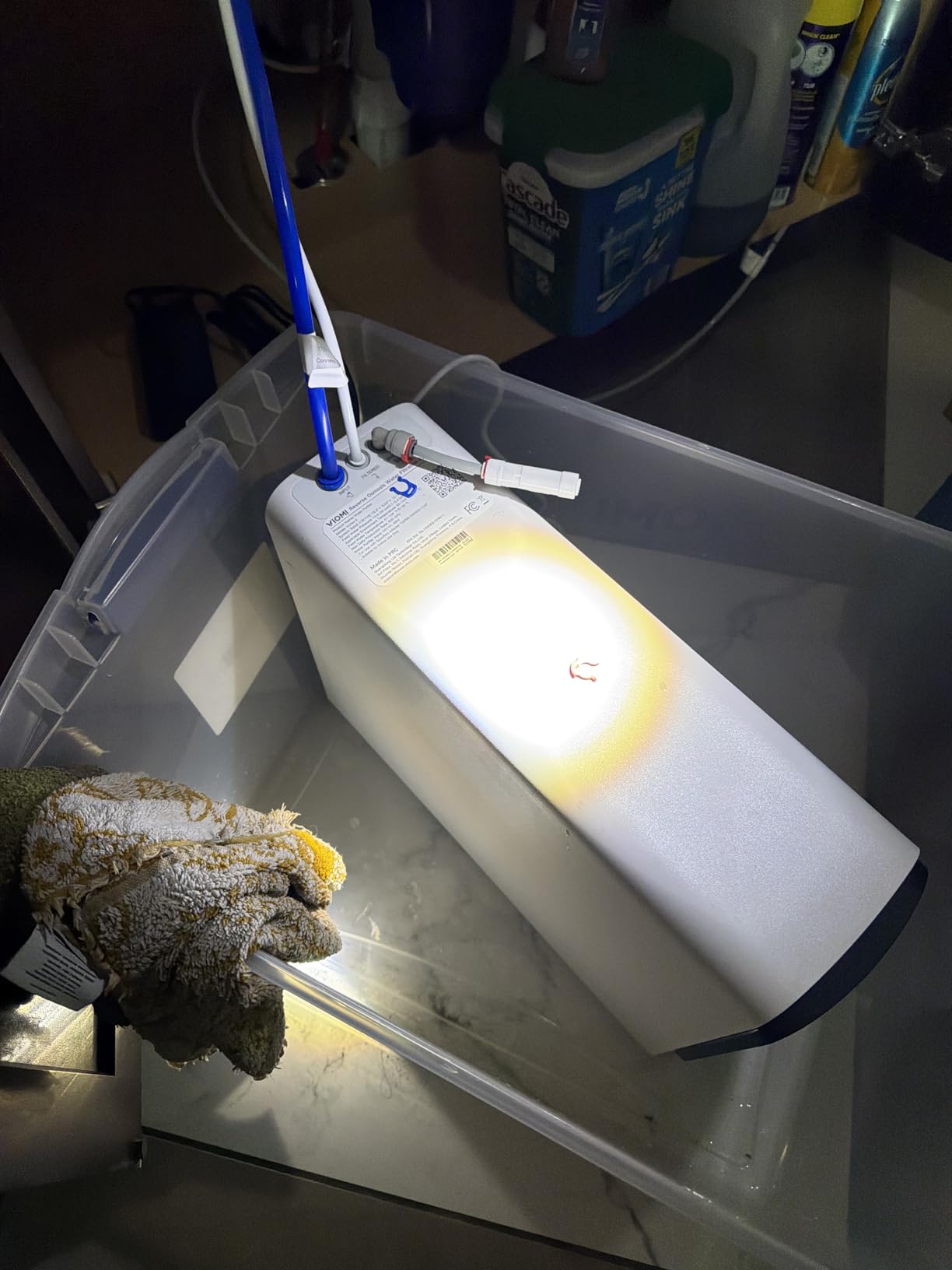
The standout practical feature is filter longevity. The package includes two PCB pre-filters and one RO filter, with a stated lifespan of up to four years, which is the longest filter interval of any unit here. Fewer cartridge swaps over the life of the system is a real saving in both money and attention.
The LED faucet glows orange when replacement is due, which is a simple signal every family member can read without opening the cabinet.
The faucet limitation you need to know about
The V8 works only with the faucet included in the box. It cannot connect to another faucet, and it cannot feed a refrigerator or ice maker. That rules it out if part of your plan is a second tap for the fridge, which several larger systems in this roundup handle naturally.
It also requires two drilled holes, one for the countertop faucet and one under the sink for the drain line, plus a dedicated electrical outlet and 2 to 3.9 inches of rear clearance. Installation is quoted at about 20 minutes using a four-step video guide.
Where the rating reflects the friction
The 4.3 average is the lowest in this roundup, with 71 percent five-star and 9 percent three-star. Buyers like the capacity-to-size ratio and the four-year interval. The complaints cluster around installation rigidity: the proprietary faucet, the two holes, the outlet and the clearance requirement.
Inlet TDS support tops out at 900 ppm, so it is unsuitable for very high-mineral water. If your cabinet is tight and you do not need a fridge hookup, the space saving justifies the trade-offs. If you need an ice maker, pick a different unit.
Tankless vs Tank-Based RO for Large Families
The tank decision is the one most large households agonise over, and the honest answer depends on when your water use actually happens. Tank-based systems use line pressure to fill a storage vessel, then push that stored water through the membrane. Tankless systems use a permeate pump to drive water through the membrane only while the faucet is open.
For clustered use, tankless wins. There is no stored reservoir sitting at low pressure waiting to be drawn down, so fill speed stays consistent from the first cup to the twentieth. Tank-based units are noticeably slower once the tank empties, which in a household of six typically happens at the worst possible moment.
Three other differences are worth weighing. Tank-based units keep filtered water in a plastic vessel, and owners report off-taste and biofilm concerns after long idle periods, which tankless avoids entirely. Tankless units need an unswitched power outlet under the sink, unless you choose a non-electric model, and the pump is a failure point that does not exist on a tank system.
A tank is still fine if your filtered water use is genuinely low. One or two people drinking a glass of water a day, or a couple who cook with filtered water occasionally, will get consistent flow from a tank unit with no outlet and no pump. Our other guides cover entry-level RO systems and whole-home options, including a well water guide if your supply is untreated.
How Much Water Does a Tankless RO Waste?
Every RO system sends more water down the drain than it delivers. That is the physics of forcing water through a semi-permeable membrane, and the only variable is how much. Buyers who understand the ratio tend to be far less disappointed six months in.
Pure-to-waste ratio expresses gallons of purified water per gallon of wastewater. Take a household of six using 12 gallons of purified water daily:
- 2:1 ratio produces 12 gallons purified and 12 gallons of wastewater, or 24 gallons of total water use a day, roughly 8,760 gallons a year.
- 2.5:1 ratio produces 12 gallons purified and roughly 18 gallons of wastewater, about 10,950 gallons a year.
- 3:1 ratio produces 12 gallons purified and 8 gallons of wastewater, about 7,300 gallons a year.
The gap between a 2:1 and a 3:1 unit is roughly 1,460 gallons a year for this household. That is meaningful on a water bill, and it is the single clearest reason to avoid older 1:1 and 1:2 designs that remain on the market.
Now the other side of the ledger. A household of six buying bottled water for drinking and cooking at roughly a gallon a day uses about 365 gallons a year, plus the plastic. A tankless RO at the volumes above produces far more purified water than that, so the system covers drinking and cooking comfortably and still has capacity left. Families who move to filtered water mainly to cut plastic report the habit change, not the water bill, as the deciding benefit.
What to Look for When Buying a Tankless RO System
Start with the number that governs everything else: sustained fill speed at the faucet, measured in gallons per minute, not just rated GPD. Two systems with identical 800 GPD ratings can feel completely different because one pairs its membrane with a booster pump and the other does not.
Then check certification carefully, because the numbers mean specific things. NSF/ANSI 58 certifies reduction of total dissolved solids in RO systems. NSF/ANSI 53 certifies reduction of health-related contaminants such as lead and arsenic. NSF/ANSI 42 covers taste, odor and particulate, and does not verify contaminant removal. NSF/ANSI 372 certifies lead-free materials. NSF/ANSI 401 covers optional trace contaminants such as cryptosporidium. Look for verification in an accredited database rather than trusting a badge on a listing.
Remineralization is the next decision. If more than one person drinks more than a gallon of RO water a day, a post-carbon mineral cartridge such as the one on the Waterdrop X12 is worth considering. It costs a little more and taste improves noticeably.
On hard water, check the maximum supported inlet TDS before you buy. The figures here range from 300 ppm on both iSpring models up to 1000 ppm on the Frizzlife PD1200 and Waterdrop X12. Higher hardness means more scaling on the membrane and faster loss of rated capacity, so match the unit to your actual incoming water.
Three practical items close out the checklist. Confirm the outlet situation, since most tankless units need an unswitched power outlet under the sink that many kitchens do not have. Measure cabinet depth and width against the listed dimensions, allowing extra room for the drain line. And look up the replacement filter set and its interval before buying, because annual consumable cost is what separates a good system from an expensive one.
On noise, be realistic. Pump hum is the most common complaint in water treatment forums, described variously as rattly or louder than expected, and it is why the non-electric Glacier Fresh model appeals to open-plan kitchens. Pump failure is a genuine downside of pumped systems, and warranty length varies considerably across this roundup.
How to Install an Under-Sink Tankless RO System
Most of these units install in 20 to 30 minutes with quick-connect fittings, but the plumbing details decide whether the job is smooth. Work through them in order.
- Measure the cabinet first. Check depth, width and rear clearance against the manufacturer’s listed dimensions, and note where the cold water shutoff and drain are.
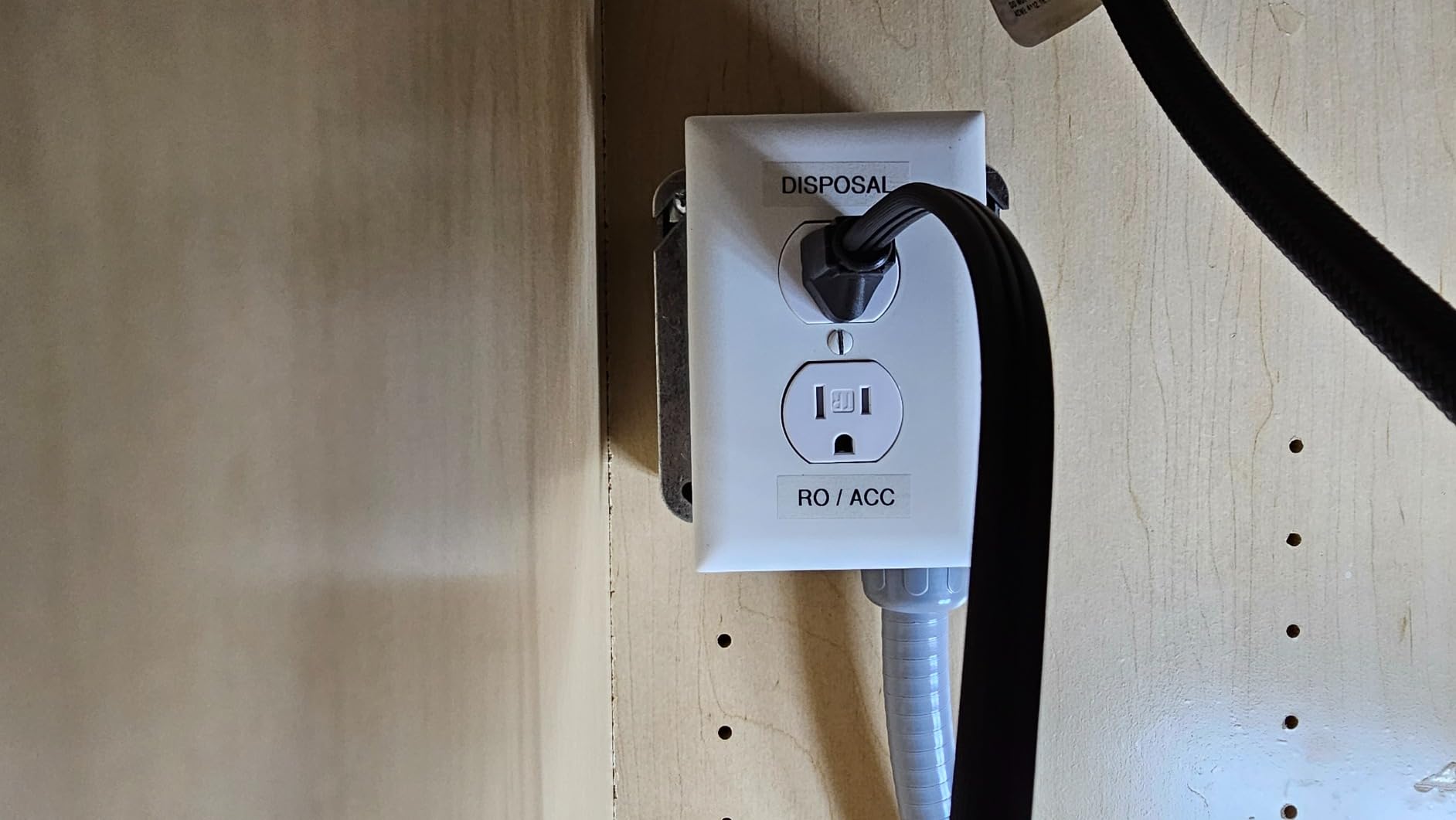
- Confirm the power situation. Pump-driven tankless units need an unswitched outlet under the sink. If you do not have one, either install it or choose a non-electric model.
- Drill the faucet hole. Check the required diameter against your sink material, since thin stainless and thicker composite sinks take different bits.
- Mount the faucet and check clearance. Leave room below for tall containers to fill and for the filter housings to be pulled out.
- Connect the feed line to the cold water shutoff with a tee or adapter, and run the purified line to the faucet.
- Route the drain line to a true air gap. Never connect the brine line directly into the sink drain without an air gap fitting, because wastewater can backflow into the purified line.
- Flush the filters. Run the faucet for the time the manual specifies, usually 10 to 20 minutes, and confirm the TDS reading on the display drops to the expected range before anyone drinks it.
If you are adding an ice maker or refrigerator line, check compatibility first. The VIOMI V8 works only with its included faucet and cannot feed a fridge, so verify before you buy rather than after drilling. If your installation involves a new outlet, a new air gap fitting or a hole in a stone countertop, that is plumber territory and a good use of professional help.
Frequently Asked Questions
Who makes the best tankless reverse osmosis system?
For a large family, the Waterdrop G2P600 is our overall pick, with a 2:1 pure-to-drain ratio, a 200ml cup filled in about 8 seconds and three-second tool-free filter changes. Households wanting maximum output should consider the Frizzlife PD1200 at 1200 GPD with NSF/ANSI 42, 58 and 372 certification.
What is the best water purifier for a large family?
A tankless reverse osmosis system rated at 800 GPD or higher is the right choice for a household of five to seven. Below 800 GPD a busy morning of formula, coffee, cooking and pet bowls outruns the membrane. At 800 GPD, dispensing speed stops being a daily complaint.
Are tankless reverse osmosis systems better?
Tankless systems are better for large families with clustered water use, because they deliver consistent fill speed from the first cup onward and store no stagnant filtered water. Tank-based units are simpler, need no power outlet and have no pump to fail, which makes them reasonable for households using only one or two glasses a day.
Is RO water hard on the kidneys?
Public health guidance including CDC and EPA material does not identify reverse osmosis water as harmful to healthy kidneys, and properly maintained RO systems routinely supply drinking water. If anyone in your household drinks more than a gallon a day, a remineralization cartridge such as the one on the Waterdrop X12 restores calcium and magnesium and improves taste.
Do tankless RO systems need an electrical outlet?
Most do, because a permeate pump drives water through the membrane while the faucet is open. Look for an unswitched outlet under the sink that stays powered. The GLACIER FRESH GFU03 is the exception in this roundup, running on line water pressure alone with no outlet and zero operating noise.
How much water does a tankless RO system waste?
It depends on the pure-to-drain ratio. A family of six using 12 gallons of purified water daily sends about 12 gallons of wastewater to the drain daily at a 2:1 ratio, roughly 8,760 gallons a year. At 3:1 the same household sends about 7,300 gallons a year, which is a meaningful difference on a water bill.
The Best Tankless Reverse Osmosis Systems for Large Families
After six weeks of comparing these eight tankless reverse osmosis systems, the Waterdrop G2P600 remains our choice for most large families. It fills a 200ml cup in about 8 seconds, wastes only two gallons per gallon purified, and swaps filters in three seconds without tools. At 600 GPD it suits a household of five, or a family of six where water use is spread through the day rather than clustered.
If you need more headroom, the sizing ladder is straightforward. Move to 800 GPD for a family of six, which is where the Waterdrop G3P800 sits with the deepest certification and the largest review base in the roundup. Step up to 1000 GPD for a family of seven, athletes or heavy daily cooking, where the iSpring RO1000-ORB leads on fill speed. Choose 1200 GPD only if you run a continuous ice maker or treat filtered water as a cooking staple, and there the Frizzlife PD1200 is the stronger buy.
Two constraints are worth checking before you order anything. If your cabinet is tight, the VIOMI V8 is the narrowest option but only works with its own faucet. If there is no power outlet under the sink, the GLACIER FRESH GFU03 runs without one and makes no noise at all, at the cost of flow on long fills.
Whichever you choose, verify the certification in an accredited database, confirm your cabinet dimensions, and budget for replacement filters from year one. Those three steps prevent almost every complaint we found across thousands of reviews.
We update this roundup for 2026 as new models and revised specifications appear.