
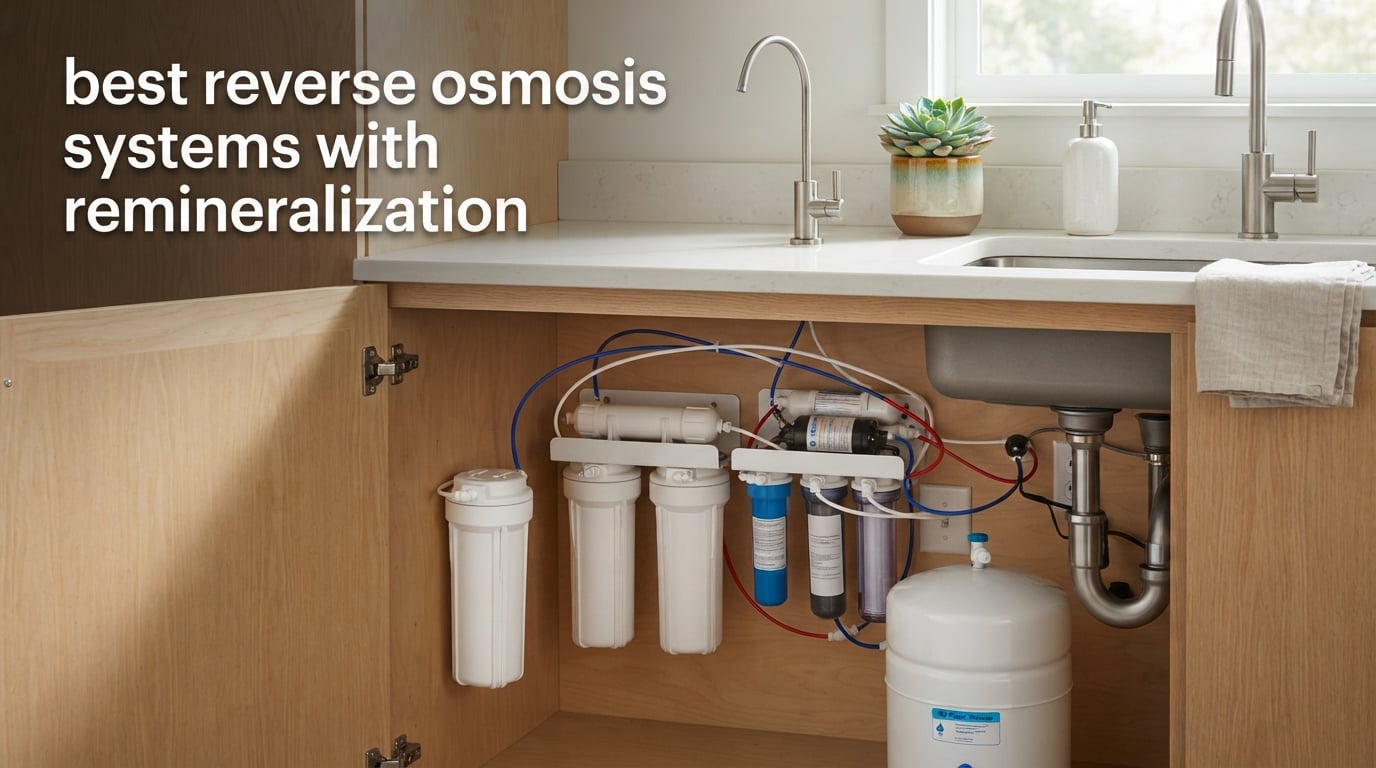
Most reverse osmosis systems strip your water down to almost nothing. The membrane cannot tell a lead ion apart from a calcium ion, so it removes both, and what lands in your glass tastes flat, faintly sweet and a little empty. That is the whole reason people start searching for the best reverse osmosis systems with remineralization, and it is a real problem rather than a marketing one.
We spent weeks reading the specs, certification listings and owner feedback on ten under-sink units that all add a mineral stage back into the purified water. Every system in this roundup does it differently. Some use a calcite and magnesium oxide blend, some use a natural mineral media, one uses a patented two-pass design that adds calcium and magnesium twice, and one adds sodium along with the good stuff. That difference matters more than most buyers expect.
What follows is a roundup restricted to systems that actually remineralize. We left out plenty of capable RO units because their last stage is a post-carbon polish and nothing more. Here, every pick raises pH, adds calcium or magnesium, or both, and we tell you exactly which one.
We also want to be straight about the health framing. Most of your daily minerals come from food, not water. On the cost of pure water per gallon, a stage that adds back a few dozen ppm of calcium is a taste and water-character decision, not a nutritional requirement. Treat it that way and you will be happier with whatever you pick.
Table of Contents
Top 3 Picks for Remineralizing Reverse Osmosis

All 10 Remineralizing RO Systems Side by Side in 2026
| Product | Specifications | Action |
|---|---|---|
 iSpring RCC7AK-BN 75 GPD Alkaline iSpring RCC7AK-BN 75 GPD Alkaline |
|
Check Latest Price |
 APEC ROES-PH75 75 GPD Alkaline APEC ROES-PH75 75 GPD Alkaline |
|
Check Latest Price |
| Frizzlife PD600-TAM3 600 GPD Tankless |
|
Check Latest Price |
 iSpring RCC1UP-AK 100 GPD Pump and UV iSpring RCC1UP-AK 100 GPD Pump and UV |
|
Check Latest Price |
 SimPure T1-400ALK 400 GPD Tankless SimPure T1-400ALK 400 GPD Tankless |
|
Check Latest Price |
 iSpring RO5004F-AK 500 GPD Tankless iSpring RO5004F-AK 500 GPD Tankless |
|
Check Latest Price |
 Home Master TMAFC Full Contact Home Master TMAFC Full Contact |
|
Check Latest Price |
 Waterdrop T3-M 450 GPD Tankless Waterdrop T3-M 450 GPD Tankless |
|
Check Latest Price |
 Home Master TMHP-L HydroPerfection Home Master TMHP-L HydroPerfection |
|
Check Latest Price |
 Waterdrop X8-WAN 800 GPD Tankless Waterdrop X8-WAN 800 GPD Tankless |
|
Check Latest Price |
What Remineralization Actually Does to RO Water
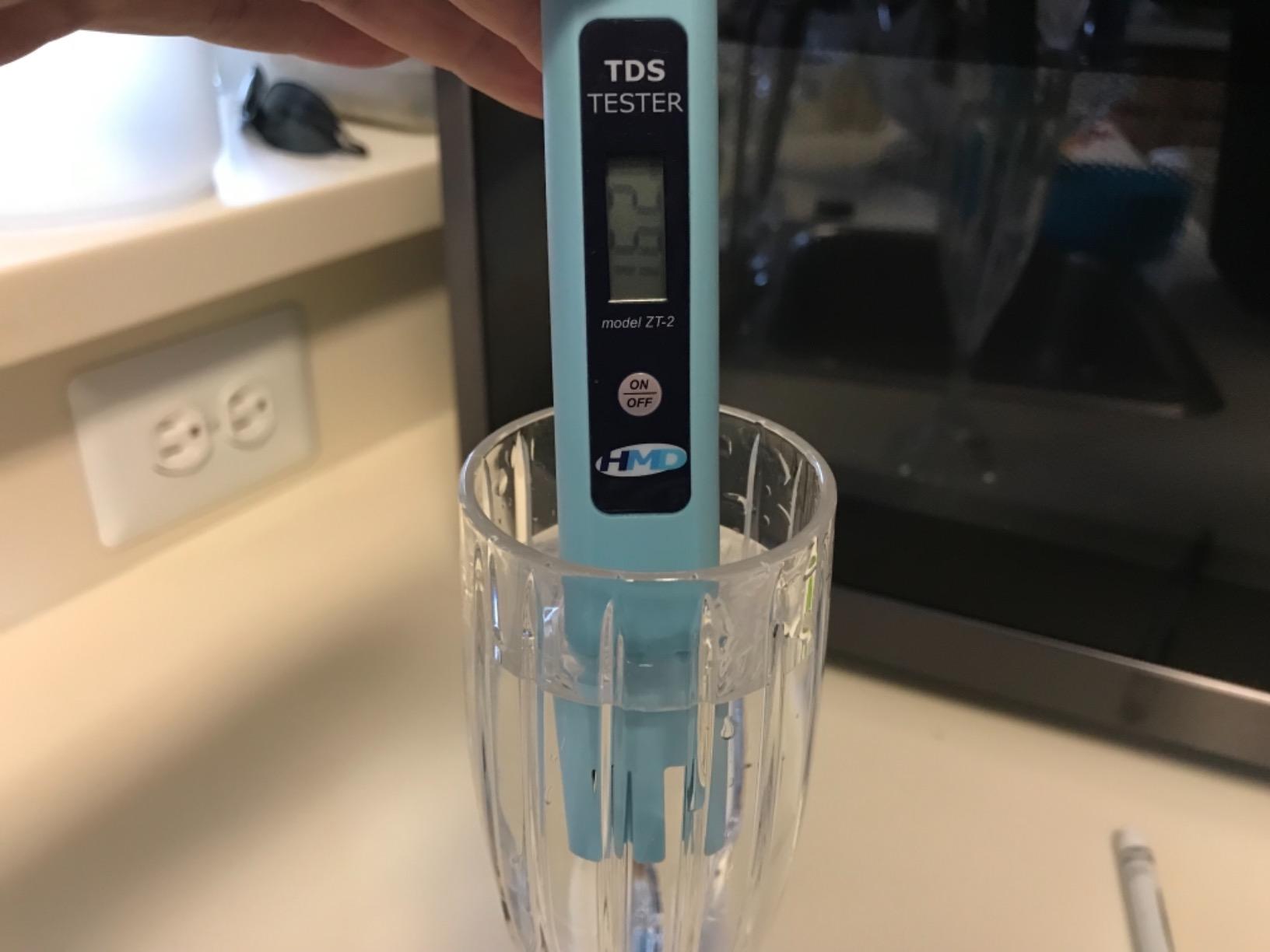
Remineralization is a final-stage filter that dissolves mineral salts back into water on its way to the faucet. Without it, RO output typically lands around 2 to 10 ppm TDS with a pH between 5.5 and 6.5. With it, output commonly climbs into the 25 to 70 ppm range and pH moves toward 7.0 to 8.0.
The membrane is the reason. It blocks 90 to 97 percent of dissolved solids, which is exactly what you want for lead, fluoride, PFAS and nitrates, and exactly what you do not want for the calcium and magnesium that give water its mouthfeel. Buyers who complain about flat, empty water are describing this gap, not a defective filter.
Media type decides the outcome. Calcite raises pH but adds mostly calcium carbonate, which is slow and gentle. Magnesium oxide media releases magnesium faster and pushes pH harder. Blended mineral media mixes both. Alkaline cartridges built around ion-exchange resin add sodium as well, and that is worth knowing if you watch your intake.
One caution from the brewing and aquarium communities, where people think about mineral ratios more carefully than most consumer roundups do: pure or nearly pure water tastes bad, and minerals are what bring flavor back. The same enthusiasts track exact mineral profiles for a reason. A balanced trace load is the goal, not a mineral bath.
Owners of the units below frequently report a break-in period. Output TDS climbs over the first weeks as the mineral media establishes itself, which is why a reading taken on day one is not a fair test of whether the stage works.
1. iSpring RCC7AK-BN Review: The Best Reverse Osmosis System With Remineralization for Most Homes
iSpring RCC7AK-BN NSF Certified, 75 GPD, Alkaline 6-Stage Reverse Osmosis System, pH+ Remineralization RO Water Filter System Under Sink Patented Top-Mounted Faucet Design for Easy Installation
75 GPD
6 stages
NSF/ANSI 58
Natural mineral AK stage
70 psi operating pressure
Pros
- Largest proven review base in this roundup
- No power or outlet required
- Transparent first-stage housing shows filter condition
- Strong US technical support
Cons
- Needs roughly 70 psi line pressure to perform well
- Alkaline post-filter needs 30+ minutes of flushing to clear
- Included tubing runs short in some sinks
This is the unit we kept coming back to. With more than 21k reviews behind it, the RCC7AK-BN is the most proven remineralizing RO we could find, and the numbers back up the reputation. Owners report tap water around 100 ppm dropping to a finished range of roughly 3 to 47 ppm depending on how long the mineral stage has been running.
The patented top-mounted faucet design is the detail that sold us. Most RO systems force you to lie under the sink and twist the housing from below. This one mounts from above, which matters in a cabinet that already holds a disposal and a recycling bin.
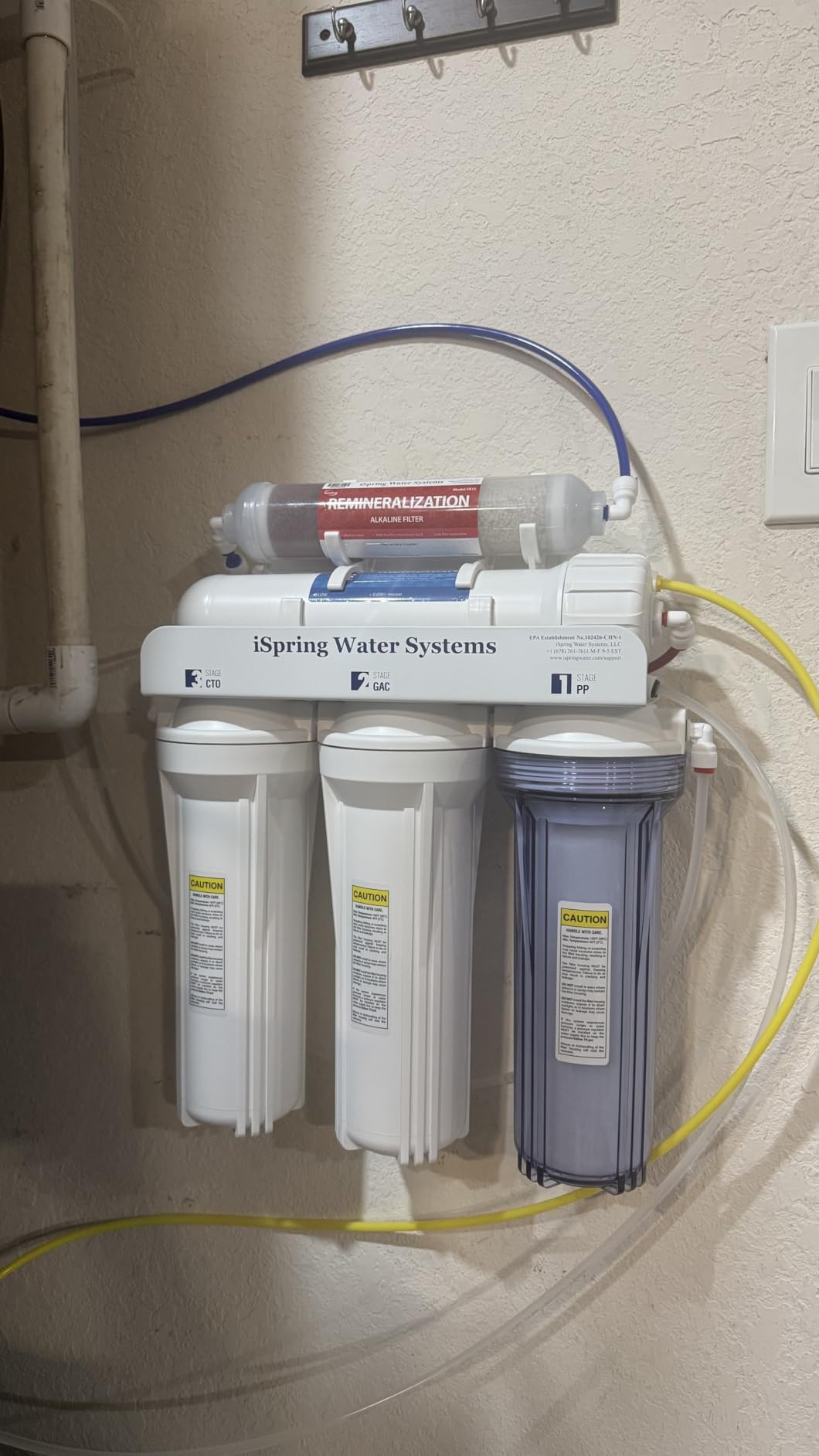
The natural mineral AK stage raises pH and adds minerals back, and the difference in taste is immediate. People describe it as spring water rather than purified laboratory water. That is a subjective judgment, but it is a consistent one across a very large sample of owners.
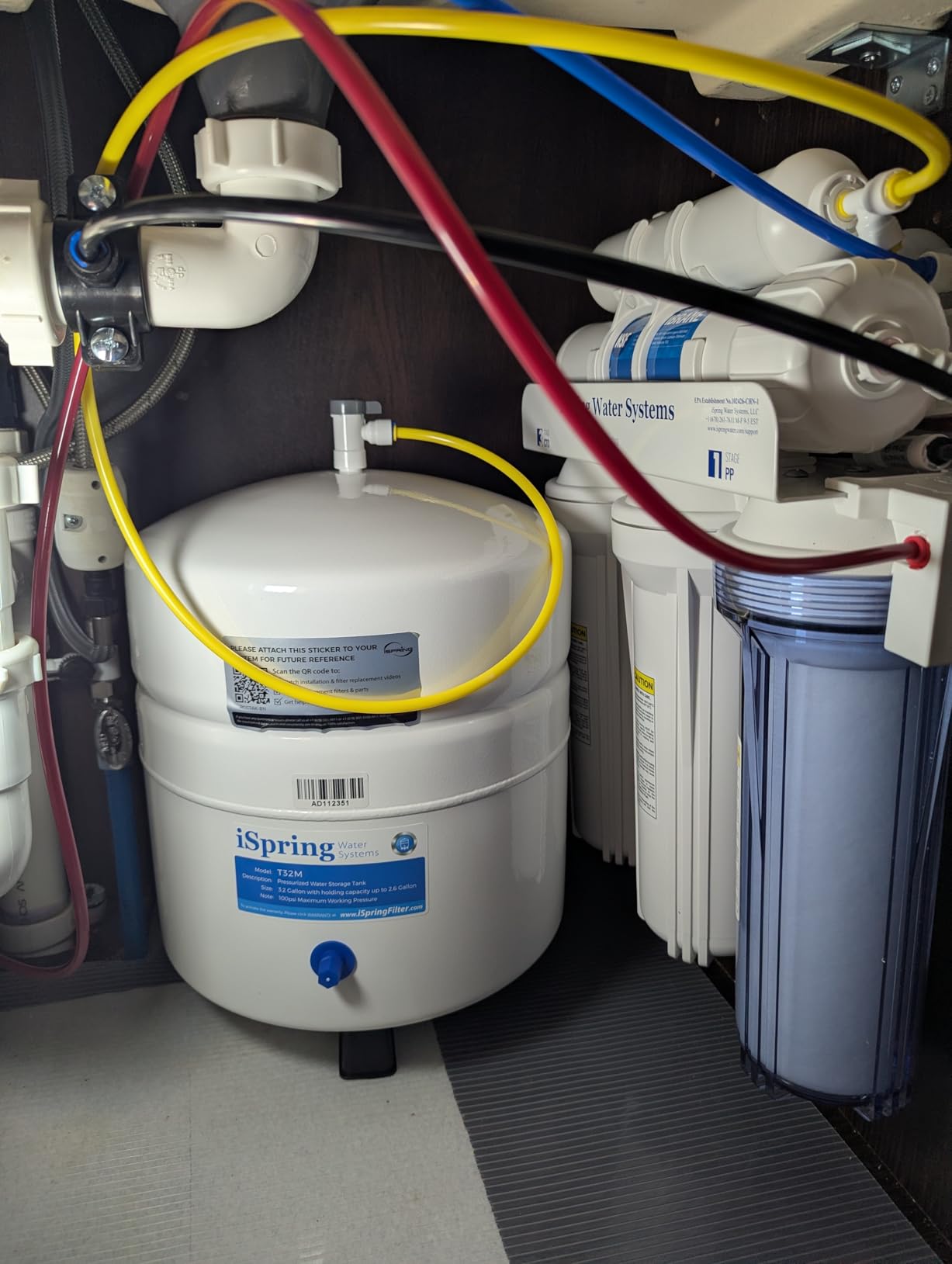
Replacement filters come in four set sizes, from a 6-month F4AK through a 3-year F28K75, so you are not locked into one interval. The transparent first-stage housing is the small feature I appreciate most, because you can see the sediment and carbon turning brown instead of guessing.
Who the iSpring RCC7AK-BN suits well
This is the pick for a normal kitchen on municipal water with decent pressure and no electrical outlet nearby. It runs entirely on line pressure, which means no pump noise, no power dependency and a smaller electrical footprint under the sink.
It is also the safest recommendation for a first-time installer. The quick-fitting push connections, the clear instructions and the video guides make it the unit we would hand to someone who has never plumbed anything.
Where it falls short
Line pressure is the constraint. At around 70 psi the system is in its element, and reviewers on low-pressure lines report thinner production and weaker mineralization. If your home runs low, this is the wrong box and you need a pump version instead.
The other recurring gripe is physical rather than technical. The manual is vague on drain saddle placement, the tubing can be too short for awkward cabinets, and the brushed nickel faucet may not match what you already have.
2. APEC ROES-PH75 Review: Budget Pick Tank-Based Remineralizing RO
APEC Water ROES-PH75, 6-Stage Under Sink RO System, Alkaline, 75 GPD
75 GPD
6 stages
WQA certified
Alkaline calcium stage
40-85 psi operating range
Pros
- Complete install kit with tank and faucet and drain saddle
- Very tolerant of high-TDS feed water
- Quiet tank-fed delivery
- Proven long-running design
Cons
- Tank-based format uses more under-sink space
- Slow measured flow around 0.05 gpm
- May need a booster pump on low-pressure lines
APEC has built this configuration for years and it shows. The ROES-PH75 handles feed water up to 2000 ppm TDS, which is unusually tolerant for a tank system, and it runs across a 40 to 85 psi window rather than demanding one narrow target.
The premium calcium cartridge raises pH and adds minerals for improved alkalinity and taste. Buyers consistently report a 81 percent five-star share, and the taste improvement after the alkaline stage is the most common positive comment in the reviews.
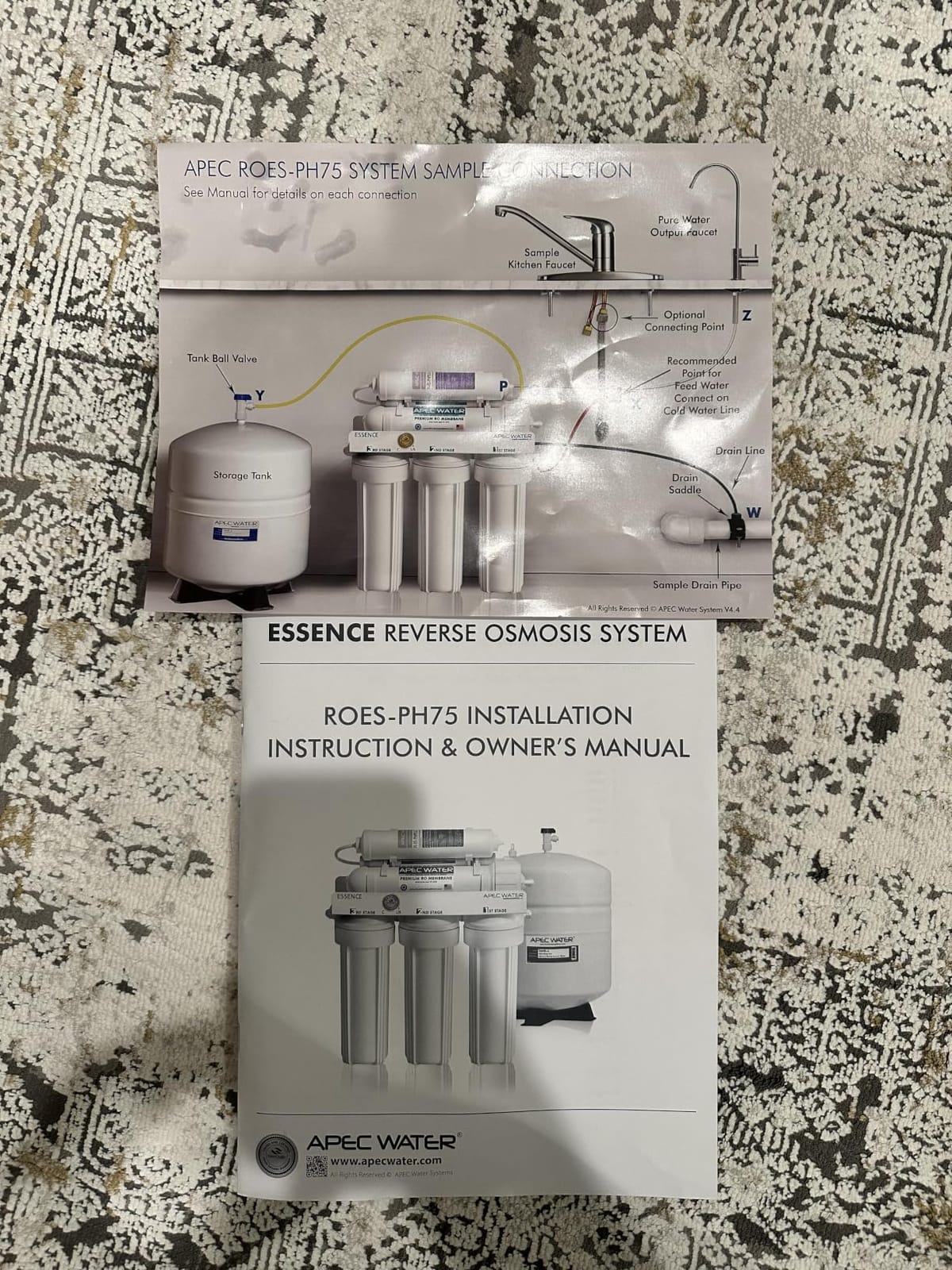
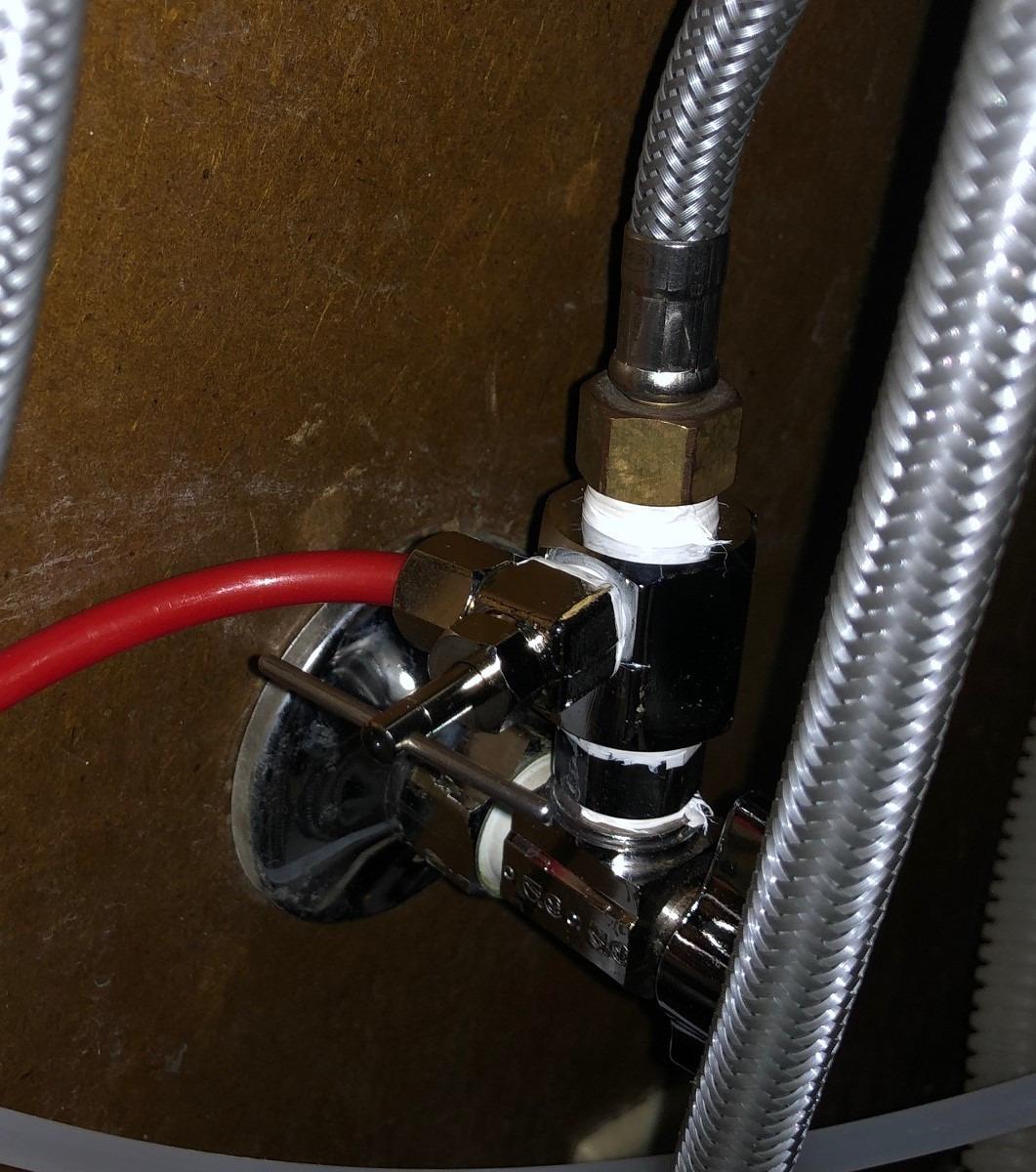
Everything you need to install is in the box: filter set, tank, faucet, tubing, drain saddle, feed water adapter and wrenches. That completeness is why this lands as the value pick. There is nothing to buy separately on day one.
It is a quieter, simpler proposition than any of the tankless units here. There is no pump, no electronics, no display to learn and no firmware to recalibrate. You open the faucet and water comes out.
Who the APEC ROES-PH75 suits well
This is the right choice for households on well water or very hard municipal supply, and for anyone who wants a system they will not have to think about. The 2000 ppm feed tolerance means you do not need a softener or a pretreatment discussion first.
It is also the best pick if under-sink cabinet space is tight but you can live with a tank. A tank is bulky, but it is silent and it needs no power.
Where it falls short
Flow is genuinely slow. At about 0.05 gpm measured, a glass takes noticeably longer than a tankless unit fills one, and in a large household that adds up. If several people drink and cook at once, expect to wait.
There is no tankless option in this line, and on low-pressure lines you may still end up adding a booster pump, which erodes the value argument a little.
3. Frizzlife PD600-TAM3 Review: Best High-Flow Remineralizing Tankless RO
Frizzlife Reverse Osmosis Water Filter – Alkaline Mineral pH+, NSF/ANSI 58&53&42&372 Standard, 600GPD Tankless RO Reverse Osmosis System, Under Sink, 2:1 Pure to Drain, Reduce FPAS/PFOA, PD600-TAM3
600 GPD
0.41 gpm
2:1 pure-to-drain
pH above 7.5 after stage 3
Smart LED TDS panel
Pros
- Very fast output with a 330 ml cup in about 10 seconds
- 2:1 ratio saves water versus conventional RO
- Visible TDS and filter life alerts
- NSF/ANSI 58 and 53 and 42 and 372
Cons
- Needs a power outlet under the sink
- Display and filter alerts take some setup
- Output TDS will not read near zero
The Frizzlife PD600-TAM3 is the fastest mineralizing system in this roundup by a wide margin. At 600 GPD and 0.41 gpm measured flow, a 330 ml cup fills in about 10 seconds, and nothing else here comes close.
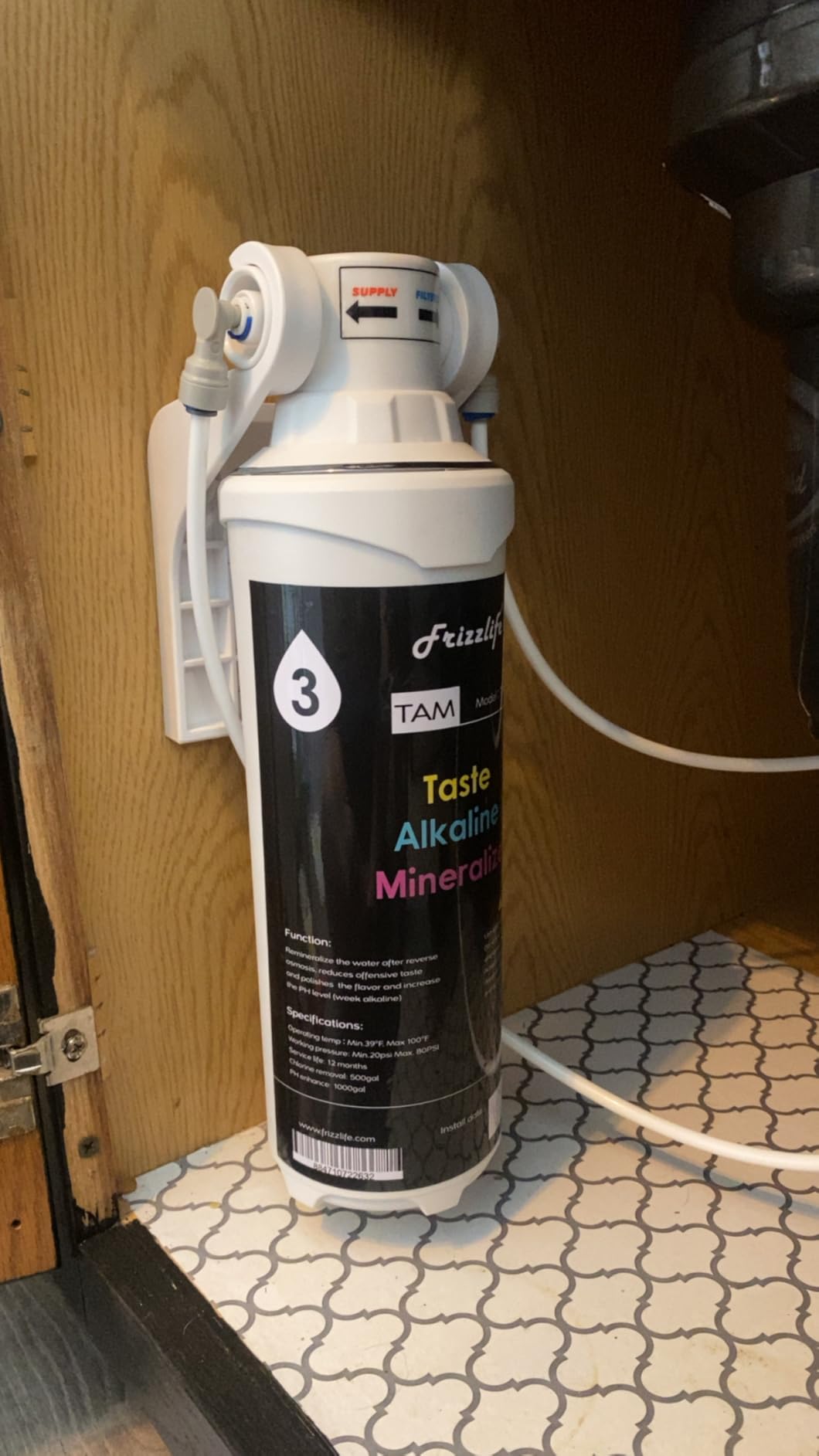
Its third-stage alkaline filter rebalances pH to above 7.5 and restores the minerals the membrane stripped. That is the most assertive pH target in the group, and it is why owners describe the water as having mineral character rather than tasting flat.
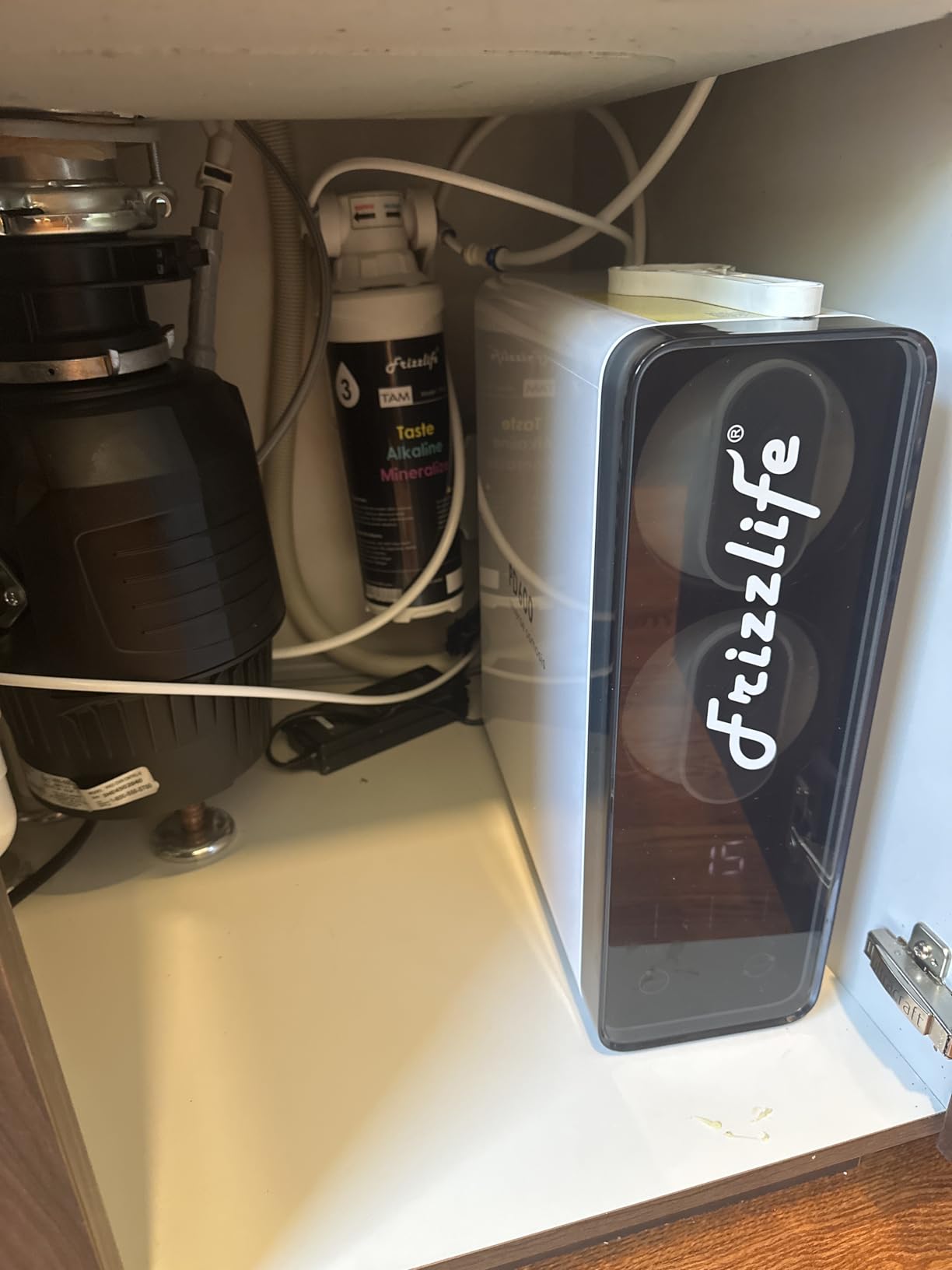
The 2:1 pure-to-drain ratio is where the engineering shows. Conventional RO systems commonly waste three to five gallons per gallon purified, so this is a meaningful reduction in household water use, and Frizzlife claims savings of up to 450 percent against that baseline.
The smart LED panel is more useful than it sounds. It shows real-time output TDS and remaining filter life with color-coded alerts, which solves a problem reviewers on other units complain about constantly: not knowing when a cartridge is spent.
Who the Frizzlife PD600-TAM3 suits well
This is the pick for a large household, anyone who cooks a lot, and anyone who has ever been annoyed waiting for an RO faucet. The tankless format also frees cabinet space and removes the storage tank entirely, which removes a surface where bacteria can establish themselves.
It is a strong choice for anyone who wants visible, ongoing proof that mineralization is still happening rather than taking it on faith.
Where it falls short
It needs a power outlet under the sink. That is fine in most kitchens and a real problem in rentals or older homes where no outlet exists in the cabinet.
Because mineralization is working, output TDS will not read near zero. Buyers who test expecting a number in the single digits get disappointed, and some reviewers report needing time to get the display and filter alert settings right.
4. iSpring RCC1UP-AK Review: Best Remineralizing RO for Well Water and Low Pressure
iSpring RCC1UP-AK, 100 GPD 7-Stage Reverse Osmosis Under Sink Water Filtration System with Boost Pump, Alkaline Remineralization and UV Filter, Patented Top-Mounted Faucet Design for Easy Installation
100 GPD
7 stages
Booster pump
UV with flow sensor
Alkaline mineral filter
Pros
- Booster pump keeps production steady on low-pressure lines
- UV stage adds a barrier against microbes
- Mineral effect measurable at roughly 15-18 ppm versus 27-30 ppm
- Strong phone support that ships parts free
Cons
- Requires power for the pump and UV
- Booster pump adds mechanical noise
- Early alkaline taste needs a short pre-flush
This is the one to buy if your water comes from a well or your line pressure is weak. The booster pump pressurizes feed water so the membrane performs consistently, and it does so with less wastewater than pumpless models at similar output.
Owners report tap water at 244 to 250 ppm dropping to roughly 12 to 44 ppm filtered. More interesting for this roundup, they report the alkaline effect directly: about 15 to 18 ppm without the remineralization cartridge versus 27 to 30 ppm with it installed.
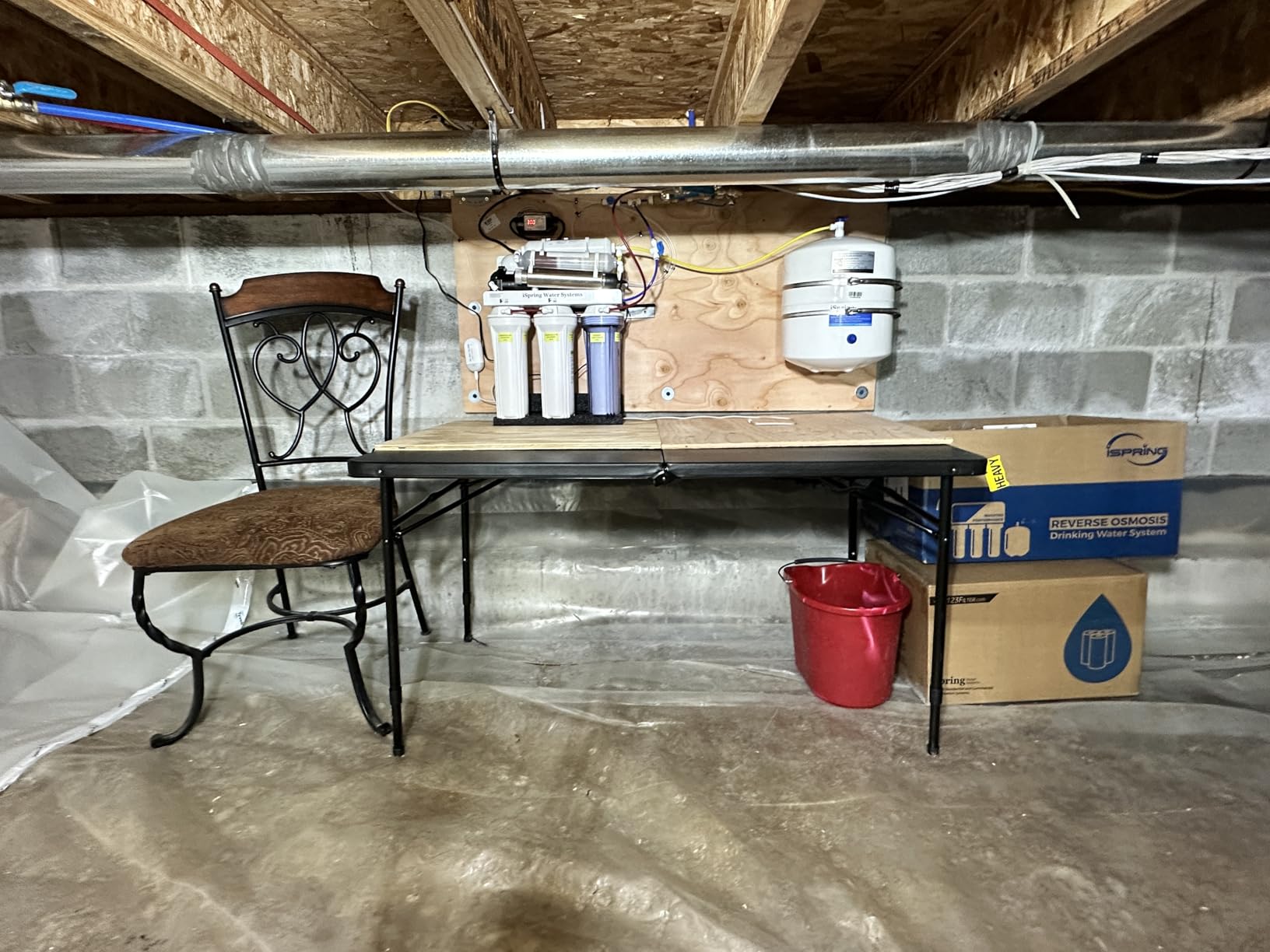
The UV stage activates only when water flows, using a smart flow sensor with a three-minute delay that extends bulb life. On suspect water that is a real additional barrier, though it does not replace proper well treatment for bacteria or iron.
The customer support stands out. iSpring will size the system to your psi and ppm readings over the phone and has been known to ship replacement fittings and parts at no charge, which is the kind of thing that only shows up after a few installs go wrong.
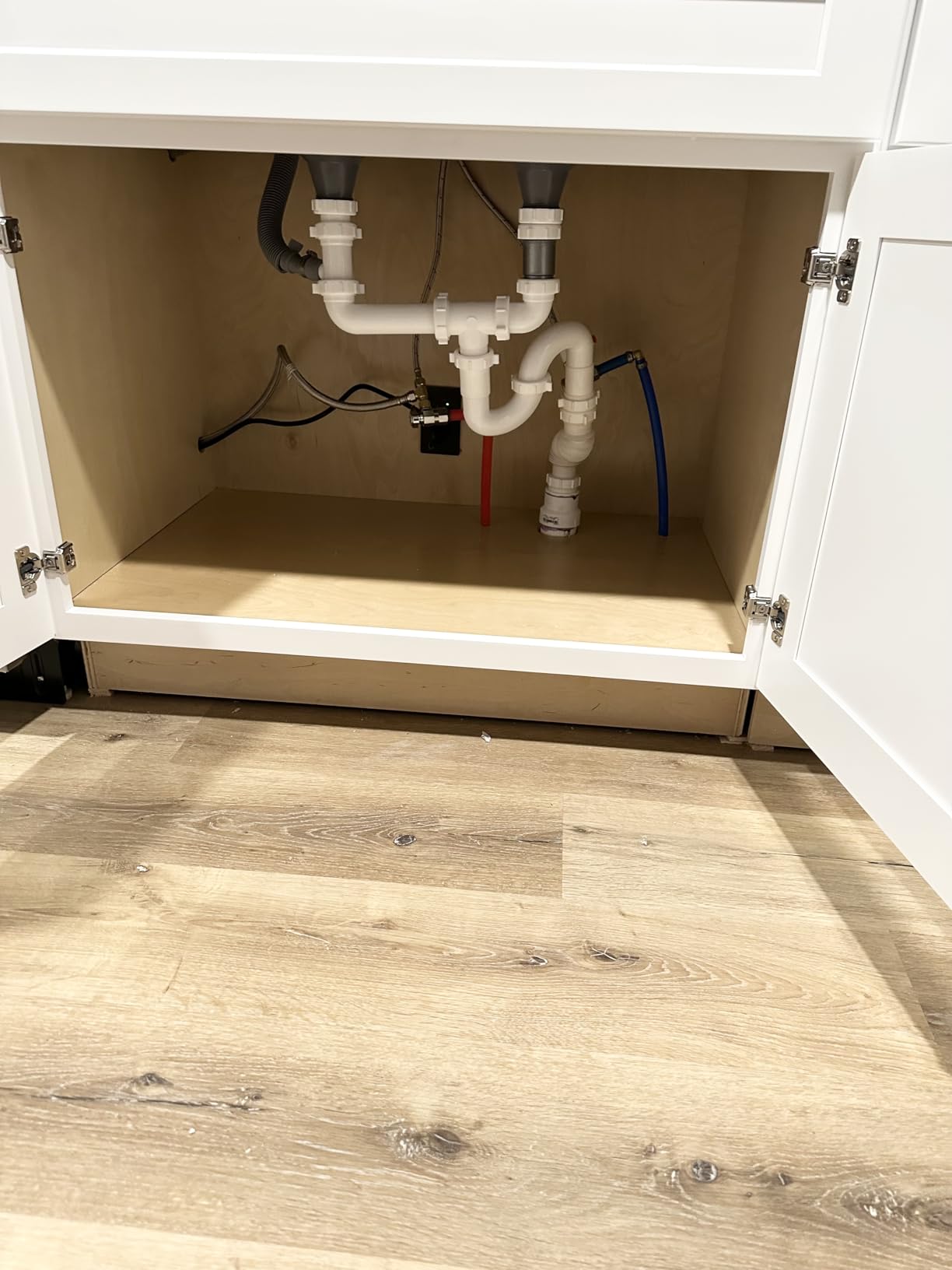
Who the iSpring RCC1UP-AK suits well
Well water households and anyone on a low-pressure line. The pump is not optional decoration here, it is the reason this system holds its rated output where the pumpless units in this roundup would not.
It also fits a standard under-sink cabinet with its tank and refills in about 45 minutes, so it is not the bulky choice among pumped systems.
Where it falls short
It needs an outlet for the pump and the UV, and no water is produced during a power outage. On a well, a pump failure is a real inconvenience rather than an inconvenience.
Two smaller annoyances recur in reviews. The booster pump is noticeably noisy in some installs, and the remineralization cartridge can give the first ounces an earthy, mineral-heavy taste that a three to five second pre-flush clears.
5. SimPure T1-400ALK Review: Best Value for a Tankless Alkaline System
SimPure T1-400ALK Tankless Alkaline Reverse Osmosis Water Filter 400 GPD
400 GPD
0.4 gpm
1.5:1 pure-to-drain
UV on flow activation
Calcium, magnesium and potassium media
Pros
- Tankless with UV at a mid-range price
- 0.4 gpm flow is genuinely fast
- Quick-change twist cartridges
- Filter set rated for 1057 gallons
Cons
- Lowest average rating here at 4.2 with a 12 percent one-star share
- Needs power under the sink
- Mineralization means TDS never reads zero
The SimPure T1-400ALK packs a lot into the box. You get 400 GPD tankless flow, a UV sterilizer that activates automatically on flow pressure, and an alkaline stage using natural mineral media to add calcium, magnesium and potassium. The 1.5:1 pure-to-drain ratio is better than most tank systems.
It was independently tested by SGS against the NSF/ANSI 58 standard for this configuration, with claimed removal of over 99.99 percent of more than 1,000 contaminants. The filter set is rated for 1,057 gallons of purified water, which spreads the cartridge cost reasonably.
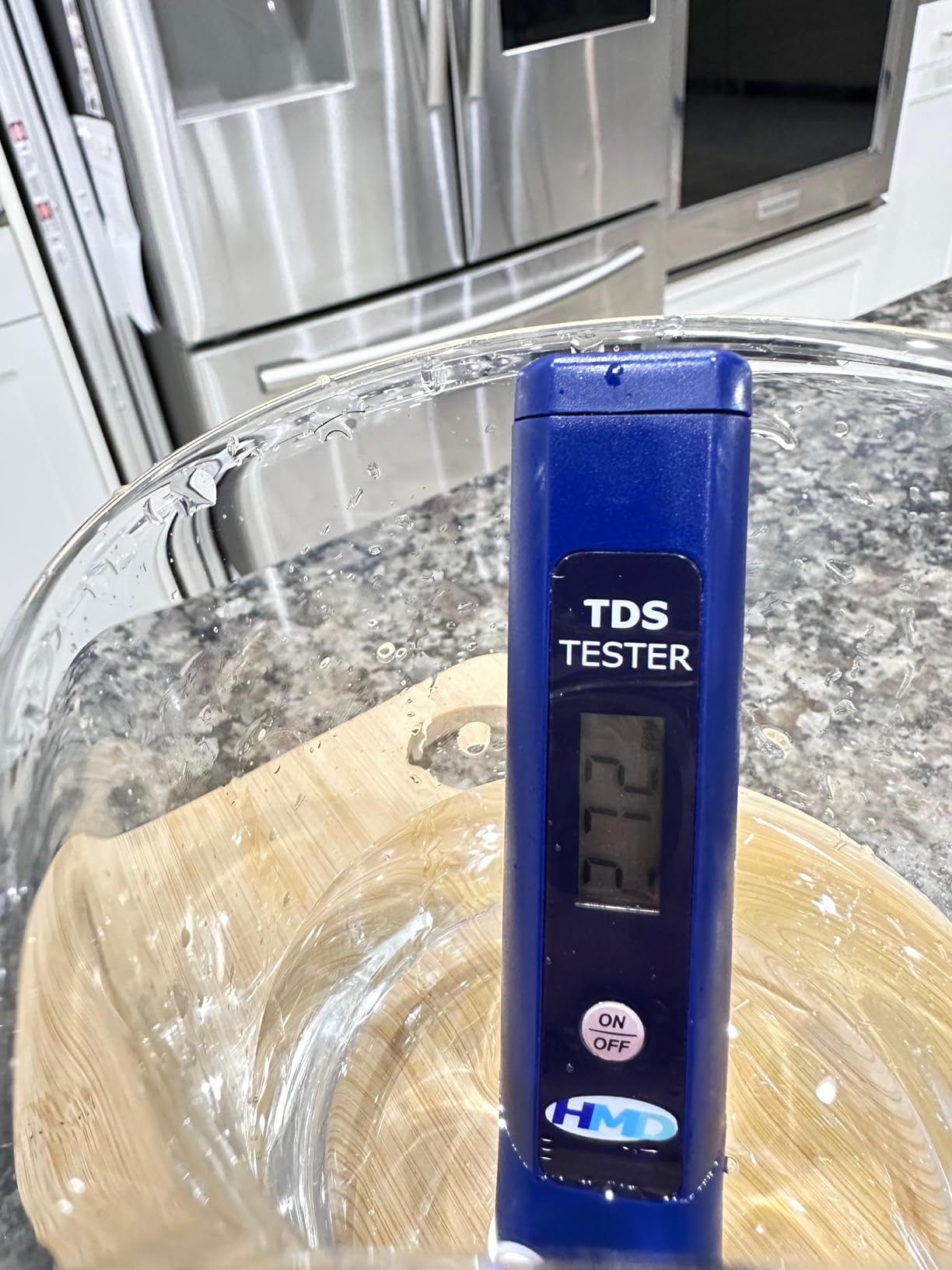
Where we want to be straightforward is the rating. At 4.2 with a 12 percent one-star share, this is the weakest satisfaction score in our list, and that reflects real friction. Set it up as intended and reviewers report strong reduction and good taste.
The three minerals it adds are worth noting. Calcium, magnesium and potassium cover most of what people want back from a mineral stage, and potassium is added by very few units in this roundup.
Who the SimPure T1-400ALK suits well
Buyers who want tankless speed, UV and real mineralization without spending near the top of the range. If a 75 GPD tank system is too slow and a premium tankless unit is too much, this is the middle.
It also suits anyone who wants potassium in the output, since very few competing cartridges add it.
Where it falls short
The elevated one-star share suggests more installation and support friction than the alternatives. If you are not comfortable with under-sink plumbing, budget time for it or pick a simpler tank system.
It needs electrical power for the pump and UV. And like every genuinely mineralizing unit here, the output TDS will not fall to zero, which the manufacturer flags in its own listing notes.
6. iSpring RO5004F-AK Review: Best Feature Set with Tankless Flow and UV
iSpring RO5004F-AK UV Alkaline Reverse Osmosis Water Filter, SGS Tested PFAS and TDS Reduction, 500 GPD Tankless Remineralization RO System Under Sink, Filter Life Monitor, 2:1 Pure to Drain
500 GPD
Tankless
Built-in booster pump
UV rated 8000 hours
Natural mineral AK stage
Pros
- Highest average rating here at 4.7 with an 83 percent five-star share
- 500 GPD fills a cup in about 10 seconds
- Tankless frees cabinet space
- Filter life monitor with twist-to-unlock cartridges
Cons
- Newer listing with a smaller review base than the established iSpring model
- Requires power for pump and UV
- Larger casing than some competing tankless units
The RO5004F-AK is the most current-generation unit iSpring makes, and it has the strongest satisfaction scores in this group at 4.7 with an 83 percent five-star share. It combines a built-in booster pump, a UV stage and the natural mineral AK remineralization stage in one tankless body.
At 500 GPD it fills a cup in roughly 10 seconds, which the brand puts at more than five times faster than traditional RO systems. The pump helps in low-pressure environments and improves membrane efficiency rather than just adding noise and cost.
SGS independently tested it for PFAS and TDS reduction, with claimed removal of over 99 percent of more than 1,000 contaminants. That third-party testing is a meaningful differentiator, because plenty of listings in this category rely on the same badge language without a test behind it.
Maintenance is the part we like. The filter life monitor tracks cartridge status and the twist-to-unlock cartridges change without tools. The UV light is rated for up to 8,000 hours, and replacement filters are designated FP500, FC500SL, MRO5004F and FG500AK.
Who the iSpring RO5004F-AK suits well
Anyone who wants one box to handle speed, minerals, UV and low-pressure resilience. It suits a busy kitchen where multiple people use the faucet daily and where nobody wants to think about filter timing.
If you are upgrading from an older iSpring unit, the tankless footprint and the filter life monitor are the two upgrades most people notice immediately.
Where it falls short
It needs power, and with 953 reviews it has the thinnest long-term data of the high-rated iSpring products. The casing is also larger than some competing tankless units, so measure your cabinet before you commit.
The 500 GPD rating is generous for most homes. You are paying for headroom you may not use, which is fine if you do use it and wasteful if you do not.
7. Home Master TMAFC Review: Best Made in USA Remineralizing RO with a Five-Year Warranty
Home Master TMAFC Artesian Full Contact Reverse Osmosis System, 7-stages, Patented 2-Pass Alkaline Remineralization, Fast 4.5s Fill Rate, 8.5” catalytic carbon, 5-year limited parts
50 gpd membrane
7 stages
Patented 2-pass remineralization
4.5 second fill rate
5-year parts warranty
Pros
- Fastest measured fill rate here at 8 oz in 4.5 seconds
- Patented 2-pass design adds calcium and magnesium twice
- Made in the USA by an NSF-listed company
- Tool-free modular annual filter changes
Cons
- 50 gpd membrane is small next to the 400-800 gpd units
- Uses more under-sink space than tankless designs
- Needs 40-95 psi line pressure
Home Master does something none of the other brands in this roundup do. The patented 2-pass remineralization adds calcium and magnesium twice during purification, which is designed to mimic natural mineral water and is claimed to slow storage tank degradation over time.
The flow result is the standout. Larger fittings and tubing push an 8 oz glass fill in about 4.5 seconds, and the system uses 8.5 inch catalytic carbon per pass for chlorine and chloramine reduction rather than a shorter block.
It is made in the USA by an NSF-listed company and all components are NSF-certified for material safety and performance. The warranty is five years limited on parts, with five years of spare part availability, and that is the longest support commitment in this group.
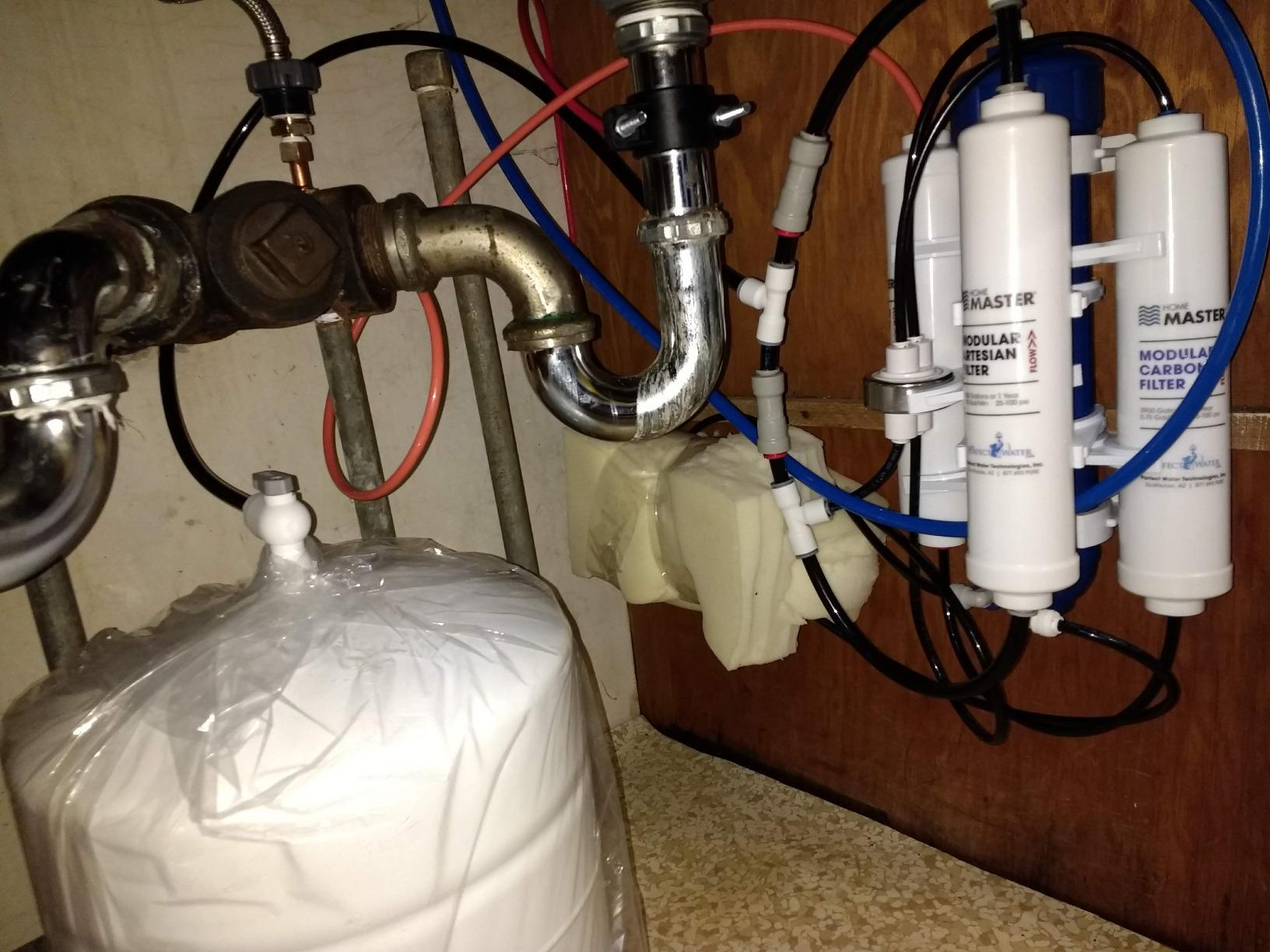
Serviceability is thoughtful. The modular design allows tool-free annual filter replacement and leaves room for future upgrades, which matters more in year four than it does on day one.
Who the Home Master TMAFC suits well
Buyers who want genuine calcium and magnesium rather than a pH bump, and who value domestic manufacturing and a long warranty. Reviewers repeatedly single out the taste difference between this and standard single-pass RO output.
It is also a good fit for anyone who prefers one large, serviceable cluster over a stack of small housings.
Where it falls short
The membrane is 50 gpd, the smallest daily capacity in this roundup. If a household drinks and cooks heavily, that is a real ceiling even though the fill rate feels fast.
The cluster is bulky at 16 inches tall by 8 inches wide by 5 inches deep, and with the 15-inch tank it needs real cabinet space. Line pressure must sit between 40 and 95 psi.
8. Waterdrop T3-M Review: Best Remineralizing RO for Simplest Filter Changes
Waterdrop T3-M Remineralization Reverse Osmosis Water Filter, 450 GPD
450 GPD
9 stages
0.0001 micron membrane
Mineral enrichment
2:1 pure-to-drain
Pros
- All-in-one cartridge changes in seconds
- 24-month RO membrane life cuts replacement frequency
- Continuous automatic flushing with LED status
- Mineral-infused output improves taste
Cons
- Faucet installation requires drilling the countertop
- Needs a power outlet under the sink
- Smaller review base than the established models here
The T3-M is the entry point into 450 GPD tankless remineralization, and the reason it stands out is maintenance. The all-in-one cartridge design means you swap the whole assembly in seconds instead of tracking three or four separate filter changes.
Nine stages with a 0.0001 micron RO membrane were third-party laboratory tested, and the system reduces heavy metals, chlorine, PFOA and PFOS while enriching the water with calcium and magnesium. The 2:1 pure-to-drain ratio keeps waste in check for a tankless unit.
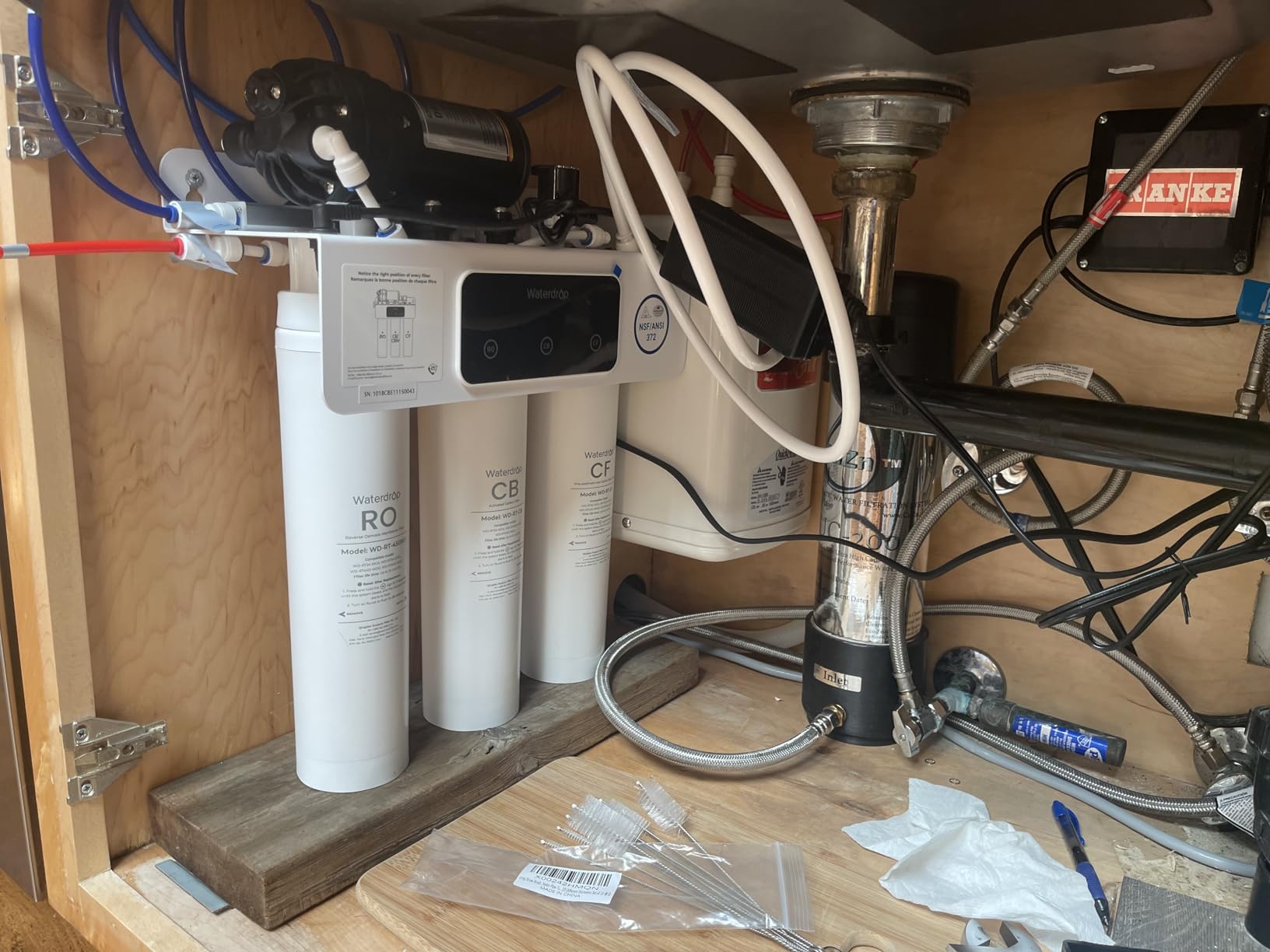
The replacement schedule is unusually clear: 6-month carbon fiber, 12-month carbon block, 24-month RO filter. A 24-month membrane life is longer than most systems here, and that is the single biggest lever on your long-run cartridge cost.
Continuous automatic flushing with an LED indicator keeps the water fresh and keeps you on schedule. Smart filter-change alerts do the same job in software.
Who the Waterdrop T3-M suits well
Anyone who does not want to learn a filtration system. One cartridge, one change, one reminder. That simplicity is worth a lot if you have avoided replacing filters on a previous system because it seemed like too many moving parts.
It is also a good fit for a second sink or a basement utility area where you want high flow without a dedicated drinking faucet setup.
Where it falls short
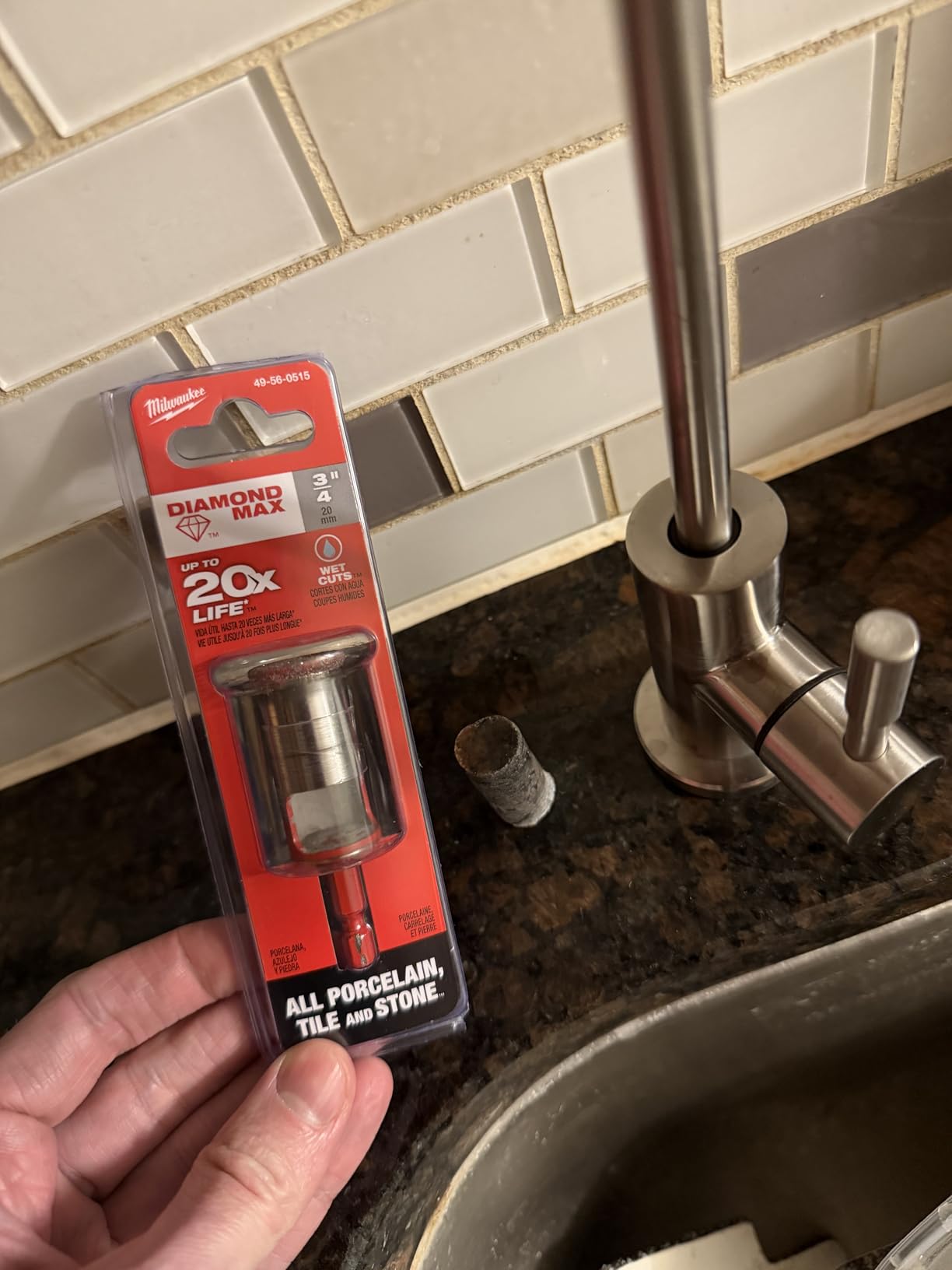
The faucet requires drilling the countertop. If you rent, or you have a tile or stone counter, that is a real cost and a real hesitation, and it is worth checking whether an existing sink hole can take the faucet instead.
It needs a plug-in power outlet under the sink, and with 482 reviews the long-term reliability picture is thinner than for the established models. Remineralization also means output TDS sits above the near-zero readings some buyers expect.
9. Home Master TMHP-L Review: Best Remineralizing RO for Water Conservation
Home Master TMHP-L HydroPerfection RO System, 9-stages, 99% rejection DOW membrane, Patented 2-pass Remineralization, 4.5sec Fill Rate, 1:1 Waste Ratio, UV 99.9% EPA 97952AZ1, Lux Faucet, Fridge Ki
9 stages
1:1 pure-to-waste
EPA registered UV
Patented 2-pass remineralization
4.5 second fill
Pros
- Only unit here with a 1:1 pure-to-waste ratio
- Highest average rating in the roundup at 4.8
- EPA-registered UV sterilizer
- Loaded bundle with Lux faucet and fridge kit
Cons
- One of the costlier systems here
- Needs power for the UV sterilizer
- Only 337 reviews so long-term data is thin
The TMHP-L is the premium loaded option, and it earns the highest average rating in the roundup at 4.8 with an 88 percent five-star share. What separates it from everything else is the 1:1 pure-to-waste ratio, which effectively halves the water used compared with a typical tank system.
It combines nine stages with a DOW FilmTec high-performance high-hardness 0.0001 micron membrane, the patented 2-pass remineralization, and an EPA registered LED UV sterilizer registered as 97952-AZ-1 with claimed 99.9 percent inactivation of viruses, bacteria and fungi.
The oversized fittings and tubing produce the same 4.5 second fill rate as the TMAFC, which is a direct result of flow restriction being designed out rather than brute-forced with a bigger pump.
There is also a KDF85 and GAC iron pre-filter in the path, plus BPA-free and lead-free components. The loaded package includes the Lux faucet, a disposal drain adapter and a fridge connection kit, so the ice maker hookup is already handled.
Who the Home Master TMHP-L suits well
Households in water-restricted areas or on metered supply where a 3:1 drain ratio would be genuinely expensive over years. Halving the waste is the most defensible efficiency claim in this entire roundup.
It also suits anyone who wants a refrigerator and ice maker connection from day one, and anyone who prefers buying one complete system to assembling components.
Where it falls short
It sits at the expensive end of this roundup, and the value argument gets harder when you weigh it against systems that deliver similar mineralization for much less.
With 337 reviews, it has the smallest sample in the roundup, so long-term reliability data is thinner than the numbers alone suggest. It also needs power for the UV and needs real cabinet space for the canister cluster and tank.
10. Waterdrop X8-WAN Review: Best Remineralizing RO for Maximum Capacity
Waterdrop X8-WAN Alkaline Mineral Tankless Reverse Osmosis System Undersink
800 GPD
10 stages
16-layer 0.0001 micron membrane
Alkaline mineralization with Ca, Mg, Na and K
2:1 ratio
Pros
- Highest capacity here at 800 GPD
- Triple NSF/ANSI 42 and 58 and 372 certification
- Smart digital faucet shows TDS and filter life
- Mineral cartridge adds Ca and Mg and K
Cons
- Requires countertop drilling for the faucet
- Needs a power outlet under the sink
- Low hum and audible purge cycle
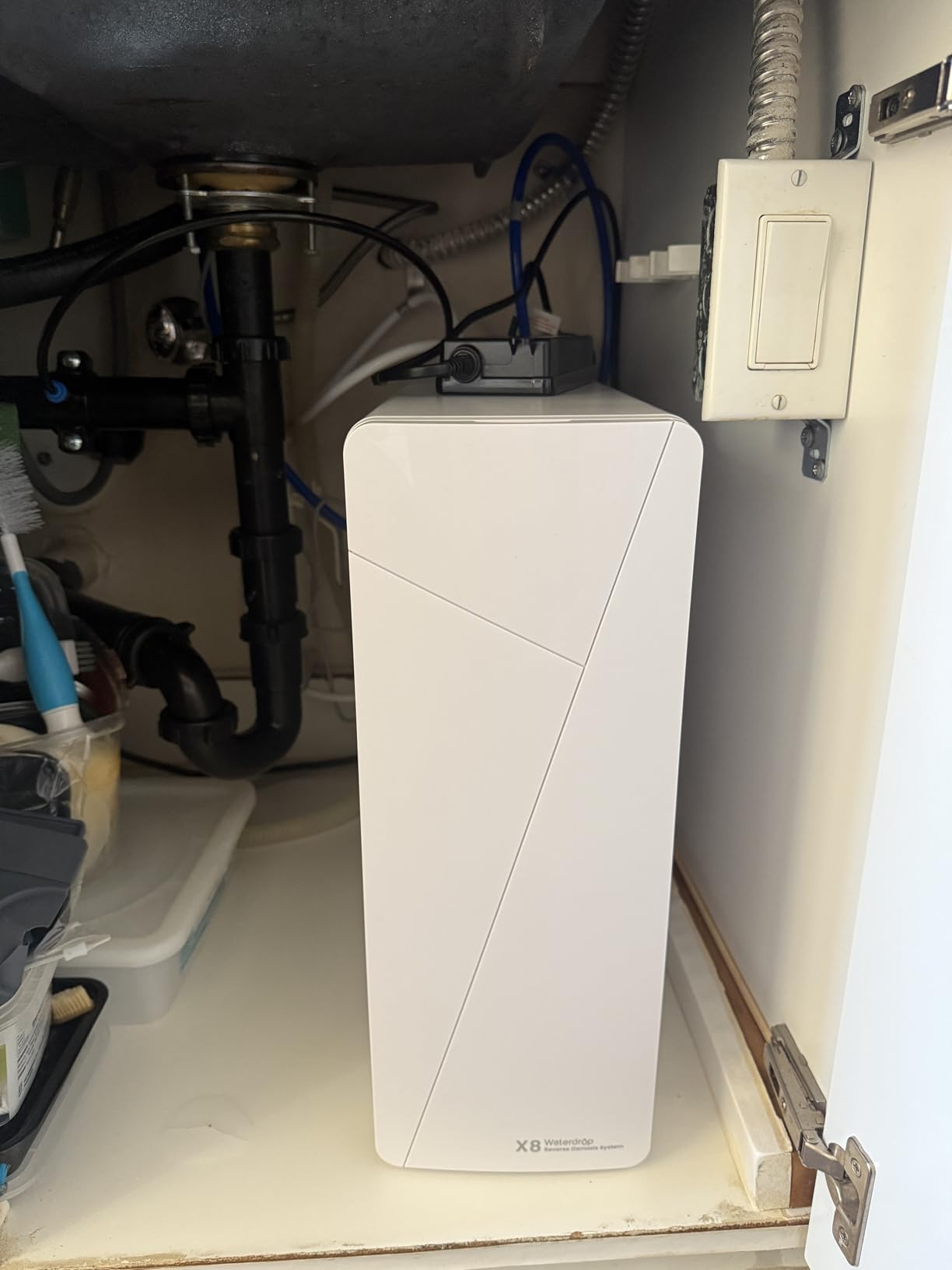
The X8-WAN is the largest system in the roundup at 800 GPD across ten stages. The membrane is a 16-layer 0.0001 micron type, SGS tested, and the system is certified to NSF/ANSI 42, 58 and 372, which is broader coverage than most competitors carry.
The alkaline mineralization cartridge adds Ca2+, Mg2+, Na+ and K+ to the purified water. It is one of only two units here that add sodium, and that is worth flagging if you are watching sodium intake for any health reason.
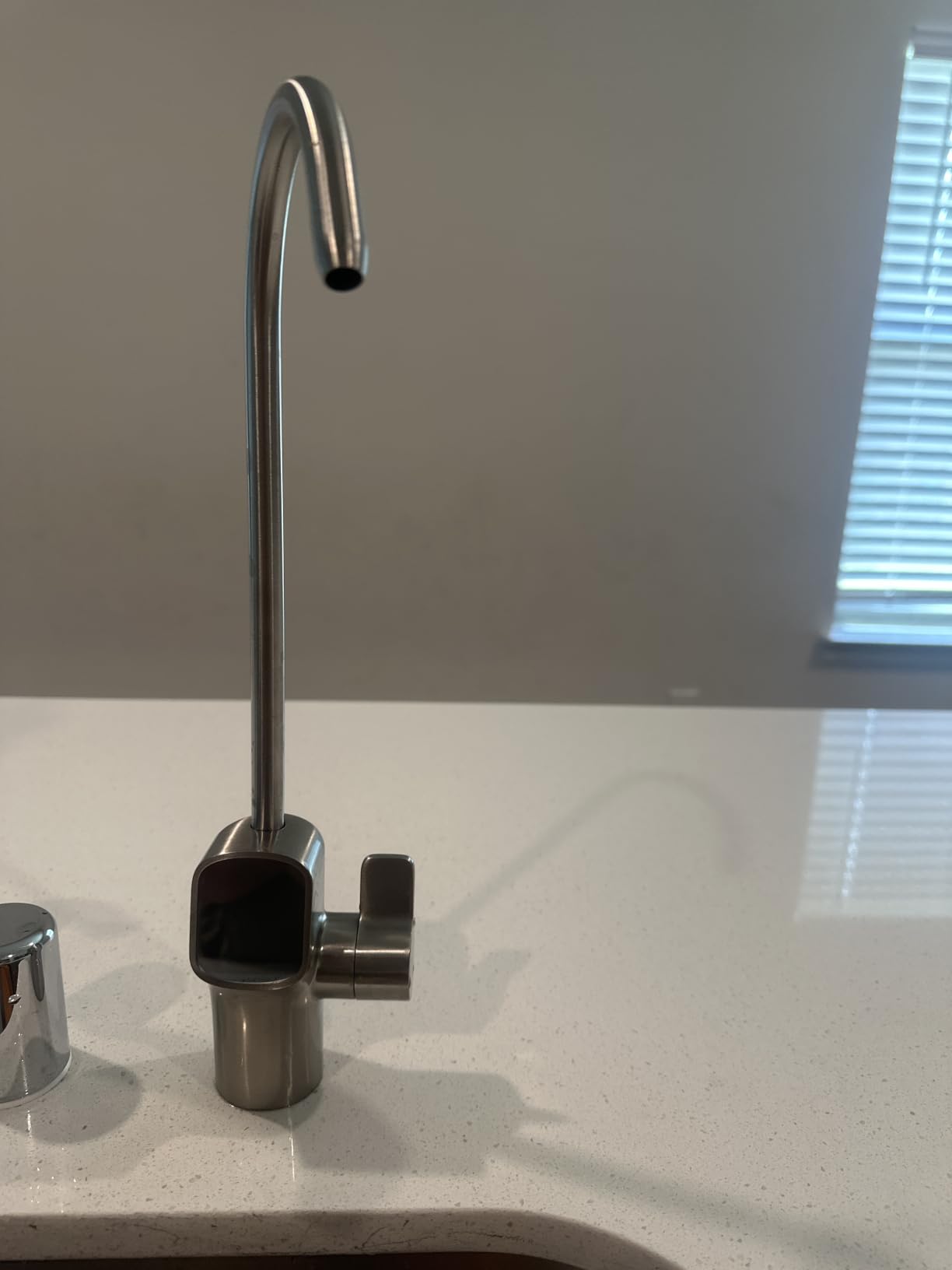
The smart digital faucet displays TDS and filter life status at the tap, which removes the need for a separate meter. With a 2:1 pure-to-drain ratio and 24-month RO filter life, both the water and the cartridge economics stay reasonable at this capacity.
Owners report filling a 5-gallon jug in roughly 6 to 7 minutes and often use an existing sink hole for the faucet rather than drilling, which is a practical tip worth checking before you plan the install.
Who the Waterdrop X8-WAN suits well
Large households, and anyone running an ice maker, a refrigerator line or a serious cooking setup where 400 GPD feels limiting. At 800 GPD you are buying headroom and you will probably use it.
It is also a good pick if you want the broadest certification coverage available in this roundup and want minerals including potassium in the output.
Where it falls short
It needs countertop drilling and a power outlet, so it is not a renter-friendly install. The unit also produces a low operating hum and an occasional automatic purge cycle that some owners find audible in a quiet kitchen.
There is a cluster of reports about TDS display faults requiring repeated troubleshooting with support. That is a display problem rather than a filtration problem, but it is frustrating when the display is how you verify mineralization is working.
How We Chose and What We Did Not Test
Every unit here ships with a mineral stage that measurably raises finished-water pH and adds calcium, magnesium, potassium or a combination. That was the filter. We excluded capable RO systems whose only post-membrane stage is a carbon polish, and we excluded countertop units because none of the ten we could verify combine real flow with a genuine remineralization stage.
We also weighted the things that decide whether a remineralizing system works in a real kitchen. Certification standards mattered, but so did the replacement schedule, the availability of standard parts, whether an outlet already exists under the sink, and how clearly the manufacturer documents pressure requirements.
Here is the honest limit of this roundup. We did not perform first-party laboratory testing, so we cannot give you our own input and output calcium, magnesium and sodium panels. Every mineral figure in this article comes from manufacturer technical data or from owner-reported measurements in reviews, and we have labelled which is which.
Where we quote ppm readings, treat them as ranges from owner reports rather than instrument readings. Several brands describe the same stage differently, and alkaline media that has not fully broken in will read lower than its steady-state output.
What we can say confidently is that all ten systems genuinely remineralize. The differences are in how much, which minerals, how fast and at what ongoing cost.
Remineralization Media Types Compared
Calcite is crushed calcium carbonate. It dissolves slowly, raises pH modestly and adds mostly calcium. It is the gentlest option and the one least likely to make water taste chalky, which is why budget systems use it.
Magnesium oxide media releases magnesium more readily and pushes pH harder than calcite alone. Magnesium is the mineral most associated with the slightly bitter, mineral depth that people describe as taste rather than absence of taste.
Blended mineral media mixes calcite with magnesium compounds, which is the most common approach in this roundup and the most balanced. The SimPure T1-400ALK and the iSpring AK stages both add more than one mineral, and that breadth is why their output reads less aggressively chalky.
Alkaline cartridges built on ion-exchange resin raise pH the most and can add sodium as a byproduct. The Waterdrop X8-WAN lists sodium explicitly among the ions it restores. If you are on a sodium-restricted diet, that is a decision point rather than a detail.
Two-pass remineralization, which only the two Home Master systems use, adds calcium and magnesium at two separate points in the filtration path. The stated benefit is a mineral profile closer to natural spring water and slower degradation of the storage tank over time.
What you are aiming for is a finished-water TDS somewhere in the broad 25 to 70 ppm range with a pH between 7.0 and 8.0. A system that pushes pH past 9.0 is adding more than most people want to drink, and one that lands at 5 ppm is effectively an RO system with a marketing label.
How to Choose a Remineralizing RO System
Start with pressure, because it decides everything else. Most of the pumpless units in this roundup want somewhere near 70 psi and will underperform below that, while APEC accepts 40 to 85 psi and the pumped systems handle low pressure by design. Measure your line pressure before you pick a format.
Next decide tank or tankless. A storage tank is silent, needs no power and fits anywhere, but it occupies space and sends three to five gallons to drain for every gallon you drink. A tankless unit gives you fast flow, better efficiency ratios and no tank to contaminate, at the cost of an outlet under the sink and electronics that can misbehave. Our tankless RO guide for small kitchens goes deeper on fitting tankless units into tight cabinets.
Then pick your minerals. Calcium only, calcium and magnesium, or a blend with potassium and possibly sodium. Blends taste rounder and cost slightly more to maintain in pH terms, but they are the option most people end up happy with.
Check the certifications properly. NSF/ANSI 58 covers health contaminants including lead, arsenic, fluoride, chromium and PFAS compounds. NSF/ANSI 42 covers aesthetic claims like chlorine, taste and odor. NSF/ANSI 372 covers lead-free material compliance. A listing that says NSF certified without naming the standard is telling you very little, and a brand claiming a certification that does not appear in a database lookup is a reason to look elsewhere.
Check the Frizzlife PD600-TAM3 as a model here. It is certified to 58, 53, 42 and 372, and it names the standards, which means you can verify it. The Frizzlife certification set is broader than most systems in this category carry.
Look at the whole ownership cost, not just the cartridge interval. A 24-month RO membrane life, as on the Waterdrop T3-M and X8-WAN, does more for your long-run cost than a small discount on the pre-filters. And remember the mineral cartridge is a separate line item every 6 to 12 months on most of these systems.
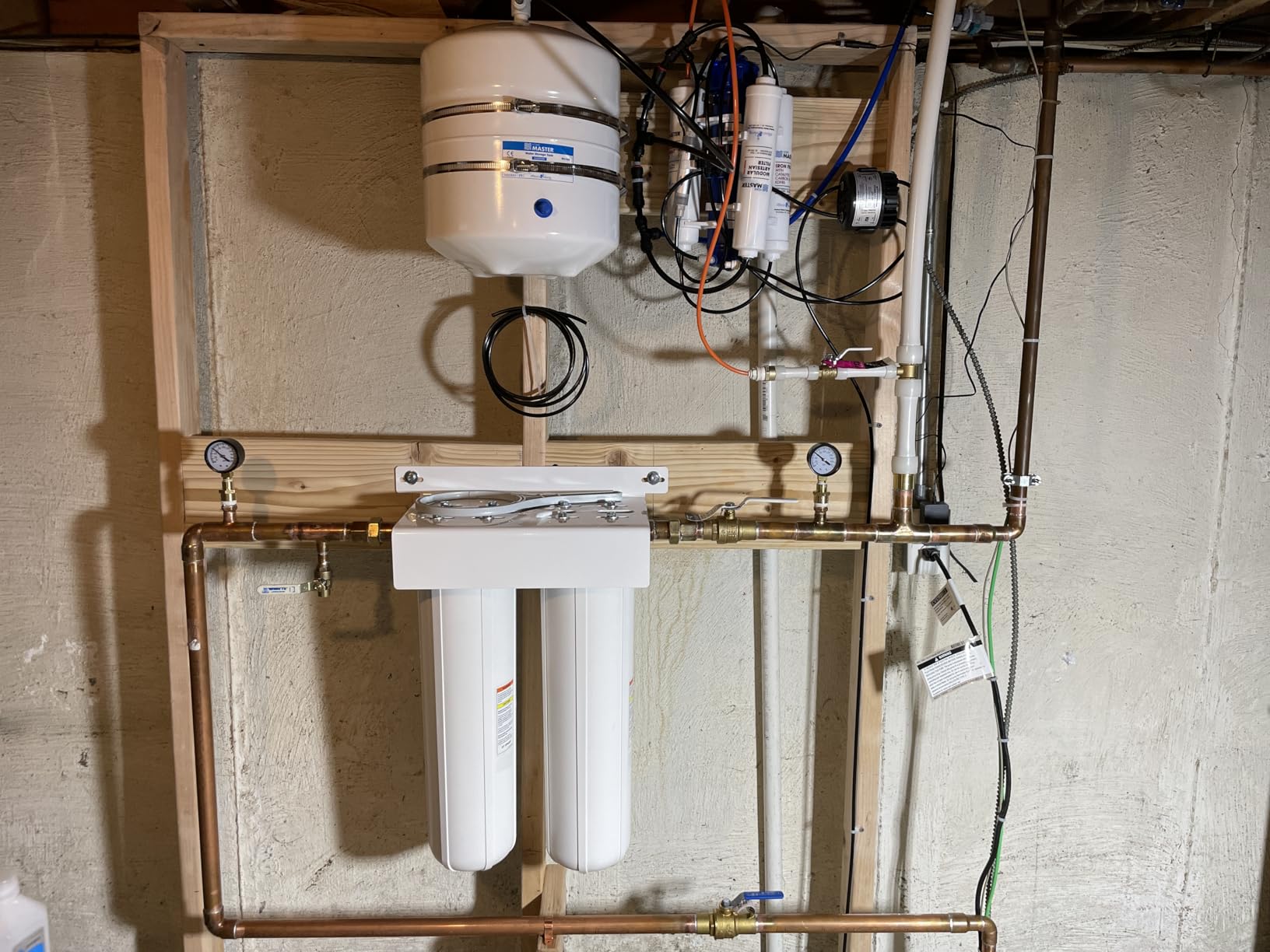
Finally, think about your water source. Well water with iron, sediment or bacterial concerns needs pretreatment before the membrane, and none of the mineral stages in this roundup fix a membrane that is already fouled. If you want the broader picture on city versus well installs, our under-sink RO kitchen guide covers the pretreatment question in more detail.
And if you have no plumbing situation you can improve, the honest answer may be that a countertop unit is the sensible route. We covered those separately in our countertop RO roundup for no-install situations, though none of the picks there match the mineralization depth of the under-sink systems reviewed here.
Installation and the Remineralization Replacement Schedule
Every under-sink RO needs a faucet hole, a drain line and some working room. Tankless and pumped systems also need an outlet. Check all three before you buy, because a countertop drilling or an electrician’s visit will cost more than the price difference between the units in this roundup.
The typical install order is feed water adapter to the cold line, then the sediment pre-filter, then the carbon block, then the RO membrane housing, then the post-carbon polish, and finally the remineralization cartridge at the very end. That cartridge must sit last, after the membrane and after the carbon, or you will mineralize the wrong water.
Flush each new system before you drink from it. For units with an alkaline post-filter, that means an extended flush, sometimes 30 minutes or more, until the water runs clear and stops tasting mineral-heavy. Owners who skip this step often conclude the mineralization is a defect when it is just a cartridge that has not settled.
The maintenance cadence is fairly standard across all ten. Sediment pre-filter and carbon block run 6 to 12 months depending on how dirty the feed water is. The RO membrane runs 2 to 4 years, or longer on the systems with a 24-month rated cartridge life. The remineralization cartridge runs 6 to 12 months and is the piece people most often forget.
That last point is the real complaint we saw in forum discussion. Cartridge exhaustion is invisible. There is no reliable TDS event that tells you the mineral stage is spent, because TDS creep in a tank can mask it and tankless readings fluctuate. Judge it by taste, by pH, and by a calendar you set on purchase day.
TDS creep deserves its own warning for tank systems. Water sitting in a storage tank overnight picks up dissolved material from the tank liner, so the first glass of the morning can read far higher than the glass after it. If your morning water tastes different from your evening water, that is usually the tank, not a failing filter.
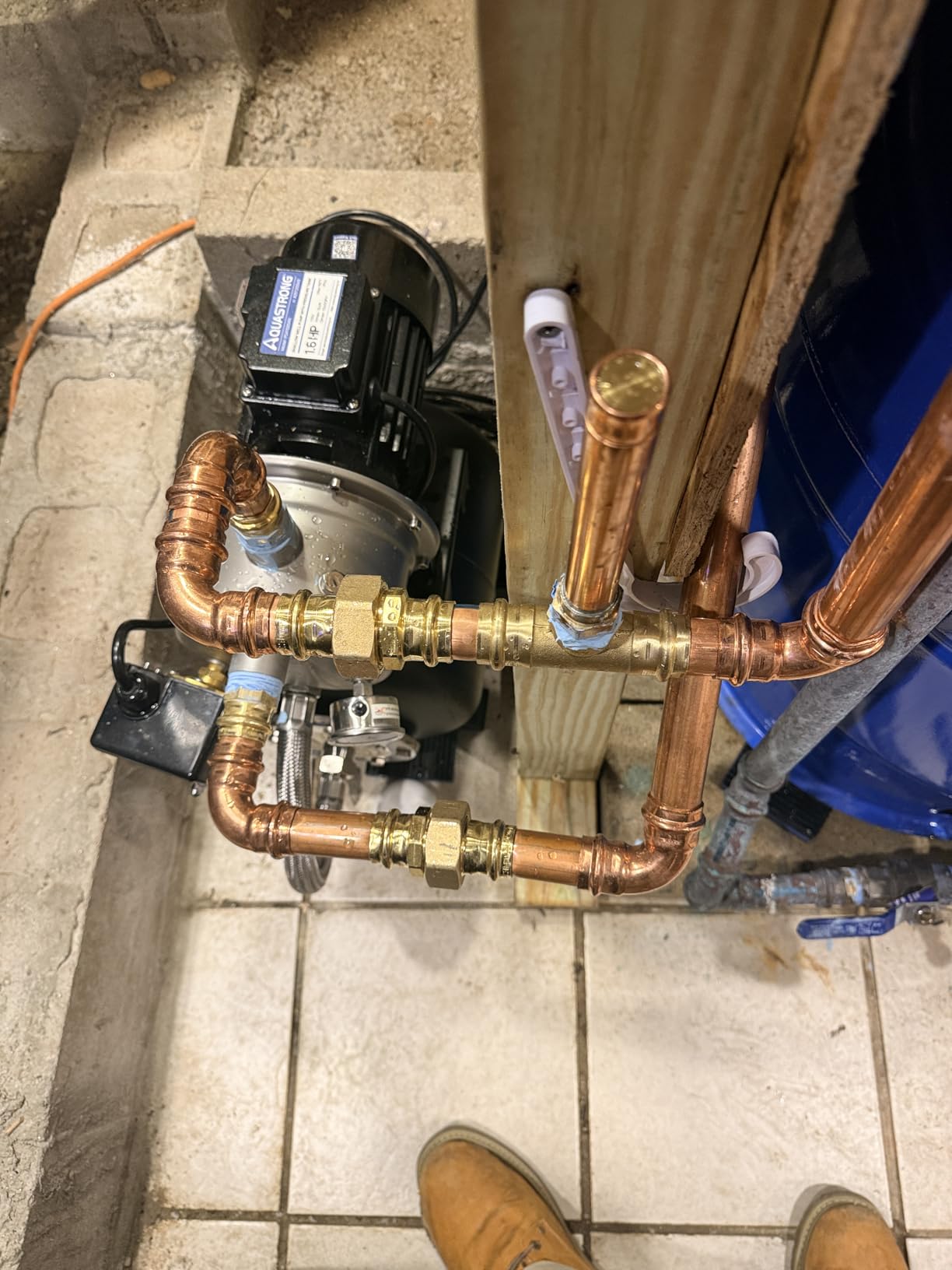
One more thing worth knowing before you go further. If you already own a capable RO system with no mineral stage, adding a standalone remineralization cartridge inline after the membrane is a real option and a much smaller spend than replacing the unit. Just confirm your housing takes a standard inline cartridge rather than a proprietary one.
Frequently Asked Questions
Do I need to remineralize my RO water?
Probably not for health reasons, and almost certainly for taste reasons. RO membranes strip 90 to 97 percent of dissolved solids, which removes contaminants and also removes the calcium and magnesium that give water body, leaving it flat and slightly acidic at a pH of roughly 5.5 to 6.5. Most of your daily minerals come from food rather than water, so a mineral stage is a taste and water-character decision. But if you dislike the taste of plain RO water, you will not drink as much of it, and that is a practical reason to add the stage.
Does a remineralization filter raise TDS or pH?
It does both, and that is the entire point. Without a mineral stage, RO output typically lands near 2 to 10 ppm TDS at a pH between 5.5 and 6.5. With one, finished water commonly lands in the 25 to 70 ppm TDS range with a pH between 7.0 and 8.0. Owner measurements on the iSpring RCC1UP-AK show roughly 15 to 18 ppm without the alkaline cartridge versus 27 to 30 ppm with it installed. Higher output TDS is not a sign the membrane failed.
Why does my new RO filter taste bad?
Almost always one of three things. First, the alkaline or mineral cartridge gives the first ounces an earthy, mineral-heavy taste until it breaks in, and a three to five second pre-flush usually clears it. Second, the carbon block needs a long initial flush, sometimes 30 minutes or more, before the water runs clear. Third, if your system has a storage tank, TDS creep makes the first glass of the morning taste different from later glasses. All three resolve with time and flushing rather than a warranty claim.
Why does reverse osmosis water taste weird or sweet?
Because the membrane removes minerals along with contaminants, leaving almost nothing but water. Sweetness is the absence of bitter and mineral notes rather than the presence of sugar, which is why people who dislike flat water are the ones who seek out reverse osmosis systems with remineralization. If you want the taste back, a mineral stage with calcium and magnesium is the fix. If you want a stronger flavor signal, a carbon post-polish helps too, though it will not restore what the membrane removed.
Is RO water hard on the kidneys?
There is no good evidence that drinking demineralized RO water is harmful to healthy kidneys, and health guidelines generally treat water mineral content as a quality and taste attribute rather than a health requirement. Kidney disease is a different matter because fluid, sodium and potassium intake all become medically managed, and some alkaline remineralization cartridges add sodium or potassium back. If you have a diagnosed kidney condition or are on a sodium-restricted diet, talk to your clinician before choosing a mineral stage, and check whether the cartridge adds sodium.
Is a remineralization filter worth it?
For most buyers who dislike flat RO water, yes, because it is the difference between water you drink and water you tolerate. It is also a modest ongoing cost, typically one cartridge every 6 to 12 months on top of your normal filter schedule. The stronger argument is that it works: the systems in this roundup add measurable calcium, magnesium or potassium and move finished-water pH toward neutral. If you already own an RO system without a mineral stage, an inline add-on cartridge is a far cheaper path than replacing the whole unit.
How long does a remineralization cartridge last?
Roughly 6 to 12 months for most of the systems in this roundup, and that figure is harder to trust than a filter change date suggests. There is no reliable TDS signal that tells you the mineral stage is spent, because readings fluctuate with cartridge age, tank TDS creep and water usage. Judge it by taste, by pH, and by a calendar you set when you buy. Some manufacturers sell multi-year filter sets that bundle the mineral cartridge, which makes the interval a non-question for the first few years.
Conclusion: The Best Reverse Osmosis Systems With Remineralization
After working through all ten, the iSpring RCC7AK-BN remains our pick for the best reverse osmosis systems with remineralization overall. It has the largest proven review base in the category, it needs no power, it adds a transparent housing that lets you see filter condition, and its natural mineral AK stage produces the kind of finished water people actually enjoy drinking.
If you want speed, the Frizzlife PD600-TAM3 delivers 600 GPD with a 2:1 water ratio and pH above 7.5. If you want the lowest cost of entry into a mineralizing system, the APEC ROES-PH75 does the job quietly and tolerates feed water up to 2000 ppm. If your water comes from a well, the pumped iSpring RCC1UP-AK is the one built for it.
Whatever you pick, check three things before you buy: your line pressure, whether you have an outlet under the sink, and whether your countertop can take a faucet hole. Those three answers eliminate most of the field in under a minute, and they are the difference between an easy install and an expensive afternoon.