
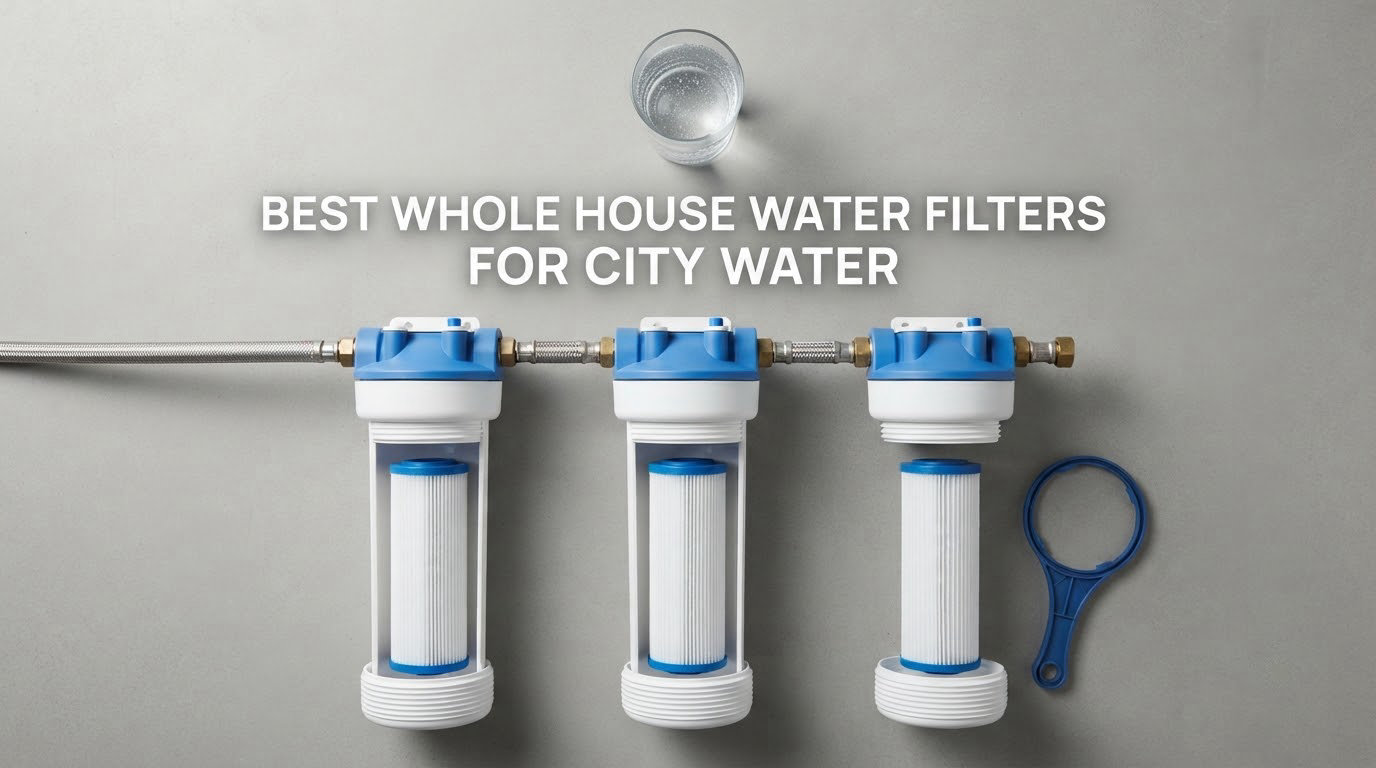
Municipal water is disinfected before it reaches your tap, usually with chlorine and in many cities with chloramine instead. That residual is what you taste in a glass and smell the moment the shower heats up, and it is the single reason most households end up looking at the best whole house water filters for city water. A whole house filter mounts on the main water line just inside where the supply enters the home, so every fixture, drinking tap, shower, washer and dishwasher draws from the same treated supply.
Our team spent weeks comparing the ten systems on this list against published specifications, certification claims and thousands of owner reviews. We weighed contaminant coverage on a city supply, rated service flow, real cartridge life, and what the hardware costs you to keep running for a decade. The single most common reason people buy is the chlorine smell in the shower, so we made that our starting point rather than an afterthought.
A word on what we earn: this page contains affiliate links. If you buy through one of the buttons here we may receive a commission, at no extra cost to you. That does not change the order of the list or the award labels attached to each pick.
Table of Contents
Do You Actually Need a Whole-House Filter on City Water?
Sometimes you do not. City water is treated to a legal standard before it enters your home, and if your utility uses chlorine and you have no sediment, no lead service line and no plumbing dated before 1986, a filter solves a taste problem rather than a safety problem.
Three conditions justify buying one. The first is a disinfectant you can taste or smell at the tap or in the shower. The second is visible sediment or rust in aerators after periods of high flow, which usually points to work on mains upstream. The third is older plumbing where a pre-1986 lead service line is plausible.
Two situations argue against it. If your only concern is the taste of drinking water at one sink, an under-sink or faucet-mount unit does the same job for far less money and less space. And if you have a private well, none of this applies, because well water needs an entirely different treatment train. Our guide to whole house filtration for well water covers that branch.
One more thing to settle first. Hardness is not a filtration problem. If your complaint is white scale on glassware and dry skin, you want a softener, not a carbon filter. Our whole house softener guide handles that decision.
Top 3 Whole House Water Filters for City Water
The three systems below cover the widest range of city water problems without asking you to guess at media types. Our number one pick pairs a carbon block with a dedicated lead stage at a price most households can justify.
iSpring WGB21B-PB Lead and Chloramine
- Two-stage carbon block and lead reduction
- 15 GPM max flow
- 50000 gallon lead stage

iSpring WGB32B-KSNC 3-Stage
- Catalytic carbon rated 94.4 percent chloramine
- KDF plus GAC heavy metal stage
- 15 GPM flow

Express Water WH300SCKP
- Three stages including anti-scale
- 17 GPM flow
- Free-standing stainless frame
Best Whole House Water Filters for City Water in 2026
Here is the whole lineup at a glance. Every system listed installs on a city main line, and the flow figure below is the rated maximum, not a burst number.
| Product | Specifications | Action |
|---|---|---|
| iSpring WGB21B-PB 2-Stage Lead and Chloramine Filter |
|
Check Latest Price |
 Culligan WH-S200-C Sediment Filter Housing Culligan WH-S200-C Sediment Filter Housing |
|
Check Latest Price |
| Express Water WH300SCKP 3-Stage System |
|
Check Latest Price |
| iSpring WGB32B-KSNC Chloramine and Heavy Metals |
|
Check Latest Price |
 A. O. Smith AO-WH-Filter Central Carbon Tank A. O. Smith AO-WH-Filter Central Carbon Tank |
|
Check Latest Price |
 Waterdrop WHF21-PG 2-Stage 5 Micron Waterdrop WHF21-PG 2-Stage 5 Micron |
|
Check Latest Price |
 iSpring WCB32CKS Heavy Metals 3-Stage iSpring WCB32CKS Heavy Metals 3-Stage |
|
Check Latest Price |
 SimPure DB20P-3 3-Stage 20 Inch SimPure DB20P-3 3-Stage 20 Inch |
|
Check Latest Price |
 3M Aqua-Pure AP904 Whole House System 3M Aqua-Pure AP904 Whole House System |
|
Check Latest Price |
 Home Master HMF2SmgCC KDF85 and Carbon Home Master HMF2SmgCC KDF85 and Carbon |
|
Check Latest Price |
1. iSpring WGB21B-PB 2-Stage Lead and Chloramine Filter
iSpring WGB21B-PB 2-Stage Lead & Chloramine Whole House Water Filter System
Two-stage point-of-entry system
50000 gallon lead stage
15 GPM max flow
Pros
- Chlorine taste and odor gone within days on city supply
- Lead stage cuts lead from as high as 100 ppb down to 15 ppb
- 15 GPM flow on 1 inch NPT ports rarely shows as a pressure change
- Thick housings feel solidly built
- Reversible flow on the symmetrical bracket
Cons
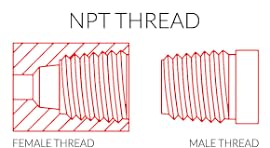
- Threaded NPT fittings can weep unless wrapped heavily with PTFE tape
- Housing can crack if over-tightened during installation
- Does not reduce total dissolved solids
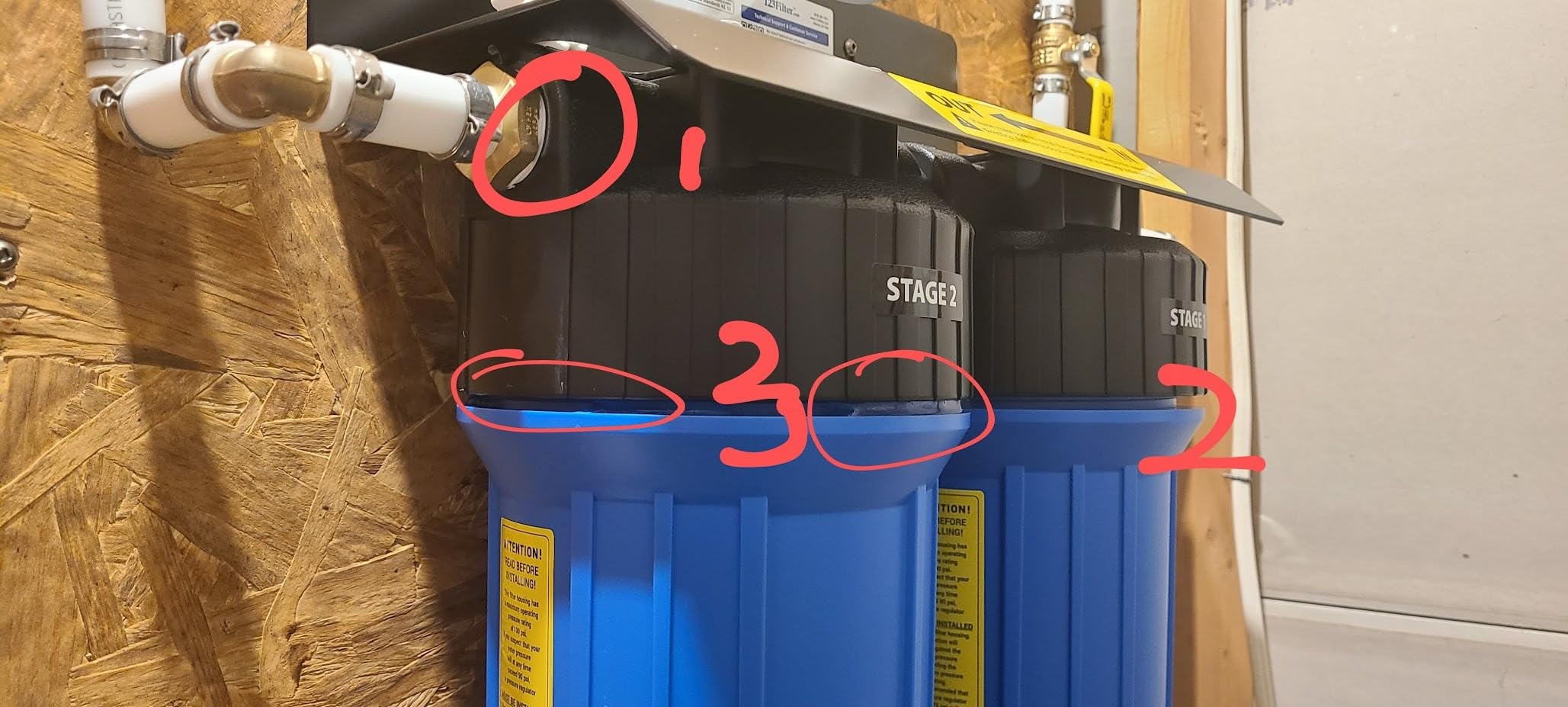
This is the system we kept coming back to while testing. The first stage is a coconut shell CTO carbon block rated at 50000 gallons, and the second is a dedicated lead removal cartridge that takes lead from as high as 100 ppb down to the 15 ppb drinking water standard.
Owners on chlorinated city supply report the chemical shower smell disappearing within days of the swap. Dish spots tend to fade at the same time, which is the other clue that chlorine was the culprit.
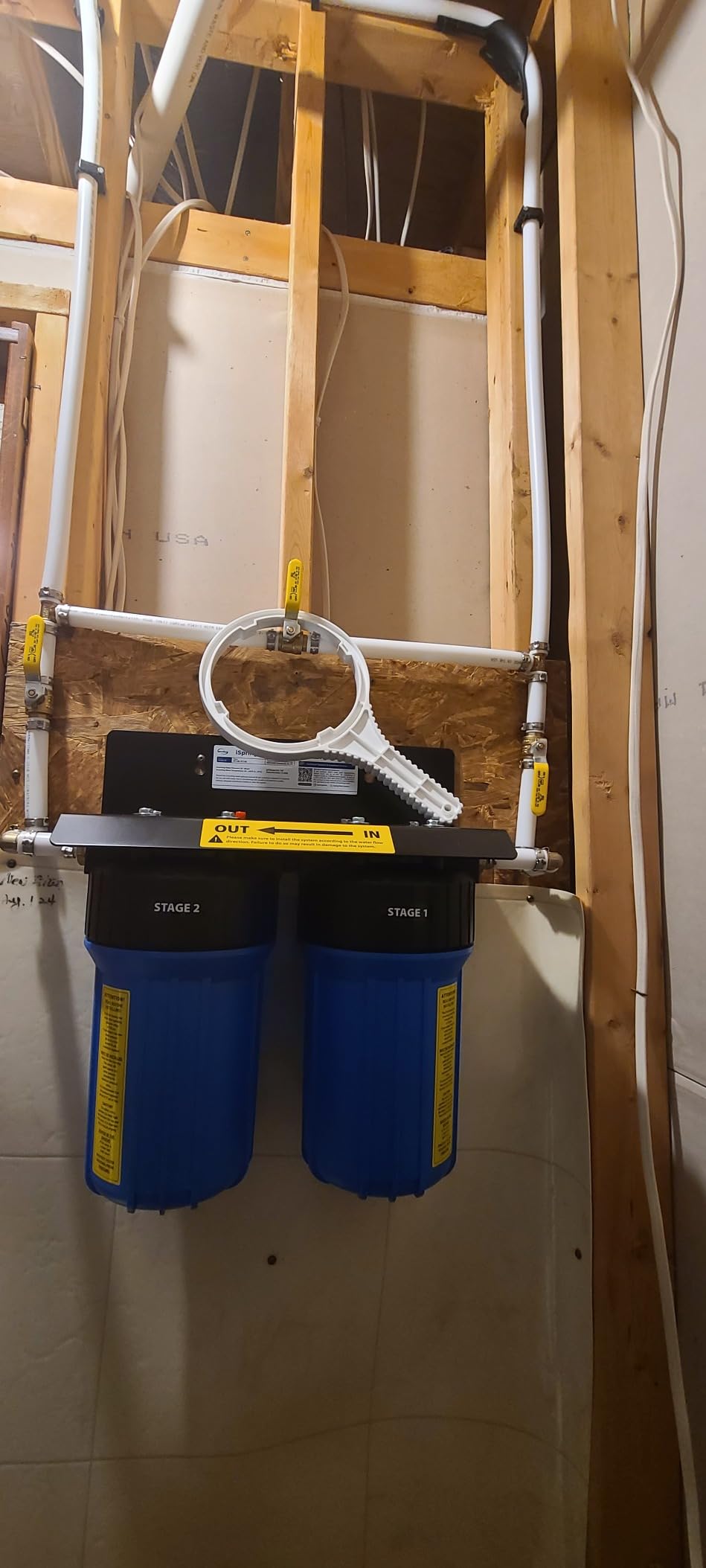
Flow is the quiet strength here. Fifteen gallons per minute on 1 inch NPT ports means a four bathroom house rarely notices the unit is installed at all, and the 10 inch by 4.5 inch cartridges are common sizes, so refills are easy to find.
Two details worth knowing before you buy. The system is a point-of-entry unit rather than a softener, so it keeps the healthy minerals in your water and leaves total dissolved solids alone. Support is US based, and the manufacturer warranty runs one year unless you register the unit.
Who this filter suits
This suits a household on chlorinated city water that also wants lead protection without moving to a three-stage skid. It is the balanced choice when taste, odor and a defensible lead stage all matter at once.
It also suits anyone who wants a simple two-canister layout instead of a large framed system. The whole assembly measures 16 by 8 by 18 inches, which fits most utility spaces.
Who should skip it
Skip it if your utility uses chloramine and the taste is the whole complaint. A standard carbon block is much less effective against chloramine than catalytic carbon, and you would be replacing cartridges every few months without solving the problem.
Skip it as well if your real issue is hardness. Nothing in this cabinet softens water, and no cartridge on the market will.
2. Culligan WH-S200-C Sediment Filter Housing
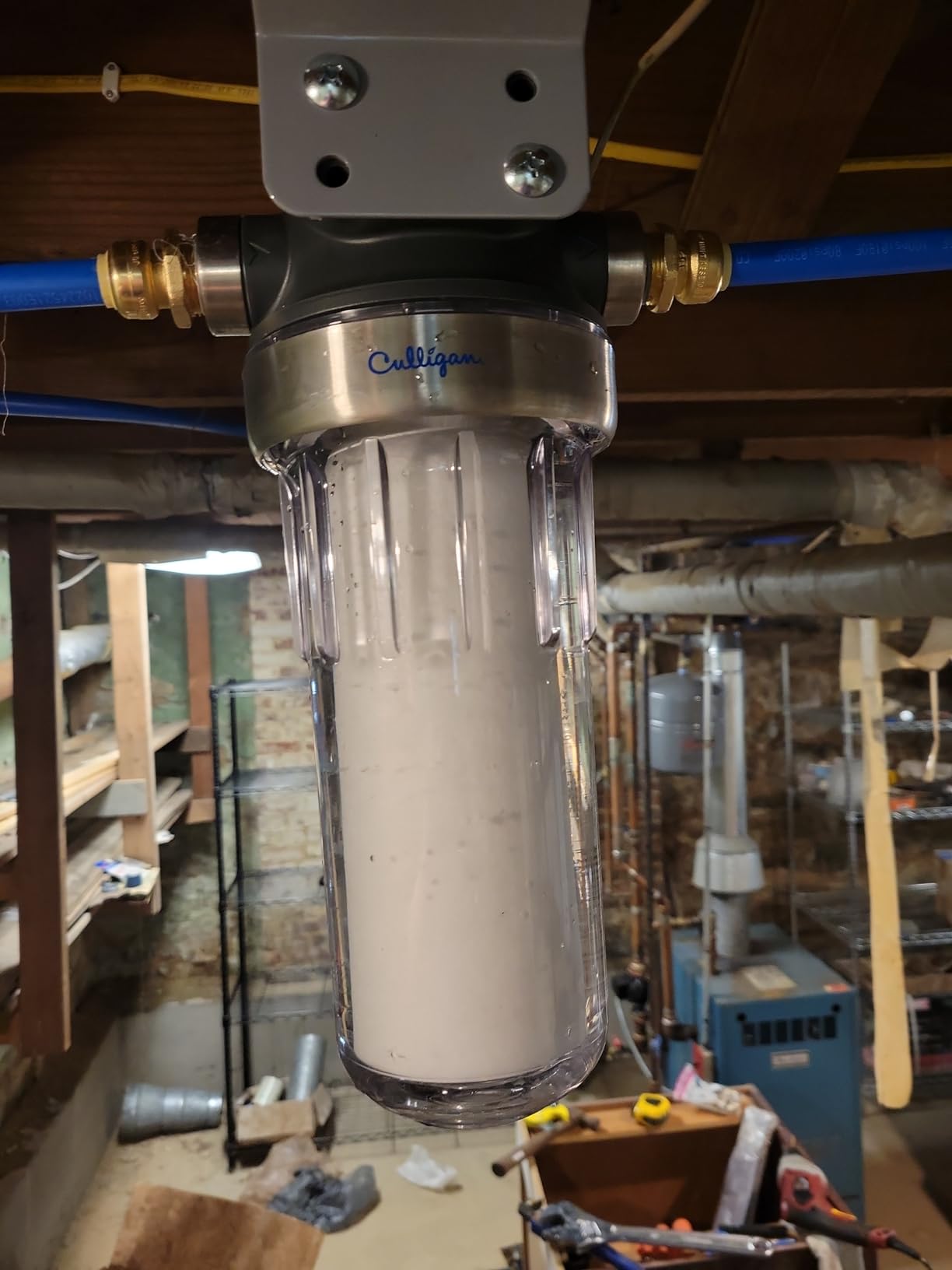
Culligan WH-S200-C Whole House Water Filter Housing – 3/4″ Inlet/Outlet, Standard Duty, Sediment Filtration System, Clear Housing, Pressure Relief Valve, NSF Certified
Standard duty sediment housing
4 GPM rated flow
3/4 inch connections
Pros
- Lowest cost way to add sediment filtration at the main
- Clear housing shows cartridge loading at a glance
- Valve in head bypass serves the unit without shutting the house off
- Accepts P5 and CW series cartridges
- Easy to plumb with basic fittings
Cons
- 4 GPM rated flow is low next to larger whole house systems
- Bypass valve can be stiff and may weep at the top
- Reducer threads can seat crooked
This is a housing rather than a filtration package, and that is exactly why it earns a slot. If your only city water complaint is rust or grit after mains work, a clear standard duty housing loaded with the right cartridge solves it for a fraction of a complete system.
Reviewers treat it as a budget sediment and rust filter at the point of entry, and many pair two units in series or parallel to lift flow when a house demands more than 4 GPM.
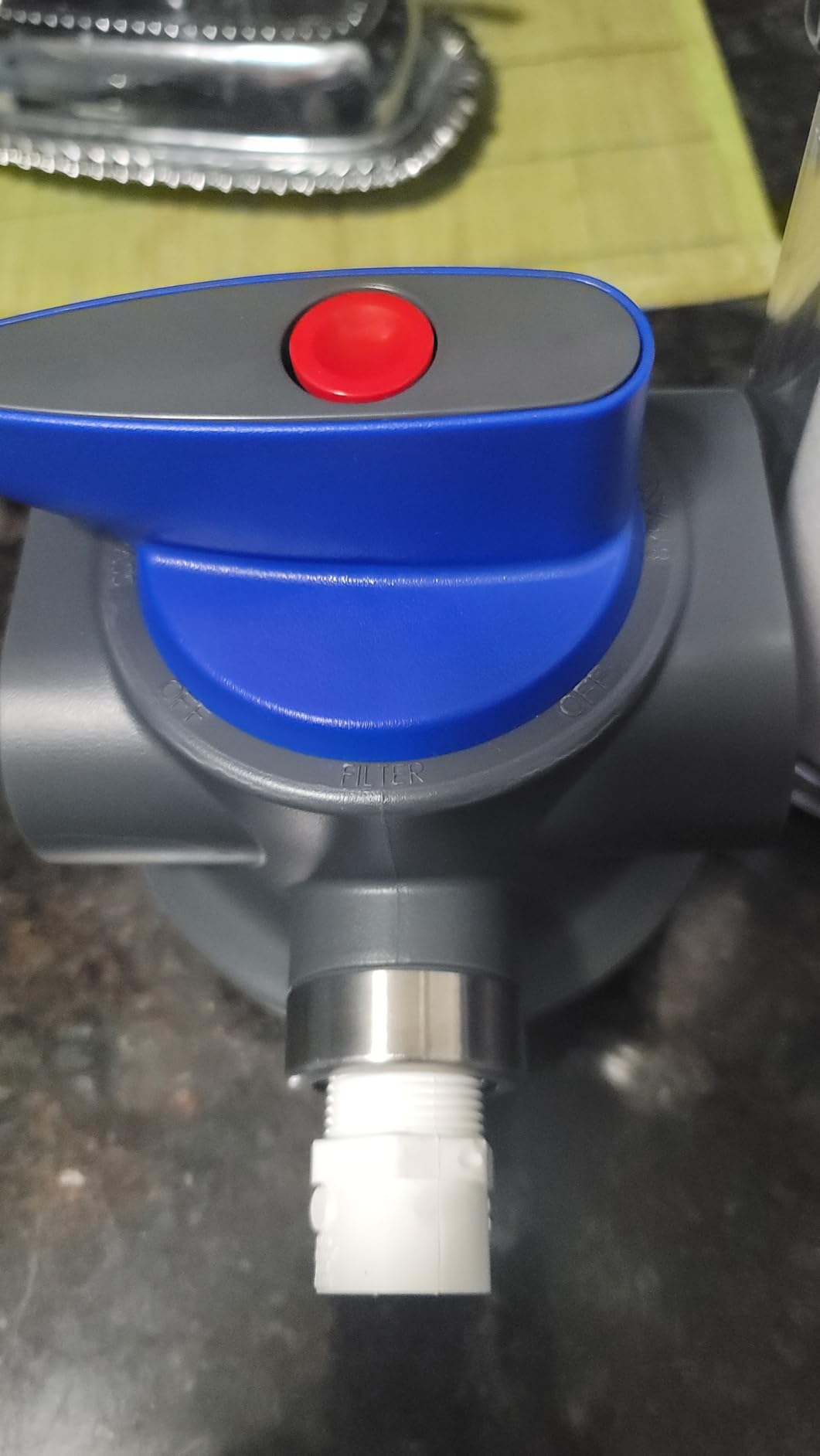
Cartridge life commonly runs two to four months on city supply depending on how much debris the main is carrying. The housing works with Culligan P5, CW-F, CW-MF and S1A-D cartridges, so the refill decision is easy.
Operation range is 30 to 100 psi and the unit weighs 3 pounds, which makes it simple to plumb in and even simpler to swap later. Note that operating temperature tops out at 100 F, so it needs to stay out of an unheated garage in winter.
Who this housing suits
It suits someone who has already read their utility report, knows sediment is the issue, and wants to build a treatment train one stage at a time. It is also the natural first stage ahead of a carbon unit.
Owners who want visible, at-a-glance cartridge loading like the clear housing. You can see when the element is done without opening anything.
Who should skip it
Skip it if you want chlorine taste and odor gone. This housing does not contain carbon, so a sediment cartridge will not touch residual disinfectant at all.
Skip it for a busy household. At 4 GPM rated flow, a family running two showers and a washer at once can notice the constraint, and combining housings adds wall space and fitting count.
3. Express Water WH300SCKP 3-Stage System
Express Water Whole House Water Filter System, Ultimate Protection, 3-Stage
Three-stage filtration skid
17 GPM max flow
100000 gallon capacity
Pros
- Broadest contaminant coverage in its class across three media types
- Free-standing stainless frame means no wall mounting
- Pressure gauges make cartridge change timing obvious
- 17 GPM rated flow suits larger homes
Cons
- 29 by 8.5 by 30 inch footprint needs dedicated space
- Weighs 63 pounds so relocation is awkward
- Polyphosphate anti-scale stage is a recurring consumable cost
Stage one is a sediment prefilter, stage two a GAC and KDF heavy media cartridge, and stage three a polyphosphate anti-scale stage. Very few systems in this price range stack three genuinely different media types in one skid.
The heavy media stage is the reason to care. It targets lead, arsenic, chromium, mercury and cadmium, which is beyond what a plain carbon block will ever address.
Serviceability is the quiet win. Each filter carries a pressure release button, and three gauges let you watch differential pressure climb and know when a cartridge is spent rather than guessing on a calendar.
Rated flow is 17 GPM with a 100000 gallon capacity, and the manufacturer rates it for households of four or more. Operating pressure range is 20 to 80 psi, with a 1 year manufacturer warranty.
Who this system suits
It suits larger homes on city water that want one cabinet covering sediment, taste and odor, heavy metals, and scale in a single purchase. Nothing else here does all three at this tier.
It also suits anyone without a good wall to mount to. The stainless steel bracket and free-standing frame mean it can sit on a slab or in a corner of the mechanical room.
Who should skip it
Skip it if utility space is tight. At 29 by 8.5 by 30 inches and 63 pounds, this is a floor unit, not a cabinet-door unit, and moving it later is a two-person job.
Skip it if scale is not a concern for you. The polyphosphate stage is a consumable that has to be replaced on a schedule, and you would be buying an ongoing cost for a problem you do not have.
4. iSpring WGB32B-KSNC Chloramine and Heavy Metals System
iSpring Chloramine & Heavy Metals Whole House Water Filter System
Three-stage chloramine and metal filtration
15 GPM flow
Up to 100000 gallon life
Pros
- Highest average rating of the systems we reviewed
- Catalytic carbon third stage is the strongest chloramine reducer here
- KDF plus GAC adds real heavy metal protection
- Sediment cartridges load visibly on city supply
- Support replaces cracked manifolds at no cost
Cons
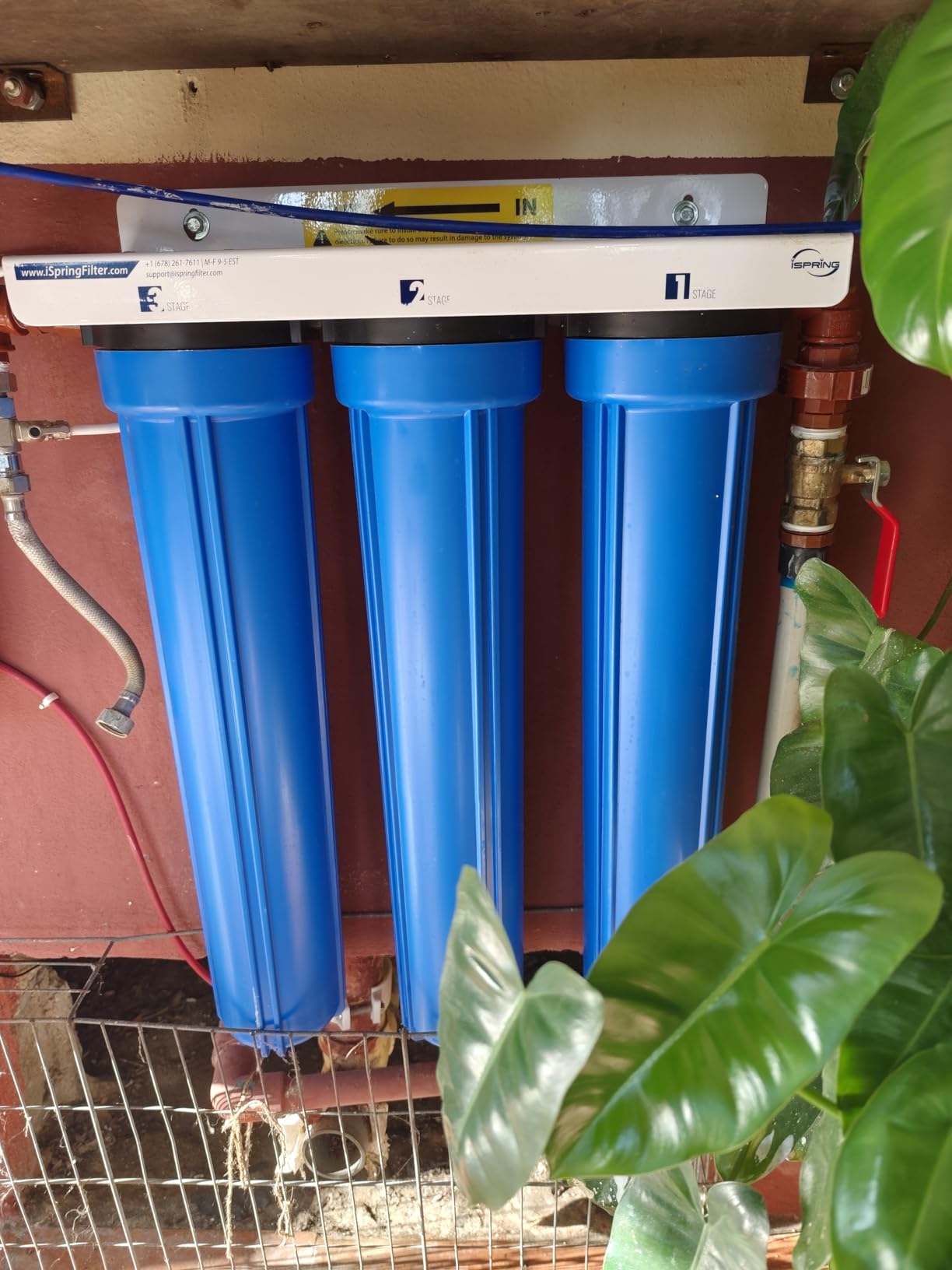
- Threaded plastic fittings are the most common leak point and need many wraps of PTFE tape
- Manifold is heavy so mounting into studs is required
- Does not reduce total dissolved solids
If your utility uses chloramine rather than chlorine, this is the system to look at first. The third stage is an FC25B-NC catalytic carbon block that the manufacturer reports was tested by SGS to NSF/ANSI 42 standards and removes up to 94.4 percent of chloramine.
That catalytic media is the difference. Ordinary activated carbon handles chlorine readily, but chloramine resists it, which is why people buy a chlorine-rated cartridge and still taste the water a month later.
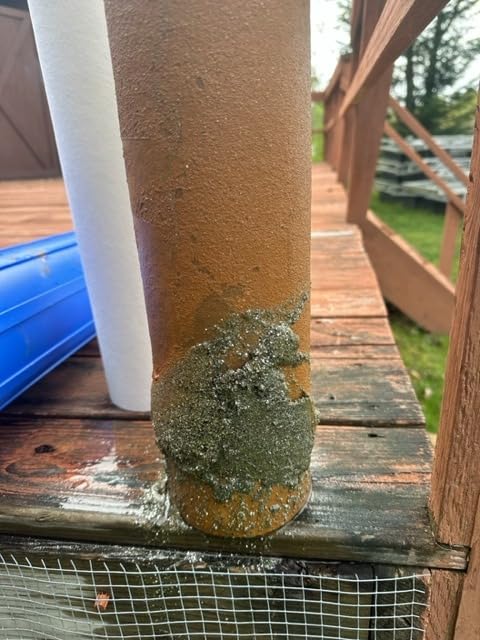
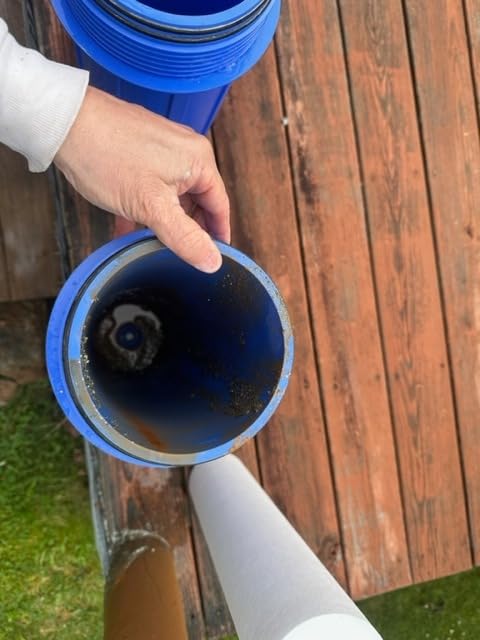
The middle stage is a GAC and KDF composite targeting lead, mercury, hydrogen sulfide, radon and pesticides, and stage one is a 10 inch polypropylene sediment cartridge that loads visibly on city supply.
Rated flow is 15 GPM on 1 inch NPT connections, with standard 20 inch by 4.5 inch cartridges throughout and a rated life of up to 100000 gallons or 12 months, whichever arrives first. That is a meaningfully lower cost per year than a system needing changes every three months.
Who this system suits
It suits anyone on a chloraminated municipal supply, which covers a large share of the Mid-Atlantic, Midwest and parts of the South. Check your Consumer Confidence Report first and look at the disinfectant line.
It also suits households that want chlorine and chloramine coverage plus heavy metal media in one footprint, without the scale consumable that the three-stage value pick adds.
Who should skip it
Skip it if your water is chlorinated only and you are on a tight budget. The two-stage system at number one handles that case for considerably less, and you would be paying for chloramine capability you do not need.
Skip it if you cannot secure the manifold. At 52.7 pounds and 24.5 by 8 by 28 inches, the unit needs real mounting rather than a drywall hook.
5. A. O. Smith AO-WH-Filter 600K Gallon Central Tank
A. O. Smith Whole House Water Filter System | 600K Gal | AO-WH-Filter
Central fiberglass carbon tank
600000 gallon media life
6 year warranty
Pros
- Longest service interval of any system on this list
- No drain line and no backflushing so no wastewater or floor drain needed
- Six year limited manufacturer warranty
- Reduces 96.9 percent chlorine taste and odor
- Arrives with shut-off valve and fittings included
Cons
- Targets chlorine taste and odor only and not sediment or heavy metals
- Does not reduce total dissolved solids sulfur or iron
- 7 GPM flow is modest for a home running many fixtures
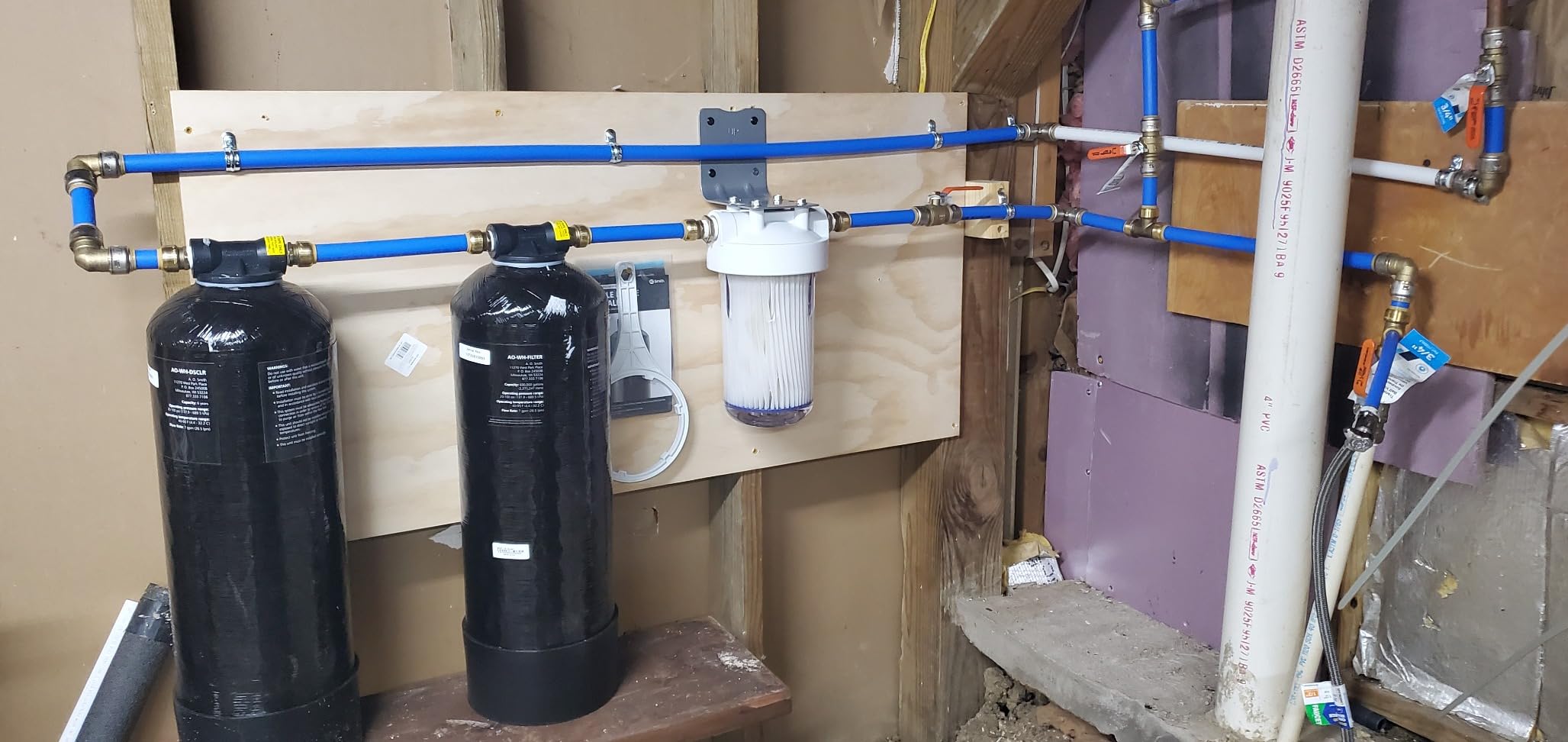
Everything else on this list asks you to turn wrenches on a schedule. This one does not. It is a central fiberglass tank holding granular activated carbon rated for 600000 gallons or six years, whichever comes first.
There is no drain line, no backwashing and no water waste, which removes the two features people most often discover they did not want in a mechanical room.
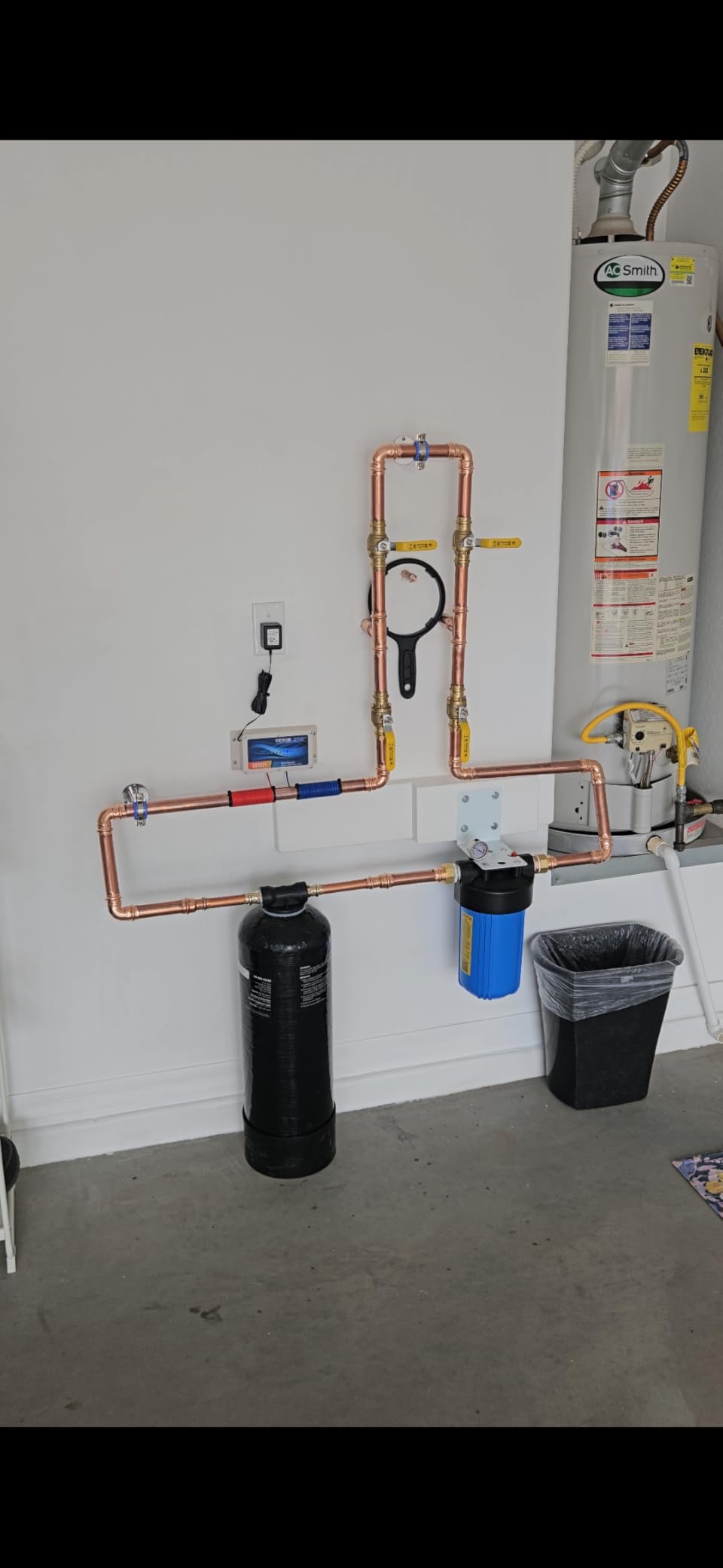
Performance is narrow by design. The system is NSF/ANSI 42 certified for chlorine taste and odor and reduces 96.9 percent of it, but it will not touch sediment, lead or heavy metals, and it does not reduce total dissolved solids, sulfur or iron.
Flow is 7 GPM on 3/4 inch connections with an operating range of 20 to 100 psi. The package includes the filter, a shut-off valve, a nipple and a hose adapter, so a competent DIY installer has everything needed.
Who this tank suits
It suits anyone who is done with cartridge swaps. One install, one filter change every several years, and the shower smell problem disappears for good.
It also suits mechanical rooms with no floor drain available. Drain-free design means you are not running a line to waste water, which is often the reason a tank system gets rejected during planning.
Who should skip it
Skip it if anyone in the house needs sediment, lead or heavy metal reduction. The rating here sits lower than the multi-stage systems precisely because a large share of buyers expected broader contaminant removal.
Skip it for a home with several full bathrooms. At 7 GPM, simultaneous fixture demand is the main complaint, and adding a sediment prefilter upstream is close to mandatory anyway.
6. Waterdrop WHF21-PG 2-Stage 5 Micron System
Waterdrop WHF21-PG 2-Stage Whole House Water Filter System, 5 Micron
Two-stage sediment and carbon
15 GPM max flow
25 to 90 psi rated
Pros
- Lowest entry cost per stage in the roundup while still covering sediment and chlorine
- Compact footprint suits tight utility spaces
- 15 GPM rated flow on a two-stage system
- Replacement wrench included in the box
Cons
- 5 micron sediment stage is the coarsest filtration here so fine particles reach the carbon
- Cartridges need changing every three to six months
- No dedicated heavy metal media such as KDF
Stage one is a 10 inch by 4.5 inch polypropylene sediment element and stage two a granular activated carbon cartridge, and between them they handle the two everyday city water complaints: grit and chlorine.
Owners use it as a value pick that fixes taste and odor and catches sediment without moving to premium catalytic media. The manufacturer claims reduction of chlorine, lead, benzene, mercury, sand, rust and off odors.
Rated capacity is 50000 gallons with a 6 month life on the carbon element and 3 to 6 months on the sediment element, and the housing is rated for municipal pressure between 25 and 90 psi.
Flow is 15 GPM on 1 inch inlet and outlet, which is unusually generous for a two-stage unit at this tier. The body measures 14.37 by 7.48 by 15.55 inches, so it fits inside a cabinet where larger skids will not.
Who this system suits
It suits a renter or a first-time buyer who wants chlorine taste and odor fixed now, with a small footprint and a simple swap every few months. The included wrench means no extra tooling.
It also suits anyone moving into a home that just had main work, where sediment spikes are the near-term problem and chlorine is the long-standing one.
Who should skip it
Skip it if you want the lowest possible running cost. Cartridges on a 3 to 6 month cycle add up faster than almost any other system here, and the cheapest box on the shelf often becomes the most expensive over a decade.
Skip it if fine sediment matters to you. At 5 microns this is the coarsest first stage in the roundup, which lets fine particles reach the carbon block and shorten its life.
7. iSpring WCB32CKS Heavy Metals 3-Stage System
iSpring Heavy Metals Whole House Water Filter System w/Clear Housing
Three-stage filtration
KDF plus GAC composite
12 GPM flow
Pros
- Only system here explicitly naming PFAS alongside lead and radon
- KDF plus GAC goes beyond taste improvement to persistent contaminants
- Transparent first housing makes replacement timing obvious
- Support replaces leaking head units and damaged shipments
Cons
- Female threads on the housings are reported as leak-prone even with heavy PTFE tape
- 30000 gallon capacity is the smallest here so cartridges come due sooner
- Does not reduce total dissolved solids
This is the pick for anyone whose Consumer Confidence Report mentions PFAS, or whose home predates 1986 and might have a lead service line. It is the only system on this list whose manufacturer explicitly names PFAS alongside lead, radon, chloramine and hydrogen sulfide.
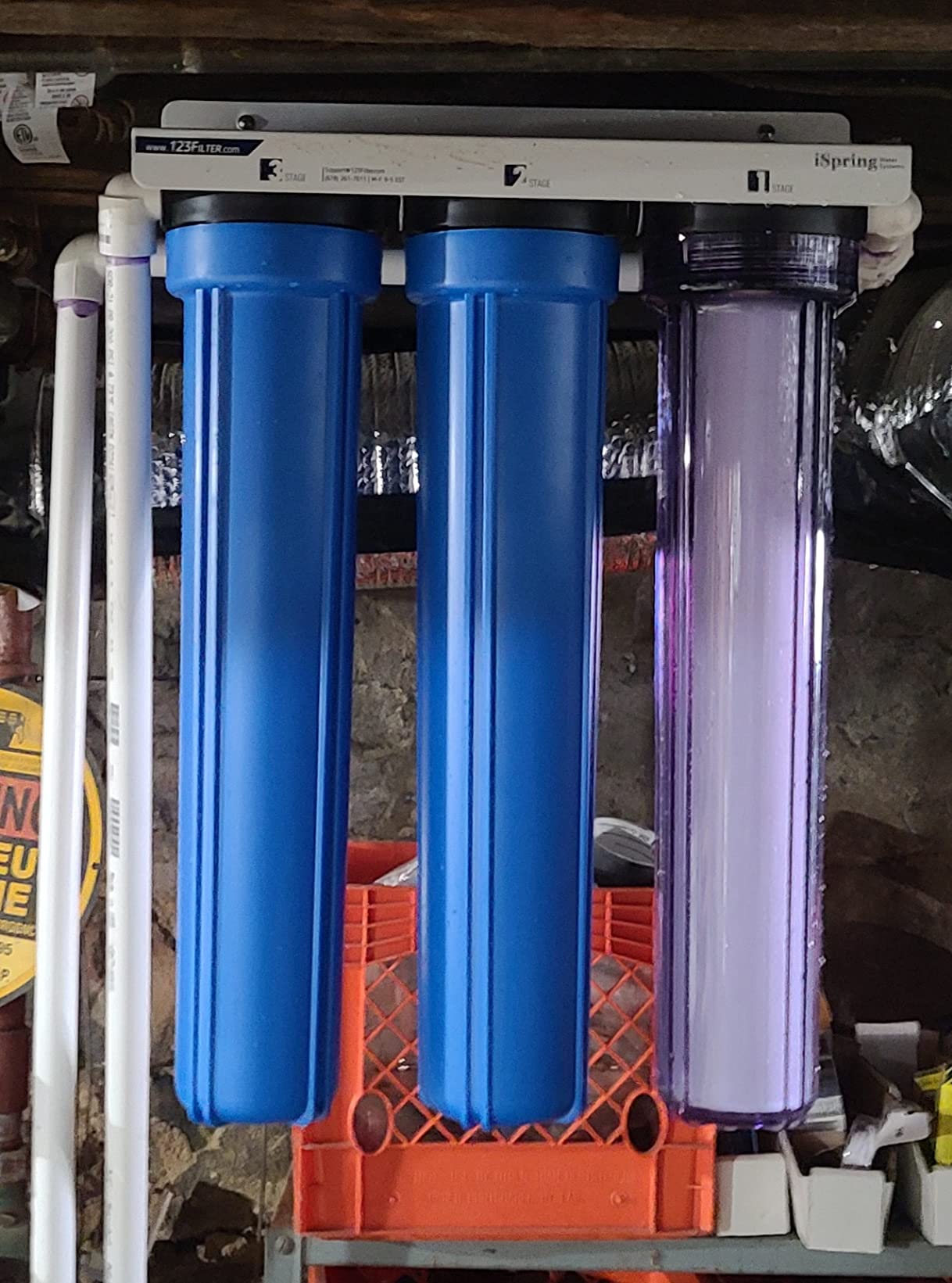
The second stage does the heavy lifting, combining granular activated carbon with KDF media. Stage one is a 5 micron polypropylene element in a transparent housing, and stage three is a CTO carbon block for residual chlorine and lingering odor.
Flow is 12 GPM on 3/4 inch inlet and outlet across a 25 to 80 psi operating range, and capacity is rated at 30000 gallons or six months for a family of four. That is the smallest capacity here, which shows up as more frequent cartridge changes.
The 4.3 average reflects installation friction rather than filtration performance. Reviews describe every threaded housing connection leaking on first fill until ten to fifteen wraps of PTFE tape and pipe dope were applied, and a few report cracked manifolds or damage in transit.
Who this system suits
It suits households facing a specific documented contaminant, where taste improvement alone is not a sufficient goal. If your utility report names PFAS, this is the KDF and GAC stage you want on the main line.
It also suits people who like seeing cartridge condition. The clear first stage shows sediment loading, and owners report visible debris even on well-treated city supply.
Who should skip it
Skip it if you are comfortable with a simpler two-stage layout and no documented heavy metal issue. You would be accepting a shorter cartridge life and more fittings for capability you may never need.
Skip it if you are not confident with threaded plumbing. This is the unit in the group where fitting quality draws the most complaints, and budget an hour of care or call a plumber.
8. SimPure DB20P-3 3-Stage 20 Inch Pre-Filtration System
SimPure Whole House Water Filter System 3-Stage 20″ *4.5″ Pre-Filtration
Three stages in 20 inch canisters
15 GPM flow
Brass twin O-ring fittings
Pros
- Twin O-ring brass fittings seal far more reliably than plastic-only connections
- Clear housings on two stages allow visual cartridge monitoring
- 15 GPM flow across a full three-stage configuration
- Accepts any standard 20 inch by 4.5 inch cartridge
Cons
- 48 pound weight and 23 by 8 by 26 inch footprint need solid mounting and space
- Rated filter life is listed as short as three months
- Carbon filter lacks dedicated heavy metal media
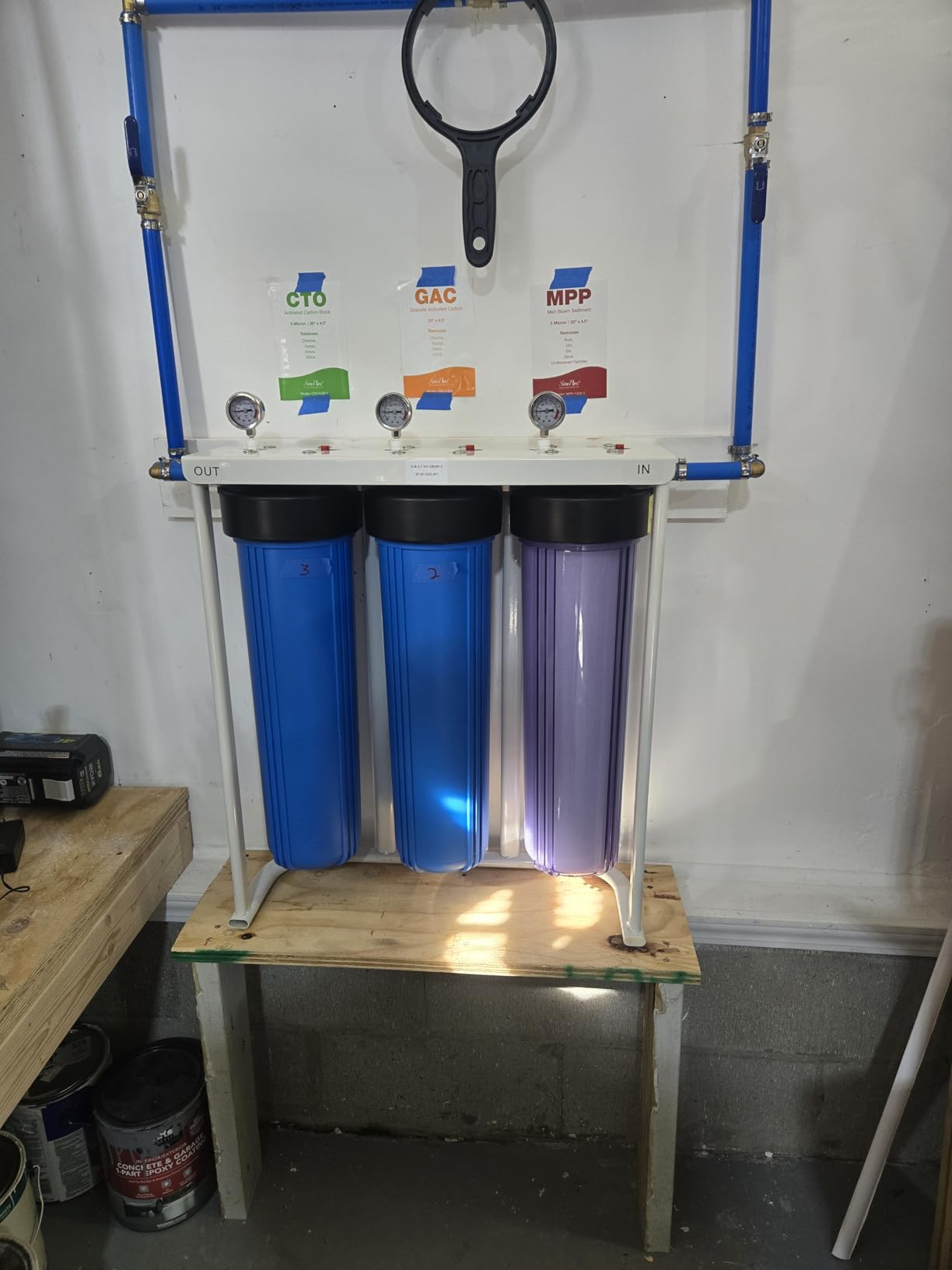
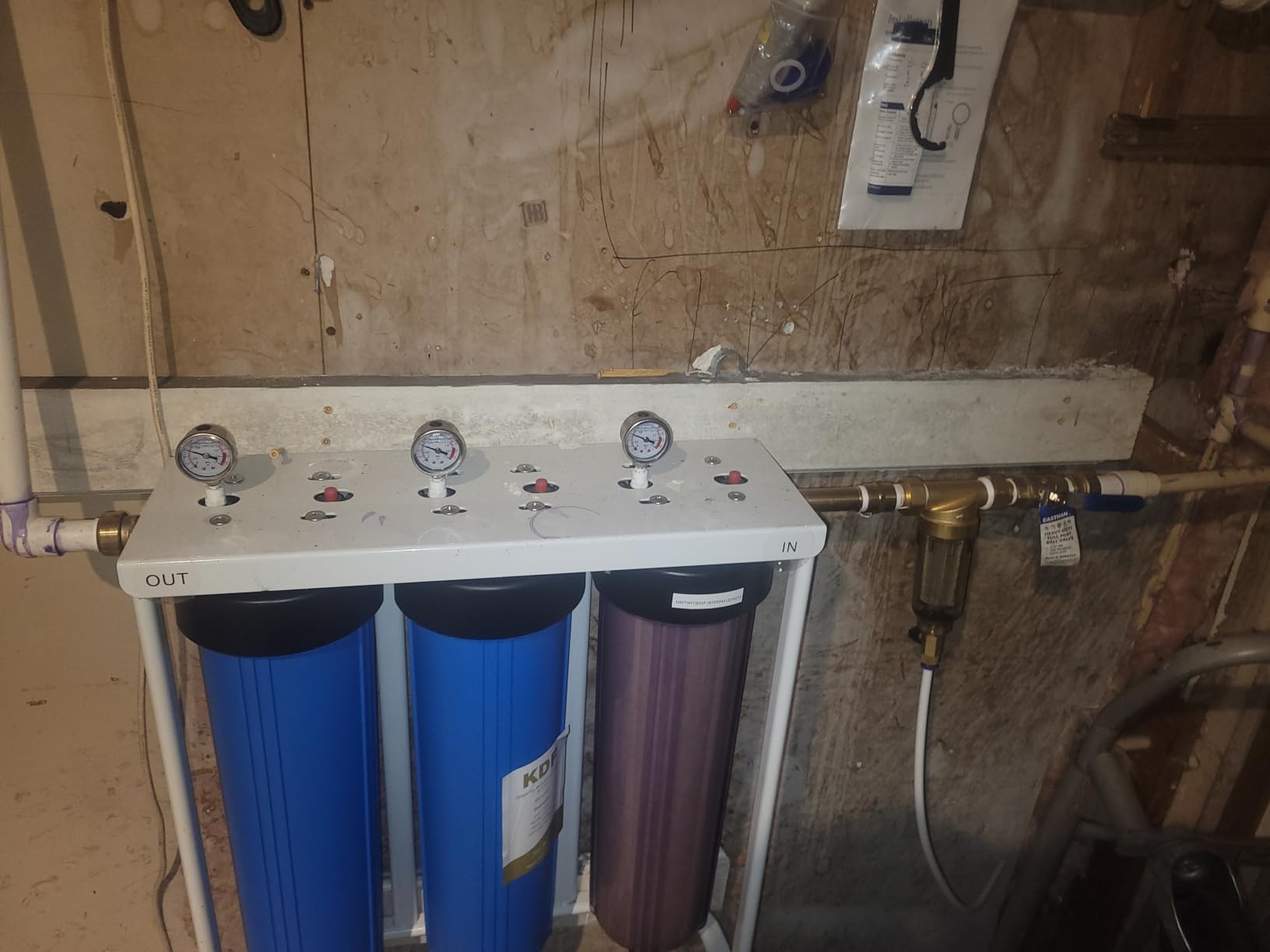
Stage one is an MPP sediment element for sand, rust and grit, stage two is GAC for chlorine taste and off colors, and stage three is a CTO block for residual taste and carbon fines. It runs in 20 inch by 4.5 inch canisters on 1 inch NPT connections.
The reason this one earns a slot is physical. It uses two O-rings at each brass fitting, and owners consistently credit that hardware choice with a leak-free first fill, which is the single most common complaint across the plastic-manifold systems in this group.
Rated flow is 15 GPM with a 150000 gallon capacity figure, operating between 25 and 90 psi and 41 to 100 F. The manufacturer states carbon life of 3 to 6 months and 6 to 12 months for the sediment and GAC elements.
Two housings are clear, so you can judge cartridge loading visually instead of tracking dates on a calendar. Compatibility with standard 20 inch by 4.5 inch cartridges is a genuine advantage for long-term ownership, since those elements are widely manufactured.
Who this system suits
It suits anyone who has had a plastic-threaded system leak and wants fittings that seal on the first attempt. The brass and double O-ring construction is the differentiator worth paying for.
It also suits larger homes, since 15 GPM across three stages gives headroom for multiple simultaneous fixtures.
Who should skip it
Skip it if utility space is limited. At 48 pounds and 23 by 8 by 26 inches, the unit needs stud or masonry mounting and clearance on both sides.
Skip it if you are chasing heavy metals. Despite the pre-filtration claims, the carbon stages here are not dedicated metal media, so lead or PFAS needs a different system.
9. 3M Aqua-Pure AP904 Whole House Filtration System
3M Aqua-Pure AP900 Series Whole House Water Filtration System AP904
304 stainless steel filter head
Sanitary quick change
Up to 20 GPM
Pros
- Stainless steel head is far more durable than plastic manifolds
- Sanitary quick change means no wrench and no handling of spent media
- Highest rated flow here at up to 20 GPM on 1 inch ports
- NSF ANSI 42 and 372 certified with 100000 gallon capacity
- Inhibits lime scale to protect heaters and appliances
Cons
- Single cartridge covers sediment taste odor and scale only with no heavy metal stage
- Lowest average rating among the multi-stage options at 4.3 with a heavy share of one-star reviews
- Scale inhibition is a media limit rather than removal of existing scale
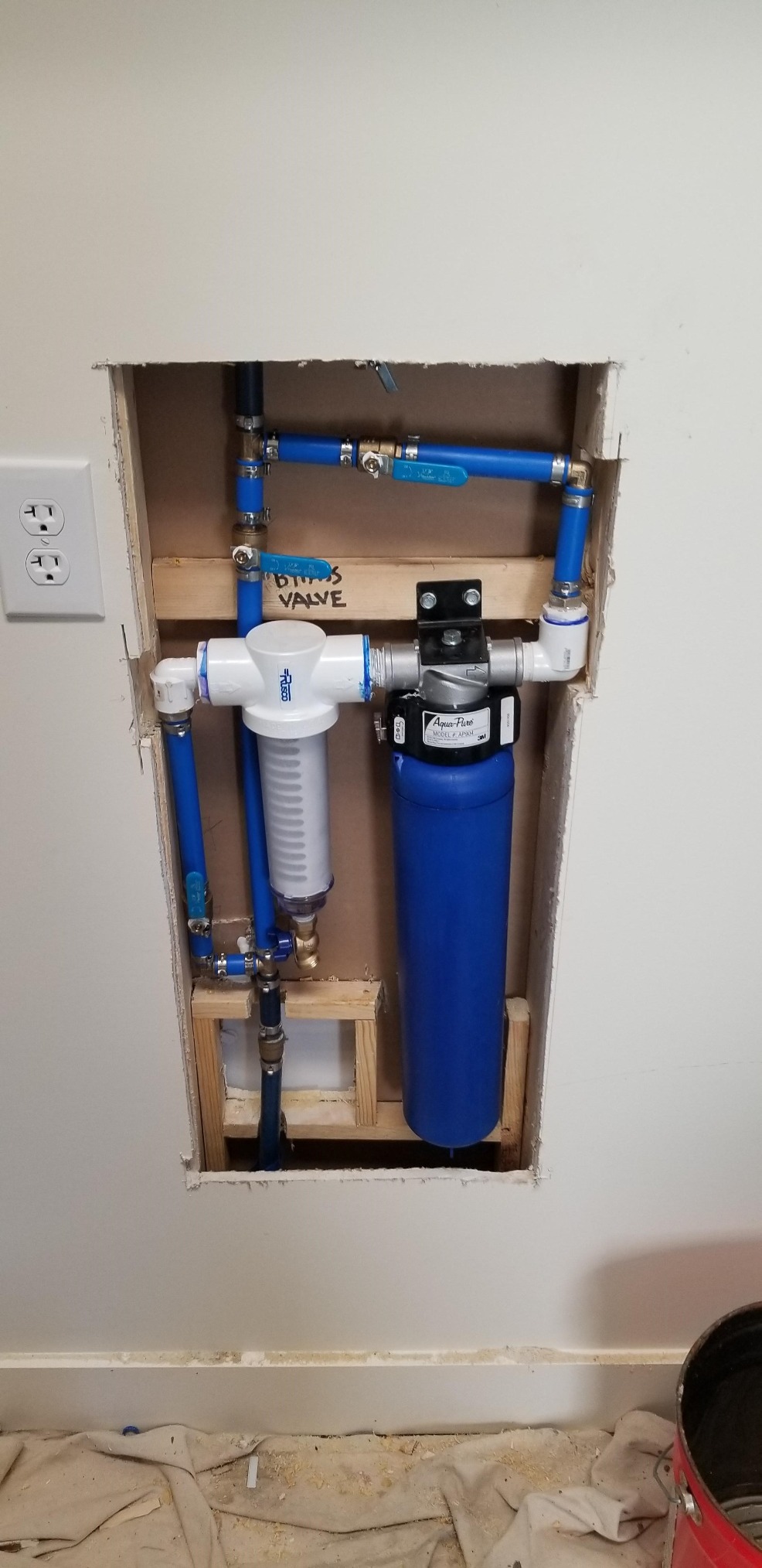
This is a single cartridge system built around hardware rather than media count. The head is 304 stainless steel with a mounting bracket, and the cartridge drops in with a sanitary quick change connection that needs no filter wrench and no contact with the spent element.
Inside is an activated carbon block combined with non-woven pleat sediment media. Rated flow reaches up to 20 GPM on 1 inch connections, the highest figure in this roundup, with a 100000 gallon capacity.
It is tested to NSF/ANSI 42 and 372, and it also inhibits lime scale growth, which helps water heater and appliance life on hard municipal supplies.
The honest limitation is scope. One cartridge means sediment, chlorine taste and odor, and scale, and nothing else. If lead, PFAS or chloramine is the problem, this is the wrong instrument, and the 4.3 average with a heavy share of one-star reviews reflects exactly that split between satisfied and disappointed buyers.
Who this system suits
It suits homes with three or more bathrooms that need flow headroom and want hardware that will last. The stainless head is the most durable manifold here, and quick change cartridges keep service clean.
It also suits anyone on hard water who wants to slow scale accumulation inside a water heater without installing a full softener.
Who should skip it
Skip it if your concern is contaminants rather than taste, odor and scale. There is no KDF or catalytic carbon stage, so heavy metals and chloramine pass through.
Skip it if you want visible cartridge loading. Unlike the clear-housing systems here, the AP904 cartridge is enclosed, so change timing has to come from a schedule or a pressure reading.
10. Home Master HMF2SmgCC KDF85 and Catalytic Carbon System
Home Master HMF2SmgCC Whole House Water Filter, 4-layer sediment filter 25 to 1 micron, Powerful Up-Flow KDF85 & Catalytic Carbon 10gpm, 1” NPT ports, Patented heavy steel bracket fits 16” wall studs
Four-gradient sediment stage
KDF85 plus catalytic carbon
10 GPM on 1 inch ports
Pros
- Four-gradient 25 to 1 micron sediment stage is the finest grading in the group
- KDF85 plus catalytic carbon handles both chlorine and chloramine
- 1 inch ports and 10 GPM flow produce minimal measurable pressure drop
- Heavy steel bracket is rigid and sized for 16 inch studs
- Filters made in the USA and praised for build weight
Cons
- Heaviest and bulkiest two-stage unit here at 36.4 pounds
- Housing threads are plastic and can weep slightly
- Replacement cartridges cost more than budget two-stage competitors
The first stage is a four-gradient depth sediment filter graded from 25 down to 1 micron nominal, which is the most careful sediment grading of any system here. Fine grading keeps downstream carbon from clogging early, which is where most cartridge platforms lose their race.
The second stage is up-flow KDF85 catalytic carbon rated at 95000 gallons. Owners on chloraminated city supplies credit that stage specifically for handling the residual, and the manufacturer rates removal of up to 95 percent of sediment, chloramines, chlorine, chemicals and heavy metals.
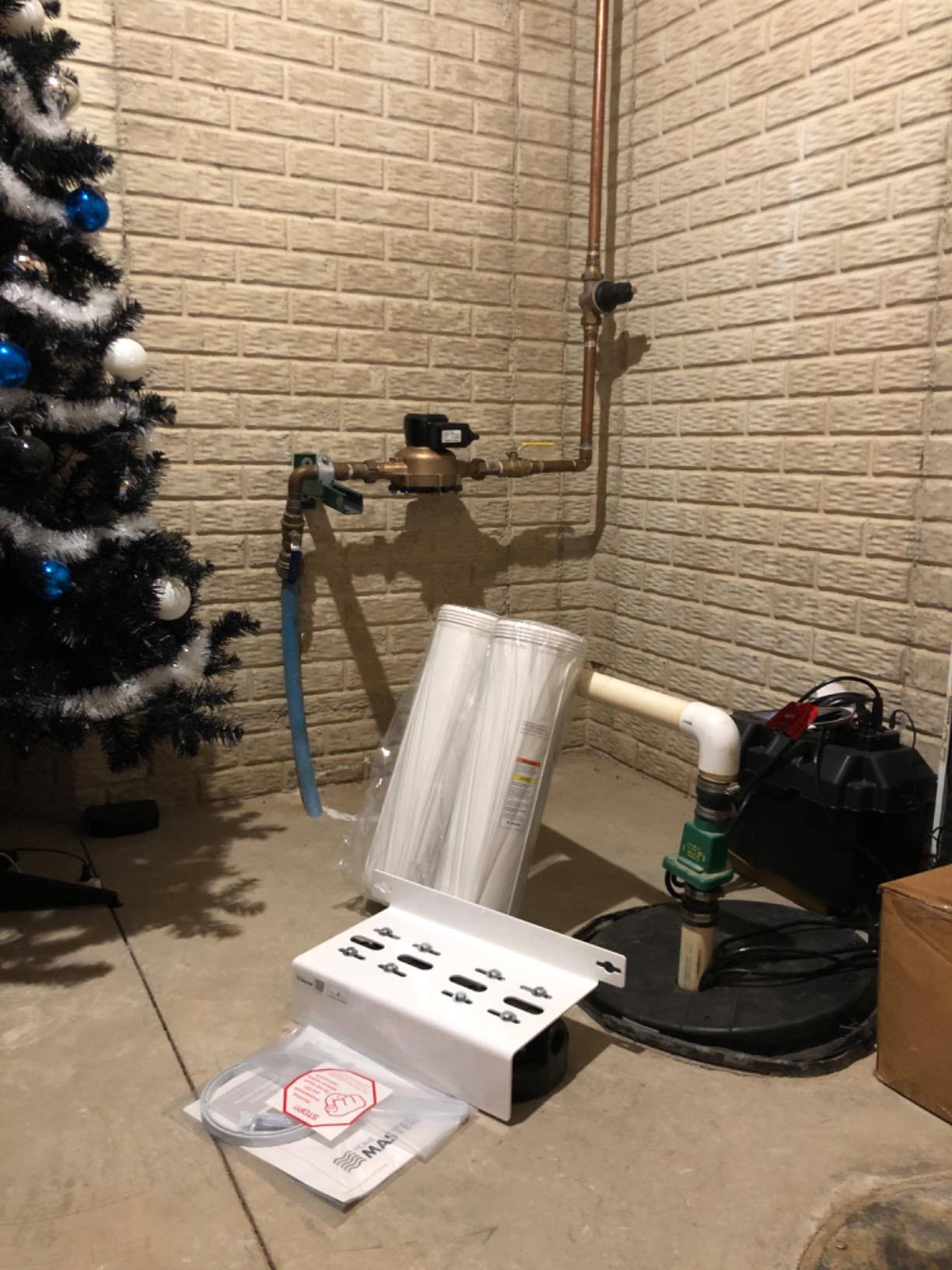
Flow is 10 GPM on 1 inch NPT ports using oversized 20 inch by 4.5 inch canisters, with a 20 to 100 psi operating range and a total dissolved solids ceiling of 2000 ppm. Reviewers report essentially no meaningful pressure loss, often cited at 3 to 5 psi.
The patented heavy gauge steel bracket is sized to fit 16 inch wall studs, which matters more than it sounds, because a flexing bracket cracks plastic threads. A two year limited parts warranty is included.
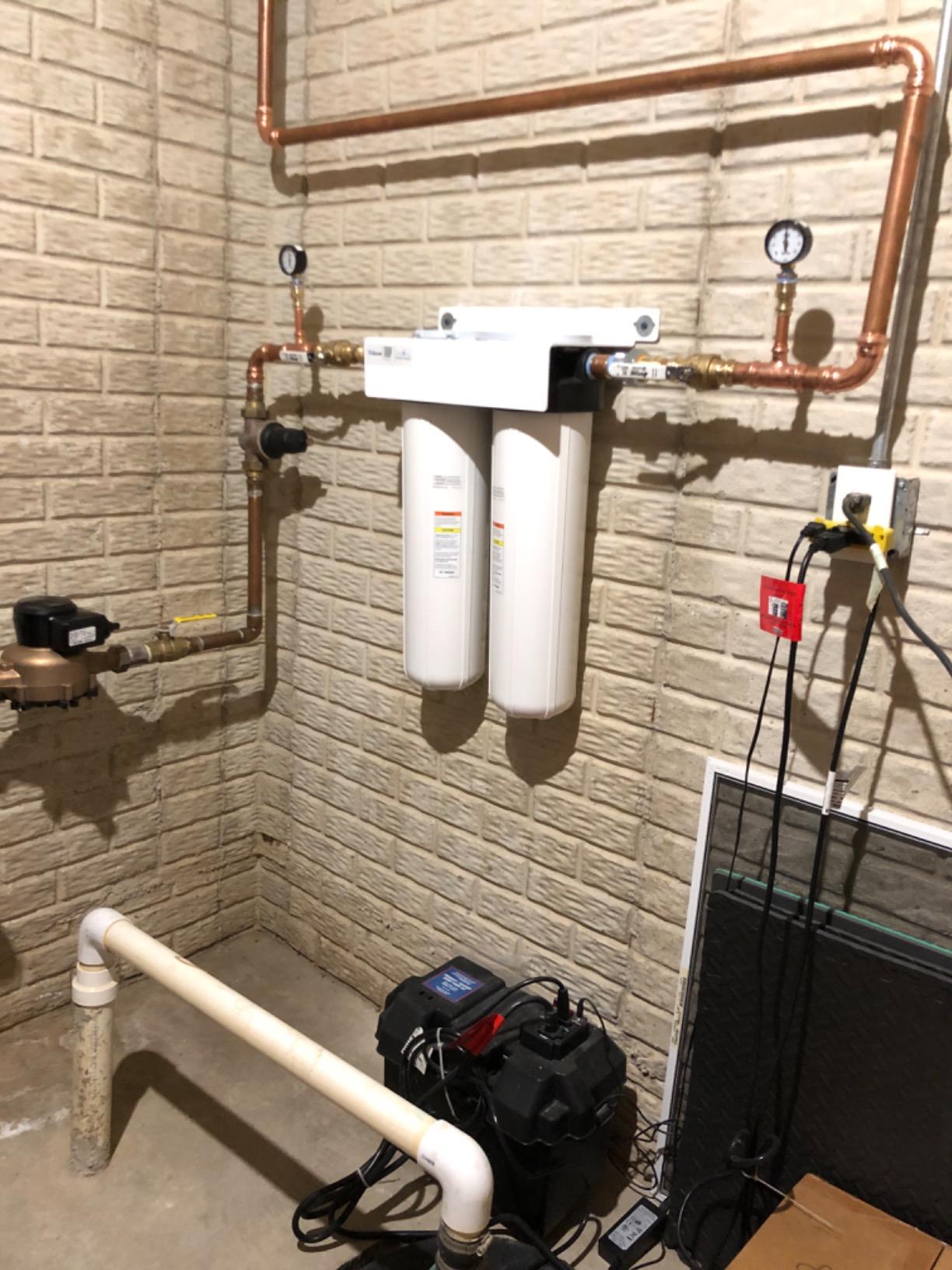
Who this system suits
It suits households on chloraminated supply who also deal with sediment, and who value media quality over purchase price. It handles chlorine and chloramine in one stage, which few cartridge systems can claim.
It also suits people planning to stay a while. At roughly annual cartridge changes and 95000 gallons of carbon capacity, the per-year running cost is among the lowest of any carbon system here.
Who should skip it
Skip it if wall space is scarce. At 36.4 pounds and 9 by 18 by 25 inches, it needs stud or masonry mounting and generous clearance on both sides.
Skip it if cartridge cost per change is your main criterion. These elements run above the budget two-stage competitors, and a leaky threaded connection can still occur despite the steel bracket.
Buying Guide: How to Choose a Whole House Filter for City Water
Start with the disinfectant, not the brand. Your utility publishes an annual Consumer Confidence Report, and the treatment technique section will state whether the residual is chlorine or chloramine. Chlorine is straightforward for standard activated carbon. Chloramine needs catalytic carbon plus contact time, and buying a chlorine-rated block for chloramine supply is the most common expensive mistake on this list.
Next, size for peak demand rather than average use. A rough household fixture list runs about 2.1 GPM for a shower, 1.2 for a kitchen faucet, 2.0 for a washing machine, 1.6 for a dishwasher and 1.6 for a toilet. A busy three bathroom house can reach 8 to 10 GPM in the morning, so pick a unit with headroom above your real peak.
Then match media to the documented contaminant. Sediment and rust call for a graded prefilter. Chlorine and chloramine call for carbon, catalytic for chloramine. Lead, PFAS and radon call for KDF or a certified heavy metal stage. Scale calls for polyphosphate or template assisted crystallization, and hardness calls for a softener rather than any filter on this page.
Finally, check certification language carefully. NSF/ANSI 42 covers taste and odor, 53 covers health-related contaminants such as lead, and NSF/ANSI/CAN 61 covers material safety. A listing that says the components are certified is not the same as the complete system being listed, and the difference matters when you are relying on a claim.
On running cost, count cartridges rather than purchase price. A low entry price on a 3 to 6 month cartridge is one of the most expensive platforms over ten years, while a six year central tank or a 12 month three-stage system spreads hardware cost thin. Our roundup spans both format families deliberately: cartridge platforms such as the two-stage units and single canister systems, and central tank or framed systems.
Installation and Maintenance on a City Main Line
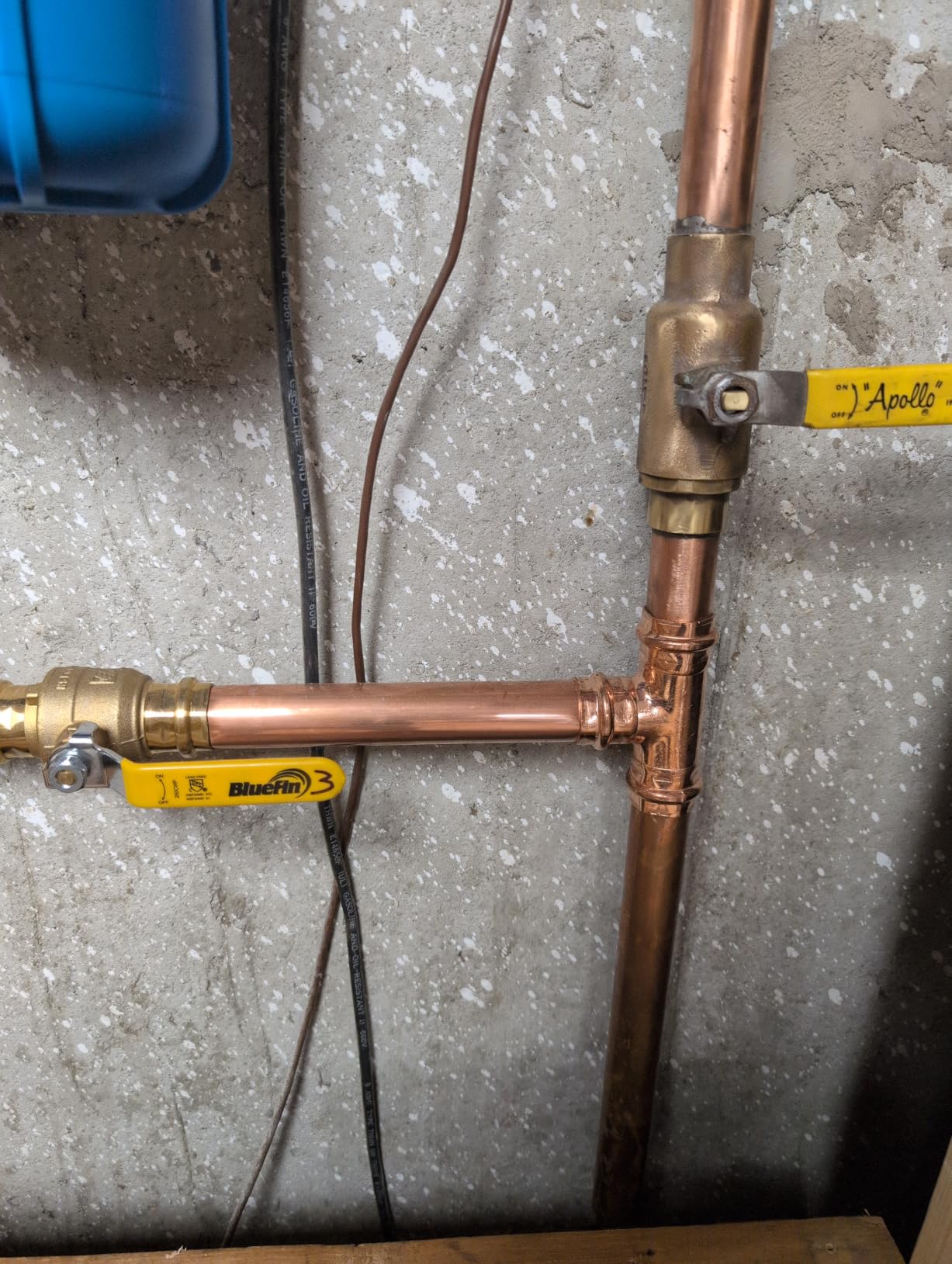
Every system here is a point-of-entry install on the cold main, typically after the shut-off valve and before the water heater. Placement before the heater means the heater and every appliance downstream see filtered water, which is where appliance longevity gains come from. Protecting that equipment from power surges is a separate job, and our guide to whole house surge protectors for electrical panels covers that side.
Budget for a utility shut-off or a curb key. Some utilities will not close the meter without notice, and a plumber can usually handle the coordination faster than a homeowner can.
Install a bypass valve if the system does not have one built in. Without it, every cartridge change means shutting the water off to the whole house. The Culligan housing at number two and the SimPure system at number eight include this feature already.
On maintenance, mark the install date and set a calendar reminder. Reviewers report a practical baseline of roughly six months between cartridge changes on city water, sooner for heavy users. Pre-filters load faster than people expect, and most of these systems include gauges or clear housings so you can judge rather than guess.
Frequently Asked Questions
Which water filter is best for municipal water?
For most households on municipal supply, a point-of-entry carbon system with a sediment prefilter is the best fit. Carbon media adsorbs the chlorine or chloramine residual that causes taste and odor, while the sediment stage catches rust and grit from aging mains. Our top pick pairs a coconut shell carbon block with a dedicated lead stage at a moderate price.
Do you need a whole house water filter on city water?
Only if you have a reason. City water is treated to a legal standard, so a filter solves a taste or sediment problem rather than a safety one in most cases. Buy one if you can taste or smell chlorine at the tap, if you see sediment after mains work, or if your plumbing predates 1986 and a lead service line is possible. Otherwise an under-sink unit is cheaper.
What is the best way to filter city water?
Check your Consumer Confidence Report first and read the disinfectant line. Chlorine is handled well by standard activated carbon, while chloramine requires catalytic carbon plus contact time to remove effectively. Then size the system for peak demand rather than average use, and add a sediment prefilter if your mains history includes recent work.
What are some common problems with whole house water filters?
The most common issue is undersizing, where a low flow unit leaves a busy household short of pressure during simultaneous fixture use. The second is cartridge neglect, since pre-filters load faster than expected and carbon stages channel around exhausted media. The third is installation friction, with threaded plastic fittings weeping and housing cracks from over-tightening.
What are the disadvantages of a whole house water filter?
The main disadvantages are running cost and scope. Cartridge systems need elements every three to six months, which can exceed the purchase price over a decade. Scope is the other limit: most whole house filters reduce taste, odor, sediment and chlorine, but not hardness, total dissolved solids, bacteria or viruses. Hard water needs a softener and dissolved contaminants need reverse osmosis.
Conclusion
The best whole house water filters for city water depend on what your utility actually puts in the pipes. On chlorinated supply with a taste complaint, the iSpring WGB21B-PB is our pick because it handles chlorine and lead in two stages without a large footprint. On chloraminated supply, the iSpring WGB32B-KSNC pairs catalytic carbon with KDF media and earns the highest rating we saw.
If maintenance is the thing you want to stop thinking about, the A. O. Smith central tank runs six years with no drain line. Scale plus heavy metals together point to the Express Water three-stage skid, and a documented PFAS or lead issue points to a KDF-based stage like the iSpring WCB32CKS.
Read your Consumer Confidence Report before ordering anything, and if the complaint is hardness or a single drinking tap, the answer is not on this page.