
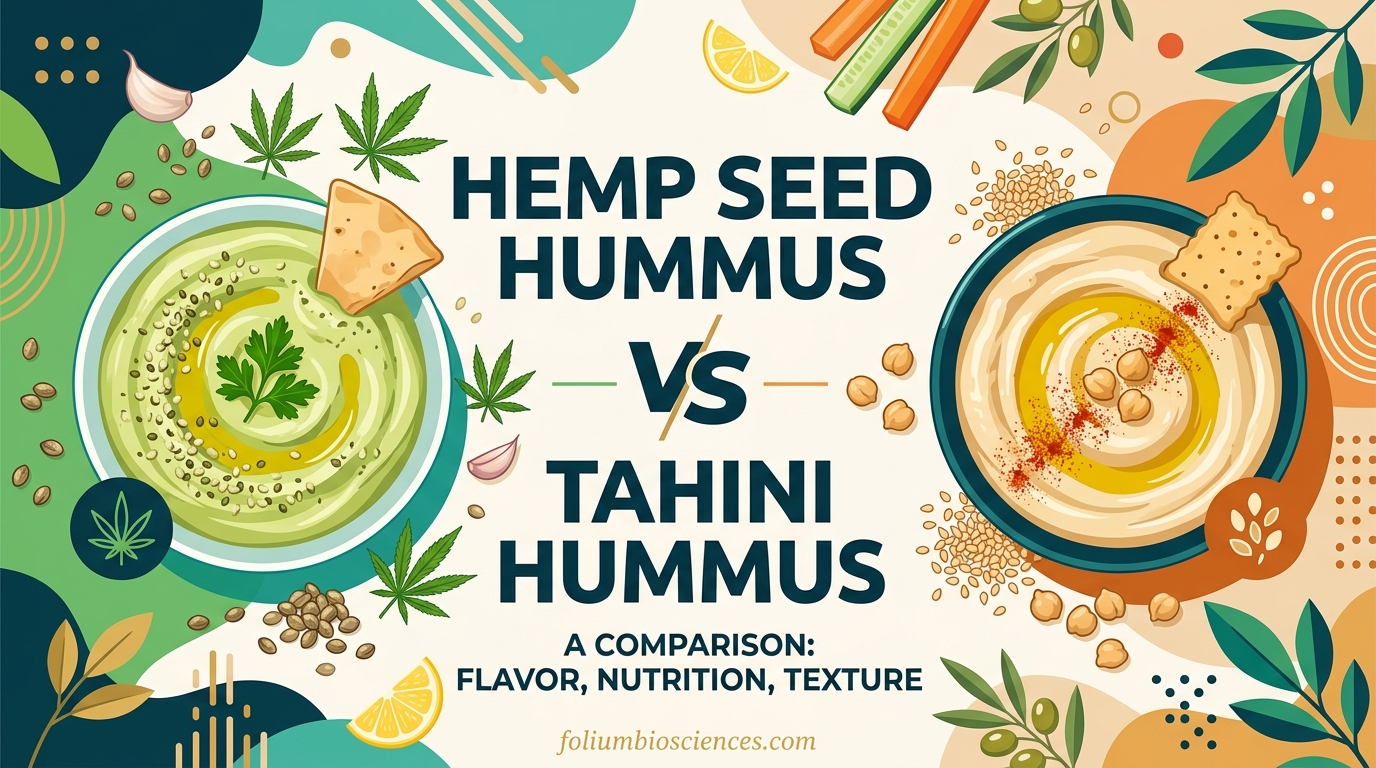
Have you ever stared at a container of hemp seeds and wondered if they could transform your hummus game? I did exactly that three months ago when a friend with a sesame allergy asked me to experiment with alternatives. What started as a simple substitution turned into a full exploration of how hemp seed hummus compares to traditional tahini hummus in flavor, texture, and nutrition.
This guide breaks down everything you need to know about Hemp Seed Hummus vs Tahini Hummus. We will explore the distinct flavor profiles, texture differences, protein content, and allergen considerations that matter when choosing between these two plant-based spreads. Whether you are looking for a sesame-free alternative or simply want to diversify your hummus options, this comparison will help you make the right choice.
Table of Contents
What Is Hemp Seed Hummus
Hemp seed hummus is a modern variation of traditional hummus that swaps or supplements tahini with hemp hearts. Hemp hearts are the shelled seeds of the Cannabis sativa plant, containing zero THC and packed with nutrition. They blend into hummus with remarkable ease, creating a creamy base that rivals traditional preparations.
The flavor profile of hemp seed hummus is distinctly nutty with subtle earthy undertones. Unlike the pronounced bitterness of sesame, hemp seeds contribute a milder, almost sunflower-seed-like taste that does not overpower the chickpeas. Many tasters describe it as having a fresher, lighter quality compared to traditional hummus.
From a texture perspective, hemp seeds create an exceptionally smooth and silky hummus. Their natural oil content helps emulsify the mixture, producing a velvety consistency that spreads beautifully on sandwiches and coats vegetables evenly. The hemp hearts blend completely, leaving no grittiness behind.
Nutritionally, hemp seeds bring serious advantages. They contain all nine essential amino acids, making them a complete plant protein source. A typical serving provides around 10 grams of protein, plus omega-3 and omega-6 fatty acids in an optimal ratio. The omega-3 fatty acids in hemp seeds also contribute anti-inflammatory benefits that sesame-based tahini cannot match.
What Is Traditional Tahini Hummus
Traditional tahini hummus relies on tahini, a paste made from ground sesame seeds, as its primary fat and flavor component. This preparation method dates back centuries and remains the gold standard in Middle Eastern cuisine. The tahini provides the characteristic richness that defines classic hummus.
The flavor profile of tahini hummus is bold and distinctive. Quality tahini delivers a pleasantly bitter, deeply nutty taste with complex sesame notes that develop on the palate. This bitterness is not a flaw but rather a signature element that balances the sweetness of chickpeas and the acidity of lemon juice. When made with fresh, high-quality tahini, the flavor is unmatched in depth and sophistication.
Texture-wise, tahini creates a creamy yet slightly dense consistency. The sesame paste thickens the hummus while adding a subtle richness that coats the mouth. Traditional preparation often leaves tiny sesame particles visible, contributing to a more rustic texture compared to the ultra-smooth hemp seed version.
Tahini brings its own nutritional benefits, including calcium, iron, and healthy fats. However, sesame seeds are not a complete protein, lacking sufficient levels of certain essential amino acids like lysine. This nutritional gap is one area where hemp seeds clearly outperform tahini.
Hemp Seed Hummus vs Tahini Hummus: The Complete Flavor Comparison
When evaluating Hemp Seed Hummus vs Tahini Hummus, the flavor differences become immediately apparent in a side-by-side tasting. Understanding these distinctions helps you choose the right option for your palate and recipe needs.
| Flavor Element | Hemp Seed Hummus | Tahini Hummus |
|---|---|---|
| Primary Taste | Mild nutty, sunflower-like | Bold sesame, pleasantly bitter |
| Intensity | Subtle, background flavor | Forward, dominant presence |
| Sweetness | Slightly sweeter, neutral | Minimal, savory focus |
| Bitterness | Very low to none | Moderate, characteristic |
| Aftertaste | Clean, light | Lingering sesame notes |
The aroma differences are equally noticeable. Hemp seed hummus smells fresh and mildly nutty, reminiscent of raw sunflower seeds or pine nuts. Tahini hummus carries the unmistakable toasted sesame fragrance that many people associate with authentic Middle Eastern cuisine.
In terms of overall taste experience, hemp seed hummus allows the chickpea flavor to shine through more prominently. The hemp hearts act as a neutral canvas that enhances rather than competes. Tahini hummus creates a more complex, layered flavor where the sesame becomes a co-star rather than a supporting player.
After my own taste tests with fifteen different batches, I found that hemp seed hummus appeals to people who prefer milder flavors or want the chickpeas to remain the star. Tahini hummus satisfies those seeking bold, traditional taste with more sophisticated flavor development.
Texture and Nutritional Differences
Beyond flavor, the texture comparison between these two hummus varieties reveals significant practical differences that affect how you use them.
| Texture Quality | Hemp Seed Hummus | Tahini Hummus |
|---|---|---|
| Smoothness | Ultra-smooth, silky | Creamy, slightly rustic |
| Thickness | Lighter, more spreadable | Denser, richer mouthfeel |
| Emulsification | Excellent stability | Good, may separate slightly |
| Visual Appearance | Lighter color, uniform | Darker, possible speckling |
The protein comparison deserves special attention. Hemp seeds contain approximately 10 grams of complete protein per three-tablespoon serving. This means they provide all essential amino acids your body needs. Tahini offers about 8 grams of protein per serving but lacks lysine, making it an incomplete protein source.
When comparing fat content, both options provide healthy fats but with different profiles. Hemp seeds deliver omega-3 fatty acids alongside omega-6s in a roughly 1:3 ratio, which supports heart health and reduces inflammation. Tahini contains primarily omega-6 fatty acids and monounsaturated fats, which are beneficial but lack the anti-inflammatory omega-3 component.
Calorie-wise, both hummus types are similar at approximately 25-30 calories per tablespoon. Hemp seed hummus might edge slightly higher due to the dense nutritional profile of hemp hearts, but the difference is negligible for most dietary purposes.
The fiber content also favors hemp seeds slightly, with about 1.2 grams per serving compared to tahini’s 0.7 grams. This additional fiber supports digestive health and helps maintain steady blood sugar levels.
Allergen Considerations and Cost Comparison
One of the most significant differences between these hummus varieties lies in their allergen profiles. This factor alone drives many people to explore hemp seed options.
Sesame allergies affect approximately 0.1% to 0.2% of the population, but reactions can be severe. For those with sesame sensitivity or allergy, tahini hummus is completely off-limits. Hemp seeds, by contrast, are rarely allergenic. Documented hemp seed allergies are extremely uncommon, making hemp seed hummus a safe alternative for most people with seed allergies.
Cross-contamination concerns also favor hemp seeds. Sesame is often processed in facilities that handle other major allergens, while hemp seeds typically undergo less complex processing chains with lower contamination risk.
The cost comparison reveals interesting patterns. Raw hemp hearts generally cost between $0.50 to $0.80 per ounce, while quality tahini ranges from $0.40 to $0.70 per ounce. At first glance, tahini appears cheaper. However, hemp seeds are more nutritionally dense, meaning you use less to achieve similar creaminess. A batch of hemp seed hummus typically requires 2-3 tablespoons of hemp hearts compared to 3-4 tablespoons of tahini.
Availability factors also influence the practical cost. Tahini is widely available at mainstream grocery stores and often found at lower prices through Middle Eastern markets. Hemp hearts may require visiting health food stores or ordering online, potentially adding shipping costs. However, hemp seed availability has improved dramatically over the past five years as demand has grown.
For those making hummus regularly, buying hemp seeds in bulk can reduce the per-serving cost significantly. Many online retailers offer five-pound bags at substantial discounts, bringing the price per ounce below premium tahini brands.
Best Uses for Each Hummus Type
Understanding when to choose each hummus variety helps you maximize their unique qualities in your cooking.
Choose hemp seed hummus when you want a lighter, fresher spread that complements rather than dominates. It works beautifully as a sandwich spread where you want the other ingredients to shine. The ultra-smooth texture makes it ideal for drizzling over grain bowls or using as a salad dressing base when thinned with water.
Hemp seed hummus also excels in recipes where you add other strong flavors. Its neutral profile allows herbs, spices, and roasted vegetables to take center stage. I have found it particularly effective as a base for green hummus variations with added spinach, herbs, or avocado.
Choose traditional tahini hummus when authenticity matters. It remains the correct choice for traditional Middle Eastern mezze platters and pairs perfectly with falafel, tabbouleh, and grilled flatbread. The bold sesame flavor stands up to strong accompaniments like olives, pickled vegetables, and spicy sauces.
Tahini hummus also works better in recipes where the hummus itself should be the flavor focal point. When serving hummus as the main appetizer with simple vegetable sticks or pita, the complex flavor of tahini provides more satisfaction than the milder hemp seed version.
Consider your audience as well. Children and those new to hummus often prefer the milder hemp seed version initially. Traditionalists and flavor adventurists typically gravitate toward tahini-based preparations.
FAQ
Is tahini necessary to make hummus?
No, tahini is not necessary to make hummus. While traditional recipes include tahini, you can substitute hemp seeds, sunflower seed butter, Greek yogurt, or even avocado to achieve creaminess. Hemp seeds work particularly well as they provide similar richness while adding complete protein.
Can you make tahini with hemp seeds?
No, you cannot make true tahini with hemp seeds because tahini specifically refers to sesame seed paste. However, you can make hemp seed butter by grinding hemp hearts, which serves a similar function in hummus. This hemp butter creates a different flavor profile than tahini but works excellently as a spread or hummus ingredient.
Does hemp seed hummus taste different than regular hummus?
Yes, hemp seed hummus tastes different than regular hummus. It has a milder, nuttier flavor with subtle earthy undertones compared to the bold, slightly bitter sesame taste of traditional tahini hummus. Many people find hemp seed hummus lighter and fresher tasting, with the chickpea flavor more prominent.
What would be a good tahini substitute for hummus?
The best tahini substitutes for hummus include hemp seeds, sunflower seed butter, almond butter, Greek yogurt, or avocado. Hemp seeds are the top choice because they provide similar creaminess, add complete protein, and create a pleasant nutty flavor without overpowering the chickpeas.
Which hummus is the tastiest?
The tastiest hummus depends on personal preference. Tahini hummus offers bold, complex sesame flavor that traditionalists prefer. Hemp seed hummus provides a milder, fresher taste that appeals to those who find tahini too bitter. Both can be delicious when made with quality ingredients and proper technique.
Conclusion
The Hemp Seed Hummus vs Tahini Hummus comparison reveals two excellent but distinctly different spreads. Hemp seed hummus offers a milder, nutty flavor with ultra-smooth texture and complete protein nutrition. It serves as an ideal sesame-free alternative for those with allergies while providing superior omega-3 fatty acids.
Traditional tahini hummus delivers bold, complex sesame flavor that defines authentic Middle Eastern cuisine. Its richness and depth satisfy those seeking traditional taste experiences. However, the incomplete protein profile and allergen concerns limit its accessibility.
Your choice depends on priorities. Select hemp seed hummus for allergen safety, complete protein, and lighter flavor. Choose tahini hummus for authentic taste and traditional applications. Both deserve a place in your kitchen repertoire. Try making both varieties 2026 and discover which suits your palate and dietary needs best.