
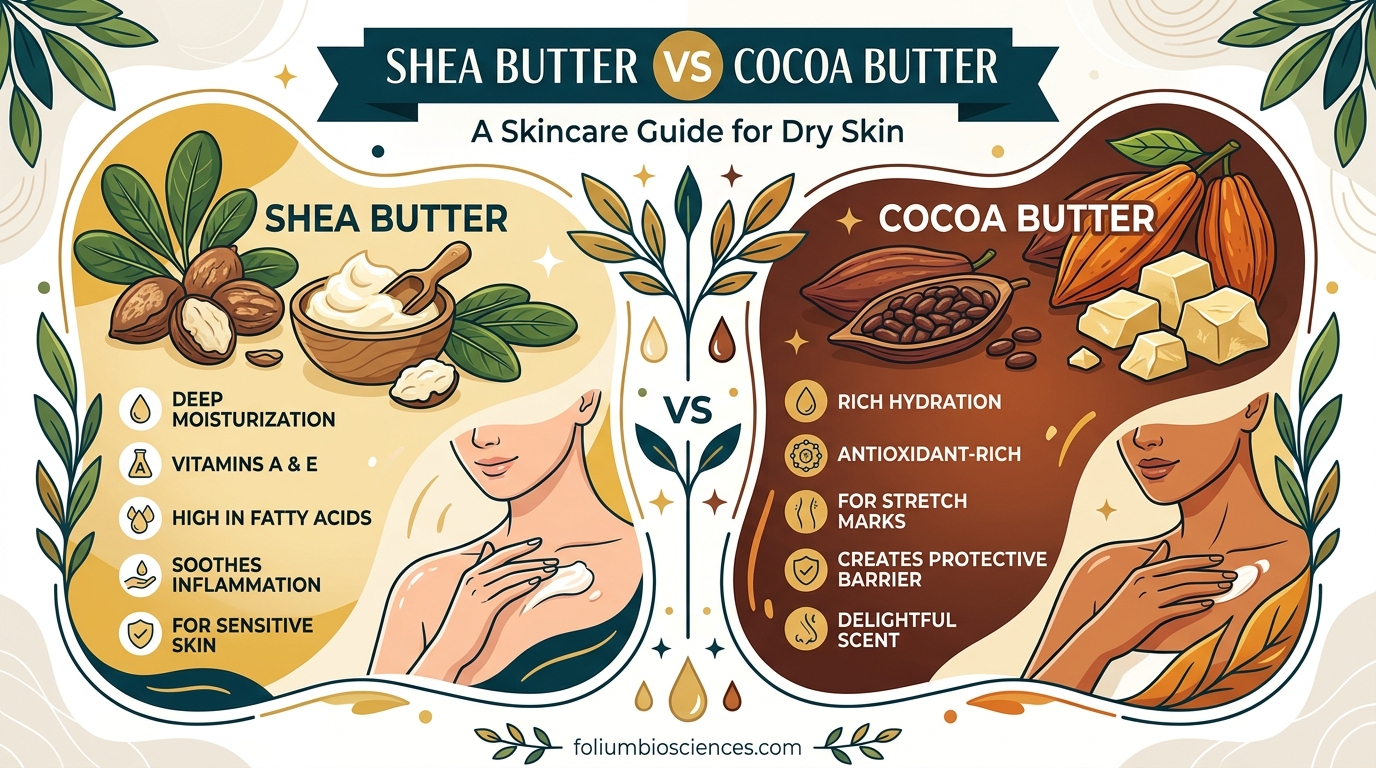
Dealing with dry skin can feel like a never-ending battle, especially when you’re standing in the skincare aisle wondering which natural butter will actually provide lasting relief. I’ve spent years researching and testing plant-based moisturizers, and the shea butter vs cocoa butter debate comes up constantly in skincare communities. Both butters offer incredible moisturizing benefits, but their texture and absorption characteristics are fundamentally different.
When you understand how these butters behave on your skin, you can make an informed choice that matches your skin type, lifestyle, and personal preferences. The right butter isn’t just about hydration—it’s about how your skin absorbs and retains moisture throughout the day.
In this comprehensive guide, I’ll break down the scientific differences between shea butter vs cocoa butter, explain why their absorption rates vary so dramatically, and help you determine which one deserves a permanent spot in your skincare routine.
Table of Contents
Quick Comparison: Shea Butter vs Cocoa Butter at a Glance
Before diving into the details, here’s a direct comparison of the key differences between these two natural moisturizers:
| Characteristic | Shea Butter | Cocoa Butter |
|---|---|---|
| Texture at Room Temperature | Creamy, spreadable, slightly grainy if unrefined | Hard, solid, requires warming to soften |
| Absorption Rate | Fast-absorbing, penetrates deeply within minutes | Slower absorption, sits on surface longer |
| Skin Feel | Lightweight, non-greasy finish | Rich, luxurious, can feel heavy |
| Primary Function | Deep penetration and nourishment | Protective barrier formation |
| Comedogenic Rating | 0-2 (low likelihood of clogging pores) | 3-4 (moderate likelihood of clogging pores) |
| Best For | Face, oily/combination skin, daily use | Body, very dry skin, overnight treatment |
| Scent | Nutty, earthy (unrefined) or neutral | Natural chocolate aroma |
| Key Fatty Acid | High oleic acid (penetrates deeply) | High stearic acid (stays on surface) |
Understanding Shea Butter vs Cocoa Butter: The Basics
Shea butter and cocoa butter are both plant-based fats extracted from nuts and beans, respectively. Shea butter comes from the nuts of the shea tree, which grows primarily in West Africa. The butter is extracted from the nuts through a process that involves crushing, boiling, and skimming the fat that rises to the surface.
Cocoa butter originates from the cacao bean, the same source that gives us chocolate. Found in tropical regions, cacao beans contain approximately 50-55% fat, which is pressed and refined to produce cocoa butter. This creates its distinctive chocolate scent and rich, velvety texture.
Both butters have been used for centuries in traditional skincare practices. African communities have valued shea butter for its healing properties, while Mesoamerican cultures treasured cocoa butter for its moisturizing and protective qualities. Today, they’ve become staples in natural skincare worldwide.
Texture and Consistency: The Most Noticeable Difference
When comparing shea butter vs cocoa butter, texture is the first difference you’ll notice. This distinction affects everything from application to absorption and ultimately determines which butter works better for your specific needs.
Shea butter has a creamy, spreadable consistency at room temperature. It’s soft enough to scoop with your fingers and melts immediately upon contact with skin. Unrefined shea butter can have a slightly grainy texture due to natural crystallization, but this disappears as you warm it between your palms. The texture feels luxurious and substantial without being overwhelming.
Cocoa butter is significantly harder and more solid at room temperature. You often need to scrape or shave it to get usable pieces, and it requires deliberate warming in your hands to become spreadable. Once melted, cocoa butter has a thinner, more oil-like consistency that feels rich and indulgent. The hardness comes from its higher saturated fat content, which also gives it that famous melting point right around body temperature.
The texture difference directly affects application experience. Shea butter is grab-and-go convenient, while cocoa butter requires more preparation time. However, many users find the ritual of warming cocoa butter between their palms to be part of its appeal.
The Science of Absorption: Why Shea Penetrates Deeper
The absorption rate difference between shea butter vs cocoa butter isn’t just about texture—it’s rooted in their molecular composition. Understanding this science helps explain why shea butter seems to “disappear” into your skin while cocoa butter creates a noticeable protective layer.
Shea butter contains high levels of oleic acid, a monounsaturated fatty acid with a smaller molecular structure that penetrates the skin barrier more easily. This allows shea butter to reach deeper layers of the epidermis, delivering nutrients and hydration where your skin needs it most. The absorption process typically completes within 10-15 minutes, leaving minimal surface residue.
Cocoa butter is dominated by stearic acid, a saturated fatty acid with larger molecules that don’t penetrate as deeply. Instead, stearic acid remains on the skin’s surface, forming an occlusive barrier that prevents moisture loss. This is why cocoa butter takes 30-45 minutes to fully absorb and often leaves a noticeable emollient film.
The skin absorption process involves passing through the stratum corneum, the outermost layer of skin. Smaller fatty acid molecules like oleic acid can navigate this barrier more effectively, while larger molecules like stearic acid tend to get “stuck” at the surface, creating that protective coating effect.
This molecular difference explains why shea butter is often preferred for facial skincare—it delivers hydration without clogging pores. Cocoa butter’s surface-level action makes it ideal for creating a protective shield on areas prone to extreme dryness.
Shea Butter: Texture, Absorption, and Best Uses
Shea butter has earned its reputation as a versatile skincare powerhouse, and its unique texture-absorption profile makes it suitable for various applications. Let’s examine why shea butter might be the better choice for your specific dry skin concerns.
Texture Profile
The creamy consistency of shea butter makes it incredibly user-friendly. It spreads easily across large areas without requiring warming or manipulation. You can apply it directly from the container to your skin, which is perfect for quick morning routines. The texture feels substantial enough to provide lasting moisture but light enough for comfortable all-day wear.
Unrefined shea butter maintains its natural beige color and may have small grainy particles that melt upon application. Refined versions are uniformly smooth and white, though some beneficial compounds are removed during processing. The choice between unrefined and refined often comes down to texture preference and scent tolerance.
Absorption Characteristics
Shea butter’s rapid absorption is one of its biggest advantages. The high oleic acid content (40-60% of its fatty acid composition) allows it to penetrate the skin quickly and deeply. Within minutes of application, shea butter has delivered its fatty acids, vitamins A and E, and other nutrients to the deeper layers of your epidermis.
This deep penetration makes shea butter particularly effective for treating dryness at its source rather than just addressing surface symptoms. Your skin receives nourishment from within, resulting in longer-lasting hydration and improved skin barrier function over time.
Best Uses and Skin Types
Shea butter excels for facial skincare due to its non-comedogenic properties (rating 0-2 on the comedogenic scale). People with acne-prone or combination skin can often use shea butter without experiencing breakouts, making it one of the few rich butters suitable for facial application.
For body care, shea butter provides excellent daily hydration without feeling heavy or sticky. It’s particularly effective for rough patches like elbows, knees, and heels, where its nourishing properties help soften thickened skin over time.
Pros and Cons
Pros:
- Fast absorption with minimal residue
- Non-comedogenic—suitable for face and acne-prone skin
- High in vitamins A and E for antioxidant protection
- Anti-inflammatory properties help with conditions like eczema
- Easy application with no warming required
- Available in refined and unrefined options
Cons:
- Unrefined versions have a distinct nutty scent
- May feel less luxurious than cocoa butter
- Less protective barrier formation for extreme conditions
- Grainy texture in unrefined forms (disappears upon application)
Cocoa Butter: Texture, Absorption, and Best Uses
Cocoa butter offers a completely different skincare experience focused on protection and surface-level moisturization. Its unique properties make it the preferred choice for specific dry skin situations, particularly when you need heavy-duty protection.
Texture Profile
The hard, solid consistency of cocoa butter at room temperature requires a more deliberate application ritual. You’ll need to scrape or shave the butter, then warm it between your palms until it melts into a workable oil. This extra step is part of what makes cocoa butter feel like a luxurious treatment rather than a quick moisturizer.
Once melted, cocoa butter has a thinner consistency than you might expect, spreading easily in its liquid state. As it cools on your skin, it returns to a semi-solid state, creating that characteristic protective layer. The texture transformation from solid to liquid to semi-solid is unique to cocoa butter and contributes to its distinctive skincare experience.
Absorption Characteristics
Cocoa butter’s absorption is slower and more superficial compared to shea butter. The high stearic acid content (approximately 33% of its fatty acid composition) creates larger molecules that don’t penetrate deeply. Instead, cocoa butter remains on the skin’s surface, forming an occlusive barrier that locks in existing moisture.
This surface-level action makes cocoa butter exceptionally effective at preventing moisture loss, particularly in harsh environmental conditions. The absorption process takes 30-45 minutes, during which you’ll notice a protective film developing on your skin. This film provides continuous hydration and protection throughout the day or night.
Best Uses and Skin Types
Cocoa butter shines when applied to the body, especially areas prone to extreme dryness like hands, feet, and elbows. Its protective barrier makes it ideal for overnight treatments, when you can apply a thick layer and let it work while you sleep without worrying about residue transfer to clothing.
People with very dry, mature, or eczema-prone skin often prefer cocoa butter’s heavier, more protective nature. The occlusive properties prevent trans-epidermal water loss, which is particularly beneficial during winter months or in dry climates.
However, cocoa butter’s higher comedogenic rating (3-4) makes it less suitable for facial use, especially for those prone to acne. The heavier consistency and pore-clogging potential mean it’s best reserved for body care.
Pros and Cons
Pros:
- Creates a strong protective barrier against moisture loss
- Natural chocolate scent is appealing to many
- Excellent for extreme dryness and harsh conditions
- Improves skin elasticity and may help with stretch marks
- Luxurious, spa-like application experience
- Long-lasting effects due to surface protection
Cons:
- Higher comedogenic rating—may clog pores
- Requires warming before application
- Slower absorption with noticeable residue
- Can feel heavy on oily or combination skin
- Less suitable for facial use
- Chocolate scent may not appeal to everyone
Shea Butter vs Cocoa Butter: Choosing by Skin Type
The decision between shea butter vs cocoa butter often comes down to your specific skin type and concerns. Here’s a detailed breakdown to help you choose the right butter for your individual needs.
For Dry Skin
If you struggle with general dryness without extreme symptoms, shea butter is typically the better choice. Its deep penetration delivers hydration where your skin needs it most, and the faster absorption means you can apply it and continue with your day without waiting. Shea butter addresses the root cause of dryness by improving your skin’s ability to retain moisture over time.
For Very Dry Skin
When your skin is extremely dry, flaky, or cracked, cocoa butter’s protective barrier becomes advantageous. It prevents further moisture loss while creating a healing environment for damaged skin. Many people with very dry skin prefer applying cocoa butter overnight, allowing maximum absorption time without interference from daily activities.
For Sensitive Skin
Shea butter’s anti-inflammatory properties make it the safer choice for sensitive skin conditions. It’s less likely to cause reactions, and the lower comedogenic rating reduces breakout potential. People with eczema, psoriasis, or general sensitivity typically tolerate shea butter better than cocoa butter.
For Eczema and Skin Conditions
Dermatologists often recommend shea butter for eczema due to its anti-inflammatory compounds and ability to penetrate without clogging pores. The deep hydration helps restore the skin barrier function, which is often compromised in eczema patients. Shea butter’s non-irritating nature makes it suitable for frequent application during flare-ups.
For Face vs Body
The face-body distinction is crucial when choosing between butters. Shea butter’s lighter texture and lower comedogenic rating make it appropriate for facial use on most skin types. Cocoa butter’s heavier nature and pore-clogging potential mean it’s generally reserved for body care, where the skin is thicker and less prone to breakouts.
Application Techniques for Optimal Absorption
Regardless of which butter you choose, proper application technique significantly affects absorption and effectiveness. Here are proven methods to maximize the benefits of both shea and cocoa butter.
Timing Your Application
Apply both butters immediately after bathing or showering, when your skin is still slightly damp. This creates a moisture-locking effect, as the butters seal in the water from your shower. The dampness also helps spread the product more evenly and enhances absorption.
For shea butter, morning or daytime application works well due to its faster absorption. You can apply and dress shortly after without worrying about transfer to clothing.
Cocoa butter is best applied at night, giving it hours to absorb without interference. The overnight application also maximizes its restorative properties during your skin’s natural regeneration cycle.
Application Amount
Less is more with both butters. Start with a pea-sized amount and increase gradually as needed. Over-application leads to waste and can create unnecessary greasiness, particularly with cocoa butter.
For shea butter, a thin layer typically suffices for most areas. Focus on problem spots like elbows, knees, and heels rather than applying heavily everywhere.
With cocoa butter, apply slightly more generously to extremely dry areas, but still avoid excessive amounts. A moderate layer will create the protective barrier without feeling overwhelmingly heavy.
Combination Usage
Many skincare enthusiasts find the perfect solution is using both butters strategically. Apply shea butter to your face and areas needing quick absorption, while using cocoa butter on your body’s driest areas like hands, feet, and elbows.
You can also create custom blends by melting equal parts of both butters together. This combination offers the deep penetration of shea butter with the protective barrier of cocoa butter, giving you the benefits of both in a single product.
Seasonal Adjustments
Consider seasonal changes in your butter choice. During summer months, shea butter’s lighter feel is often more comfortable. In winter, when harsh conditions strip moisture from your skin, cocoa butter’s extra protection becomes valuable.
Some users switch between butters seasonally, while others adjust their ratio in combination blends. The key is paying attention to how your skin responds in different conditions and adapting accordingly.
Quality Considerations: Refined vs Unrefined
The quality and processing method of your shea or cocoa butter significantly affects texture, absorption, and overall effectiveness. Understanding these differences helps you make informed purchasing decisions.
Unrefined shea butter retains all its natural vitamins, minerals, and beneficial compounds. It has a characteristic nutty scent and beige color. The texture may be slightly grainy due to natural crystallization, but this disappears upon application. Unrefined shea butter offers maximum benefits but requires tolerance of its natural aroma.
Refined shea butter has been processed to remove scent and color, creating a white, odorless product. While some beneficial compounds are lost during refining, the texture is consistently smooth, and the absence of scent makes it more versatile for those sensitive to smells. Refined shea butter still provides excellent moisturization, though slightly less potent than unrefined versions.
For cocoa butter, look for food-grade or cosmetic-grade varieties labeled as pure or raw. These retain the natural chocolate scent and beneficial compounds. Avoid deodorized versions if you want the full skincare benefits, as the deodorization process removes some therapeutic compounds.
Quality indicators for both butters include organic certification, fair trade sourcing, and minimal ingredient lists. Pure butters should contain only one ingredient—the butter itself—without additives, fragrances, or preservatives.
Storage and Shelf Life
Proper storage extends the life of both butters and maintains their beneficial properties. Store in a cool, dark place away from direct sunlight and heat sources. Room temperature is ideal for both shea and cocoa butter.
Unrefined shea butter typically has a shelf life of 18-24 months, while refined versions can last up to 3 years. Cocoa butter generally lasts 2-5 years due to its high antioxidant content from vitamin E.
If your butter develops an off smell, unusual texture, or mold growth, it has gone bad and should be discarded. Proper storage in airtight containers prevents oxidation and extends freshness.
FAQ
Which is better for very dry skin, shea butter or cocoa butter?
Cocoa butter is generally better for very dry skin due to its strong occlusive properties that form a protective barrier and prevent moisture loss. Its thicker consistency creates a healing environment for extremely dry, cracked, or flaky skin. However, shea butter provides deeper penetration and nourishment, which may help address the root cause of dryness over time.
Can shea butter remove melasma?
Shea butter may help improve the appearance of melasma due to its vitamin A content, which supports skin cell turnover, and its anti-inflammatory properties that can soothe irritated skin. However, shea butter is not a cure for melasma and should be used as a supportive treatment alongside proven therapies like sunscreen, hydroquinone, or treatments prescribed by a dermatologist. Results vary significantly between individuals.
Which butter is best for very dry skin?
For very dry skin, cocoa butter is often the best choice due to its excellent occlusive properties that create a protective barrier and lock in moisture. Its thicker consistency provides longer-lasting protection against moisture loss. However, the best approach often involves using both: shea butter for deep nourishment during the day and cocoa butter as an overnight treatment to prevent moisture loss while sleeping.
What is better for your skin, shea butter or cocoa butter?
Neither butter is universally better—shea butter vs cocoa butter choice depends on your skin type and concerns. Shea butter is better for facial use, acne-prone skin, and quick absorption needs. Cocoa butter excels at body care, extreme dryness, and creating protective barriers. Many people find the optimal solution is using both strategically: shea for face and daytime, cocoa for body and overnight treatments.
Will cocoa butter help with scars?
Cocoa butter may help improve the appearance of scars and stretch marks due to its ability to improve skin elasticity and provide deep moisturization. The fatty acids in cocoa butter support skin regeneration and may help blend scar tissue with surrounding skin over time. However, results vary significantly between individuals, and cocoa butter works best as a preventive measure or on newer scars. Old, established scars may show minimal improvement.
Is cocoa butter or shea butter better for eczema?
Shea butter is generally preferred for eczema due to its anti-inflammatory properties and lower comedogenic rating. Shea butter penetrates deeply without clogging pores, which is crucial for eczema-prone skin that’s already susceptible to irritation. Its anti-inflammatory compounds can help soothe eczema flare-ups and restore the compromised skin barrier. Always patch test first and consult your dermatologist for severe eczema cases.
Conclusion: Making Your Choice Between Shea Butter vs Cocoa Butter
The shea butter vs cocoa butter decision ultimately comes down to your specific skin type, concerns, and preferences. Both butters offer exceptional moisturizing benefits, but their different characteristics make them suitable for different situations.
Choose shea butter if you want faster absorption, facial-friendly skincare, or have acne-prone or sensitive skin. Its deep penetration delivers lasting hydration without clogging pores, making it versatile enough for daily use on both face and body.
Opt for cocoa butter if you need heavy-duty protection for extremely dry skin, prefer the luxurious application experience, or want to target specific concerns like stretch marks and scars. Its occlusive properties create a powerful barrier against moisture loss, especially beneficial during harsh winter months or in dry climates.
Many skincare enthusiasts find the perfect solution is incorporating both butters into their routine: shea for face and daytime use, cocoa for body and overnight treatments. This combination approach gives you the deep nourishment of shea butter with the protective barrier of cocoa butter, addressing all your dry skin concerns comprehensively.
Remember that individual skin responses vary, so what works perfectly for someone else might need adjustment for your unique skin. Start with one butter, observe how your skin responds over several weeks, and adjust your approach accordingly. The perfect skincare routine is personal, and understanding the fundamental differences between these two natural butters empowers you to make the best choice for your skin.
Whichever butter you choose, you’re selecting a time-tested, natural solution that has provided relief for dry skin across cultures and generations. Both shea and cocoa butter offer skincare benefits that synthetic moisturizers struggle to match, making them worthy additions to any natural skincare routine focused on texture, absorption, and lasting hydration.