
Ashwagandha is one of the most popular adaptogens in modern wellness, celebrated for its ability to help the body manage stress, boost energy, and support restful sleep. But if you have been researching the best time to take ashwagandha, you have probably noticed something confusing: some sources recommend taking it in the morning, while others swear by taking it at night. The truth is that both are correct, depending entirely on what you are trying to achieve.
The question of whether to take ashwagandha in the morning or at night is not a one-size-fits-all answer. It comes down to your personal goals, how your body responds, and understanding how the herb interacts with your natural circadian rhythms. This guide cuts through the conflicting advice and gives you a clear, science-backed framework for deciding the best time of day to take ashwagandha based on whether you want more energy or better sleep.
Table of Contents
Quick Decision Guide: Morning vs Evening
Before diving into the science and personal experimentation process, here is a quick reference to help you decide where to start. The right choice depends primarily on your primary goal:
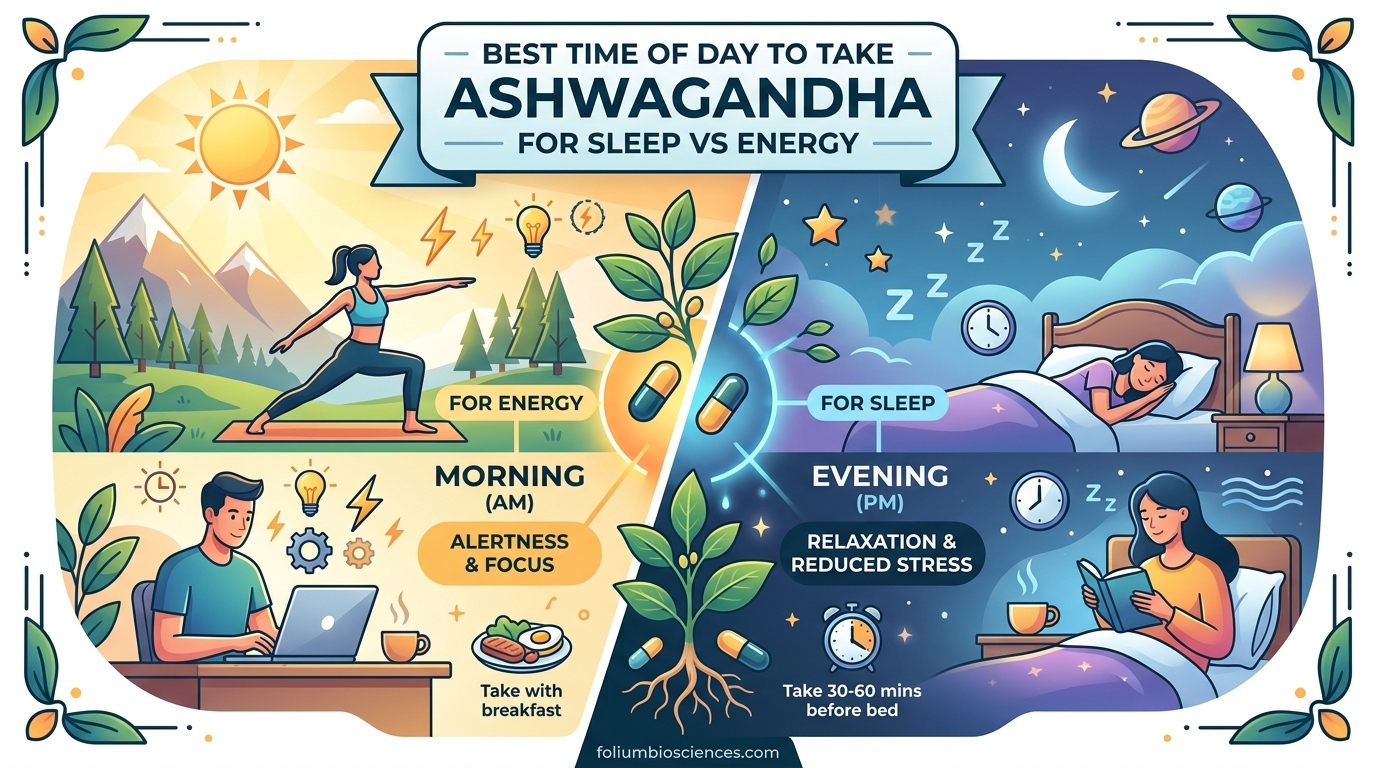
- Choose Morning if your goals are: sustained energy, better focus, stress resilience throughout the day, cortisol balance, or support for an active lifestyle.
- Choose Evening if your goals are: falling asleep more easily, improving sleep quality, reducing nighttime anxiety, or promoting deep relaxation.
- Choose Split Dosing if you want to experience both energy benefits during the day and sleep support at night, or if you are unsure which category you fall into.
Keep in mind that ashwagandha is not a stimulant. It does not work like caffeine, which gives you an immediate burst of energy. Instead, ashwagandha works gradually, building up in your system over time. Consistency matters far more than whether you take it at 7:00 AM or 9:00 PM. Most users begin noticing meaningful changes in their stress levels, energy, or sleep quality within 4 to 8 weeks of consistent use.
Taking Ashwagandha in the Morning for Energy
When taken in the morning, ashwagandha shines as a tool for supporting energy, focus, and stress resilience throughout the day. Here is the science behind why morning timing works for these goals.
How Morning Dosing Supports Energy
Ashwagandha’s active compounds, known as withanolides, interact with your body’s hypothalamic-pituitary-adrenal (HPA) axis, which is the system responsible for managing your stress response. Chronic stress often leads to elevated cortisol levels, particularly in the morning when cortisol naturally peaks to help wake you up. By supporting healthy cortisol regulation, ashwagandha can help you feel calmer and more centered as you navigate daily stressors.
Research published in the Indian Journal of Psychological Medicine found that participants taking ashwagandha extract reported significantly greater reductions in perceived stress and serum cortisol levels compared to the placebo group. This cortisol-balancing effect is one of the primary reasons morning dosing appeals to people looking for steady, sustainable energy rather than the jittery spike and crash associated with caffeine.
Unlike stimulants that deplete energy reserves, ashwagandha works by helping your body adapt to stress more efficiently. Many users describe the effect as a sense of calm focus, which makes morning dosing particularly popular among people with demanding workdays, caregivers, athletes, and anyone managing chronic stress.
What the Forums Say About Morning Timing
Real user experiences from Reddit communities like r/Supplements and r/Biohackers echo the scientific findings. One user on r/ASHWAGANDHA reported, “I take 600mg of KSM-66 first thing in the morning and it genuinely helps me stay calm during stressful meetings. I feel like I have better energy without the edge I used to get.” Others note that morning dosing helps them avoid the afternoon slump that typically follows a heavy lunch, without interfering with nighttime sleep.
Practical Tips for Morning Dosing
- Take ashwagandha with breakfast or another meal to improve absorption and reduce the risk of stomach upset.
- If you take other morning supplements, ashwagandha stacks well with vitamins and minerals.
- Start with a lower dose (around 300mg) for the first week to assess how your body responds before increasing.
- Give it at least 4 to 6 weeks of consistent daily use before evaluating whether morning timing is working for you.
Taking Ashwagandha at Night for Sleep and Relaxation
Evening timing is the preferred choice for people whose primary goal is sleep improvement, relaxation, and anxiety relief. While ashwagandha is not a sedative, its effects on GABA signaling and cortisol reduction can create the ideal physiological conditions for falling asleep more easily and enjoying deeper, more restorative rest.
How Night Dosing Supports Sleep
Ashwagandha has been shown to support GABA production, the neurotransmitter responsible for calming nervous system activity. GABA is your brain’s primary inhibitory neurotransmitter, and higher GABA activity is associated with deeper sleep and reduced anxiety. This is why many users report feeling a gentle sense of relaxation shortly after taking ashwagandha in the evening.
Elevated evening cortisol is a common culprit behind insomnia and restless nights. When cortisol remains high at night, it keeps your body in a state of alertness that makes falling asleep difficult. By helping regulate cortisol levels throughout the day and into the evening, ashwagandha can create more favorable conditions for sleep onset and maintenance.
A study in the journal PLOS ONE found that ashwagandha root extract significantly improved sleep quality and morning alertness in participants. The effects were more pronounced in those who had higher baseline stress and sleep difficulties, suggesting that people struggling with stress-related sleep issues may benefit the most from evening dosing.
What the Forums Say About Night Timing
Reddit users on r/sleep and r/Supplements frequently share positive experiences with nighttime ashwagandha use. One user wrote, “I take it about 30 minutes before bed and I notice I am not lying awake with racing thoughts anymore. It does not knock me out, but it takes the edge off enough that I actually relax into sleep.” Another user on r/PeterAttia noted, “I switched from morning to evening dosing and my sleep efficiency improved noticeably. I am waking up less during the night.”
However, a minority of users report that ashwagandha makes them feel slightly stimulated when taken at night, which is why personal experimentation is so important. Some people metabolize adaptogens differently, and what works as a sleep aid for most may not work for everyone.
Practical Tips for Evening Dosing
- Take ashwagandha 30 to 60 minutes before bedtime to allow time for the initial relaxation effects to set in.
- Pair evening dosing with a relaxing routine such as reading, gentle stretching, or drinking herbal tea.
- Avoid taking ashwagandha on an empty stomach in the evening, as this can cause nausea that interferes with sleep.
- If you experience stimulation rather than relaxation at night, consider switching to morning dosing or trying a split dose.
How Timing Affects Your Outcomes
The reason timing matters so much with ashwagandha is that the herb does not simply produce a generic effect. Instead, its mechanisms support different outcomes depending on when you take it and what your body needs most.
The Cortisol Connection
Your cortisol levels follow a predictable daily pattern, typically highest in the early morning and lowest around midnight. This is known as your cortisol awakening response. Ashwagandha’s primary mechanism involves supporting healthy cortisol regulation, which means it can help keep morning cortisol from spiking too aggressively (reducing jitteriness and anxiety) and can help ensure evening cortisol drops low enough to allow restful sleep.
When you take ashwagandha in the morning, you are essentially priming your stress response system for the day ahead. The withanolides interact with the HPA axis to promote stress resilience, meaning you are less likely to feel overwhelmed by everyday challenges. By evening, when the ashwagandha has been working throughout the day, your cortisol levels are more likely to have tapered to their natural low evening state, supporting sleep onset.
When you take ashwagandha at night, you are more directly targeting the relaxation and sleep-supporting effects. The GABA-promoting properties create a calming effect that directly facilitates the transition into sleep, while the continued cortisol regulation helps maintain deeper, more continuous sleep cycles throughout the night.
Split Dosing: The Best of Both Worlds
If you find that your goals do not fit neatly into the morning or evening category, or if you want to experience the benefits of ashwagandha for both energy and sleep, split dosing may be the ideal approach. This involves taking a portion of your daily dose in the morning and the remainder in the evening.
Cooper Complete, one of the few resources that covers split dosing in detail, recommends this approach for users seeking balanced benefits. Forum users on r/HubermanLab have discussed taking KSM-66 (a popular ashwagandha extract) twice daily for several months with positive results, reporting both improved daytime focus and better nighttime sleep quality.
A typical split dose might look like this:
- Morning: 300mg with breakfast
- Evening: 300mg with dinner or 30 minutes before bed
Not all ashwagandha supplements are created equal when it comes to split dosing. Full-spectrum extracts like KSM-66 and Sensoril are both backed by clinical research and are popular choices for this purpose. If you are unsure which form to choose, consult our internal guides on ashwagandha types and dosages.
Consistency Is More Important Than Timing
Regardless of whether you choose morning, evening, or split dosing, the most important factor for success with ashwagandha is consistency. Unlike caffeine, which works immediately, ashwagandha builds up in your system over time. Most users need at least 4 to 8 weeks of daily use before noticing meaningful changes in their stress levels, energy, or sleep quality.
Many forum users also advise building in periodic breaks. After 2 to 3 months of consistent use, some people choose to take a 1 to 2 week break before resuming. This practice may help prevent your body from becoming desensitized to the herb, though more research is needed to understand long-term cycling protocols.
Finding Your Optimal Timing: A Personal Experimentation Framework
Because individual responses to ashwagandha vary significantly, the most effective approach is to treat your ashwagandha routine as a personal experiment. Here is a step-by-step framework for finding the timing that works best for you.
Step 1: Define Your Primary Goal
Start by asking yourself what matters most to you right now. Are you struggling with low energy and daytime fatigue? Or is your main challenge falling asleep and staying asleep at night? It is difficult to optimize two goals simultaneously when you are first starting out, so choose one as your primary focus. You can always expand to split dosing once you have established how your body responds.
Step 2: Start With the Suggested Timing for Your Goal
If sleep is your primary concern, begin with evening dosing. If energy and stress resilience are more important, start with morning dosing. Choose a consistent time each day and stick with it for at least 4 weeks.
Step 3: Track Your Response
Keep a simple journal noting your energy levels throughout the day, sleep quality at night, mood, and any side effects. Many users find it helpful to use a sleep tracking app or a simple rating scale (1 to 10) for morning energy and evening relaxation. After 4 weeks, review your notes to see if there is a pattern.
Step 4: Adjust Based on Your Observations
If evening dosing is helping your sleep but you feel groggy in the morning, try taking your dose earlier in the evening (at least 2 hours before bed) or switch to morning dosing. If morning dosing gives you great energy but seems to interfere with falling asleep, try moving your dose to earlier in the day or consider switching to a lower dose in the evening. Remember that ashwagandha can cause stomach upset when taken on an empty stomach, so ensure you are taking it with food.
Step 5: Consider Split Dosing
If you have been on a single-timing protocol for 6 to 8 weeks and feel that you are missing out on either the energy benefits or the sleep benefits, consider transitioning to split dosing. Start by moving half your dose to the opposite time of day and monitor how you feel over the next 4 weeks.
Step 6: Cycle if Needed
Some long-term users find that taking periodic breaks (such as 2 weeks off after every 8 to 10 weeks of use) helps maintain the herb’s effectiveness. If you notice diminishing benefits over time, a break may be worth trying.
Safety, Side Effects, and Interactions
Ashwagandha is generally considered safe for most healthy adults when taken at recommended doses, but it is important to be aware of potential side effects and interactions before starting a new supplement routine.
Common Side Effects
Most users tolerate ashwagandha well, particularly when taken with food. However, some people experience:
- Stomach upset or digestive discomfort, especially when taken on an empty stomach
- Drowsiness or grogginess, particularly when first starting or when taking at higher doses
- Mild stimulation or insomnia if they are sensitive to adaptogens or take it too late in the evening
- Headaches in rare cases
The People Also Ask question “Can people with schizophrenia take ashwagandha?” highlights an important point: individuals with certain neurological conditions, those who are pregnant or breastfeeding, and those on specific medications should consult a healthcare provider before using ashwagandha. It is also worth noting that ashwagandha supplements are not strictly regulated by the FDA, so product quality and concentration can vary significantly between brands.
Important Interactions
Ashwagandha may interact with certain medications and conditions. The People Also Ask question “Can I take ashwagandha while on HRT?” reflects a common concern. If you are on hormone replacement therapy or any other prescription medication, speak with your doctor before adding ashwagandha to your routine. Specific interactions of concern include:
- Thyroid medications: Ashwagandha may affect thyroid hormone levels, potentially requiring dose adjustments
- Immunosuppressants: Because ashwagandha may stimulate immune function, it could interfere with immunosuppressive therapies
- Blood pressure and diabetes medications: Ashwagandha may lower blood pressure and blood sugar, potentially amplifying medication effects
- Benzodiazepines and sedatives: Combining ashwagandha with these medications may cause excessive drowsiness
Verywell Health notes that there have been rare reports of liver damage associated with ashwagandha use, though a direct causal relationship has not been established. If you have any pre-existing liver condition, it is especially important to seek medical guidance before use.
Who Should Avoid Ashwagandha
- Pregnant or breastfeeding women (due to limited safety data)
- Individuals with autoimmune conditions (as ashwagandha may stimulate immune activity)
- People scheduled for surgery (discontinue at least 2 weeks before any surgical procedure)
- Those taking medications that affect cortisol, thyroid, or immune function without medical supervision
Frequently Asked Questions
[faq_schema]
Should I take ashwagandha in the morning or at night?
It depends on your primary goal. Take ashwagandha in the morning if you want sustained energy, better focus, and stress relief throughout the day. Take it at night if your main goal is falling asleep more easily, improving sleep quality, and reducing evening anxiety. If you want both benefits, consider split dosing with half your dose in the morning and half in the evening.
Can ashwagandha make you sleepy or energized?
Yes. Ashwagandha affects GABA production and cortisol regulation, which can produce either relaxation and drowsiness (more common with evening dosing) or steady, calm energy (more common with morning dosing). Individual responses vary. Some users report feeling slightly stimulated at night, in which case morning dosing is preferable.
How long does ashwagandha take to work?
Unlike stimulants that work immediately, ashwagandha requires consistent daily use over time. Most people begin noticing changes within 4 to 8 weeks. Full benefits for stress resilience, energy optimization, and sleep improvement are typically experienced after 8 to 12 weeks of consistent use.
Should you take ashwagandha with food?
Yes, taking ashwagandha with food is strongly recommended. The herb can cause stomach upset, nausea, or digestive discomfort when taken on an empty stomach. Taking it with breakfast or dinner improves absorption and reduces the risk of gastrointestinal side effects.
Can you take ashwagandha every day?
Yes, most healthy adults can take ashwagandha daily. Consistency is more important than timing for achieving results. Many long-term users recommend taking periodic breaks (such as 2 weeks off after every 8 to 10 weeks) to prevent desensitization, though this is based more on user reports than clinical studies.
What are the side effects of ashwagandha?
Most people tolerate ashwagandha well. Common side effects include mild stomach upset, drowsiness (especially at higher doses), and, rarely, stimulation or insomnia if taken too late in the evening. Serious side effects are uncommon but have been reported in isolated cases. If you have liver disease, autoimmune conditions, or are on prescription medications, consult your healthcare provider before use.
[/faq_schema]
Conclusion
The best time of day to take ashwagandha ultimately depends on what you are trying to achieve. Morning dosing is ideal for energy, focus, stress resilience, and cortisol balance throughout the day. Evening dosing is best for relaxation, sleep onset, and deep rest. Split dosing offers the advantages of both approaches and is an excellent option for people who want comprehensive support or who are still figuring out which category they fall into.
No matter which timing you choose, remember that ashwagandha is a long-term investment in your wellbeing. It requires consistency, patience, and a willingness to listen to your body as you fine-tune your routine. Start with one timing approach, track your results for at least 4 to 6 weeks, and adjust as needed. With a little experimentation, you will find the timing and protocol that works best for your unique physiology and lifestyle.