
Maca root has exploded in popularity as a natural supplement for energy, libido, and hormone balance. But before you add this Peruvian adaptogen to your routine, you need to understand the full picture. Maca root side effects are real, and certain people should avoid this supplement entirely.
Our team has spent months analyzing clinical research, medical databases, and real user experiences from communities like Reddit’s r/Supplements and r/Endometriosis. We’ve compiled everything you need to know about maca safety, who should steer clear, and why some groups face serious risks.
In this guide, you’ll learn exactly who should avoid maca root, the side effects you might experience, how it interacts with medications, and the specific health conditions that make this supplement dangerous. Whether you’re considering maca for fertility, menopause, or athletic performance, this information could save you from unexpected complications.
Table of Contents
What Is Maca Root
Maca (Lepidium meyenii) is a cruciferous vegetable native to the high Andes mountains of Peru. Often called “Peruvian ginseng,” this root vegetable belongs to the same family as broccoli, cabbage, and radishes. Indigenous Peruvians have cultivated maca for over 2,000 years, traditionally using it to enhance fertility, stamina, and vitality at high altitudes.
The root contains unique bioactive compounds called macamides and macaenes that researchers believe influence hormone pathways and energy metabolism. Maca also contains glucosinolates, plant chemicals found in many cruciferous vegetables that can affect thyroid function when consumed in large amounts.
Unlike many herbal supplements, maca doesn’t contain plant hormones. Instead, it appears to work through your hypothalamic-pituitary-adrenal axis, potentially helping your body optimize its own hormone production. This mechanism explains both its benefits and its risks for certain populations.
Common Maca Root Side Effects
While maca is generally well-tolerated, side effects do occur. Based on clinical studies and user reports, here’s what you might experience.
Digestive Issues
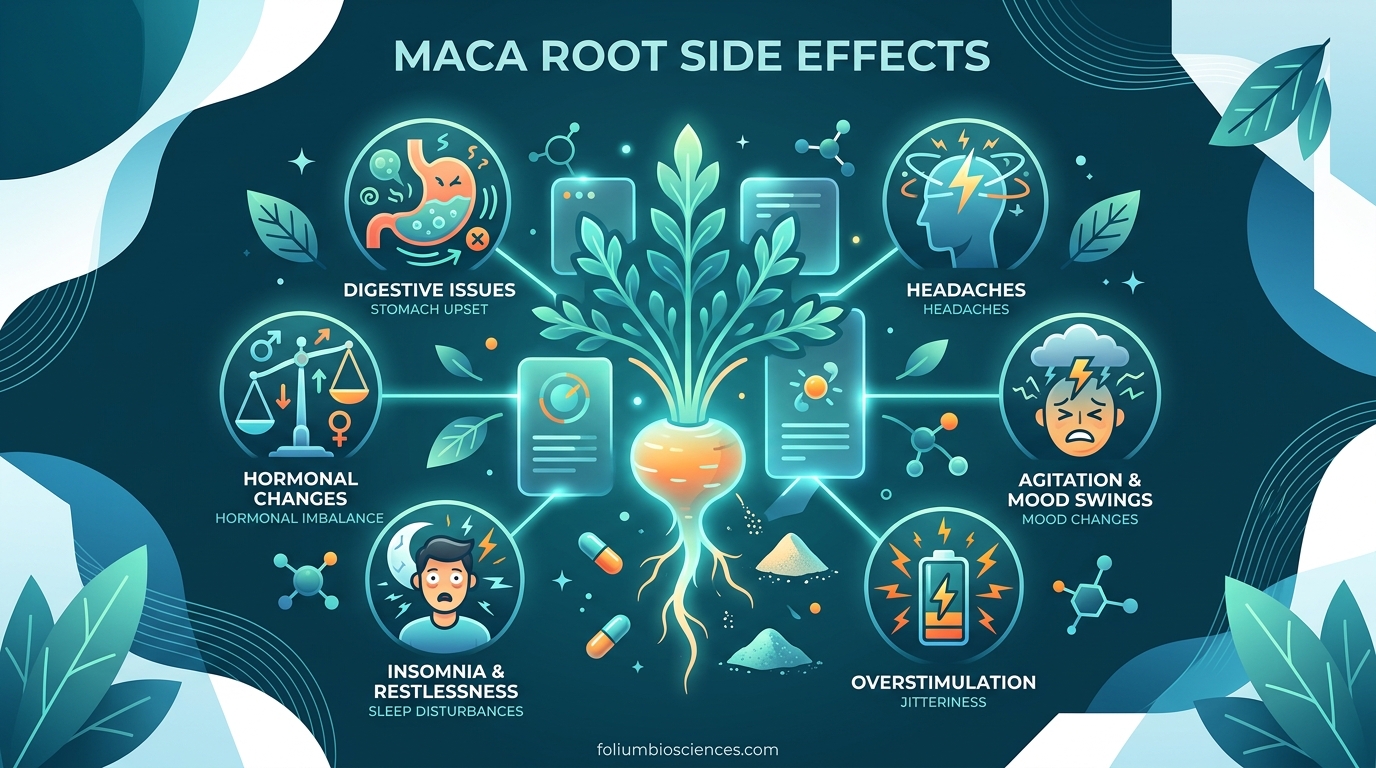
The most commonly reported side effect involves your digestive system. Users frequently report stomach upset, gas, bloating, and cramping, especially when taking raw maca powder. These symptoms typically appear within the first few days of use and may resolve as your body adjusts.
Raw maca contains resistant starches and fiber that can be difficult to digest. If you have a sensitive stomach or irritable bowel syndrome, these effects may be more pronounced. Gelatinized maca, which has been pre-cooked to remove starch, causes fewer digestive problems.
Anxiety and Heart Palpitations
Some users report feeling anxious, jittery, or experiencing heart palpitations after taking maca. These effects seem more common at higher doses, particularly above 3 grams daily. If you’re sensitive to stimulants or already prone to anxiety, start with a very low dose and monitor your response carefully.
From our analysis of forum discussions, users taking 4-6 grams daily report these symptoms more frequently than those staying at 1.5-3 grams. The energizing effects that make maca popular can become overwhelming if you exceed your personal tolerance.
Insomnia
Because maca can increase energy and alertness, taking it too late in the day may disrupt your sleep. Many users find they need to take maca in the morning or early afternoon to avoid insomnia. If you’re already struggling with sleep issues, this side effect warrants particular attention.
Headaches
A smaller percentage of users report headaches, particularly during the first week of supplementation. These may result from hormonal fluctuations or changes in blood flow. Staying well-hydrated and starting with a lower dose can help minimize this effect.
Acne Breakouts
Since maca can influence hormone levels, some users experience acne flare-ups. Interestingly, maca helps hormonal acne in some people while causing it in others. Men seem particularly prone to this side effect based on community reports.
Who Should Avoid Maca Root
Certain groups face elevated risks from maca supplementation and should avoid it entirely. If you fall into any of these categories, skip maca unless your healthcare provider specifically approves it.
Pregnant Women
Pregnant women should avoid maca root. While traditional use suggests safety, modern clinical data on maca during pregnancy is insufficient to establish safety. The potential for hormonal effects creates unnecessary risk during this critical developmental period.
Breastfeeding Women
Nursing mothers should also avoid maca. We don’t have enough research on how maca compounds transfer to breast milk or how they might affect developing infants. The hormone-modulating properties that make maca effective also make it potentially problematic for breastfeeding.
People with Hormone-Sensitive Conditions
Maca extracts may act like estrogen in your body. This means anyone with hormone-sensitive conditions should avoid maca or use it only under strict medical supervision. These conditions include breast cancer, uterine cancer, ovarian cancer, endometriosis, and uterine fibroids.
People with Thyroid Disorders
Maca contains goitrogens, substances that can interfere with thyroid function. If you have hypothyroidism, Hashimoto’s thyroiditis, or other thyroid conditions, maca could worsen your symptoms. We’ll explore this in detail in the next section.
People Taking Blood Pressure Medications
Maca may affect blood pressure. If you’re taking medication for hypertension, maca could interfere with your treatment or cause unpredictable blood pressure changes. Never combine maca with blood pressure medications without medical supervision.
People on Blood Thinners
Maca may have mild anticoagulant effects. If you’re taking warfarin, aspirin, or other blood-thinning medications, maca could increase bleeding risk. This interaction hasn’t been well-studied, so caution is warranted.
Hormone-Sensitive Conditions and Maca
The estrogen-like activity of maca requires special attention if you have certain medical conditions. Here’s what you need to know about specific hormone-sensitive conditions.
Breast Cancer
If you have a history of estrogen receptor-positive breast cancer, avoid maca. While maca doesn’t contain actual estrogen, its hormone-modulating effects could theoretically stimulate estrogen-sensitive cancer cells. The risk isn’t worth the potential benefits.
Even if you’ve completed treatment and are in remission, consult your oncologist before considering maca. Some integrative practitioners may approve maca for certain patients, but this decision requires individualized medical assessment.
Uterine and Ovarian Cancer
Similar to breast cancer, uterine and ovarian cancers can be hormone-sensitive. Maca’s effects on estrogen pathways create potential concern. Avoid maca if you have any history of these cancers unless your oncologist explicitly clears it.
Endometriosis
Endometriosis involves tissue that normally lines the uterus growing in other areas, often causing pain and fertility issues. This condition is estrogen-dependent, meaning maca’s hormone effects could potentially worsen symptoms.
Interestingly, some women with endometriosis report maca helps balance their hormones and reduce symptoms. However, others find it makes things worse. Because responses vary so widely, we recommend avoiding maca with endometriosis unless you’re working closely with a knowledgeable healthcare provider.
Uterine Fibroids
Uterine fibroids are non-cancerous growths that respond to estrogen. Since maca may influence estrogen activity, it could theoretically promote fibroid growth. If you have fibroids, especially large or symptomatic ones, avoid maca or discuss risks thoroughly with your doctor.
PCOS Considerations
Polycystic ovary syndrome (PCOS) involves hormonal imbalance, but not necessarily in the same way as estrogen-dominant conditions. Some women with PCOS find maca helpful for hormone balance, while others don’t tolerate it well.
If you have PCOS, approach maca cautiously. Start with very low doses, monitor your symptoms closely, and discontinue if you notice any worsening of your condition.
Thyroid Considerations: Can I Take Maca with Hashimoto’s
This is one of the most common questions we see, and the answer requires understanding how maca affects thyroid function.
Maca belongs to the Brassicaceae family, which includes vegetables like broccoli, cauliflower, and kale. These plants contain goitrogens, compounds that can interfere with iodine uptake by your thyroid gland. When consumed in large amounts, goitrogens can potentially worsen hypothyroidism.
If you have Hashimoto’s thyroiditis, an autoimmune condition that causes hypothyroidism, raw maca poses the greatest concern. The goitrogens in raw maca are more active than in cooked or gelatinized forms. However, even processed maca may affect some individuals with thyroid conditions.
The clinical evidence on maca and thyroid function is limited. Some practitioners allow patients with well-controlled hypothyroidism to use maca, while others recommend complete avoidance. Our team recommends consulting an endocrinologist before using maca if you have any thyroid condition.
If you do choose to use maca with thyroid issues, gelatinized maca is safer than raw. The cooking process reduces goitrogen activity. Monitor your thyroid symptoms closely and have your TSH, T3, and T4 levels checked regularly.
Maca Interactions with Medications
Maca can interact with several classes of medications. Here’s what you need to know about specific drug interactions.
Blood Pressure Medications
Maca may have mild blood pressure-lowering effects. If you’re taking antihypertensive medications like ACE inhibitors, beta-blockers, or calcium channel blockers, combining them with maca could cause your blood pressure to drop too low.
Symptoms of low blood pressure include dizziness, fainting, and fatigue. If you take blood pressure medication, monitor your readings closely if you decide to try maca, and never start without medical supervision.
Anticoagulants and Blood Thinners
Maca may affect blood clotting. While research is limited, theoretical concerns exist about interactions with warfarin, heparin, and even over-the-counter blood thinners like aspirin. The risk of increased bleeding, especially if you’re already on anticoagulants, makes this combination potentially dangerous.
Hormone Replacement Therapy
If you’re taking hormone replacement therapy for menopause or other conditions, adding maca could complicate your hormone balance. Maca’s effects on your endocrine system may enhance or interfere with your prescribed hormones.
Birth Control Pills
While not well-documented, maca’s hormone-modulating effects could theoretically affect contraceptive efficacy. If you rely on oral contraceptives, discuss maca with your healthcare provider before use.
Raw Maca vs Gelatinized Maca: Safety Differences
The preparation method significantly affects maca’s safety profile. Understanding the difference helps you make safer choices.
What Is Gelatinization
Gelatinization is a process that heats and pressure-cooks maca to remove starch content. Despite the name, no gelatin is added. The resulting powder is more concentrated, easier to digest, and has reduced goitrogen content.
Digestive Safety Differences
Raw maca contains fiber and resistant starches that can cause gas, bloating, and cramping. Our analysis of user reports shows that digestive side effects occur far more frequently with raw maca than gelatinized versions.
If you have a sensitive stomach, irritable bowel syndrome, or any digestive condition, gelatinized maca is the safer choice. The pre-cooking process makes the nutrients more bioavailable while removing difficult-to-digest components.
Thyroid Safety Differences
For people with thyroid concerns, gelatinized maca is significantly safer than raw. The heating process reduces goitrogen activity, though it doesn’t eliminate it entirely. If you have mild thyroid concerns and still want to try maca, gelatinized is your better option.
Our Recommendation for Beginners
Unless you have specific reasons to choose raw maca, start with gelatinized. It’s gentler on your digestive system, safer for thyroid health, and the nutrients are actually more concentrated and absorbable. Many experienced maca users who started with raw powder have switched to gelatinized for comfort and convenience.
Safe Usage Guidelines and Dosage
If you don’t fall into any contraindicated categories, following safe usage guidelines minimizes your risk of side effects.
Recommended Dosage
Clinical studies typically use doses between 1.5 and 3 grams daily. We recommend starting at the lower end of this range, around 1.5 grams, and only increasing if you tolerate it well. Doses above 3 grams daily increase side effect risk without clear additional benefits.
Duration Limits
Most safety data covers use up to 4 months. While traditional use suggests longer-term safety, modern clinical evidence doesn’t strongly support indefinite daily use. Consider cycling maca or taking breaks after 3-4 months of continuous use.
Cycling Recommendations
Many experienced users follow a cycling pattern: 3 months on, 1 month off. This approach gives your body a break from constant hormonal stimulation and may reduce the risk of side effects or tolerance. While not extensively studied clinically, this pattern aligns with traditional use and common supplement cycling practices.
Starting Low and Slow
Begin with half the recommended dose for the first week. This lets your body adjust and helps you identify any sensitivity before committing to a full dose. Pay attention to how you feel, especially regarding energy, sleep, digestion, and mood.
Quality Concerns and Third-Party Testing
Supplement quality varies enormously. Some maca products have been found adulterated with prescription drugs like sildenafil (Viagra). Choose brands that provide third-party testing certificates and source their maca from reputable Peruvian suppliers.
Look for products standardized to contain specific amounts of macamides, the active compounds in maca. Organic certification also helps ensure you’re not consuming pesticides or contaminants.
Frequently Asked Questions
Who should avoid taking maca?
Can I take maca if I have Hashimoto’s?
Will maca root make me ovulate?
Does maca root help prostate?
How long can you take maca safely?
Conclusion
Maca root side effects are real and can affect anyone, but certain groups face elevated risks that warrant complete avoidance. Pregnant and breastfeeding women, people with hormone-sensitive conditions, thyroid disorders, and those on blood pressure or blood-thinning medications should avoid maca unless explicitly cleared by their healthcare provider.
For everyone else, starting with a low dose, choosing gelatinized over raw maca, and paying attention to your body’s signals minimizes side effect risk. Remember that “natural” doesn’t mean “safe for everyone,” and supplements can interact with medications and conditions in complex ways.
If you’re considering maca root for energy, libido, or hormone support, review this guide with your healthcare provider. They can help you assess your individual risk factors and determine whether maca is appropriate for your specific health situation.