
When I first started researching squalane oil for my own skincare routine, I kept seeing the same question pop up in forums: is sugarcane squalane better than olive squalane? And perhaps more importantly, does all squalane still come from sharks? These are fair questions. Squalane has become one of the most popular moisturizing ingredients in skincare, yet most consumers have no idea where it actually comes from or why the source matters.
In this guide, I will break down exactly what squalane is made from, compare the three main sources (shark liver, olives, and sugarcane), and explain why the choice between them has implications for your skin and the environment. By the end, you will know exactly which squalane source deserves a spot in your routine.
Table of Contents
What Is Squalane Made From?
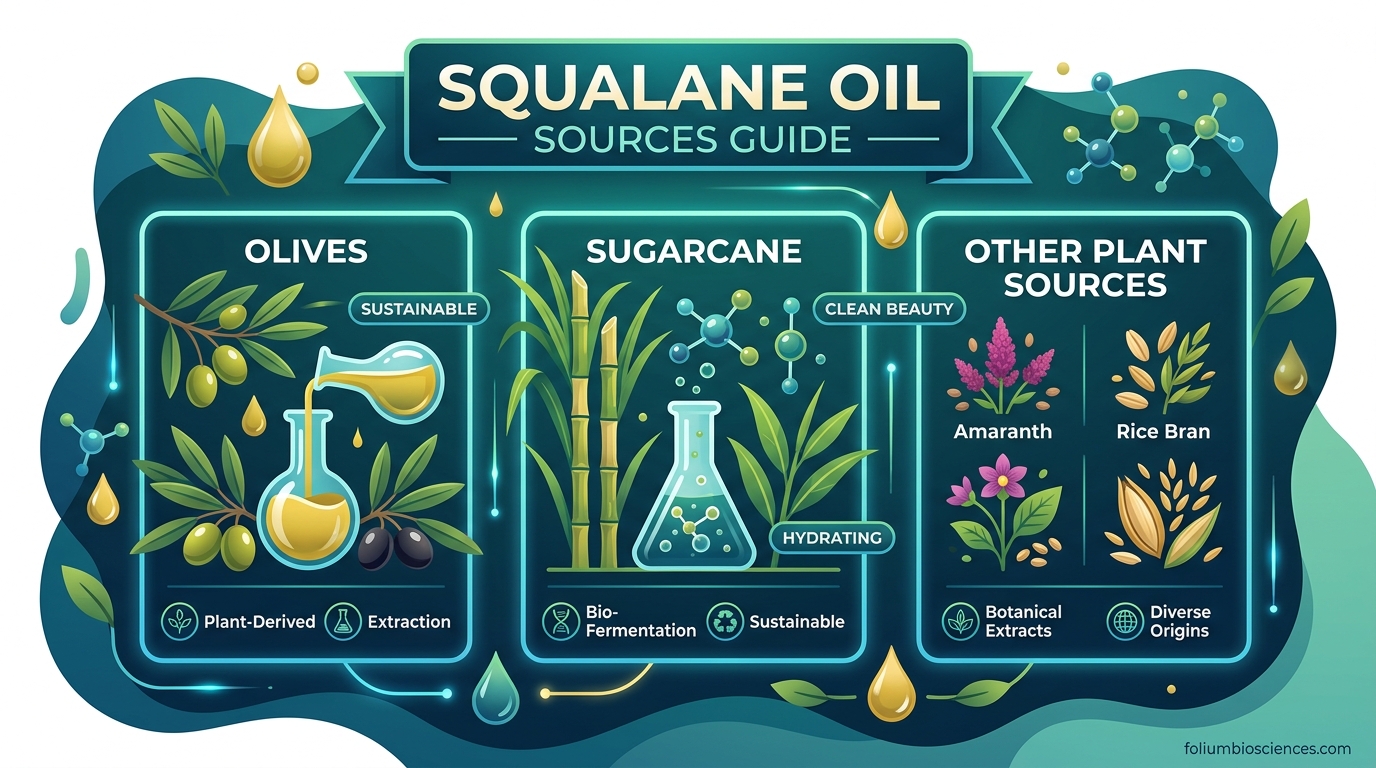
Squalane is a saturated hydrocarbon that comes from squalene, a compound found naturally in shark liver oil, olives, sugarcane, amaranth, and several other plant sources. The ingredient was first discovered in 1906 by Japanese chemist Mitsumaru Tsujimoto, who extracted it from shark liver. For decades, deep-sea sharks remained the primary commercial source because their livers contain extraordinarily high concentrations of squalene.
Today, squalane production has shifted dramatically. Plant-derived squalane now dominates the market, with sugarcane and olive oil serving as the two most common sources. Biotechnology has also introduced fermentation-based production methods that offer even more sustainable alternatives.
Squalene vs Squalane: The Key Difference
The difference between squalene and squalane comes down to one chemical transformation: hydrogenation. Squalene is an unsaturated hydrocarbon with six double bonds in its molecular structure (C30H50). These double bonds make it unstable and prone to oxidation, which means it goes rancid quickly when exposed to air.
To create squalane, manufacturers add hydrogen gas to squalene using a metal catalyst like palladium or nickel. This process eliminates the double bonds, creating a fully saturated molecule that is stable, odorless, and has a significantly longer shelf life. The resulting squalane retains all the moisturizing benefits of squalene without the instability.
From a skincare perspective, this matters because stable squalane can sit on your bathroom shelf for years without degrading, while squalene would oxidize within months. Your skin recognizes both compounds, but only squalane gives you that reliability.
Shark-Derived Squalane: Why the Controversy?
Shark liver oil has been the traditional source of squalene because certain deep-sea species contain extraordinary concentrations. The gulper shark (Centrophorus squamosus) can have squalene concentrations exceeding 90% in its liver oil. This made shark harvesting economically attractive for cosmetic companies for over a century.
The environmental impact has been devastating. Shark populations have declined by over 70% in the past 50 years. Conservation organizations estimate that approximately 2.7 million deep-sea sharks are killed annually for their livers, making this practice one of the biggest threats to shark species worldwide.
Sharks are apex predators that mature slowly and have low reproductive rates. Removing them from ocean ecosystems creates cascading effects throughout marine food webs. Many countries have begun regulating shark fishing, but enforcement remains challenging, and some cosmetic products still contain shark-derived squalane, particularly in regions with less stringent labeling requirements.
Plant-Based Squalane: Olive, Sugarcane, and Beyond
Plants offer several viable alternatives to shark-derived squalene. Olive oil remains the most established plant source, though it contains far less squalene than shark liver. Sugarcane has emerged as a superior option thanks to modern biotechnology. Several other plants also contribute to the phytosqualane market.
Here is how the major plant sources compare in terms of raw squalene concentration:
| Source | Squalene Concentration | Commercial Viability |
|---|---|---|
| Shark Liver Oil | Up to 90% | High (historically) |
| Amaranth Oil | 5-8% | Medium |
| Olive Oil | 0.4-0.7% | High |
| Rice Bran Oil | 0.3-0.5% | Low |
| Palm Oil | 0.1-0.3% | Low |
| Peanut Oil | 0.1-0.2% | Very Low |
Olive-derived squalane dominates the plant-based market because olive oil is already produced at massive scale for food use. The squalane is simply a valuable byproduct of the refining process. Amaranth offers higher concentrations but faces supply limitations. Sugarcane represents the newest and most innovative approach.
Sugarcane vs Olive Squalane: Which Is Better?
Not all plant-derived squalane is identical. The source affects texture, skin feel, sustainability profile, and even suitability for different skin types. After testing both personally and reviewing the available research, here is how they stack up:
| Factor | Sugarcane Squalane | Olive Squalane |
|---|---|---|
| Skin Feel | Ultra-lightweight, matte finish | Richer, satin finish |
| Absorption | Very fast | Fast |
| Best For | Oily, acne-prone, combination skin | Dry, mature, normal skin |
| Production Method | Fermentation/biotechnology | Extraction/refining |
| Purity | Extremely consistent | Can vary by harvest |
| Environmental Impact | Lower water usage, renewable | Higher water footprint |
| Price Range | Premium | Mid-range |
Sugarcane squalane tends to feel lighter on the skin, absorbing almost instantly without any residue. This makes it ideal for oily or acne-prone skin types who want hydration without heaviness. Olive squalane has a slightly richer feel that many people with dry skin prefer, especially for nighttime use.
From a formulation standpoint, sugarcane-derived squalane offers superior batch consistency because it is produced through controlled fermentation rather than agricultural extraction. Olive squalane quality can vary slightly depending on the harvest, region, and refining process.
How Fermentation-Based Squalane Is Made
Fermentation-based squalane represents the cutting edge of sustainable cosmetic production. Instead of extracting squalene from plant matter, manufacturers use biotechnology to produce it directly. The process begins with sugarcane juice, which feeds specially engineered yeast strains in large bioreactors.
These yeast cells ferment the sugar and produce squalene as a metabolic byproduct. The fed-batch fermentation process allows precise control over production conditions, resulting in extremely consistent purity and quality. Once the squalene is produced, it undergoes the same hydrogenation process to create stable squalane.
This method uses significantly less land and water than growing olives for extraction. It also eliminates the agricultural variability that can affect crop-based sources. Companies like Biossance have pioneered this approach, creating a reliable supply chain that does not depend on seasonal harvests or geographic growing regions.
Environmental Impact: Making the Ethical Choice
The environmental implications of your squalane choice extend far beyond your bathroom cabinet. Shark-derived squalane directly contributes to ocean ecosystem collapse. The fishing methods used to capture deep-sea sharks often involve destructive bottom trawling that damages sensitive seafloor habitats.
Among plant sources, water usage becomes the critical metric. Olive cultivation requires significant irrigation, with some estimates suggesting 1,000-2,000 liters of water per kilogram of olives produced. Sugarcane is more water-efficient and can be grown in regions with better rainfall patterns. Fermentation-based production from sugarcane has the smallest environmental footprint overall.
Look for certifications like vegan, cruelty-free, and sustainable sourcing when selecting squalane products. These labels help ensure you are not unknowingly supporting shark fishing or environmentally destructive agricultural practices.
How to Choose the Best Squalane Source for Your Skin
Choosing the right squalane source depends on your skin type, values, and budget. Here is how I recommend thinking through the decision:
For oily or acne-prone skin: Sugarcane squalane is your best bet. The lightweight texture will not clog pores or feel greasy. Many users on skincare forums report that sugarcane-derived squalane works better for fungal acne compared to olive-derived versions, though individual results vary.
For dry or mature skin: Olive squalane offers that extra bit of richness that dry skin craves. The satin finish feels more nourishing, especially in winter months or for nighttime routines.
For sensitive skin: Either plant source works well since squalane is non-irritating and hypoallergenic. Sugarcane may have a slight edge due to more consistent purity.
Reading product labels: Not all brands clearly state their squalane source. Look for terms like “sugarcane-derived,” “plant-derived,” or “vegan squalane.” Contact customer service if the source is not specified. If a brand says nothing about sourcing, shark-derived squalane remains a possibility.
Price considerations: Sugarcane squalane typically costs more due to the biotechnology involved. Budget-conscious shoppers may prefer olive-derived options from brands like The Ordinary, which offers affordable plant-based squalane.
Frequently Asked Questions
Is sugarcane squalane better than olive squalane?
Sugarcane squalane is generally considered better for oily and acne-prone skin due to its ultra-lightweight, fast-absorbing texture. Olive squalane has a richer feel that many people with dry skin prefer. From a sustainability standpoint, sugarcane squalane produced through fermentation uses less water and resources than olive cultivation. Both provide the same moisturizing benefits.
Does all squalane come from sharks?
No, not all squalane comes from sharks. While shark liver was the original source discovered in 1906, most modern squalane is plant-derived. Sugarcane and olive are the most common sustainable sources. However, some cosmetic products still use shark-derived squalane, particularly in regions with less strict labeling requirements. Always check for vegan or plant-derived certifications if you want to avoid shark sources.
Why is squalane controversial?
Squalane is controversial because traditional production relied heavily on deep-sea shark liver oil. Shark populations have declined by over 70% in the past 50 years, with approximately 2.7 million sharks killed annually for their livers. This environmental impact sparked backlash from conservation groups. The controversy has driven the industry toward plant-based and fermentation-based alternatives.
Which brand of squalane oil is best?
The best squalane brand depends on your priorities. Biossance is widely regarded for its premium sugarcane-derived squalane with excellent purity standards. The Ordinary offers affordable plant-derived squalane for budget-conscious shoppers. Other reputable brands include Indie Lee, Peter Thomas Roth, and Timeless. Look for brands that clearly state their source (sugarcane preferred) and have sustainable sourcing certifications.
What is the difference between squalane and hemi-squalane?
Squalane is a fully saturated hydrocarbon with 30 carbon atoms. Hemi-squalane is a lighter, shorter-chain molecule with just 15 carbon atoms. Hemi-squalane is even lighter than regular squalane, making it popular for hair care products and very oily skin types. It spreads more easily and feels less oily, though it may not provide quite as much moisture retention as full squalane.
Can I use squalane if I have fungal acne?
Squalane is generally considered safe for fungal acne-prone skin because it is a saturated hydrocarbon that malassezia yeast cannot metabolize. Many users with fungal acne report success with sugarcane-derived squalane specifically. However, individual reactions vary. If you have diagnosed fungal acne, consider doing a patch test first and choosing products without additional ingredients that might feed yeast.
Final Thoughts: Which Squalane Source Should You Buy?
If you are wondering which squalane source to buy, here is my straightforward recommendation: choose sugarcane-derived squalane when possible. It offers the best combination of performance, sustainability, and ethical sourcing. The lightweight texture suits virtually every skin type, the biotechnology-based production minimizes environmental impact, and you can be confident no sharks were harmed in the process.
Olive-derived squalane remains an excellent choice, especially if you have dry skin or prefer a richer feel. It is more affordable and widely available. Just verify the brand sources responsibly.
Shark-derived squalane should be avoided entirely. There is simply no justification for contributing to ocean ecosystem destruction when superior plant-based alternatives exist. Check your product labels, support brands that prioritize transparency, and enjoy the benefits of this remarkable moisturizing ingredient with a clear conscience.