
Seeing your Monstera leaves turn yellow after repotting can be alarming. You just gave your plant more room to grow, and now it looks like it’s dying. The good news: yellowing after repotting is almost always transplant shock, not a death sentence. In this guide, I’ll walk you through exactly what transplant shock is, why it happens, and what you can expect week by week as your Monstera recovers.
I have repotted dozens of Monsteras over the years, and I can tell you from experience that some yellowing is completely normal. The key is knowing the difference between normal transplant stress and something more serious like root rot. Let me show you the timeline so you can stop worrying and start helping your plant heal.
Table of Contents
What Is Transplant Shock in Monstera Plants
Transplant shock is a temporary stress response that occurs when you disturb a Monstera’s root system during repotting. When you remove the plant from its pot, untangle roots, and place it in new soil, the fine root hairs that absorb water and nutrients get damaged. This disruption causes the plant to go into survival mode.
Think of it like surgery recovery. Your Monstera has just undergone a major procedure, and it needs time to heal. During this healing period, the plant redirects its energy away from maintaining existing leaves and focuses on rebuilding its root system. This is why you see the oldest leaves turning yellow first, they are being sacrificed so the plant can survive.
Transplant shock is completely normal and expected. Even experienced plant parents deal with it every time they repot. The shock typically lasts between two to four weeks, though some plants may take up to six weeks to fully recover depending on the season, root damage, and environmental conditions.
Why Monstera Leaves Turn Yellow After Repotting
Understanding why the yellowing happens will help you stay calm during the recovery process. When you repot your Monstera, several things happen that trigger the stress response.
Root Disturbance Reduces Water Uptake
The fine root hairs on your Monstera are incredibly delicate. They are responsible for absorbing the majority of water and nutrients. When you handle the root ball during repotting, many of these hairs break or dry out when exposed to air. This dramatically reduces the plant’s ability to take up water, causing a temporary drought response even if the soil is moist.
Energy Gets Redirected to Root Growth
Plants are survival machines. When resources are limited, they prioritize the essentials. For your Monstera, regrowing roots is more important than maintaining older leaves. The plant breaks down chlorophyll in older leaves to reclaim nutrients and energy, which is why those leaves turn yellow and eventually brown before dropping.
Photosynthesis Temporarily Slows
Stress hormones produced during transplant shock slow down photosynthesis. The plant essentially puts itself in a low-power mode while it repairs the root system. This reduced energy production contributes to leaf yellowing as the plant cannot maintain all its foliage.
Transplant Shock vs Root Rot: How to Tell the Difference
This is where many plant owners panic unnecessarily. The symptoms of transplant shock and root rot can look similar, but the causes and treatments are completely different. Here is how to distinguish between them.
Transplant shock typically causes yellowing of the oldest, lowest leaves first. The yellowing is usually uniform across the leaf, starting from the edges and moving inward. The roots, if you were to check them, should still be firm and white or light tan. There should be no foul odor.
Root rot, on the other hand, often affects newer leaves or causes random yellowing. The yellow may be accompanied by brown or black spots, and the leaves feel mushy rather than just limp. If you smell the soil, root rot often has a sour or rotten odor. When you check the roots, they will be brown, black, or mushy and may fall apart when touched.
Here is the key difference: transplant shock happens immediately after repotting and improves over time with proper care. Root rot typically develops from overwatering and gets worse over time. If your Monstera was healthy before repotting and yellowing started within days, it is almost certainly transplant shock.
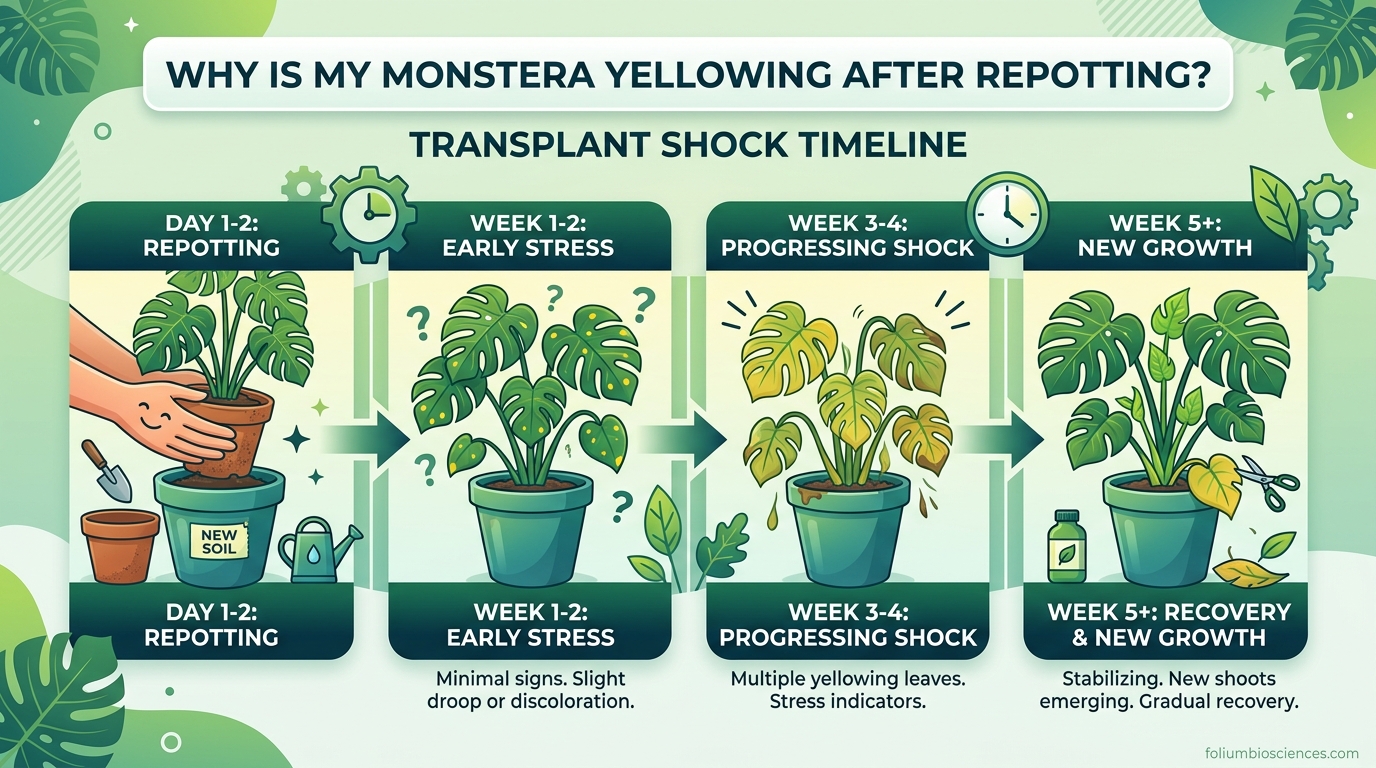
Week-by-Week Transplant Shock Timeline: What to Expect
This is the section I wish I had when I first started repotting Monsteras. Having a clear timeline eliminates guesswork and helps you know when to wait versus when to worry.
Days 1-3: The Immediate Shock Phase
Your Monstera may look fine for the first day or two. Then suddenly, leaves start drooping. This is completely normal. The plant is realizing its root system has been compromised. You may see slight wilting or curling in some leaves. The soil may feel dry on top even if you just watered, as the damaged roots cannot pull moisture up effectively.
What to do: Keep the soil lightly moist but not soggy. Place the plant in bright, indirect light away from direct sun. Do not fertilize. Do not repot again. Just let it rest.
Week 1: Yellowing Begins
By the end of the first week, you will likely see yellowing on the oldest leaves. These are the lowest leaves on the stem, often the smallest ones. The yellowing typically starts at the tips or edges and spreads inward. This is the plant sacrificing foliage to conserve energy for root regrowth.
What to do: Resist the urge to overwater. Many plant owners see drooping and yellowing and think the plant needs more water. It does not. The roots cannot absorb it. Keep watering light and consistent. One to two older leaves turning yellow is normal and expected.
Week 2: The Worst Phase
Week two is usually when things look the worst. More leaves may yellow. The plant might look limp and sad. This is the bottom of the recovery curve. If you are going to lose leaves, it typically happens during this week. One to three leaves turning yellow is still within the normal range for transplant shock.
What to do: Stay the course. Check that the soil is not staying wet for days. If the top inch of soil has been wet for more than four days, you may be overwatering. Ensure the pot has drainage holes. Maintain humidity if possible, around 50 to 60 percent helps recovery.
Week 3: Stabilization Begins
By week three, the yellowing should slow down or stop. The remaining leaves should start perking up. The plant is beginning to establish new roots in the fresh soil. You might notice the soil drying out slightly faster than before, which is a good sign that roots are starting to take up water again.
What to do: Continue light watering when the top inch of soil feels dry. You can start increasing water slightly if the plant seems to be drinking more. Still no fertilizer yet.
Week 4: Recovery Signs Appear
Week four is when you start seeing positive signs. The existing leaves should look firm and healthy. You might see tiny new root tips if you were to peek at the drainage holes. The plant should no longer look droopy or stressed. Yellowing should have completely stopped.
What to do: Resume a normal watering schedule based on soil dryness. You can begin light fertilizing with a diluted solution if the plant looks healthy.
Weeks 5-6: New Growth Resumes
By weeks five and six, your Monstera should be putting out new growth. A new leaf unfurling is the best sign that transplant shock is over. The plant has successfully rebuilt its root system and is now focusing energy above ground again.
What to do: Resume normal Monstera care. Water when the top two inches of soil are dry. Fertilize monthly during the growing season. Your plant has made it through.
How to Help Your Monstera Recover Faster
While you cannot eliminate transplant shock entirely, you can help your Monstera recover more quickly by optimizing its care during the recovery period.
Adjust Your Lighting
Place your newly repotted Monstera in bright, indirect light. Avoid direct sunlight, which can stress the already compromised plant further. Too little light will slow recovery, but too much direct sun can scorch leaves that are already struggling. An east-facing window or a few feet back from a south or west window works perfectly.
Modify Your Watering Schedule
This is critical. Damaged roots cannot handle soggy soil. Water lightly and less frequently than you normally would. Wait until the top inch of soil feels dry before watering again. When you do water, water thoroughly until it drains from the bottom, then let the soil dry again.
Many Monstera owners make the mistake of watering more when they see drooping leaves. This is the opposite of what your plant needs. Overwatering during transplant shock is a leading cause of root rot development.
Increase Humidity
Monsteras are tropical plants that appreciate humidity. During transplant shock, higher humidity reduces water loss through the leaves, taking pressure off the damaged root system. Aim for 50 to 60 percent humidity if possible. You can use a humidifier, place the pot on a pebble tray, or group it with other plants.
Hold Off on Fertilizer
Do not fertilize for at least four weeks after repotting. The plant cannot absorb nutrients effectively with a damaged root system anyway, and fertilizer salts can actually burn tender new roots. Fresh potting mix already contains nutrients, so your Monstera is not starving.
Avoid Moving the Plant
Pick a spot and stick with it. Moving your Monstera around while it is in shock adds environmental stress on top of root stress. Find a good location with stable conditions and leave it there until recovery is complete.
Signs Your Monstera Is Recovering from Transplant Shock
Knowing what recovery looks like helps you recognize when the danger has passed. Here are the positive signs to watch for.
- Yellowing has stopped and no new leaves are turning yellow
- Existing leaves feel firm and turgid, not limp or soft
- The soil is drying at a normal rate, about every 7 to 10 days
- You see new leaf growth emerging from the stem
- Aerial roots may start growing again
- The plant looks perky and upright, not droopy
Once you see new growth, you can breathe easy. Your Monstera has successfully recovered from transplant shock and is back to business as usual.
When to Be Concerned: Red Flags Beyond Normal Transplant Shock
While transplant shock is normal, some symptoms indicate a more serious problem. Here is when you should worry.
If yellowing continues past week four or spreads to newer leaves, something else may be wrong. If the soil smells sour or rotten, you likely have root rot developing. If multiple leaves turn yellow rapidly within a few days of repotting, you may have overwatered or damaged the roots severely during repotting.
If you suspect root rot, gently remove the plant from its pot and inspect the roots. Healthy roots are white or tan and firm. Rotten roots are brown or black and mushy. If you find rot, trim away the affected roots with sterile scissors, repot in fresh dry soil, and adjust your watering.
Prevention Tips to Minimize Transplant Shock in the Future
While you cannot completely prevent transplant shock, you can minimize its severity with proper technique.
- Water your Monstera thoroughly one to two days before repotting. This helps the root ball hold together and reduces root damage
- Choose the right time: spring and early summer are ideal when the plant is in active growth
- Use a well-draining potting mix specifically formulated for aroids
- Be gentle with the roots. Untangle them carefully rather than ripping them apart
- Choose a pot only one size larger than the current one. Too big a pot leads to overwatering issues
- Ensure the new pot has adequate drainage holes
- Handle the plant by the root ball, not the stems or leaves
With good technique, you may still see some yellowing, but it will be minimal and recovery will be faster.
Frequently Asked Questions
Is it normal for monstera to turn yellow after repotting?
Yes, it is completely normal. Yellowing of older leaves is a common symptom of transplant shock. When the root system is disturbed during repotting, the plant redirects energy to root regrowth and sacrifices older leaves. One to three leaves turning yellow within the first two weeks is typical.
How long does transplant shock last in monstera?
Transplant shock in Monstera typically lasts 2 to 4 weeks, though some plants may take up to 6 weeks to fully recover. By week 4, yellowing should stop and the plant should show signs of stabilization. New growth usually resumes by weeks 5 to 6.
Should I cut off yellow leaves on my monstera after repotting?
You can remove yellow leaves once they are completely yellow and crispy. However, it is fine to leave them until they naturally drop. The plant reclaims nutrients from dying leaves before letting them go. Removing them too early removes potential energy reserves.
How do I know if my monstera has transplant shock or root rot?
Transplant shock affects oldest leaves first with uniform yellowing and happens immediately after repotting. Root rot often affects newer leaves, causes brown or black spots, and has a sour smell. Check the roots: transplant shock shows firm white or tan roots, while root rot shows mushy brown or black roots.
How often should I water monstera after repotting?
Water less frequently than normal during recovery. Wait until the top inch of soil feels dry before watering. This might be every 7 to 10 days depending on your environment. Damaged roots cannot absorb excess water, so overwatering during transplant shock can cause root rot.
Can a monstera die from transplant shock?
It is very rare for a healthy Monstera to die from transplant shock alone. The plant is programmed to survive by sacrificing older leaves and rebuilding roots. Death usually only occurs if transplant shock is combined with overwatering, severe root damage, or other stress factors.
Conclusion: Why Is My Monstera Yellowing After Repotting
If your Monstera is turning yellow after repotting, take a deep breath. This is transplant shock, and it is a normal, temporary response to root disturbance. Your plant is not dying. It is reallocating resources to rebuild its root system.
Expect some yellowing of older leaves in weeks one and two. By week four, things should stabilize. By week six, you should see new growth. The key is patience and proper care: bright indirect light, reduced watering, no fertilizer, and stable conditions.
With the right approach, your Monstera will bounce back stronger than ever, ready to unfurl those beautiful fenestrated leaves once again. The yellowing you see today is just the plant doing what it needs to do to thrive tomorrow.