
When your dog has an upset stomach, you might reach for whatever probiotic option is in your fridge. But here’s the truth most pet owners discover too late: not all gut health solutions are equal. The debate between dog probiotics vs yogurt isn’t just about convenience – it’s about giving your furry friend the right support for their digestive system.
I’ve spent years researching canine nutrition, and I’ve seen firsthand how confusing this choice can be. Some dogs thrive with a spoonful of plain Greek yogurt. Others need the concentrated power of veterinary-formulated probiotics. This guide breaks down exactly what you need to know to make the best decision for your pet.
Table of Contents
What is Plain Yogurt for Dogs?
Plain yogurt is simply milk that has been fermented with live bacterial cultures. For dogs, the “plain” part matters enormously. This means no added sugars, artificial sweeteners, flavors, or fruit mixtures. Just milk and active cultures.
The two main types you’ll see at the grocery store are regular yogurt and Greek yogurt. Regular yogurt contains whey, giving it a thinner consistency. Greek yogurt has been strained to remove most of the whey, resulting in a thicker texture with higher protein content and less lactose. Many veterinarians recommend Greek yogurt specifically because that reduced lactose content makes it easier for dogs to digest.
What makes yogurt potentially beneficial for dogs is its content of live and active cultures – primarily Lactobacillus acidophilus and Bifidobacterium strains. These are the same types of beneficial bacteria found in dog probiotic supplements, though in significantly lower concentrations.
From a nutritional standpoint, plain yogurt offers calcium for bone health, protein for muscle maintenance, and some B vitamins. A typical plain Greek yogurt contains about 100 calories, 17 grams of protein, and 190 milligrams of calcium per cup. These are real benefits, but they come with limitations we’ll explore.
Understanding Dog Probiotic Supplements
Dog probiotic supplements are purpose-formulated products containing concentrated amounts of beneficial bacteria specifically selected for canine digestive systems. Unlike yogurt, which contains whatever cultures happened to be used during fermentation, dog probiotics contain researched strains known to survive the acidic environment of a dog’s stomach and colonize the intestines.
The key metric for probiotics is CFU – Colony Forming Units. This measures how many live, viable bacteria are present in each dose. Quality dog probiotic supplements typically contain between 1 billion and 10 billion CFU per serving. Some therapeutic formulations for dogs with specific digestive issues may contain even higher concentrations.
What sets dog probiotics apart is strain specificity. The most effective canine probiotics contain strains like Lactobacillus acidophilus, Lactobacillus rhamnosus, Bifidobacterium animalis, and Enterococcus faecium. These have been studied specifically in dogs and shown to support gut health, improve stool quality, and help maintain balance in the intestinal microbiome.
Probiotic supplements also offer consistency. Every scoop or chew contains the same bacterial count. Every batch is tested for viability. You know exactly what your dog is getting. With yogurt, the probiotic content varies dramatically between brands, batches, and even individual containers depending on storage conditions and age.
Dog Probiotics vs Yogurt: Key Differences
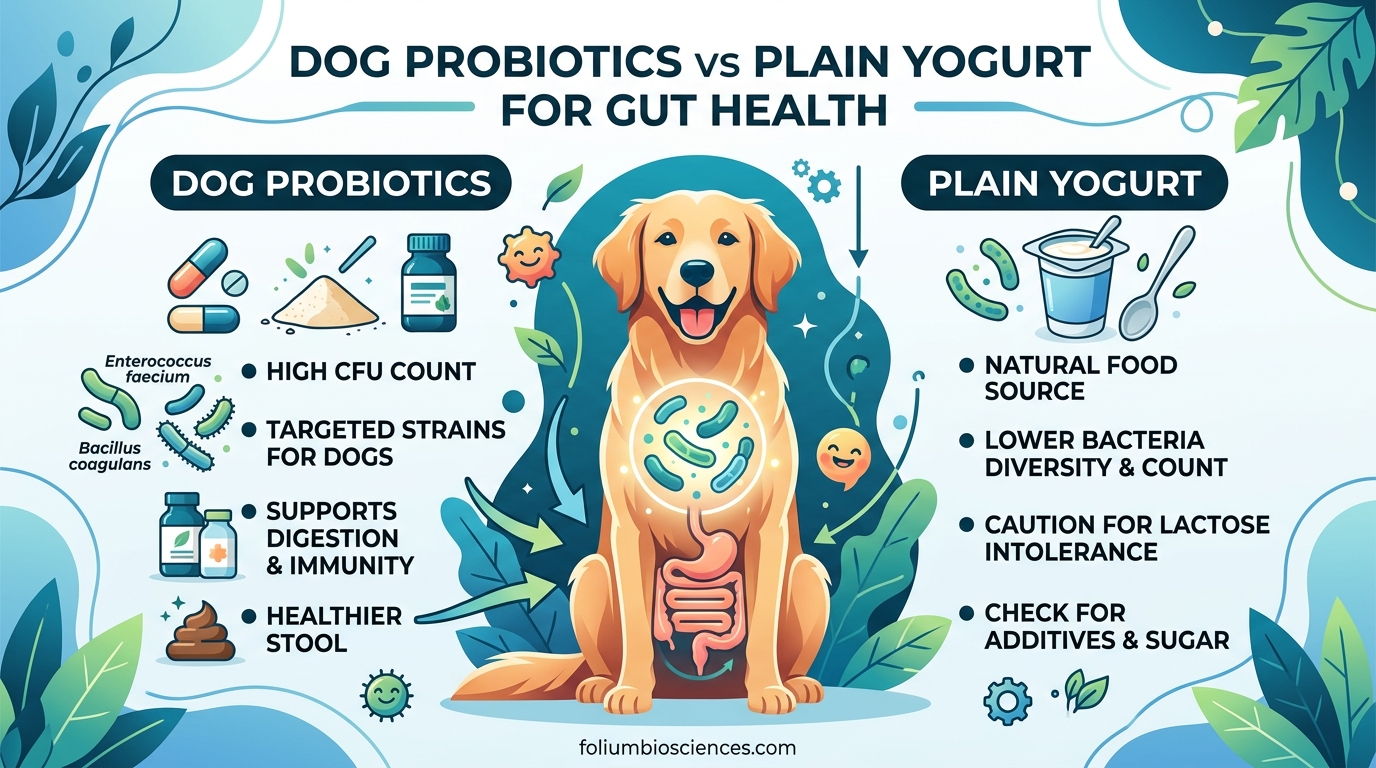
Now let’s get to the comparison that matters. When evaluating dog probiotics vs yogurt for gut health, several factors determine which option makes sense for your situation.
The CFU gap is striking. A typical serving of plain yogurt contains roughly 100 million to 1 billion CFU of probiotics. That sounds like a lot until you compare it to a standard dog probiotic supplement, which delivers 1 to 10 billion CFU – often ten times more beneficial bacteria per dose. Some high-potency canine probiotics provide up to 100 billion CFU.
Strain diversity tells a similar story. Yogurt typically contains 2 to 4 bacterial strains. Premium dog probiotics may contain 6 to 10 different strains specifically chosen for canine digestive health. This diversity matters because different strains colonize different parts of the digestive tract and perform different functions.
Cost is where yogurt seems to win at first glance. A container of plain Greek yogurt costs $3 to $5 and provides multiple servings. A quality dog probiotic supplement might cost $15 to $30 for a month’s supply. But when you calculate cost per billion CFU, probiotics often deliver better value. You’re paying for concentrated, guaranteed beneficial bacteria rather than a food product where probiotics are a secondary benefit.
Convenience depends on your dog’s preferences and your routine. Yogurt can be mixed with food or given as a treat. Some dogs love it. Others refuse it or experience digestive upset. Probiotics come in powders, chews, and capsules that can be hidden in food. They also travel better and don’t require refrigeration, though many probiotic supplements do recommend cool storage for maximum potency.
Here is a side-by-side comparison:
| Factor | Plain Yogurt | Dog Probiotic Supplements |
|---|---|---|
| CFU Count | 100 million – 1 billion per serving | 1 – 100 billion per dose |
| Strain Variety | 2-4 strains typically | 6-10+ targeted strains |
| Canine-Specific | No | Yes |
| Lactose Content | Variable (higher in regular, lower in Greek) | None |
| Storage | Refrigerated | Room temperature or refrigerated |
| Monthly Cost | $10-$20 | $15-$30 |
| Best For | Occasional digestive support, healthy dogs | Therapeutic use, chronic issues, after antibiotics |
When should you choose one over the other? Yogurt works well for healthy dogs needing occasional digestive support or as a calcium-rich treat. It’s fine for general wellness maintenance when your dog tolerates dairy well. Probiotic supplements are the clear choice for dogs with chronic digestive issues, those recovering from antibiotic treatment, or when your veterinarian recommends specific bacterial strains for therapeutic purposes.
Safety Considerations and Risks
Before adding either yogurt or probiotics to your dog’s routine, understanding the risks keeps your pet safe.
Lactose intolerance affects more dogs than many owners realize. While puppies produce lactase (the enzyme that breaks down lactose), many adult dogs produce less of it as they age. Signs of lactose intolerance include gas, bloating, diarrhea, and vomiting within 12 hours of consuming dairy. Greek yogurt contains less lactose than regular yogurt, making it the safer choice if you want to try dairy, but intolerance is still possible.
Xylitol is a deadly risk that cannot be overstated. This artificial sweetener, found in many sugar-free yogurts and foods, is toxic to dogs even in small amounts. Xylitol triggers a rapid release of insulin, causing dangerous hypoglycemia (low blood sugar) and potentially liver failure. Symptoms can appear within 30 minutes and include vomiting, weakness, lack of coordination, and seizures. Always check ingredient labels meticulously. Even “plain” yogurt can contain added sweeteners in some brands.
High fat content in some yogurts poses risks for dogs prone to pancreatitis. Full-fat Greek yogurt can contain significant fat levels that may trigger inflammation in the pancreas, especially in breeds like Miniature Schnauzers, Yorkshire Terriers, and Cocker Spaniels that are predisposed to this condition. Always choose low-fat or non-fat plain yogurt if offering it to your dog.
Probiotic supplements carry fewer risks but aren’t entirely without concerns. Some dogs experience temporary gas or loose stools when starting probiotics as their gut bacteria balance shifts. This usually resolves within a week. Dogs with compromised immune systems should only take probiotics under veterinary supervision, as introducing bacteria could theoretically cause issues in severely immunocompromised animals.
Watch for these warning signs after introducing either option: persistent diarrhea, vomiting, loss of appetite, or lethargy. Discontinue use and contact your veterinarian if symptoms persist beyond 48 hours.
Serving Guidelines and Best Practices
If you decide to try yogurt, start small and observe. For small dogs under 20 pounds, begin with 1 teaspoon. Medium dogs between 20 and 60 pounds can start with 1 to 2 tablespoons. Large dogs over 60 pounds might handle 2 to 4 tablespoons. Always introduce gradually over several days rather than jumping to a full serving immediately.
How often can you give yogurt? For healthy dogs who tolerate it well, a few times per week is reasonable. Daily yogurt isn’t necessary and may contribute to excess calorie intake. Remember that treats and additions to meals should make up no more than 10 percent of your dog’s daily caloric intake.
The best way to serve yogurt is mixed into regular food or offered as a frozen treat on hot days. Some owners stuff yogurt into Kong toys and freeze them for extended enrichment. Never give yogurt containing any fruit, honey, or flavorings – these can contain additional sugars or toxic ingredients like xylitol.
For probiotic supplements, follow the manufacturer’s dosing guidelines based on your dog’s weight. Most supplements are given daily, and many veterinarians recommend continuing probiotics for several weeks after antibiotic treatment to help rebuild healthy gut bacteria. Store supplements according to package instructions – some require refrigeration to maintain potency, while others are stable at room temperature.
Timing matters with probiotics. Give them with food to help the bacteria survive stomach acid. If your dog is on antibiotics, separate probiotic administration by at least 2 hours from antibiotic doses. Antibiotics kill bacteria indiscriminately, so you want the probiotics to have the best chance of colonization.
Goat kefir deserves mention as an alternative for dogs who don’t tolerate cow’s milk yogurt. This fermented goat milk product contains probiotics and typically has lower lactose levels than cow’s milk yogurt. Many dogs who react to regular yogurt handle goat kefir without issues.
Frequently Asked Questions
Can I give my dog plain yogurt as a probiotic?
What is the best probiotic for a dog’s gut?
Is it okay for dogs to eat yogurt every day?
Is yogurt good for dogs with pancreatitis?
Conclusion
Choosing between dog probiotics vs yogurt comes down to your dog’s individual needs and health status. Plain yogurt offers a convenient, affordable way to introduce some beneficial bacteria along with calcium and protein. It works well for healthy dogs needing occasional digestive support.
However, for dogs with ongoing digestive issues, those recovering from illness or antibiotics, or when you want guaranteed therapeutic-level probiotic support, supplements are the superior choice. The higher CFU counts, strain diversity, and canine-specific formulations provide targeted benefits that yogurt simply cannot match.
Whichever option you choose, start slowly, watch for adverse reactions, and consult your veterinarian for personalized advice. Your dog’s gut health is worth the extra attention to get it right.