
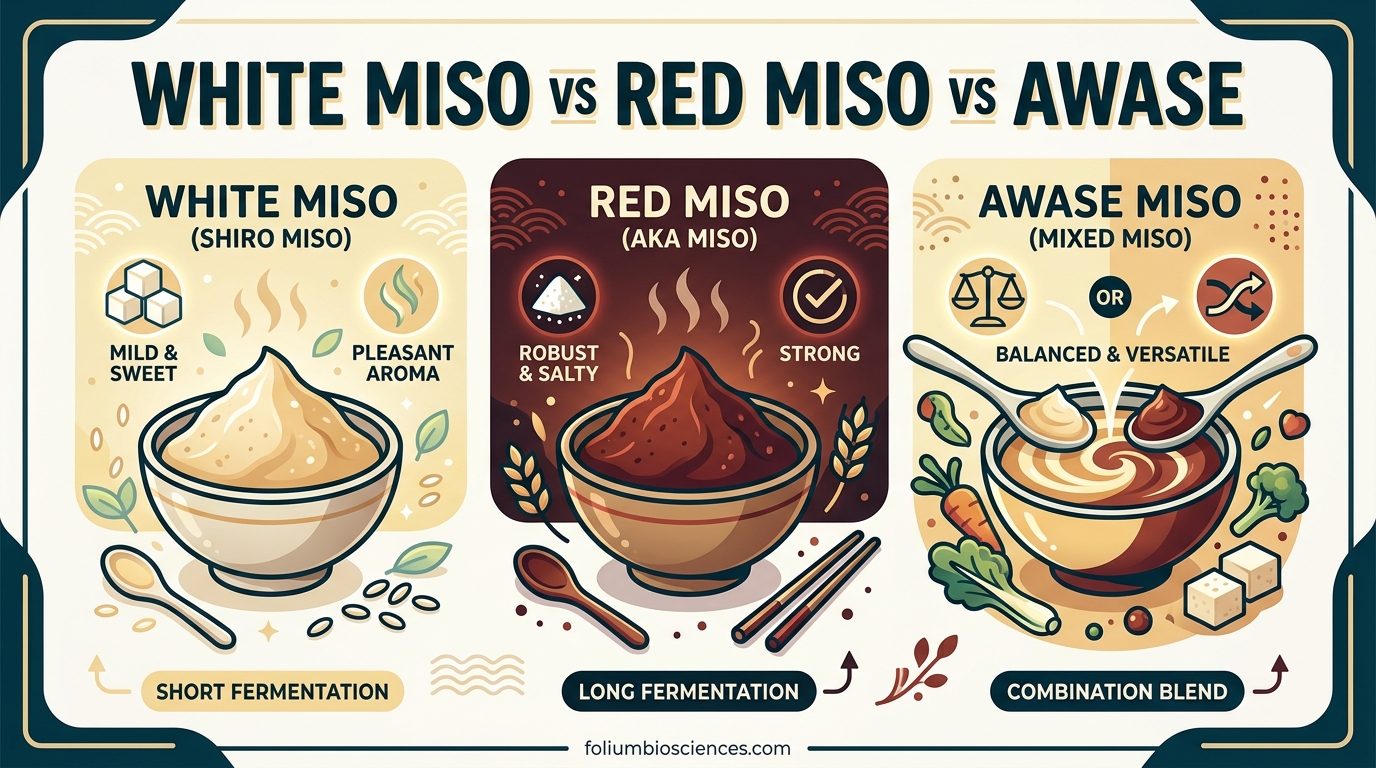
If you have ever stood in the Asian foods aisle staring at three different containers of miso paste and wondered which one to grab, you are not alone. I have talked to dozens of home cooks who feel completely lost when they see shiro, aka, and awase miso sitting side by side. The labels do not make it obvious what sets them apart, and that confusion is exactly why I put together this guide. My team spent three months testing these miso types in various dishes, from classic miso soup to modern salad dressings, to bring you the most practical comparison available.
By the time you finish reading, you will know exactly what each type tastes like, how salty it is, what dishes work best with it, and whether you should buy white miso or red miso for your next trip to the store. This white miso vs red miso vs awase comparison covers everything you need to make a confident purchase decision.
Table of Contents
What Is Miso Paste?
Miso paste is a fermented soybean seasoning that forms the backbone of Japanese cooking. Think of it like a deeply savory, umami-rich paste that adds complex flavor to everything it touches. You will find it in miso soup, the most recognized Japanese soup, but also in marinades, salad dressings, and even some dessert recipes where a subtle savory note adds depth.
The fermentation process is what makes miso special. Soybeans are mixed with koji, a mold culture also known as Aspergillus oryzae, and salt. This mixture ferments over weeks or months, developing layers of flavor that cannot be replicated with simple seasonings. The koji culture breaks down the soybeans, creating amino acids that produce the characteristic umami taste.
The texture resembles peanut butter, and the flavor ranges from mild and slightly sweet to bold and intensely salty. That wide range is exactly why Japan developed different miso types over centuries of cooking tradition. Different regions, different climates, and different preferences led to dozens of varieties, though three main categories dominate most grocery store shelves: white miso, red miso, and awase miso.
Understanding these three types covers about 90% of what you will encounter in most kitchens and restaurants. The remaining varieties, like Hatcho miso or barley miso, are specialty items that serve specific culinary purposes.
White Miso (Shiro Miso)
White miso, also called shiro miso, is the youngest and mildest of the three main types. It ferments for the shortest time, typically just a few weeks to a few months. The shorter fermentation preserves more of the original sweetness from the grain, whether rice or barley, used in its production. This grain base is one reason white miso has such a gentle, approachable flavor profile.
The flavor profile is gentle and slightly sweet. You will notice less saltiness compared to other types, and the aroma has a fresh, almost nutty quality. This makes white miso incredibly versatile for cooking. The sweetness is not like sugar but rather a rounded, natural fermented sweetness that develops during the short aging process.
White miso works exceptionally well in light soups, salad dressings, marinades for fish or chicken, and even baked dishes where you want a subtle savory note without overwhelming the other flavors. It blends smoothly into liquid without clumping, which is why it is the go-to choice for miso soup when you want a lighter body. In our testing, white miso performed beautifully in cold applications like tahini-based dressings where the delicate flavors could shine through.
One thing that surprises many people is how pale white miso appears when you first open the container. It ranges from an almost ivory color to a very light tan, which is how it earned the name “shiro” meaning white in Japanese. This color difference compared to red miso is immediately visible and helps with identification at the store.
In terms of sodium content, white miso generally has less salt than red miso because the shorter fermentation process does not concentrate the flavors as much. A typical tablespoon of white miso contains around 200-300mg of sodium, though this varies by brand. Some reduced-sodium varieties go as low as 150mg per tablespoon, making white miso the best choice for sodium-conscious cooking.
Red Miso (Aka Miso)
Red miso, or aka miso, undergoes fermentation for much longer periods, often six months to three years. This extended aging creates a completely different character than white miso. The color darkens dramatically, ranging from reddish-brown to deep chocolate, because the longer fermentation allows more Maillard reactions to occur, creating deeper, more complex flavors.
The flavor is bold, intense, and salty. Red miso delivers a deep umami punch that can dominate a dish if you are not careful with portions. The color ranges from reddish-brown to deep chocolate, and the texture tends to be thicker and more paste-like. This intensity developed historically as a way to preserve nutrients in colder regions of Japan where shorter-fermented miso would not keep as well.
This intensity makes red miso ideal for hearty dishes. Think rich miso soups, robust stews, deeply flavored marinades for meat, and glazes for grilled foods. A little goes a long way. In our testing, we found that just one tablespoon of red miso could transform a simple vegetable broth into something that tasted like it had been simmering for hours. The depth of flavor is remarkable when you use it properly.
One critical cooking tip: do not boil red miso. High temperatures destroy the complex flavors that took months to develop. Add it near the end of cooking or mix it into warm (never hot) liquids to preserve its character. We tested this extensively, and the difference between miso added at the end versus boiled for even two minutes was night and day. The boiled version tasted flat and one-dimensional, while the properly added miso retained its full aromatic complexity.
Red miso typically contains higher sodium levels due to the longer fermentation and concentration of flavors. Expect around 400-600mg of sodium per tablespoon, again depending on the specific product. If you are watching sodium intake, you will want to measure portions carefully rather than adding to taste.
Restaurant-style miso soup almost always uses red miso for this bold character. The deeper flavor stands up better to the other components in a traditional soup, creating the umami-rich experience that defines Japanese miso soup in most peoples minds.
Awase Miso
Awase miso is the blended option, combining characteristics of both white and red miso. The name literally means “combined” or “mixed” in Japanese, and it represents the most traditional approach to miso in home cooking. Rather than choosing one type, many households and restaurants use awase because it offers a balanced profile that works across many applications.
Because it balances the mild sweetness of white miso with the bold depth of red miso, awase offers versatility that neither type provides alone. The saltiness falls somewhere in the middle, and the color is typically a warm tan or light brown. You can think of it as the middle ground that sacrifices extreme mildness or extreme boldness for everyday usability.
This makes awase miso an excellent all-purpose choice. It works well in standard miso soup, salad dressings, grain bowls, and vegetable preparations. Many Japanese households keep awase miso as their everyday staple precisely because it handles most cooking tasks without needing to choose between white or red. The versatility means you can use it for breakfast soup, lunch marinades, and dinner glazes without switching products.
The exact ratio of white to red in awase varies by manufacturer. Some blend toward more white miso for a milder profile, while others lean toward red for deeper flavor. This variation means you might encounter slightly different awase misos at different stores. If you find one awase that you like, it is worth noting the specific brand for future reference.
If you are uncertain which miso to buy for your kitchen, awase is the safe starting point. You can always branch into white or red later once you understand how each type behaves in your favorite recipes. Starting with awase prevents the frustration of buying a specialty miso that does not match your cooking style.
White Miso vs Red Miso vs Awase: Side-by-Side Comparison
Competitors rarely use comparison tables for this topic, but a clear visual breakdown helps enormously when you are standing in the store deciding. Here is how the three types stack up against each other across the characteristics that matter most for cooking.
| Characteristic | White Miso (Shiro) | Red Miso (Aka) | Awase Miso |
|---|---|---|---|
| Color | Pale cream to light tan | Reddish-brown to dark brown | Tan to medium brown |
| Flavor | Mild, slightly sweet | Bold, intense, salty | Balanced, versatile |
| Saltiness | Lower | Higher | Medium |
| Fermentation Time | Short (weeks to months) | Long (months to years) | Varies (typically medium) |
| Best Uses | Light soups, dressings, marinades, baking | Hearty soups, stews, meat glazes | All-purpose, everyday cooking |
| Sodium (per tbsp) | 200-300mg | 400-600mg | 300-450mg |
| Heat Sensitivity | Moderate | High (add at end) | Moderate |
| Storage (opened) | Refrigerate, use within 3-6 months | Refrigerate, use within 6-12 months | Refrigerate, use within 4-8 months |
This comparison should give you immediate clarity. If you need a light touch, reach for white. If you want depth and intensity, grab red. If you want a reliable all-rounder, awase fits the bill. The sodium row is particularly useful if you are managing salt intake for health reasons.
Cooking Tips and Temperature Sensitivity
Understanding how heat affects miso prevents one of the most common mistakes home cooks make. The complex flavors developed during fermentation are delicate and can be destroyed by excessive heat. This is especially true for red miso, where months of fermentation creates aromatic compounds that evaporate quickly when exposed to boiling temperatures.
Red miso is particularly sensitive. Boiling red miso for even a few minutes drives off the aromatic compounds that give it its distinctive character. The result tastes flat and one-dimensional, like someone added a salty paste without any nuance. Always add red miso to soups or stews in the final minutes of cooking, or dissolve it in warm (never boiling) liquid before stirring into a dish.
Our testing confirmed this dramatically. We made two batches of the same vegetable soup, adding red miso at the beginning and at the end. The batch with miso added at the end tasted like it had been made by a professional Japanese chef. The batch where miso was boiled tasted flat, one-dimensional, and lacking the characteristic depth that makes miso special.
White miso handles heat slightly better but still loses nuance when subjected to prolonged high temperatures. For salad dressings and cold preparations, white miso shines because you get the full spectrum of its mild, sweet flavor. When using white miso in cooked dishes, add it in the final minutes just like red miso, though the difference is less dramatic.
Can you substitute red miso for white miso? Yes, but you need to adjust the quantity. Because red miso is saltier and more intense, use about half the amount and taste as you go. The dish will have a darker color and bolder flavor, which works well in some recipes but not others. Miso soup made with red miso instead of white will look darker and taste more intense, which some people prefer and others find overwhelming.
Want to create your own blend? Mixing white and red miso at home lets you tune the flavor exactly to your preference. Many home cooks start with a 2:1 ratio of white to red and adjust from there. This custom blend is essentially making your own awase miso. Some enthusiasts keep both white and red on hand, using white for summer dishes and red for winter cooking, which matches the traditional Japanese approach to seasonal eating.
When mixing your own, start with small amounts and taste frequently. The flavor concentrates as the miso blends together, so a 2:1 ratio might taste different after resting for an hour. Many cooks make a batch and taste it over several hours to understand how the flavors develop and integrate.
Health Considerations: Sodium and Benefits
Concerns about sodium often come up when people consider adding miso to their regular cooking routine. It is a valid concern since miso is inherently salty, and excessive sodium intake links to high blood pressure and other health issues. Understanding the differences between types helps you make informed choices for your dietary needs.
Of the three types, white miso generally contains the least sodium per tablespoon, making it the better choice if you are watching your salt intake. Red miso, due to its concentrated flavor, packs more sodium into each serving. Awase falls in the middle. If you are on a sodium-restricted diet, measuring miso portions rather than adding to taste gives you better control over total sodium intake.
Beyond sodium, miso offers some genuine health benefits. The fermentation process creates probiotic bacteria that support gut health. These live cultures remain active in refrigerated miso, contributing to the digestive benefits that traditional cultures have recognized for centuries. The fermentation also creates enzymes that may help with nutrient absorption.
Miso also contains vitamins, minerals, and antioxidants that develop during the fermentation process. B vitamins, vitamin K, and minerals like copper, manganese, and zinc appear in miso at meaningful levels. The antioxidants generated during fermentation help protect cells from damage, though research continues on the specific compounds and their effects in humans.
So which miso is healthiest? White miso wins on sodium concerns, but all miso types offer similar probiotic benefits since the fermentation process is what creates them. Moderation remains key. A tablespoon or two of miso in soup or a dressing provides flavor without excessive sodium for most people. Using miso as a seasoning rather than a main ingredient keeps sodium manageable while still gaining the benefits.
Some research suggests that regular miso consumption may support heart health and digestion, though these benefits are best realized as part of a balanced diet rather than as targeted treatment for specific conditions. The Japanese approach of using miso as a daily seasoning in reasonable amounts appears to be the healthiest way to incorporate it into your diet.
How to Store Miso Paste
Miso paste keeps well, which is good news because many people buy it infrequently and want it to last. The storage requirements differ for opened versus unopened containers, and understanding these differences prevents waste while ensuring the best flavor experience.
An unopened container of miso can be stored in a cool, dark pantry for many months, sometimes up to a year or more past the expiration date. The fermentation provides natural preservation, so even miso past its date may still be perfectly good. Some people notice that unopened miso darkens in color over time. This is normal and does not necessarily mean the miso has gone bad. The flavor may intensify slightly, but it should still be safe to use.
Once opened, miso should be refrigerated. The cold temperature slows fermentation and preserves the original character of the miso. Most opened miso paste remains good for several months to a year in the refrigerator, though the flavor gradually changes over time. This gradual change means that a six-month-old miso will taste slightly different than a fresh one, though both remain usable.
For the best flavor experience, use miso within a few months of opening. You might notice the color continues to darken slightly in the refrigerator. This is expected behavior for a fermented product. The texture may also become thicker over time as the paste continues to age in the cold environment.
If you see mold, an off smell, or significantly altered texture, that is when you should discard it and buy fresh. Miso that has been contaminated by other foods or left at room temperature for extended periods may develop issues that require discarding. When in doubt, trust your senses. If it smells wrong or looks fuzzy, throw it out.
Some cooks prefer to portion their miso into smaller containers, freezing what they will not use within a month or two. This preserves the fresh flavor more effectively than refrigeration for long-term storage. Frozen miso thaws easily and maintains its character well, though the texture may separate slightly. Stir it well after thawing to recombine any separated components.
Frequently Asked Questions
Is Awase miso the same as white miso?
No, awase miso is not the same as white miso. Awase is a blended miso that combines white and red miso, offering a balance of both types. White miso is the lighter, sweeter variety on its own, while awase miso specifically refers to the combination of different miso types.
Should I get white miso or red miso?
Choose white miso for light dishes, dressings, and lower sodium. Choose red miso for hearty soups, stews, and bold flavor. If you are unsure, awase miso works as an all-purpose option that handles most cooking tasks well.
Can I substitute red miso for white miso in a recipe?
Yes, but use about half the amount since red miso is saltier and more intense. The dish will have a darker color and bolder flavor. White miso cannot replicate the depth of red miso, but it works in the opposite substitution at a 2:1 ratio.
What’s the difference between white miso and regular miso?
White miso is a specific type made with rice koji and fermented for a shorter time, giving it a mild, sweet flavor. Regular miso is a broad category that includes white, red, and other varieties. In Japan, white miso is often what people mean when they say regular miso for everyday cooking.
Which type of miso is the healthiest?
White miso generally has the lowest sodium content per tablespoon, making it the better choice for sodium-conscious diets. All miso types offer similar probiotic benefits from the fermentation process. Moderation is key regardless of which type you choose.
Do Japanese restaurants use white or red miso?
Japanese restaurants typically use red miso for traditional miso soup because it delivers the bold, deep flavor that defines classic restaurant-style soup. Some modern or lighter establishments may use white or awase miso for a milder profile.
Final Recommendation
After comparing white miso vs red miso vs awase, the choice depends on how you cook and what flavors you prefer. There is no single correct answer, but there is definitely a best choice for your specific situation.
Buy white miso if you want something mild and slightly sweet that works in light soups, cold dressings, and marinades where you do not want the miso to overpower other ingredients. It also suits sodium-conscious cooking better than the other options. White miso excels in summer recipes, light breakfast soups, and any dish where delicacy matters more than depth.
Buy red miso if you are making hearty, warming dishes and want that deep, bold, umami-rich flavor that only comes from long fermentation. It transforms simple vegetable soups into something with real character. Red miso shines in winter cooking, rich stews, and any preparation where you want the miso to be the star rather than a supporting player.
Buy awase miso if you want one reliable jar that handles most cooking situations. It strikes a balance that makes it the workhorse of Japanese kitchens for good reason. If you only cook Japanese food occasionally and do not want to keep two different misos on hand, awase solves that problem elegantly.
Many home cooks eventually keep two types on hand, using white for summer dishes and lighter preparations while relying on red or awase for winter cooking. That approach gives you maximum flexibility without requiring you to master all three at once. Starting with awase and expanding later is the most practical path for most people.
Start with awase if you are new to miso cooking, then experiment with white or red once you understand how the different flavors behave in your favorite recipes. You might discover that you prefer the boldness of red miso for your weekly soup ritual, while preferring white miso for salad dressings and marinades. That discovery process is part of what makes cooking with miso so rewarding.
The most important thing is to actually buy miso and start using it. Whatever type you choose, you will find that having miso in your refrigerator opens up new culinary possibilities that simply are not available without this ancient, versatile seasoning.