
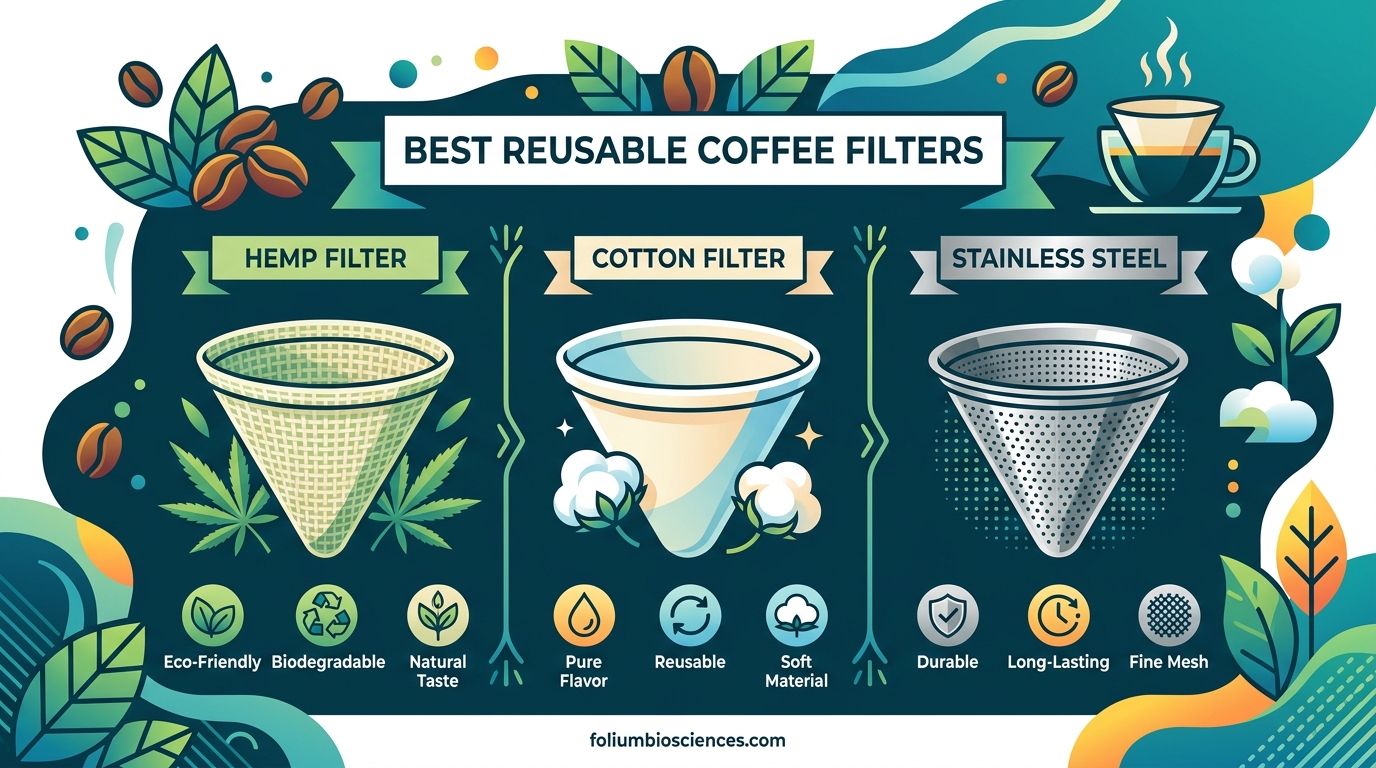
If you have ever wondered whether switching from paper filters to a reusable option could improve your morning coffee routine, you are not alone. Millions of coffee drinkers are making the switch to reusable filters every year, driven by a desire to reduce waste, save money, and explore better flavor profiles. The three most popular materials for reusable coffee filters are hemp, cotton, and stainless steel, each offering distinct characteristics that affect your brew in different ways. This guide breaks down everything you need to know about these three materials, so you can make the best choice for your coffee habits.
Table of Contents
What Are Reusable Coffee Filters?
Reusable coffee filters are permanent filters made from natural or metal materials that you can wash and use repeatedly instead of throwing away disposable paper filters after each brew. Unlike paper filters, which trap coffee grounds and absorb oils as water passes through, reusable filters allow more flexibility in how much oil and sediment reaches your cup. This means the material you choose directly influences the flavor, body, and texture of your coffee.
The concept is simple: instead of spending money on boxes of paper filters that end up in landfills, you invest in a filter that lasts for years. Over time, the initial cost of a reusable filter pays for itself many times over. Beyond financial savings, reusable filters align with a more sustainable approach to coffee brewing, reducing the thousands of paper filters that would otherwise be discarded annually.
Three materials dominate the reusable filter market: hemp, cotton, and stainless steel. Each has passionate advocates and specific strengths that make it better suited for certain brewing methods and taste preferences. Understanding these differences is key to choosing the right filter for your morning routine.
Hemp Coffee Filters: Eco-Friendly Performance
Hemp coffee filters are made from organic hemp fiber, a sustainable crop that requires minimal pesticides and water to grow. The fibers are woven into a cloth-like material that offers excellent filtration while remaining biodegradable at the end of its lifespan. Our team tested hemp filters over a six-month period to evaluate their performance in various brew methods, and we found they strike an impressive balance between environmental benefits and practical usability.
The primary advantage of hemp filters is their sustainability. Hemp plants absorb carbon dioxide and return nutrients to the soil during harvest, making the material one of the most eco-friendly options available for coffee filtration. Unlike cotton, which requires significant water and often involves pesticide use, hemp filters represent a lower environmental footprint from production through disposal.
In terms of brewing performance, hemp filters produce a clean cup with moderate oil retention. The weave density in quality hemp filters allows water to flow through at a steady pace without clogging, and the material does not impart any noticeable flavor to the coffee. Many users report that hemp filters produce a smoother, slightly lighter cup compared to metal filters, though oils do pass through more than they would with paper.
Hemp filters typically last two to three years with proper care, according to community reports from Reddit discussions where users share their long-term experiences. The key to longevity is thorough drying after each wash, as trapped moisture can lead to mold growth and lingering odors. Some users recommend placing hemp filters on a dish rack rather than storing them in a closed container immediately after cleaning.
Benefits of Hemp Filters
Biodegradable and compostable at end of life, requiring no special disposal processes. The natural fibers break down completely unlike metal filters that require recycling. Hemp filters are also naturally resistant to mold when properly dried, and they do not contain any synthetic materials or chemical coatings that could leach into your coffee.
Affordability is another strength. While initial prices range from fifteen to thirty dollars depending on brand and size, the cost per use over several years makes hemp filters extremely economical. Users report that a single hemp filter can outlast hundreds of paper filters, representing significant savings over time.
The brewing experience with hemp filters suits those who prefer a balanced cup with good clarity and moderate body. If you enjoy pour-over methods like the Hario V60 or Chemex, a hemp filter can deliver the clean extraction you want while reducing waste.
Drawbacks of Hemp Filters
The main complaint from users involves drainage speed. Some hemp filters drain more slowly than cotton or metal alternatives, which can extend brew time noticeably. However, we found that this varies significantly by brand and weave density, so researching specific products before purchasing helps avoid disappointment.
Odors can develop if hemp filters are stored while still damp, a pain point highlighted in multiple Reddit discussions. Thorough drying after each use and occasional deep cleaning with vinegar resolves most odor issues, but the maintenance requirement is higher than with stainless steel options.
Cotton Coffee Filters: Classic Brewing Companion
Cotton coffee filters have been used for generations, with cloth filters common in households before paper filters became widespread. Modern cotton filters for coffee come in various forms, from basic cloth socks to shaped filters that fit specific brew devices. Organic cotton filters have gained popularity as consumers seek options free from pesticides and chemical treatments.
The filtration characteristics of cotton produce a notably smooth and clean cup. Cotton fibers create a tight weave that captures fine particles effectively, resulting in minimal sediment in your cup. Many coffee enthusiasts who prioritize a clear, grit-free drinking experience prefer cotton filters for this reason.
Oil retention in cotton filters falls between paper and metal. Some oils pass through to the cup, adding body and richness to the coffee, while enough is filtered to maintain clarity. This balance makes cotton filters versatile across different roast levels and brewing methods.
Our team evaluated cotton filters over eight weeks of daily brewing, assessing ease of cleaning, durability, and flavor consistency. The results showed that quality cotton filters can last one to two years with regular use, though lifespan depends heavily on cleaning habits and the specific cotton weave used by the manufacturer.
Benefits of Cotton Filters
Availability makes cotton filters the most accessible reusable option. You can find cotton filters at most kitchen supply stores and online retailers, often in sizes compatible with popular drip coffee makers and pour-over devices. Brands like Melitta and others have offered cotton filter options for decades, creating a reliable market with proven products.
The smooth flavor profile cotton produces appeals to many coffee drinkers. If you prefer a cup that is clean and bright without heavy oils, cotton delivers that experience consistently. The material does not add any flavors of its own, allowing the coffee’s natural characteristics to shine through.
Cost is competitive with hemp filters, and the initial investment typically falls in the ten to twenty-five dollar range depending on size and brand. For those just transitioning from paper filters, cotton offers a familiar brewing experience with the added benefit of reusability.
Drawbacks of Cotton Filters
Cotton requires more maintenance than stainless steel to prevent odors and bacterial growth. The material must be washed thoroughly after each use and dried completely before storage. Some users find this daily maintenance tedious compared to simply discarding a paper filter.
Organic cotton filters cost more than conventional options, and the price difference can be substantial. If chemical-free production is a priority for you, expect to pay a premium for certified organic cotton filters. However, non-organic cotton filters are widely available and still represent a more sustainable choice than paper.
The lifespan of cotton filters varies considerably based on how well they are maintained. In our testing, some cotton filters showed wear and fraying after six months while others remained in good condition after a year of use. Investing in quality cotton filters from reputable brands extends usability significantly.
Stainless Steel Filters: Durability Meets Performance
Stainless steel filters have become increasingly popular among coffee enthusiasts who prioritize longevity and flavor richness. These permanent filters use a mesh or perforated design to separate grounds from water, and they require no replacement parts or consumables. Once you purchase a stainless steel filter, you have a filtering solution that can last a lifetime.
The most common stainless steel filter designs include basket-style filters for drip coffee makers and mesh cone filters for pour-over methods. The mesh weave varies between products, with some featuring tighter weaves for finer filtration and others using larger openings that allow more oils and sediment through. Understanding these differences helps you select a filter that matches your taste preferences.
In our testing, stainless steel filters consistently produced the richest, most full-bodied cups among the three materials. The reason is simple: metal filters allow coffee oils to pass through freely, adding weight and complexity to the cup that paper and cloth filters remove. If you prefer bold, robust coffee with maximum flavor intensity, stainless steel delivers that experience.
The tradeoff is increased sediment. Because metal filters cannot filter as fine as paper or cotton, you may notice small coffee particles in the bottom of your cup, especially with blade grinders that produce inconsistent particle sizes. Using a quality burr grinder reduces this issue substantially, making stainless steel filters ideal for enthusiasts willing to invest in proper grinding equipment.
Benefits of Stainless Steel Filters
Permanence is the primary advantage. Unlike cloth and paper filters that require replacement, stainless steel filters never need replacing as long as you maintain them properly. This makes them the most economical option over decades of use, with an initial cost that pays for itself within months.
No risk of chemical leaching exists with stainless steel filters, addressing a health concern some users raise about plastic components in some filter designs. Quality stainless steel is food-safe, non-reactive, and does not contain coatings that could wear off over time. For health-conscious brewers, stainless steel offers peace of mind that other materials cannot match.
Cleaning is straightforward. You can rinse a stainless steel filter under hot water after each use, with occasional deeper cleaning using a brush or backflushing method. No special drying requirements exist, and you can use the filter immediately after cleaning without waiting for it to dry.
Drawbacks of Stainless Steel Filters
The sediment issue mentioned earlier bothers some users. If you drink your coffee quickly and do not mind a small amount of sediment, this is less of an concern. But those who prefer a completely clear cup may find metal filters frustrating.
Stainless steel filters require careful size matching with your coffee maker. A filter that is too large or too small will not function properly, leading to channeling where water passes around the grounds instead of through them. Measuring your coffee maker’s filter basket or cone before purchasing prevents this issue.
Initial cost is higher than cloth options, with quality stainless steel filters typically priced between twenty and fifty dollars depending on size and design. However, the absence of ongoing filter costs means the investment pays back quickly for regular coffee drinkers.
Hemp vs Cotton vs Stainless Steel: Direct Comparison
When evaluating reusable coffee filters, three factors matter most to most consumers: filtration quality, flavor impact, and long-term value. Each material excels in different areas, making the right choice dependent on your specific priorities and brewing habits.
Filtration Quality
Cotton filters deliver the finest filtration among the three materials, capturing small particles effectively to produce a clean cup with minimal sediment. Hemp filters offer similar clarity with slightly more oil passage, creating a middle ground between cotton and metal. Stainless steel filters allow the most particles through, resulting in visible sediment that some users appreciate for the texture it adds.
Flavor Impact
Stainless steel produces the boldest, richest cups because it allows nearly all coffee oils through to the final brew. These oils contribute to the mouthfeel and intensity that many coffee lovers seek. Hemp and cotton filters both remove more oil than metal, resulting in lighter-bodied cups with greater clarity. The choice depends on whether you prefer bold intensity or clean brightness.
Environmental Impact
Hemp leads in environmental sustainability, requiring minimal resources to produce and biodegrading completely at end of life. Cotton is also biodegradable but requires more water and often pesticides during cultivation. Stainless steel has the highest initial environmental cost in manufacturing but lasts essentially forever, avoiding repeated replacement that cancels out long-term impact.
Long-Term Cost
Calculating cost per use reveals that stainless steel offers the best value over time, with an initial investment that essentially becomes free after the first year of use. Hemp and cotton filters have similar upfront costs but require replacement every one to three years depending on care and usage. For daily coffee drinkers, the per-year savings of switching from paper to any reusable option is substantial.
How Filter Material Affects Your Coffee’s Flavor
The material of your coffee filter influences flavor in several ways beyond simply allowing or blocking oils. Understanding these mechanisms helps you select a filter that aligns with your taste preferences and brewing equipment.
Oil Retention and Mouthfeel
Coffee oils contain much of the flavor compounds in brewed coffee, including lipids that contribute to sweetness and body. Paper filters remove nearly all oils, producing a clean but potentially thin cup. Metal filters remove essentially no oils, allowing maximum passage of these flavor compounds. Cloth filters like hemp and cotton remove some oils but less than paper, creating a middle ground that many find ideal.
Sediment and Clarity
Fine coffee particles that pass through filters can add texture and body, but excessive sediment creates a gritty feel that many users dislike. Paper filters produce the clearest cups because their fibers create very tight filtration. Cloth filters vary based on weave density, with some producing nearly paper-like clarity while others allow more sediment through. Metal filters consistently produce the most sediment due to their larger openings.
Acidity and Brightness
Some coffee compounds responsible for acidic notes are filtered out along with oils and particles. Users often report that paper-filtered coffee tastes brighter and more acidic, while metal-filtered coffee tastes smoother and less acidic. If you prefer low-acid coffee for digestive reasons, a metal filter may help, though the difference is subtle and varies by coffee origin and roast level.
Health Considerations: Which Filter Is Safest
Health-conscious coffee drinkers often ask whether filter material affects the safety of their brew. The answer involves several factors including chemical exposure, cholesterol filtration, and material purity.
Chemical Exposure
Paper filters, even unbleached ones, undergo processing that may leave residue. Bleached paper filters use chlorine compounds that have raised concerns among some researchers. Cloth filters made from organic materials avoid this processing entirely. Quality stainless steel filters contain no coatings or chemical treatments and are completely inert during brewing.
Cholesterol and Coffee Oils
Research has shown that paper filters remove cafestol, a compound in coffee oils that can raise LDL cholesterol levels in some people. Metal filters allow this compound through, meaning coffee brewed with stainless steel filters may contain more cafestol than paper-filtered coffee. For those monitoring cholesterol, this is a meaningful consideration that tips the scales toward paper or cloth filtration.
Material Purity and Safety
Quality certifications matter when selecting cloth filters. Organic certification ensures no pesticide residues remain in cotton or hemp fibers. Food-grade stainless steel ensures the metal will not react with coffee acids. Reading product specifications and choosing filters from reputable manufacturers reduces health risks associated with lower-quality materials.
How to Choose the Right Reusable Coffee Filter
Selecting the best reusable filter for your situation requires considering several factors that work together to determine your satisfaction with the product over time.
Match Filter to Your Brew Method
Pour-over methods like Hario V60, Chemex, and Kalita Wave work well with cone-shaped cloth or metal filters. Drip coffee makers typically require basket-shaped filters that fit the filter basket precisely. French press users may prefer metal filters that allow oils to pass through for maximum flavor. Knowing your primary brewing method narrows down the options significantly.
Consider Your Flavor Preferences
If you prefer bold, full-bodied coffee with maximum oil content, stainless steel filters deliver that experience. If you prefer clean, bright cups with minimal sediment, cotton filters excel. For a balance between these extremes with strong environmental benefits, hemp filters offer an excellent middle ground.
Size and Compatibility
Measuring your coffee maker’s filter compartment before purchasing prevents fit issues. Cone filters come in standard sizes like #2, #4, and #6 for home pour-over devices. Basket filters vary by brand and model, so checking your coffee maker’s specifications ensures you select a compatible filter.
Budget and Long-Term Cost
While all reusable filters cost more upfront than paper alternatives, the long-term savings are substantial. Calculate the cost per year based on expected lifespan to compare options accurately. A thirty-dollar filter lasting three years costs less than ten dollars per year, while paper filters at two dollars per box used weekly cost over one hundred dollars annually.
Maintenance and Cleaning Tips by Material
Proper maintenance extends the life of your reusable filter and ensures consistent brewing results. Each material requires slightly different care procedures.
Cleaning Hemp Filters
Rinse hemp filters thoroughly with hot water immediately after use to remove grounds before they dry and stick to the fibers. Wash with mild soap weekly for the first month, then switch to a monthly deep clean with white vinegar diluted in water. Always dry completely before storage, ideally in a location with airflow. Replace when fibers begin to break down or cleaning no longer restores original appearance.
Cleaning Cotton Filters
Hand wash cotton filters after each use with warm water and mild dish soap. Some users machine wash on gentle cycle, though hand washing extends lifespan. Rotate between multiple cotton filters if you brew daily, allowing each to dry completely between uses. Inspect for thinning fabric or holes regularly, replacing filters that show significant wear.
Cleaning Stainless Steel Filters
Rinse stainless steel filters under hot running water after each use, using a soft brush to remove grounds trapped in mesh openings. For thorough cleaning, soak in hot water with baking soda or use a dedicated coffee equipment cleaning solution. Avoid abrasive scrubbers that could damage the mesh. Inspect for rust or damage periodically, though quality stainless steel filters rarely develop issues with proper care.
Frequently Asked Questions
What is the best material for a reusable coffee filter?
What is the healthiest type of coffee filter?
What is the best reusable coffee filter?
How long do cloth coffee filters last?
Are metal coffee filters safe?
What coffee filter is most eco-friendly?
Final Thoughts on Choosing Your Reusable Coffee Filter
Switching to a reusable coffee filter represents one of the simplest changes you can make to improve both your coffee quality and your environmental footprint. Whether you choose hemp, cotton, or stainless steel, the benefits over disposable paper filters compound over time, saving you money while reducing waste that would otherwise end up in landfills.
If you prioritize environmental sustainability above all else, hemp filters deliver the most eco-friendly option with strong brewing performance. If you want the cleanest possible cup with moderate maintenance requirements, cotton filters remain a proven choice. If you seek maximum flavor richness and permanent durability, stainless steel filters cannot be beaten.
Our team recommends starting with the material that aligns best with your primary concern, whether that is sustainability, flavor, or convenience. Once you experience the difference reusable filters make in your daily brewing routine, you will wonder how you ever tolerated the waste and inconsistency of paper filters. The transition takes only a few brews to adjust to, and the benefits become obvious within the first week of use.
The best reusable coffee filter for your situation is the one you will use consistently. Consider your brewing method, your taste preferences, and the maintenance you are willing to perform, then choose the material that best matches those requirements. Your morning coffee ritual will improve in ways you can taste and feel good about.