
Table of Contents
Table of Contents
- Introduction
- Taxonomy and Botanical Classification
- Leaf Shape and Texture Differences
- Petiole Differences: The Key Identifier
- Aerial Roots: One vs Multiple
- New Growth: Cataphylls Explained
- Care Requirements Comparison
- Light Requirements
- Watering Differences
- Temperature and Humidity
- Soil and Potting Requirements
- Propagation Techniques
- The Satin Pothos Confusion: Scindapsus
- Toxicity Warning: Pets and Children
- Frequently Asked Questions
- Conclusion
Introduction
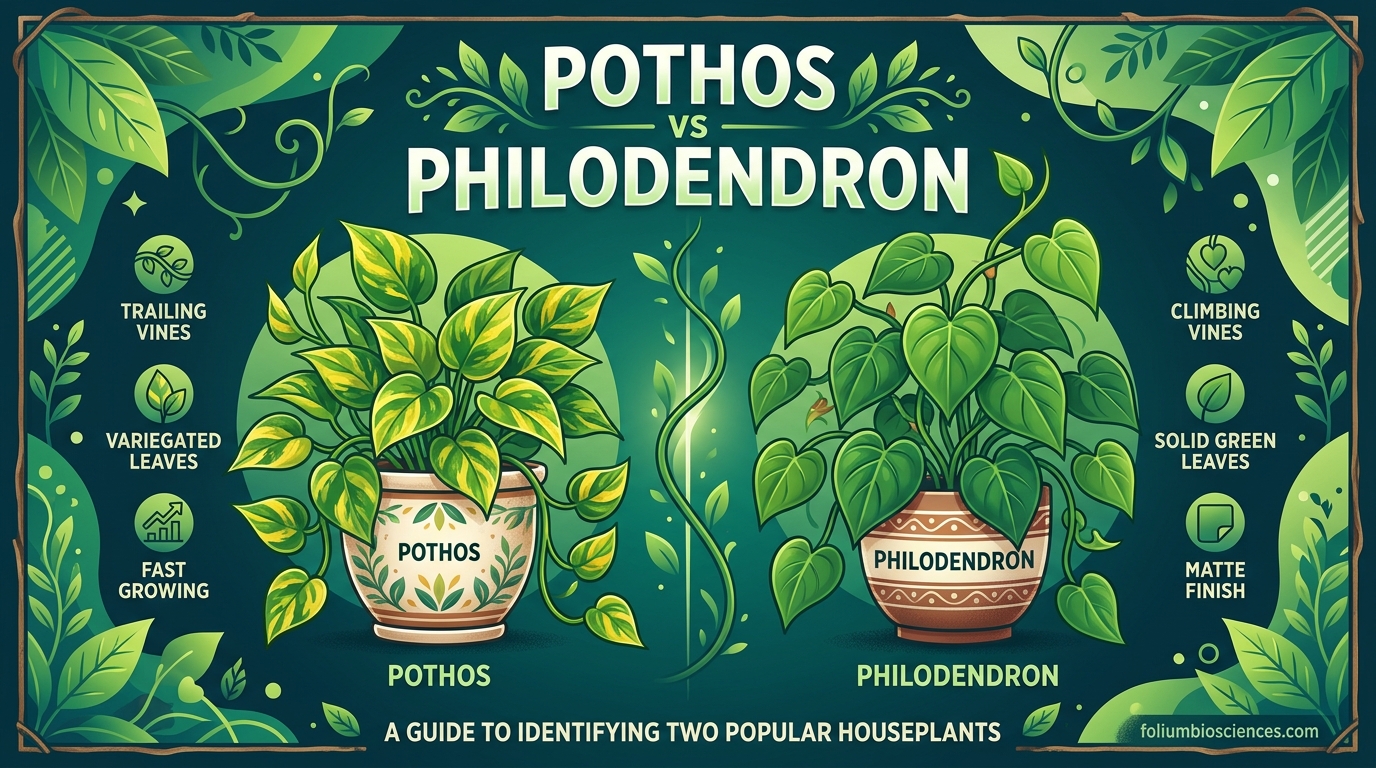
If you have ever walked into a garden center or scrolling through online plant shops, you have probably noticed how remarkably similar Pothos and Philodendron plants look at first glance. Both feature heart-shaped leaves, both are vining plants that trail beautifully from hanging baskets, and both have earned reputations as virtually indestructible houseplants for beginners. This visual similarity causes endless confusion among plant enthusiasts, from rookie gardeners just starting their indoor jungle to experienced horticulturists who should know better.
The truth is, despite their visual similarities, Pothos (Epipremnum aureum) and Philodendron (Philodendron hederaceum) are botanically distinct plants from different genera within the same plant family. Understanding the differences between these two popular houseplants matters more than you might think. The care requirements, while similar, have important nuances that can mean the difference between a thriving plant and one that merely survives. Proper identification ensures you give your plant exactly what it needs to grow vigorously, display stunning variegation, and produce those long, graceful vines that make these plants so desirable.
In this comprehensive guide, we will explore every meaningful difference between Pothos and Philodendron plants. We will examine their botanical taxonomy, dissect the anatomical differences in their leaves and petioles, analyze their aerial root systems, and compare their growth patterns. Additionally, we will provide detailed care instruction comparisons covering light, water, temperature, humidity, soil, and propagation methods. By the end of this article, you will possess the knowledge to confidently identify either plant and adjust your care routine to match its specific needs.
Whether you are trying to identify a mystery cutting from a friend, deciding which plant better suits your home environment, or simply wanting to understand your existing plants more deeply, this guide covers everything you need to know about distinguishing and caring for Pothos versus Philodendron.
Taxonomy and Botanical Classification
Understanding the fundamental taxonomic differences between Pothos and Philodendron provides the foundation for all other identification and care considerations. While both plants belong to the Araceae family, commonly known as the arum family or aroid family, they occupy different genera with distinct evolutionary histories.
Pothos: Epipremnum aureum
Pothos belongs to the genus Epipremnum, which contains approximately 15 species of evergreen climbing vines native to the tropical regions of Southeast Asia and the western Pacific. The scientific name Epipremnum aureum reveals important information about this plant. The species name “aureum” refers to the golden or yellow coloration that appears in the variegated forms, giving rise to the common name “Golden Pothos.” The genus name itself derives from Greek roots meaning “upon” (epi) and “stem” (premon), describing the plant’s growth habit of climbing upon other plants or structures.
Pothos plants have earned the common name “Devil’s Ivy” due to their reputation as nearly unstoppable climbers that can thrive in conditions where other plants would perish. This hardy nature explains why Pothos remains one of the most popular and widely sold houseplants worldwide, capable of adapting to a remarkable range of indoor environments.
Philodendron: Philodendron hederaceum
Philodendrons belong to the genus Philodendron, a vastly larger group containing over 450 described species. The name comes from the Greek words “philos” (loving) and “dendron” (tree), describing this plant’s natural habit of growing toward and clinging to trees in its native tropical rainforest habitat. Unlike Pothos, which primarily climbs upward, many Philodendron species exhibit both climbing and spreading growth habits.
The most common houseplant Philodendron, Philodendron hederaceum, goes by several common names including Heartleaf Philodendron, Sweetheart Plant, and simply Philodendron. This species showcases the classic heart-shaped leaves that cause so much confusion with Pothos. Other popular Philodendron species for indoor growing include Philodendron Brasil with its striped variegation, Philodendron Micans with its velvety textured leaves, and the increasingly popular Philodendron Gloriosum with its dramatic silver-veined leaves.
Leaf Shape and Texture Differences
Leaf examination provides the most immediately accessible method for distinguishing between Pothos and Philodendron, once you know what subtle details to observe. While casual observation might suggest these plants have identical leaves, careful inspection reveals distinctive differences in both shape and texture.
Pothos Leaf Characteristics
Pothos leaves typically display a more symmetrical, balanced heart shape with smooth, consistent margins. The leaves generally appear thicker and more waxy than Philodendron foliage, featuring a pronounced sheen that catches light beautifully. This leaf thickness relates directly to Pothos greater drought tolerance, as the waxy cuticle helps reduce water loss through transpiration.
The leaf tips of Pothos plants taper to a definite, often slightly drooping point. The base of the leaf where it attaches to the petiole shows a more angular junction, creating an unmistakable heart shape with well-defined lobes. Pothos leaves usually lie flatter and more uniformly than Philodendron leaves, which tend to angle upward from their petioles, especially in lower light conditions.
Regarding size, mature Pothos leaves can grow quite large, particularly on older, established plants climbing on moss poles. Golden Pothos leaves can reach 12 inches or more in length when given adequate support and optimal conditions. The variegation patterns in Pothos varieties like Marble Queen, Golden Pothos, and Neon Pothos typically appear as bold, irregular patches or streaks rather than the fine, delicate stripes found in some Philodendron varieties.
Philodendron Leaf Characteristics
Philodendron leaves, particularly in the Heartleaf Philodendron (Philodendron hederaceum), present a softer, more delicate appearance overall. The leaf shape tends toward a broader, more rounded heart form with less defined basal lobes. Many Philodendron species display leaves with a distinctly thinner texture than Pothos, feeling almost papery to the touch in some varieties.
The most distinguishing textural feature of many Philodendron species is their matte or velvety leaf surface. Philodendron Micans, for example, has leaves with a soft, fuzzy texture and fine velvety covering that absolutely cannot be replicated by any Pothos variety. This texture difference becomes immediately apparent when you touch both plants side by side.
Philodendron leaves typically angle upward from their stems rather than lying flat, even when the plant is not experiencing etiolation from low light. This upward growth pattern relates to the plant’s natural adaptation to reaching toward filtered light beneath the rainforest canopy. The leaves often appear to be “reaching” toward you when viewing the plant from above, creating a different visual effect than the more horizontal Pothos foliage.
Petiole Differences: The Key Identifier
The petiole the stalk connecting the leaf blade to the stem offers one of the most reliable and visually apparent distinguishing features between Pothos and Philodendron. This difference can be observed without any special equipment or botanical expertise, making it the perfect identification method for casual plant enthusiasts.
Pothos Petiole Structure
Pothos petioles feature a distinctive inward-curving shape that creates a noticeable crease or channel running along the upper surface. If you cut a Pothos petiole cross-section, you would observe a shape somewhat reminiscent of celery stalk, with the edges curving inward toward the center. This indentation runs the length of the petiole and creates a subtle but unmistakable visual cue.
When viewing a Pothos petiole from the side, the inward curve creates a somewhat grooved appearance. This structural feature serves the plant well, as it provides additional support for the often-large leaf blades and helps channel water down the petiole toward the stem. The grooved petiole also allows the plant to better manage water distribution in its tropical native habitat.
The Pothos petiole is typically green in color, often matching or slightly lighter than the leaf blade itself. The surface texture remains smooth and somewhat waxy, consistent with the rest of the plant’s exterior.
Philodendron Petiole Structure
Philodendron petioles present a strikingly different profile. Rather than the grooved, inward-curving shape of Pothos, the Philodendron petiole is essentially rounded or cylindrical in cross-section, much like a pencil or small twig. The top surface of a Philodendron petiole is flat or slightly convex, lacking any significant indentation.
This rounded petiole shape explains why Philodendron leaves position themselves differently than Pothos leaves. The cylindrical support structure provides more versatile positioning options, allowing the leaves to angle upward or outward as needed to capture available light in the competitive rainforest understory.
Philodendron petioles often display a reddish or purplish coloration, particularly on the undersides or near the leaf junction. This subtle color difference provides another identification clue, though it should not be relied upon exclusively as some Pothos varieties can show reddish petiole coloration under certain lighting conditions.
Aerial Roots: One vs Multiple
Both Pothos and Philodendron produce aerial roots, yet the quantity, appearance, and behavior of these structures differ significantly between the two genera. Understanding these differences aids both identification and successful propagation of either plant type.
Pothos Aerial Root System
Pothos plants typically produce one aerial root per node. This root emerges from the node the point where the leaf attaches to the stem and tends to be relatively thick, fleshy, and adventurous in its growth habit. Pothos aerial roots can grow quite long, often extending several inches before making contact with a potential support structure or growing medium.
The aerial roots of Pothos plants are particularly vigorous and can quickly establish themselves when they contact damp potting medium or a moss pole. This aggressive rooting behavior makes Pothos an excellent candidate for propagation in water or soil, as cuttings typically root within 2-3 weeks with minimal intervention.
Pothos aerial roots have a slightly woody, cork-like texture as they mature. They are cream-colored to light brown and can appear somewhat thick and fleshy, especially when the plant is receiving adequate moisture. These roots serve dual purposes: providing additional support for the climbing vine and absorbing moisture and nutrients from the surrounding environment.
Philodendron Aerial Root System
Philodendron species, particularly the climbing varieties, often produce multiple aerial roots per node, sometimes two or even three roots emerging from a single node. These roots tend to be thinner and more wiry than Pothos aerial roots, with a more delicate appearance overall.
The multiple root system of Philodendrons represents an adaptation to their natural rainforest habitat, where competition for resources is intense. Having multiple roots per node increases the plant’s chances of successfully establishing contact with suitable growing medium or finding additional nutrient sources from decomposing organic matter on tree bark.
Philodendron aerial roots often appear more translucent or whitish compared to the cream-colored Pothos roots. They have a more delicate, fibrous quality and may not grow as quickly or as aggressively when placed in water or soil for propagation.
New Growth: Cataphylls Explained
Perhaps the most technically sophisticated difference between Pothos and Philodendron involves their new growth patterns and the presence of specialized leaf structures called cataphylls. While this difference requires closer observation, it provides definitive identification for those who know what to look for.
Understanding Cataphylls
Cataphylls are specialized, modified leaf structures that appear as small, typically brownish or papery appendages at the base of new growth on certain plants within the Araceae family. These structures serve protective and supportive functions for emerging leaves, encasing the delicate growing tip during development and often persisting after the leaf unfurls.
The term derives from Greek roots meaning “downward” (cata) and “leaf” (phyllon), though the exact botanical meaning relates to their position and function rather than literal translation. Cataphylls should not be confused with stipules or true leaves they represent a distinct category of plant structures specific to certain groups within the Araceae family.
Pothos New Growth
Pothos plants do not produce cataphylls. Instead, new leaves emerge directly from the stem without any protective covering or specialized structure beyond the typical leaf sheath. When a new Pothos leaf unfurls, you will observe it emerging cleanly from the vine with no residual protective structure remaining attached.
This absence of cataphylls in Pothos means that the stems themselves are more visible and exposed during active growth. The growing tip of a Pothos vine remains relatively unprotected, which is one reason why Pothos can tolerate slightly more handling and movement than Philodendrons during their active growing season.
The new leaves of Pothos unfurl from the tip of the vine with the leaf blade initially tightly rolled or folded. As the leaf expands, it reveals its characteristic shape and coloration relatively quickly compared to Philodendrons with their additional cataphyll protection.
Philodendron New Growth
Philodendrons prominently feature cataphylls, which play an essential role in their growth and development. When a new leaf begins forming on a Philodendron, a cataphyll first emerges from the growth node. This cataphyll encases and protects the developing leaf tip, creating a hard, protective shell around the vulnerable new growth.
As the leaf matures and prepares to unfurl, the cataphyll gradually dries and becomes papery, often turning brown or tan in color. The leaf then pushes through or past this dried structure, which frequently remains visible at the base of the petiole for some time even after the leaf has fully expanded. You can often spot these dried cataphyll remnants clinging to the stem below established leaves.
The presence of cataphylls in Philodendrons explains why their new growth tends to be more protected and why Philodendron cuttings sometimes take longer to establish than Pothos cuttings. The additional structure requires more energy and time to produce, but it provides valuable protection against herbivores and physical damage in the plant’s natural habitat.
Care Requirements Comparison
While Pothos and Philodendron share reputations as low-maintenance houseplants, their care requirements show meaningful differences that can impact your success with each plant. Understanding these nuances helps you provide optimal care for whichever plant graces your home.
| Care Factor | Pothos | Philodendron |
|---|---|---|
| Light Requirements | Adaptable, tolerates low light; prefers bright indirect | Prefers bright indirect; more light needed for variegation |
| Watering Frequency | Every 1-2 weeks; very forgiving of drought | Every 1-2 weeks; more consistent moisture preferred |
| Soil Moisture Preference | Allows soil to dry completely between waterings | Keep lightly moist; wilts more quickly when dry |
| Temperature Range | 50-90°F (10-32°C); tolerates cooler temps | 65-85°F (18-29°C); prefers warmer conditions |
| Humidity Tolerance | Very adaptable; tolerates low humidity | Appreciates higher humidity; tolerates average |
| Growth Rate | Fast: up to 12 inches per week in optimal conditions | Moderate: up to 10 cm per week during growing season |
| Root-Bound Tolerance | Highly tolerant; thrives when root-bound | Moderately tolerant; appreciates occasional repotting |
| Drought Tolerance | Excellent; can survive weeks without water | Moderate; will show stress faster when dry |
Light Requirements
Light availability significantly impacts the health, growth rate, variegation maintenance, and overall vigor of both Pothos and Philodendron plants. While both plants can survive in low-light conditions, their preferences and performance under various light levels differ meaningfully.
Pothos Light Preferences
Pothos plants demonstrate remarkable adaptability to a wide range of light conditions, earning them a reputation as one of the most tolerant houseplants available. They can survive in low-light corners that would cause other plants to decline, making them excellent choices for offices, bathrooms, or rooms with limited natural light.
However, Pothos truly thrive when given bright, indirect light. Under optimal conditions, you will see faster growth, more vibrant coloration in variegated varieties, and general improved plant health. East-facing windowsills or locations several feet back from south or west-facing windows provide ideal lighting for most Pothos varieties.
Variegated Pothos varieties, including Marble Queen, Golden Pothos, and Neon Pothos, maintain their distinctive patterns more consistently in brighter light. In insufficient light, these plants often revert to solid green leaves as the plant prioritizes chlorophyll production over variegation. If your variegated Pothos is producing increasingly green leaves, try moving it to a brighter location.
Pothos can tolerate some direct morning sunlight, but intense afternoon sun can scorch their leaves, causing brown patches and tip burn. Filtered light through sheer curtains or the dappled light of an east window provides optimal conditions for most Pothos varieties.
Philodendron Light Preferences
Philodendron plants generally prefer more consistent bright indirect light than Pothos. They evolved as understory plants in tropical rainforests, naturally adapted to receiving filtered, dappled light that passes through the forest canopy above.
Providing your Philodendron with adequate light ensures the best growth rates, most vibrant leaf colors, and maintained variegation in varieties like Brasil or White Knight. Philodendrons positioned in too-low light conditions often become leggy, with elongated stems and smaller, less vibrant leaves as they stretch toward available light sources.
Like Pothos, Philodendrons should be protected from intense direct sunlight that can damage their leaves. A few hours of gentle morning sun is acceptable, but afternoon direct sun typically causes problems. North-facing windows or locations filtered by sheer curtains provide excellent growing conditions for most Philodendron species.
Some Philodendron varieties, particularly those with darker solid green leaves, can tolerate lower light levels better than their variegated counterparts. The darker the leaves, the more efficiently they can photosynthesize in reduced light conditions, reflecting the genetic adaptations of their native rainforest understory habitats.
Watering Differences
Perhaps the single most meaningful practical difference between Pothos and Philodendron care involves watering requirements. This is where the plants diverges most significantly, and understanding these differences prevents one of the most common causes of houseplant failure.
Watering Pothos
Pothos plants exhibit exceptional drought tolerance compared to most other common houseplants, making them the more forgiving choice for those who occasionally forget to water or travel frequently. Their thick, waxy leaves and modified root structures allow them to survive extended periods without water by reducing metabolic activity and drawing on stored moisture.
For Pothos, the general rule is to water thoroughly when the top 50% of the soil volume has dried completely. In practice, this often translates to watering every 1-2 weeks depending on your home environment, pot size, and season. During winter months or in low-light conditions, Pothos may need water only every 2-3 weeks.
The telltale sign that Pothos needs water is leaf limpness or wilting, followed by slight yellowing of lower leaves if the drought continues. Unlike some plants that show stress immediately, Pothos often appears briefly wilted before recovering rapidly once watered. The plant can survive several drought cycles without permanent damage, though consistent underwatering will eventually result in smaller leaves, slower growth, and browning leaf tips.
Overwatering presents the greater danger to Pothos plants. Sitting in waterlogged soil quickly leads to root rot, fungal infections, and potentially fatal decline. Always ensure your Pothos pot has adequate drainage holes, and never allow the plant to sit in standing water for more than a few hours.
Watering Philodendron
Philodendron plants prefer more consistent moisture levels and show stress more quickly when underwatered compared to Pothos. Their thinner leaves and less developed water storage tissues mean they cannot tolerate extended drought as effectively.
The ideal watering approach for Philodendron involves keeping the soil lightly moist at all times, but never waterlogged. Water thoroughly when the top 1-2 inches of soil feels dry to the touch, typically once every 7-10 days under normal conditions. During active growth in spring and summer, Philodendrons may need water more frequently.
When a Philodendron lacks water, it wilts much more dramatically and noticeably than Pothos. The leaves droop obviously, sometimes appearing almost deflated, and recovery after watering takes longer. Extended drought periods cause Philodendron leaves to develop brown, crispy edges and eventually yellow and drop from the plant.
Like Pothos, Philodendrons are susceptible to root rot if overwatered, so drainage remains essential. The key difference lies in the plant’s tolerance range: Pothos forgives both over and underwatering better than Philodendron, which prefers consistency and shows stress more readily when conditions deviate from ideal.
Temperature and Humidity
As tropical plants from similar native environments, both Pothos and Philodendron share preferences for warm, humid conditions. However, their tolerance ranges and specific preferences show meaningful differences that affect placement decisions and care routines in typical home environments.
Temperature Requirements
Pothos plants demonstrate impressive temperature tolerance compared to Philodendrons, accommodating a broader range of conditions without stress. They survive temperatures as low as 50°F (10°C) for short periods and can tolerate temperatures up to 90°F (32°C) or higher if humidity and water availability are adequate.
This temperature flexibility makes Pothos more suitable for placement in areas that might experience temperature fluctuations, such as near entry doors, drafty hallways, or rooms with less consistent climate control. However, optimal growth occurs within the 60-80°F (15-27°C) range.
Philodendrons prefer warmer conditions and are more cold-sensitive than Pothos. They perform best when temperatures remain consistently between 65-85°F (18-29°C). Temperatures below 60°F (15°C) for extended periods cause Philodendrons to slow growth, drop leaves, and eventually decline in health.
Avoid placing Philodendrons near cold drafts, air conditioning vents, or exterior doors that open frequently in winter. Sudden temperature drops cause immediate leaf drop and can stress the plant significantly. Pothos can withstand brief exposure to cooler air when doors open, but prolonged cold affects both plants negatively.
Humidity Preferences
Both plants appreciate higher humidity levels, mimicking their native tropical rainforest environments where moisture hangs in the air. However, Pothos demonstrates superior adaptability to typical household humidity levels, often thriving in the 30-50% humidity range found in most climate-controlled homes.
Philodendrons appreciate humidity above 50% when achievable, but they survive in average household humidity without significant problems. The main concern with lower humidity is browning leaf tips and edges, which appears more quickly on Philodendrons than on Pothos given their thinner, more sensitive leaf structures.
If you struggle with brown leaf tips on either plant despite proper watering techniques, consider increasing humidity through group plants together, placing on pebble trays filled with water, using a room humidifier, or relocating to naturally more humid spaces like bathrooms with adequate light.
Misting both plants directly is generally discouraged as it provides only temporary humidity relief and can potentially encourage fungal issues if water sits on leaves for extended periods. Bottom watering or grouping plants near other moisture-loving species provides more effective humidity management.
Soil and Potting Requirements
Both Pothos and Philodendron share similar soil preferences, yet subtle differences in their root structures and growth habits influence the ideal potting medium for each plant. Proper soil selection prevents many common problems including root rot, nutrient deficiencies, and stunted growth.
Ideal Soil Mix
Both plants thrive in well-draining, aerated potting mixes that retain adequate moisture without becoming waterlogged. A standard high-quality potting soil amended with perlite and orchid bark provides excellent results for both Pothos and Philodendron.
A suitable blend for either plant includes approximately 2 parts potting soil, 1 part perlite, and 1 part orchid bark or coarse bark chips. This combination ensures fast drainage while providing enough organic material for moisture retention and nutrient availability. Commercial aroid or tropical plant potting mixes work well as a base and can be further amended depending on your specific conditions.
Neither plant is particularly fussy about soil pH, though both prefer slightly acidic to neutral ranges (approximately 6.0-7.0). Standard commercial potting soils typically fall within this acceptable range without adjustment.
Pot Selection and Drainage
Proper drainage proves absolutely essential for both Pothos and Philodendron. Always select pots with adequate drainage holes, and consider elevating pots slightly to ensure holes remain unblocked and water can escape freely.
Pothos tolerates being slightly root-bound and can remain in the same pot for longer periods without decline. Their more aggressive root systems adapt well to confined spaces, and they often continue growing vigorously even when roots are visibly circling the pot interior. You can typically wait until you see roots emerging from drainage holes before repotting Pothos.
Philodendrons appreciate occasional repotting to refresh soil nutrients and provide additional growing space. While they also tolerate root-bound conditions, Philodendrons generally benefit from repotting every 1-2 years rather than waiting for visible root emergence. Fresh soil mix provides new nutrient availability that supports continued healthy growth.
Terra cotta pots offer advantages for both plants by allowing soil to dry more quickly through evaporation from the porous pot walls. If you tend to overwater, terra cotta provides an excellent safety mechanism. Plastic and ceramic pots retain moisture longer, which can benefit those who underwater or in particularly dry environments.
Propagation Techniques
Both Pothos and Philodendron rank among the easiest houseplants to propagate, making them ideal candidates for sharing with friends, expanding your collection, or creating backups of beloved specimens. The fundamental propagation approach is similar for both plants, with minor nuances affecting success rates and speed.
Water Propagation
Water propagation represents the most popular method for both plants and offers the rewarding experience of watching roots develop in real-time. Select a healthy vine with at least 4-6 inches of growth, then locate a node the small bump or ridge where leaves and aerial roots emerge.
Cut the vine approximately 1/2 inch below a node using clean, sharp scissors or pruning shears. Remove the leaf closest to the cut end, leaving 2-3 leaves on the cutting. Place the cutting in a glass or jar filled with room-temperature water, ensuring the node remains submerged while leaves stay above the waterline.
Change water every 5-7 days to prevent stagnation and bacterial buildup. Position the glass in bright, indirect light and maintain water level as evaporation occurs. Pothos cuttings typically develop visible roots within 2-3 weeks, while Philodendron cuttings may take slightly longer, often 3-4 weeks.
Once roots reach 2-3 inches in length with multiple branching rootlets, the cutting is ready for transfer to soil. While some gardeners successfully transition cuttings directly from water to soil, others report better success by allowing roots to develop more fully before soil transition.
Soil Propagation
Direct soil propagation eliminates the need for water-to-soil transition and can produce established plants more quickly when done correctly. Prepare cuttings as described for water propagation, then plant directly into moist (not wet) potting mix.
Use a small pot or propagation tray with drainage holes, filling with your standard aroid potting mix. Create a small hole in the center, insert the cutting up to the node, and gently firm soil around the cutting to eliminate air pockets. Maintain consistent moisture without overwatering during the establishment period.
Soil propagation often produces stronger root systems more quickly than water propagation because roots develop directly in the growing medium rather than adapting from water roots to soil roots. However, soil propagation makes monitoring root development more difficult and requires more careful attention to moisture levels.
Division and Layering
Mature plants with multiple vines can be divided during repotting by carefully separating root balls into smaller sections, each with its own established root system and several vines. This method provides immediately viable plants without waiting for cuttings to root.
Air layering offers another technique, particularly useful for very long vines where you want to create a new plant while preserving the mother plant. Wound a node on the long vine by making a small cut, wrap the wounded area with damp sphagnum moss and plastic wrap, and wait for roots to develop before cutting and potting the new plant.
The Satin Pothos Confusion: Scindapsus
While Pothos and Philodendron confusion is common enough, many plant enthusiasts also mistake another closely related plant for both of them: Scindapsus pictus, commonly known as Satin Pothos or Silver Pothos. Understanding this additional plant provides complete identification knowledge for navigating the sometimes-confusing world of aroid houseplants.
Identifying Scindapsus
Scindapsus pictus earns its common name “Satin Pothos” from its visual similarity to both Pothos and the confusion this similarity creates. Unlike true Pothos (Epipremnum), Scindapsus belongs to its own genus and includes several species of climbing vines native to Southeast Asia.
The most distinctive feature of Scindapsus pictus is its leaf coloration and texture. The matte, dark green leaves feature silver or cream-colored speckles and patches that appear almost painted onto the leaf surface. This silver variegation creates a distinctive visual effect quite different from the bold, waxy variegation of Pothos Marble Queen or the delicate stripes of Philodendron Brasil.
Scindapsus leaves have a matte, almost fabric-like texture quite different from the waxy sheen of Pothos or the velvety surface of Philodendron Micans. This textural difference provides one of the most reliable identification methods once you have observed enough examples of each plant.
Scindapsus Care Considerations
Scindapsus care falls between Pothos and Philodendron in terms of difficulty and specificity. Like Pothos, it tolerates lower light conditions better than Philodendron, but it appreciates more consistent moisture than Pothos. The silver variegation patterns remain most vibrant in brighter indirect light conditions.
Water Scindapsus when the top inch of soil feels dry, maintaining moisture levels more consistent than you would for Pothos but allowing light drying between waterings similar to Philodendron. Scindapsus benefits from occasional misting or humidity enhancement due to its tropical heritage.
This plant makes an excellent choice for those who appreciate the easy-care nature of Pothos but want something with more distinctive foliage interest. The silver-speckled leaves add visual variety to plant collections without requiring the more specific care attention that Philodendrons sometimes demand.
Toxicity Warning: Pets and Children
Before bringing any of these plants into your home, understanding their potential toxicity proves essential for protecting curious pets and small children who might investigate greenery with their mouths. All three plants discussed in this article Pothos, Philodendron, and Scindapsus contain calcium oxalate crystals that can cause significant health problems if ingested.
Symptoms of Ingestion
If a pet or child chews or bites any part of these plants, calcium oxalate crystals cause immediate irritation to the mouth, tongue, and lips. Symptoms typically include excessive drooling, pawing at the mouth, oral swelling, difficulty swallowing, and vocal distress. Gastrointestinal symptoms like vomiting may follow depending on the amount ingested.
While serious toxicity is rare due to the immediate pain and irritation that deters further ingestion, some pets particularly cats with access to plant material may experience more significant reactions. If you suspect your pet has ingested any part of these plants, contact your veterinarian or the ASPCA Animal Poison Control Center immediately for guidance.
Safe Alternatives
If you have curious pets or young children who cannot be kept away from houseplants, consider adding genuinely pet-safe options to your collection. Spider Plant (Chlorophytum comosum), Boston Fern (Nephrolepis exaltata), and Calathea species offer attractive foliage without the toxicity concerns. Peperomia varieties also provide excellent, safe options for households with pets and children.
Many plant parents choose to place toxic plants on high shelves, in hanging baskets out of reach, or in rooms with access restricted by gates or closed doors. However, remember that determined pets particularly climbing cats may still access elevated placements, making true prevention through plant selection the most reliable safety approach.
Frequently Asked Questions
The most reliable identification methods involve examining the petiole shape and checking for cataphylls. Pothos petioles are indented with a groove running along the top surface, while Philodendron petioles are rounded and cylindrical. Philodendrons also produce cataphylls small brown protective structures at the base of new leaves which Pothos lacks. Additionally, Pothos leaves tend to be thicker and waxier with a smooth texture, while many Philodendron species have thinner, sometimes velvety leaf surfaces.
Pothos is generally considered easier and more forgiving, particularly for beginners or those who occasionally forget to water. Pothos tolerates drought well, adapts to low light conditions, and can survive occasional care mistakes. Philodendron requires more consistent moisture and warmer temperatures but remains a relatively easy plant for most indoor growing conditions. If you want the most forgiving plant possible, choose Pothos; if you can provide more consistent care, either plant will thrive.
While it is technically possible to plant Pothos and Philodendron together, it is generally not recommended due to their different watering preferences. Pothos prefers to dry out completely between waterings, while Philodendron likes consistent moisture. Growing them together makes meeting both plants needs simultaneously quite challenging. If you want a mixed planter for visual impact, consider including only plants with similar care requirements, or keep them in separate pots grouped together for display.
Variegated Pothos varieties revert to solid green when they receive insufficient light. The plant prioritizes chlorophyll production over maintaining decorative variegation patterns when light energy is limited. Move your variegated Pothos to a brighter location with more consistent indirect light to encourage variegation to return on new growth. You can also prune back any all-green vines to encourage branching from variegated sections.
Water Pothos thoroughly when the top 50% of the soil has dried completely. In typical indoor conditions, this often means watering every 1-2 weeks. During winter months or in low-light situations, you may only need to water every 2-3 weeks. Always ensure excess water drains freely from the pot, and never let Pothos sit in standing water for extended periods.
Philodendrons prefer consistent moisture and should be watered when the top 1-2 inches of soil feels dry, typically every 7-10 days under normal conditions. During active growth in spring and summer, you may need to water more frequently. Watch for wilting as an indicator of thirst Philodendrons droop more dramatically than Pothos when they need water.
Pothos typically produces one aerial root per node, while Philodendrons often produce multiple roots per node. Pothos aerial roots tend to be thicker, cream-colored, and more aggressive in growth. Philodendron aerial roots are typically thinner, more wiry, and may have a more translucent appearance. Both types of roots serve the same functions absorption and support but differ in quantity and appearance.
No, Scindapsus pictus commonly called Satin Pothos or Silver Pothos is not a true Pothos. It belongs to a different genus (Scindapsus) within the Araceae family. Despite the common name, it is more closely related to Philodendron than to true Pothos (Epipremnum). The best way to distinguish Scindapsus from both Pothos and Philodendron is its distinctive matte green leaves with silver speckles and its unique leaf texture.
Yes, both Pothos and Philodendron are toxic to cats, dogs, and other pets if ingested. They contain calcium oxalate crystals that cause oral irritation, excessive drooling, vomiting, and difficulty swallowing. Contact your veterinarian immediately if you suspect your pet has eaten any part of either plant. Consider pet-safe plant alternatives like Spider Plant, Boston Fern, or Peperomia if pets have access to your houseplants.
Conclusion
Pothos and Philodendron plants, while superficially similar, offer distinct experiences for houseplant enthusiasts willing to learn their differences. Understanding these differences transforms random plant care into targeted, effective cultivation that helps each plant reach its full potential in your home environment.
The key differences to remember when identifying your plant are the petiole shape (grooved in Pothos, rounded in Philodendron), the presence or absence of cataphylls (absent in Pothos, present in Philodendron), and leaf texture (thick and waxy versus thin and potentially velvety). These three identification markers will serve you well when examining any mysterious vining aroid in your collection.
In terms of care, Pothos provides superior forgiveness for those new to plants or with less consistent schedules, tolerating drought, low light, and occasional neglect with grace. Philodendron rewards more attentive care with slightly more specific requirements for moisture and temperature, producing elegant growth when those needs are met.
Whether you choose Pothos for its bulletproof reliability, Philodendron for its elegant diversity, or both to appreciate their similarities and differences side by side, these plants remain outstanding choices for indoor growing. Their forgiving natures, beautiful foliage, and easy propagation make them valuable additions to any plant collection, from the smallest studio apartment to the most elaborate indoor jungle.
Now that you have mastered the art of distinguishing and caring for Pothos versus Philodendron, you can share your knowledge with fellow plant enthusiasts, help identify mystery plants at local garden centers, and make informed decisions when expanding your green family. Happy growing!