
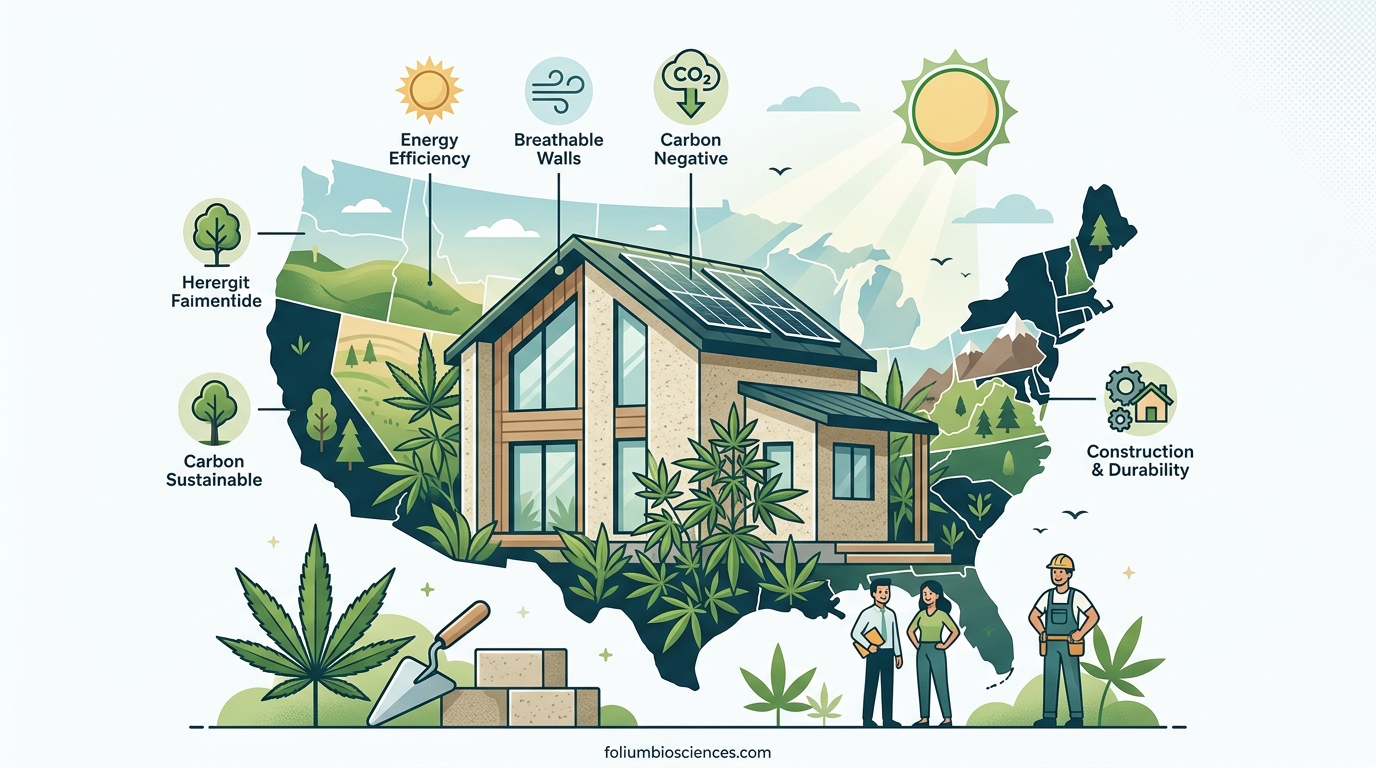
Building a hempcrete house in the US costs between $120 and $310 per square foot when you factor in materials and labor. That is the reality many prospective builders face when researching sustainable construction options. I have spent months analyzing actual build costs, talking to hempcrete homeowners on Reddit, and reviewing permits and codes to give you the complete financial picture.
Hempcrete represents one of the most promising sustainable building materials available today. It sequesters carbon rather than emitting it, creates breathable walls that regulate humidity naturally, and provides fire resistance that traditional construction simply cannot match. But the costs and logistics differ significantly from conventional stick-built homes.
In this guide, I will walk you through everything you need to know about hempcrete house costs in the US. You will learn what hempcrete actually is, why it costs what it does, how regional variations affect your budget, and whether DIY construction can save you money. I have compiled real numbers from actual builds, not manufacturer estimates or theoretical projections.
Table of Contents
What Is Hempcrete
Hempcrete is a bio-composite building material made from three simple ingredients: hemp hurd (the woody inner core of the hemp plant), a lime-based binder, and water. Unlike traditional concrete, which uses cement and aggregates, hempcrete creates a lightweight, breathable wall system that insulates while allowing moisture vapor to pass through.
The material goes by several names including hemplime and hemp-lime composite. Builders mix hemp hurd with hydraulic lime binder in specific ratios, typically around 1:1.5 to 1:2.5 hurd to lime by volume, then add water to activate the lime. The mixture is either poured into temporary forms against a structural frame or sprayed onto surfaces using specialized equipment.
Hempcrete differs fundamentally from concrete in both composition and function. Concrete is load-bearing, dense, and creates a vapor barrier. Hempcrete is non-load-bearing, lightweight at roughly 300-400 kg per cubic meter when cured, and vapor-permeable. This means hempcrete walls need separate structural support, usually timber or steel frames, while the hempcrete itself provides insulation, thermal mass, and protection.
The material gained significant attention after the 2018 Farm Bill legalized industrial hemp cultivation in the US. Prior to that, builders imported hemp hurd from Europe, primarily France where hempcrete construction has existed for decades. Today, domestic hemp production is growing, though supply chains remain limited compared to traditional building materials.
Hempcrete Benefits That Justify the Investment
Hempcrete offers performance characteristics that traditional construction struggles to match. Understanding these benefits helps explain why homeowners choose to pay premium costs for this material.
Fire Resistance Beyond Conventional Materials
Hempcrete achieves ASTM E-84 Class A fire ratings, meaning it resists flame spread and produces minimal smoke. The lime binder creates a mineralized shell around hemp fibers that chars rather than burns. I have reviewed multiple fire tests showing hempcrete walls withstanding temperatures exceeding 1,800 degrees Fahrenheit without structural failure. Traditional wood frame construction cannot match this level of fire protection without expensive additional treatments.
Superior Moisture Management
The breathable nature of hempcrete allows moisture vapor to move through walls while preventing liquid water penetration. This creates natural humidity regulation inside homes. When indoor humidity rises, hempcrete absorbs excess moisture. When humidity drops, the material releases stored moisture back into the air.
This hygroscopic behavior prevents the condensation problems common in tight modern homes built with vapor barriers. Mold and mildew growth becomes far less likely because hempcrete walls do not trap moisture. Reddit users living in hempcrete homes consistently report stable indoor humidity levels between 40-60% year-round without mechanical humidification.
Carbon Negative Construction
Perhaps hempcrete’s most significant advantage is its carbon sequestration capability. Hemp plants absorb CO2 during growth, storing carbon in the woody hurd. The lime binder absorbs additional CO2 during curing through carbonation. Studies suggest hempcrete walls can sequester approximately 165-330 pounds of CO2 per cubic meter.
Compare this to Portland cement production, which emits roughly 1,600 pounds of CO2 per ton of cement. A typical hempcrete home can sequester several tons of carbon dioxide over its lifetime rather than contributing to emissions.
Thermal Performance and R-Value
Hempcrete provides R-values between 2.4 and 3.5 per inch of thickness. A standard 12-inch hempcrete wall delivers R-28 to R-42 insulation performance. More importantly, hempcrete provides thermal mass that stabilizes indoor temperatures.
The material absorbs heat during the day and releases it slowly at night, reducing heating and cooling demands. Owners report 30-50% reductions in energy bills compared to conventional construction, though actual savings vary by climate and design.
Pest and Mold Resistance
The alkaline lime environment makes hempcrete naturally resistant to insects, rodents, and mold. Termites avoid hempcrete walls. The material contains no nutrients that support fungal growth. This eliminates the need for chemical treatments common in traditional wood construction.
Disadvantages and Limitations You Must Understand
Before committing to a hempcrete build, understand these constraints. Realistic expectations prevent costly surprises during construction.
Non-Load-Bearing Requirements
Hempcrete cannot support structural loads. You must build a separate frame system using timber, steel, or concrete to carry roof and floor loads. The hempcrete fills the spaces between framing members as insulation and finish material.
This dual-system approach adds complexity and cost compared to conventional construction where walls provide both structure and insulation. Engineering requirements increase because you essentially build two complete wall systems rather than one.
Higher Upfront Costs
Material costs for hempcrete run 20-30% higher than traditional construction in most US markets. Labor costs can be 50-100% higher due to limited contractor availability and longer installation times. Most hempcrete projects require specialized crews or extensive DIY labor.
Forum discussions reveal many homeowners underestimate total costs. One Reddit user reported their hempcrete walls costing approximately $180 per square foot compared to $120 per square foot for conventional lumber construction in their region.
Limited Builder Availability
Finding experienced hempcrete builders remains challenging across much of the US. The 2023 IRC inclusion helps legitimize the material, but skilled contractors remain concentrated in specific regions. California, Colorado, and the Pacific Northwest have more hempcrete experience than the Southeast or Midwest.
Many homeowners end up acting as their own general contractors, coordinating hempcrete specialists with conventional framers and trades. This adds management burden and risk to projects.
Longer Construction Timelines
Hempcrete requires curing time after installation. Walls need 6-8 weeks to fully dry and cure before applying finishes. This extends construction schedules compared to conventional framing where drywall can go up immediately.
Weather affects installation. Freezing temperatures can damage curing hempcrete. Rain requires protection during the critical curing period. These factors limit construction seasons in northern climates.
Foundation Restrictions
Building codes prohibit hempcrete below grade. You cannot use hempcrete for basement walls or foundations. Standard concrete or block foundations are required, then hempcrete begins at the sill plate level. This creates a material transition that must be detailed properly to prevent moisture issues.
Hempcrete Houses in the US: Real Costs
Understanding the complete cost picture helps you budget realistically for a hempcrete project. These numbers reflect actual US construction costs in 2026.
Material Costs Only
Raw hempcrete materials cost between $10 and $180 per square foot of wall area depending on sourcing and method. Breaking this down:
Hemp hurd typically costs $200-400 per ton delivered. You need approximately 1.5-2 tons per 1,000 square feet of 12-inch thick wall. Hydraulic lime binder runs $15-25 per 50-pound bag, with roughly 80-100 bags needed per 1,000 square feet.
Pre-formed hempcrete blocks cost more per square foot but reduce labor significantly. Block prices range from $12-25 per square foot depending on thickness and supplier. Shipping adds substantial cost for locations far from manufacturing facilities.
Spray-applied hempcrete from specialized contractors typically costs $8-15 per square foot for material and application, but requires experienced crews with proper equipment.
Full Construction Costs
When you include framing, labor, finishing, and all associated costs, hempcrete houses cost $120-$310 per square foot in the US. This range reflects:
- Basic DIY builds with minimal contractor involvement: $120-160/sqft
- Mid-range contractor builds with standard finishes: $180-240/sqft
- High-end architect-designed homes with premium finishes: $260-310/sqft
For perspective, conventional stick-built homes in the US average $150-200 per square foot in 2026. Hempcrete sits at the upper end of conventional construction costs but offers performance benefits that justify the premium for many owners.
Cost Comparison with Traditional Materials
| Material | Cost per Sq Ft | R-Value (12″ wall) | Fire Rating |
|---|---|---|---|
| Hempcrete | $120-310 | R-28 to R-42 | Class A |
| Wood Frame with Fiberglass | $150-200 | R-38 (with batts) | Class C (untreated) |
| ICF (Insulated Concrete Forms) | $180-250 | R-40+ | Class A |
| Straw Bale | $100-180 | R-30 to R-45 | Class A |
| Rammed Earth | $150-250 | R-12 to R-20 | Class A |
Hidden Costs to Budget For
Beyond the wall system itself, budget for structural engineering review, typically $2,000-5,000. Specialized permits in jurisdictions unfamiliar with hempcrete may require additional documentation and fees. Shipping hemp materials to remote locations adds 20-40% to material costs in some regions.
Interior finishing requires breathable materials compatible with hempcrete’s vapor-permeable nature. Standard latex paints and vinyl wall coverings trap moisture. Budget for clay paints, lime washes, or other compatible finishes that cost 30-50% more than conventional options.
Regional Cost Variations Across the US
Where you build significantly affects hempcrete costs. Material availability, shipping distances, and local labor markets create regional variations.
West Coast (California, Oregon, Washington)
The West Coast leads US hempcrete adoption. California has multiple hemp processors and experienced contractors. Material costs run lower here due to shorter shipping distances from Oregon and Washington hemp farms.
Expect to pay $140-260 per square foot for full construction on the West Coast. Labor costs are higher than national averages, but material availability offsets some of this premium. The 2023 California building code updates specifically address hempcrete, streamlining permitting.
Mountain West (Colorado, Montana, Idaho)
Colorado has emerged as a hempcrete hub with several active builders and suppliers. Material costs match West Coast levels due to local hemp production. Cold climates increase insulation requirements, often pushing wall thickness to 14-16 inches.
Construction costs range $130-240 per square foot. Winter construction limitations extend timelines but do not significantly affect per-square-foot pricing.
Midwest
The Midwest presents challenges for hempcrete construction. Fewer experienced builders operate in this region. Materials must ship from Colorado or the West Coast, adding $20-40 per square foot in transportation costs.
Expect total construction costs of $160-290 per square foot in the Midwest. The market is growing as hemp farming expands in states like Kentucky and Illinois, but supply chains remain less developed than coastal regions.
Southeast
The Southeast has limited hempcrete infrastructure. Humid climates actually suit hempcrete well due to its moisture management, but finding materials and builders proves difficult.
Costs range $170-310 per square foot, with shipping representing a significant portion of material expenses. Some Florida builders report importing hempcrete blocks from Europe when US suppliers cannot meet demand, pushing costs toward the upper end.
Northeast
The Northeast combines high labor costs with moderate material shipping distances from Canadian suppliers and developing US sources. Vermont and Maine have seen several hempcrete projects, creating small pockets of expertise.
Budget $180-300 per square foot in the Northeast. Historic preservation regulations in some areas actually favor hempcrete’s compatibility with traditional building techniques.
DIY vs Contractor: The Real Cost Comparison
One of the most common questions on hempcrete forums concerns DIY construction. Can you actually save money building yourself?
DIY Savings Potential
DIY builders report 30-50% labor cost savings on hempcrete projects. Labor typically represents 40-50% of total construction costs, so DIY can reduce overall project costs by 15-25%.
However, these savings come with significant time investments. A Reddit user who built a 1,200 square foot hempcrete home reported spending 18 months on construction working weekends and evenings, compared to the 6-8 months a professional crew would require.
DIY requires equipment rental for mixing. Tow-behind mortar mixers cost $200-400 per week. Specialized spray equipment rental runs $500-1,000 per week if you choose that application method.
The Learning Curve Reality
First-time hempcrete builders make mistakes that cost money. Mix ratios affect performance. Improper compaction creates weak walls. Curing mistakes require costly repairs.
Experienced forum members recommend starting with a small structure like a shed or studio before attempting a full house. One user practiced on a 12×12 shed, learned proper techniques, then proceeded to their main house build with confidence.
Consider attending a hempcrete workshop before DIY construction. Workshops cost $300-800 but provide hands-on training that prevents expensive errors. Several US companies offer multi-day courses covering mixing, forming, and finishing techniques.
When to Hire Professionals
Structural framing, electrical, and plumbing require licensed professionals in most jurisdictions. Many hempcrete homeowners act as owner-builders, doing the hempcrete work themselves while hiring contractors for technical systems.
Engineering review is essential regardless of who builds. Hempcrete walls need proper detailing at openings, corners, and roof connections. A structural engineer familiar with hempcrete can review plans for $2,000-5,000, potentially saving tens of thousands in mistake avoidance.
Hybrid Approaches
The most cost-effective approach for many homeowners combines DIY labor with professional guidance. Hire an experienced hempcrete consultant for $500-1,000 per day to supervise critical phases like first-time mixing and forming.
Some builders use pre-formed hempcrete blocks for the first floor where loads are heaviest, then switch to site-mixed hempcrete for upper stories where access is easier and structural demands lower.
US Market Availability and Supply Chain
Material availability affects both cost and timeline. Understanding the supply landscape helps you plan effectively.
Hemp Hurd Sourcing
Hemp hurd comes from processing industrial hemp stalks. The woody inner core is separated from the bast fiber outer layer. US hemp processing capacity has grown significantly since 2018 but remains concentrated in specific regions.
Primary US hempcrete suppliers include HempTraders in California, Bulk Hemp Warehouse in multiple locations, and several regional processors in Colorado, Oregon, and Vermont. Expect to order materials 4-8 weeks in advance of your build date.
Pre-Formed Blocks vs Raw Materials
Hempcrete blocks offer faster installation but cost 30-50% more per square foot than site-mixed materials. Blocks eliminate the forming and curing wait time, allowing faster enclosure of the structure.
Site-mixed hempcrete provides design flexibility for complex wall shapes and custom details. It requires more labor but allows on-the-fly adjustments. Most custom homes use site-mixed material while standardized designs may benefit from blocks.
Shipping Considerations
Hemp hurd ships by truck in bulk bags of approximately 1,000 pounds. Freight costs range from $200-600 per ton depending on distance from the processing facility. Some suppliers offer regional hub pickup options that reduce shipping costs for customers willing to arrange their own transportation.
Plan material deliveries carefully. Hemp hurd must stay dry before mixing. Lime binder has a shelf life and absorbs moisture if stored improperly. Coordinate deliveries so materials arrive just before installation.
Building Codes and Permits
The regulatory landscape for hempcrete changed significantly with the 2023 International Residential Code update.
2023 IRC Inclusion
The 2023 International Residential Code added hempcrete as an approved building material for the first time. This provides a pathway for permit approval in jurisdictions that adopt the IRC. Previously, hempcrete projects required alternative materials approval, adding months to the permitting process.
The IRC inclusion specifies hempcrete as a non-load-bearing insulation material with defined compressive strength and thermal properties. It does not make hempcrete legal everywhere automatically, but provides a recognized standard that local building officials can reference.
State-by-State Status
Building code adoption varies by state. California, Washington, and Colorado have specific hempcrete provisions or accept the IRC language. Other states lag behind, requiring engineers to stamp plans and demonstrate compliance with performance-based codes.
Contact your local building department early in the planning process. Some jurisdictions have never seen a hempcrete permit application and may need education. Providing ICC reports, engineering calculations, and examples from similar climate zones helps officials understand the material.
Engineering Requirements
Most jurisdictions require structural engineering review for hempcrete construction. Engineers must verify that the structural frame can support all loads independently since hempcrete provides no structural capacity.
Engineers also review connection details between hempcrete and framing, vapor management strategies, and compliance with local seismic or wind load requirements. Budget $3,000-8,000 for comprehensive engineering services.
Step-by-Step Construction Overview
Understanding the construction process helps you plan timelines and budget labor appropriately.
Step 1: Foundation and Frame
Build a conventional foundation using concrete or block. Install the structural frame using timber or steel designed to carry all loads. Hempcrete attaches to this frame but does not support it. Frame spacing typically runs 12-24 inches on center depending on structural requirements.
Step 2: Mixing Preparation
Calculate volumes carefully. You need approximately 2 cubic feet of loose hemp hurd per square foot of 12-inch thick wall. Mix hemp hurd with hydraulic lime binder in ratios between 1:1.5 and 1:2.5 hurd to lime by volume. Add water gradually until the mixture reaches the consistency of damp oatmeal.
Step 3: Installation
Install temporary forms on both sides of the frame. Pour or pack hempcrete into the forms in lifts of 6-12 inches, compacting each layer slightly. Continue until forms are full. Alternatively, use spray equipment to apply hempcrete directly to the frame without forms.
Step 4: Curing
Allow 6-8 weeks for full curing. During this period, protect walls from rain and freezing temperatures. The lime binder reacts with CO2 in the air, gradually hardening the material. Walls will support themselves after a few days but need full curing before applying interior finishes.
Step 5: Finishing
Remove forms and trim excess material. Apply breathable finishes like clay plaster, lime wash, or silicate paints. Avoid standard latex paints and vinyl coverings that trap moisture. Interior surfaces can receive standard trim and fixtures once cured.
FAQ
How much does it cost to build a house with hempcrete?
Building a hempcrete house in the US costs between $120 and $310 per square foot for complete construction including labor. Material-only costs range from $10 to $180 per square foot depending on whether you use raw materials or pre-formed blocks. A 2,000 square foot hempcrete home typically costs $240,000 to $620,000 total. DIY construction can reduce costs by 15-25% but requires significant time investment and learning.
What are the negatives of hempcrete?
Hempcrete has several limitations: it is non-load-bearing requiring separate structural framing, upfront costs run 20-30% higher than conventional construction, experienced builders are scarce in many regions, construction takes longer due to 6-8 week curing times, and you cannot use hempcrete below grade for foundations. Supply chain limitations can also cause delays and shipping costs add expense in regions far from hemp processors.
How long does a hempcrete house last?
Hempcrete houses can last centuries with proper maintenance. The lime binder petrifies over time, creating increasingly durable walls. European hempcrete buildings from the 1990s show no degradation after 30+ years. The material is resistant to pests, mold, and fire. As long as the structural frame remains sound and the roof keeps water out, hempcrete walls continue performing indefinitely.
Why isn’t hempcrete used more in construction?
Hempcrete faces adoption barriers including higher upfront costs compared to conventional construction, limited builder familiarity requiring specialized training, supply chain constraints with few domestic hemp processors, longer construction timelines, and recent legal status since industrial hemp was only fully legalized in the US in 2018. The 2023 IRC inclusion helps legitimize the material, and adoption is growing steadily.
What is the R-value of 12 inches of hempcrete?
Twelve inches of hempcrete provides an R-value between R-28 and R-42 depending on density and mix ratio. Hempcrete typically delivers R-2.4 to R-3.5 per inch. The material also provides thermal mass that stabilizes indoor temperatures beyond what the R-value alone suggests. Many builders use 12-16 inch thick walls to optimize both insulation value and structural stability.
Is $200,000 enough to build a hempcrete house?
A $200,000 budget can build a hempcrete house of approximately 650-1,100 square feet depending on your region and finishes. At $180-310 per square foot for full contractor builds, your square footage will be limited. DIY construction stretching the budget to 1,300-1,600 square feet is possible if you provide significant labor yourself. Simple designs, minimal finishes, and locations with lower labor costs help maximize square footage.
Conclusion: Is Hempcrete Right for Your Build?
Hempcrete houses in the US represent a significant investment with real costs running $120-$310 per square foot. You pay a premium over conventional construction but receive benefits that many homeowners find worth the extra expense.
The material excels for those prioritizing sustainability, fire safety, and indoor air quality. Carbon sequestration, moisture management, and thermal performance justify costs for environmentally conscious builders. The 2023 IRC inclusion signals growing acceptance that should improve supply chains and reduce costs over time.
However, hempcrete is not for everyone. Tight budgets, urgent timelines, and locations without experienced builders present challenges. You must accept the non-load-bearing nature and plan for the specialized construction process.
If you are considering hempcrete, start by contacting suppliers in your region for current pricing. Attend a workshop to understand the material firsthand. Connect with local hempcrete homeowners through online forums to hear real experiences. With proper planning and realistic budgeting, hempcrete can deliver a durable, healthy home that will stand for generations.