
When your dog’s coat starts looking dull or their skin gets dry and itchy, coconut oil often comes up as a natural remedy. Pet parents across online forums swear by it for everything from softening fur to soothing hot spots. But here is the question that confuses most owners: should you rub it on your dog’s coat or mix it into their food?
We have spent the last three months consulting with veterinarians, reviewing research on medium-chain triglycerides (MCTs), and gathering real experiences from dog owners. What we found surprised us. The method you choose—topical versus oral—makes a significant difference in results, safety, and how your dog responds.
This guide breaks down coconut oil for a dog’s coat: topical vs oral pros and cons so you can make an informed decision. We will cover how each method works, what the science actually says, safety concerns every owner should know, and practical tips for getting the best results.
Table of Contents
What Is Coconut Oil and How Does It Work for Dogs?
Coconut oil comes from the meat of mature coconuts and contains over 90% saturated fat. The magic lies in its unique fat composition, specifically something called medium-chain triglycerides (MCTs). Unlike long-chain fatty acids found in most foods, MCTs absorb quickly and metabolize differently in the body.
The star component is lauric acid, which makes up about 50% of coconut oil’s fatty acid content. Lauric acid converts to monolaurin in the body, a compound with demonstrated antibacterial, antifungal, and antiviral properties. Caprylic acid and capric acid contribute additional antimicrobial benefits.
Virgin vs. Refined: Which Type Should You Use?
Always choose virgin or unrefined coconut oil for your dog. Cold-pressed virgin coconut oil retains more beneficial compounds including antioxidants and phytonutrients. Refined coconut oil undergoes processing that strips away many of these beneficial elements. Look for organic, cold-pressed virgin coconut oil in glass jars when possible.
Benefits of Using Coconut Oil Topically on Your Dog’s Coat
Applying coconut oil directly to your dog’s skin and coat delivers immediate, localized benefits. The oil creates a protective barrier that locks in moisture and delivers antimicrobial compounds exactly where needed.
Immediate Moisture and Itch Relief
Dry, flaky skin finds fast relief with topical coconut oil application. The fatty acids penetrate the outer skin layer (stratum corneum) and fill gaps between skin cells. This reduces water loss and soothes irritation within hours. Many owners report their dogs stop scratching after just one or two applications.
Coat Shine and Softness
Coconut oil smooths the hair cuticle, creating that silky shine many owners seek. The oil coats each hair shaft, reducing frizz and tangles. Dogs with coarse or brittle fur often show remarkable improvement in texture after consistent topical use.
Hot Spot and Minor Wound Support
The antimicrobial properties of lauric acid help prevent secondary infections in hot spots and minor skin irritations. While coconut oil will not cure underlying allergies causing hot spots, it creates a protective barrier that supports healing. The anti-inflammatory effects also reduce redness and swelling.
Cracked Paw Pad Healing
Dry, cracked paw pads respond exceptionally well to coconut oil. The thick consistency creates a protective layer while the fatty acids penetrate and moisturize damaged tissue. Apply before bedtime when your dog will not walk on treated paws for several hours.
Natural Pest Deterrent Properties
Some research suggests lauric acid has mild ectoparasiticidal properties that may help repel fleas and ticks. While coconut oil should never replace veterinary-approved parasite prevention, it may provide supplementary support when applied regularly during flea season.
Benefits of Giving Coconut Oil Orally to Dogs
Adding coconut oil to your dog’s food takes a systemic approach, delivering benefits from the inside out. The MCTs absorb rapidly from the digestive tract and circulate throughout the body.
Improved Digestive Health
Coconut oil’s antimicrobial properties extend to the gut, where they may help balance beneficial bacteria. The oil can improve nutrient absorption and ease constipation in some dogs. The anti-inflammatory effects may also benefit dogs with inflammatory bowel issues, though veterinary guidance is essential for these cases.
Immune System Support
The lauric acid in coconut oil demonstrates immune-modulating properties in research studies. Regular oral supplementation may help support your dog’s natural defenses against pathogens. This systemic immune support indirectly benefits skin and coat health by reducing inflammatory responses.
Brain Health and Cognitive Function
MCTs provide an alternative energy source for the brain that does not require glucose metabolism. This has generated interest for senior dogs showing cognitive decline. Some veterinary studies suggest MCT supplementation may support brain function in aging dogs, though more research is needed.
Coat Health From the Inside
Oral coconut oil nourishes skin and coat through the bloodstream, delivering fatty acids to hair follicles. This internal approach addresses deficiencies that topical application cannot fix. Dogs with nutritionally-related dull coats often show improvement after several weeks of dietary supplementation.
Quick Energy Source
The rapid metabolism of MCTs provides quick energy without the insulin spike associated with carbohydrates. Working dogs, agility competitors, and highly active breeds may benefit from this clean energy source. However, the caloric content must be factored into daily food intake to prevent weight gain.
Coconut Oil for a Dog’s Coat: Topical vs Oral Pros and Cons
Choosing between topical and oral application depends on your specific goals, your dog’s health status, and practical considerations. Here is a direct comparison to help you decide.
When Topical Application Works Best
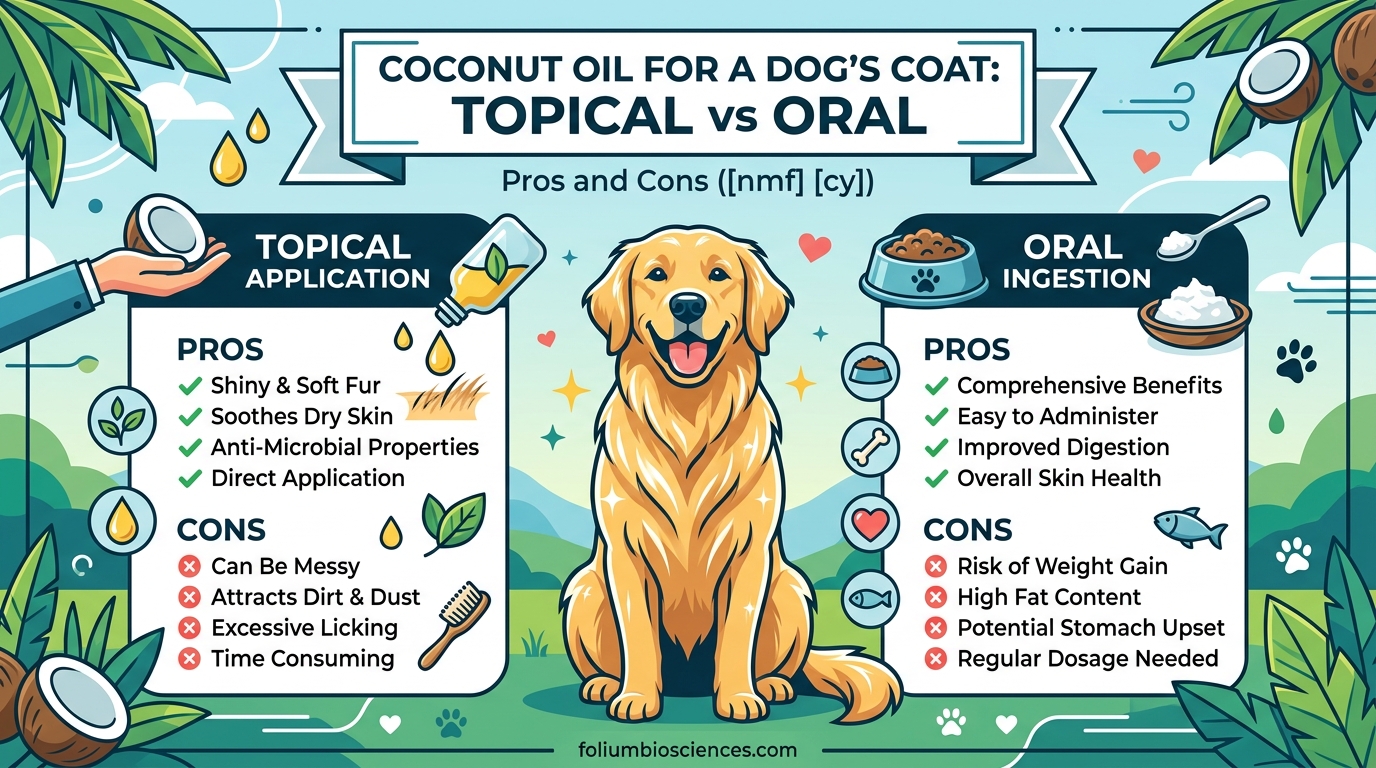
Topical coconut oil excels for immediate skin relief, localized hot spots, and surface-level coat conditioning. If your dog has a specific dry patch, minor skin irritation, or cracked paws, direct application delivers targeted results. The effects are visible within hours for moisture relief.
The downside? Many dogs immediately lick off topical applications, reducing effectiveness and adding calories they do not need. Topical use also creates a mess on furniture and floors. You will need to supervise your dog after application to prevent them from licking the oil away.
When Oral Supplementation Works Best
Oral coconut oil provides systemic benefits that topical application cannot match. For overall coat health, immune support, and digestive benefits, adding coconut oil to food makes more sense. The effects take longer to see—typically 2-4 weeks—but address root causes rather than symptoms.
The downside involves calorie addition and potential digestive upset. Dogs with sensitive stomachs may experience diarrhea when first introduced. There is also a real risk of pancreatitis in susceptible dogs, making veterinary consultation essential before starting oral supplementation.
Can You Use Both Methods Together?
Some owners successfully combine both approaches for maximum benefit. A small oral dose supports systemic health while occasional topical applications address specific problem areas. However, you must account for the calories from oral doses and monitor total fat intake carefully.
If your dog has any health conditions, especially pancreatic issues, obesity, or a history of digestive problems, stick to topical-only use unless your veterinarian specifically approves oral supplementation.
Risks, Side Effects, and Safety Considerations
Coconut oil is not risk-free for dogs. Understanding potential side effects helps you make safer choices and recognize problems early.
Pancreatitis Risk — The Most Serious Concern
Pancreatitis represents the most serious risk of coconut oil supplementation, particularly for oral use. High-fat foods can trigger this painful, potentially life-threatening inflammation of the pancreas. Certain breeds including Miniature Schnauzers, Yorkshire Terriers, and Shetland Sheepdogs carry higher genetic risk.
Symptoms include vomiting, diarrhea, loss of appetite, abdominal pain, and lethargy. If your dog shows these signs after starting coconut oil, discontinue use immediately and contact your veterinarian. Never give oral coconut oil to a dog with a history of pancreatitis without explicit veterinary approval.
Weight Gain and Obesity Concerns
Coconut oil contains about 120 calories per tablespoon. Adding this to your dog’s diet without reducing other food leads to weight gain over time. Obesity creates its own cascade of health problems including joint issues, diabetes, and cardiovascular strain.
Calculate coconut oil calories into your dog’s daily intake. For a 50-pound dog receiving one tablespoon daily, that represents roughly 10-15% of their daily caloric needs. Reduce regular food accordingly or choose topical-only application for overweight dogs.
Digestive Upset and Diarrhea
Introducing coconut oil too quickly commonly causes loose stools or diarrhea. Dogs need time to adjust to increased fat intake. Start with a quarter of the target dose and increase gradually over two weeks. Stop and consult your vet if diarrhea persists beyond a few days.
Allergic Reactions
Though rare, some dogs develop allergic reactions to coconut oil. Signs include skin redness, itching, hives, or digestive upset that does not resolve. Discontinue use immediately if you suspect an allergic response. For topical use, test a small patch of skin first and wait 24 hours before broader application.
When to Avoid Coconut Oil Completely
Avoid oral coconut oil if your dog has pancreatitis, diabetes, obesity, or a history of fat intolerance. Topical use may still be appropriate for skin benefits, but discuss with your veterinarian first. Puppies under six months should not receive oral coconut oil as their digestive systems are still developing.
How to Apply Coconut Oil to Your Dog: Step-by-Step Guide
Proper application technique maximizes benefits while minimizing mess and ingestion. Follow these guidelines for both topical and oral use.
Topical Application: Wet vs. Dry Fur
Apply coconut oil to dry fur for deeper penetration into the skin. Wet fur creates a barrier that prevents the oil from reaching the skin surface effectively. However, for overall coat conditioning after bathing, applying to damp (not soaking wet) fur helps distribute the oil evenly through the coat.
Step 1: Warm a small amount of coconut oil between your palms until liquid.
Step 2: Part your dog’s fur and massage the oil directly into the skin for dry patches.
Step 3: Work remaining oil through the coat with your fingers or a soft brush.
Step 4: For paw pads, apply generously and consider using dog booties for 30 minutes to prevent licking.
How Often Should You Apply Coconut Oil?
For dry skin issues, apply coconut oil 2-3 times weekly. Daily application is safe for short periods but may lead to excessively oily fur. For coat conditioning, once weekly suffices for most dogs. Always start less frequently and increase based on your dog’s response.
Oral Dosage Guidelines by Dog Size
Start with half these amounts and increase gradually over two weeks:
Small dogs (under 25 lbs): 1/4 teaspoon daily
Medium dogs (25-60 lbs): 1/2 teaspoon daily
Large dogs (60+ lbs): 1 teaspoon daily
These are general guidelines. Your veterinarian may recommend different amounts based on your dog’s health status and specific needs. Never exceed 1 teaspoon per 10 pounds of body weight.
Preventing Your Dog From Licking Topical Applications
The biggest challenge with topical coconut oil is preventing your dog from licking it off immediately. Apply during a distraction activity like mealtime or a walk. For paw applications, use booties or socks for 20-30 minutes. A light t-shirt can protect body applications on the torso.
Consider applying coconut oil right before a distracting activity your dog loves. Many owners find success applying before a car ride or play session when their dog’s attention is focused elsewhere.
What Veterinarians Say About Coconut Oil for Dogs
Veterinary opinions on coconut oil vary widely, reflecting the limited scientific research specifically in dogs. Understanding the medical consensus helps set realistic expectations.
The General Veterinary Consensus
Most veterinarians acknowledge that coconut oil is unlikely to harm healthy dogs when used appropriately. However, many express skepticism about the dramatic claims made by some proponents. The American Kennel Club notes that while topical application is generally safe, it can be messy and may clog pores in some dogs.
PetMD takes a more cautious stance, stating that veterinarians typically do not recommend coconut oil for dogs’ skin because risks often outweigh benefits. They emphasize that established veterinary treatments have stronger evidence behind them.
When Veterinarians Recommend It
Some veterinarians suggest coconut oil as a supplementary option for specific situations. Dry cracked paw pads, minor skin irritations, and coat conditioning are common approved uses. The key is using it as an adjunct to—not replacement for—veterinary treatment for underlying conditions.
Research Limitations in Dogs
The scientific literature on coconut oil specifically in dogs remains limited. Most evidence comes from human studies or in-vitro research. While the antimicrobial properties of lauric acid are well-documented in laboratory settings, clinical trials in dogs with skin conditions are sparse.
This lack of robust veterinary research leads many practitioners to recommend proven treatments first. Omega-3 fatty acids from fish oil, for example, have stronger evidence for skin and coat health in dogs.
Frequently Asked Questions
Can I put coconut oil on my dog’s fur every day?
Daily application is generally safe for short periods, but most dogs do not need it that frequently. 2-3 times weekly provides benefits without making the coat excessively oily. If using daily for a specific skin issue, reduce frequency once improvement occurs.
Do vets recommend coconut oil for dogs?
Veterinary opinions vary. Some vets suggest it for minor skin issues and coat conditioning, while others caution against it due to limited scientific evidence in dogs. Most agree it is safe for healthy dogs when used appropriately, but emphasize it should not replace veterinary treatment for medical conditions.
Is it okay if my dog licks coconut oil?
Small amounts of coconut oil are not toxic if licked, but excessive ingestion defeats the purpose of topical application. The calories add up quickly, and too much fat can cause digestive upset. Try to prevent licking for at least 20-30 minutes after application using distractions or protective clothing.
How much coconut oil should I give my dog per day?
Start with small amounts: 1/4 teaspoon daily for small dogs under 25 lbs, 1/2 teaspoon for medium dogs 25-60 lbs, and 1 teaspoon for large dogs over 60 lbs. Gradually increase over two weeks while monitoring for digestive issues. Never exceed 1 teaspoon per 10 pounds of body weight without veterinary guidance.
Should I put coconut oil on my dog wet or dry?
Apply to dry fur for treating skin issues so the oil penetrates effectively to the skin surface. For general coat conditioning after bathing, application to damp (not soaking wet) fur helps distribute the oil evenly through the coat. Avoid applying to soaking wet fur as water blocks absorption.
Can I leave coconut oil on my dog overnight?
Overnight application works well for dry paw pads when you can cover them with booties or socks. For body application, overnight may lead to your dog licking it off while you sleep or transferring oil to furniture. A few hours is usually sufficient for absorption; overnight is not necessary for benefits.
Why is my dog going crazy over coconut oil?
Many dogs love the taste and smell of coconut oil. The fatty aroma appeals to their senses, and the high fat content makes it highly palatable. This enthusiasm is normal but requires supervision to prevent excessive licking of topical applications or begging for more oral doses than recommended.
Final Thoughts: Making the Right Choice for Your Dog
When deciding between coconut oil for a dog’s coat—topical vs oral—consider your specific goals and your dog’s health status. Topical application provides fast, localized relief for dry skin and adds immediate shine. Oral supplementation supports systemic health and nourishes coat from within but carries higher risks and takes weeks to show results.
We recommend starting with topical use unless your veterinarian specifically suggests oral supplementation. It carries fewer risks while still delivering noticeable coat and skin benefits. Whichever method you choose, always select virgin, cold-pressed coconut oil and introduce it gradually.
Remember that coconut oil for dogs is not a miracle cure and should never replace proper veterinary care. If your dog has persistent skin issues, allergies, or coat problems, consult your veterinarian to identify underlying causes. Used wisely, coconut oil can be a helpful addition to your dog’s care routine in 2026.