
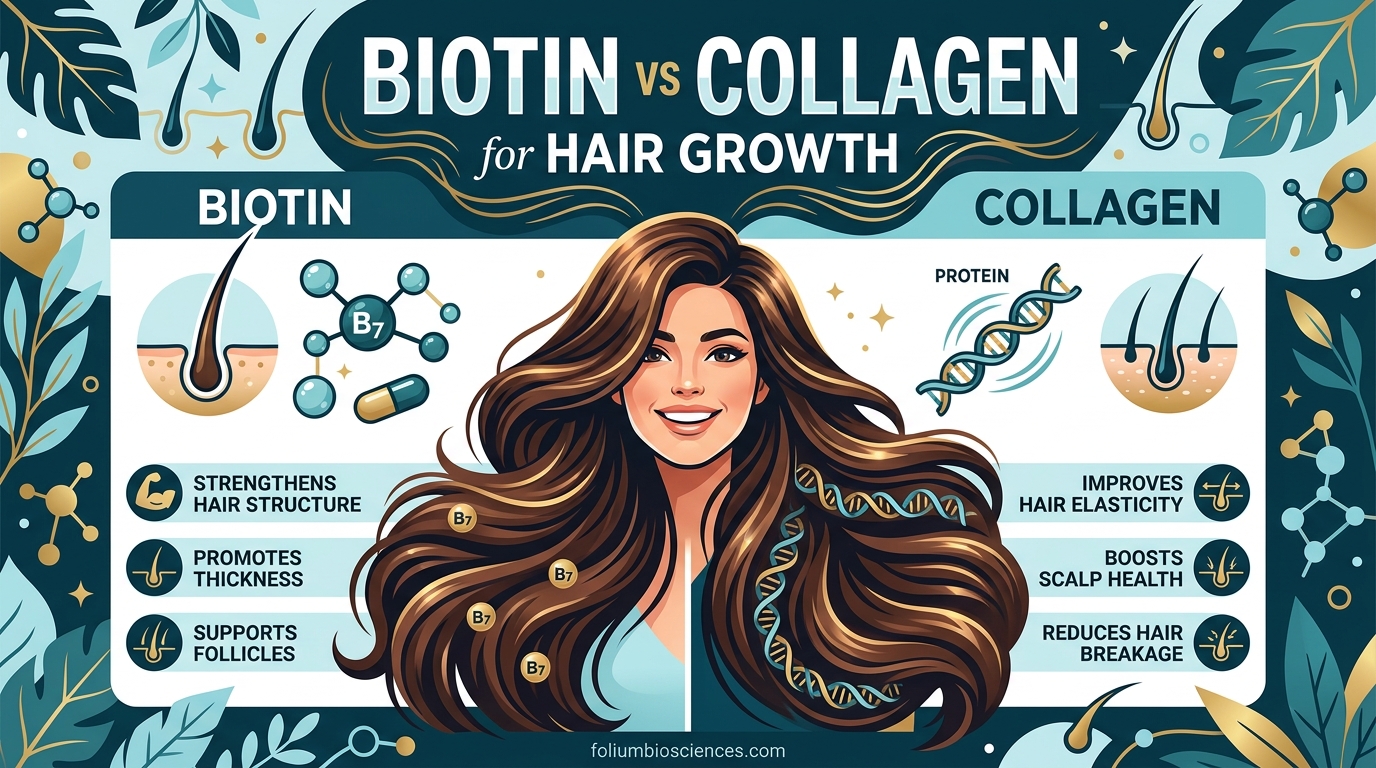
You have probably seen the supplement aisle packed with biotin and collagen products promising thicker, healthier hair. I have spent months researching which one actually works and discovered the answer depends entirely on what is causing your hair issues in the first place.
Biotin vs collagen for hair growth is not a simple either-or question. These two supplements work through completely different mechanisms in your body. One addresses cellular energy and protein metabolism while the other provides structural support for your hair follicles.
In this guide, I will break down exactly which supplement works for which specific cause of hair problems. You will learn the science behind each option, what the research actually shows, and how to make an informed decision for your situation.
Table of Contents
What Is Collagen?
Collagen is the most abundant structural protein in your body, making up about 30% of your total protein content. Think of it as the scaffolding that holds everything together from your skin to your joints to your hair follicles.
Your body produces collagen naturally using amino acids from the protein you eat. There are 28 different types of collagen, but types I, II, and III are most relevant for hair health. Type I collagen provides the structural framework for your skin and hair follicles.
Collagen peptides are simply collagen that has been hydrolyzed (broken down) into smaller chains of amino acids. This process makes collagen more bioavailable, meaning your body can actually absorb and use it. When you take collagen supplements, you are essentially providing your body with the building blocks it needs to maintain healthy hair follicle structure.
What Is Biotin?
Biotin, also known as vitamin B7, is a water-soluble vitamin that acts as a cofactor for several metabolic enzymes. Unlike collagen which is a structural component, biotin functions more like a catalyst that helps your body process nutrients and build proteins.
Your body needs biotin to convert carbohydrates, fats, and proteins into energy. Specifically for hair, biotin plays a role in keratin production. Keratin is the protein that makes up your hair strands, so adequate biotin is necessary for healthy hair formation.
Biotin deficiency is relatively rare in people who eat a balanced diet. However, when deficiency does occur, hair loss is one of the primary symptoms. This is why biotin supplements have become popular for hair growth even though the evidence is limited for people with normal biotin levels.
How Collagen Supports Hair Health
Collagen supports hair health through several interconnected mechanisms. Understanding these helps explain when collagen might be the right choice for your specific hair concerns.
First, collagen provides the amino acid building blocks your body needs to produce keratin. Your hair is primarily made of keratin, and your body requires specific amino acids like glycine, proline, and hydroxyproline to manufacture it. Collagen is rich in these amino acids, providing a direct supply line for hair construction.
Second, collagen supports the structural integrity of your hair follicles. Your follicles sit within the dermal layer of your skin, and collagen forms the extracellular matrix that surrounds and supports them. As collagen naturally declines with age, the scalp environment becomes less supportive, potentially contributing to hair thinning.
Third, collagen may help protect against free radical damage. The antioxidant properties of collagen peptides can help defend hair follicles from oxidative stress, which is a known factor in hair aging and loss.
Fourth, collagen improves skin elasticity and hydration. A healthier scalp environment with better blood flow and moisture retention creates optimal conditions for hair growth.
How Biotin Supports Hair Growth
Biotin works differently than collagen. Rather than providing structural materials, biotin enables the chemical reactions your body needs to build hair proteins.
Biotin acts as a cofactor for carboxylase enzymes involved in fatty acid synthesis, gluconeogenesis, and amino acid metabolism. For hair specifically, these enzymes help produce keratin infrastructure. Without sufficient biotin, your body cannot efficiently manufacture the proteins that form hair strands.
The critical point here is that biotin supplementation primarily helps people who are actually deficient. Multiple studies have shown that biotin improves hair growth in individuals with biotin deficiency or related disorders. However, for people with normal biotin levels, the evidence for hair growth benefits is much weaker.
That said, some research suggests biotin may still benefit hair quality even in non-deficient individuals. A 2015 study in the Journal of Clinical and Aesthetic Dermatology found that women with self-perceived thinning hair saw improved hair growth and quality after 90 days of biotin supplementation.
Biotin vs Collagen for Hair Growth: Which Works for What Cause
This is the question you came here to answer. The truth is neither supplement is universally better. Each addresses different underlying causes of hair issues. Here is how to match the right supplement to your specific situation.
Choose biotin if you have:
Confirmed or suspected biotin deficiency. Signs include brittle nails, skin rashes, and neurological symptoms alongside hair loss. Risk factors include long-term antibiotic use, certain medications, pregnancy, and malabsorption conditions.
Hair thinning with no clear structural cause. If your hair is breaking or falling out but your scalp appears healthy, biotin may help by supporting the protein synthesis needed for strong hair growth.
Choose collagen if you have:
Age-related hair thinning. After age 25, your natural collagen production drops by about 1% per year. This structural decline can affect hair follicle support.
Hair that is becoming finer or weaker over time. Collagen provides the amino acids needed to rebuild hair structure from the inside out.
Poor scalp health or elasticity issues. If your scalp feels tight or shows signs of aging, collagen can improve the underlying skin structure.
Consider both if you have:
Multiple factors contributing to hair issues. Many people benefit from a combined approach since biotin and collagen work through different mechanisms and are generally safe to take together.
Postpartum hair loss. The combination addresses both the metabolic stress and structural changes that occur after pregnancy.
Scientific Evidence Quality: What the Research Actually Shows
Let us be honest about the evidence. Both supplements have research limitations that are rarely discussed in marketing materials.
Biotin evidence: Strong evidence exists for treating biotin deficiency and related disorders. However, high-quality randomized controlled trials showing hair growth benefits in healthy adults are limited. Most studies are small, short-term, or funded by supplement manufacturers.
Collagen evidence: Research on collagen for hair specifically is emerging but still preliminary. A 2021 study published in the Journal of Cosmetic Dermatology found that oral collagen peptides increased hair thickness in women after 16 weeks. However, larger, longer-term studies are needed to confirm these findings.
The bottom line: Both supplements show promise, but neither is a guaranteed solution. Individual results vary significantly based on your specific situation, underlying causes, and consistency of use.
Can You Take Biotin and Collagen Together?
Yes, you can absolutely take biotin and collagen together. In fact, many people find this combination more effective than either supplement alone. There are no known negative interactions between these two nutrients.
The combination makes sense from a biological perspective. Biotin supports the metabolic processes that build hair proteins, while collagen provides the actual amino acid building blocks those processes use. Together, they address both the supply chain and the construction crew.
There is also a synergy with vitamin C that you should know about. Your body needs vitamin C to convert the amino acids in collagen into stable collagen fibers. Without adequate vitamin C, collagen supplementation is less effective. Many quality collagen supplements include vitamin C for this reason, or you can take them alongside a vitamin C source.
If you choose to take both, timing matters less than consistency. Some people prefer taking collagen in the morning on an empty stomach for better absorption, while others take it with meals to avoid digestive discomfort. Biotin can be taken any time of day.
Dosage Recommendations and Timeline for Results
Knowing what to expect and when helps you avoid abandoning supplements prematurely.
Biotin dosage: The recommended dietary allowance for adults is 30 micrograms daily. Most hair-focused supplements contain 2,500 to 10,000 micrograms. There is no established upper limit with documented toxicity, though very high doses can interfere with lab tests.
Collagen dosage: Studies showing benefits typically use 2.5 to 15 grams daily of hydrolyzed collagen peptides. Most hair-focused supplements fall in the 5 to 10 gram range.
Timeline expectations: Hair grows slowly. You cannot expect overnight results. Here is what research and user experiences suggest:
4 to 6 weeks: Possible improvement in nail strength (often noticed before hair changes).
8 to 12 weeks: Some users report reduced shedding and early signs of new hair growth.
3 to 6 months: More noticeable changes in hair thickness and quality.
6+ months: Full results typically visible, especially for collagen which builds structural changes gradually.
Side Effects and Safety Considerations
Both supplements are generally well-tolerated, but there are important safety considerations you should know.
Biotin side effects: Biotin is water-soluble and excess is excreted in urine, so toxicity is rare. However, high-dose biotin can cause acne in some people. The bigger concern is that biotin can interfere with certain laboratory tests, including thyroid tests and troponin tests used for heart attacks. Always tell your healthcare provider if you are taking biotin before blood work.
Collagen side effects: Collagen supplements may cause digestive upset in some people, including feelings of fullness, heartburn, or mild nausea. Marine collagen can trigger allergic reactions in people with fish allergies. Some people report a lingering unpleasant taste.
Special considerations: People with Ehlers-Danlos syndromes (EDS) have connective tissue disorders and should consult their healthcare provider before taking collagen supplements. While collagen may theoretically help, individual guidance is important for this population.
Pregnant and breastfeeding women should check with their healthcare provider before starting any new supplement regimen.
Food Sources of Biotin and Collagen
Supplements are convenient, but you can also support your hair health through diet.
Biotin-rich foods:
Egg yolks are one of the best sources. One cooked egg provides about 10 micrograms. Nuts and seeds, particularly almonds and sunflower seeds, offer significant biotin. Legumes, especially peanuts and soybeans, contain moderate amounts. Organ meats like liver are extremely rich in biotin. Sweet potatoes, mushrooms, and avocados provide smaller amounts.
Collagen-supporting foods:
Bone broth made from simmering animal bones releases collagen into the liquid. Fish with the skin on provides marine collagen. Chicken skin and cartilage contain collagen. Egg whites provide proline, one of the amino acids needed for collagen production. Citrus fruits, berries, and bell peppers supply vitamin C which is essential for collagen synthesis.
A balanced diet typically provides adequate biotin for most people. Collagen itself is not found in plant foods, but you can support your body’s collagen production by eating protein-rich foods and vitamin C sources.
FAQ
What works better for hair growth, collagen or biotin?
The answer depends on your specific cause of hair issues. Biotin works best if you have a biotin deficiency or metabolic issues affecting keratin production. Collagen works better for age-related thinning and structural weakness in hair follicles. Many people benefit from taking both since they work through different mechanisms.
Should people with Ehlers-Danlos take collagen?
People with Ehlers-Danlos syndromes should consult their healthcare provider before taking collagen supplements. While collagen may theoretically help with connective tissue support, individual medical guidance is essential for this population due to the complexity of these disorders.
Can you take biotin and collagen together?
Yes, biotin and collagen can be taken together safely. There are no known negative interactions between these supplements. In fact, many people find the combination more effective than either alone since biotin supports protein metabolism while collagen provides amino acid building blocks.
How long does it take to see results from biotin or collagen?
Hair grows slowly, so patience is required. Initial changes like reduced shedding may appear in 8 to 12 weeks. More noticeable improvements in thickness and quality typically require 3 to 6 months of consistent use. Full results from collagen may take 6 months or longer due to its structural rebuilding process.
What are the side effects of biotin and collagen supplements?
Biotin is generally safe but high doses can cause acne in some people and interfere with laboratory tests including thyroid and cardiac markers. Collagen may cause digestive upset, heartburn, or an unpleasant taste. Marine collagen can trigger allergic reactions in people with fish allergies.
What are the big 3 for hair regrowth?
The big 3 for hair regrowth typically refers to minoxidil (Rogaine), finasteride (Propecia), and ketoconazole shampoo. These are pharmaceutical treatments with stronger evidence for hair regrowth than supplements. Biotin and collagen are better viewed as supportive nutrients rather than primary treatments for significant hair loss.
Does biotin affect AMH levels?
High-dose biotin supplementation can interfere with certain laboratory tests, including some hormone assays. There have been reports of biotin affecting AMH (anti-Mullerian hormone) test results. If you are having fertility testing, inform your healthcare provider about any biotin supplements you are taking.
Conclusion
Biotin vs collagen for hair growth is not a competition where one supplement wins. The right choice depends entirely on what is causing your hair concerns.
If you suspect a biotin deficiency, have brittle nails alongside hair issues, or want metabolic support for protein synthesis, biotin is likely your better option. If you are dealing with age-related thinning, structural weakness, or want to support scalp health, collagen makes more sense.
Many people find the combination works best. Since biotin and collagen work through different mechanisms and are safe to take together, a combined approach addresses multiple potential causes simultaneously.
Remember that supplements support hair health but they are not miracle cures. Results take months, not weeks. Quality matters, so choose reputable brands with third-party testing. And if you are experiencing significant hair loss, consult a healthcare provider to rule out underlying medical conditions.
Your hair deserves patience and the right nutrients matched to your specific needs.