
Walk into any garden center and you will see rows of fertilizer bottles covered in numbers like 10-10-10, 9-3-6, or 15-30-15. If those numbers make your eyes glaze over, you are in good company. Most houseplant owners I talk to just grab whatever is on sale and hope for the best. But understanding the NPK ratio on your fertilizer label is the single most useful thing you can learn for keeping your houseplants healthy and thriving.
In this guide, I will break down exactly what those three numbers mean, how each nutrient affects your plants, and which NPK ratio fertilizer houseplants actually need depending on whether you are growing leafy foliage or blooming beauties. No chemistry degree required.
Table of Contents
What Does NPK Mean on a Fertilizer Label?
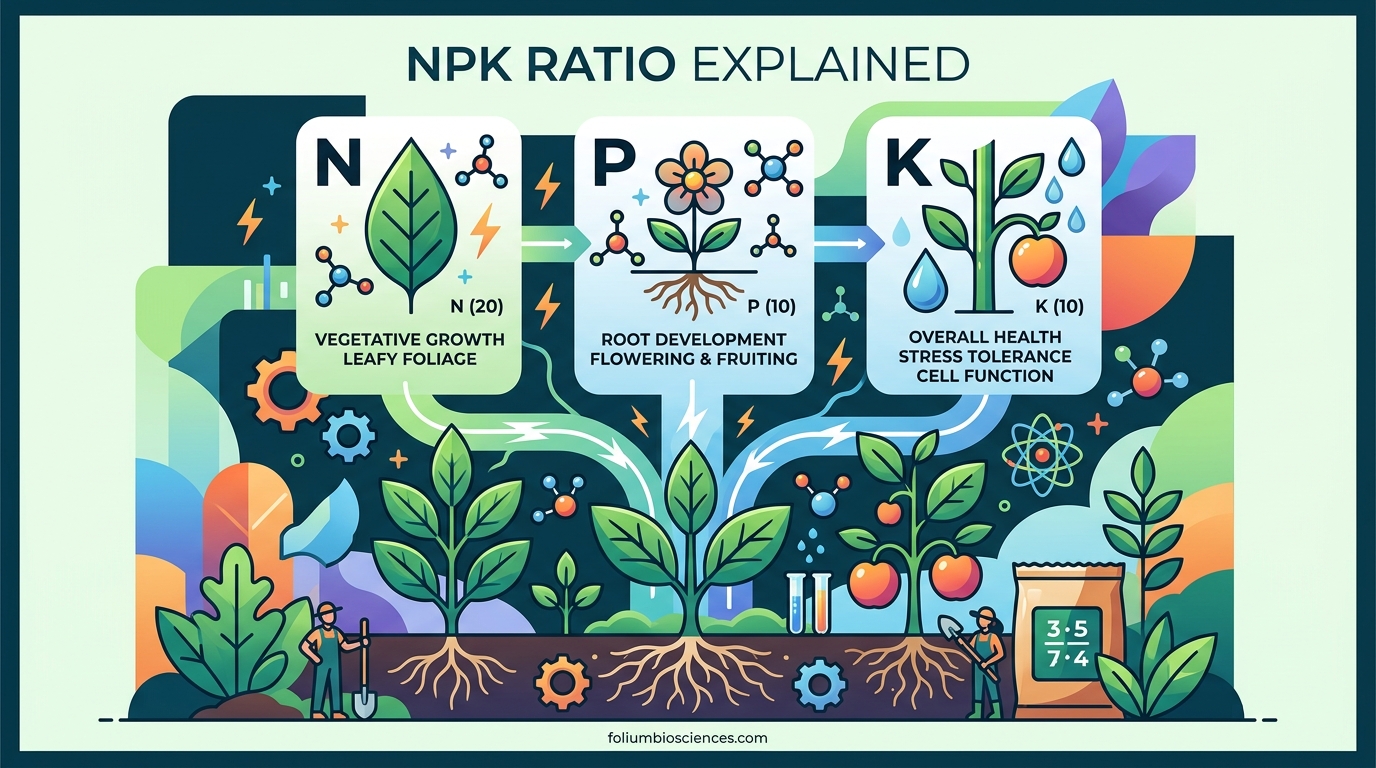
NPK stands for the three primary macronutrients every plant needs in the largest amounts: nitrogen (N), phosphorus (P), and potassium (K). The three numbers on a fertilizer bag or bottle represent the percentage of each nutrient by weight, always listed in the same N-P-K order.
Here is what that looks like in practice:
- 10-10-10 means 10% nitrogen, 10% phosphorus (as P2O5), and 10% potassium (as K2O) by weight. This is considered a balanced fertilizer.
- 9-3-6 means 9% nitrogen, 3% phosphorus, and 6% potassium. The ratio simplifies to roughly 3-1-2, which is nitrogen-heavy.
- 10-30-20 means 10% nitrogen, 30% phosphorus, and 20% potassium. This is a bloom fertilizer with heavy phosphorus.
The remaining 70% (or whatever is left after those three numbers) consists of filler material, secondary nutrients like calcium and magnesium, and trace micronutrients such as iron, zinc, and boron. Those filler materials matter because they help distribute the nutrients evenly and improve how the fertilizer dissolves.
One important distinction: the phosphorus and potassium numbers are listed as their oxide forms (P2O5 and K2O), not elemental amounts. The actual phosphorus content is about 44% of the P2O5 number, and actual potassium is about 83% of the K2O number. For most houseplant owners, the ratio between the three numbers matters far more than the exact percentages, so you do not need to convert these yourself.
Think of the NPK ratio as a recipe. A 3-1-2 ratio like 9-3-6 gives your plant roughly three parts nitrogen to one part phosphorus to two parts potassium. Whether you use 9-3-6 or 12-4-8, the proportions are the same. The higher numbers just mean the fertilizer is more concentrated, so you would use less of it per gallon of water.
What Each Nutrient Does for Your Houseplants
Each of the three macronutrients plays a distinct role in plant health. Understanding these roles helps you pick the right NPK ratio for your specific plants and recognize deficiency symptoms before they become serious problems.
Nitrogen (N): The Growth Engine
Nitrogen is the nutrient most responsible for green, leafy growth. It drives chlorophyll production, which is what makes leaves green and enables photosynthesis. Without enough nitrogen, your plant simply cannot produce new leaves efficiently.
Nitrogen also fuels protein synthesis within the plant. Proteins are the building blocks of new cells, so adequate nitrogen means faster growth, larger leaves, and richer green coloration. This is why foliage-focused fertilizers always lead with nitrogen.
Signs of too little nitrogen: Older leaves turn pale yellow starting from the tips and margins, while new growth comes in smaller and slower than expected. The yellowing happens on lower leaves first because the plant moves its limited nitrogen reserves to support new growth at the top.
Signs of too much nitrogen: Rapid, leggy growth with dark green leaves but weak stems. Plants may produce lots of foliage at the expense of flowers. In extreme cases, you can see fertilizer burn as brown, crispy leaf margins.
Phosphorus (P): Roots and Blooms
Phosphorus supports root development and flower production. It plays a central role in energy transfer within the plant through ATP (adenosine triphosphate), the molecule that stores and moves energy around plant cells. Strong roots mean better nutrient and water uptake, which supports everything else the plant does.
For flowering houseplants, phosphorus is the key nutrient that triggers and sustains bloom production. Without enough phosphorus, plants may grow healthy leaves but refuse to flower, no matter how much light they get.
Signs of too little phosphorus: Stunted growth with dark green or purplish-tinged leaves, especially on the undersides. Root systems remain small and underdeveloped. Flowering plants may not produce buds at all.
Signs of too much phosphorus: Ironically, excess phosphorus can block the uptake of other nutrients like iron, zinc, and copper. This shows up as interveinal chlorosis, where leaf tissue between the veins turns yellow while the veins stay green.
Potassium (K): The Immune Booster
Potassium strengthens overall plant health and disease resistance. It regulates water movement within plant cells, improves drought resistance, and strengthens cell walls to make plants more resilient against pests and environmental stress.
Unlike nitrogen and phosphorus, potassium does not become part of the plant’s physical structure. Instead, it works as an activator for dozens of enzymes that control processes like stomata opening and closing, sugar transport, and protein formation. Think of potassium as the nutrient that keeps all systems running smoothly.
Signs of too little potassium: Leaf edges and tips turn brown and crispy (a condition called necrosis), starting on older leaves. Plants become more susceptible to disease and may wilt more easily between waterings.
Signs of too much potassium: Similar to excess phosphorus, too much potassium can interfere with calcium and magnesium absorption, leading to secondary deficiency symptoms.
Best NPK Ratio for Leafy Houseplants
For foliage plants, the ideal NPK ratio is approximately 3-1-2. This ratio mirrors the actual nutrient uptake pattern of fast-growing leafy plants, which use far more nitrogen than phosphorus and a moderate amount of potassium. If you want one number to remember for your houseplant fertilizer decisions, 3-1-2 is it for foliage.
Common fertilizers that match or approximate this ratio include:
- 9-3-6 (exact 3-1-2 ratio, found in products like Superthrive and Dynamite Foliage)
- 12-4-8 (exact 3-1-2 ratio, commonly available as Foliage Pro)
- 24-8-16 (exact 3-1-2 ratio, found in Miracle-Gro water-soluble formulas)
- 10-10-10 (balanced, works as a general-purpose alternative when diluted to half strength)
Plants that thrive with a nitrogen-heavy 3-1-2 ratio include monstera, pothos, philodendron, snake plants, ZZ plants, ferns, and most aroids. These plants produce continuous new leaves during their growing season and need that steady nitrogen supply to maintain lush, green growth.
In our houseplant community discussions, I see many experienced growers using a diluted balanced fertilizer like 20-20-20 at quarter or half strength for all their foliage plants with great results. The specific ratio matters less than consistent, moderate feeding. A 3-1-2 formula simply gives foliage plants what they use most, reducing wasted phosphorus that can accumulate in the soil.
The key takeaway: nitrogen-heavy fertilizers support the green leafy growth that foliage plants are all about. You do not need a different fertilizer for every single plant, but starting with a 3-1-2 ratio gives your leafy houseplants the best match for their nutritional needs.
Best NPK Ratio for Flowering Houseplants
Flowering houseplants benefit from a higher phosphorus ratio, typically in the range of 1-3-2 or 1-2-1. The extra phosphorus supports the energy-intensive process of producing blooms, while keeping nitrogen moderate so the plant does not channel all its energy into growing more leaves instead of flowers.
Common fertilizers for flowering houseplants include:
- 10-30-20 (1-3-2 ratio, often labeled as bloom booster formulas)
- 15-30-15 (1-2-1 ratio, widely available bloom food)
- 7-9-5 (close to 1-1-1 with slight phosphorus emphasis, works for light bloomers)
Plants that benefit from a phosphorus-focused formula include African violets, orchids, peace lilies, anthuriums, hibiscus, hoya, and holiday cacti. These plants produce showy blooms that demand extra phosphorus during their flowering phase.
A practical approach I recommend is switching fertilizers based on the season or growth phase. During active growth in spring and summer, use a balanced or slightly nitrogen-heavy formula to build strong foliage and roots. When the plant begins setting buds, transition to a bloom booster with higher phosphorus to support flower production. This two-phase approach gives your plants exactly what they need at each stage.
One word of caution about high-phosphorus fertilizers: phosphorus does not leach out of soil as easily as nitrogen does. Repeated applications of heavy phosphorus formulas can lead to buildup that blocks other nutrients. If you notice your plant’s leaves yellowing between the veins despite regular feeding, excess phosphorus may be the culprit. Flushing the pot with plain water every few months helps prevent this issue.
How to Apply Fertilizer Without Burning Your Plants
Overfertilizing is the most common mistake I see among houseplant owners, and it causes more damage than underfertilizing ever could. Fertilizer burn shows up as brown, crispy leaf tips and margins, and in severe cases, wilting and root damage. Here is how to feed your plants safely.
Step 1: Water first. Always water your plant with plain water before applying fertilizer. Dry roots absorb concentrated nutrients too quickly, which causes osmotic stress and root damage. Wet soil acts as a buffer, diluting the fertilizer as it reaches the roots.
Step 2: Dilute to half strength. Most fertilizer label recommendations are calibrated for outdoor plants in full sun. Indoor plants grow more slowly and need less food. Start with half the recommended dose and observe how your plant responds. You can always increase slightly, but you cannot undo fertilizer burn.
Step 3: Feed during active growth only. Most houseplants grow actively from spring through early fall and slow down or go dormant in winter. Fertilize every 2 to 4 weeks during the growing season and stop or reduce to monthly in winter when growth slows. Feeding a dormant plant forces nutrients it cannot use, leading to salt buildup in the soil.
Step 4: Flush pots regularly. Every 2 to 3 months, water your plants heavily with plain water until it runs freely from the drainage holes. This flushes accumulated salts from fertilizer and tap water out of the root zone. If you see a white crust forming on the soil surface or the pot rim, that is a clear sign salt is building up and you need to flush.
Step 5: Watch and adjust. Your plants will tell you if your fertilizer strategy is working. Rich green new growth means you are on the right track. Brown tips, yellowing, or stunted growth mean something needs to change. Adjust your concentration or frequency based on what each plant is telling you.
Signs Your Fertilizer Strategy Is Wrong
Sometimes the hardest part of plant care is figuring out what went wrong. Here are the most common symptoms I see and what they typically mean in terms of plant food and nutrient balance.
Yellow lower leaves moving upward: This is the classic sign of nitrogen deficiency. The plant is pulling nitrogen from older leaves to fuel new growth. Switch to a nitrogen-heavy formula or increase your feeding frequency slightly.
Brown, crispy leaf tips and edges: This usually means fertilizer burn or salt buildup. Flush the pot thoroughly with plain water and cut your fertilizer dose in half for the next few applications.
Green, leafy plant but no flowers: Your plant is likely getting too much nitrogen and not enough phosphorus. Switch to a bloom formula with a higher middle number to encourage flower production.
White crust on soil surface or pot rim: This is accumulated salt from fertilizer and hard tap water. Flush the pot generously and consider reducing your fertilizer concentration going forward.
Overall stunted, pale growth: This can indicate a general nutrient deficiency. If you have not fertilized in months, start a regular feeding schedule with a balanced fertilizer at half strength and see if the plant responds within a few weeks.
Purple or reddish leaf tinting: Phosphorus deficiency often shows up as purple or reddish coloring on leaves, particularly on the undersides. This is more common in cool conditions when phosphorus uptake is reduced.
FAQ
What is the best NPK ratio for flowering plants?
The best NPK ratio for flowering houseplants is approximately 1-3-2, meaning higher phosphorus relative to nitrogen and potassium. Formulas like 10-30-20 or 15-30-15 provide the extra phosphorus that supports bud formation and bloom production. Switch to a bloom booster when your plant begins setting buds, and use a balanced formula during its regular growing phase.
What is a poor man’s fertilizer?
A poor man’s fertilizer typically refers to everyday household items that can supplement plant nutrients at no extra cost. Coffee grounds add small amounts of nitrogen, crushed eggshells provide calcium, and banana peel tea delivers potassium. While these home remedies can supplement a fertilizing routine, they do not provide the complete or consistent nutrient profile that commercial fertilizers offer. Use them as supplements, not replacements.
What is the NPK ratio for leafy greens and foliage houseplants?
The ideal NPK ratio for leafy houseplants is 3-1-2, which provides extra nitrogen to support chlorophyll production and green leafy growth. Common fertilizers matching this ratio include 9-3-6, 12-4-8, and 24-8-16. Foliage plants like monstera, pothos, and philodendron use more nitrogen than phosphorus, so this ratio closely matches their natural nutrient uptake pattern.
Which fertilizer is called the king of fertilizer?
Nitrogen is often called the king of fertilizers because it has the most visible and immediate impact on plant growth. Adequate nitrogen drives leaf expansion, chlorophyll production, and protein synthesis, making it the nutrient most responsible for visible, vigorous growth. Without sufficient nitrogen, plants cannot efficiently use the other nutrients available to them, which is why nitrogen content is listed first on every fertilizer label.
Choosing the Right NPK Ratio for Your Houseplants
Picking the right NPK ratio fertilizer for houseplants comes down to one simple question: what does your plant grow, leaves or flowers? Leafy foliage plants like monstera and pothos thrive with a nitrogen-heavy 3-1-2 ratio, while flowering plants like African violets and orchids bloom best with a phosphorus-focused 1-3-2 formula.
Start with a balanced 10-10-10 or a foliage-focused 3-1-2 formula at half strength and see how your plants respond. You can always add a bloom booster later for your flowering plants. The most important thing is to feed consistently during the growing season, water before you fertilize, and flush your pots regularly to prevent salt buildup.
Your plants will reward you with stronger growth, richer color, and more blooms once you match the NPK ratio to what they actually need.