
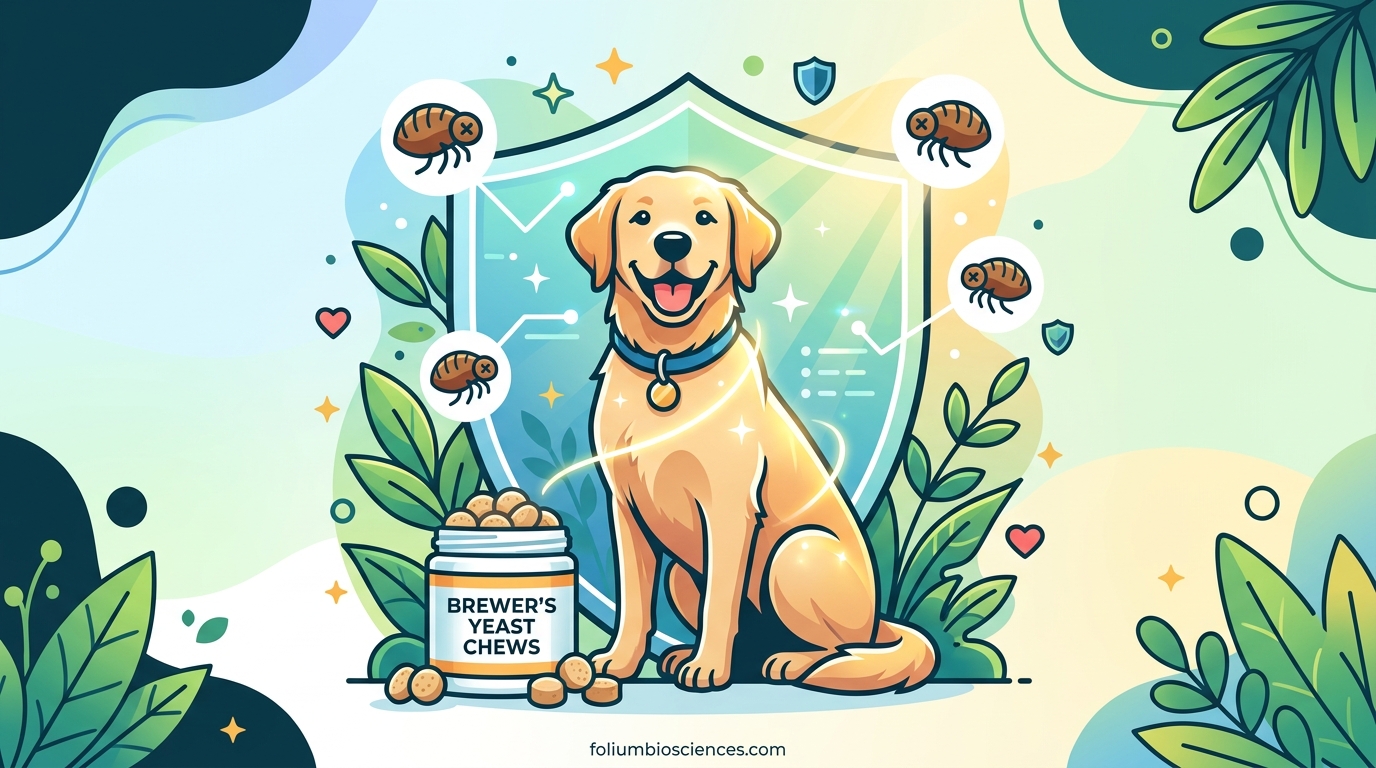
If you have been searching for a natural way to protect your dog from fleas, you have probably come across brewer’s yeast chews marketed as a flea prevention solution. They are sold everywhere, from pet stores to online shops, often with bold claims about repelling fleas naturally. But are brewer’s yeast chews safe for flea prevention, and do they actually work?
The short answer is that brewer’s yeast is generally safe as a dietary supplement for most dogs, but it has not been scientifically proven to repel or kill fleas. Veterinarians consistently recommend proven flea preventives over brewer’s yeast for actual parasite control. The 1983 study by Baker and colleagues, published in the Journal of the American Veterinary Medical Association, found no statistically significant difference in flea counts between dogs given brewer’s yeast and untreated dogs.
In this article, our team breaks down what brewer’s yeast actually is, what the science says about its flea-repelling claims, safety concerns you should know about, and what veterinarians really think about using it for flea prevention in 2026. We will also cover the specific differences between chews, powders, and pills since most guides skip that detail entirely.
Table of Contents
What Is Brewer’s Yeast and Why Do Dog Owners Use It?
Brewer’s yeast is a single-celled fungus called Saccharomyces cerevisiae that is a byproduct of the beer-brewing process. It is packed with B-complex vitamins (including B1, B2, B3, B5, B6, B7, and B9), trace minerals like chromium and selenium, and contains all essential amino acids. As a dietary supplement, it has legitimate nutritional value for dogs.
Dog owners started using brewer’s yeast for flea prevention based on a theory that has been circulating for decades. The idea is that when a dog consumes brewer’s yeast regularly, it changes the scent of the dog’s skin, making them less attractive to fleas. Some pet parents also believe the B-vitamins create an environment in the blood that fleas find unappealing.
These claims sound plausible enough that brewer’s yeast became one of the most popular natural flea remedies. You will find it in pet stores in three main forms: chews, powders, and pills. Many dog owners prefer chews because dogs actually enjoy eating them, making daily supplementation much easier than wrestling with a pill or mixing powder into food.
Outside of flea claims, brewer’s yeast does offer real benefits. It supports skin and coat health, provides immune system support through its antioxidant properties, and can serve as a protein source in a dog’s diet. Some owners report shinier coats and improved digestion when using it as a general wellness supplement. The problem arises when it is marketed and relied upon specifically as a flea repellent.
The Scientific Evidence: Does Brewer’s Yeast Actually Repel Fleas?
Brewer’s yeast has not been scientifically proven to repel or kill fleas on dogs. The most frequently cited study on this topic, conducted by Baker and colleagues in 1983 and published in the Journal of the American Veterinary Medical Association (PubMed ID 6885593), tested brewer’s yeast both alone and in combination with garlic on dogs exposed to fleas. The study found no statistically significant reduction in flea counts compared to untreated control dogs.
This is the study that Google’s AI Overview cites when answering questions about brewer’s yeast and fleas. It is the same study veterinary professionals reference when explaining why they do not recommend brewer’s yeast as a flea preventive. And it has been the standard scientific reference on this topic for over four decades.
So why do some dog owners swear by it? The answer comes down to a few factors. First, there is the placebo effect. When someone starts giving their dog a supplement and the dog does not get fleas that season, they credit the supplement, even though the dog might not have encountered fleas regardless. Second, some brewer’s yeast products contain added ingredients like garlic, which has its own (also unproven but widely discussed) reputation as a natural flea deterrent.
Third, and this is important, many dog owners who use brewer’s yeast chews for flea prevention are also using other preventive measures at the same time. They might be treating their yard, washing bedding regularly, or using environmental controls. When their dog stays flea-free, the chews get the credit even though the real protection likely came from those other measures combined.
Reddit forums are filled with this exact pattern. Some users report complete success with brewer’s yeast, while others say it did absolutely nothing. One thread titled “Brewer’s Yeast – the ultimate flea treatment” claims remarkable results. But dig into the comments and you will find just as many people saying they tried it faithfully for months and still found fleas on their dogs. The anecdotal evidence is deeply inconsistent.
Brewer’s Yeast Chews vs. Powder vs. Pills: Does the Form Matter?
This is a question most articles on this topic completely ignore, but it matters if you are deciding what to buy. Brewer’s yeast supplements come in three forms, and each has practical differences.
Chews are the most popular option and the one most commonly marketed for flea prevention. They are soft, flavored treats that dogs generally enjoy. The main advantage is palatability. Dogs see them as treats rather than medicine, which means consistent daily dosing is much easier. The downside is that chews often contain additional ingredients like flavorings, preservatives, and binding agents. These extras can include things like molasses, glycerin, or other fillers that add calories without nutritional benefit.
Powder form is the most straightforward option. It contains fewer additives, and you can mix it directly into your dog’s food. This form tends to be more concentrated, meaning you get more actual brewer’s yeast per serving compared to chews. The trade-off is that some dogs refuse to eat food with powder mixed in, especially picky eaters who detect even small changes to their meals.
Pills and tablets offer precise dosing and minimal additives. They are easy to store and have a longer shelf life. However, many dogs resist taking pills, which can make daily supplementation a battle.
Here is the bottom line on form: none of these delivery methods changes the fundamental fact that brewer’s yeast is not a proven flea repellent. Whether you choose chews, powder, or pills, the scientific evidence regarding flea prevention remains the same. The form only matters for convenience and your dog’s willingness to take the supplement consistently.
Is Brewer’s Yeast Safe for Dogs? Side Effects and Risks
While brewer’s yeast is not effective for flea prevention, it is generally safe for most healthy dogs when given in appropriate amounts. But “generally safe” does not mean risk-free. There are real side effects and specific groups of dogs that should avoid it entirely.
Common Side Effects
The most frequently reported side effects are digestive issues. Because brewer’s yeast is a live yeast product, it can cause gas, bloating, and mild stomach upset, especially when a dog first starts taking it. Most dogs adjust within a few days, but some experience ongoing digestive discomfort.
Allergic reactions are also possible. Signs of an allergic response include itching, skin redness, hives, or swelling around the face. If you notice any of these symptoms after starting brewer’s yeast, stop giving it immediately and contact your vet.
Which Dogs Should Avoid Brewer’s Yeast
Certain dogs face higher risks and should not take brewer’s yeast without veterinary supervision. Dogs with a history of yeast infections or chronic ear infections may see their condition worsen, since introducing more yeast into the system can disrupt the natural balance of microorganisms.
Dogs with autoimmune conditions need special caution. The immune-stimulating properties of brewer’s yeast, which are beneficial for healthy dogs, can potentially overstimulate a compromised immune system. If your dog has an autoimmune disorder, talk to your vet before adding any new supplement.
Reddit users have specifically raised concerns about giving brewer’s yeast to epileptic dogs. While there is no definitive study linking brewer’s yeast to increased seizure activity, the community discussion highlights the importance of consulting a veterinarian when a dog has any chronic health condition.
Pregnant and nursing dogs should avoid brewer’s yeast unless specifically recommended by a veterinarian. The effects on developing puppies have not been thoroughly studied, and it is always better to err on the side of caution during pregnancy.
Senior dogs with compromised digestion or kidney issues should also be evaluated by a vet before starting supplementation. The additional protein and mineral load may not be appropriate for all older dogs.
Dosage Considerations
There is no officially established veterinary dosage for brewer’s yeast in dogs, which is itself a concern. Most commercial products provide their own dosing guidelines based on dog weight, but these recommendations are not standardized or veterinary-approved in most cases. Following the package directions is the safest approach, but you should still discuss it with your vet, especially if your dog takes other medications or supplements.
What Vets Actually Say About Brewer’s Yeast for Flea Prevention
Veterinarians are fairly consistent in their stance on brewer’s yeast as a flea preventive: they do not recommend it. The veterinary community relies on products that have undergone rigorous testing and have demonstrated effectiveness in controlled studies. Brewer’s yeast has not met that standard for flea prevention.
Most vets will tell you that brewer’s yeast is fine as a general nutritional supplement. The B-vitamins and minerals it provides can support skin health, coat quality, and immune function. But using it as your dog’s primary defense against fleas is not responsible pet care, according to veterinary professionals.
The concern vets raise goes beyond just effectiveness. When dog owners rely on an unproven method like brewer’s yeast chews for flea prevention, they often skip or delay using proven treatments. This leaves their dog vulnerable to flea infestations, which can lead to flea allergy dermatitis, tapeworm infections, anemia in severe cases, and the misery of constant itching and scratching.
Dr. Heather Browning, a veterinarian frequently quoted on pet health topics, has noted that natural does not always mean effective. Many pet owners equate “natural” with “safe and working,” but nature does not guarantee results. Fleas are resilient parasites that have survived for millions of years. They require targeted, proven interventions to control.
If you want to use brewer’s yeast as a supplement for your dog’s coat and skin health, most vets will support that decision. Just do not count on it to keep fleas away. Think of it as a vitamin, not a pest control solution.
Proven Flea Prevention Methods That Actually Work
If brewer’s yeast is not the answer for flea prevention, what is? Here are the methods that veterinarians consistently recommend and that have real scientific evidence behind them.
Veterinary-Approved Flea Preventives
Prescription and over-the-counter flea preventives remain the gold standard. These include monthly topical treatments, oral medications (both chewable tablets and flavored chews), and flea collars that release active ingredients over time. Products containing ingredients like fipronil, imidacloprid, selamectin, spinosad, or fluralaner have been tested extensively and proven to kill and repel fleas effectively.
Oral preventives have become particularly popular in 2026 because they are easy to administer, work systemically, and do not leave residue on your dog’s coat. Many of these products also protect against ticks and other parasites, giving you broader protection than a single-purpose natural remedy ever could.
Natural Approaches With More Evidence
If you are committed to a more natural approach, there are options that have better support than brewer’s yeast. Regular flea combing with a fine-toothed comb physically removes fleas and flea dirt from your dog’s coat. It is labor-intensive but genuinely effective for detection and partial removal.
Washing your dog’s bedding weekly in hot water kills fleas at all life stages. Vacuuming your home frequently, especially carpets, furniture, and baseboards, removes flea eggs and larvae before they can develop into biting adults.
Diatomaceous earth (food grade) can be applied to your yard and home environment to desiccate fleas. While it works more slowly than chemical treatments, it is a legitimate physical control method. Just be sure to use food-grade diatomaceous earth, not pool grade, and avoid inhaling the dust yourself.
Environmental Control
Flea prevention is not just about what goes on or in your dog. Treating your environment is critical because fleas spend most of their life cycle off the host. Only about 5% of the total flea population in your home is actually on your dog at any given time. The rest exist as eggs, larvae, and pupae in your carpets, furniture, and yard.
Mowing your lawn regularly, clearing leaf litter, and reducing shady, moist areas where fleas thrive can significantly reduce the flea population around your home. Treating outdoor areas with nematodes (beneficial microscopic worms that eat flea larvae) is another natural approach gaining traction among pet owners.
When to Talk to Your Vet About Flea Prevention
If your dog currently has fleas, do not waste time with unproven remedies. Call your vet. A flea infestation can escalate quickly, and dogs with flea allergy dermatitis can suffer intensely from even a single flea bite.
You should also consult your vet before starting any new supplement, including brewer’s yeast. This is especially important if your dog is on medication, has a chronic health condition, is pregnant, or is a senior. Your vet can help you choose a flea prevention strategy that fits your dog’s specific health profile and your personal preferences.
Good questions to ask your vet include: What flea preventive do you recommend for my dog’s age and weight? Are there any interactions with my dog’s current medications? Can I use brewer’s yeast as a supplement alongside a proven flea preventive? What should I do if my dog has a reaction to a flea product?
The best time to start flea prevention is before you see fleas. In most of the United States, flea season peaks during the warm months from spring through fall, with late summer and early fall being the worst periods. But in warmer climates, fleas can be a year-round problem. Talk to your vet about when to start and how long to continue prevention in your area.
FAQ
Does brewer’s yeast help keep fleas away?
No. Scientific research, including the 1983 Baker et al. study published in the Journal of the American Veterinary Medical Association, found no evidence that brewer’s yeast repels or kills fleas on dogs. While some dog owners report anecdotal success, controlled studies have not demonstrated any statistically significant flea-repelling effect.
What are the side effects of brewer’s yeast in dogs?
Common side effects include gas, bloating, and mild stomach upset, especially when first starting supplementation. Some dogs may experience allergic reactions such as itching, hives, or facial swelling. Dogs with yeast infections, autoimmune conditions, epilepsy, or those who are pregnant should avoid brewer’s yeast unless directed by a veterinarian.
What’s the worst month for fleas?
August through October are typically the worst months for fleas in most of the United States. Flea populations peak in late summer and early fall when warm temperatures and humidity create ideal breeding conditions. In southern states and warmer climates, fleas can remain active year-round.
What naturally kills fleas on dogs?
Flea combs physically remove fleas from your dog’s coat. Regular bathing with gentle dog shampoo can drown and wash away fleas. Food-grade diatomaceous earth can be applied to bedding and carpets to desiccate fleas. Washing all pet bedding in hot water weekly kills fleas at all life stages. However, for active infestations, veterinarians consistently recommend proven flea preventives over natural methods alone.
Can I give my dog brewer’s yeast chews with other flea treatments?
Generally, yes. Brewer’s yeast does not interact with most veterinary-approved flea preventives. However, you should always inform your vet about all supplements your dog takes, including brewer’s yeast. This allows them to check for any potential interactions with your dog’s specific medications and health conditions.
How much brewer’s yeast should I give my dog?
There is no officially established veterinary dosage for brewer’s yeast in dogs. Most commercial products provide weight-based dosing guidelines on the label. As a general reference, many products suggest roughly 1/2 teaspoon of powder or one chew per 10 pounds of body weight daily. Always follow the product label and consult your veterinarian before starting supplementation.
The Bottom Line on Brewer’s Yeast Chews for Flea Prevention
After reviewing the scientific evidence and veterinary consensus, the answer to whether brewer’s yeast chews are safe for flea prevention comes down to two separate questions. Are they safe? For most healthy dogs, yes, when given in appropriate amounts. Do they prevent fleas? No, the science does not support that claim.
Brewer’s yeast is a legitimate dietary supplement with real nutritional benefits. The B-vitamins, minerals, and amino acids it provides can support your dog’s skin, coat, and immune system. If you want to give your dog brewer’s yeast chews as a general wellness supplement, that is a reasonable choice for most dogs.
But relying on brewer’s yeast chews for flea prevention is not a strategy any veterinarian would endorse. The single most important study on this topic, conducted over 40 years ago, found no evidence that brewer’s yeast repels fleas. No subsequent research has overturned those findings.
If you are dealing with fleas or want to prevent them, talk to your vet about proven options. Your dog depends on you to make evidence-based decisions about their health, and when it comes to brewer’s yeast chews for flea prevention, the evidence is clear.