
Standing in the supplement aisle comparing green powders can feel overwhelming. Two options keep catching your eye: moringa and wheatgrass. Both promise energy, nutrients, and vitality, but which one actually delivers more value for your money?
I spent weeks researching the science behind these superfoods and talking to regular users about their real experiences. What I found surprised me, and it probably will change how you think about green supplements.
In this guide, you will discover exactly how moringa and wheatgrass stack up against each other. We will compare their nutritional profiles, health benefits, taste, cost, and help you decide which green powder deserves a spot in your daily routine.
Table of Contents
Moringa vs Wheatgrass: Quick Overview
Before diving deep, here is what you need to know at a glance. Moringa comes from the leaves of the moringa oleifera tree, native to India and parts of Africa. Wheatgrass is the young grass of the common wheat plant, harvested before it develops gluten-containing seeds.
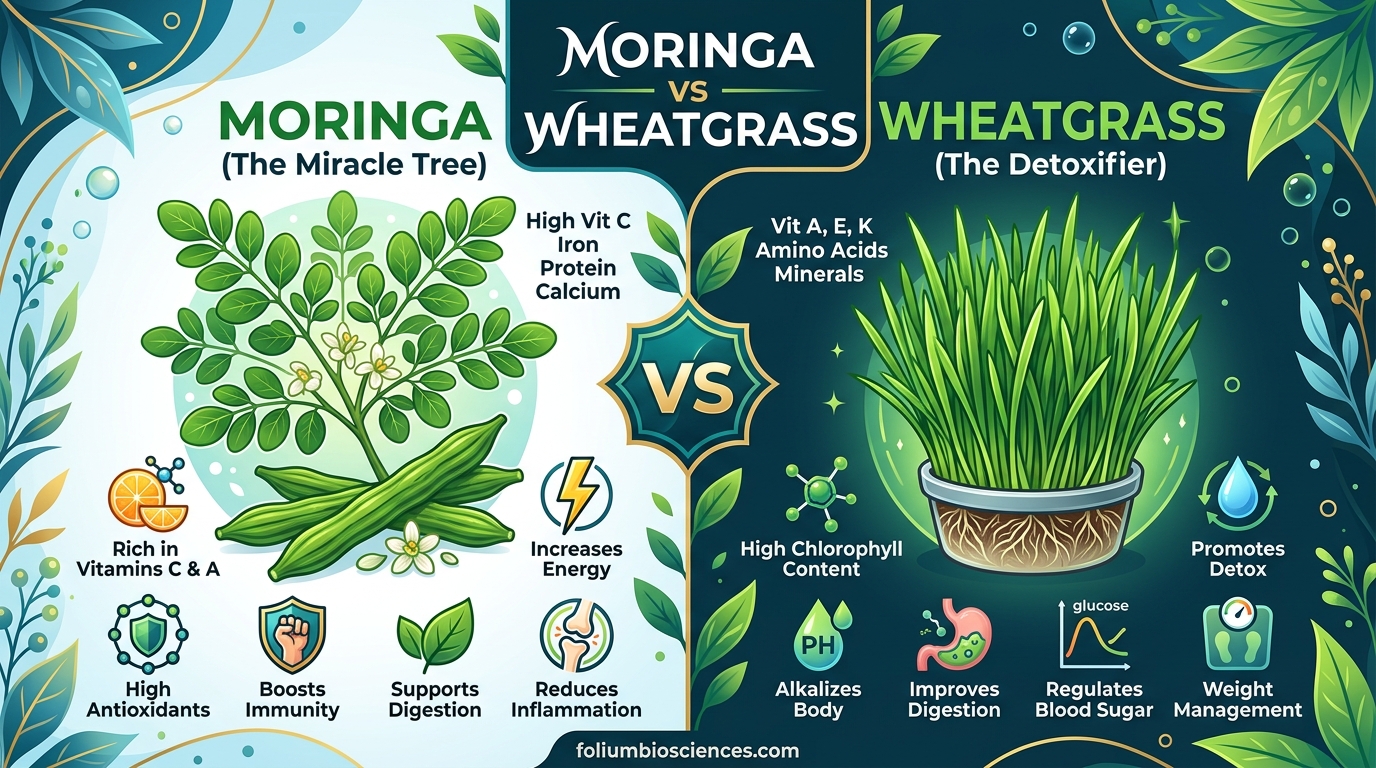
Moringa generally wins on overall nutrient density, offering more protein, calcium, iron, and vitamin K per serving. Wheatgrass excels in chlorophyll content and has a milder taste that many find easier to consume daily.
Your choice depends on your specific health goals. Want complete plant protein and maximum vitamins? Moringa might be your winner. Prioritizing detox support and easier taste? Wheatgrass could be the better fit.
What Is Moringa?
Moringa oleifera, often called the drumstick tree or miracle tree, grows natively in the Himalayan foothills of India. People have used its leaves, seeds, and pods for thousands of years in traditional Ayurvedic medicine.
The leaves get dried and ground into a fine green powder that packs an impressive nutritional punch. Just one tablespoon delivers significant amounts of vitamin A, vitamin C, calcium, potassium, and iron. Moringa also contains all nine essential amino acids, making it a rare complete plant protein source.
Traditional cultures have relied on moringa to address everything from malnutrition to inflammation. Modern research now supports many of these traditional uses, with studies highlighting its antioxidant, anti-inflammatory, and blood sugar supporting properties.
What Is Wheatgrass?
Wheatgrass refers to the young grass shoots of the wheat plant, typically harvested 7 to 10 days after sprouting. At this early stage, the plant contains no gluten, making it safe for those with gluten sensitivities.
The grass gets juiced fresh or dehydrated into powder form. Its deep green color signals high chlorophyll content, the compound that gives plants their green hue and offers potential health benefits for human consumption.
Wheatgrass gained popularity in the 1940s through Charles Schnabel, an agricultural chemist who studied its effects on livestock and humans. Since then, it has become a staple in juice bars and health food stores worldwide, often consumed as shots or mixed into smoothies.
Nutritional Comparison: Moringa vs Wheatgrass
Let us break down how these two green superfoods compare nutritionally. Understanding these differences helps you choose based on what your body actually needs.
Protein Content
Moringa delivers approximately 3 grams of complete protein per tablespoon, containing all nine essential amino acids your body cannot produce on its own. This makes moringa one of the few plant sources considered a complete protein.
Wheatgrass contains about 1 gram of protein per serving, but it is not a complete protein. It lacks adequate amounts of certain essential amino acids like lysine. For protein seekers, moringa clearly wins this category.
Vitamins and Minerals
Moringa dominates in most vitamin and mineral categories. It provides 7 times more vitamin C than oranges, 4 times more calcium than milk, and 4 times more vitamin A than carrots by weight. The iron content particularly stands out, offering 3 times more than spinach.
Wheatgrass contains vitamins A, C, and E, plus minerals like magnesium and potassium. However, the concentrations are generally lower than moringa across most nutrients except for specific trace minerals.
Antioxidant Content
Both superfoods contain antioxidants, but moringa offers a broader spectrum including quercetin and chlorogenic acid. These compounds help fight oxidative stress and support heart health.
Wheatgrass shines in chlorophyll content, providing up to 70 percent chlorophyll by weight. This green pigment has shown promise for supporting detoxification processes and promoting healthy blood oxygenation.
Dietary Fiber
Moringa contains approximately 2 grams of fiber per tablespoon, supporting digestive health and helping you feel full longer. This fiber content contributes to its blood sugar stabilizing effects.
Wheatgrass contains minimal fiber since it is typically consumed as juice or fine powder. If digestive regularity matters to you, moringa provides more support in this area.
Moringa Benefits: What the Research Shows
Moringa offers several science-backed health benefits that make it stand out as a superfood powder worth considering.
Energy Support Without the Crash
Many users report sustained energy throughout the day when taking moringa regularly. Unlike caffeine that spikes and crashes, moringa provides iron and B vitamins that support natural energy production at the cellular level. Forum discussions reveal users noticing increased energy within 2 to 3 weeks of consistent daily use.
Digestive Health Support
The fiber content in moringa supports healthy digestion and regular bowel movements. Additionally, moringa contains compounds with antibacterial properties that may help maintain a healthy gut microbiome balance.
Immune System Support
With its high vitamin C and antioxidant content, moringa helps support immune function. The combination of vitamins A, C, and E provides comprehensive antioxidant protection that supports your body natural defense systems.
Blood Sugar Management
Several studies suggest moringa may help maintain healthy blood sugar levels already in the normal range. The chlorogenic acid in moringa slows down sugar absorption in the bloodstream, potentially preventing energy spikes and crashes.
Inflammation Reduction
Chronic inflammation contributes to many health issues. Moringa contains isothiocyanates and other compounds that have demonstrated anti-inflammatory effects in research studies, supporting joint health and overall wellness.
Wheatgrass Benefits: Why People Love It
Wheatgrass brings its own unique set of benefits that have made it a health food staple for decades.
Detoxification Support
The high chlorophyll content in wheatgrass makes it particularly popular for detox protocols. Chlorophyll has shown potential for supporting the body natural cleansing processes, particularly in the liver. Many users report feeling “cleaner” and more energized after incorporating wheatgrass into their routine.
Energy and Vitality
Wheatgrass shots have become popular pre-workout rituals for good reason. The concentrated nutrients provide a quick boost that users describe as clean and jitter-free. Prevention.com reviewed wheatgrass and found many users reporting improved energy levels and reduced fatigue.
Digestive Support
While lower in fiber than moringa, wheatgrass contains enzymes that may support digestion. Many users find it helps reduce bloating and supports overall digestive comfort when taken regularly.
Alkalizing Effects
Wheatgrass is considered highly alkaline-forming in the body. While the science around alkalizing diets remains debated, many users report feeling more balanced and experiencing fewer cravings when maintaining an alkaline-focused diet that includes wheatgrass.
Skin Health
The combination of vitamins A, C, and E in wheatgrass supports skin health from the inside out. Some users report clearer skin and improved complexion after several weeks of consistent use.
Key Differences: Taste, Texture, and Cost
Beyond nutrition, practical factors often determine which green powder you will actually use consistently.
Taste Comparison
Wheatgrass has a milder, grassier flavor that many find more palatable, especially when mixed with fruit juices or smoothies. It blends relatively easily into liquids without overwhelming other flavors.
Moringa has a stronger, more earthy taste with slight peppery notes. Some describe it as similar to matcha but more intense. While not unpleasant, it requires more effort to mask in smoothies. Many users mix moringa into savory dishes like soups or sprinkle it over food rather than drinking it straight.
Texture and Mixability
Both powders mix reasonably well in liquids, though moringa tends to clump more and may require a blender for smooth integration. Wheatgrass powder generally dissolves more easily in water or juice.
Cost Comparison
Prices vary by brand and quality, but moringa typically costs slightly more per ounce than wheatgrass. However, when calculating cost-per-nutrient, moringa often provides better value due to its higher nutrient density. You need less moringa powder to get equivalent nutritional benefits.
A typical monthly supply of quality moringa runs $15 to $25, while wheatgrass ranges from $10 to $20 for comparable quantities.
Sustainability Factors
Moringa trees grow rapidly in harsh conditions with minimal water, making them highly sustainable crops that thrive where other plants struggle. The entire tree is useful, with minimal waste.
Wheatgrass cultivation requires more controlled conditions and water, though it grows quickly and can be harvested multiple times. Both represent relatively sustainable choices compared to animal-based supplements.
Can You Take Moringa and Wheatgrass Together?
Yes, you can absolutely take moringa and wheatgrass together, and many health enthusiasts do exactly that. The combination offers complementary benefits without known negative interactions.
Taking both gives you moringa complete protein and superior vitamin content alongside wheatgrass detoxifying chlorophyll. Many users report excellent results from a morning routine that includes both superfoods.
If you choose to combine them, start with smaller doses of each to see how your body responds. A typical combination might include one teaspoon of moringa and one teaspoon of wheatgrass mixed into a smoothie or taken separately throughout the day.
Which Should You Choose?
Your ideal choice depends on your specific health priorities and lifestyle preferences.
Choose Moringa If:
You want maximum nutritional density and complete plant protein. You are focused on supporting immune function, managing blood sugar, or increasing your iron intake. You do not mind a stronger taste or plan to mix it into foods rather than drinks.
Moringa particularly suits vegetarians and vegans seeking complete protein sources, athletes needing recovery support, and anyone dealing with iron deficiency or looking to support healthy blood sugar levels.
Choose Wheatgrass If:
You prioritize detoxification and want something easy to drink daily. You prefer milder flavors that blend easily into juices and smoothies. You are specifically interested in chlorophyll benefits and alkaline-forming foods.
Wheatgrass works well for beginners to green superfoods, people focused on cleansing or detox protocols, and those who want a simple addition to their morning juice routine.
Specific Use-Case Recommendations
For energy support, both work well, but moringa provides more sustained support while wheatgrass offers quicker bursts. For weight management, moringa protein and fiber content provides better satiety. For detox protocols, wheatgrass chlorophyll content gives it the edge.
For immune support during cold and flu season, moringa higher vitamin C content makes it the stronger choice. For digestive issues, moringa fiber wins, though wheatgrass enzymes offer complementary benefits.
Side Effects and Precautions
Both moringa and wheatgrass are generally safe for most people, but some precautions apply.
Moringa Precautions
Pregnant women should avoid moringa root and bark, as they may cause uterine contractions. The leaves are generally considered safe in food amounts, but consult your healthcare provider before using supplements during pregnancy.
Moringa may lower blood sugar and blood pressure. If you take medications for either condition, monitor your levels closely and discuss with your doctor. Start with small doses to avoid digestive upset from the fiber content.
Wheatgrass Precautions
While wheatgrass is gluten-free when harvested before the seed forms, those with celiac disease should choose certified gluten-free products to avoid cross-contamination risks.
Some people experience nausea, headaches, or digestive discomfort when first starting wheatgrass, especially with high doses. Begin with small amounts and increase gradually. People with grass allergies should exercise caution and consult healthcare providers before trying wheatgrass.
Frequently Asked Questions
Is moringa better than wheatgrass?
Moringa generally offers higher nutrient density with more protein, calcium, iron, and vitamin K. However, wheatgrass excels in chlorophyll content and has a milder taste. The better choice depends on your specific health goals. Moringa wins for overall nutrition and protein, while wheatgrass wins for detox support and palatability.
Can I mix wheatgrass and moringa powder together?
Yes, you can safely mix moringa and wheatgrass together. The combination offers complementary benefits without negative interactions. Many users take both for comprehensive nutrition, combining moringa complete protein with wheatgrass chlorophyll content. Start with smaller doses when combining to assess your tolerance.
Does moringa leaf powder boost testosterone?
Some preliminary research suggests moringa may support healthy testosterone levels, particularly in men with certain health conditions. Studies have shown antioxidant compounds in moringa may help protect testicular function. However, more research is needed to confirm these effects in healthy populations. Always consult a healthcare provider before using supplements for hormonal support.
Which has more protein, moringa or wheatgrass?
Moringa contains significantly more protein than wheatgrass. One tablespoon of moringa provides about 3 grams of complete protein with all nine essential amino acids. Wheatgrass contains approximately 1 gram per serving and is not a complete protein. For protein content, moringa is the clear winner.
How long does it take to see results from moringa or wheatgrass?
Most users report noticing increased energy within 2 to 3 weeks of consistent daily use. Digestive improvements often appear within 1 to 2 weeks. For benefits like immune support or skin health improvements, expect 4 to 8 weeks of consistent use. Results vary by individual and depend on factors like diet, lifestyle, and consistency of use.
Moringa vs Wheatgrass: Final Verdict
After comparing moringa vs wheatgrass across nutrition, benefits, taste, and value, moringa emerges as the nutritional heavyweight. Its complete protein profile, superior vitamin and mineral content, and higher fiber make it a more comprehensive superfood supplement.
However, wheatgrass holds its own for specific use cases. If you prioritize detoxification, prefer milder flavors, or want something that mixes easily into your morning juice, wheatgrass remains an excellent choice.
For maximum benefit, consider incorporating both into your routine. Start with wheatgrass if you are new to green superfoods, then add moringa as you adapt to the taste. Ultimately, the best superfood is the one you will actually take consistently.
Remember that supplements complement, not replace, a balanced diet rich in whole foods. Whichever green powder you choose, consistency matters more than perfection. Start small, listen to your body, and adjust based on how you feel.