
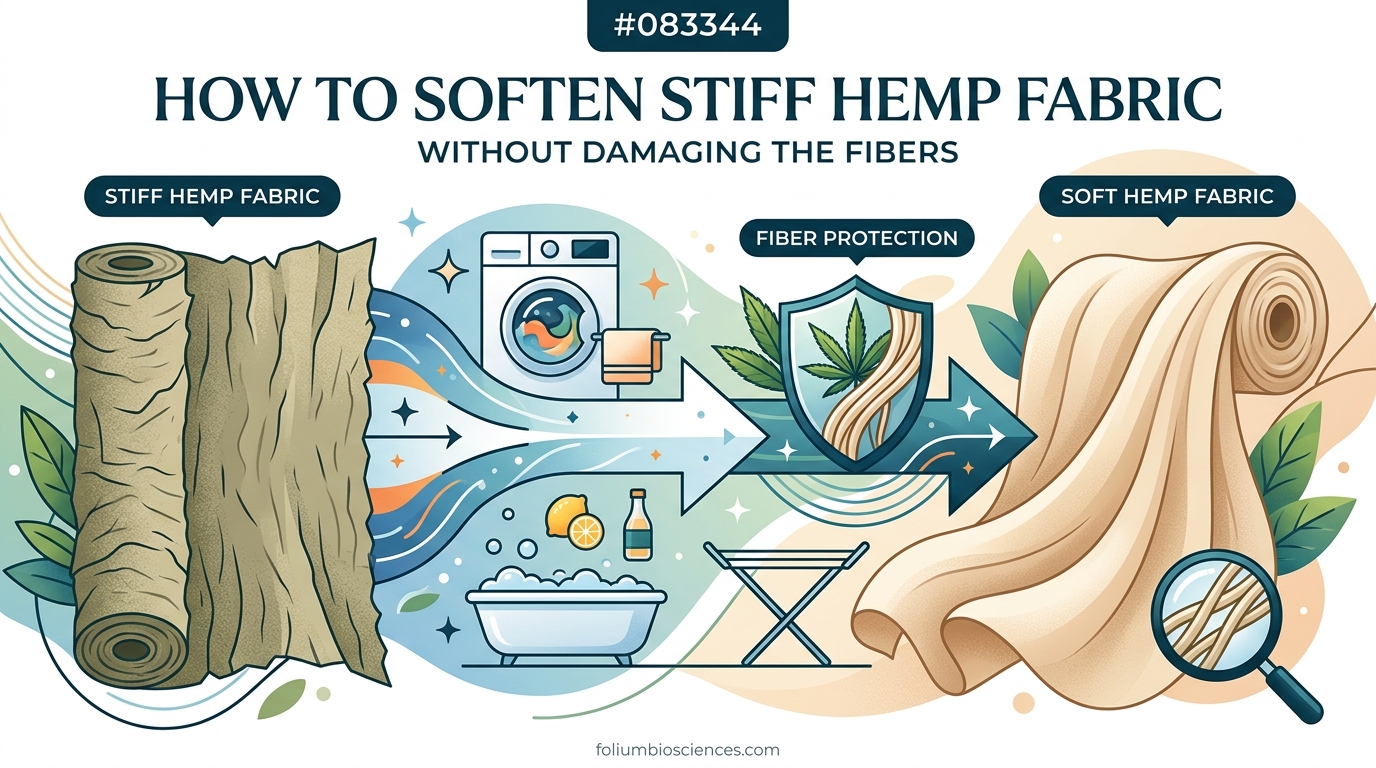
Hemp fabric arrives stiff and scratchy, but transforms into one of the softest, most comfortable textiles you will own. I learned this firsthand after buying my first hemp shirt and wondering if I had made a terrible mistake. The fabric felt like canvas against my skin.
That stiffness is completely normal. How to soften stiff hemp fabric without damaging the fibers is simpler than most people realize. The key is understanding that hemp fibers need to break in gently, not forced.
In this guide, I will share the exact methods that worked for me and thousands of others in the hemp community. You will learn why hemp softens naturally, which techniques speed up the process safely, and what mistakes to avoid that could ruin your fabric.
Table of Contents
Why Hemp Is Naturally Stiff (And Why It Softens)
Hemp fibers come from the stalk of the Cannabis sativa plant. These natural fibers have a porous, coarse structure with a natural stiffness that makes the fabric durable but initially rough against skin.
The fiber structure contains lignin, a natural binding compound that holds fibers rigid. When you wash and wear hemp, water penetrates these pores while mechanical action gradually breaks down the lignin. Heat accelerates this process without damaging the fiber integrity.
Unlike synthetic fabrics that stay the same forever, hemp improves with age. Each wash cycle relaxes the fibers. Each wear session flexes the material. Over time, the fibers become more pliable while maintaining their strength.
How Long Does Softening Take?
Most hemp fabric shows noticeable softening after 3 to 4 washes. You will feel significant improvement around the 8 to 10 wash mark. By 15 to 20 washes, high-quality hemp feels as soft as well-worn linen.
Heavier hemp canvas takes longer than lightweight hemp jersey. Woven hemp softens slower than knit hemp. Fabric weight and construction directly impact your timeline.
How to Soften Hemp Fabric: 4 Proven Methods
These methods work individually or combined for faster results. I have tested each one on different hemp pieces over the past two years.
Method 1: Hot Water Wash and Tumble Dry Cycle
This is the most effective method recommended by hemp textile experts. Wash your hemp fabric in hot water (60°C or 140°F) using a gentle detergent. Immediately tumble dry on medium heat until completely dry.
Repeat this hot wash and tumble dry cycle 2 to 3 times. Each cycle mechanically stresses the fibers in a controlled way that encourages softening. The heat opens fiber pores while the tumbling action breaks down stiffness.
Warning: This method may cause 2-3% shrinkage. Pre-wash before sewing projects.
Method 2: White Vinegar Soak
For a natural chemical-free approach, add 1 cup of white vinegar to your wash cycle. The mild acid in vinegar helps break down residue and softens fibers without coating them like commercial fabric softeners.
Alternatively, soak the hemp in a solution of 1 part vinegar to 4 parts warm water for 30 minutes before washing normally. This works particularly well for hemp that feels waxy or has manufacturing residue.
Method 3: Baking Soda Treatment
Add 1/2 cup of baking soda to your washing machine along with your regular detergent. Baking soda naturally balances pH and softens water, which helps the detergent work better and leaves fibers softer.
This method is ideal for those with hard water, as mineral buildup can make hemp feel stiffer than it should.
Method 4: Wear and Mechanical Softening
Sometimes the simplest method works best. Wear your hemp clothing regularly. The natural friction from movement, sitting, and washing gradually breaks in the fibers.
You can also manually flex the fabric by scrunching it in your hands or rolling it tightly and unrolling repeatedly. This mechanical action mimics weeks of wear in just a few minutes.
Softening Methods Comparison
| Method | Speed | Effectiveness | Best For |
|---|---|---|---|
| Hot wash + tumble dry | Fast (2-3 cycles) | High | New hemp clothing |
| Vinegar soak | Medium | Medium-High | Residue removal |
| Baking soda | Slow | Medium | Hard water areas |
| Natural wear | Slowest | Gradual | Delicate items |
What to Avoid When Softening Hemp
Some common fabric care habits actually damage hemp or prevent proper softening.
Never Use Commercial Fabric Softener
Commercial fabric softeners coat fibers with chemical residues that build up over time. This coating prevents hemp from breathing and can actually make the fabric feel stiffer long-term. The coating also blocks the natural softening process that happens through washing.
Many hemp care guides specifically warn against fabric softener. One boutique brand even states it will void their quality guarantee if used.
Avoid Bleach and Harsh Chemicals
Bleach weakens hemp fibers and causes yellowing over time. Oxygen-based bleaches are safer alternatives if you need whitening.
Skip Spot Cleaning and Soaking
Spot cleaning can create water marks on hemp. If you must spot clean, wet the entire panel evenly rather than just the stained area. Never wring or twist hemp aggressively.
Line Drying Can Make Hemp Rough
While air drying is eco-friendly, line-dried hemp often feels rougher than tumble-dried hemp. The mechanical action of tumbling actually helps soften fibers. If you must line dry, shake the fabric vigorously before hanging and finish with a quick tumble on low heat.
Care Tips for Maintaining Soft Hemp
Once your hemp softens, proper care keeps it that way.
Ironing and Steaming
Steam is your friend with hemp. Use medium heat with steam for best results. A handheld garment steamer works wonderfully for removing wrinkles without direct contact. Iron while slightly damp for easiest pressing.
Storage Recommendations
Store hemp items loosely folded or hung. Tight compression can create permanent creases. Hemp is naturally moth-resistant, so cedar blocks are optional but appreciated.
Woven vs Knit Hemp
Woven hemp fabrics like canvas and twill require more breaking in than knit hemp like jersey or rib. Knit hemp stretches and softens faster. Treat woven hemp more gently during the softening process.
Pre-Washing Before Sewing
Always pre-wash hemp fabric before cutting patterns. Hemp shrinks most during its first few washes. Pre-washing prevents finished garments from changing size later.
Frequently Asked Questions
Does hemp get softer over time?
Yes, hemp naturally gets softer with each wash and wear. The fibers relax and become more flexible as lignin breaks down. Most hemp shows noticeable softening after 3 to 4 washes and becomes significantly softer by 10 washes.
Can you use fabric softener on hemp?
No, you should never use commercial fabric softener on hemp. It coats the fibers with residue that prevents natural softening and reduces breathability. Use vinegar or baking soda instead for natural softening.
How many washes does it take to soften hemp?
Hemp typically needs 3 to 4 washes before you notice significant softening. Full transformation to a soft, comfortable fabric usually takes 8 to 15 washes depending on fabric weight and quality.
Does hemp shrink when washed?
Yes, hemp shrinks approximately 2 to 3% during the first few hot washes. Higher temperatures cause more shrinkage. Always pre-wash hemp before sewing projects to prevent size changes in finished items.
Final Thoughts on How to Soften Stiff Hemp Fabric Without Damaging the Fibers
Learning how to soften stiff hemp fabric without damaging the fibers transforms your relationship with this incredible material. The initial stiffness is temporary. The durability and comfort last for years.
Start with the hot water wash and tumble dry method for fastest results. Be patient with the process. Quality hemp rewards your care with a fabric that feels better every time you wear it.
Remember to avoid fabric softener completely. Use vinegar or baking soda if you want natural alternatives. And always pre-wash before sewing to account for shrinkage.
Your hemp fabric will become one of the most comfortable items in your wardrobe. The effort you put into softening it now pays dividends for years of comfortable, sustainable wear.