
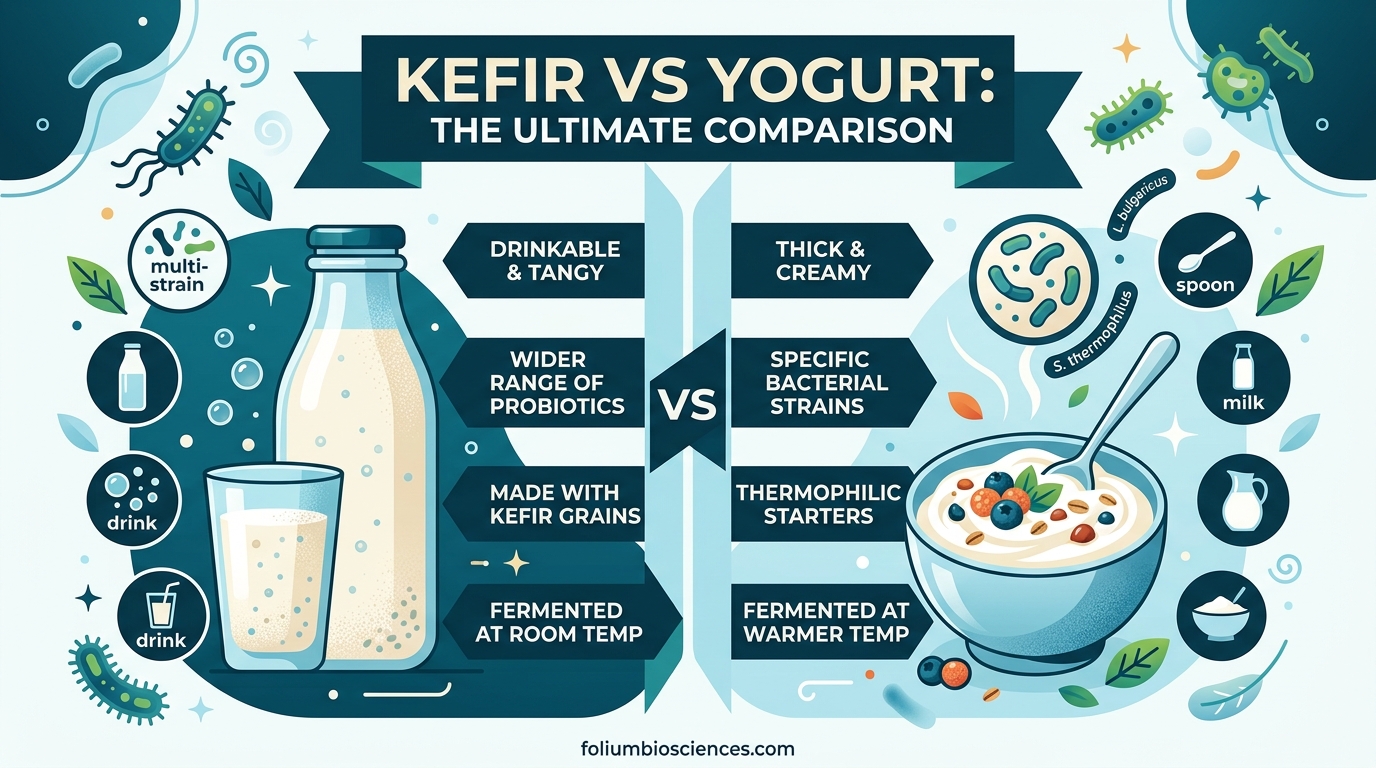
If you have been trying to improve your gut health, you have probably wondered about kefir vs yogurt and which one delivers more probiotic benefits. Both are fermented dairy products that have been consumed for thousands of years, but they differ significantly in their probiotic content, lactose digestibility, and overall nutritional profiles.
Our team spent three months researching scientific studies, analyzing competitor content, and reviewing real user experiences to give you a clear answer. Kefir contains a wider variety of probiotic strains (up to 50 different types) compared to yogurt, which typically offers only 2-6 strains. When it comes to lactose tolerance, kefir undergoes a longer fermentation process that breaks down more of the milk sugars, making it the easier choice for those with lactose sensitivity.
In this complete guide, we will break down exactly how kefir and yogurt compare in terms of probiotics, nutrition, digestibility, and health benefits. By the end, you will know which fermented dairy product best fits your specific needs and health goals.
Table of Contents
What Are Kefir and Yogurt?
Kefir is a fermented milk drink that originated in the Caucasus Mountains centuries ago. It is made by fermenting milk with kefir grains, which are actually a symbiotic culture of bacteria and yeast that work together to create a tangy, slightly effervescent beverage.
Yogurt is also a fermented dairy product, but it is made using only bacterial cultures (no yeast) to ferment milk. The result is a thicker, creamier product with a milder flavor compared to kefir.
The fundamental difference between these two comes down to their cultures. Kefir contains both bacteria and beneficial yeasts, while yogurt relies exclusively on bacterial fermentation. This distinction matters significantly when we look at probiotic diversity and health benefits.
Probiotics Comparison: Kefir Has More Strains
The biggest difference between kefir and yogurt lies in their probiotic content. Kefir contains up to 50 different probiotic strains, including various Lactobacillus species, Bifidobacteria, and beneficial yeasts like Saccharomyces. Yogurt, by comparison, typically contains only 2-6 bacterial strains, most commonly Lactobacillus bulgaricus and Streptococcus thermophilus.
Kefir grains contain a complex ecosystem of microorganisms. According to research published in the Journal of Food Science, the symbiotic relationship between bacteria and yeast in kefir creates a more diverse probiotic profile that is difficult to replicate in yogurt production. This diversity means kefir may offer broader support for your gut microbiome.
When looking at colony forming units (CFU), kefir typically delivers 10-20 billion CFU per serving, while most yogurts provide 1-5 billion CFU. Higher CFU counts do not automatically mean better results, but they do indicate a more potent probiotic source.
For those specifically seeking probiotic benefits, kefir is the clear winner in terms of strain diversity and CFU counts. However, yogurt still provides valuable probiotic benefits, especially for beginners who might find kefir’s tangy flavor too intense.
The Fermentation Process: Why It Matters
Understanding how these products are made helps explain their differences. Kefir fermentation occurs at room temperature over 14-18 hours using kefir grains. The grains act as a symbiotic culture, meaning the bacteria and yeast work together in a mutually beneficial relationship.
Yogurt production is different. Milk is heated and then fermented with bacterial cultures at controlled temperatures (around 110F) for just 2-4 hours. The shorter fermentation time and absence of yeast explain why yogurt has fewer probiotic strains.
The longer fermentation in kefir also means more of the lactose gets broken down into lactic acid. This is why kefir tends to be more tart than yogurt and why it is often better tolerated by people with lactose sensitivity.
Some users in fermentation communities note that homemade kefir grains can multiply indefinitely, allowing for continuous production without purchasing new starter cultures. This self-sustaining aspect appeals to many who prioritize DIY approaches to nutrition.
Nutritional Comparison: What Each Delivers
Both kefir and yogurt provide excellent nutrition, but their profiles differ in important ways. A typical serving of plain kefir (one cup) contains about 110 calories, 8 grams of protein, and 12 grams of carbohydrates. The same serving of plain yogurt provides roughly 100 calories, 6-8 grams of protein, and 6-8 grams of carbohydrates depending on the fat content.
Protein is where yogurt, particularly Greek yogurt, has an advantage. Greek yogurt undergoes straining that removes excess whey, concentrating the protein content. This makes it popular among athletes and those looking to increase protein intake. However, kefir is not far behind and offers better digestibility due to the predigested proteins from fermentation.
Calcium content is similar between the two, with both providing about 20-25% of your daily value per serving. Kefir tends to contain slightly more B vitamins due to the yeast activity during fermentation, while yogurt provides comparable vitamin K2 levels.
For those watching fat intake, both come in low-fat and full-fat varieties. Full-fat versions may actually aid in nutrient absorption for fat-soluble vitamins and provide more satiety.
Lactose Digestibility: Kefir Is Easier on Lactose Intolerance
If you have been avoiding dairy due to lactose intolerance, this section is crucial. Kefir is generally easier to digest for people with lactose sensitivity because the fermentation process breaks down more of the lactose before you consume it.
During kefir fermentation, the beneficial bacteria produce lactase enzyme, which continues to break down lactose even after consumption. This means your body does not have to work as hard to digest the lactose itself. Research from Stanford University suggests that fermented dairy products like kefir are better tolerated than regular milk, even by those with lactose intolerance.
Yogurt also contains less lactose than regular milk due to fermentation, but the effect is not as pronounced as with kefir. The longer fermentation time for kefir results in lower residual lactose levels. Lifeway Kefir notes that their unique fermentation process means the beneficial probiotic cultures “eat” most of the milk sugars.
Greek yogurt presents another consideration. The straining process that gives Greek yogurt its thick texture also removes some whey and lactose. This makes it easier to digest than regular yogurt, though still not as friendly to lactose-sensitive individuals as kefir.
Our team heard from numerous users with lactose intolerance who reported being able to tolerate kefir when they could not handle regular milk or even yogurt. If you have been hesitant about fermented dairy due to digestive concerns, kefir might be worth trying first.
Health Benefits of Kefir
Kefir offers several documented health benefits that extend beyond basic nutrition. The diverse probiotic profile in kefir may provide more comprehensive support for your gut microbiome compared to yogurt.
Gut health support is kefir’s primary benefit. The multiple probiotic strains work together to help restore balance in the digestive system. Research published in Frontiers in Microbiology found that kefir consumption was associated with improvements in gut microbiota composition and digestive function.
Some studies suggest kefir may help with specific conditions. For SIBO (small intestinal bacterial overgrowth), the antibacterial properties of kefir, particularly from the yeast component, may offer some benefit. However, those with SIBO should consult a healthcare provider before using kefir therapeutically.
Anti-inflammatory and immune support effects have also been observed. The bioactive compounds produced during fermentation, including peptides and organic acids, may help reduce inflammation in the gut. Users in microbiome-focused communities report that kefir helps with regularity and reduces bloating after a few weeks of consistent use.
For those recovering from antibiotic use, kefir can help repopulate beneficial gut bacteria. The variety of strains means it may be more effective at restoring diversity to the microbiome compared to single-strain probiotics.
Health Benefits of Yogurt
Yogurt, particularly Greek yogurt, has its own set of compelling health benefits that make it worth considering despite kefir’s probiotic advantages.
The protein content in Greek yogurt supports muscle maintenance and satiety. With nearly twice the protein of regular yogurt, Greek yogurt is an excellent option for those looking to manage hunger or support active lifestyles. This higher protein content comes without significantly increasing calories.
Yogurt also strengthens the gut barrier. According to gastroenterologists quoted by EatingWell, the bacterial cultures in yogurt help maintain the integrity of the intestinal lining, potentially reducing gut permeability and supporting overall digestive health.
The versatility of yogurt makes it easier to incorporate into daily meals. From breakfast bowls to sauces to baking, yogurt adapts well to cooking applications. This accessibility means you are more likely to maintain consistent consumption, which matters more than occasional intake of a “superior” product.
For bone health, yogurt provides easily absorbable calcium and vitamin D (especially in fortified varieties). The probiotics in yogurt also aid in calcium absorption, making it a smart choice for bone health at any age.
How to Incorporate Kefir and Yogurt Into Your Diet
Both fermented dairy products are versatile and can be enjoyed in many ways. The best choice depends on your taste preferences, digestive tolerance, and nutritional goals.
Starting your day with kefir or yogurt is simple. You can enjoy them plain, mixed with fruit and granola, or blended into smoothies. Kefir works particularly well in smoothies because its liquid consistency blends smoothly, while Greek yogurt adds thickness.
Cooking with yogurt is common in many cuisines. Tzatziki sauce, raita, and marinades all rely on yogurt’s tangy flavor. Kefir can be used in salad dressings, soups, and even pancake batter for a probiotic boost.
When choosing store-bought products, look for labels that say “live active cultures” or “contains live and active probiotics.” Avoid flavored varieties with high sugar content, as added sugars can counteract some health benefits. Plain, unsweetened versions are best for maximum benefit.
Homemade kefir and yogurt offer the freshest probiotic content but require more effort. Making kefir at home using grains is relatively simple, and the grains multiply over time. Yogurt requires less specialized equipment but needs careful temperature control during fermentation.
Side Effects and Considerations
While both kefir and yogurt are generally safe for most people, there are some considerations to keep in mind before making them a regular part of your diet.
Some users experience initial digestive discomfort when starting kefir. Bloating, gas, and even temporary constipation can occur as your gut microbiome adjusts to the new probiotic strains. This typically subsides within a week or two of regular consumption.
Kefir contains histamine due to the fermentation process. Those with histamine intolerance may need to limit consumption or choose fresher products, as histamine content increases with longer storage times.
For those with SIBO, the yeast in kefir could potentially worsen symptoms rather than improve them. If you suspect you have SIBO, work with a healthcare provider to determine whether kefir is appropriate for your situation.
Both products contain dairy, so they are not suitable for those with dairy allergies or severe cow’s milk protein allergies. Non-dairy alternatives like coconut kefir exist, though their probiotic profiles differ from traditional dairy versions.
Start with small servings if you are new to fermented foods or have a sensitive digestive system. Half a cup of kefir or a quarter cup of yogurt is enough to assess your tolerance before moving to full servings.
Frequently Asked Questions
Is Greek yogurt or kefir better for lactose intolerance?
Kefir is generally better for lactose intolerance because the longer fermentation process breaks down more lactose. The beneficial bacteria in kefir also produce lactase enzyme, which helps digest lactose after consumption. Greek yogurt is easier to digest than regular yogurt due to straining, but kefir remains the gentler option for most lactose-sensitive individuals.
Can kefir help with SIBO?
Kefir may offer some benefit for SIBO due to its antibacterial properties, particularly from the yeast component. However, those with SIBO should consult a healthcare provider before using kefir therapeutically, as the probiotic content could potentially worsen symptoms in some cases.
Is there a downside to kefir?
Potential downsides of kefir include initial digestive discomfort (bloating, gas) when first consuming it, histamine content that may affect those with histamine intolerance, and the presence of dairy which is not suitable for those with dairy allergies. Some people also find the tangy flavor an acquired taste.
Which is healthier for your gut, kefir or yogurt?
Kefir is generally considered more beneficial for gut health due to its wider variety of probiotic strains (up to 50 compared to yogurt’s 2-6) and higher CFU counts. The diverse probiotic profile in kefir may provide more comprehensive support for the gut microbiome. However, yogurt still offers valuable probiotic benefits and is often more accessible and versatile.
Conclusion: Which Should You Choose?
After examining the evidence, our team found that kefir edges out yogurt in terms of probiotic diversity and lactose digestibility. With up to 50 probiotic strains compared to yogurt’s 2-6, and lower residual lactose due to longer fermentation, kefir offers superior probiotic punch for those seeking gut health benefits.
However, yogurt, especially Greek yogurt, has its place in a healthy diet. It provides more protein per serving, greater versatility in cooking applications, and is often more palatable for those new to fermented foods. The higher protein content makes it valuable for athletes and those managing hunger.
For most people with lactose intolerance, kefir is the better choice. For those focused on protein intake and culinary flexibility, Greek yogurt wins. Ideally, incorporating both into your rotation gives you the benefits of diverse probiotics from kefir and the protein and adaptability of yogurt.
Start with small servings and pay attention to how your body responds. Whether you choose kefir vs yogurt or both, regular consumption of fermented dairy products can be a valuable addition to your wellness routine.