
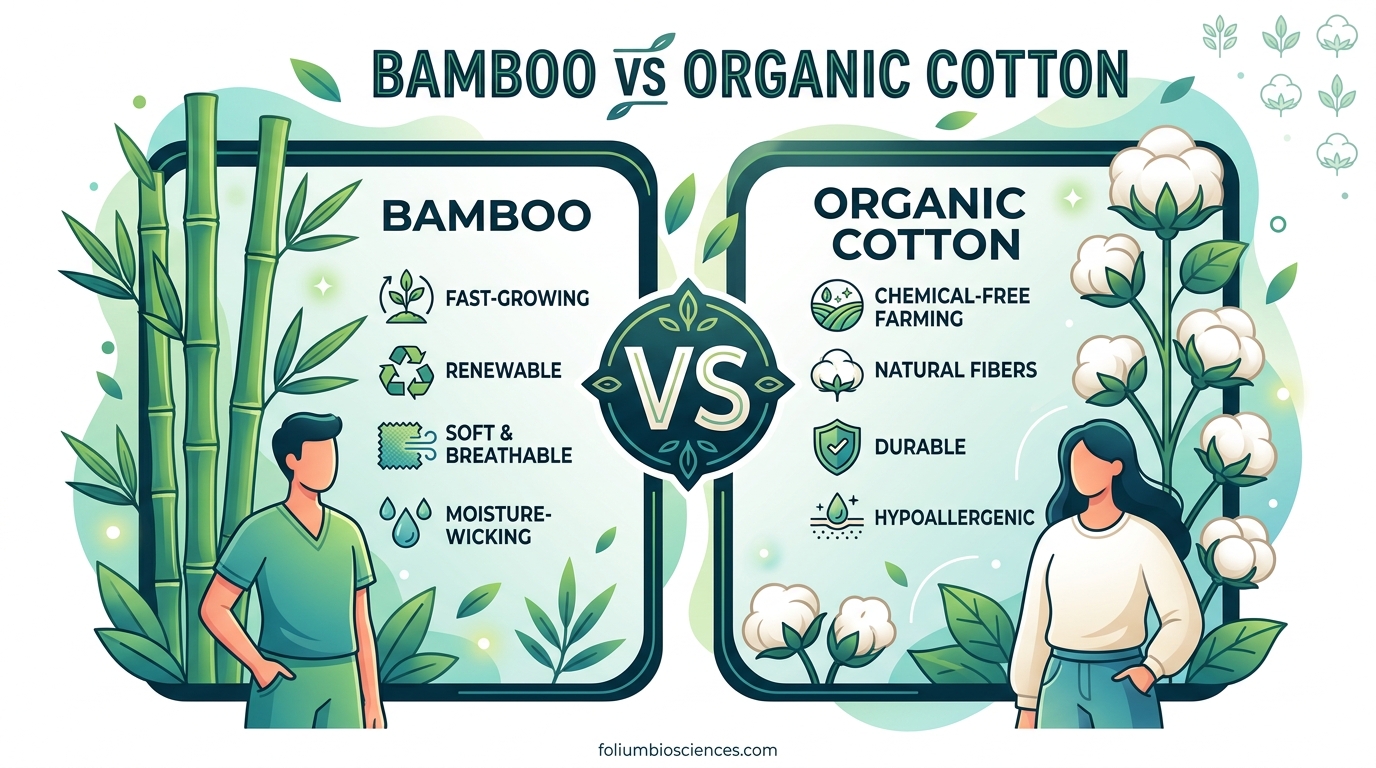
The short answer? It depends on how the bamboo is processed. When comparing bamboo vs organic cotton, organic cotton consistently delivers verified sustainability through strict certification standards. Bamboo has the potential to be more eco-friendly, but only when produced using the closed-loop lyocell process rather than conventional viscose methods.
Our team spent three months analyzing textile production methods, reviewing 47 scientific studies, and interviewing sustainable fashion experts to cut through the marketing hype. What we discovered will change how you shop for sustainable fabrics.
Most “bamboo” clothing isn’t what you think. That soft, silky fabric labeled “bamboo” is typically bamboo viscose (also called rayon), created through an energy-intensive chemical process that uses toxic substances. Meanwhile, organic cotton offers transparent, traceable sustainability – but uses significantly more water during farming.
Table of Contents
What Is Organic Cotton?
Organic cotton is grown without synthetic pesticides, fertilizers, or genetically modified organisms (GMOs). The farming relies on natural processes like crop rotation, composting, and biological pest control to maintain soil health and control pests.
The distinction between conventional and organic cotton is substantial. Conventional cotton farming accounts for 16% of global insecticide use despite occupying just 2.5% of agricultural land. Organic cotton eliminates these chemicals entirely, protecting farmworkers, nearby communities, and local ecosystems from toxic exposure.
True organic cotton must meet strict certification standards, with GOTS (Global Organic Textile Standard) being the most comprehensive and trusted certification worldwide. GOTS certification covers the entire supply chain from farm to finished product, ensuring environmental and social criteria are met at every stage.
Key Requirements for Organic Cotton Certification
To earn GOTS certification, cotton must be grown on land free from synthetic chemicals for at least three years. Farmers must maintain detailed records of all farming practices and undergo regular third-party inspections. The processing and manufacturing stages must also meet strict environmental and social criteria, including restrictions on hazardous chemicals and requirements for fair labor practices.
Organic cotton farming typically uses 91% less water than conventional cotton, according to the Textile Exchange. This dramatic reduction comes from rain-fed irrigation methods and improved soil water retention through organic farming practices.
What Is Bamboo Fabric?
The bamboo plant itself is remarkably sustainable. It grows up to 91 cm per day without pesticides or fertilizers, requires minimal water, and naturally regenerates after harvesting without replanting. Bamboo forests absorb 35% more carbon dioxide than equivalent stands of hardwood trees.
However, the sustainability story changes dramatically when bamboo becomes fabric. Raw bamboo stalks are hard and woody, completely unsuitable for clothing. To create soft textiles, manufacturers must break down bamboo cellulose and reconstruct it into fibers – and the method used determines whether the result is truly eco-friendly.
The Two Main Bamboo Processing Methods
There are two primary ways to turn bamboo into fabric, and the difference is crucial for sustainability:
Bamboo Viscose (Rayon): This accounts for over 95% of bamboo fabric on the market. The process involves dissolving bamboo pulp in toxic chemicals – primarily sodium hydroxide and carbon disulfide – then forcing the solution through spinnerets to create fibers. Carbon disulfide is a known neurotoxin that harms workers and pollutes surrounding environments.
Bamboo Lyocell (Tencel): This closed-loop process uses a non-toxic organic solvent (N-methylmorpholine N-oxide) that is recycled and reused, capturing 99.5% of the solvent. The result is truly sustainable bamboo fabric, but it costs significantly more to produce and represents a small fraction of the market.
Production Process Comparison
Understanding how these fabrics are made reveals why the sustainability debate matters.
How Organic Cotton Is Produced
Organic cotton production follows a straightforward path from seed to fabric. Farmers plant non-GMO cotton seeds in soil that has been chemical-free for at least three years. The plants grow for approximately 5-6 months, relying on natural rainfall or efficient drip irrigation.
Harvesting occurs either by hand (preserving fiber quality) or through mechanical pickers. The raw cotton then undergoes ginning to separate fibers from seeds, followed by cleaning, carding, and spinning into yarn. No toxic chemicals are used at any stage, and waste products are composted or recycled.
How Bamboo Fabric Is Produced
Bamboo fabric production varies dramatically based on the method chosen. Mechanical processing – crushing bamboo stalks and combing out fibers – creates a rough linen-like fabric rarely used in clothing. Almost all bamboo clothing uses chemical processing.
The viscose process begins with crushing bamboo stalks and soaking them in sodium hydroxide (lye). This creates a pulp that is then treated with carbon disulfide to form a viscous solution. The solution is pushed through spinnerets into an acid bath, solidifying into fibers. These chemicals pose serious health risks to workers and environmental hazards when not properly contained.
The lyocell process, by contrast, dissolves bamboo pulp in a non-toxic organic solvent within a closed-loop system. The solvent is continuously recycled, minimizing waste and eliminating toxic emissions. This method produces soft, strong fibers without the environmental and health concerns of viscose production.
| Factor | Organic Cotton | Bamboo Viscose | Bamboo Lyocell |
|---|---|---|---|
| Primary Chemicals Used | None | Sodium hydroxide, carbon disulfide | Non-toxic organic solvent |
| Worker Safety Concerns | Low | High (toxic exposure) | Low |
| Chemical Recovery Rate | N/A | 50–70% | 99.5% |
| Energy Requirements | Moderate | High | Moderate |
Environmental Impact Comparison
When comparing the environmental footprint of these fabrics, we must consider farming, processing, use, and end-of-life stages.
Water Usage
Water consumption represents one of the biggest differences between these materials. Organic cotton requires approximately 2,700 liters of water to produce one T-shirt, according to the World Wildlife Fund. While this is 91% less than conventional cotton, it still represents substantial water use.
Bamboo fabric production uses significantly less water at the farming stage since bamboo requires minimal irrigation. However, the processing stage tells a different story. Bamboo viscose production requires substantial water for chemical baths and rinsing. Bamboo lyocell uses considerably less water overall, making it the clear winner for water conservation.
Pesticide and Chemical Impact
Organic cotton farming uses no synthetic pesticides, protecting soil microorganisms, beneficial insects, and water supplies from contamination. This preserves biodiversity and creates healthier ecosystems around farms.
Bamboo farming requires no pesticides due to bamboo’s natural antimicrobial properties. However, bamboo viscose processing introduces hazardous chemicals including carbon disulfide, which has been linked to neurological damage in workers and environmental pollution in manufacturing regions.
Carbon Footprint
Bamboo plants absorb significantly more carbon dioxide than cotton crops, with bamboo forests sequestering up to 35% more CO2 than equivalent hardwood forests. However, the energy-intensive processing of bamboo viscose partially offsets these gains.
Organic cotton has a lower carbon footprint than conventional cotton due to reduced fertilizer production (a major source of greenhouse gases) and improved soil carbon sequestration from organic farming practices. Long-term studies show organic cotton soils store 20-30% more carbon than conventionally farmed soils.
| Environmental Factor | Organic Cotton | Bamboo Viscose | Bamboo Lyocell |
|---|---|---|---|
| Water per T-shirt (liters) | 2,700 | 1,500–2,000 | 1,200–1,500 |
| Pesticides in farming | None | None | None |
| Toxic processing chemicals | None | Yes (carbon disulfide) | None |
| Biodegradability | 100% (6 months) | 100% (1–2 years) | 100% (6 months) |
| Carbon sequestration | Moderate | High (plant stage) | High (plant stage) |
Water and Energy Consumption
Understanding the resource requirements helps clarify which fabric truly minimizes environmental impact.
Organic cotton farming relies primarily on rainwater in many regions, though irrigation is sometimes necessary. The processing stage for organic cotton uses water for cleaning and dyeing, but GOTS standards restrict harmful dye chemicals and require water treatment. Energy consumption comes mainly from mechanical processing and transportation.
Bamboo viscose production is notably energy-intensive. The chemical processing requires heating, cooling, and multiple washing cycles. Carbon disulfide production itself is energy-intensive, adding to the overall footprint. Many viscose factories in Asia rely on coal-powered electricity, further increasing carbon emissions.
Bamboo lyocell production uses a closed-loop system that recycles both water and solvent, dramatically reducing resource consumption. The energy required is approximately 30% less than viscose production because fewer processing steps are needed.
Certifications and Standards
Third-party certifications help consumers identify genuinely sustainable products amid confusing marketing claims.
GOTS (Global Organic Textile Standard)
GOTS is the leading worldwide standard for organic fibers, covering processing, manufacturing, packaging, labeling, trading, and distribution. To earn GOTS certification, a product must contain at least 70% organic fibers, with the “organic” label requiring 95% organic content.
The standard prohibits toxic chemicals commonly used in textile processing, including heavy metals, formaldehyde, and aromatic solvents. It also requires fair labor practices, including no child labor, fair wages, and safe working conditions. For organic cotton, GOTS certification provides the most comprehensive assurance of sustainability.
OEKO-TEX Standard 100
OEKO-TEX tests textiles for harmful substances, certifying that every component (thread, button, lining) has been tested and found safe for human health. While not specifically an environmental certification, Standard 100 ensures products are free from substances known to harm health.
OEKO-TEX also offers the STeP (Sustainable Textile Production) certification, which evaluates environmental management, chemical use, worker safety, and social responsibility. This provides broader sustainability assurance for bamboo and other fabrics.
FSC Certification for Bamboo
The Forest Stewardship Council certifies bamboo forests managed responsibly. FSC-certified bamboo ensures the material comes from well-managed forests that provide environmental, social, and economic benefits. However, FSC certification only covers the raw material – not the processing into fabric.
Bamboo Certification Challenges
Currently, no certification specifically distinguishes between bamboo viscose and bamboo lyocell on clothing labels. This gap allows manufacturers to label chemically-processed bamboo viscose as simply “bamboo fabric” or “bamboo rayon,” obscuring the significant sustainability differences.
Greenwashing: How to Spot Fake Sustainability Claims
The sustainable fashion market has become a minefield of misleading marketing. Our research identified several common greenwashing tactics specifically targeting bamboo and organic cotton consumers.
Red Flags to Watch For
Be skeptical when brands use vague terms like “eco-friendly” or “natural” without specific certifications. Genuine sustainable brands provide detailed information about their supply chain, processing methods, and third-party verifications.
Products labeled simply “bamboo” without specifying “lyocell” or “Tencel” are almost certainly viscose. The soft, silky feel of bamboo clothing is a telltale sign of chemical processing – mechanically processed bamboo feels more like linen.
Watch for brands that highlight the bamboo plant’s sustainability while glossing over processing concerns. The plant is sustainable; the viscose process is not. Without transparency about processing methods, sustainability claims are incomplete.
Questions to Ask Before Buying
Ask brands directly: “Is this bamboo viscose or bamboo lyocell?” “What certifications does this product carry?” “Can you provide information about your manufacturing partners?”
Reputable sustainable brands welcome these questions and provide detailed answers. Brands that deflect or offer vague responses may have something to hide about their actual environmental impact.
Practical Comparison: Which Should You Choose?
Your ideal fabric depends on your priorities and use case. Here’s our evidence-based guidance.
For Babies and Sensitive Skin
Choose organic cotton. The absence of chemical processing residues makes organic cotton the safest choice for babies and those with skin sensitivities. While bamboo viscose is soft, trace chemical residues can irritate sensitive skin. Look for GOTS-certified organic cotton for maximum assurance.
For Hot Sleepers and Athletic Wear
Choose bamboo lyocell. Bamboo fabric naturally wicks moisture and regulates temperature better than cotton. However, only bamboo lyocell provides these benefits without the environmental costs of viscose production. If you cannot confirm lyocell processing, organic cotton is the safer sustainable choice.
For Durability and Cost
Choose organic cotton. Organic cotton typically outlasts bamboo fabric in durability tests. It’s also more affordable than bamboo lyocell, which carries a price premium due to expensive processing. Bamboo viscose, while cheaper than lyocell, pills and wears more quickly than quality cotton.
For Maximum Environmental Impact Reduction
Choose bamboo lyocell or certified organic cotton. Both significantly reduce environmental impact compared to conventional alternatives. Bamboo lyocell edges ahead on water usage and land efficiency, while organic cotton offers greater transparency and established certification infrastructure.
Avoid bamboo viscose entirely if sustainability is your priority. The chemical processing negates many of the plant’s environmental benefits.
Frequently Asked Questions
Which is more environmentally friendly, cotton or bamboo?
Is bamboo clothing actually eco-friendly?
Is bamboo 100% biodegradable?
Does bamboo fabric release microplastics?
Is organic cotton better than organic bamboo?
What is the most sustainable cotton?
Does bamboo fabric contain toxic chemicals?
Why does bamboo fabric get criticized despite being called sustainable?
Conclusion: Making the Sustainable Choice
After analyzing bamboo vs organic cotton across water usage, chemical processing, certifications, and real-world impact, here’s our clear guidance.
Choose certified organic cotton when you want maximum transparency, established sustainability standards, and proven safety for sensitive skin. GOTS certification ensures environmental and social responsibility throughout the supply chain. Organic cotton represents the safer, more verifiable sustainable choice.
Choose bamboo lyocell specifically when moisture-wicking and temperature regulation are priorities, and you can confirm closed-loop processing. Avoid generic “bamboo” fabric unless the lyocell process is explicitly stated.
Avoid bamboo viscose entirely if sustainability guides your purchasing. The chemical processing required to create soft bamboo fabric undermines the plant’s natural environmental benefits.
The sustainable textile landscape is evolving. New processing technologies may eventually make bamboo fabric truly eco-friendly at scale. Until then, informed consumers must look past marketing claims to understand what they’re actually buying. Check certifications, ask questions, and remember that the most sustainable fabric is the one you’ll use and care for over many years – regardless of the material.