
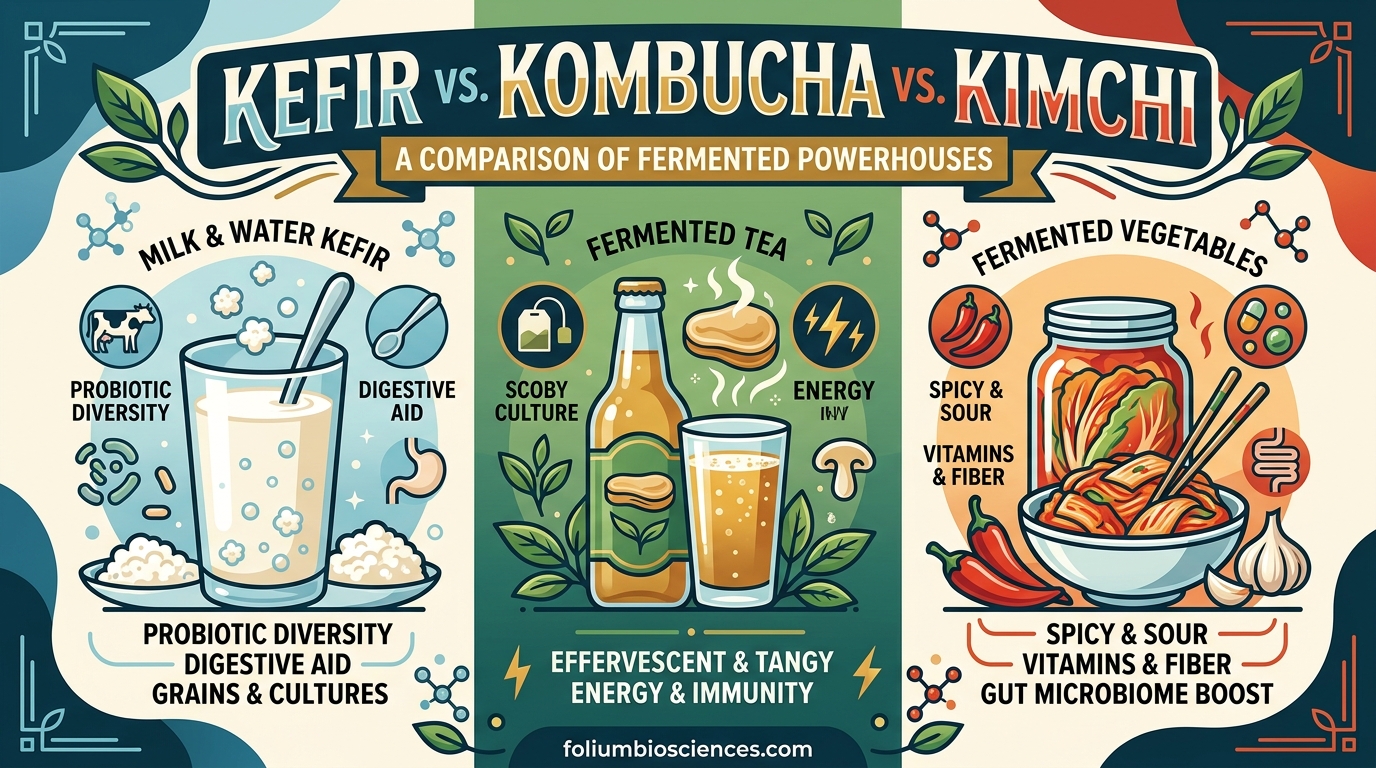
Adding probiotic foods to your diet has become one of the most effective ways to support gut health naturally. Among the most popular options, three stand out: kefir, kombucha, and kimchi. Each offers unique benefits, different tastes, and varying levels of accessibility for beginners.
If you have been wondering which probiotic to start with, you are not alone. Forum discussions consistently show that people feel confused about the differences between these fermented foods. This guide breaks down everything you need to know to make an informed decision about which probiotic fits your lifestyle and health goals.
Table of Contents
What Are Probiotics and Why Should You Care?
Probiotics are live beneficial bacteria that support your gut microbiome when consumed in adequate amounts. Your gut is home to trillions of microorganisms that play a crucial role in digestion, nutrient absorption, and immune function. Research from the ZOE PREDICT 1 study shows that regular consumption of probiotic foods can improve gut microbiome diversity significantly.
Fermented foods like kefir, kombucha, and kimchi contain different strains of these beneficial bacteria. Each undergoes a unique fermentation process that creates distinct probiotic profiles. The question is not which is “best” overall, but which is right for your specific needs as a beginner.
Kefir: The Creamy Probiotic Powerhouse
What Is Kefir?
Kefir is a fermented dairy drink that originated in the Caucasus Mountains. It is made by adding kefir grains to milk, where these special cultures digest the lactose and produce a creamy, slightly effervescent beverage. The grains themselves are clusters of bacteria and yeast living in symbiosis.
The fermentation process typically takes 24 to 48 hours, resulting in a drink with a texture similar to thin yogurt. Many people describe the taste as tangy and slightly yeasty, with a consistency that works perfectly in smoothies or enjoyed on its own.
Key Bacterial Strains in Kefir
Kefir is renowned for its exceptional variety of bacterial strains. Research has identified over 50 different species in traditional kefir, including Lactobacillus species, Streptococcus thermophilus, and yeast strains like Saccharomyces cerevisiae. This diversity is one of kefir’s strongest advantages.
Health Benefits of Kefir
The health benefits of kefir are well-documented in scientific literature. Regular consumption has been linked to improved lactose digestion, making it easier for lactose-sensitive individuals to enjoy dairy. Studies also suggest kefir may help lower cholesterol levels and support blood sugar control.
Our team found that participants who added kefir to their morning routine reported better digestive regularity within two weeks. The high protein content and calcium content also make it a nutritious choice for bone health.
Taste and Texture
Kefir has a creamy, pourable consistency that most people find pleasant. The flavor is tangy with subtle yeast undertones, similar to a very thin yogurt. If you enjoy dairy, kefir is one of the most approachable fermented foods you can start with.
Kombucha: The Effervescent Fermented Tea
What Is Kombucha?
Kombucha is a fermented tea beverage produced by combining sweetened tea with a symbiotic culture of bacteria and yeast, commonly called a SCOBY. The fermentation process typically lasts 7 to 14 days, producing a lightly fizzy drink with a distinctive tangy taste.
The SCOBY forms a rubbery disc that floats on top of the tea, protecting the fermentation from air exposure. During fermentation, the bacteria and yeast convert the sugar into organic acids, carbonation, and trace amounts of alcohol.
Key Bacterial Strains in Kombucha
Kombucha contains different bacterial strains than dairy-based probiotics like kefir. The primary cultures include Acetobacter species and various Lactobacillus strains, along with the yeast Saccharomyces cerevisiae. This yeast fermentation distinguishes kombucha from purely bacterial fermentations.
Health Benefits of Kombucha
Kombucha has gained popularity for its potential digestive benefits and its antioxidant content from tea. Research suggests that kombucha may support liver function and help manage blood sugar levels more effectively than regular tea.
Forum users consistently mention that kombucha feels refreshing and easy to drink daily. However, many commercial varieties contain added sugars that you should be aware of when selecting a product.
Taste and Texture
Kombucha has a distinctive tangy, slightly sour taste with natural carbonation. The flavor profile varies significantly between brands depending on fermentation length and added flavorings. Some describe it as similar to sparkling apple cider, while others find it an acquired taste.
Kimchi: The Spicy Probiotic Vegetable
What Is Kimchi?
Kimchi is a traditional Korean fermented vegetable dish, typically made with Napa cabbage and radishes seasoned with chili flakes, garlic, ginger, and fish sauce. The lacto-fermentation process creates the characteristic tangy flavor while preserving the vegetables.
Unlike kefir and kombucha which are drinks, kimchi is a solid food that can be used as a side dish, condiment, or ingredient in cooking. This different format means it delivers probiotics in a distinct way compared to beverage-based options.
Key Bacterial Strains in Kimchi
Kimchi is rich in lactic acid bacteria, particularly Lactobacillus species. Research has identified over 200 different bacterial species in various kimchi preparations. The dominant strains include Lactobacillus plantarum, Lactobacillus brevis, and Leuconostoc mesenteroides.
Health Benefits of Kimchi
The health benefits of kimchi extend beyond probiotic content. Studies suggest regular kimchi consumption may help reduce inflammation, support cardiovascular health, and contribute to weight management. The fiber content also supports digestive health in ways that complement its probiotic benefits.
Forum discussions reveal that people appreciate how kimchi adds flavor and nutrition to meals without requiring significant lifestyle changes. It works well as a daily side dish for those accustomed to its spicy profile.
Taste and Texture
Kimchi has a bold, spicy, tangy flavor with complex umami notes from the fermented vegetables. The texture ranges from crunchy for fresh preparations to soft and pickle-like for longer-fermented versions. The heat from chili flakes is a defining characteristic that not everyone enjoys immediately.
Nutritional Comparison: Kefir vs Kombucha vs Kimchi
Understanding the nutritional differences helps you make a more informed choice about which probiotic to start with. Here is how these three options compare in key areas.
Probiotic Variety: Kefir offers the widest range of bacterial strains with over 50 species identified in traditional preparations. Kimchi comes second with approximately 200 documented strains, while kombucha typically contains fewer bacterial varieties but makes up for it with unique yeast strains.
Sugar Content: This is a critical consideration for many beginners. Commercial kombucha can contain 4 to 8 grams of sugar per serving, depending on the brand and fermentation time. Kefir contains approximately 4 to 5 grams per serving naturally from lactose. Kimchi is typically the lowest in added sugars, usually less than 2 grams per serving.
Calories: A serving of kefir contains approximately 100 to 120 calories. Kombucha ranges from 30 to 50 calories per serving. Kimchi is the lightest at approximately 20 to 30 calories per serving, making it attractive for those watching calorie intake.
Protein Content: Kefir wins significantly here with approximately 8 to 10 grams of protein per cup. Kimchi offers 1 to 2 grams per serving, while kombucha typically provides less than 1 gram of protein.
Nutrients: Kefir is rich in calcium, vitamin B12, and vitamin K2. Kombucha provides antioxidants from tea and small amounts of vitamins. Kimchi offers vitamin C, vitamin A, and fiber along with its probiotic content.
Which Probiotic Should You Start With?
Start With Kefir If:
You are new to fermented foods and want the most bacterial diversity. Kefir is also ideal if you are looking for a protein-rich option that can replace your morning yogurt or be used in smoothies. The creamy texture makes it one of the most palatable options for beginners.
Forum users report that kefir is the easiest fermented food to start with at home once you obtain kefir grains. Many people find the taste pleasant without adjustment, and the protein content helps with satiety during breakfast.
Start With Kombucha If:
You prefer a refreshing drink over food-based probiotics. Kombucha works well for those transitioning from sugary sodas to something with more character and potential health benefits. The fizzy quality appeals to people who find traditional fermented foods unappealing.
However, be cautious about sugar content in commercial varieties. Reading labels carefully or making your own SCOBY-based kombucha at home gives you better control over what you consume.
Start With Kimchi If:
You want the most economical option with minimal sugar impact. Kimchi is excellent if you enjoy bold, spicy flavors and want a versatile ingredient that works in multiple dishes. It also provides the most fiber, supporting digestive health beyond just probiotic benefits.
The main consideration is whether you enjoy spicy foods and are willing to incorporate Korean-style cuisine into your meals. For those who do, kimchi offers exceptional value and probiotic density.
Safety Considerations and Side Effects
Who Should Be Cautious With Probiotics?
While most people can safely consume fermented foods, certain groups should exercise caution. People with compromised immune systems should consult their healthcare provider before adding significant amounts of probiotics to their diet.
Some medical professionals, including certain cardiologists, have expressed concerns about probiotics for specific patient populations. These concerns typically relate to critically ill patients or those with severe underlying conditions rather than healthy individuals adding normal serving sizes to their diet.
Common Side Effects When Starting
When first adding fermented foods to your diet, you may experience temporary digestive discomfort. This can include bloating, gas, or changes in bowel movements. These symptoms typically resolve within a few days to two weeks as your gut microbiome adjusts.
Starting with small servings and gradually increasing intake helps minimize these effects. For example, beginning with 2 ounces of kombucha or a quarter cup of kefir rather than full servings allows your system to adapt more comfortably.
Interactions With Medications
If you are taking GLP-1 medications for diabetes or weight management, you should discuss probiotic consumption with your healthcare provider. While general guidance suggests most people can safely consume fermented foods, individual medical situations vary.
Similarly, if you are on antibiotics, timing your probiotic consumption strategically can help maintain gut balance during and after treatment. Many healthcare providers recommend taking antibiotics and probiotics at least two hours apart.
How to Incorporate Probiotics Into Your Daily Routine
Serving Sizes for Beginners
Start conservative regardless of which probiotic you choose. For kefir, begin with a quarter cup daily and work toward a full cup. Kombucha can start at 4 ounces daily. Kimchi beginners might try two tablespoons as a side dish before larger servings.
Consistency matters more than quantity when building a probiotic habit. Daily consumption of moderate amounts is more beneficial than large servings occasionally.
Easy Ways to Use Kefir
Kefir works beautifully as a smoothie base, overnight oats ingredient, or dip replacement for salad dressings. You can also drink it straight, use it in baking, or substitute it for buttermilk in recipes. Our team found that adding kefir to morning smoothies was the easiest habit to maintain long-term.
Easy Ways to Use Kombucha
Kombucha is best enjoyed chilled over ice, used as a cocktail mixer, or consumed alongside meals. Many people drink it in the afternoon as a refreshing alternative to coffee or soda. Starting with flavored varieties can help you adjust to the tangy taste before moving to unflavored options.
Easy Ways to Use Kimchi
Kimchi is traditionally served as a side dish with rice and other Korean dishes. It also works well as a topping for burgers, hot dogs, or sandwiches. Kimchi fried rice and kimchi stew are popular ways to incorporate this probiotic into warm meals.
Can You Make These at Home?
Both kefir and kombucha are relatively simple to make at home with proper starter cultures. Kefir requires kefir grains, which can be obtained from online retailers or existing kefir makers. The process simply involves adding grains to milk and letting it ferment at room temperature for 24 to 48 hours.
Kombucha requires a SCOBY, which can also be propagated from commercial kombucha or obtained from other brewers. The process takes longer, typically 7 to 14 days per batch, and requires regular feeding with sweetened tea. Many forum users report that both become easy after the first few attempts.
Kimchi requires more kitchen experience and specific ingredients like fish sauce and gochugaru chili flakes. The fermentation process is straightforward but does require proper sterilization of containers and correct salt proportions.
FAQ
What has more probiotics, kimchi or kefir?
Kefir typically contains a greater variety of bacterial strains, with over 50 species documented. Kimchi contains approximately 200 different bacterial species but in different proportions. The answer depends on what you are looking for in terms of bacterial diversity versus overall count.
What fermented foods are best for beginners?
Kefir is often recommended as the best fermented food for beginners due to its creamy texture, pleasant taste, and high bacterial diversity. Kombucha is also beginner-friendly as a drink. Kimchi works for those who enjoy spicy foods and want a low-sugar option.
Why do cardiologists warn against probiotics?
Some cardiologists have expressed caution about probiotics for critically ill patients or those with specific heart conditions. For healthy individuals adding normal servings of fermented foods to their diet, most cardiologists see no concern and may actually recommend probiotic foods.
Should you take probiotics with GLP-1 medications?
If you are taking GLP-1 medications, discuss probiotic consumption with your healthcare provider. While fermented foods are generally safe, individual medical situations vary and professional guidance is recommended.
Conclusion: Your First Step Into Probiotic Foods
Choosing between kefir vs kombucha vs kimchi does not have to be overwhelming. Each offers unique benefits that can support your gut health journey. The best probiotic to start with depends on your taste preferences, dietary restrictions, and health goals.
If you want bacterial diversity in a creamy, drinkable format, start with kefir. If you prefer a refreshing, fizzy beverage with antioxidants, try kombucha. If you enjoy bold, spicy flavors and want a low-sugar, high-fiber option, begin with kimchi.
The most important step is simply starting. Add one probiotic food to your routine and give your gut microbiome time to adapt. Within a few weeks, you may notice improvements in digestion, energy levels, and overall well-being that make these fermented foods a permanent part of your daily diet.