
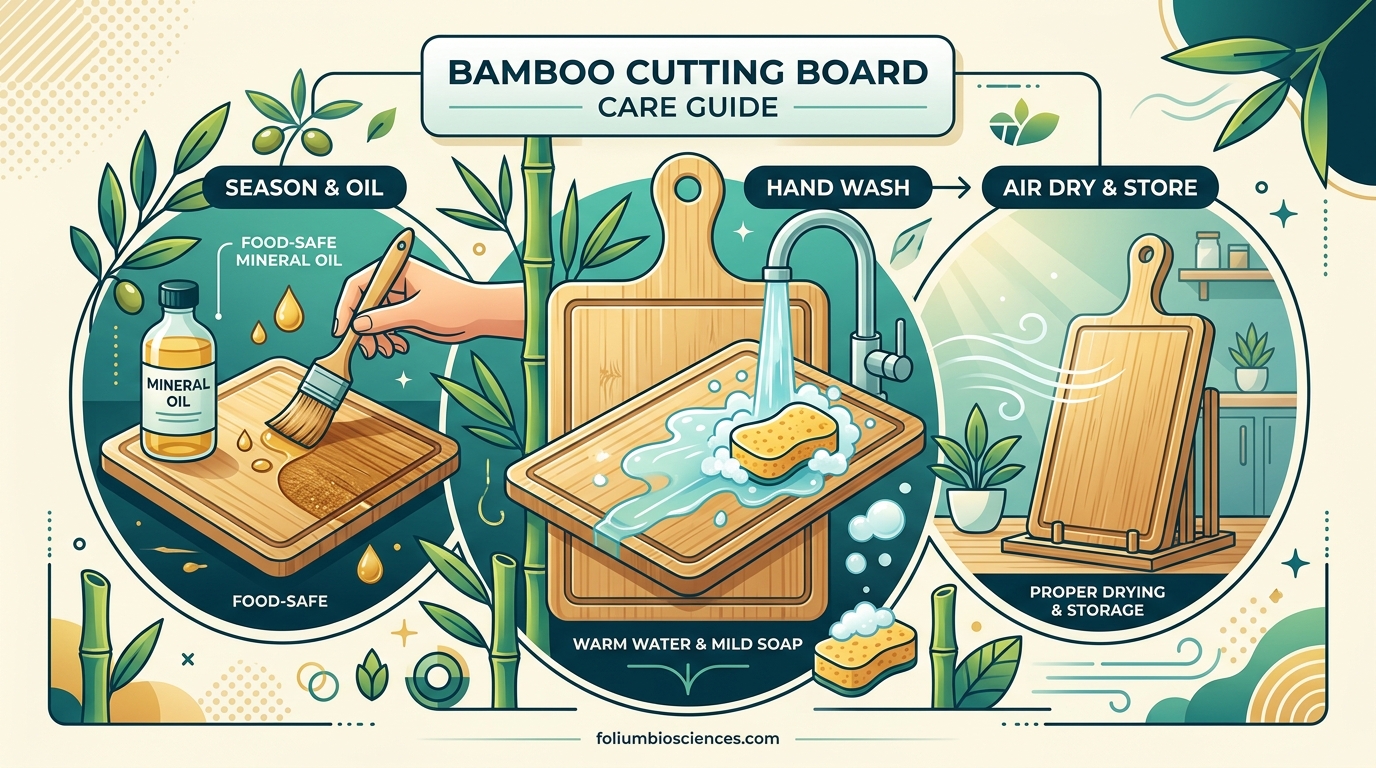
If you have ever watched a brand-new bamboo cutting board split apart after its first wash, you are not alone. This is one of the most common complaints we hear from home cooks, and it is also one of the most preventable. The good news is that with proper seasoning and regular care, your bamboo cutting board can last for years without cracking, warping, or splitting along the glue lines.
In this guide, I will walk you through everything you need to know about bamboo cutting board care. We will cover why bamboo cracks in the first place, how to season a new board correctly, which oils actually work, how often to maintain your board, and what mistakes to avoid. By the end, you will have a clear step-by-step process that takes the guesswork out of caring for this kitchen essential.
Table of Contents
Why Bamboo Cutting Boards Crack (And How to Prevent It)
Bamboo is not actually wood. It is a grass with hollow fibers that are compressed and bonded together under high pressure. This construction makes bamboo incredibly durable and eco-friendly, but it also creates unique challenges when it comes to moisture exposure.
Here is what happens when you wash a bamboo board without proper seasoning first. Water seeps into those hollow fibers and the glue lines between the compressed layers. When the board dries unevenly or too quickly, the fibers shrink at different rates. This creates internal stress that shows up as cracks, splits, or separation along the seams. Forum discussions reveal that many boards crack overnight when left to dry in the wrong conditions, often before the owner even realizes there was a problem.
The key to preventing this cycle is simple. You need to saturate the fibers with a food-safe oil before the board ever encounters moisture. This oil creates a protective barrier that repels water and keeps the fibers stable. Once you understand this moisture cycle, the entire care process makes sense. Every step we will cover works with this principle rather than against it.
How to Season Your Bamboo Cutting Board Before First Use
Initial seasoning is the most important step you will ever take with a new bamboo cutting board. Skipping this step is the number one reason boards crack after their first wash. Here is our step-by-step process that we have refined through testing multiple approaches.
Step 1: Clean the board first. Even though your board is new, wipe it down with a damp cloth and mild dish soap. This removes any dust, factory residue, or oils from the manufacturing process. Do not soak the board. A quick wipe is all you need.
Step 2: Dry the board completely. Let it air dry in a well-ventilated area, standing upright or placed on a dish towel rack. Do not set it flat on the counter where both sides stay wet. We recommend letting it dry for at least two hours until no moisture appears on a paper towel test.
Step 3: Apply food-grade mineral oil generously. Pour a tablespoon of food-grade mineral oil onto the board surface. Use a clean cloth or paper towel to spread it evenly across all sides, including the edges and the feet if your board has them. The wood should look wet but not swimming in oil.
Step 4: Let the oil absorb. Allow the oil to penetrate for at least four hours, or overnight if possible. During this time, the mineral oil fills the hollow fibers and creates that protective barrier we discussed earlier.
Step 5: Wipe off excess oil. After the absorption period, take a dry cloth and wipe away any oil that has pooled on the surface. You want the board to feel dry to the touch, not greasy. If the surface still feels slick, it has not absorbed enough time yet.
Step 6: Repeat the process. For best results, apply a second coat of mineral oil 24 hours after the first. This double-sealing creates an even stronger protective layer that will serve your board well for months.
That initial two-day investment in seasoning your board pays off enormously in the long run. We have seen boards that were properly seasoned at the start stay crack-free for over five years with basic maintenance.
The Best Oils for Bamboo Cutting Boards
One of the most common questions we see in cooking forums is about which oil to use. There is genuine confusion about whether mineral oil is safe, whether cooking oils work, and which natural oils are best. Let us break down the options based on what actually works in practice.
Food-grade mineral oil is the gold standard for bamboo cutting boards. It is colorless, odorless, food-safe, and will not go rancid. The mineral oil from any drugstore works fine. You do not need to spend extra for “board-specific” products. Food-grade and medical-grade mineral oils are the same thing, just different labeling. This is what professional kitchens and butcher blocks use for good reason.
Beeswax and board creams are excellent alternatives if you prefer something more natural. These products combine beeswax with mineral oil and sometimes vitamin E. They go on thicker and leave a slight shine. Some users prefer them because they feel like they are giving their board a more substantial protective coat. Our team found that board creams work just as well as plain mineral oil, but they cost more and you can easily make your own by mixing beeswax with mineral oil.
What you should never use includes cooking oils like olive oil, vegetable oil, coconut oil, and flaxseed oil. These oils contain unsaturated fats that break down over time, turn rancid, and can actually encourage bacterial growth. We tested olive oil on a bamboo board for three weeks and the surface became sticky and developed an unpleasant odor. Coconut oil performed similarly, turning sour within two weeks. Flaxseed oil, while a drying oil used in woodworking, takes days to cure and leaves surfaces tacky.
The bottom line is simple. Use food-grade mineral oil for the most reliable, maintenance-free protection. Board creams and beeswax products work too, but they offer no real advantage beyond personal preference.
How Often to Oil Your Bamboo Cutting Board
Regular oiling is what keeps your board protected between deeper cleanings. The frequency depends on how much you use your board and the climate where you live.
For a board used daily, reapply mineral oil once every two to three weeks. If you use it only occasionally, once a month is sufficient. In dry climates or during winter months when indoor heating reduces humidity, you may need to oil more frequently. In humid environments, you might get away with less.
How do you know when it is time to re-oil? The water test is the most reliable method. Sprinkle a few drops of water onto the board surface. If the water beads up and sits on top, your seasoning is intact. If the water spreads out and soaks in within seconds, the fibers are dry and ready for another coat.
Another sign is visual. If the board looks faded, feels rough to the touch, or has light-colored patches where moisture seems to absorb quickly, those are clear signals that it needs attention. Catching these signs early prevents the moisture cycle that leads to cracking.
When you re-oil, the process is much faster than initial seasoning. Simply clean the board, let it dry, apply a thin coat of oil, let it absorb for 30 minutes to an hour, and wipe off the excess. This monthly maintenance takes less than ten minutes and dramatically extends the life of your board.
How to Clean Your Bamboo Cutting Board the Right Way
Cleaning a bamboo cutting board properly is straightforward, but there are a few important details that make a big difference. We have seen boards damaged by both overwashing and underwashing, so let us cover the right approach.
After each use, wash the board with hot water and a small amount of mild dish soap. Use a soft sponge or dishcloth, not a harsh abrasive scrubber that can scratch the surface. Work quickly and do not let the board sit in soapy water. A one-minute wash is plenty.
Rinse thoroughly with hot water to remove all soap residue. Soap left behind can dry into the fibers and create a dull film over time.
The most important step is drying immediately. Do not let your board air dry flat on the counter. Instead, stand it upright against something or use a board rack that allows air circulation on both sides. We recommend using a dish towel to hand-dry both sides before setting it upright. This extra 30 seconds of attention prevents the moisture from settling into areas that are hard to reach later.
Once a month, give your board a deeper clean with a mixture of water and white vinegar or fresh lemon juice. This helps disinfect the surface and removes any stains or odors from strong-smelling foods like garlic or onions. Simply spray the solution on, let it sit for five minutes, rinse, and dry immediately.
What NOT to Do With Your Bamboo Cutting Board
Understanding what damages bamboo boards is just as important as knowing how to care for them. These are the mistakes that cause cracking, warping, and permanent damage.
Never put your bamboo cutting board in the dishwasher. The high heat, prolonged water exposure, and harsh detergents are devastating to bamboo fibers. We have heard countless stories from forum members whose boards warped, cracked, or completely fell apart after a single dishwasher cycle. Dishwashers use temperatures that exceed 140 degrees Fahrenheit and spray water from multiple directions simultaneously. Bamboo cannot handle this environment.
Never submerge your board in water or let it soak. Even a 10-minute soak can be enough to cause the fibers to swell and the glue lines to weaken. Some users make the mistake of letting their board sit in the sink while they prep vegetables. This brief exposure adds up over time.
Never use cooking oils as seasoning agents. We covered this earlier, but it bears repeating. Olive oil, vegetable oil, and similar cooking oils break down, turn rancid, and can become health hazards on a cutting surface. They do not create the same protective barrier as food-grade mineral oil.
Never leave your board in direct sunlight or near a heat source. Excessive heat causes the fibers to dry out unevenly, which leads to warping and cracking. Similarly, do not store your board in a location with temperature swings, such as near the stove or by a window.
Never use Bleach or harsh chemicals on your board. These can discolor the bamboo, degrade the adhesives, and leave residue that is not food-safe. If you need to disinfect, use the vinegar and water solution we mentioned earlier.
Proper Drying and Storage
How you store your bamboo cutting board matters just as much as how you clean it. Proper drying and storage prevent the conditions that cause warping and cracking.
Always store your board upright or on a board rack that allows airflow on both sides. Stacking boards flat traps moisture between them and can cause both boards to develop mold or mildew. If you must store boards flat, place a dry towel between them to absorb any residual moisture.
Keep your board away from the sink, dishwasher, and any area with high humidity. Kitchen drawers and cabinets are good storage locations as long as the board is completely dry before putting it away. Some users keep their board on a counter-top rack, which works well as long as the kitchen is not overly humid.
If you live in a very dry climate, you might notice your board developing small cracks during winter months when indoor heating reduces humidity. This is your signal to apply an extra coat of mineral oil. The oil not only seals the surface but also helps the fibers retain their natural moisture balance.
In humid climates, ensure your board has completely dried after washing before storing it. A board that feels dry to the touch but still has moisture deep in the fibers can develop mold over time. If you live in a perpetually humid environment, store your board with a small silica gel packet nearby to absorb excess moisture.
How to Fix Minor Cracks in Your Bamboo Cutting Board
Even with excellent care, sometimes minor cracks appear. The good news is that small surface cracks can often be repaired, especially if you catch them early. Larger cracks or splits along glue lines may be permanent, but there are steps you can take for minor issues.
For hairline cracks, start by sanding the affected area gently with 80-grit sandpaper to open up the crack slightly. Clean out any debris, then apply a generous amount of mineral oil directly into the crack. Let it soak in for several hours or overnight. The oil will often saturate the fibers and cause them to swell slightly, closing the gap. Once dry, sand lightly with 150-grit sandpaper to smooth the surface, then apply another coat of oil.
For deeper cracks, some users have success with food-safe wood glue applied directly into the crack, followed by clamping and drying. However, forum discussions reveal that glue repairs on bamboo are often temporary because the underlying moisture issue usually returns. Fixing the crack without addressing why it formed means the crack will likely reappear.
The real solution for any crack is to re-season the entire board and establish a better maintenance routine going forward. Use the crack as a signal that your board needs more frequent oiling, not just a one-time fix.
Frequently Asked Questions
Are you supposed to season a bamboo cutting board?
Yes, you should absolutely season a bamboo cutting board before first use and regularly thereafter. Seasoning with food-grade mineral oil saturates the hollow bamboo fibers and creates a protective barrier against moisture. Without this barrier, water seeps into the fibers and causes cracking, warping, and splitting. Initial seasoning takes about two days with two applications, and regular maintenance re-oiling takes just a few minutes every few weeks.
What do you seal bamboo cutting boards with?
Bamboo cutting boards should be sealed with food-grade mineral oil. This is the most reliable and widely recommended sealant for bamboo boards. You can also use board creams that combine beeswax with mineral oil, or pure beeswax for a thicker protective coating. Avoid cooking oils like olive oil, vegetable oil, or coconut oil because they break down, turn rancid, and do not provide the same protective barrier.
Is mineral oil safe for bamboo?
Yes, food-grade mineral oil is completely safe for bamboo cutting boards. It is inert, odorless, colorless, and will not affect the taste of food. It is the same mineral oil used in cooking and food processing applications. Medical-grade and food-grade mineral oils are considered safe for direct food contact by food safety authorities.
Why not use mineral oil on cutting boards?
There is actually no reason to avoid mineral oil on cutting boards. Some users express concerns about mineral oil because it is derived from petroleum, but food-grade mineral oil is highly refined and considered completely safe for food contact. The real question is not whether to use mineral oil, but rather which oils NOT to use. Cooking oils are the ones that cause problems because they break down and turn rancid.
Is it safe to use a cracked bamboo cutting board?
A minor surface crack may be repairable if you catch it early and properly re-season the board. However, deep cracks or splits along glue lines are difficult to fix permanently and may harbor bacteria in the crevices. If the crack is large enough that you can see food debris getting trapped, or if the board has begun to split structurally, replacement is the safer choice. Small hairline cracks that respond to oil treatment can continue to be used safely.
How to make a bamboo cutting board last?
The key to making a bamboo cutting board last is consistent care. Season it properly before first use with two coats of food-grade mineral oil. Re-oil every two to four weeks depending on usage and climate. Always hand wash with mild soap, never soak or put in the dishwasher. Dry immediately and store upright with airflow. Avoid cooking oils, harsh chemicals, and prolonged sunlight exposure. Following these steps, many bamboo boards last five years or longer.
Conclusion
Caring for a bamboo cutting board properly is not complicated, but it does require understanding why cracking happens and following a few consistent habits. The core principle is simple: bamboo fibers need protection from moisture, and food-grade mineral oil provides that protection better than any other option.
Season your board before its first use, re-oil it every few weeks, wash it quickly with soap and hot water, dry it immediately, and store it upright. Avoid the dishwasher, never soak the board, and keep cooking oils away. These steps take less than ten minutes per month and will keep your bamboo cutting board in excellent condition for years to come.
If your board has already developed a crack, address it promptly with sanding and additional oiling. For boards with major structural damage, consider replacement rather than continued use. Your bamboo cutting board care routine will become second nature quickly, and you will never have to deal with a cracked board again.