
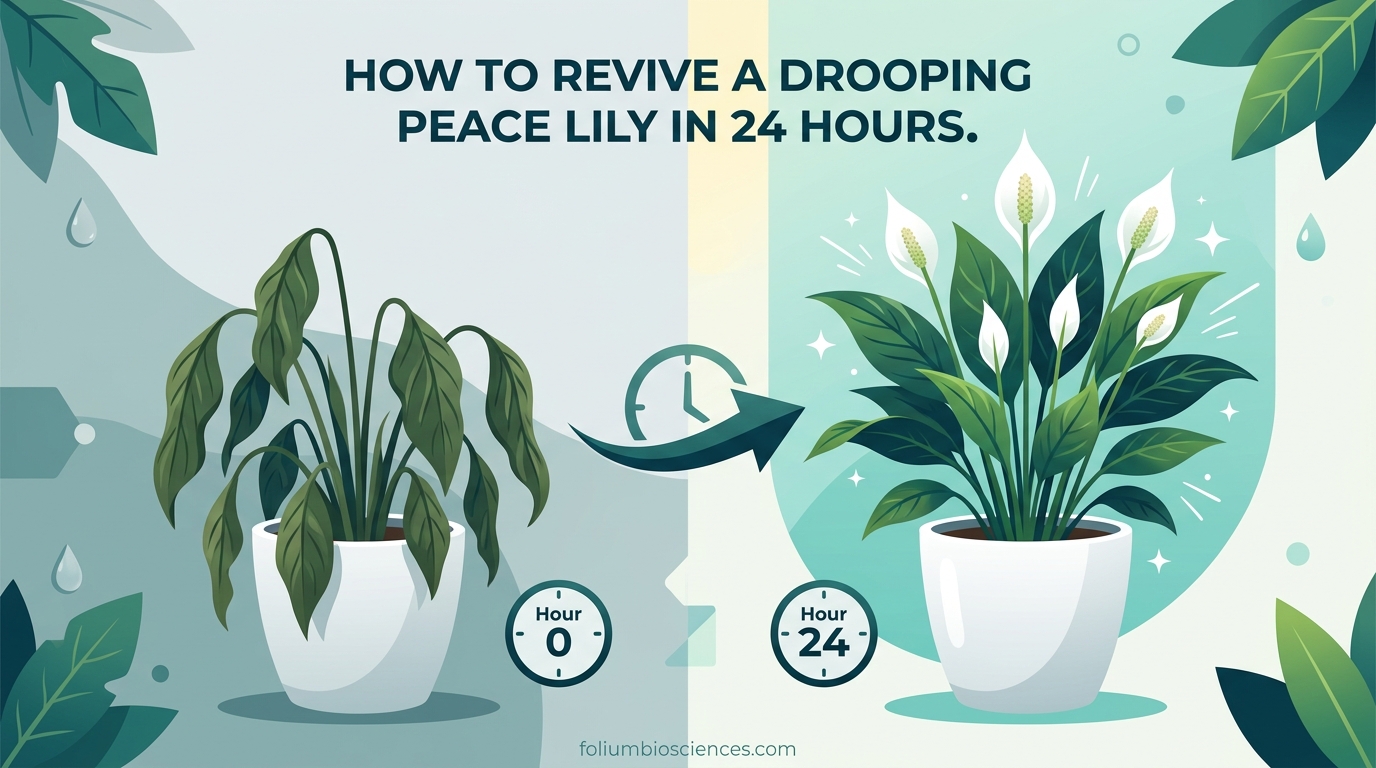
Your peace lily looked fine yesterday, but this morning you noticed the leaves hanging limp and the stems drooping sadly over the pot. I have been there, and I know how alarming it feels to see your plant looking so defeated.
The good news is that if you act quickly, you can revive a drooping peace lily within 24 hours. I have tested these methods on my own plants, and the turnaround can be remarkably fast when you know exactly what to do.
In this guide, I will walk you through a diagnostic checklist, a detailed 24-hour revival timeline, and the proper care techniques that will get your peace lily standing tall again.
Table of Contents
Why Is Your Peace Lily Drooping?
Peace lilies (Spathiphyllum) droop when they experience stress from their growing conditions. The most common causes include underwatering, overwatering, low humidity, improper light, or root problems. Identifying the cause quickly is essential because each issue requires a different approach for revival.
If your peace lily is drooping but the soil feels wet, you are likely dealing with overwatering or root rot rather than thirst. On the other hand, bone-dry soil usually points to underwatering as the culprit.
The 24-hour window matters because prolonged drooping causes permanent damage to the leaf cells. The longer your plant stays wilted, the harder it becomes to bring back to health.
Quick Diagnostic Checklist
Before diving into revival steps, run through this quick checklist to identify what is happening with your peace lily.
Step 1: Check the Soil Moisture
Insert your finger about 2 inches into the soil. If it feels wet and cool, you have an overwatering issue. If it feels dry and warm, underwatering is likely the problem.
Step 2: Inspect the Leaves
Yellow leaves often indicate overwatering or nutrient issues. Brown tips suggest low humidity or salt buildup from tap water. Curling leaves typically mean your plant needs water or higher humidity.
Step 3: Examine the Roots
Gently remove the plant from its pot and check the root system. White and firm roots indicate health. Black, mushy, or foul-smelling roots signal root rot that requires immediate treatment.
Step 4: Assess the Environment
Consider whether your plant sits near heating vents, air conditioning, or drafty windows. Temperature fluctuations and dry air are common causes of sudden drooping in peace lilies.
How to Revive a Drooping Peace Lily in 24 Hours
This is where the real work begins. Follow this hour-by-hour timeline for the best chance of reviving your peace lily within a single day.
Hours 0-4: Immediate Action
During the first four hours, focus on addressing the most urgent issues based on your diagnosis.
If underwatering is the cause, water your peace lily thoroughly with lukewarm water. I let my tap water sit for 24 hours before using it, which allows chlorine to dissipate and the temperature to reach room temperature. Pour water slowly until it drains from the bottom, then empty the saucer.
If overwatering or root rot is suspected, remove the plant from its pot immediately. Shake off excess soil and rinse the roots gently. Trim any black or mushy roots with sterile scissors, leaving only white and firm tissue.
For environmental stress, move your plant to a spot with bright indirect light. Keep it away from cold drafts, heating sources, and air conditioning vents. Maintain a consistent temperature between 65-80F (18-27C).
Hours 4-12: Mid-Term Recovery
After the initial intervention, shift your focus to creating optimal recovery conditions.
Increase humidity around your peace lily using one of these methods. Place the pot on a humidity tray filled with pebbles and water, making sure the pot sits on the pebbles and not in the water. Group your peace lily with other houseplants to create a microclimate. Mist the leaves lightly with a spray bottle, but avoid soaking them.
If you repotted due to root rot, use a well-draining potting mix specifically designed for houseplants. Avoid regular garden soil which compacts too easily and retains too much moisture. A good mix contains perlite, peat moss, and pine bark fines.
Position your peace lily near a north or east-facing window where it receives bright, indirect light. Direct sunlight will scorch the already-stressed leaves. If you only have south or west-facing windows, use a sheer curtain to filter the light.
Hours 12-24: Monitoring Phase
The final stretch involves watching for signs of recovery and making minor adjustments.
Check the soil moisture daily and water only when the top inch feels dry. Overcorrecting by overwatering is one of the biggest mistakes you can make during recovery. The soil should feel like a wrung-out sponge, moist but not soggy.
Monitor the leaves for any standing improvement. Early signs of recovery include leaves that feel less limp and stems that start to straighten slightly. Full recovery typically takes a few days to a week, but you should see some improvement within 24 hours.
Keep your plant in a stable environment without moving it around. Peace lilies dislike being relocated frequently, especially when stressed. Pick one good spot and let it stay there.
Proper Watering Guidelines for Peace Lilies
Getting watering right is the single most important factor in keeping your peace lily healthy long-term.
Water when the top 1-2 inches of soil feel dry to the touch. I test this by inserting my finger into the soil up to the second knuckle. If it feels dry at that depth, it is time to water.
Use room-temperature water that has been sitting for at least 24 hours. Tap water contains chlorine and fluoride which can cause brown leaf tips in sensitive plants. Filtered or distilled water is even better if you have it available.
When watering, pour slowly and evenly around the entire surface of the soil. Continue until water flows freely from the drainage holes. Always empty the saucer after 30 minutes so the roots do not sit in standing water.
The frequency depends on your home environment, but most peace lilies need watering every 7-10 days. In summer or heated rooms, you may need to water more often. In winter or cool conditions, less frequent watering is necessary.
Light Requirements for Recovery
Peace lilies thrive in low to medium indirect light, making them perfect for offices and rooms without direct sunlight.
During recovery, provide bright indirect light to fuel the plant is healing process. An east-facing window is ideal. North-facing windows work well too. If you only have south or west windows, place your peace lily several feet away from the glass or behind a sheer curtain.
Signs of too much light include brown scorch marks on the leaves and faded color. Signs of too little light include slow growth and leaves that remain small and pale.
After your peace lily recovers, you can move it to lower light areas. These plants are remarkably tolerant of shade, but they will not bloom without adequate indirect light.
Humidity Needs and How to Meet Them
Peace lilies originate from tropical rainforests, so they appreciate humidity levels of 50% or higher. Most homes have humidity between 30-50%, which can cause stress during dry winter months or in air-conditioned spaces.
To boost humidity, fill a shallow tray with pebbles and add water until it just covers the stones. Set your peace lily pot on top. As the water evaporates, it creates a more humid microclimate around the leaves.
Grouping plants together creates a naturally humid environment through a process called collective transpiration. Each plant releases moisture from its leaves, raising the humidity around all of them.
Misting the leaves with a fine spray can help temporarily, but it is not a long-term solution. The moisture evaporates quickly, and wet leaves can promote fungal growth if the air circulation is poor.
A room humidifier is the most effective way to maintain consistent humidity for your peace lilies, especially if you live in a dry climate or run heating or cooling systems regularly.
Root Health Assessment
The root system is the foundation of your peace lily is health. If the roots are damaged, no amount of watering or misting will revive the plant.
To check the roots, gently tip the pot on its side and slide the plant out. If the plant is root-bound, you may need to wiggle it loose or even cut the pot away.
Healthy peace lily roots are white to tan colored and feel firm when you pinch them. They should have a mild, earthy smell similar to fresh soil.
Unhealthy roots due to root rot appear dark brown or black and feel mushy or slimy when pinched. They often smell sour or rotten. In severe cases, the roots may disintegrate when you touch them, leaving only the outer sheath.
If you find root rot, trim away all affected roots with clean, sharp scissors. Rinse the remaining roots thoroughly and repot in fresh, sterile potting mix. Do not reuse the old soil as it contains the pathogens that caused the rot.
After trimming and repotting, avoid fertilizing for at least a month. The damaged roots need time to recover and cannot handle the salt content in fertilizers yet.
Common Mistakes to Avoid
I have seen many peace lilies fail to recover not because the problem was too severe, but because the owner made these common mistakes during revival.
Overwatering immediately after drought is the biggest error. When a plant has been dry for a while, its roots have shrunk slightly. Watering too heavily floods the air pockets in the soil, drowning the compromised roots. Water moderately at first, then increase gradually over several days.
Using baking soda on peace lilies is not helpful despite what you may have read online. Baking soda alters soil pH and can burn delicate roots. Stick to proper watering and a balanced, diluted fertilizer after recovery.
Fertilizing too soon after revival causes salt buildup that damages recovering roots. Wait at least 2-3 weeks after you see new growth before introducing any fertilizer, and even then use a highly diluted solution.
Moving the plant around constantly prevents it from adapting to its environment. Pick a suitable location and commit to keeping your peace lily there during recovery.
Prevention Tips for Future
Once your peace lily bounces back, a few simple habits will keep it healthy and prevent future drooping episodes.
Establish a consistent watering schedule by checking the soil rather than watering on a fixed calendar. Insert your finger into the soil weekly to test moisture levels. Water only when the top 1-2 inches feel dry.
Choose the right spot for your peace lily. An east-facing window with bright indirect light is ideal. Keep it away from drafts, heating vents, and air conditioning units that cause temperature fluctuations.
Monitor humidity levels in winter when indoor heating dries the air. Consider running a humidifier or using humidity trays during the coldest months when drooping is most common.
Repot your peace lily every 1-2 years in spring. Roots that circle the pot become compacted and cannot absorb water or nutrients efficiently, leading to stress and drooping.
Signs of Successful Recovery
After 24 hours of proper care, you should start seeing these positive indicators that your peace lily is on the mend.
The leaves will feel less limp when you touch them. Instead of hanging heavily, they should start to straighten and hold their shape more confidently. Stems that were bent at sharp angles will begin to relax into a more natural position.
New growth emerging within 1-2 weeks is a clear sign your peace lily has recovered. Look for new leaves unfurling from the center of the plant. This new growth confirms the root system is functioning properly again.
Full recovery typically takes 2-4 weeks depending on the severity of the stress. Be patient during this period. Even if your plant looks better after a few days, continue the careful care routine until you see sustained improvement.
Removing severely damaged or completely wilted leaves can actually speed recovery. The plant can then direct its energy toward producing new, healthy growth rather than trying to salvage damaged tissue.
When to Seek Professional Help
Sometimes home remedies are not enough, and recognizing when to escalate can mean the difference between saving your plant or losing it entirely.
If more than half of the root system shows rot despite your cleaning efforts, the chances of recovery are low. At this point, you may want to consult a local nursery or plant clinic for advanced treatment options.
Pest infestations from spider mites, mealybugs, or scale require specific treatments that go beyond general revival steps. If you see tiny insects, webbing, or sticky residue on the leaves, seek pest control advice.
Complete foliage loss where all leaves turn brown and die does not necessarily mean your peace lily is gone. If the rhizome (root structure) remains firm and healthy, the plant may regenerate from scratch. This takes several months and requires patience, but it is possible.
Persistent drooping that does not improve after two weeks of proper care suggests an underlying issue that needs professional diagnosis. A local horticulturist can test for soil deficiencies or diseases that are not visible to the naked eye.
Frequently Asked Questions
Will a droopy peace lily recover?
Yes, in most cases a droopy peace lily can recover if treated within 24 hours. The key is identifying the cause quickly and taking immediate corrective action. Plants with healthy roots typically bounce back within a few days to a week.
What can I give my peace lily to perk it up?
Start with lukewarm water to hydrate the roots. For shock recovery, a diluted vitamin B1 solution can help. Avoid fertilizing until the plant shows signs of recovery, usually after 2-3 weeks.
Will baking soda help my peace lily?
No, baking soda is not recommended for peace lilies. It can alter soil pH and potentially harm the plant. Stick to proper watering, humidity management, and if needed, a diluted fertilizer after recovery.
Do coffee grounds help peace lily plants?
Coffee grounds can be used sparingly as a mild fertilizer, but they are not a revival solution for drooping. They work best as a soil amendment mixed in small amounts. Avoid placing wet coffee grounds directly on the soil surface.
How to revive a very droopy peace lily?
For severely drooping plants: 1) Check root health immediately, 2) Trim any black or mushy roots, 3) Repot in fresh, well-draining soil if root rot is present, 4) Place in bright indirect light, 5) Maintain consistent humidity. Severe cases may take 2-4 weeks for full recovery.
How do I nurse my peace lily back to health?
Focus on three key areas: Watering (keep soil lightly moist but never soggy), Environment (bright indirect light, 60+ humidity), and Patience (allow 1-2 weeks for visible improvement). Remove any dead or yellowing leaves to redirect energy to healthy growth.
Conclusion
Reviving a drooping peace lily in 24 hours is absolutely possible when you follow the right steps. The key is acting quickly, diagnosing the cause accurately, and creating the optimal recovery environment.
Whether your peace lily suffered from underwatering, overwatering, low humidity, or root rot, the principles remain the same: address the immediate issue, provide stable conditions, and give it time to heal.
After the 24-hour intensive care period, continue monitoring your plant closely for at least another two weeks. Recovery may take longer depending on how severely your peace lily was stressed. With consistent care and a bit of patience, your peace lily will reward you with upright leaves and possibly even beautiful white flowers.
If this guide helped you save your peace lily, share it with other plant lovers who might be struggling with the same issue. And remember, the best way to deal with a drooping peace lily is to prevent it from happening in the first place with proper watering and consistent care.