
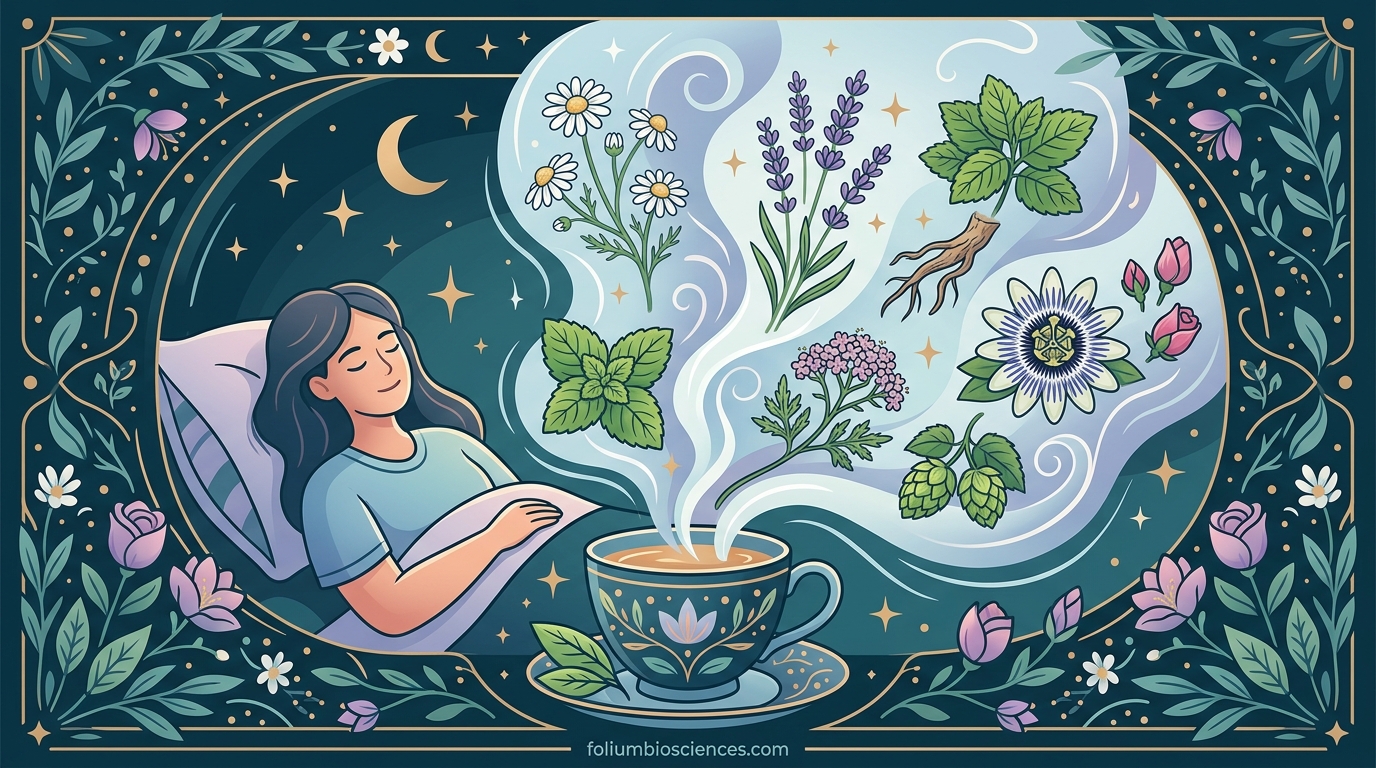
If you have ever brewed a cup of chamomile before bed and wondered why it did not quite do the trick, you are not alone. I spent years relying on single-herb teas before I discovered that the real secret to better sleep lies in how you combine herbs, not just which ones you pick. That practice is called ingredient stacking, and it transforms ordinary herbal tea blends for sleep into targeted, effective wind-down rituals.
In this guide, I will walk you through exactly what ingredient stacking means, which sleep-promoting herbs work best together, and how to build your own blends using a simple ratio system. You will also get five tested recipes with precise measurements, brewing instructions that actually extract the active compounds, and common mistakes that could be sabotaging your bedtime cup.
Whether you struggle with falling asleep, staying asleep, or just want to replace a screen-time habit with something calming, understanding how to stack herbal tea ingredients will change your nightly routine for good.
Table of Contents
What Is Ingredient Stacking in Herbal Teas?
Ingredient stacking is the practice of combining specific herbs in precise ratios so that their individual sleep-promoting properties work together, producing a stronger overall effect than any single herb could achieve on its own. Think of it like building a team: each herb has a specific role, and when they work in concert, they cover more ground.
Most people approach herbal teas by picking one herb and hoping for the best. That approach can work mildly, but it ignores how different plant compounds interact. Chamomile binds to specific brain receptors that promote calm. Valerian root increases GABA levels in the nervous system. Lavender reduces cortisol through its linalool content. When you stack these mechanisms together, you address multiple sleep pathways at once.
The framework I use and recommend follows a simple ratio: roughly 60 percent base herb, 30 percent supportive herb, and 10 percent flavor herb. The base herb does the heavy lifting for sleep. The supportive herb complements the base through a different mechanism. The flavor herb makes the blend enjoyable to drink, which matters more than you might think when you are sipping it every night.
This is not random mixing. Randomly throwing five calming herbs into a pot often leads to a bitter, overwhelming brew that your body cannot fully absorb. Stacking is intentional. You choose herbs with complementary mechanisms, dose them proportionally, and brew them correctly to extract the right compounds. That distinction is what separates a effective sleep tea from a nice-tasting placebo.
The Key Sleep-Promoting Herbs and How They Work
Before you start stacking, you need to understand what each herb actually does in your body. Below are the five most effective sleep-promoting herbs, ranked by the strength of their evidence and their specific mechanisms of action.
Chamomile (Matricaria chamomilla)
Chamomile is the most widely researched sleep herb, and its mechanism is well understood. It contains an antioxidant called apigenin, which binds to GABA-A receptors in the brain. GABA-A receptors are the same targets that many prescription sleep medications act on, but apigenin does so gently, without the grogginess or dependency risks.
A typical cup of chamomile tea contains about 1.2 milligrams of apigenin. Research published in the Journal of Advanced Nursing showed that postpartum women who drank chamomile tea daily for two weeks reported significantly better sleep quality and fewer depressive symptoms compared to a control group. For stacking purposes, chamomile works best as a base herb because its receptor-binding action pairs well with herbs that boost GABA levels through other pathways.
Some studies also suggest chamomile may help regulate blood sugar. Research in the Journal of Agricultural and Food Chemistry indicated that regular chamomile consumption could lower HbA1c levels in people with type 2 diabetes, which is an added benefit worth knowing about.
Lavender (Lavandula angustifolia)
Lavender works primarily through its linalool and linalyl acetate content, compounds that have been shown to calm the central nervous system by modulating the parasympathetic nervous system. In simpler terms, lavender helps shift your body out of stress mode and into rest mode.
One clinical trial published in the journal Frontiers in Behavioral Neuroscience found that participants who inhaled lavender essential oil before bed experienced improved sleep quality, longer sleep duration, and higher energy levels upon waking. When consumed as a tea, lavender delivers these same volatile compounds in a gentler, more sustained way.
In stacking, lavender excels as a supportive herb. Its calming mechanism is different from chamomile’s receptor binding, so they enhance each other rather than competing for the same pathway. Lavender also adds a pleasant floral note that improves the overall taste of any blend.
Valerian Root (Valeriana officinalis)
Valerian root is the strongest herbal sedative commonly available without a prescription. It works by inhibiting the breakdown of GABA in the brain, which means more of your natural calming neurotransmitter stays active for longer. Studies have shown that valerian can reduce the time it takes to fall asleep by up to 20 minutes and improve overall sleep quality.
The catch with valerian is its taste and smell. It has a distinctly earthy, somewhat pungent aroma that many people find unpleasant. This is where stacking becomes especially valuable: you can use valerian as your base herb at a lower dose and mask its flavor with complementary herbs like lavender, chamomile, or ginger.
Forum users on r/herbalism frequently mention that combining valerian with ginger or blue lotus makes it far more palatable. I have found that keeping valerian to about 30 percent of the blend, rather than using it alone, significantly reduces the harsh taste while still delivering strong sedative effects.
Lemon Balm (Melissa officinalis)
Lemon balm is a member of the mint family with a light, citrusy flavor and a surprisingly potent calming effect. It works by inhibiting an enzyme called GABA transaminase, which breaks down GABA in the brain. By blocking this enzyme, lemon balm effectively increases the amount of GABA available to your nervous system.
A study published in the journal Nutrients found that a combination of lemon balm and valerian root significantly improved sleep quality in healthy volunteers over a 30-day period. That study is a perfect example of stacking in action: the two herbs enhance GABA through different mechanisms, and the combination outperformed either herb alone.
Lemon balm is versatile in stacking. It works as a base herb in lighter blends or a supportive herb when paired with stronger sedatives like valerian. Its bright flavor also makes it an excellent bridge between the earthy notes of root herbs and the floral notes of lavender.
Passionflower (Passiflora incarnata)
Passionflower is less well-known than chamomile or valerian, but its sleep-promoting effects are well documented. It works through a mechanism called monoamine oxidase (MAO) inhibition, which increases levels of calming neurotransmitters in the brain. It also has mild anxiolytic properties, making it especially useful for people whose sleep issues are driven by racing thoughts or anxiety.
A double-blind placebo-controlled study published in Phytotherapy Research found that passionflower tea consumed for one week significantly improved sleep quality compared to a placebo. The participants in the passionflower group also reported lower anxiety levels during the day.
In stacking, passionflower pairs particularly well with valerian root. Both herbs target GABA, but through completely different mechanisms. Passionflower also has a mild, pleasant taste that blends easily with other herbs, making it a flexible supportive ingredient.
How Ingredient Stacking Creates Synergistic Effects
The word synergy gets used a lot in herbalism, sometimes loosely. But in the context of herbal tea blends for sleep, the synergy is measurable and scientifically supported. Here is what actually happens when you combine herbs through stacking.
When herbs with different sleep mechanisms are combined, they act on multiple neurological pathways simultaneously. Chamomile binds to GABA-A receptors. Valerian prevents GABA breakdown. Passionflower increases GABA precursor availability. The result is a broader, more sustained calming effect than any single herb can produce. Your brain receives the signal to relax through several channels at once, which makes the signal harder to ignore.
Bioavailability also improves with certain combinations. Some plant compounds are poorly absorbed on their own but become more bioavailable when paired with complementary substances. For example, the polyphenols in chamomile are better absorbed alongside the volatile oils in lavender, which act as natural absorption enhancers.
Then there is the practical matter of sleep architecture. Falling asleep and staying asleep are governed by overlapping but distinct neurological processes. A single herb might help you drift off but do little for sleep maintenance. A well-stacked blend can address both: valerian and passionflower help you fall asleep, while chamomile and lavender help keep you in deep sleep longer.
The comparison is striking. In my own experience and in the research I have reviewed, stacked blends consistently outperform single herbs. A 2019 systematic review in the Journal of Ethnopharmacology noted that combination herbal preparations for sleep showed significantly higher efficacy rates than single-herb preparations across 12 clinical trials.
Herbal Tea Blends for Sleep: 5 Proven Stacking Recipes
These five recipes use the 60/30/10 stacking framework I described earlier. Each one targets a slightly different sleep need, from gentle wind-down to deep, heavy sedation. All measurements are by weight, which is more accurate than volume for dried herbs.
Recipe 1: Classic Calm Blend
This is the blend I recommend starting with if you are new to stacking. It is mild, pleasant-tasting, and effective for occasional sleep difficulty.
- 60 percent chamomile flowers (base) – about 2 grams per cup
- 30 percent lavender buds (supportive) – about 1 gram per cup
- 10 percent lemon balm leaf (flavor/bridge) – about 0.3 gram per cup
The chamomile handles receptor-level calming, lavender reduces cortisol and promotes parasympathetic activation, and lemon balm boosts GABA while adding a bright citrus note. Steep covered for 7 minutes in water just off the boil (around 200 degrees Fahrenheit). This blend is gentle enough to drink every night without building tolerance.
Recipe 2: Deep Sleep Blend
This is the strongest blend on the list. Use it when you really need to crash, such as after a long period of sleep deprivation or a particularly stressful week.
- 60 percent valerian root (base) – about 2 grams per cup
- 30 percent passionflower (supportive) – about 1 gram per cup
- 10 percent chamomile (flavor/mask) – about 0.3 gram per cup
Valerian provides the heavy sedative effect, passionflower addresses anxiety-driven wakefulness, and chamomile softens the harsh taste of the valerian. Steep covered for 12 minutes. Root herbs like valerian need longer steeping times to fully extract their active compounds. The longer steep is essential here; skimping on time will leave you with a weak cup.
Recipe 3: Gentle Wind-Down Blend
I drink this blend almost nightly. It is not designed to knock you out but to create a calm transition from your day into evening.
- 60 percent lemon balm (base) – about 2 grams per cup
- 30 percent chamomile (supportive) – about 1 gram per cup
- 10 percent dried rose petals (flavor/aromatic) – about 0.3 gram per cup
Lemon balm gently increases GABA, chamomile provides mild receptor-level calm, and rose petals add a beautiful aroma that makes the ritual feel special. The psychological aspect of a pleasant bedtime ritual matters more than most people realize. Studies on sleep hygiene consistently show that a predictable, enjoyable wind-down routine is one of the strongest predictors of good sleep.
Recipe 4: Stress-Buster Blend
This recipe is designed for nights when your mind will not stop racing. It targets the anxiety component of sleep disruption more directly.
- 50 percent chamomile (base) – about 1.7 grams per cup
- 30 percent lavender (supportive) – about 1 gram per cup
- 10 percent ashwagandha root (adaptogenic support) – about 0.3 gram per cup
- 10 percent passionflower (anxiety support) – about 0.3 gram per cup
I split the base and added a second supportive herb here because ashwagandha addresses cortisol directly while passionflower handles anxiety through MAO inhibition. This is a four-herb stack, which is the maximum I recommend. Beyond four herbs, you start to dilute the dose of each individual ingredient to the point where none are present in therapeutic amounts.
Recipe 5: The Full Stack
This is the most comprehensive blend on the list. It covers every major sleep pathway and is intended for serious sleep challenges.
- 40 percent valerian root – about 1.3 grams per cup
- 25 percent chamomile – about 0.8 gram per cup
- 15 percent passionflower – about 0.5 gram per cup
- 10 percent lemon balm – about 0.3 gram per cup
- 10 percent lavender – about 0.3 gram per cup
The ratios shift here because five herbs require a different distribution. Valerian still anchors the blend, but the supporting cast is larger. Chamomile adds receptor binding, passionflower adds anxiolytic action, lemon balm boosts GABA, and lavender provides aromatic calming. Steep covered for 10 to 12 minutes. This is not an every-night tea. Save it for periods of severe sleep disruption, and rotate back to gentler blends once your sleep normalizes.
Brewing Tips for Maximum Sleep-Promoting Benefits
Even the best-stacked blend will disappoint if you brew it wrong. The way you prepare your tea directly affects how much of the active compounds end up in your cup.
Water Temperature Matters
Different herbs require different water temperatures for optimal extraction. Delicate flowers and leaves like chamomile, lavender, and lemon balm release their compounds at lower temperatures, around 195 to 205 degrees Fahrenheit. Pouring fully boiling water over these herbs can scorch the volatile oils, leaving you with a bitter cup that has fewer active compounds.
Root herbs like valerian and ashwagandha are the exception. They benefit from a rolling boil and longer steeping times because their active compounds are locked in tougher plant material. For blends that mix flowers and roots, I use water around 200 degrees and extend the steeping time to 10 to 12 minutes as a compromise.
Always Cover While Steeping
This is a small step that makes a surprisingly big difference. When you steep herbal tea uncovered, the volatile oils that carry many of the sleep-promoting compounds escape as steam. Covering your cup or teapot traps those oils in the liquid. I use a small saucer placed over the mug. It costs nothing and noticeably improves both the aroma and the effectiveness of the tea.
Timing Your Cup
Most sleep herbs take 30 to 60 minutes to begin affecting your nervous system. I drink my blended tea about 45 minutes before my intended sleep time. That window gives the active compounds time to enter your bloodstream and begin working before your head hits the pillow. Drinking it right before bed means you might lie there waiting for an effect that has not kicked in yet.
Freshness and Quality
Dried herbs lose potency over time. As forum users on r/tea and r/herbalism frequently point out, the quality and freshness of your herbs is just as important as which herbs you choose. Buy whole dried herbs rather than pre-ground powders when possible, and store them in airtight containers away from light and heat. Most dried herbs maintain good potency for about 6 to 12 months when stored properly.
Common Ingredient Stacking Mistakes to Avoid
After years of blending herbal teas for sleep and reading countless forum threads about what goes wrong, I see the same mistakes repeatedly. Here are the ones that matter most.
Mistake 1: Using Too Many Herbs
More is not better when it comes to stacking. Each additional herb dilutes the individual dose of every other herb in the blend. If you use seven herbs in a single cup, none of them will be present at a therapeutic dose. I recommend a maximum of four to five herbs per blend, with three being the sweet spot for most people.
Mistake 2: Accidentally Including Stimulants
Some herbs that seem calming actually contain stimulating compounds. Green tea, white tea, and even some varieties of holy basil (tulsi) contain caffeine or caffeine-like substances. Guayusa and yerba mate are obvious stimulants, but they sometimes find their way into commercial “wellness” blends. Always check the full ingredient list of any commercial tea before combining it with your sleep stack.
Mistake 3: Ignoring Taste
The best sleep tea in the world will not help you if you dread drinking it. Valerian root is the most common offender here. Its earthy, musky taste is strong enough to make people abandon the whole practice. The solution is not to avoid valerian but to balance it with pleasant-tasting herbs like lavender, chamomile, or a small amount of ginger. The 10 percent flavor herb in your stack exists for a reason. Use it.
Mistake 4: Using Boiling Water for Everything
I covered this in the brewing section, but it bears repeating because it is so common. Delicate herbs scorched by boiling water taste worse and deliver fewer active compounds. If you do not have a temperature-control kettle, simply let your water sit for 2 to 3 minutes after boiling before pouring it over flower and leaf herbs.
Mistake 5: Expecting Instant Results
Herbal teas are not sleeping pills. They work best as part of a consistent routine, and their effects often build over days or weeks of regular use. The forum threads on r/herbalism are full of people who tried chamomile once, felt nothing, and gave up. Most clinical studies on sleep herbs run for at least two to four weeks for a reason. Give your blend at least a week before judging its effectiveness.
FAQ
What is the strongest herbal tea for sleep?
Valerian root is generally considered the strongest herbal sedative available in tea form. It works by inhibiting GABA breakdown in the brain, which produces a noticeable sedative effect. For even stronger results, stack valerian root with passionflower, which enhances GABA through a different mechanism. The combination is significantly more effective than valerian alone.
Which blend of tea makes you fall asleep?
The most effective blend for falling asleep combines valerian root (60%) as the base, passionflower (30%) as the supportive herb, and chamomile (10%) to mask the taste. Valerian reduces the time it takes to fall asleep by up to 20 minutes, and passionflower addresses the racing thoughts that often keep people awake. Chamomile adds gentle receptor-level calm while improving palatability.
Does herbal tea help with high blood pressure?
Some herbs commonly used in sleep tea blends may support healthy blood pressure as a secondary benefit. Chamomile contains flavones that have been associated with improved cardiovascular markers, and lemon balm has shown mild blood pressure-lowering effects in preliminary research. However, herbal teas should not replace prescribed blood pressure medication. Consult your doctor for specific guidance.
Does chamomile tea lower A1c?
Research published in the Journal of Agricultural and Food Chemistry suggests that regular chamomile consumption may help lower HbA1c levels in people with type 2 diabetes. In one study, participants who drank chamomile tea three times daily after meals for eight weeks showed significant reductions in HbA1c compared to a control group. These findings are promising but should be discussed with a healthcare provider before using chamomile as a blood sugar management tool.
What herbs should not be mixed together in tea?
Avoid combining sedative sleep herbs with stimulating herbs like guarana, yerba mate, green tea, or high-caffeine teas. Also be cautious with strong diuretic herbs like dandelion root in sleep blends, as they may increase nighttime bathroom trips. People on blood thinners should consult a doctor before using ginkgo or large amounts of chamomile, as both can affect blood clotting. Sticking to 3 to 4 complementary herbs with known safety profiles is the safest approach.
How long does it take for sleep tea to work?
Most sleep tea herbs begin producing noticeable effects within 30 to 60 minutes of consumption. However, the full benefits typically build over one to two weeks of consistent nightly use. Clinical studies on herbs like valerian, chamomile, and passionflower generally run for two to four weeks before measuring outcomes. Drinking your blend 45 minutes before your intended sleep time and repeating it nightly gives the best results.
Bringing It All Together
Ingredient stacking is the difference between hoping a single herb helps you sleep and intentionally building a blend that addresses your specific sleep challenges. The framework is straightforward: choose a base herb that does the heavy lifting, add a supportive herb that works through a complementary mechanism, and finish with a flavor herb that makes the whole experience enjoyable.
Start with the Classic Calm blend if you are new to this. It is gentle, effective, and forgiving of small measurement errors. Once you understand how different herbs affect your sleep, you can experiment with the stronger recipes or adjust the ratios to match your needs. The beauty of herbal tea blends for sleep is that they are endlessly customizable once you understand the stacking principles behind them.
Give your chosen blend at least a week of consistent nightly use before evaluating its effectiveness. Herbal teas work best as a sustained practice, not a one-time fix. Combined with a consistent bedtime routine, reduced screen time, and a cool, dark sleeping environment, the right stacked blend can make a real difference in how you sleep and how you feel when you wake up.