
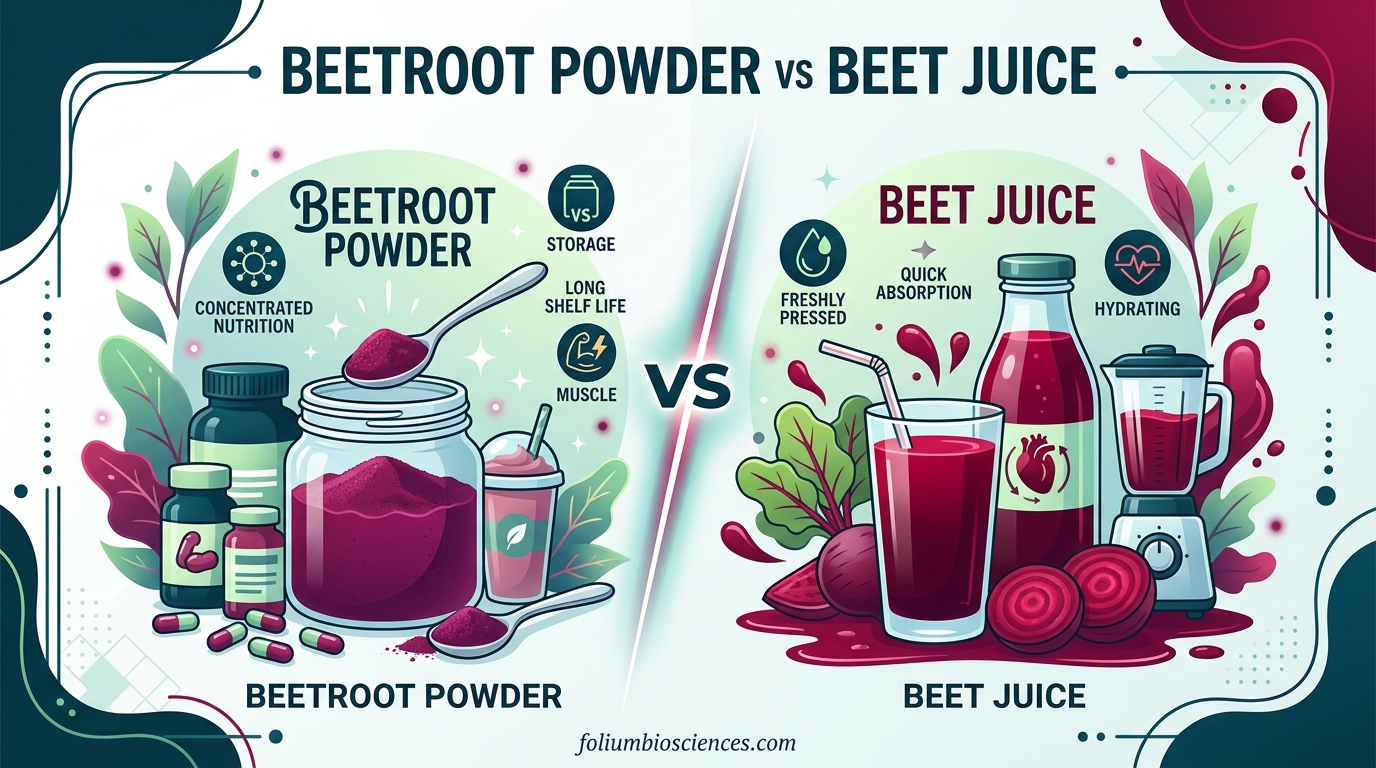
High blood pressure affects nearly half of American adults, and many are searching for natural ways to manage it without relying solely on medication. Beetroot has emerged as one of the most promising dietary interventions for cardiovascular health, with research consistently showing its ability to lower blood pressure through a fascinating biological mechanism involving nitrates and nitric oxide.
But when it comes to choosing between beetroot powder and beet juice for blood pressure reduction, the decision is not as straightforward as you might think. Each form has distinct advantages, different nitrate concentrations, and unique practical considerations that can significantly impact your results.
In this comprehensive guide, we will examine the science behind how beets lower blood pressure, compare the nitrate content between juice and powder forms, analyze clinical effectiveness data, and provide specific dosage recommendations based on current research. By the end, you will understand exactly which form works better for your blood pressure goals and why.
Table of Contents
How Beets Lower Blood Pressure: The Nitrate-to-Nitric Oxide Pathway
Beets are nature’s most concentrated source of dietary nitrates, compounds that your body converts into nitric oxide. This conversion process is the key to understanding why beets are so effective for blood pressure management.
When you consume beets, the nitrates travel through your bloodstream to your salivary glands, where they concentrate in your saliva. This is where the magic happens. Beneficial bacteria on your tongue and in your oral cavity convert these nitrates into nitrites through an enzymatic process. When you swallow, these nitrites enter your stomach and bloodstream, where they are converted into nitric oxide.
Nitric oxide is a powerful signaling molecule that causes your blood vessels to relax and widen, a process called vasodilation. When blood vessels dilate, resistance to blood flow decreases, which directly reduces blood pressure. This effect is particularly pronounced in systolic blood pressure, the top number in your blood pressure reading that measures pressure when your heart beats.
The oral microbiome plays a surprisingly critical role in this process that most people overlook. Your mouth contains specific bacteria, particularly species from the genera Neisseria, Veillonella, and Actinomyces, that possess the nitrate reductase enzymes necessary for the initial conversion. Without a healthy oral microbiome, this conversion becomes less efficient, which means you get less nitric oxide and less blood pressure benefit from the same amount of dietary nitrates.
Research from multiple clinical trials has confirmed these effects. A landmark study published in Hypertension found that consuming 500ml of beetroot juice daily reduced systolic blood pressure by an average of 4-5 mmHg. Other studies have shown reductions of up to 10 mmHg in systolic pressure, which is comparable to the effects of some blood pressure medications.
Nitrate Content Comparison: The Numbers That Matter
When comparing beetroot powder versus beet juice for blood pressure, the single most important factor is nitrate concentration. This is where the two forms diverge dramatically, and understanding these numbers is essential for making an informed choice.
| Form | Nitrate Content (mg per serving) | Typical Serving Size |
|---|---|---|
| Fresh Beet Juice | 400-2,850 mg | 8 oz (240ml) |
| Beetroot Powder | 40-320 mg | 1 tsp-1 tbsp (5-15g) |
| Concentrated Beet Juice | 2,000-4,000 mg | 2-3 oz (60-90ml) |
| Beetroot Shots | 300-400 mg | 2-3 oz (60-90ml) |
The data reveals a striking difference. Fresh beet juice can contain anywhere from 400 to 2,850 milligrams of nitrates per 8-ounce serving, depending on the beet variety, growing conditions, and processing method. Beetroot powder, on the other hand, typically contains just 40 to 320 milligrams per serving.
This tenfold difference exists because of how each form is produced. Beet juice is essentially the concentrated liquid extracted from beets, capturing the water-soluble nitrates in a relatively undiluted form. The juicing process concentrates the nitrates while removing the fiber. Beet powder is made by dehydrating whole beets and grinding them into a fine powder, which means the nitrate content becomes spread out across the entire mass of the original vegetable.
However, there is an important caveat to these numbers. Beetroot powder varies significantly based on processing method. Freeze-dried beet powder retains more nitrates than heat-dried powder, and some manufacturers specifically concentrate their powders or standardize them to specific nitrate levels. The brand and manufacturing process matter enormously here.
Fresh juice also has variability. Nitrate content in beets depends on soil conditions, fertilizer use, harvest timing, and storage conditions. Studies have found that nitrate levels in beet juice can vary by up to 400 percent between different batches and brands. This inconsistency makes it difficult to standardize your intake.
Effectiveness for Blood Pressure Reduction: What the Studies Show
Clinical research provides clear evidence about which form delivers better blood pressure results. Multiple randomized controlled trials have compared the effects of beet juice versus powder, and the data consistently favors juice for acute blood pressure lowering.
A systematic review and meta-analysis published in the Journal of Nutrition examined 22 clinical trials involving beetroot supplementation. The researchers found that beet juice produced more consistent and significant blood pressure reductions compared to powder forms. Participants drinking beet juice experienced average systolic blood pressure reductions of 3.55 mmHg, while powder supplementation showed smaller effects.
The timing of effects is equally important. Beet juice typically begins lowering blood pressure within one hour of consumption, with peak effects occurring around three hours post-consumption. This 3-hour window represents when nitric oxide production reaches its maximum. Blood pressure gradually returns to baseline after about 6-8 hours, which suggests that consistent daily consumption provides the most benefit.
One Reddit user in the hypertension community reported their blood pressure dropped to 100/68 after consistent beetroot use, demonstrating the real-world potential of this intervention. However, individual results vary significantly based on baseline blood pressure, the starting nitrate content of the product, and the efficiency of your oral microbiome’s nitrate conversion.
Beet powder can still be effective, but typically requires larger serving sizes or more frequent dosing to achieve comparable nitrate levels. Some users report better results when mixing powder with citrus juice, which provides vitamin C that may help preserve nitrite levels during the conversion process.
The Verdict: Which Form Lowers Blood Pressure More Effectively?
Beet juice is generally better than beet powder at lowering blood pressure because it contains significantly higher concentrations of nitrates, typically 400 to 2,850 mg per serving compared to 40 to 320 mg in powder. This higher nitrate content translates directly to more nitric oxide production and greater vasodilation effects.
However, this does not mean powder is ineffective. For some people, especially those who need to monitor sugar intake or prefer the convenience of a shelf-stable product, beet powder may still provide meaningful benefits when consumed at appropriate doses. The key is understanding that you will likely need to consume more powder to achieve the same nitrate load as a glass of juice.
Your choice should depend on your specific health situation and priorities. If maximum blood pressure reduction is your primary goal and you do not mind the taste or preparation, beet juice offers superior nitrate delivery. If convenience, lower sugar, and fiber retention matter more to you, beet powder remains a viable option with the understanding that you may need higher doses.
Practical Considerations: Beyond Just Nitrates
While nitrates drive the blood pressure benefits, practical factors significantly influence which form people actually stick with long-term. Here is how juice and powder compare across key considerations.
| Factor | Beet Juice | Beet Powder |
|---|---|---|
| Convenience | Ready to drink | Must mix with liquid |
| Shelf Life | 3-7 days (fresh), 12+ months (shelf-stable) | 1-2 years |
| Sugar per Serving | 20-25 grams | 0-3 grams |
| Fiber Content | Minimal (removed during juicing) | Retained from whole beet |
| Taste Profile | Earthy, sweet, intense | Mild, more versatile |
| Portability | Requires refrigeration | Travel-friendly |
| Cost per Serving | $2-5 | $0.50-2 |
| Tooth Staining | High (can stain teeth pink) | Low (when mixed well) |
Sugar content represents a major differentiator. Fresh beet juice contains 20-25 grams of sugar per 8-ounce serving, which is significant for people monitoring their carbohydrate intake or managing diabetes. Beet powder retains only trace amounts of sugar because the dehydration process does not concentrate sugars in the same way juice extraction does.
Fiber is another consideration. While fiber does not directly impact blood pressure through the nitrate pathway, it supports overall cardiovascular health and digestive wellness. Beet powder retains the fiber from the whole beet, while juicing removes it. For people prioritizing fiber intake, this gives powder an advantage despite its lower nitrate content.
Storage and convenience heavily favor powder. Fresh beet juice spoils quickly, lasting only 3-7 days refrigerated. Many users report frustration with juice going bad before they finish it. Powder stays viable for 1-2 years when stored properly and can be kept in a desk drawer or travel bag without refrigeration.
The taste and staining issues mentioned in forum discussions are real concerns. Beet juice has an intense earthy flavor that some people find unpleasant. It can also temporarily discolor your mouth, tongue, and even stool (a harmless condition called beeturia). Beet powder has a milder taste when mixed into smoothies or water and causes less dramatic staining.
Dosage and Timing Recommendations for Blood Pressure
Getting the dosage right is crucial for seeing meaningful blood pressure results. Based on clinical studies, here are the evidence-based recommendations for each form.
For beet juice, the effective dose ranges from 250ml to 500ml daily, providing approximately 300-600mg of nitrates. The majority of successful clinical trials used 500ml (about 16 ounces) of beetroot juice daily. Some concentrated beet juice products deliver equivalent nitrates in smaller volumes of 2-3 ounces.
For beetroot powder, achieving comparable nitrate levels requires larger amounts. Most studies showing blood pressure benefits used 3-6 grams of nitrate-rich beetroot powder daily, which is significantly more than the typical 1-teaspoon serving many people take. Check your product’s specific nitrate content and adjust accordingly.
Timing matters for maximum effect. Consume your beet supplement 2-3 hours before when you want peak blood pressure reduction. Many people find taking it in the morning works well, as this provides daytime coverage when blood pressure tends to be highest. Avoid using antibacterial mouthwash before or after consumption, as it can disrupt the oral bacteria needed for nitrate conversion.
Side Effects and Important Considerations
Beetroot is generally safe, but there are important considerations to keep in mind. Beeturia, the reddening of urine and stool after consuming beets, is harmless but can be alarming if you are not expecting it. This effect occurs in roughly 10-14 percent of people and is more common with iron deficiency.
People taking blood pressure medication should consult their healthcare provider before adding beetroot to their routine. Beets can enhance the effects of certain medications, potentially causing blood pressure to drop too low. Do not stop taking prescribed blood pressure medication without medical supervision, even if beets seem to be helping.
Kidney stones represent another consideration. Beets are high in oxalates, which can contribute to stone formation in susceptible individuals. If you have a history of kidney stones, discuss beetroot consumption with your doctor. Additionally, the high sugar content in beet juice may not be suitable for people with diabetes or those following very low-carbohydrate diets.
Frequently Asked Questions
Is beet juice better than beet powder for blood pressure?
Beet juice is generally better than beet powder for blood pressure because it contains significantly higher concentrations of nitrates. A typical 8-ounce serving of beet juice provides 400-2,850 mg of nitrates compared to 40-320 mg in beetroot powder. Higher nitrate content leads to more nitric oxide production and greater vasodilation effects.
Does beetroot powder really lower your blood pressure?
Yes, beetroot powder can lower blood pressure, though typically less dramatically than beet juice. Studies show that beetroot powder supplementation can reduce systolic blood pressure by 2-4 mmHg when consumed at appropriate doses. The key is consuming enough powder to achieve meaningful nitrate intake, typically 3-6 grams daily of nitrate-rich powder.
How long does it take for beetroot powder to lower BP?
Beetroot powder begins lowering blood pressure within 1-2 hours of consumption, with peak effects occurring around 3 hours post-consumption. Blood pressure gradually returns to baseline after 6-8 hours. Consistent daily use provides the best results, with some people noticing meaningful changes after 1-2 weeks of regular supplementation.
How does beetroot work on blood pressure?
Beetroot contains dietary nitrates that convert to nitric oxide in your body through a three-step process: First, bacteria in your mouth convert nitrates to nitrites. Then, stomach acid converts nitrites to nitric oxide. Finally, nitric oxide causes blood vessels to relax and widen (vasodilation), reducing resistance to blood flow and lowering blood pressure.
What is the best form of beetroot to take?
Beet juice is best for maximum blood pressure reduction due to higher nitrate content. Beet powder is better for convenience, lower sugar intake, and fiber retention. Choose beet juice if your priority is maximum BP lowering and you do not mind the taste. Choose powder if you need portability, lower sugar, or longer shelf life.
What to avoid when taking beetroot powder?
Avoid using antibacterial mouthwash before or after taking beetroot powder, as it kills the oral bacteria necessary for converting nitrates to nitrites. Also avoid taking it with medications that lower blood pressure without consulting your doctor, as the combined effects could lower BP too much. People with kidney stone history should discuss with their healthcare provider due to oxalate content.
Conclusion: Making the Right Choice for Your Blood Pressure Goals
When comparing beetroot powder versus beet juice for blood pressure, beet juice emerges as the clear winner for effectiveness. With 10 to 20 times more nitrates per serving, juice delivers the nitrate load necessary for meaningful blood pressure reduction supported by robust clinical evidence.
However, the best choice depends on your individual circumstances. If you prioritize maximum blood pressure lowering and can handle the taste, preparation, and sugar content, beet juice offers superior results. If convenience, portability, lower sugar, and fiber retention matter more, beetroot powder can still provide benefits when consumed at higher doses.
Regardless of which form you choose, consistency matters most. The blood pressure effects of beets are temporary, lasting 6-8 hours, which means daily consumption provides the greatest benefit. Start with the form you are most likely to stick with long-term, monitor your blood pressure regularly, and adjust your approach based on your results.
Remember that while beets are a powerful natural tool for blood pressure management, they work best as part of an overall heart-healthy lifestyle including proper diet, regular exercise, stress management, and appropriate medical care. Always consult your healthcare provider before making significant changes to your blood pressure management approach, especially if you are currently taking medication.