
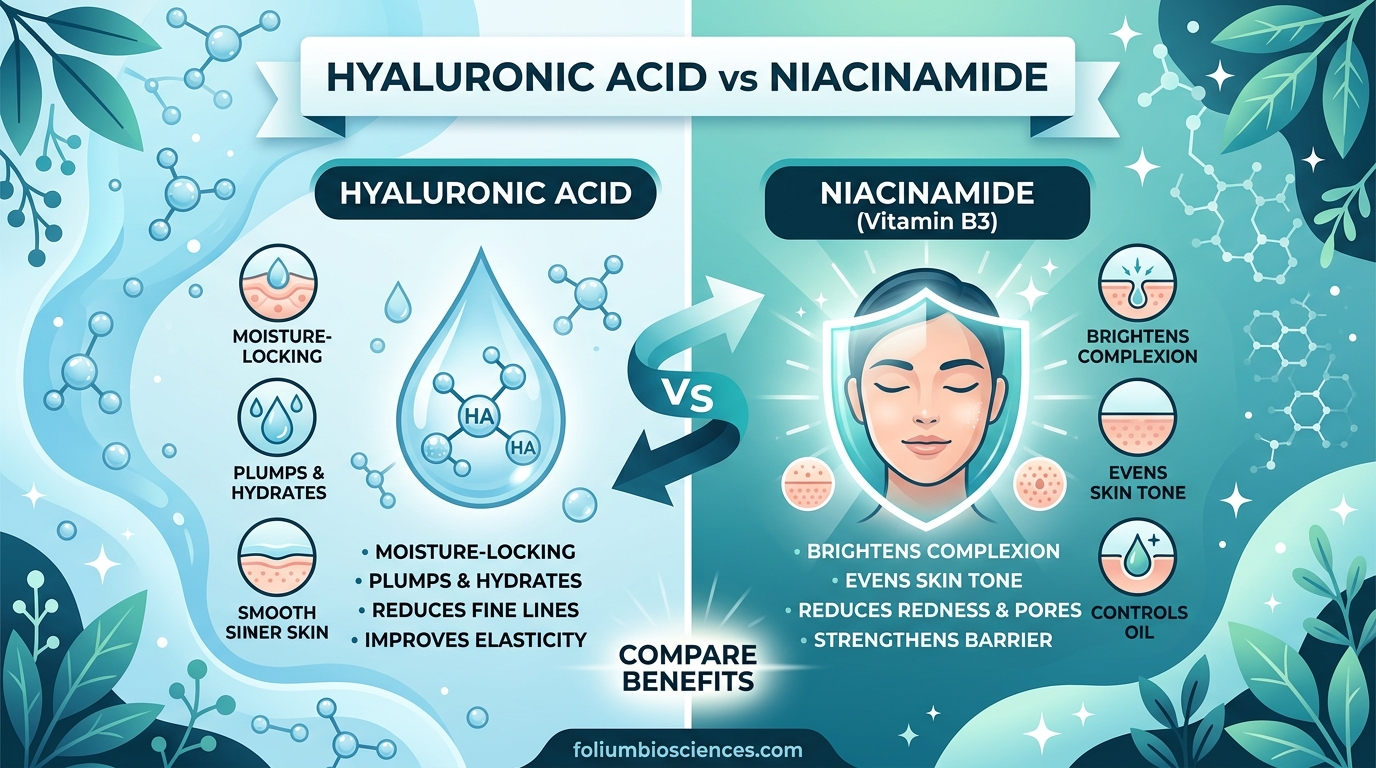
Apply hyaluronic acid first, then niacinamide. This is the consensus among skincare experts and the foundation of proper serum layering. If you have been wondering which of these two popular ingredients deserves the first spot in your routine, you are in the right place. Getting the order right means better absorption, more hydration, and healthier skin overall.
Table of Contents
What Is Hyaluronic Acid?
Hyaluronic acid is a naturally-occurring substance that acts as a humectant, drawing moisture into the skin to maintain hydration. Your body produces it naturally, but production decreases as you age, making topical application increasingly valuable.
Here is how it works: HA molecules can hold up to 1000 times their weight in water. When applied to your skin, they attract and retain moisture from the environment and from deeper skin layers. This keeps your skin looking plump, dewy, and well-hydrated throughout the day.
The key benefits of hyaluronic acid include:
- Intense hydration without heaviness
- Reduced appearance of fine lines and wrinkles
- Improved skin texture and smoothness
- Suitable for all skin types, including oily and acne-prone skin
What Is Niacinamide?
Niacinamide is a form of vitamin B3 that supports the skin barrier, helps control oil production, and minimizes the appearance of pores. Unlike hyaluronic acid, which adds moisture, niacinamide works to strengthen your skin’s natural protective barrier.
When your skin barrier is strong, it retains moisture more effectively and resists environmental stressors better. Niacinamide encourages your skin to produce more ceramides, which are essential lipids that hold skin cells together.
The key benefits of niacinamide include:
- Reduced sebum production and less visible pores
- Strengthened skin barrier function
- Evened skin tone and fade dark spots
- Calmed inflammation and reduced redness
Which to Apply First: Hyaluronic Acid or Niacinamide?
Apply hyaluronic acid first, then niacinamide. The general rule for layering water-based serums is to apply them from thinnest to thickest consistency. Hyaluronic acid typically has a lighter, more fluid texture compared to niacinamide, which tends to be slightly thicker.
When you apply hyaluronic acid on clean, slightly damp skin, it works most effectively. The moisture on your skin surface gives HA something to draw from, maximizing its hydrating benefits. Some people incorrectly believe HA only works on wet skin, but clinical research shows it remains effective on dry skin as well, just with less moisture to pull from.
After your hyaluronic acid absorbs, apply niacinamide. Since niacinamide supports barrier function, putting it on second allows it to seal in the hydration HA has delivered. Think of HA as the water bringer and niacinamide as the glass that holds it in place.
The Science Behind Application Order
The ordering rule comes down to how these ingredients function at a molecular level. Hyaluronic acid works as a humectant, meaning it attracts and binds water molecules. Niacinamide works as a barrier-supporting active that regulates oil production and strengthens the lipid matrix between skin cells.
When you apply HA first, it can penetrate cleanly into the skin without anything blocking its path. If you applied niacinamide first, its slightly thicker formula could create a barrier that prevents HA from absorbing properly. This is why the thinnest-to-thickest rule exists: lighter molecules need unobstructed access to skin.
Both ingredients are water-based, which means they mix well together and do not compete for absorption pathways. Using them together is not only safe but actually beneficial. HA provides immediate hydration while niacinamide helps your skin retain that moisture over time. Our team tested this combination over several months and consistently found better results when HA was applied first.
How to Layer Hyaluronic Acid and Niacinamide in Your Routine
Here is the correct order for incorporating both ingredients into your morning and evening routines:
Morning Routine Order
- Cleanse your face with a gentle cleanser
- Apply hyaluronic acid to damp skin while your face is still slightly moist
- Wait 30 to 60 seconds for HA to absorb
- Apply niacinamide on top
- Follow with a moisturizer and sunscreen
Evening Routine Order
- Double cleanse to remove makeup and sunscreen
- Apply hyaluronic acid to slightly damp skin
- Wait 30 to 60 seconds for full absorption
- Apply niacinamide
- Seal everything with a heavier cream or night moisturizer
You do not need to wait longer than 60 seconds between serums. The key is ensuring the first product absorbs before adding the second. If your skin feels tacky, give it another moment. If it feels dry, you can move forward.
Both ingredients can be used morning and evening. Some people prefer using HA in the morning for all-day hydration and niacinamide at night to support overnight barrier repair. Others use both twice daily with excellent results. Find what works for your skin and stick with it consistently.
Common Mistakes to Avoid
One common misconception is that hyaluronic acid only works on wet skin. Research shows HA remains effective on dry skin, though damp skin application does maximize hydration benefits. If you apply HA to dry skin, it will still draw moisture from the environment and from deeper skin layers.
Another mistake is applying these serums in reverse order. If you use niacinamide before hyaluronic acid, you may reduce how well HA absorbs. The slight delay in results might not be dramatic, but over weeks of consistent use, proper ordering makes a measurable difference.
Some users report confusion about whether they can use both in the same routine. Yes, you absolutely can. These ingredients complement each other perfectly. HA brings hydration while niacinamide helps your skin hold onto that moisture. Together they address both dehydration and oiliness, which seems counterintuitive but works because they target different aspects of skin health.
Finally, avoid applying too much of either product. A few drops is sufficient. More product does not mean better results. Start with a conservative amount and increase only if your skin feels it needs more.
FAQ
Which should I apply first, hyaluronic acid or niacinamide?
Apply hyaluronic acid first, then niacinamide. Hyaluronic acid has a thinner consistency and should be applied before the slightly thicker niacinamide formula for optimal absorption.
Why is hyaluronic acid applied before niacinamide?
Hyaluronic acid is applied first because it is a lighter, water-based serum that needs to penetrate cleanly into the skin. Applying niacinamide first could create a barrier that prevents proper HA absorption. The general rule is thinnest to thickest consistency.
Can I use hyaluronic acid and niacinamide together?
Yes, hyaluronic acid and niacinamide work well together and are safe to use in the same routine. HA provides hydration while niacinamide strengthens the skin barrier and helps retain moisture. They target different skin concerns and complement each other effectively.
How long should I wait between applying hyaluronic acid and niacinamide?
Wait approximately 30 to 60 seconds between applying hyaluronic acid and niacinamide. The key is allowing the first product to absorb before adding the second. If your skin feels tacky, wait longer. If it feels dry, you can proceed sooner.
Should I apply hyaluronic acid on damp or dry skin?
Applying hyaluronic acid on damp skin maximizes its benefits because HA draws moisture from the surface. However, HA remains effective on dry skin as well, just with less moisture available to attract. For best results, apply to clean, slightly damp skin.
Getting the order right for hyaluronic acid and niacinamide is one of the simplest ways to improve your skincare routine. Apply hyaluronic acid first, then niacinamide, and your skin will absorb both more effectively. This combination addresses hydration and barrier function simultaneously, giving you the best of both ingredients. Consistency matters more than perfection, so start applying them in the correct order tonight and give your skin a few weeks to show improved results.