
If you have ever dealt with nails that split, peel, or snap at the slightest pressure, you know how frustrating it can be. I spent months watching my own nails crack and break before I started looking into whether nutrition could actually make a difference. Turns out, the connection between what you eat and how strong your nails grow is real and well-documented.
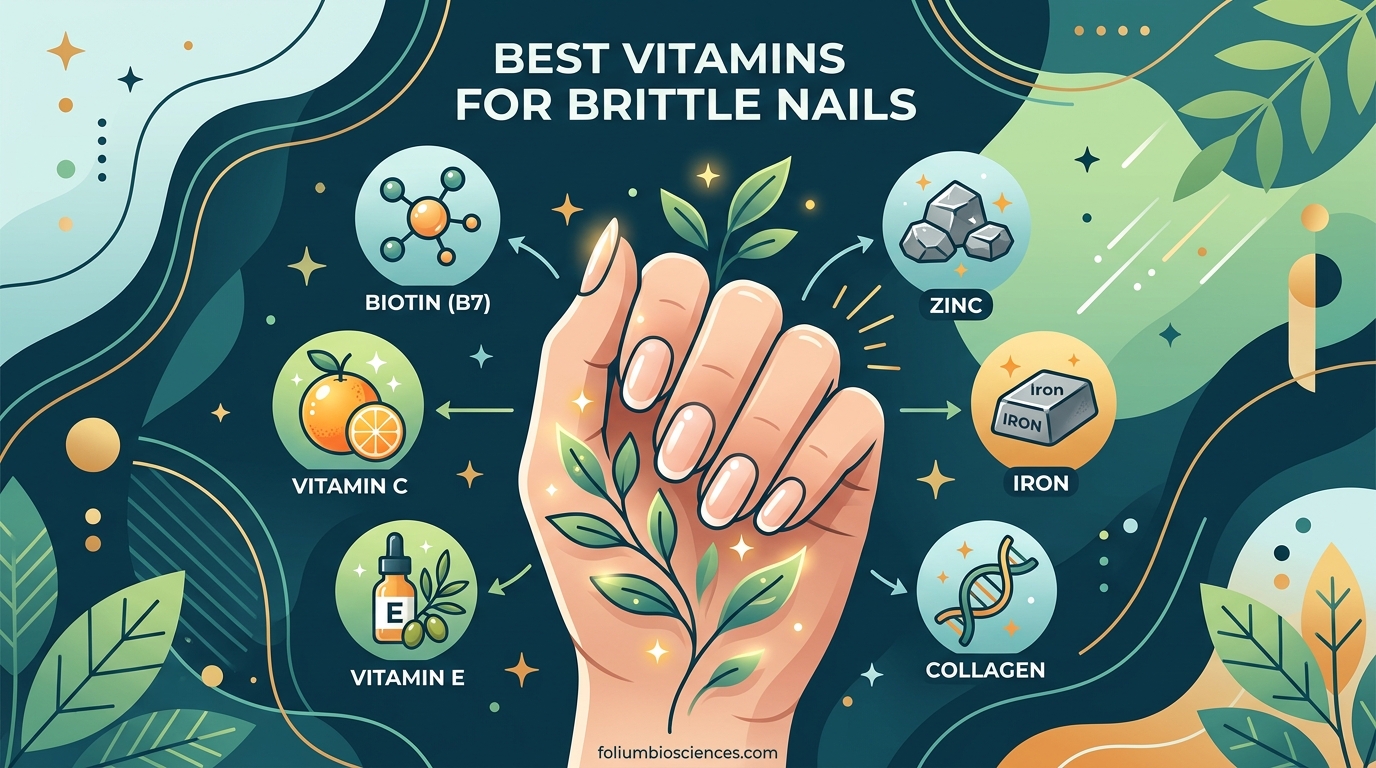
The best vitamins for brittle nails start with biotin (vitamin B7), which has the most research behind it for improving nail strength. But biotin is just one piece of the puzzle. Iron, zinc, vitamin B12, magnesium, vitamin C, and adequate protein all play important roles in keeping your nails from turning weak and brittle.
The 7 best vitamins and nutrients for brittle nails are:
- Biotin (B7) – the most researched vitamin for nail strength
- Iron – carries oxygen to nail beds for healthy growth
- Zinc – supports cell division and nail plate formation
- Vitamin B12 – helps form healthy red blood cells for nail growth
- Magnesium – involved in protein synthesis for strong nails
- Vitamin C – essential for collagen production in nail beds
- Protein – the building block of keratin, your nails’ main structural protein
In this guide, I will walk through each of these nutrients in detail, explain what the research actually says, and share the food sources and dosage information you need to start strengthening your nails from the inside out.
Table of Contents
Why Do Nails Become Brittle in the First Place?
Brittle nails affect roughly 20% of the population, and that number climbs higher as we get older. Understanding why your nails are breaking is the first step toward fixing the problem.
Your nails are made of layers of a protein called keratin. When those layers are healthy and well-hydrated, they stay flexible and strong. But when something disrupts the keratin structure or the growth process, the nails become dry, brittle, and prone to splitting.
The causes of brittle nails fall into two broad categories: internal factors and external damage. Internal factors include nutritional deficiencies, hormonal changes, thyroid conditions, and certain medications. External factors include repeated wetting and drying, exposure to harsh chemicals, frequent use of nail polish remover, and physical trauma from typing or manual labor.
On forums like r/Nails, I see the same complaints over and over. People describe nails that are “thin and bendy” or that “split in layers when trying to grow.” Many users have tried supplements with mixed results, which suggests the underlying cause matters a lot. If your nails are brittle because of a zinc deficiency, taking biotin alone will not solve the problem.
That is why this guide covers the full range of vitamins and nutrients connected to nail health, not just biotin. Pinpointing what your body actually needs makes all the difference between seeing real improvement and wasting months on the wrong supplement.
Biotin for Brittle Nails: The Research-Backed Vitamin
Biotin is the single most talked-about vitamin for nail health, and for good reason. It has more clinical evidence behind it than any other nutrient when it comes to strengthening brittle nails.
What Is Biotin and How Does It Work?
Biotin, also known as vitamin B7 or coenzyme R, is a water-soluble B-complex vitamin. Your body uses it as a coenzyme in metabolic processes, particularly for metabolizing fats, carbohydrates, and amino acids. Those amino acids are the raw materials your body uses to build keratin, the structural protein that makes up your nails, hair, and the outer layer of your skin.
Here is the key point: biotin does not directly build keratin. Instead, it supports the metabolic pathways that convert the protein you eat into the amino acids your body needs for keratin production. Think of biotin as the factory worker that helps process the raw materials, not the raw material itself.
The recommended Adequate Intake (AI) for biotin is 30 micrograms per day for adults. Most people get enough biotin from a normal diet because it is found in eggs, nuts, seeds, organ meats, and many vegetables. True biotin deficiency is rare, but suboptimal intake may contribute to nail weakness in some people.
Biotin and Keratin Production: The Connection
Keratin is a tough, fibrous protein that forms the structural framework of your nails. Your nails are roughly 90% keratin. When keratin production is running smoothly, nails grow out thick, smooth, and resilient. When something slows down that production, nails become thin, ridged, and prone to breaking.
Biotin supports keratin production by helping metabolize branched-chain amino acids like leucine, isoleucine, and valine. These amino acids are particularly important for keratin synthesis. Without adequate biotin, the conversion process slows down, and your body may not produce keratin as efficiently.
A well-known study published in the Journal of Cosmetic Dermatology tested high-dose biotin (2.5 mg daily) on people with brittle nails. After six months, 63% of participants showed clinical improvement in nail firmness and hardness. That is a meaningful result, though it also means that about a third of participants did not see improvement from biotin alone.
This lines up with what I see in real user reports. Some people notice dramatic changes in nail strength within a few months of starting biotin. Others see minimal difference, which usually points to a different underlying cause for their brittle nails.
How Long Does Biotin Take to Work on Nails?
This is one of the most common questions people ask, and the answer requires some honesty about expectations. Nails grow slowly. Fingernails grow at an average rate of about 3.5 millimeters per month, and toenails grow even slower at roughly 1 millimeter per month.
Because biotin strengthens the new nail as it grows out from the matrix (the nail growth center under your cuticle), you will not see results overnight. Most studies and clinical observations suggest it takes 3 to 6 months of consistent daily supplementation before you can judge whether biotin is helping.
Here is a rough timeline of what to expect:
- Weeks 1-4: No visible difference. The biotin is beginning to support keratin production in the nail matrix, but the improved nail has not grown out enough to see.
- Months 2-3: You may notice the new nail growth near the cuticle feels slightly thicker or less flexible. Some people report their nails feel harder during this period.
- Months 4-6: This is when most people who respond to biotin see a clear improvement. Nails that were splitting and peeling may feel noticeably stronger and grow longer without breaking.
Forum users frequently express frustration with this timeline. I understand the impatience. But nails are not like hair, where you can see a difference in texture relatively quickly. Nail improvement is a slow, steady process that rewards consistency.
One important note: if you have been taking biotin for 6 months and see zero improvement, the issue likely is not biotin deficiency. Consider looking into iron, zinc, or other nutritional factors, or talk to a dermatologist about non-nutritional causes.
Other Essential Vitamins for Brittle Nails Beyond Biotin
Biotin gets most of the attention, but it is far from the only nutrient your nails need. If you have tried biotin without success, one of these other vitamins or minerals might be the missing piece.
Iron: The Oxygen Carrier Your Nails Need
Iron deficiency is one of the most common nutritional deficiencies worldwide, and your nails often show the signs before anything else. Iron helps red blood cells carry oxygen throughout your body, including to your nail matrix where new nail cells are formed.
When iron levels drop too low, nail growth slows down and the nail plate can become thin and concave. A condition called koilonychia, where nails develop a spoon-like shape that curves upward at the edges, is a classic sign of iron deficiency anemia. Vertical ridges on the nails can also point to low iron.
The RDA for iron is 8 mg per day for adult men and 18 mg per day for adult women (8 mg after age 50). Good dietary sources include red meat, poultry, fish, lentils, spinach, and fortified cereals. Pairing iron-rich foods with vitamin C improves absorption.
Zinc for Nail Growth and Cell Division
Zinc is involved in over 100 enzymatic reactions in the body, including many that are essential for cell division and protein synthesis. Since your nails are made of rapidly dividing cells that produce keratin, zinc plays a direct role in healthy nail growth.
White spots on the nails (leukonychia) are often attributed to zinc deficiency, though minor trauma can also cause them. More significant zinc deficiency can cause slowed nail growth, brittle texture, and even separation of the nail from the nail bed.
The RDA for zinc is 11 mg for men and 8 mg for women. Oysters are the richest food source of zinc by a wide margin, but beef, pumpkin seeds, lentils, and cashews are also good options.
Vitamin B12 and Folate
Vitamin B12 and folate (vitamin B9) work together to form healthy red blood cells and support DNA synthesis. Both functions are critical for the rapid cell division that happens in your nail matrix.
B12 deficiency can show up in your nails as bluish discoloration, darkened streaks, or brownish-gray coloring. Some people also develop hyperpigmentation of the nail bed. Folate deficiency may contribute to brittle, fragile nails because it impairs cell reproduction.
These deficiencies are more common in vegans and vegetarians (B12), during pregnancy (folate), and in older adults (both). The RDA for B12 is 2.4 micrograms and for folate is 400 micrograms daily. If you suspect a B12 deficiency, a simple blood test can confirm it.
Magnesium for Nail Strength
Magnesium is involved in over 300 biochemical reactions in the body, including protein synthesis. Since nails are made of the protein keratin, magnesium deficiency can impair your body’s ability to produce strong, healthy nail tissue.
Vertical ridges on your nails are sometimes linked to low magnesium levels. The RDA for magnesium is 400-420 mg for men and 310-320 mg for women. Dark leafy greens, almonds, cashews, black beans, and whole grains are all excellent sources. Most people do not get enough magnesium from their diet alone.
Vitamin C and Collagen for Nail Beds
Vitamin C is essential for collagen synthesis, and collagen provides the structural foundation for your nail bed and the surrounding skin. Without adequate vitamin C, the tissue beneath and around your nails weakens, which can lead to slow nail growth and increased fragility.
Severe vitamin C deficiency (scurvy) causes nails to become thin, brittle, and prone to splitting. While scurvy is rare in developed countries, suboptimal vitamin C intake is more common than you might think, especially among people who eat limited amounts of fresh fruits and vegetables.
The RDA for vitamin C is 90 mg for men and 75 mg for women. One medium orange provides about 70 mg, so it does not take much effort to meet your needs. Bell peppers, strawberries, broccoli, and kiwi are also top sources.
Protein and Keratin: The Building Blocks
Your nails are roughly 90% keratin, which is a structural protein. If you are not eating enough protein, your body cannot produce adequate keratin, and your nails will suffer. This is one of the most overlooked factors in nail health.
The Recommended Dietary Allowance for protein is 0.8 grams per kilogram of body weight per day. For a 150-pound person, that is roughly 55 grams of protein daily. But many dietitians now suggest that higher intakes (1.0-1.2 g/kg) may be better for tissue health, especially as we age.
Some people also take hydrolyzed keratin or collagen peptide supplements for nail support. While the research on these specific supplements is still emerging, a few small studies have shown improvements in nail growth and reduced brittleness. The mechanism makes sense: you are providing the body with the specific amino acids it needs for nail formation.
Good protein sources for nail health include eggs (which also contain biotin), chicken, fish, beans, Greek yogurt, and cottage cheese. A balanced diet with adequate protein at each meal is more effective than relying on supplements alone.
Signs of Vitamin Deficiency in Your Nails
Your nails can act as a window into your nutritional status. Different nail changes can signal different deficiencies, which helps you narrow down what your body might need.
Here are the most common nail signs and what they typically indicate:
- Spoon-shaped nails (koilonychia): Most commonly linked to iron deficiency anemia. The nails become thin and concave, scooping upward at the edges.
- Vertical ridges: Can be a normal sign of aging, but may also indicate magnesium deficiency, iron deficiency, or general poor nutrient absorption.
- White spots (leukonychia): Often caused by minor trauma to the nail matrix. Sometimes associated with zinc deficiency when spots appear on multiple nails simultaneously.
- Horizontal lines (Beau’s lines): These run across the nail and can indicate a temporary interruption in nail growth due to severe illness, fever, or significant nutritional deficiency.
- Dark streaks or discoloration: Can signal vitamin B12 deficiency, though any new dark streak on a nail should be evaluated by a dermatologist to rule out melanoma.
- Splitting and peeling: May indicate biotin deficiency, general protein deficiency, or repeated wetting and drying. This is the most common complaint and often has multiple contributing causes.
- Slow growth: Can be linked to overall caloric insufficiency, zinc deficiency, or low protein intake.
Keep in mind that nail changes develop slowly. The nail you see today was actually formed weeks or even months ago. If you start addressing a deficiency now, it will take time for the improved nail to grow out and become visible.
Also, not every nail problem is nutritional. Thyroid disorders, psoriasis, fungal infections, and certain medications can all affect nail health. If your nail changes are dramatic, painful, or accompanied by other symptoms, it is worth seeing a doctor rather than self-treating with supplements.
Best Food Sources for Nail-Strengthening Vitamins
Getting your nutrients from food is generally more effective than relying on supplements because whole foods provide a complex matrix of vitamins, minerals, and cofactors that work together. Here are the best food sources for each of the key nail nutrients.
Biotin-rich foods: Egg yolks are one of the best sources of biotin. A single cooked egg yolk contains about 10 micrograms. Other good sources include salmon, pork chops, sunflower seeds, sweet potatoes, almonds, and spinach. Organ meats like liver are extremely rich in biotin if you eat them. Note that raw egg whites contain avidin, a protein that binds to biotin and prevents absorption, so cook your eggs.
Iron-rich foods: Heme iron from animal sources is absorbed more efficiently than non-heme iron from plants. Top sources include beef liver, oysters, beef, chicken, and fortified cereals. For plant-based iron, lentils, chickpeas, tofu, and pumpkin seeds are solid choices. Always pair non-heme iron with vitamin C for better absorption.
Zinc-rich foods: Oysters contain more zinc per serving than any other food, at about 32 mg per 3 ounces. Beef, crab, lobster, pork, and dark meat chicken are also excellent. For plant-based options, pumpkin seeds, hemp seeds, lentils, and cashews provide meaningful amounts.
Magnesium-rich foods: Spinach leads the list with 157 mg per cooked cup. Other top sources include Swiss chard, almonds, cashews, black beans, edamame, avocado, and whole grains like quinoa and brown rice. Dark chocolate (70% or higher) also contains a surprising amount of magnesium.
Vitamin C-rich foods: Red bell peppers actually contain more vitamin C per serving than oranges. Other standout sources include kiwi, strawberries, broccoli, Brussels sprouts, and cantaloupe. Vitamin C is heat-sensitive, so raw or lightly cooked produce retains more of it.
Protein for nails: Focus on complete protein sources that provide all essential amino acids: eggs, poultry, fish, beef, dairy, and soy. Collagen peptides and bone broth have become popular for nail support because they contain the specific amino acids (glycine, proline, hydroxyproline) used in connective tissue and nail bed health.
Building your meals around these foods creates a nutritional foundation that supports nail health without needing to rely on supplements. That said, if you have a confirmed deficiency or dietary restrictions that limit certain food groups, targeted supplementation can fill the gaps.
Safety Warning: Biotin and Lab Test Interference
This section might be the most important one in this entire article. Most guides about biotin for nails skip this information entirely, but it is something everyone taking high-dose biotin needs to know.
The FDA issued a safety communication warning that high-dose biotin supplementation can cause falsely high or falsely low results on certain blood tests. The tests most commonly affected include thyroid function tests (TSH, free T4, free T3), cardiac troponin tests used to diagnose heart attacks, and some hormone tests.
Here is why this happens: many lab tests use a technology called immunoassay that relies on biotin-streptavidin binding to detect hormones and proteins in your blood. When you take high-dose biotin supplements, the excess biotin in your blood can interfere with this binding process and produce inaccurate results.
The risk is real and documented. There have been case reports of people receiving incorrect thyroid diagnoses, and at least one reported case where biotin interference in a troponin test delayed the diagnosis of a heart attack. These are not theoretical risks.
Most over-the-counter biotin supplements for nails contain between 1,000 and 10,000 micrograms per dose. The AI for biotin is just 30 micrograms. So a typical supplement provides 30 to 300 times the recommended intake. At these doses, lab test interference is a genuine concern.
Here is what you should do if you are taking biotin supplements:
- Tell your doctor about all supplements you take, including biotin.
- Stop biotin at least 3 days before blood work. Biotin is water-soluble, so it clears from your system relatively quickly, but high doses may take longer.
- Ask your doctor about the specific tests you are having done and whether biotin could affect them.
- Do not stop biotin abruptly if you have been taking very high doses without checking with your healthcare provider first.
This is the main reason some doctors advise against taking biotin every day at mega-doses unless you have a confirmed deficiency or a specific medical reason. The benefits for nail strength need to be weighed against the risk of skewed lab results that could lead to wrong diagnoses.
Your Action Plan for Stronger Nails in 2026
Now that we have covered the science, let me give you a practical, step-by-step plan to strengthen brittle nails. I have combined the nutritional guidance with the nail care habits that dermatologists consistently recommend.
Step 1: Assess your current diet. Track what you eat for a few days and check whether you are getting adequate protein, iron, zinc, and biotin. Most nutrition tracking apps can show you this information quickly. If you notice gaps, adjust your meals to include more of the food sources listed above.
Step 2: Get bloodwork done first. Before starting any supplement, ask your doctor for a basic panel that includes iron (ferritin), vitamin B12, zinc, and thyroid function. This tells you exactly what you are deficient in rather than guessing. Taking biotin when you actually need iron is a waste of time and money.
Step 3: Choose targeted supplementation. Based on your bloodwork results, supplement only what you need. If your iron is low, address that first since iron deficiency affects everything from nail growth to energy levels. If everything looks normal and you still have brittle nails, a trial of 2.5 mg biotin daily for 4-6 months is reasonable.
Step 4: Reduce external damage. No amount of vitamins will help if you are actively destroying your nails. Wear gloves when washing dishes or using cleaning products. Keep nails trimmed and filed to prevent snagging. Limit nail polish remover use (choose acetone-free formulas). Avoid using your nails as tools to open cans or scrape things.
Step 5: Moisturize daily. Apply a hand cream or cuticle oil to your nails and cuticles at least once a day. Hydrated nails are more flexible and less likely to crack. Products containing jojoba oil or vitamin E are particularly good for nail hydration.
Step 6: Be patient and track progress. Take a photo of your nails at the start and then monthly. Since changes happen gradually, you may not notice day-to-day improvement, but the photos will show the difference. Expect 3-6 months before making a judgment on whether your approach is working.
Step 7: See a doctor if there is no improvement after 6 months. Persistent brittle nails that do not respond to nutritional changes may signal an underlying condition like hypothyroidism, psoriasis, or a malabsorption issue. A dermatologist can evaluate your nails and determine if further testing is needed.
Frequently Asked Questions About Vitamins for Brittle Nails
Does biotin help with brittle nails?
Yes, biotin can help with brittle nails, especially if you have a deficiency. A clinical study found that 2.5 mg of biotin daily improved nail firmness and hardness in 63% of participants after six months. However, biotin only works if brittle nails are related to biotin status. If your nails are brittle due to iron deficiency, zinc deficiency, or external damage, biotin alone will not solve the problem.
What is the best vitamin to take for brittle nails?
Biotin (vitamin B7) has the strongest research evidence for improving brittle nails. But the best vitamin for you depends on your specific deficiency. Iron is the answer if you have anemia. Zinc is key if you have white spots and slow growth. A blood test is the most reliable way to determine which vitamin you actually need rather than guessing.
What vitamin am I deficient in if my nails are brittle?
Brittle nails can indicate deficiency in several nutrients. The most common culprits are biotin, iron, zinc, or overall protein deficiency. Spoon-shaped nails point to iron. White spots may indicate zinc. Vertical ridges can suggest magnesium or iron deficiency. Splitting and peeling nails are often linked to biotin or protein deficiency. A blood test can give you a definitive answer.
Why should you not take biotin every day?
High-dose biotin can interfere with blood test results, particularly thyroid function tests and cardiac troponin tests used to diagnose heart attacks. The FDA has issued a warning about this. If you take biotin supplements daily at doses above 300 micrograms, tell your doctor and stop taking it at least 3 days before any blood work to avoid false results.
How long does biotin take to work on nails?
Biotin typically takes 3 to 6 months of daily supplementation to show visible improvement in nail strength. Nails grow slowly at about 3.5 mm per month, so the strengthened nail has to grow out from the cuticle before you can see the difference. Most clinical studies evaluated results at the 6-month mark.
What am I lacking if my fingernails are splitting?
Splitting fingernails can result from deficiency in biotin, iron, zinc, vitamin C, or inadequate protein intake. Repeated wetting and drying of the hands is also a major external cause. If your diet is well-balanced and your nails still split, the cause may be environmental rather than nutritional, and focusing on nail hydration and protection may help more than supplements.
The Bottom Line on Vitamins for Brittle Nails
Biotin stands out as the best vitamins for brittle nails option with the most clinical evidence, but it is not a magic pill. The research shows it helps about two-thirds of people who take it consistently for 6 months. For the rest, identifying the actual deficiency through bloodwork is the smartest move you can make.
Iron, zinc, vitamin B12, magnesium, vitamin C, and adequate protein all contribute to nail strength in different ways. Rather than throwing every supplement at the wall and hoping something sticks, start by eating a nutrient-dense diet, get tested for deficiencies, and supplement only what you actually need.
And please, if you are taking high-dose biotin, tell your doctor and stop it before any blood tests. That safety step alone sets you apart from most people who take biotin without knowing the risks.
Stronger nails take time, consistency, and the right approach for your body. Give it 3 to 6 months, track your progress, and talk to a professional if nothing changes.