
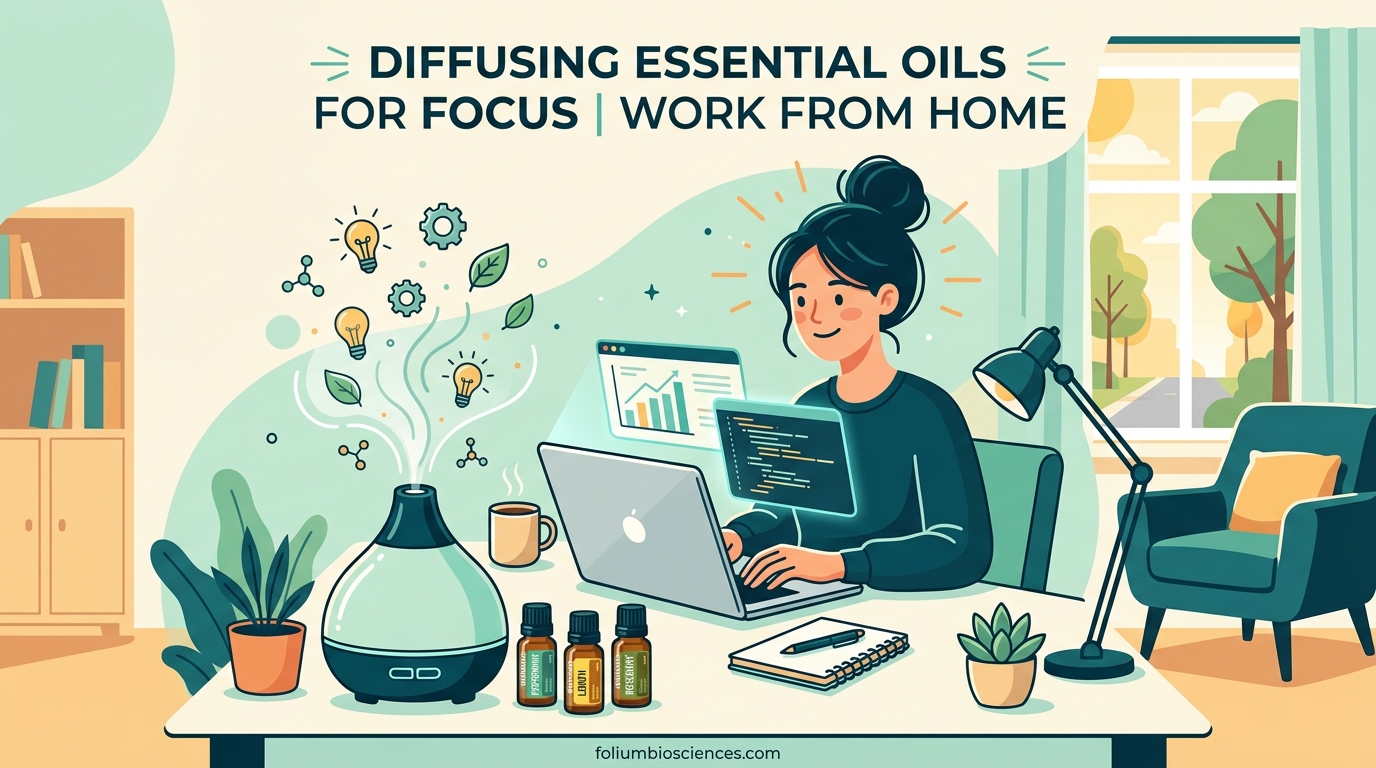
Working from home offers incredible flexibility, but it also brings unique challenges to maintaining focus and productivity. Between household distractions, the allure of the refrigerator, and the absence of office structure, staying on task can feel like an uphill battle. I’ve spent years researching and testing natural productivity solutions, and diffusing essential oils for focus while working from home has emerged as one of the most effective tools in my arsenal.
When I first started experimenting with aromatherapy for productivity, I was skeptical. How could simple plant extracts make a tangible difference in my work performance? After testing dozens of combinations and tracking my productivity metrics, I discovered that the right essential oil blends can transform your work environment and mental state. The science backs this up – certain aromatic compounds directly influence the limbic system, the part of your brain responsible for emotion, memory, and focus.
In this comprehensive guide, I’ll share the most effective diffusing essential oils for focus while working from home, along with specific blend recipes I’ve developed through years of experimentation. You’ll learn exactly which oils enhance concentration, how to combine them for maximum effect, and practical strategies for incorporating aromatherapy into your daily work routine. Whether you’re tackling creative projects, analytical work, or just trying to power through a demanding afternoon, these blends will help you stay focused and productive.
Table of Contents
Why Essential Oils Work for Focus While Working from Home
The connection between scent and cognitive performance isn’t just aromatherapy folklore – it’s rooted in neuroscience. When you inhale essential oils, aromatic molecules travel through your nasal passages and interact with olfactory receptors. These receptors send signals directly to the limbic system, the primitive part of your brain that governs emotion, memory, and arousal.
What makes this particularly powerful for remote work is that the limbic system also influences your hypothalamus, which regulates stress responses and autonomic functions. Certain essential oils contain compounds that stimulate alertness without the jittery side effects of caffeine. For example, rosemary oil is rich in 1,8-cineole, a compound that has been shown in studies to enhance cognitive performance and memory recall. Peppermint oil contains menthol, which can improve mental clarity and reduce fatigue.
Diffusing essential oils for focus while working from home offers distinct advantages over other application methods. Unlike topical application, which requires preparation and can be distracting during work sessions, diffusion creates a continuous ambient environment that supports your mental state. The gentle, background aroma keeps your brain engaged without demanding attention. I’ve found this subtle approach works better for sustained focus than more intensive methods like aromatherapy inhalers, which can be disruptive to use during deep work sessions.
The psychological aspect matters too. When I consistently use the same focus blend during work hours, my brain begins to associate that scent with productivity. This creates a powerful Pavlovian response – simply starting the diffuser signals to my mind that it’s time to concentrate. After weeks of this practice, I can shift into work mode within minutes of turning on my diffuser, a ritual that has dramatically improved my ability to transition from home life to work mode.
Top Focus-Enhancing Essential Oils
Not all essential oils are created equal when it comes to supporting concentration and mental clarity. Through extensive research and personal testing, I’ve identified specific oils that consistently enhance focus and productivity. Each has unique properties that make it particularly suited for different types of work and mental states.
Rosemary (Rosmarinus officinalis) stands at the top of my list for cognitive enhancement. Rich in 1,8-cineole (also known as eucalyptol), rosemary oil has been studied for its memory-boosting effects. I’ve noticed that diffusing rosemary during analytical tasks helps me process complex information more quickly and retain details better. The scent is herbaceous and slightly camphorous – stimulating without being overwhelming. Rosemary is particularly effective during morning work sessions when you need to hit the ground running.
Peppermint (Mentha x piperita) is my go-to for combating afternoon fatigue. The menthol content provides an immediate sense of clarity and alertness, making it perfect for that post-lunch energy dip. I’ve found peppermint especially helpful during repetitive tasks or when I’m struggling to maintain attention on detailed work. The cooling, minty aroma is instantly refreshing and can help clear brain fog. One caveat – peppermint is quite stimulating, so I avoid using it late in the day when I want to wind down.
Lemon (Citrus limon) offers a different kind of mental support. The bright, cheerful scent is uplifting without being overly stimulating, making it ideal for creative work and brainstorming sessions. Lemon oil is rich in limonene, a compound with demonstrated mood-enhancing properties. I’ve discovered that lemon helps maintain a positive mindset during challenging projects, preventing the mental fatigue that comes from prolonged focus. It’s also one of the most versatile oils – it blends beautifully with almost any other focus-enhancing oil.
Bergamot (Citrus bergamia) provides a unique combination of stress relief and mental clarity. Unlike many stimulating oils that can increase anxiety, bergamot has balancing properties that help maintain focus while keeping you calm. This makes it perfect for high-pressure work situations like deadlines or important presentations. The citrusy, slightly floral aroma is sophisticated and grounding. I’ve found bergamot particularly effective during virtual meetings – it keeps me alert and present without making me feel jittery or anxious.
Eucalyptus (Eucalyptus globulus) is another powerhouse for mental energy. The crisp, camphorous scent clears the mind and improves concentration, much like a breath of fresh air. Eucalyptus is excellent for morning diffusing when you need to shake off sleepiness and start your workday with energy. I’ve also found it helpful when working through mental blocks – the invigorating aroma seems to stimulate new perspectives and ideas. Like peppermint, eucalyptus is quite stimulating, so I use it earlier in the day.
Spearmint (Mentha spicata) offers a gentler alternative to peppermint. The sweeter, milder mint scent provides mental clarity without the intense cooling sensation that some people find overwhelming. I’ve discovered spearmint is perfect for sustained concentration during long work sessions – it’s supportive without being distracting. If you find peppermint too strong, spearmint provides many of the same focus benefits in a more subtle package.
Frankincense (Boswellia carterii) brings grounding properties to focus blends. The warm, resinous aroma helps anchor the mind and prevent scattered thinking. I’ve found frankincense invaluable during complex projects that require sustained attention over hours. It seems to deepen concentration and promote a meditative state of focus. Frankincense is particularly effective when combined with more stimulating oils – it provides a stable foundation that prevents the stimulation from becoming overwhelming.
Vetiver (Vetiveria zizanioides) is an earthy, grounding oil that excels at calming mental chatter. The rich, soil-like scent is deeply relaxing yet clarifying – it quiets anxious thoughts while maintaining alertness. I’ve found vetiver perfect for analytical work that requires precision and attention to detail. It’s especially helpful when stress or anxiety threatens to derail your focus. Vetiver blends beautifully with citrus oils, creating combinations that are both calming and mentally stimulating.
Diffusing Essential Oils for Focus While Working from Home: Best Blends
Now that we’ve covered the most effective focus-enhancing oils, let’s dive into specific diffuser blends. These recipes have been refined through years of testing – I’ve adjusted ratios, swapped ingredients, and tracked productivity results to arrive at combinations that genuinely work. Each blend serves a specific purpose and work situation, so you can choose the right one for your current task and mental state.
Morning Energy Blends
Rise and Shine Blend – Start your workday with this energizing combination. Add 3 drops rosemary, 2 drops lemon, and 1 drop peppermint to your diffuser. This blend wakes up your brain while establishing a positive, productive mindset. The rosemary enhances cognitive function, lemon lifts your mood, and a touch of peppermint provides gentle stimulation without overwhelming your senses. I’ve found this blend perfect for the first hour of work when you need to transition from home mode to deep focus.
Clarifying Morning Mix – Combine 3 drops eucalyptus, 2 drops bergamot, and 2 drops lemon in your diffuser. This blend clears mental fog while reducing morning anxiety about the day’s tasks. The eucalyptus provides immediate mental clarity, bergamot balances your mood, and lemon adds an uplifting touch. I use this blend on days when I wake up feeling groggy or overwhelmed – it helps me approach my work with calm confidence rather than frantic energy.
Citrus Focus Bomb – Mix 2 drops lemon, 2 drops grapefruit, and 2 drops sweet orange with 1 drop rosemary. This all-citrus blend is incredibly uplifting and energizing, perfect for creative brainstorming sessions or collaborative work. The combination of citrus oils creates a bright, cheerful atmosphere that stimulates creative thinking while the rosemary provides cognitive support. I’ve found this blend especially effective during team meetings or when I need to generate fresh ideas.
Gentle Morning Start – For those who find strong scents overwhelming, try 2 drops spearmint, 2 drops bergamot, and 2 drops frankincense. This blend provides gentle mental stimulation while grounding your energy for the work ahead. The spearmint offers mild clarity, bergamot balances mood, and frankincense anchors your attention. I recommend this blend if you’re sensitive to strong aromas or prefer subtler support during morning work sessions.
Sustained Focus Blends
Deep Work Blend – Combine 3 drops rosemary, 2 drops vetiver, and 1 drop frankincense in your diffuser. This blend is designed for extended focus sessions that require sustained concentration. The rosemary enhances cognitive function, vetiver calms mental chatter, and frankincense deepens your focus. I’ve used this blend during complex analytical tasks and found it helps maintain concentration for hours without the mental fatigue that typically accompanies intense work.
Flow State Formula – Mix 2 drops bergamot, 2 drops lemon, and 2 drops rosemary with 1 drop vetiver. This blend creates the ideal mental state for entering flow – that sweet spot where challenge meets skill and time seems to disappear. The citrus oils provide uplifting energy while rosemary and vetiver ground your attention. I’ve found this particularly effective during creative work or tasks that require both focus and inspiration.
Steady Concentration Mix – Combine 2 drops spearmint, 2 drops lemon, and 3 drops frankincense. This blend offers consistent mental support without the peaks and crashes that come with stronger stimulants. The spearmint provides gentle clarity, lemon maintains positive energy, and frankincense prevents scattered thinking. I use this blend during long work sessions when I need reliable focus without intensity – it’s like having a steady, supportive partner for your brain.
Analytical Advantage – For detailed, analytical work, try 3 drops rosemary, 1 drop peppermint, and 2 drops vetiver. The rosemary enhances cognitive processing, peppermint sharpens attention to detail, and vetiver prevents anxiety during complex tasks. I’ve found this blend invaluable during financial analysis, data work, or any task requiring precision and sustained mental effort.
Afternoon Pick-Me-Up Blends
Beat the Slump Blend – Combine 2 drops peppermint, 2 drops lemon, and 2 drops eucalyptus. This powerful combination punches through afternoon fatigue and restores mental energy. The peppermint provides immediate clarity, eucalyptus clears brain fog, and lemon prevents the crankiness that often accompanies afternoon exhaustion. I reach for this blend around 2 PM when my energy naturally dips – it’s like pressing a mental reset button.
Gentle Afternoon Boost – Mix 2 drops spearmint, 3 drops bergamot, and 1 drop rosemary. This blend offers support without overstimulation – perfect for later afternoon when you want to maintain focus without disrupting your evening wind-down. The spearmint provides gentle stimulation, bergamot balances mood during the fatigue-prone hours, and rosemary maintains cognitive function. I use this blend when I have afternoon deadlines but still want to sleep well that night.
Second Wind Formula – Combine 1 drop peppermint, 2 drops grapefruit, and 3 drops frankincense. This blend provides energy while grounding you for the final work push. The minimal peppermint offers clarity without jitters, grapefruit lifts mood during the tiring part of the day, and frankincense maintains focus as mental energy naturally wanes. I’ve found this perfect for powering through the final hours of work when motivation is running low.
Task-Specific Blends
Creative Flow Blend – For creative projects and brainstorming, mix 3 drops bergamot, 2 drops lemon, and 2 drops grapefruit. This all-citrus blend is incredibly uplifting and stimulates out-of-the-box thinking. The combination creates a bright, cheerful atmosphere that encourages creative risk-taking while maintaining enough focus to execute ideas. I’ve found this blend especially effective during content creation, design work, or strategy sessions.
Writer’s Block Buster – Combine 2 drops rosemary, 2 drops peppermint, and 2 drops frankincense. This blend clears mental blocks while providing the sustained attention needed for writing. The rosemary enhances word recall and cognitive flow, peppermint stimulates fresh thinking, and frankincense prevents the anxiety that often accompanies creative challenges. I use this blend whenever I’m stuck on a project – it seems to unlock new perspectives almost immediately.
Detail Work Duo – For tasks requiring precision and attention to detail, combine 3 drops rosemary with 2 drops vetiver. This simple but powerful blend enhances cognitive function while calming the anxiety that can arise during meticulous work. The rosemary sharpens focus while vetiver grounds your energy, creating the perfect mental state for detailed analysis or quality control tasks.
Presentation Prep Blend – Mix 2 drops bergamot, 2 drops frankincense, and 1 drop lavender. This blend reduces anxiety while maintaining mental clarity – ideal for preparing for important presentations or meetings. The bergamot balances mood, frankincense focuses attention, and lavender prevents nervous energy from becoming overwhelming. I diffuse this blend during the hour before any high-stakes communication – it keeps me calm while ensuring my mind remains sharp.
Calm Concentration Blends
Anxiety-Free Focus – Combine 3 drops vetiver, 2 drops bergamot, and 1 drop frankincense. This blend is perfect when stress or anxiety threatens to derail your productivity. The vetiver calms racing thoughts, bergamot stabilizes mood, and frankincense grounds your attention. I’ve found this invaluable during high-pressure projects or when working through challenging personal situations that compete for mental bandwidth.
Steady Grounding Mix – Mix 2 drops frankincense, 2 drops vetiver, and 2 drops spearmint. This blend provides reliable focus without stimulation – ideal for sensitive individuals or those prone to anxiety. The frankincense deepens concentration, vetiver prevents scattered thinking, and spearmint offers gentle clarity. I recommend this blend if you find most focus blends too intense or if you’re working through stressful periods.
Overwhelm Relief – For days when you feel overwhelmed by your workload, combine 2 drops lavender, 2 drops bergamot, and 2 drops rosemary. This blend reduces overwhelm while maintaining productivity – the lavender calms nervous energy, bergamot stabilizes mood, and rosemary supports cognitive function. It’s the perfect antidote to that paralyzed feeling when your task list seems impossibly long.
How to Use Essential Oils Safely While Working from Home
Getting the most from diffusing essential oils for focus while working from home requires proper technique and safety awareness. Through years of experimentation, I’ve learned that how you use oils matters as much as which oils you choose. Follow these guidelines to maximize benefits while ensuring safe practice.
Diffuser placement significantly affects effectiveness. Position your diffuser within 3-6 feet of your workspace for optimal exposure. I keep mine on my desk, slightly to the side so the aromatic mist doesn’t condense on my computer equipment. Avoid placing diffusers directly next to electronics or in areas where the mist could damage papers or materials. The goal is to create a gentle aromatic environment, not to saturate your workspace with intense scent.
Duration is critical – more is not better when it comes to diffusion. I’ve found the sweet spot is 30-60 minutes of active diffusion followed by a break. Continuous diffusion throughout the day can lead to olfactory fatigue, where your brain stops registering the scent. It can also cause physical stress from overexposure. My routine is to diffuse for 45 minutes, then take a 15-30 minute break before starting another session. This pulsed approach maintains effectiveness without overwhelming your system.
Water-based ultrasonic diffusers are ideal for work-from-home use. They create a fine mist that disperses oils effectively without heat, which preserves the therapeutic compounds. Add 3-5 drops of your chosen blend to the water reservoir – I’ve found this amount creates sufficient aroma without being overpowering. Clean your diffuser regularly to prevent oil buildup and bacterial growth, which can affect both performance and air quality.
Rotating your oils prevents olfactory fatigue and maintains effectiveness. Your brain adapts quickly to consistent scents, reducing their impact over time. I change my blend every 1-2 days, alternating between stimulating and calming combinations. This keeps your olfactory system responsive and prevents diminishing returns. I also seasonally adjust my blends – lighter, more energizing oils in summer and warmer, grounding oils in winter.
Safety considerations are particularly important when working in enclosed home spaces. Ensure adequate ventilation in your workspace, even while diffusing. I crack a window or run a small fan to prevent oil saturation. Be mindful of pets in your workspace – some oils, particularly tea tree, peppermint, and citrus, can be toxic to cats and dogs. If you share your home office with furry friends, research oil safety or choose pet-safe alternatives.
Pregnancy, health conditions, and medications require special consideration. Some oils interact with medications or aren’t appropriate during pregnancy. If you have health concerns, consult a qualified aromatherapist before beginning regular diffusing practice. When in doubt, start with highly diluted blends and shorter diffusion periods to assess your individual sensitivity.
Tips for Maximum Productivity with Aromatherapy
After years of incorporating essential oils into my work routine, I’ve discovered strategies that maximize their effectiveness. These advanced techniques go beyond basic diffusion to create a comprehensive productivity system that leverages aromatherapy alongside other evidence-based practices.
Creating scent associations powerfully conditions your brain for focus. I use the same blend every weekday morning for the first hour of work. Over time, my brain has learned to associate this specific aroma with productive work mode. Now, simply starting the diffuser triggers a mental shift into focus. You can create multiple scent associations for different types of work – I have one blend for creative work, another for analytical tasks, and a third for administrative work. Each scent signals to my brain what kind of mental state is needed.
Timing your diffusion to your natural energy cycles optimizes results. I’ve tracked my energy patterns and discovered I’m most alert in the morning, experience a post-lunch dip around 2 PM, and get a second wind around 4 PM. I tailor my aromatherapy to these patterns – stimulating blends in the morning, gentle support during the afternoon dip, and grounding blends for my late-day push. Working with your biology rather than against it dramatically improves effectiveness.
Layering aromatherapy with other productivity techniques creates synergistic effects. I combine diffusing with the Pomodoro technique – 25 minutes of focused work followed by a 5-minute break. I diffuse my chosen blend during work sessions and turn off the diffuser during breaks. This creates clear boundaries between focus and rest, making both more effective. I’ve also found that pairing specific blends with particular types of background music enhances their impact – rosemary with classical music for analytical work, citrus with ambient music for creative projects.
Environmental factors significantly influence aromatherapy effectiveness. Temperature and humidity affect how oils disperse and how strongly you perceive them. I’ve found that slightly cooler room temperatures (around 68-70°F) and moderate humidity levels optimize both diffusion and my personal comfort. Good air circulation prevents oil saturation and maintains consistent aroma throughout your workspace. Experiment with these variables to find what works best in your specific environment.
Quality of oils makes a substantial difference in effectiveness. Synthetic or adulterated oils may smell similar but lack the therapeutic compounds that produce cognitive benefits. I source from reputable suppliers who provide GC/MS testing and detailed information about oil composition. While quality oils cost more upfront, their potency means you use less, and the results are noticeably superior. Consider investing in a few high-quality basics rather than a large collection of lower-quality options.
Tracking your results helps identify what works best for your unique physiology and work style. I kept a simple log for the first month, noting which blends I used, what work I was doing, and rating my focus and productivity levels. This revealed patterns – bergamot-rich blends work better for creative tasks, while rosemary-heavy blends support analytical work. Your optimal combinations will differ from mine, and systematic experimentation helps you discover your personal formula for success.
Troubleshooting is normal – don’t expect immediate perfection. If a blend isn’t working, consider multiple factors: your current stress level, sleep quality, task difficulty, and even what you’ve eaten that day. Some days no blend will overcome exhaustion or overwhelm, and that’s okay. View aromatherapy as one tool in your productivity toolkit rather than a magic solution. When blends stop working after consistent use, it’s usually olfactory fatigue – take a break from all oils for a few days, then return with fresh blends.
Conclusion: Transform Your Work-From-Home Productivity
Diffusing essential oils for focus while working from home has transformed my productivity and mental clarity. What started as skepticism has become a cornerstone of my daily work routine. The right blends help me transition into focus mode, maintain concentration during challenging tasks, and power through afternoon energy dips without relying on excessive caffeine or willpower alone.
The science behind aromatherapy for cognitive enhancement is compelling, but the real proof is in daily experience. After years of experimentation, I’ve found that certain combinations consistently improve my ability to focus, create, and complete work efficiently. The morning energy blends help me start strong, the sustained focus blends support deep work, and the task-specific formulas provide targeted support for different types of challenges.
Remember that individual responses vary – what works perfectly for me might need adjustment for your unique physiology and work style. Start with the basic blends recommended in this guide, then experiment with ratios and combinations to discover your personal formula for success. Pay attention to how different oils affect your energy, mood, and mental clarity. Track your results and refine your approach based on what you observe.
The beauty of aromatherapy for productivity is its accessibility. With a simple diffuser and a few quality oils, you can transform your work environment and mental state. Unlike complex productivity systems or expensive biohacking tools, essential oils offer a straightforward, natural approach to enhancing focus. They work subtly but powerfully, creating an environment that supports your best work without demanding attention or adding complexity to your day.
I encourage you to start with one or two blends from this guide and use them consistently for a week. Notice how they affect your work quality, energy levels, and overall productivity. As you discover what works best for you, expand your collection and refine your blends. With patience and experimentation, you’ll develop a personalized aromatherapy toolkit that reliably supports your work-from-home success.
The path to better focus while working from home doesn’t have to involve complicated systems or harsh stimulants. Sometimes, the most effective solutions are also the most natural. By harnessing the power of carefully selected essential oils, you can create an environment that nurtures productivity, creativity, and sustained attention – making your work-from-home experience more effective and enjoyable than ever before.
FAQ
What essential oil blends are good for focus?
The most effective focus blends combine stimulating and grounding oils. Popular combinations include rosemary with lemon for cognitive enhancement, peppermint with eucalyptus for mental clarity, and bergamot with vetiver for calm concentration. Each oil serves a specific purpose – rosemary enhances memory, peppermint increases alertness, citrus oils lift mood, and grounding oils like vetiver prevent scattered thinking. The best blends balance these effects to support sustained attention without overstimulation.
Which essential oil is best for focus and concentration?
Rosemary is widely considered the top essential oil for focus and concentration due to its high 1,8-cineole content, a compound shown in studies to enhance cognitive performance and memory recall. Peppermint is another top choice, particularly for combating fatigue and improving mental clarity. Bergamot excels at maintaining focus while reducing anxiety, making it ideal for high-pressure work situations. The best oil for you depends on your specific needs – rosemary for cognitive enhancement, peppermint for energy, or bergamot for balanced focus.
How long should I diffuse essential oils while working?
The optimal diffusion duration is 30-60 minutes followed by a break. Continuous diffusion throughout the day can lead to olfactory fatigue, where your brain stops responding to the scent, and may cause physical stress from overexposure. I recommend diffusing for 45 minutes, then taking a 15-30 minute break before starting another session. This pulsed approach maintains effectiveness without overwhelming your system. Listen to your body – if you notice headaches, irritation, or reduced effectiveness, reduce diffusion time.
Can essential oils help with ADHD or attention issues?
While essential oils can support focus for anyone, they’re not a substitute for professional ADHD treatment. However, many people with attention challenges find aromatherapy helpful as a complementary approach. Oils like vetiver, lavender, and bergamot may help reduce the anxiety and overstimulation that often accompany attention issues. Rosemary and peppermint can enhance cognitive function and alertness. If you have ADHD or significant attention challenges, consult healthcare providers before using aromatherapy, and view oils as a supportive tool rather than a primary treatment.
What’s the difference between focus blends and energy blends?
Focus blends emphasize sustained concentration and cognitive clarity, often combining rosemary, frankincense, or vetiver with balancing oils like bergamot. They’re designed for deep work, analytical tasks, and extended attention. Energy blends prioritize stimulation and alertness, typically featuring peppermint, eucalyptus, or citrus oils. They’re ideal for combating fatigue, morning启动, or quick energy boosts. Focus blends support steady attention, while energy blends provide temporary stimulation. Some blends serve both purposes by combining stimulating and grounding elements.
Are there any safety concerns with continuous diffusion?
Yes, continuous diffusion poses several risks. Olfactory fatigue reduces effectiveness as your brain adapts to constant scent. Overexposure can cause headaches, nausea, or respiratory irritation, particularly with strong oils like peppermint or eucalyptus. Continuous diffusion may stress your body’s detoxification systems. Pets can be particularly sensitive – some oils are toxic to cats and dogs. To diffuse safely, use 30-60 minute sessions with breaks, ensure adequate ventilation, and avoid continuous operation. If you experience adverse effects, discontinue use immediately.
How do I prevent olfactory fatigue when diffusing?
Olfactory fatigue occurs when your brain stops registering a scent after continuous exposure. Prevent it by using pulsed diffusion – 30-60 minutes on, followed by 15-30 minute breaks. Rotate your blends every 1-2 days to prevent your olfactory system from adapting. Alternate between different types of blends rather than using the same combination repeatedly. If you notice a blend becoming less effective, take a complete break from all oils for 2-3 days, then resume with fresh combinations. This keeps your olfactory receptors responsive and maintains aromatherapy effectiveness.
1 thought on “Diffusing Essential Oils for Focus While Working from Home: Best Blends 2026”