
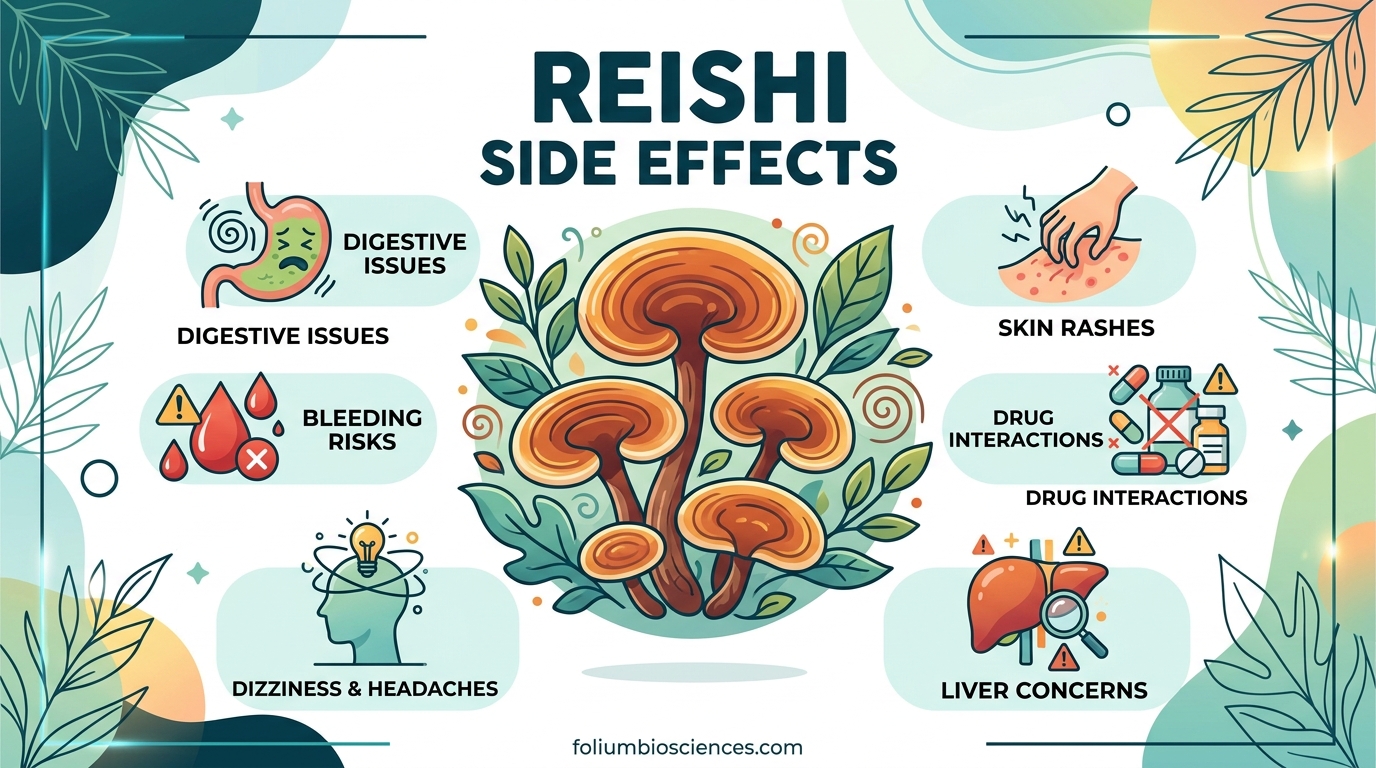
Reishi mushroom has earned its reputation as the “mushroom of immortality” over 2,000 years of traditional use. But here is what the wellness blogs often gloss over: this powerful fungus can trigger serious adverse reactions in certain people. In fact, a study of over 1,300 Reishi users found that more than half reported side effects ranging from nausea to depression.
I have spent months reviewing clinical research, medical literature, and real user experiences from forums like Reddit and Inspire. The goal is simple: give you the complete picture of Reishi side effects so you can make an informed decision about whether this supplement belongs in your routine.
Before we explore the risks, let us understand what exactly we are dealing with.
Table of Contents
What Is Reishi Mushroom?
Reishi, known scientifically as Ganoderma lucidum or lingzhi mushroom, grows on decaying hardwood trees in hot, humid Asian climates. Traditional Chinese medicine practitioners have used it for millennia to promote longevity and overall wellness.
The mushroom contains two primary bioactive compounds that drive its effects: triterpenes and polysaccharides. Triterpenes give Reishi its bitter taste and may have anti-inflammatory properties. Polysaccharides, particularly beta-glucans, are believed to stimulate immune function. These same compounds that make Reishi beneficial for some people create risks for others.
Common Reishi Side Effects
Clinical studies and user reports document several common side effects. Most are mild, but they can significantly impact your daily life.
The most frequently reported side effects include dry mouth, dizziness, itching, skin rash, nausea, stomach upset, and headaches. These symptoms typically appear within hours of taking Reishi and may persist for several days.
Forum users describe additional experiences that clinical trials sometimes miss. Many report feeling cold extremities, particularly in their hands and feet, often accompanied by sweating. Others describe a sense of brain fog or feeling “out of it” for hours after dosing. Some users mention lethargy and low motivation with consistent daily use.
Anxiety and mood swings appear in user reports despite Reishi’s reputation as a calming supplement. A small subset of users describe nerve sensations or muscle fasciculations. Long-term users occasionally report lowered libido for several hours after taking the supplement.
People with Mast Cell Activation Syndrome (MCAS) should exercise extreme caution. Several forum users with this condition report strong adverse reactions to Reishi powder, likely due to its immune-stimulating properties.
Who Should Skip Reishi Entirely
Certain groups face unacceptable risks from Reishi supplementation. If you fall into any of these categories, avoid this mushroom completely.
- Pregnant or breastfeeding women: No reliable safety data exists for Reishi use during pregnancy or lactation. The potential risks to developing fetuses and infants outweigh any theoretical benefits.
- People scheduled for surgery: Reishi’s blood-thinning effects increase bleeding risk during and after procedures. Stop taking Reishi at least two weeks before any scheduled surgery.
- Anyone taking blood thinners: Warfarin, heparin, and other anticoagulant medications interact dangerously with Reishi. The combination can cause severe bleeding episodes.
- People with bleeding disorders: Conditions like hemophilia or von Willebrand disease become more dangerous when combined with Reishi’s antiplatelet effects.
- Those with low blood pressure: Reishi may lower blood pressure further, causing dizziness, fainting, and dangerous hypotensive episodes.
- Individuals with autoimmune diseases: Multiple sclerosis, lupus, rheumatoid arthritis, and similar conditions may worsen due to Reishi’s immune-stimulating properties.
- Cancer patients undergoing treatment: Reishi may interfere with chemotherapy and radiation protocols. Always consult your oncologist before use.
Drug Interactions to Watch For
Reishi interacts with multiple medication classes. Understanding these interactions could prevent serious health complications.
Blood Thinners and Antiplatelet Drugs
Reishi may increase bleeding risk when combined with warfarin, heparin, aspirin, clopidogrel, and other anticoagulant or antiplatelet medications. Memorial Sloan Kettering Cancer Center specifically warns that Reishi can elevate INR, PT, and APTT values, indicating increased bleeding tendency.
Symptoms of dangerous interaction include nosebleeds, bloody stools, unusual bruising, and prolonged bleeding from cuts.
Blood Pressure Medications
Antihypertensive drugs combined with Reishi may cause blood pressure to drop too low. This interaction particularly affects ACE inhibitors, beta-blockers, calcium channel blockers, and diuretics.
Diabetes Medications
Reishi may lower blood sugar levels. When combined with insulin or oral diabetes medications, this effect can cause hypoglycemia. Monitor glucose levels closely if you use both.
Immunosuppressants
Drugs like cyclosporine, tacrolimus, and corticosteroids suppress immune function. Reishi’s immune-stimulating properties may counteract these medications, reducing their effectiveness.
CYP450 Metabolized Drugs
Reishi affects CYP2E1 and CYP3A enzymes in the liver. This interaction can alter how your body processes many common medications, potentially increasing or decreasing their effectiveness.
Liver Toxicity Warning
Perhaps the most serious concern surrounding Reishi is its potential to damage the liver. While some traditional uses suggest Reishi supports liver health, clinical evidence presents a more complicated picture.
Several case reports document liver injury associated with Reishi supplementation. One study found elevated liver enzymes in participants taking high doses over extended periods. The risk appears greatest with concentrated extracts and powders rather than whole mushroom preparations.
Symptoms of liver toxicity include yellowing skin or eyes, dark urine, pale stools, abdominal pain, and unexplained fatigue. If you experience these symptoms while taking Reishi, discontinue use immediately and seek medical evaluation.
People with existing liver conditions should avoid Reishi entirely. The additional stress on an already compromised liver is not worth the risk.
Blood Pressure Effects
Reishi demonstrates hypotensive properties, meaning it can lower blood pressure. For people with hypertension, this might sound beneficial. However, the effect is unpredictable and potentially dangerous.
The mushroom appears to relax blood vessels and inhibit angiotensin-converting enzyme (ACE), similar to ACE inhibitor medications. This mechanism can cause blood pressure to drop too low, particularly in people already taking antihypertensive drugs.
Symptoms of excessively low blood pressure include dizziness when standing, fainting, blurred vision, nausea, and confusion. If you experience these symptoms, discontinue Reishi and consult your healthcare provider.
Autoimmune Disease Considerations
Reishi stimulates natural killer (NK) cell activity and enhances immune function through multiple pathways. While this benefits people with weakened immunity, it creates serious problems for those with autoimmune conditions.
Autoimmune diseases occur when the immune system mistakenly attacks the body’s own tissues. Conditions like multiple sclerosis, lupus, rheumatoid arthritis, psoriasis, and inflammatory bowel disease fall into this category. Reishi’s immune-boosting effects may trigger or worsen flares in these conditions.
Memorial Sloan Kettering specifically warns that Reishi may trigger or exacerbate autoimmune skin disease, though causation requires further study. Until more research clarifies these risks, people with autoimmune conditions should avoid Reishi.
Surgery Preparation Warnings
If you have surgery scheduled, timing matters. Reishi’s anticoagulant effects increase bleeding risk during procedures and recovery.
Medical professionals recommend stopping Reishi at least two weeks before any surgical procedure. This timeline allows the mushroom’s blood-thinning compounds to clear your system.
Inform your surgeon and anesthesiologist about any Reishi use, even if you stopped weeks ago. Complete transparency ensures they can plan appropriately for your procedure.
Long-Term Use Risks
Many supplement enthusiasts take Reishi daily for months or years. This practice raises additional concerns beyond acute side effects.
Chronic Reishi use has been associated with prolonged bleeding times and liver enzyme elevation. Some users report developing tolerance to the supplement’s effects over time, requiring higher doses to achieve the same results.
Forum discussions reveal mixed experiences with long-term use. Some users report sustained benefits without issues. Others describe developing new symptoms after months of use, including persistent lethargy and mood changes.
Consider cycling Reishi rather than using it continuously. A common approach involves taking it for 8-12 weeks, then taking a 2-4 week break before resuming. This pattern may reduce tolerance development and allow your body to reset.
When to Seek Medical Help
Certain symptoms require immediate medical attention. Do not wait to see if they resolve on their own.
Seek emergency care if you experience severe bleeding, yellowing of skin or eyes, severe abdominal pain, difficulty breathing, or chest pain after taking Reishi. These symptoms could indicate serious complications requiring prompt intervention.
Schedule a medical appointment if you notice persistent nausea, ongoing dizziness, unexplained bruising, or any side effects that do not resolve within a week of discontinuing Reishi.
Always bring your Reishi supplement bottle to medical appointments. Healthcare providers need to know the exact product, dosage, and ingredients you are taking.
Frequently Asked Questions About Reishi Side Effects
Who should avoid reishi?
Pregnant and breastfeeding women, people scheduled for surgery, anyone taking blood thinners, individuals with bleeding disorders, those with low blood pressure, people with autoimmune diseases, and cancer patients undergoing treatment should avoid Reishi entirely.
Is reishi hard on the liver?
Reishi can cause liver toxicity in some people. Case reports document liver injury associated with supplementation, particularly with concentrated extracts. People with existing liver conditions should avoid Reishi entirely.
What happens if you take reishi every day?
Daily long-term use may lead to tolerance, requiring higher doses for the same effects. Chronic use has been associated with prolonged bleeding times and liver enzyme elevation. Consider cycling with breaks rather than continuous use.
Can you take reishi with blood thinners?
No. Reishi increases bleeding risk when combined with warfarin, heparin, aspirin, and other anticoagulant or antiplatelet medications. This combination can cause severe bleeding episodes.
Does reishi interact with medications?
Yes. Reishi interacts with blood thinners, blood pressure medications, diabetes medications, immunosuppressants, and drugs metabolized by CYP450 liver enzymes. Always consult your healthcare provider before combining Reishi with any medication.
Is reishi safe for pregnancy?
No. There is not enough reliable information to know if Reishi is safe during pregnancy or breastfeeding. Due to potential risks to developing fetuses and infants, pregnant and breastfeeding women should avoid Reishi entirely.
How long do reishi side effects last?
Most mild side effects like dry mouth, dizziness, and nausea resolve within a few days of discontinuing Reishi. However, some users report persistent effects lasting a week or longer, particularly with long-term use.
Conclusion
Reishi mushroom offers potential benefits for some people, but the risks are real and significant for others. Understanding Reishi side effects and who should skip this mushroom entirely empowers you to make safe, informed decisions about supplementation.
If you are pregnant, scheduled for surgery, taking blood thinners, managing an autoimmune condition, or dealing with low blood pressure, avoid Reishi completely. The risks simply outweigh any potential benefits.
For everyone else considering Reishi, start with a low dose and monitor your body’s response carefully. Pay attention to symptoms like dizziness, nausea, or unusual bleeding. And always consult your healthcare provider before adding any new supplement to your routine.