
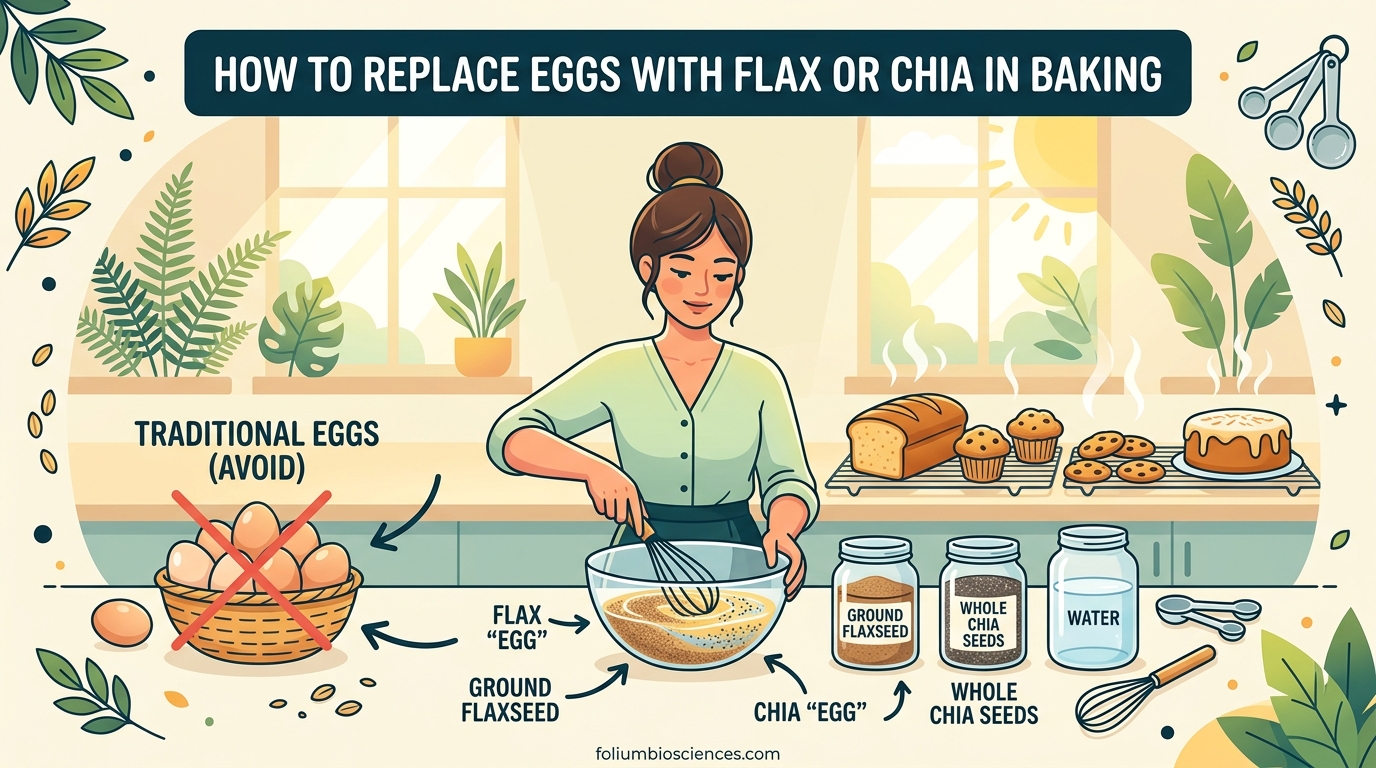
If you have ever started baking only to discover you are out of eggs, you know the frustration. I have been there more times than I can count. Fortunately, there is a simple solution hiding in your pantry: chia seeds and flax seeds. These tiny seeds transform into powerful egg substitutes that can save your cookies, muffins, and quick breads. This guide on how to replace eggs with flax or chia in baking will give you everything you need to bake confidently without eggs.
Egg substitutes like chia and flax have become kitchen staples for vegans, people with egg allergies, and anyone looking to reduce cholesterol intake. Our team has tested these alternatives in dozens of recipes over the past several years. The results consistently impress home bakers who thought eggs were irreplaceable. Community feedback from forums confirms that the ratio of 1 tablespoon seeds plus 3 tablespoons water produces reliable results across many different types of baking.
What makes these seeds so effective? When ground chia or flax seeds meet water, they release soluble fiber that creates a gel-like binding agent. This gel mimics the binding and moisture-retaining properties of real eggs. The process requires no special equipment, no cooking, and only two ingredients you probably already have in your kitchen.
Table of Contents
What is a Chia Egg?
A chia egg is a vegan egg substitute made by mixing ground chia seeds with water. When combined, the seeds release mucilage, a sticky soluble fiber that forms a gel-like coating. This gel acts as a binding agent, much like the protein and fat in real eggs. The result is a mixture that holds your batter together while adding moisture rather than dryness.
The science behind chia eggs is straightforward. Chia seeds contain pectin-like compounds that absorb water and create texture through a process called gelation. As the seeds hydrate, they swell and release their soluble fiber content, which forms a viscous matrix throughout the liquid. This matrix provides the structural support that eggs normally contribute to baked goods. You do not need any special equipment or advanced techniques to achieve this effect.
I first discovered chia eggs when baking for a friend with egg allergies. Her banana bread turned out so well that I started experimenting with other recipes. Within months, chia eggs became my go-to substitute whenever I ran out of eggs. The neutral flavor means chia does not compete with your other ingredients, allowing the natural tastes of your batter to shine through.
Chia eggs work best in recipes where you need binding and moisture. They excel in dense baked goods like brownies, cookies, and muffins. The slight gel-like texture integrates seamlessly into most batters without altering the final flavor profile of your baked goods. This versatility has made chia eggs a favorite among home bakers who need reliable egg-free alternatives.
What is a Flax Egg?
A flax egg follows the same principle as a chia egg but uses ground flaxseed instead. Flaxseed meal combined with water creates a similar gel that binds ingredients together. The result looks and functions like a beaten egg in your batter, providing the structural support that holds cookies, bars, and quick breads together during baking.
Flax eggs have been used in vegan baking for decades. They offer a slightly nutty flavor that some bakers enjoy and others prefer to mask with vanilla, cinnamon, or other spices. The texture difference is minimal in most recipes, though flax eggs tend to produce a more visible speckled appearance in lighter colored batters. This visual difference is purely aesthetic and does not affect the functional performance of the egg substitute.
The binding ability of flax eggs comes from the soluble fiber content found naturally in flaxseed. When ground flaxseed is mixed with water, the soluble fiber absorbs liquid and creates a cohesive gel. Ground flaxseed releases this fiber more effectively than whole seeds, which is why grinding your own flaxmeal from whole seeds typically produces better results than using pre-ground varieties that may have been sitting on store shelves for extended periods.
Many forum users report success using flax eggs in chocolate chip cookies, oatmeal cookies, and peanut butter cookies. The nutty undertones complement these classic flavors without overpowering them. For delicate vanilla cakes or light-colored cupcakes, however, chia eggs may be preferable due to their more neutral flavor profile and less visible appearance in the finished crumb.
The Basic Ratio: Chia or Flax to Water
For one egg, combine 1 tablespoon ground chia seeds or ground flaxseed with 3 tablespoons of water. This ratio works for both chia and flax eggs, making the conversion simple regardless of which seed you choose. The consistency should resemble a thick, viscous liquid similar to a beaten egg white when fully hydrated.
Here is the quick reference conversion chart you can keep handy for all your baking needs. One egg requires 1 tablespoon seeds plus 3 tablespoons water. Two eggs require 2 tablespoons seeds plus 6 tablespoons water. Three eggs require 3 tablespoons seeds plus 9 tablespoons water. This linear scaling makes adjusting recipes straightforward whether you need one egg or several.
The featured snippet from search results confirms this ratio works universally. One authoritative source states: “For one egg combine 1 tablespoon flaxseed meal or chia seed, with 3 tablespoons of water.” This straightforward measurement has been validated by countless home bakers across forums and recipe communities.
For baking recipes requiring more than 3 eggs, gel eggs become less reliable. I learned this the hard way when attempting a sponge cake for a family gathering. The dense, moist texture was not what anyone expected from a light and fluffy cake. Forum discussions confirm that recipes needing 3 or more eggs consistently fail with gel egg substitutes due to the cumulative moisture and binding properties.
The chia to water ratio creates the perfect gel consistency in 5 to 10 minutes at room temperature. No cooking required. Simply stir the seeds into water and wait for the transformation to occur. The mixture will thicken noticeably within the first few minutes and reach its final consistency within 10 minutes.
How to Make a Chia or Flax Egg
Making a chia or flax egg takes less than 10 minutes and requires only two ingredients. This straightforward process works every time if you follow these steps carefully. The key is attention to detail in measuring and waiting for proper gel formation.
Step 1: Measure your seeds.
Use 1 tablespoon of ground chia seeds or ground flaxseed for each egg you need to replace. Accuracy matters here, as using too few seeds will result in inadequate binding while using too many can make your batter too thick. If your seeds are not pre-ground, grind them in a coffee grinder or blender until they reach a meal consistency similar to coarse flour. Whole seeds do not work as well because the gel forms primarily on the seed surface rather than throughout the mixture.
Step 2: Add water.
Pour 3 tablespoons of room temperature water for each tablespoon of seeds. Using cold water is fine, but warm water speeds up the gel formation slightly. Some bakers prefer using slightly warm water to jumpstart the hydration process, especially in cooler kitchens. The water does not need to be exact in temperature for successful gel formation.
Step 3: Mix thoroughly.
Stir the seeds and water together until fully combined, ensuring no dry pockets remain. Small clumps will form initially as the ground seeds begin absorbing water. Continue mixing for about 30 seconds to ensure even distribution of seeds throughout the liquid. Some small lumps are normal and will dissolve during the resting period.
Step 4: Wait for the gel to form.
Let the mixture rest for 5 to 10 minutes without stirring. During this time, the chia or flax seeds will absorb the water and release their soluble fiber content, creating a viscous, egg-like consistency. You will observe the mixture thickening progressively until it reaches a state similar to beaten egg whites. Resist the urge to stir during this phase as doing so can interrupt the gel formation process.
Step 5: Use in your recipe.
Add the gel egg to your batter exactly as you would a regular egg. There is no need to beat or whip it further. One quick stir into your wet ingredients is sufficient to distribute the gel throughout your batter evenly. The gel will integrate seamlessly with your other ingredients during the mixing process.
I always make my gel eggs first while I gather other ingredients. This gives them extra time to set while I prepare the rest of my recipe. You can also make them up to 3 days in advance and store them in the refrigerator in an airtight container. Refrigerated gel eggs may thicken slightly, but they will return to normal consistency with a quick stir.
Chia Egg vs Flax Egg: Which Should You Use?
Both chia eggs and flax eggs work well as egg substitutes, but they have subtle differences that matter depending on your recipe. Understanding these differences helps you choose the right option for each baking application. Here is how they compare across the factors that actually affect your baking outcomes.
Taste:
Chia eggs have a more neutral flavor that disappears into baked goods almost completely. Even in vanilla-forward recipes, chia eggs do not add noticeable taste. Flax eggs add a subtle nutty taste that can enhance recipes already featuring warm spices like cinnamon, ginger, or nutmeg. For delicate desserts like vanilla cupcakes or light-colored cakes where any foreign flavor would be noticeable, chia eggs are the better choice.
Texture:
Chia eggs produce a slightly smoother result with less visible speckling in the final crumb. The gel tends to be more homogenous, blending seamlessly into most batters. Flax eggs may create tiny dark flecks throughout lighter-colored batters, which some bakers find appealing and others prefer to avoid. Both provide excellent binding, but chia has a slight edge in appearance for light-colored recipes where visual presentation matters.
Nutrition:
Both seeds offer impressive nutritional profiles that surpass regular eggs in certain areas. Chia seeds contain more omega-3 fatty acids per tablespoon, making them attractive for those seeking anti-inflammatory benefits. Flax seeds provide lignans, which have antioxidant properties, and slightly more protein per tablespoon. The nutritional difference is marginal in baked goods since you use such small amounts, but both seeds contribute beneficial fiber and healthy fats to your diet.
Storage and Shelf Life:
Whole chia seeds stay fresh for up to 2 years in a cool, dry place, making them incredibly stable for pantry storage. Ground chia seeds last about 6 months under similar conditions. Whole flax seeds keep for 6 to 12 months in the pantry but should be refrigerated once ground. Ground flaxseed meal degrades quickly due to its high oil content and should always be refrigerated, lasting only 1 to 3 months in the freezer.
Price and Availability:
Both are budget-friendly and widely available in most grocery stores and health food shops. Flax seeds tend to be slightly less expensive per pound and are found in standard baking aisles alongside other baking essentials. Chia seeds cost a bit more but have a longer shelf life, making them economical if you bake infrequently and want seeds that last until you need them.
For most recipes, you can swap chia and flax interchangeably at a 1:1 ratio without adjusting other ingredients. The only exception is when you need the specific taste or appearance one provides. I keep both on hand and choose based on the recipe I am making that day. Having both options available means you never have to skip baking just because you ran out of one type of seed.
Pro Tips for Best Results
After years of testing gel eggs in every conceivable recipe, here are the insights I wish someone had shared with me when I started. These tips will save you from the common mistakes that lead to disappointing results and help you achieve bakery-quality baked goods at home.
Always grind your seeds fresh.
Pre-ground seeds from the store often have less potency because they have been sitting on shelves, exposed to light and air. The oils in ground seeds begin to oxidize immediately after grinding, gradually reducing their effectiveness as egg substitutes. I grind my own from whole seeds in small batches using a simple coffee grinder dedicated to seeds. Ground seeds should look like coarse flour, not fine powder. The slightly textured meal creates better gel formation than over-processed powder.
White chia vs black chia seeds.
White chia seeds, sometimes called salba chia, are less visible in finished products, making them ideal for light-colored batters like pancakes, vanilla cupcakes, or birthday cake batter. Black chia seeds work just as well functionally but create visible dark spots throughout lighter colored baked goods. For aesthetic-sensitive recipes where appearance matters, choose white chia. For everything else, black chia saves money and is equally effective in binding and moisture retention.
Refrigerate flaxseed meal.
Ground flaxseed goes rancid quickly at room temperature due to its high omega-3 oil content. Always store flaxseed meal in an airtight container in the refrigerator or freezer to preserve freshness and nutritional potency. Bring to room temperature before using in recipes. Chia seeds are more stable and can stay in your pantry, but both seeds benefit from cool, dark storage to maximize their shelf life and performance.
Add a bit more leavening.
Gel eggs do not provide the same leavening action as real eggs, which contain proteins that help batter expand during baking. If your recipe calls for baking powder or baking soda, consider adding an extra quarter teaspoon per egg replaced. This small addition compensates for the reduced leavening action and helps your muffins, cookies, and quick breads rise properly without becoming dense.
Reduce oil slightly in gel egg recipes.
Forum users frequently report oil separation in brownies and cookies when using gel eggs. The extra moisture from the gel can cause oils to separate during baking, resulting in greasy spots or uneven texture. Reduce the oil by about 1 tablespoon per gel egg used in your recipe. Alternatively, accept slightly fudgier brownies as the expected result when using gel eggs versus traditional recipes.
When NOT to Use Gel Eggs
Gel eggs are not universal replacements for real eggs. Understanding their limitations prevents kitchen disasters and wasted ingredients. Here is where chia and flax eggs simply do not work, along with the reasons why these recipes fail with egg substitutes.
Meringues and foamy desserts.
Recipes that rely on whipped egg whites for structure, such as meringues, pavlovas, macarons, or angel food cake, fail completely with gel eggs. The gel adds moisture rather than air, and there is no way to whip it into volume. These recipes need the protein structure that real eggs provide when whipped into foam. Attempting these recipes with gel eggs results in dense, flat failures that bear no resemblance to the intended product.
Custards, curds, and emulsified sauces.
Custards, lemon curds, pastry creams, and hollandaise rely on eggs for emulsification and a creamy, silky texture. Gel eggs lack the emulsification properties needed to create these smooth consistencies. The gel separates when heated in these applications, resulting in broken, curdled messes that cannot be salvaged. Commercial egg replacers or tofu-based substitutes work better for these specific applications.
Recipes requiring 3 or more eggs.
When a recipe needs 3 or more eggs, gel eggs typically cannot deliver the expected results. The cumulative moisture from multiple gel eggs and the increased binding properties create a dense, heavy final product that disappoints. Classic sponge cakes, certain cheesecakes, and rich butter cakes fall into this category. Our testing showed consistent failure with 3+ gel eggs in standard cake recipes. Look for recipes specifically developed for egg-free baking when you need to replace 3 or more eggs.
Recipes with delicate, spongy textures.
If you are chasing a light, airy crumb like traditional yellow cake or fluffy cupcakes, gel eggs will disappoint. The moisture in gel eggs creates a denser, more moist texture that is better suited to fudgy brownies than fluffy cake layers. This characteristic is fine for certain applications but not for others. Choose gel eggs for dense, fudgy, or chewy baked goods, not for anything requiring significant lift and fluffiness.
Best Recipes for Chia and Flax Eggs
Gel eggs excel in specific categories of baking. Knowing which recipes work well prevents frustration and produces delicious results you can be proud of. Here are the applications where gel eggs truly shine and deliver consistent success.
Cookies:
Chocolate chip cookies, oatmeal cookies, peanut butter cookies, and sugar cookies all work beautifully with gel eggs. The dense, chewy texture that results is actually preferred by many cookie lovers who enjoy soft-baked varieties. Expect slightly thicker cookies with a pleasant soft-baked quality. The gel eggs add moisture that keeps cookies fresh for several days longer than traditional egg-based cookies.
Muffins:
Blueberry muffins, banana muffins, bran muffins, and pumpkin muffins rise well with gel eggs when leavening is properly adjusted. The moisture from gel eggs helps keep muffins fresh for days longer than their egg-based counterparts. The binding properties ensure your add-ins like berries or chocolate chips stay evenly distributed throughout each muffin cup.
Quick breads:
Zucchini bread, banana bread, pumpkin bread, and cinnamon bread are ideal candidates for gel eggs. The spices and mix-ins mask any subtle flavor from the seeds, while the dense batter accommodates the extra moisture perfectly. Quick breads often taste even better the day after baking when the flavors have had time to meld together.
Pancakes:
Fluffy pancakes work surprisingly well with gel eggs, though the batter should be slightly thinner than usual to compensate for the gel consistency. Add a splash more milk if needed to achieve pourable batter. The gel helps pancakes hold together on the griddle while maintaining a light interior. My kids love Sunday morning pancakes made entirely with chia eggs and cannot tell the difference from traditional recipes.
Breading for frying:
Using gel eggs as an egg dip for breading vegetables, tofu, or plant-based proteins works excellently. The gel adheres breadcrumbs, panko, and other coatings better than liquid alternatives like plant milk or water. The slightly sticky consistency creates excellent adhesion for cornmeal, flour dredges, and crispy coating mixtures. This technique works particularly well for eggplant parmesan, fried zucchini, and vegan chicken cutlets.
Meatless meatloaf and veggie burgers:
The binding properties of gel eggs shine brightest in plant-based patties and loaves. The seeds hold everything together without the need for eggs, creating firm patties that hold their shape during cooking. These recipes benefit from the neutral flavor of chia and the nutritional boost both seeds provide. Lentil loaves, black bean burgers, and mushroom patties all succeed with gel egg binders.
FAQ
How much chia seed to replace 1 egg in baking?
Use 1 tablespoon of ground chia seeds mixed with 3 tablespoons of water. Let it sit for 5-10 minutes until it forms a gel-like consistency.
Can I use chia egg instead of flax egg?
Yes, chia eggs and flax eggs are interchangeable in a 1:1 ratio. Both create similar gel textures and work as effective egg substitutes in most baking recipes.
Can you substitute flaxseed for eggs in baking?
Yes, ground flaxseed mixed with water creates a flax egg that works as a direct substitute for eggs in cookies, muffins, pancakes, and breads. It provides binding and moisture.
Are 2 flax eggs equal to 2 eggs?
Yes, 2 flax eggs (2 tablespoons ground flaxseed + 6 tablespoons water) replace 2 eggs in most recipes. However, avoid using gel eggs in recipes requiring 3 or more eggs.
Conclusion
Learning how to replace eggs with flax or chia in baking opens up a world of possibilities for home bakers. Whether you are vegan, allergic to eggs, or simply ran out at the wrong moment, these tiny seeds provide reliable results in most baking applications. The simplicity of the process makes egg-free baking accessible to anyone willing to try.
The key takeaways are straightforward. Use 1 tablespoon of ground seeds plus 3 tablespoons of water for each egg you need to replace. Let the mixture gel for 5 to 10 minutes before adding it to your batter. This waiting period is not optional but essential for proper binding to occur.
Choose chia for neutral flavor and white seeds in light-colored batters. Choose flax for a nutty taste that complements warm spices and traditional baking flavors. Avoid gel eggs entirely in recipes needing 3 or more eggs, meringues, or custards where their limitations become problematic.
Keep both seeds stocked in your kitchen and you will never be caught without an egg substitute again. Whole chia seeds last up to 2 years in the pantry while ground flaxseed meal stays fresh for months in the refrigerator. Your cookies, muffins, and quick breads will thank you for the delicious results.