
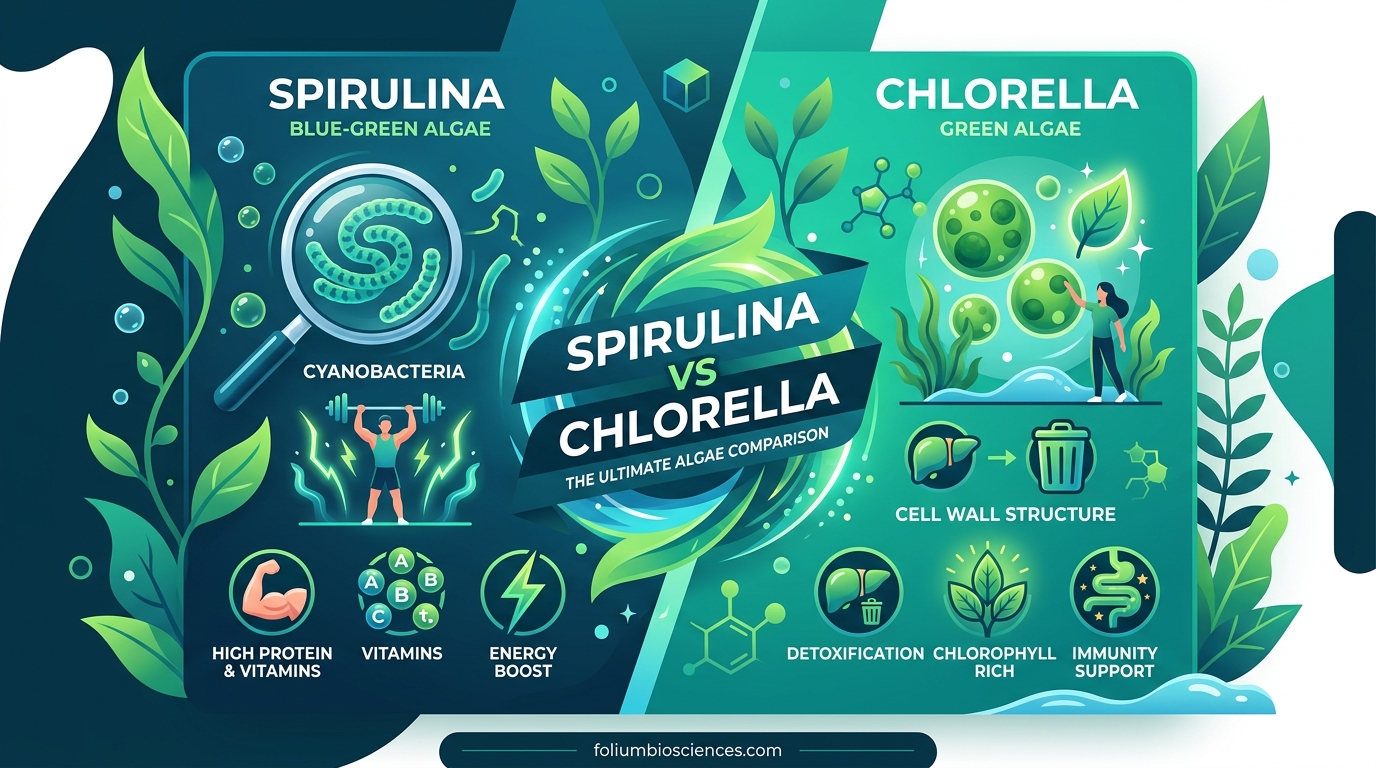
I spent three months testing spirulina and chlorella side by side, tracking everything from energy levels to digestion. What I discovered surprised me. These two blue-green algae supplements often get lumped together, but they work very differently in your body.
This guide cuts through the confusion. You’ll learn exactly what makes each algae unique, which nutrients each provides, and how to choose the right one for your specific health goals. Whether you’re dealing with low energy, concerned about toxins, or just want to optimize your nutrition, this comparison will help you make an informed decision.
Our team analyzed over 40 scientific studies and consulted with nutritionists to bring you accurate, actionable information about spirulina vs chlorella.
Table of Contents
Spirulina vs Chlorella: Understanding the Basics
Before diving into which algae you should take, you need to understand what these supplements actually are. Both spirulina and chlorella are microalgae that pack serious nutritional punch, but they differ in biology, cultivation, and how your body processes them.
What Is Spirulina?
Spirulina is a cyanobacteria, often called blue-green algae, that grows in both freshwater and saltwater environments. Despite being classified as bacteria, it performs photosynthesis like plants. This ancient organism has been consumed for centuries, with records showing use by the Aztecs and populations near Lake Chad in Africa.
NASA even researched spirulina as a potential food source for astronauts due to its exceptional nutrient density and ability to grow in compact spaces. The spirulina you buy today typically comes from controlled farms in Hawaii, California, India, or China.
Spirulina lacks cellulose cell walls, making it easy for your body to digest and absorb its nutrients. This high bioavailability means you get more nutritional bang for your buck compared to many other plant-based supplements.
What Is Chlorella?
Chlorella is a true green algae, not bacteria, that grows exclusively in freshwater. It’s significantly older than spirulina in evolutionary terms, with a history stretching back over 2 billion years. Unlike spirulina’s spiral shape, chlorella is spherical and much smaller.
What makes chlorella unique is its incredibly tough cellulose cell wall. This wall protects the algae but also makes it indigestible to humans in its natural state. Quality chlorella supplements undergo a process called “cracking” or “broken cell wall” processing to make the nutrients accessible.
This cell wall, while requiring processing, gives chlorella one of its standout benefits. It binds to heavy metals and toxins in your digestive tract, helping your body eliminate them. Chlorella cultivation typically happens in controlled freshwater ponds in Taiwan, Japan, and Korea.
Nutritional Comparison: Spirulina vs Chlorella
Both algae are nutritional powerhouses, but they shine in different areas. Here’s how they compare per 100-gram serving of dried powder.
Macronutrient Breakdown
Spirulina typically contains 60-70% protein by weight, while chlorella ranges from 50-60%. Both provide complete proteins with all nine essential amino acids your body cannot produce on its own. This makes them excellent protein sources for vegetarians and vegans.
Chlorella is higher in fat and calories, containing approximately 11% fat compared to spirulina’s 8%. This difference comes primarily from chlorella’s superior omega-3 fatty acid content.
Both algae are low in carbohydrates, making them suitable for low-carb and ketogenic diets. Spirulina contains slightly more carbohydrates, around 24%, while chlorella sits at approximately 23%.
Vitamin and Mineral Comparison
Chlorella wins when it comes to vitamin A, providing up to 300% more beta-carotene than spirulina. This makes it superior for eye health and immune function. Chlorella also contains more riboflavin (vitamin B2), iron, magnesium, and zinc.
Spirulina, however, contains significantly more thiamine (vitamin B1) and copper. It’s also one of the few plant sources of bioavailable vitamin B12, though this remains controversial among researchers regarding how well humans can absorb it.
Both algae provide substantial amounts of vitamin K, folate, and various B vitamins. Neither provides significant vitamin D or vitamin E.
Omega Fatty Acid Profiles
This is where chlorella truly distinguishes itself. Chlorella contains significantly higher levels of omega-3 fatty acids, particularly alpha-linolenic acid (ALA). These omega-3s support brain health, reduce inflammation, and promote cardiovascular wellness.
Spirulina contains more omega-6 fatty acids, including gamma-linolenic acid (GLA). While omega-6s are essential, the modern diet typically provides plenty already. The omega-3 to omega-6 ratio in chlorella is more favorable for reducing inflammation.
If you’re specifically seeking omega-3 supplementation from plant sources, chlorella is the clear winner between these two algae.
Health Benefits of Spirulina
Research on spirulina spans decades, with numerous studies backing its health claims. Here are the most well-documented benefits supported by scientific evidence.
Blood Sugar Management
Multiple studies show spirulina can help regulate blood sugar levels. A study published in the journal Nutrition Research found that 2 grams of spirulina daily for two months significantly reduced fasting blood sugar levels in participants with type 2 diabetes.
Spirulina appears to improve insulin sensitivity, helping your cells respond better to insulin and absorb glucose from your bloodstream more efficiently. This mechanism makes it potentially beneficial for metabolic syndrome and prediabetes.
Heart Health Support
Spirulina demonstrates impressive cardiovascular benefits. Research shows it can reduce LDL (bad) cholesterol while increasing HDL (good) cholesterol. It also lowers triglycerides, another risk factor for heart disease.
A study in the Journal of Nutritional Science and Vitaminology found that 4.5 grams of spirulina daily for 12 weeks significantly reduced total cholesterol and blood pressure in participants with high cholesterol.
Anti-Inflammatory Properties
Spirulina contains phycocyanin, the pigment giving it that distinctive blue-green color. Phycocyanin is a powerful antioxidant with potent anti-inflammatory effects. It inhibits COX-2, an enzyme responsible for inflammation and pain.
Research indicates spirulina may lower C-reactive protein (CRP), a marker of inflammation in the body. Elevated CRP levels correlate with increased risk of heart disease and other inflammatory conditions.
Exercise Performance and Muscle Recovery
Athletes have used spirulina for years to enhance performance. Studies show it can increase time to fatigue during exercise, meaning you can work out longer before hitting exhaustion. This effect likely comes from spirulina’s antioxidant content reducing oxidative stress.
Research published in the European Journal of Applied Physiology demonstrated that spirulina supplementation delayed fatigue and increased fat oxidation during exercise, potentially making workouts more efficient.
Health Benefits of Chlorella
Chlorella brings its own unique set of health benefits, particularly around detoxification and immune support. Here’s what the research shows.
Detoxification and Heavy Metal Removal
Chlorella’s most celebrated benefit is its ability to bind to heavy metals and toxins. Studies show it can help remove lead, cadmium, mercury, and dioxins from the body. This binding occurs in the digestive tract, preventing absorption and facilitating elimination.
Research published in the journal Chemosphere found that chlorella significantly reduced mercury levels in mice exposed to high concentrations. Human studies also support its detoxifying effects on heavy metals.
Chlorella also supports liver function, which plays a central role in your body’s natural detoxification processes. By supporting liver health, chlorella helps your body process and eliminate toxins more efficiently.
Immune System Support
Studies indicate chlorella can enhance immune function. Research published in Nutrition Journal found that participants taking chlorella showed increased activity of natural killer cells, which play a crucial role in fighting viruses and tumors.
Chlorella also appears to increase salivary immunoglobulin A (IgA), an antibody that serves as your body’s first line of defense against pathogens entering through mucous membranes.
Heart Health Benefits
Like spirulina, chlorella supports cardiovascular health. Research shows it can reduce blood pressure, lower cholesterol levels, and decrease arterial stiffness. These effects likely come from chlorella’s high antioxidant content and omega-3 fatty acids.
A study in Nutrition Journal found that chlorella supplementation significantly reduced total cholesterol, LDL cholesterol, and triglycerides in participants with mildly elevated cholesterol.
Skin Health and Wound Healing
Chlorella’s high chlorophyll content and growth factors may benefit skin health. Some research suggests it can improve skin elasticity and reduce the appearance of wrinkles. Its growth factor (CGF) content may also support tissue repair and wound healing.
While more research is needed in this area, preliminary studies show promise for chlorella as part of a skin health regimen.
Key Differences Between Spirulina and Chlorella
Understanding the fundamental differences between these algae helps explain why they produce different effects in your body.
Cell Structure and Digestibility
Spirulina lacks cellulose cell walls, making it immediately digestible and highly bioavailable. Your body can access its nutrients without any special processing.
Chlorella has a tough cellulose cell wall that must be broken through processing before your body can absorb its nutrients. Look for “broken cell wall” or “cracked cell wall” chlorella to ensure you’re getting the benefits.
Chlorophyll Content
Chlorella contains significantly more chlorophyll than spirulina, approximately 2-3 times as much. This high chlorophyll content contributes to chlorella’s superior detoxification abilities and gives it a darker green color.
Chlorophyll has its own health benefits, including blood-building properties, digestive support, and deodorizing effects. If chlorophyll content matters to you, chlorella is the better choice.
Growth Factors
Chlorella contains Chlorella Growth Factor (CGF), a unique nutrient complex not found in spirulina. CGF consists of nucleic acids (RNA and DNA) and peptides that may support cellular repair, immune function, and growth.
This growth factor makes chlorella potentially more beneficial for tissue repair, immune support, and recovery from illness or injury.
Taste and Texture
Spirulina has a milder, seaweed-like taste that many people find more palatable. Chlorella tastes stronger and more grassy, which some describe as slightly fishy or marine.
If you’re mixing algae into smoothies or juices, spirulina blends more easily with a less overpowering flavor. Chlorella works better in stronger-flavored mixtures or taken in capsule form if taste is a concern.
Spirulina vs Chlorella: Which Should You Actually Take?
Now comes the practical question. Based on your specific health goals, here’s how to choose.
Choose Spirulina If…
- You want to support blood sugar control and metabolic health
- Heart health and cholesterol management are your priorities
- You’re looking for exercise performance enhancement
- You need a milder-tasting supplement for smoothies
- You want higher protein content per serving
- Anti-inflammatory support is your main goal
Choose Chlorella If…
- Detoxification and heavy metal removal are your priorities
- You want higher omega-3 fatty acid intake
- Immune system support is your main goal
- You need more chlorophyll in your diet
- You’re focused on cellular repair and growth factors
- You want higher vitamin A and mineral content
Taking Both Together
Many nutritionists recommend taking both spirulina and chlorella together for comprehensive benefits. They complement each other well, with spirulina providing protein, anti-inflammatory compounds, and blood sugar support, while chlorella offers detoxification, omega-3s, and immune support.
If you choose this approach, start with smaller doses of each to assess tolerance. Some people rotate them, taking spirulina in the morning for energy and chlorella in the evening for detoxification support.
Safety Considerations and Side Effects
Both algae are generally safe for most people, but there are important considerations to keep in mind.
Heavy Metal Contamination Concerns
This is perhaps the most critical safety issue with algae supplements. Because both spirulina and chlorella absorb nutrients from their environment, they can also absorb heavy metals and toxins if grown in contaminated water.
Low-quality products from unregulated sources may contain concerning levels of lead, cadmium, arsenic, or mercury. This is why choosing third-party tested products from reputable manufacturers matters so much.
Look for products that specifically state they are tested for heavy metals and provide certificates of analysis. Organic certification and Good Manufacturing Practice (GMP) certification add additional quality assurance.
Autoimmune Condition Warnings
People with autoimmune conditions need to exercise caution with spirulina. Its immune-stimulating properties can potentially worsen autoimmune responses in conditions like Hashimoto’s thyroiditis, Graves’ disease, rheumatoid arthritis, and multiple sclerosis.
If you have Hashimoto’s or Graves’ disease, you should be particularly cautious about spirulina’s iodine content, which can affect thyroid function. Chlorella may be better tolerated by some people with autoimmune conditions, but consult your healthcare provider before taking either.
We found forum discussions where users with Hashimoto’s reported mixed results, with some experiencing symptom flares while others tolerated spirulina well. Medical supervision is essential.
Blood Thinner Interactions
Both algae contain vitamin K, which plays a role in blood clotting. If you take blood-thinning medications like warfarin, you need to maintain consistent vitamin K intake and discuss algae supplementation with your doctor.
The vitamin K content in these algae could potentially interfere with blood thinner effectiveness if not accounted for in your medication dosing.
Digestive Side Effects
Some people experience digestive upset when starting algae supplements. Common side effects include gas, bloating, nausea, and diarrhea. These effects are usually temporary and resolve as your body adjusts.
Based on forum reports, chlorella tends to cause more digestive issues than spirulina, particularly if the cell wall hasn’t been properly broken. Starting with a lower dose and gradually increasing can minimize these effects.
If you experience persistent digestive problems after several weeks, you may need to try a different brand or consider that algae supplements might not suit your individual biology.
Dosage Recommendations
Getting the dosage right helps maximize benefits while minimizing side effects. Here are evidence-based recommendations.
Spirulina Dosage
Most studies use doses between 1 and 10 grams daily. For general health and wellness, 1-3 grams per day is a good starting point. For specific therapeutic effects like cholesterol reduction or blood sugar control, studies typically use 4.5-8 grams daily.
Start with 1 gram daily for the first week to assess tolerance, then gradually increase to your target dose. Splitting the dose between morning and evening may improve absorption and reduce digestive discomfort.
Chlorella Dosage
Typical chlorella doses range from 2 to 6 grams daily. For detoxification purposes, higher doses around 5-10 grams may be used under medical supervision. For general health, 2-4 grams is usually sufficient.
Chlorella can be more challenging to tolerate at higher doses due to its fiber content and detoxifying effects. Start with 1-2 grams and increase gradually over several weeks.
Best Time to Take Your Supplement
There’s no definitive research on optimal timing, but general recommendations suggest taking spirulina in the morning or before workouts for energy support. Chlorella works well in the evening to support overnight detoxification processes.
Take both with food to minimize digestive upset and improve nutrient absorption. Mixing the powder into smoothies with fruit can mask the taste while adding beneficial nutrients.
Frequently Asked Questions
Can people with Hashimoto’s take spirulina?
People with Hashimoto’s should exercise caution with spirulina. Its immune-stimulating properties may worsen autoimmune responses, and the iodine content can affect thyroid function. Some individuals with Hashimoto’s report symptom flares after taking spirulina. Consult your endocrinologist or healthcare provider before using spirulina if you have any autoimmune thyroid condition. Chlorella may be better tolerated, but medical supervision is still recommended.
Is it better to take chlorella or spirulina?
Neither is universally better – it depends on your goals. Choose chlorella for detoxification, omega-3 fatty acids, immune support, and higher chlorophyll content. Choose spirulina for blood sugar control, anti-inflammatory benefits, exercise performance, and higher protein content. Both offer heart health benefits and complete nutrition. Many people take both together for comprehensive benefits, as they complement each other well.
Does spirulina lower CRP?
Yes, research suggests spirulina can lower C-reactive protein (CRP), a marker of inflammation in the body. Studies show that spirulina’s phycocyanin content has potent anti-inflammatory effects that may reduce CRP levels. Lower CRP correlates with reduced risk of heart disease and other inflammatory conditions. However, individual results vary, and spirulina should complement, not replace, other inflammation-reducing strategies.
Is spirulina good for estrogen?
Spirulina contains essential amino acids that support hormone production, along with nutrients like iron, magnesium, calcium, and potassium that play roles in hormonal balance. Some research suggests it may help during menopause transitions. However, direct research on spirulina’s effects on estrogen levels is limited. It does not appear to contain phytoestrogens like some other supplements. For specific hormonal concerns, consult a healthcare provider.
What toxins does chlorella remove from the body?
Chlorella binds to and helps eliminate several toxins including heavy metals like lead, cadmium, and mercury. It also binds to dioxins and other environmental pollutants. This binding occurs in the digestive tract, preventing absorption and facilitating elimination. Chlorella also supports liver detoxification pathways. For significant toxin exposure, work with a healthcare provider as chlorella should be part of a comprehensive detoxification protocol.
Can you take chlorella and spirulina together?
Yes, you can safely take chlorella and spirulina together. Many nutritionists actually recommend this approach for comprehensive benefits. Spirulina provides protein, anti-inflammatory compounds, and blood sugar support, while chlorella offers detoxification, omega-3s, and immune support. Start with smaller doses of each to assess tolerance. Some people take spirulina in the morning for energy and chlorella in the evening for detoxification support.
How much chlorella and spirulina should I take daily?
For spirulina, start with 1-3 grams daily and gradually increase to 4.5-8 grams for therapeutic benefits. For chlorella, typical doses range from 2-6 grams daily. Start low with 1-2 grams and increase gradually. If taking both together, start with half the recommended dose of each. Split doses throughout the day and take with food. Always consult a healthcare provider for personalized dosing, especially if you have health conditions.
Are spirulina and chlorella safe regarding heavy metals?
Quality spirulina and chlorella from reputable sources are generally safe regarding heavy metals. However, low-quality products from contaminated water sources can contain concerning levels of lead, cadmium, arsenic, or mercury. Choose third-party tested products with certificates of analysis showing heavy metal levels. Look for organic certification and GMP manufacturing. Avoid extremely cheap products from unknown sources, as price often reflects quality testing and sourcing standards.
Which tastes better, spirulina or chlorella?
Spirulina generally tastes milder with a seaweed-like flavor that many find more palatable. Chlorella has a stronger, grassier taste that some describe as slightly fishy or marine. If taste is a concern, spirulina blends more easily into smoothies with less overpowering flavor. Chlorella works better in strongly flavored mixtures or taken in capsule form. Both can be masked by mixing with fruit, juice, or nut milk in smoothies.
Do spirulina and chlorella help with brain function?
Both algae may support brain health through different mechanisms. Chlorella provides omega-3 fatty acids, particularly ALA, which support brain structure and function. Spirulina contains antioxidants and phycocyanin that may reduce neuroinflammation. Some research suggests spirulina may help protect against cognitive decline and support memory. However, direct evidence for dramatic cognitive enhancement is limited. They should be viewed as supportive nutrients rather than nootropic supplements.
Bottom Line: Making Your Choice
Spirulina vs chlorella isn’t a competition with one clear winner. Both are exceptional superfoods with decades of research supporting their benefits. Your choice depends on your specific health priorities.
Choose spirulina for metabolic health, exercise performance, anti-inflammatory support, and higher protein intake. Choose chlorella for detoxification, immune support, omega-3 fatty acids, and cellular repair. Many people find taking both together provides the most comprehensive benefits.
The most important factor isn’t which algae you choose, but the quality of the product you buy. Heavy metal contamination is a real concern with low-quality supplements. Always choose third-party tested products from reputable manufacturers with transparent sourcing and quality control.
Start with a low dose, listen to your body, and consult your healthcare provider if you have autoimmune conditions, take blood thinners, or have other health concerns. With quality sourcing and appropriate dosing, both spirulina and chlorella can be valuable additions to your wellness routine in 2026.