
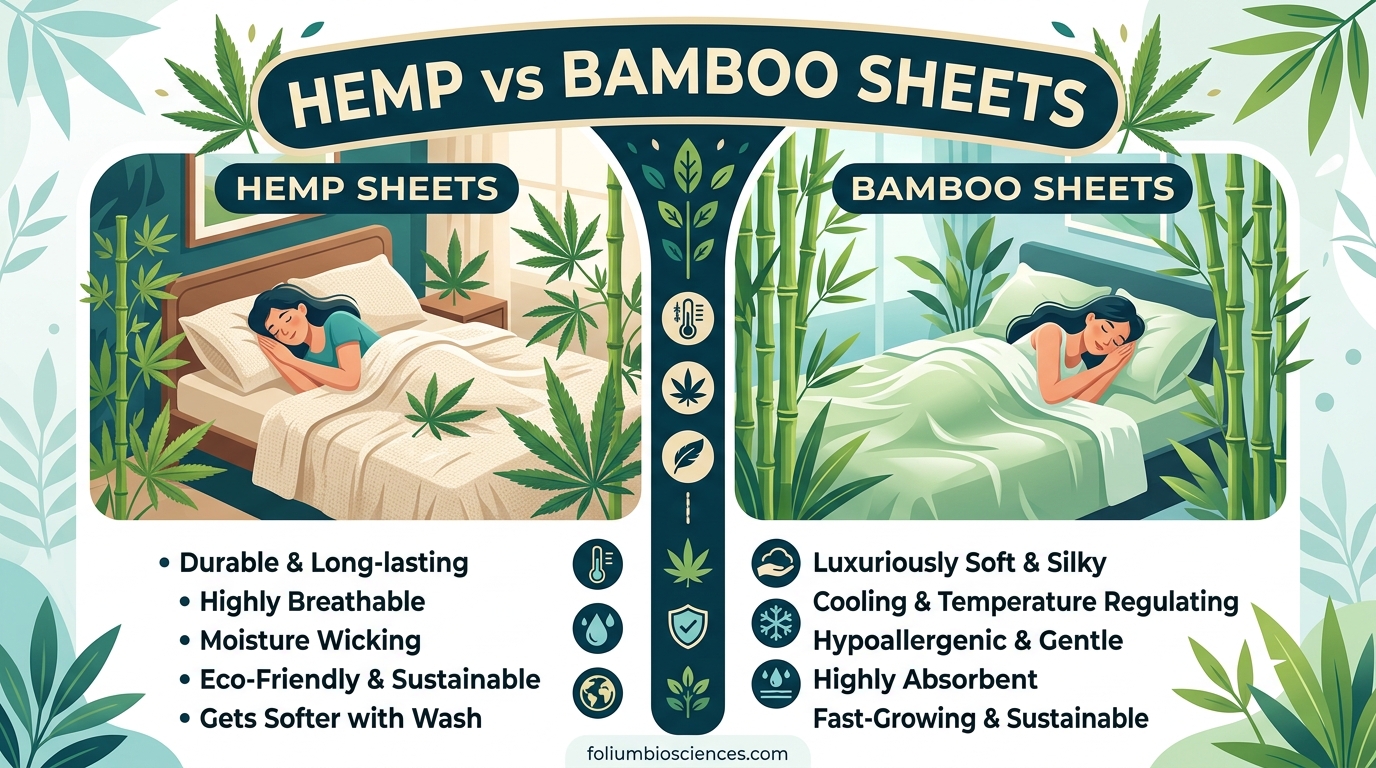
Choosing the right bedding can transform your sleep from restless tossing to deep, restorative rest. When comparing hemp bedsheets vs bamboo sheets, you are not just choosing between two fabrics. You are deciding between immediate luxury and long-term investment, between silk-like softness and fabric that ages like fine wine.
I spent weeks researching both materials, reading hundreds of user reviews and forum discussions. In this guide, I will break down exactly how hemp and bamboo compare on cooling, softness, and durability so you can make the right choice for your sleep needs in 2026.
Table of Contents
What Are Hemp Bedsheets?
Hemp bedsheets are made from fibers extracted from the Cannabis sativa plant. Do not worry, these sheets will not get you high. Industrial hemp contains negligible THC and has been cultivated for thousands of years for textiles, rope, and paper.
The magic happens in the plant’s stalk. Hemp produces long, strong bast fibers that run the length of the stem. These fibers get extracted through a process called retting, where the stalks sit in water or dew to break down the binding tissues. After retting, manufacturers decorticate the stalks to separate the fibers, then spin and weave them into fabric.
Most quality hemp sheets use 100% hemp or hemp blended with organic cotton. The fabric naturally has a crisp, linen-like texture that feels substantial and breathable against your skin.
What Are Bamboo Sheets?
Bamboo sheets come from bamboo grass pulp, not the woody stalks you might imagine. The bamboo gets pulped and processed to extract cellulose, which then transforms into fabric through one of two main methods.
Viscose bamboo (also called rayon from bamboo) uses chemical processing. Manufacturers treat the bamboo pulp with sodium hydroxide and carbon disulfide to break down the cellulose, then extrude the solution through spinnerets to create fibers. This method produces incredibly soft, silky fabric but involves harsh chemicals.
Lyocell bamboo (sometimes sold as Tencel, a branded version) uses a closed-loop process with a non-toxic solvent called N-methylmorpholine N-oxide. This method reuses 99% of the solvent and creates a more eco-friendly fabric that rivals viscose for softness while being more breathable and durable.
When shopping, you will want to know which type you are buying. Lyocell costs more but performs better long-term. Viscose feels amazing at first but may degrade faster.
Cooling and Temperature Regulation: Hemp vs Bamboo Sheets
Hot sleepers need to pay close attention here. Both hemp and bamboo sheets claim cooling properties, but they work differently.
Hemp fibers have a hollow structure that allows air to flow freely through the fabric. This creates natural ventilation that keeps heat from building up around your body. In my research, forum users consistently describe hemp as “does not trap heat like bamboo or microfiber.” Several users compared hemp favorably to linen for temperature regulation.
Bamboo sheets cool through a different mechanism. The fibers contain microscopic pores that wick moisture away from your skin and allow it to evaporate quickly. This moisture-wicking keeps you dry, which helps regulate temperature. However, some hot sleepers report that bamboo sheets eventually make them sweat, especially as the fabric ages and loses some breathability.
Lyocell bamboo performs better than viscose for cooling. The closed-loop process creates a more porous fiber structure. If cooling tops your priority list and you prefer bamboo, spend the extra money for lyocell.
For pure cooling performance, hemp edges ahead. The hollow fiber structure does not degrade with washing, meaning your sheets stay cool for years rather than months.
Softness and Comfort: Hemp Bedsheets vs Bamboo Sheets
Here is where these two fabrics diverge dramatically. Bamboo sheets deliver instant gratification. Hemp sheets reward patience.
Bamboo viscose feels silky smooth right out of the package. Many users describe it as feeling like “butter” or “silk” against the skin. This immediate luxury makes bamboo popular for first-time buyers of natural fiber bedding.
Hemp sheets feel rougher initially. They have a crisp, linen-like texture that some users find stiff or scratchy during the first few sleeps. This initial roughness turns many buyers away before they experience hemp’s secret superpower.
Hemp gets softer with every single wash. After three to five wash cycles, hemp sheets transform from crisp to cozy. After a year of regular washing, they feel like heirloom-quality fabric that molds to your body. Forum users consistently report that hemp sheets “get better with each wash” and become their favorite bedding after the break-in period.
Bamboo sheets often move in the opposite direction. That initial silky softness can degrade as fibers weaken and pills form. Several forum users noted that bamboo sheets feel “itchy” after the initial softness fades, and the fabric can develop an unpleasant texture over time.
If you want immediate luxury and do not mind replacing sheets every few years, bamboo works beautifully. If you prefer bedding that improves over time and could last a decade, hemp delivers that experience.
Durability and Longevity Comparison
Hemp claims one of the highest tensile strength ratings of any natural fiber. It actually gets stronger when wet, unlike cotton which weakens. This strength translates to sheets that resist tearing, thinning, and developing holes even after years of use.
Most quality hemp sheet sets last 10 to 20 years with proper care. Some users report passing down hemp sheets through generations. The fabric may soften and fade slightly, but the structural integrity remains intact.
Bamboo sheets typically last 5 to 8 years with good care. Viscose bamboo tends to pill and thin faster than lyocell. The chemical processing that creates that initial softness also weakens the fiber structure over time.
Let us talk about cost over lifespan. Hemp sheets cost more upfront, typically $200 to $400 for a quality set. Bamboo viscose runs $80 to $200, while lyocell costs $150 to $300. When you calculate cost per year of use, hemp often works out cheaper. A $300 hemp set lasting 15 years costs $20 per year. A $150 bamboo set lasting 6 years costs $25 per year.
If you value long-term value over upfront savings, hemp makes financial sense. If you prefer lower entry costs and do not mind replacing sheets more often, bamboo fits better.
Environmental Sustainability Comparison
Both hemp and bamboo grow faster than cotton and require fewer resources. However, the processing stage reveals important differences.
Hemp cultivation needs minimal water and grows densely enough to crowd out weeds without herbicides. The plants naturally resist pests, eliminating the need for pesticides. Hemp also improves soil health through phytoremediation, actually cleaning the soil as it grows.
Processing hemp requires water for retting, but mechanical processing methods are becoming more common and reduce environmental impact. The resulting fabric is fully biodegradable and recyclable.
Bamboo grows incredibly fast, some species shooting up 3 feet per day. Like hemp, bamboo needs no pesticides and uses less water than cotton. However, turning bamboo grass into soft fabric requires significant chemical processing.
Viscose bamboo processing uses sodium hydroxide and carbon disulfide, chemicals that can harm workers and the environment if not managed properly. Lyocell processing uses a closed-loop system that recaptures and reuses solvents, making it far more eco-friendly.
For the most sustainable choice, look for organic hemp sheets or bamboo lyocell from certified manufacturers. Both materials beat conventional cotton for environmental impact, but hemp edges ahead when you factor in the processing stage.
Skin Health and Hypoallergenic Properties
Both hemp and bamboo offer benefits for sensitive skin, though hemp provides stronger antimicrobial protection.
Hemp naturally resists mold, mildew, and dust mites. The fibers contain compounds that inhibit bacterial growth, keeping your sheets fresher between washes. This makes hemp excellent for people with allergies, asthma, or skin conditions like rosacea and eczema.
Bamboo also offers antimicrobial properties, though these diminish with washing more than hemp’s natural resistance. The smooth surface of bamboo viscose creates less friction against skin, which some people with sensitive skin prefer.
Forum discussions revealed that people with rosacea and acne often prefer hemp after trying both. The breathability prevents heat buildup that can trigger skin flare-ups, and the natural resistance to dust mites helps people with allergies sleep better.
Look for OEKO-TEX certification when buying either material. This certification ensures the fabric contains no harmful substances. GOTS (Global Organic Textile Standard) certification guarantees organic farming practices and restricts chemical use in processing.
Care and Washing Requirements
Proper care extends the life of both hemp and bamboo sheets, though hemp forgives more mistakes.
Hemp care: Wash in cold or warm water with mild detergent. Avoid bleach and fabric softeners, which can coat the fibers and reduce breathability. Tumble dry on low or line dry. Hemp wrinkles naturally, but many people appreciate the relaxed, lived-in look. If you want crisp sheets, iron while slightly damp.
Bamboo care: Wash in cold water only. High heat damages bamboo fibers and causes shrinkage. Use gentle detergent and skip the fabric softener. Tumble dry on low heat or line dry. Remove promptly from the dryer to minimize wrinkling. Bamboo sheets wrinkle more than hemp and require more attention to keep smooth.
The key difference is heat tolerance. Hemp handles warm water and moderate dryer heat without damage. Bamboo requires babying with cold water and low heat to prevent degradation. If you want low-maintenance bedding, hemp wins here.
Hemp vs Bamboo Sheets: At-a-Glance Comparison
Here is how hemp and bamboo stack up across the key factors that matter most:
Cooling: Hemp wins with hollow fiber structure that maintains breathability over time. Bamboo performs well initially but may trap heat as it ages.
Initial Softness: Bamboo wins with immediate silk-like smoothness. Hemp feels crisp and linen-like at first.
Long-Term Softness: Hemp wins by getting softer with every wash. Bamboo may pill and feel rougher over time.
Durability: Hemp wins with 10 to 20 year lifespan. Bamboo lasts 5 to 8 years typically.
Sustainability: Hemp wins with lower-impact processing. Bamboo lyocell comes close, but viscose involves harsh chemicals.
Skin Health: Hemp wins with superior antimicrobial properties. Bamboo offers smoothness that some sensitive skin types prefer.
Care Requirements: Hemp wins with more forgiving washing instructions. Bamboo requires cold water and low heat.
Upfront Cost: Bamboo wins with lower entry price. Hemp costs more initially but less over time.
Best For: Hemp suits hot sleepers, people with allergies or sensitive skin, and those who value long-term investment. Bamboo suits those prioritizing immediate softness and lower upfront cost.
FAQ
Is hemp or bamboo better?
Hemp beats bamboo for durability, long-term softness, cooling performance, and overall value. Bamboo wins for initial softness and lower upfront cost. Choose hemp if you want sheets that improve over time and last 10-20 years. Choose bamboo if you prefer immediate silk-like softness and don’t mind replacing sheets every 5-8 years.
What are the disadvantages of hemp bedding?
Hemp sheets feel rough and crisp initially, requiring 3-5 washes to soften. They cost more upfront than bamboo. Hemp wrinkles naturally and has a textured look that some people find too casual. The limited availability means fewer color and pattern options compared to bamboo.
What are the healthiest sheets to have on your bed?
Both hemp and bamboo rank among the healthiest sheet options. Hemp offers superior antimicrobial properties and resists dust mites, mold, and mildew naturally. Bamboo provides a smooth surface that creates less friction against skin. For the healthiest option, look for organic hemp or bamboo lyocell with OEKO-TEX or GOTS certification to ensure no harmful chemicals.
What are the downsides of bamboo sheets?
Bamboo sheets lose their initial softness over time and may pill or feel rough after washing. Viscose bamboo involves chemical processing with harsh substances. Bamboo traps heat more than hemp, making it less ideal for hot sleepers. The fibers weaken with washing and typically last only 5-8 years. Bamboo requires careful washing in cold water and low heat drying.
Is hemp good for bed sheets?
Yes, hemp makes excellent bed sheets. The fabric becomes softer with every wash while maintaining strength for 10-20 years. Hemp sheets breathe exceptionally well, keeping hot sleepers cool. Natural antimicrobial properties resist odors, dust mites, and allergens. Though expensive upfront, hemp sheets often cost less per year of use than cheaper alternatives.
Final Verdict: Hemp Bedsheets vs Bamboo Sheets
After comparing hemp bedsheets vs bamboo sheets across cooling, softness, and durability, hemp emerges as the superior choice for most sleepers. The fabric rewards patience with decades of comfort, superior temperature regulation, and genuine sustainability.
Choose hemp if you sleep hot, have sensitive skin or allergies, value long-term investment over upfront savings, or appreciate bedding that gets better with age.
Choose bamboo if you prioritize immediate softness, have a tighter budget, or prefer the silky feel of viscose or lyocell over textured natural fibers.
Whichever you choose, both hemp and bamboo sheets beat conventional cotton for breathability, sustainability, and sleep quality. Your body and the planet will thank you for making the switch to natural bedding in 2026.