
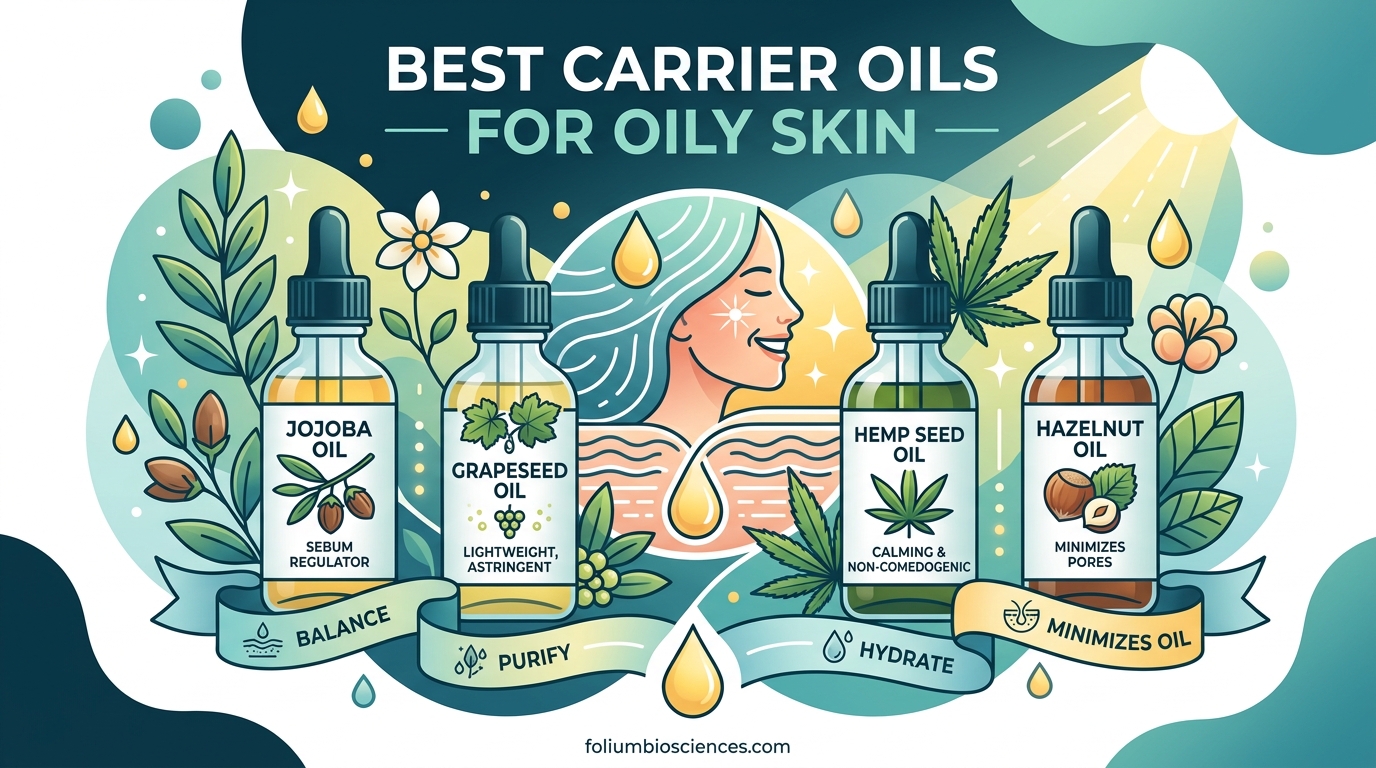
If you have oily skin, the idea of putting more oil on your face probably sounds counterintuitive. I get it. For years, I avoided facial oils entirely, convinced they would make my already-shiny T-zone worse. But here is the thing: not all oils are created equal, and choosing the right one can actually help balance your skin instead of making it greasier.
The secret lies in something called the comedogenic rating. This simple 0-to-5 scale tells you exactly how likely an oil is to clog your pores. When you understand this rating system, picking the best carrier oils for oily skin becomes straightforward rather than a guessing game.
In this guide, our team breaks down the comedogenic scale, ranks the top carrier oils for oily and acne-prone skin, and gives you a practical routine to follow. Whether you are blending essential oils or looking for a lightweight facial moisturizer, you will walk away knowing exactly which oils to use and which to avoid.
Table of Contents
What Is the Comedogenic Scale?
The comedogenic scale is a rating system from 0 to 5 that measures how likely an oil, butter, or ingredient is to clog your pores. A rating of 0 means the oil will not clog pores at all. A rating of 5 means it is almost guaranteed to cause congestion and breakouts for most people.
Here is what each level on the scale means:
- 0 – Will not clog pores. Safe for all skin types, including very oily and acne-prone skin.
- 1 – Very low likelihood of clogging pores. Excellent choice for oily and sensitive skin.
- 2 – Moderately low. Works well for most people with oily skin, though some may experience minor congestion.
- 3 – Moderate. Risky for oily skin but may work for normal or dry skin types.
- 4 – Fairly high. Likely to clog pores on oily and acne-prone skin. Best avoided if you are prone to breakouts.
- 5 – Very high. Almost certain to cause comedones (clogged pores) and should be avoided entirely on oily skin.
The term “comedogenic” comes from “comedo,” which is the medical word for a clogged hair follicle. When pores become blocked with excess sebum, dead skin cells, and oil, they form comedones. These show up as blackheads, whiteheads, or inflamed acne lesions. Understanding this scale helps you choose ingredients that support clear skin rather than sabotage it.
It is worth noting that the comedogenic scale is not perfect. Ratings were originally determined through rabbit ear testing in the 1970s and 1980s, and modern dermatology recognizes that individual skin chemistry plays a significant role. An oil rated 2 might cause breakouts for one person while working beautifully for another. That said, the scale remains one of the most useful tools available for narrowing down your options, especially if you have oily or acne-prone skin.
What Does Non-Comedogenic Mean?
Non-comedogenic simply means a product or ingredient has a low comedogenic rating and is unlikely to clog pores. When you see this term on skincare labels, it generally refers to products formulated with ingredients rated 0 to 2 on the comedogenic scale. For oily skin, non-comedogenic carrier oils should be your default choice.
Best Carrier Oils for Oily Skin Ranked by Comedogenic Rating
Below is our definitive ranked list of carrier oils for oily skin. We organized these from lowest comedogenic rating to highest among the oils recommended for oily skin types. All oils on this list rate 0 to 2 on the comedogenic scale and are backed by both scientific fatty acid profiles and real user experiences from skincare communities.
1. Sunflower Seed Oil (Comedogenic Rating: 0)
Sunflower seed oil is one of the very few carrier oils that earns a perfect 0 on the comedogenic scale, making it one of the safest bets for oily and acne-prone skin. It is lightweight, absorbs quickly, and leaves almost no greasy residue behind.
This oil is rich in linoleic acid (about 60-70% of its fatty acid profile) and vitamin E, both of which help strengthen the skin barrier without triggering excess sebum production. Many users on skincare forums report that sunflower oil feels “barely there” compared to heavier oils like jojoba or argan.
I like using cold-pressed, unrefined sunflower seed oil because it retains more of the natural antioxidants. It works well as a standalone facial oil or as a base for blending with essential oils. Apply just 2 to 3 drops to slightly damp skin after cleansing for the best absorption.
2. Squalane Oil (Comedogenic Rating: 0-1)
Squalane is technically a hydrogenated form of squalene, a lipid that your skin naturally produces. Because it mimics your skin’s own moisture molecules, it absorbs remarkably fast and feels weightless on the skin. The comedogenic rating sits at 0 to 1, making it a top-tier choice for oily faces.
One of the reasons squalane works so well for oily skin is that it does not trigger your sebaceous glands to produce more oil. Unlike some heavier oils that signal your skin to cut back on sebum (which can backfire), squalane simply hydrates without interfering with your natural oil production.
Forum users frequently recommend squalane as a gateway facial oil for people who are afraid of putting oil on oily skin. It is odorless, colorless, and mixes easily with other products. I have found that it layers beautifully under sunscreen and makeup without pilling or feeling heavy.
3. Grapeseed Oil (Comedogenic Rating: 1)
Grapeseed oil is widely considered the gold standard carrier oil for oily skin, and for good reason. It has a comedogenic rating of just 1 and boasts one of the highest linoleic acid contents of any carrier oil, typically around 70%. This makes it exceptionally lightweight and fast-absorbing.
Across Reddit skincare communities like r/SkincareAddiction and r/AsianBeauty, grapeseed oil consistently gets praised as one of the lightest carrier oils available. Users describe it as “watery” in texture, which is exactly what oily skin needs. It absorbs in seconds rather than minutes, and it will not leave a slick film on your face.
Grapeseed oil also contains proanthocyanidins, which are powerful antioxidants that help protect against environmental damage. Its astringent properties give it a mild tightening effect that many oily skin types appreciate. If I had to recommend just one carrier oil for oily skin, grapeseed would be at the top of my list.
4. Hemp Seed Oil (Comedogenic Rating: 1)
Hemp seed oil rates a 1 on the comedogenic scale and offers something most other carrier oils cannot match: a nearly perfect ratio of omega-3 to omega-6 fatty acids. This balanced fatty acid profile helps calm inflammation and supports the skin barrier without clogging pores.
Many people with oily, acne-prone skin also deal with redness and irritation, and hemp seed oil addresses both concerns simultaneously. Its linoleic acid content hovers around 55-60%, and its gamma-linolenic acid (GLA) content provides anti-inflammatory benefits that can soothe active breakouts.
The one downside is that unrefined hemp seed oil has a distinctively grassy, nutty scent and a green tint that some people find off-putting. It also has a shorter shelf life than most carrier oils and should be stored in the refrigerator to prevent rancidity. Despite these quirks, it remains one of the best carrier oils for oily skin available.
5. Rosehip Seed Oil (Comedogenic Rating: 1)
Rosehip seed oil carries a comedogenic rating of 1 and is prized for its skin-regenerative properties. It is particularly valuable for oily skin types dealing with post-acne marks, hyperpigmentation, or uneven texture because it is rich in vitamins A (in the form of trans-retinoic acid) and C.
Its linoleic acid content is impressive, typically around 45-50%, which helps regulate sebum while supporting skin repair. Users in DIY beauty communities frequently recommend rosehip oil for fading acne scars without causing new breakouts. I have personally found it works best when used at night since it has a slight golden tint and a mild earthy aroma.
Rosehip oil absorbs at a moderate pace. It is not quite as thin as grapeseed oil, but it is far from heavy. For oily skin, I suggest using it as a targeted treatment on areas with discoloration or scarring rather than applying it all over your face.
6. Evening Primrose Oil (Comedogenic Rating: 1)
Evening primrose oil earns a 1 on the comedogenic scale and is especially helpful for oily skin that tends to be inflamed or irritated. Its standout feature is a high concentration of gamma-linolenic acid (GLA), typically around 9-12%, which is rare among carrier oils.
GLA is a potent anti-inflammatory fatty acid that helps reduce redness and calm reactive skin. If your oily skin is also sensitive or tends to get red and angry-looking, evening primrose oil is worth serious consideration. Many users report visible improvement in skin texture and reduced inflammation after just a few weeks of consistent use.
This oil has a slightly thicker consistency than grapeseed or sunflower oil, so a little goes a long way. Two drops warmed between your palms and pressed gently onto the skin is plenty. It also blends well with lighter oils if you want to create a custom mixture.
7. Jojoba Oil (Comedogenic Rating: 2)
Jojoba oil sits at a comedogenic rating of 2, which is the highest I would recommend for oily skin. But it earns its spot on this list for a unique reason: jojoba oil is technically a liquid wax ester, not a true oil. Its molecular structure closely resembles human sebum, which allows it to “trick” your skin into thinking it has produced enough oil.
This sebum-mimicking quality can actually help regulate oil production over time. Some users report that consistent jojoba oil use leads to less shiny skin throughout the day. The mechanism is similar to how washing your face less often can sometimes reduce oiliness, your skin adjusts its output when it senses adequate moisture.
Jojoba oil is thicker than grapeseed or squalane, and some forum users note that it can feel slightly heavy on very oily skin. If you want to try it, start with just one or two drops mixed into your moisturizer rather than applying it straight. You can also blend it with a lighter oil like grapeseed to thin it out.
Quick Reference: Comedogenic Ratings of Top Oils for Oily Skin
Here is a side-by-side comparison of the best carrier oils for oily skin ranked by comedogenic rating. Use this as your cheat sheet when shopping for facial oils or blending your own formulations.
- Sunflower Seed Oil – Rating: 0 | Linoleic Acid: 60-70% | Best for: Lightweight daily hydration
- Squalane – Rating: 0-1 | N/A (not a triglyceride) | Best for: Weightless moisture, sensitive oily skin
- Grapeseed Oil – Rating: 1 | Linoleic Acid: ~70% | Best for: Fastest absorption, acne-prone skin
- Hemp Seed Oil – Rating: 1 | Linoleic Acid: 55-60% | Best for: Inflamed, irritated oily skin
- Rosehip Seed Oil – Rating: 1 | Linoleic Acid: 45-50% | Best for: Acne scars and hyperpigmentation
- Evening Primrose Oil – Rating: 1 | Linoleic Acid: 70-80% | Best for: Red, reactive oily skin
- Jojoba Oil – Rating: 2 | Linoleic Acid: ~5% | Best for: Sebum regulation over time
Carrier Oils to Avoid for Oily Skin
Just as important as knowing which oils to use is knowing which ones to skip. The following carrier oils have high comedogenic ratings and are far more likely to clog pores and trigger breakouts on oily skin.
Coconut Oil (Comedogenic Rating: 4)
Coconut oil is the most commonly misused oil in DIY skincare. Despite its popularity and pleasant scent, it rates a 4 on the comedogenic scale, which means it has a high likelihood of clogging pores. For oily and acne-prone skin, coconut oil on the face is almost a guaranteed path to breakouts.
The reason coconut oil is so comedogenic comes down to its fatty acid profile. It is extremely high in lauric acid and myristic acid, which are thick, heavy fatty acids that sit on top of the skin rather than absorbing. While coconut oil works wonderfully as a body moisturizer or hair treatment, it should stay far away from an oily face.
Forum users frequently share stories of coconut oil causing severe acne flares after just a few applications. One user described it as “the worst breakout of my life” after using coconut oil as a makeup remover for one week. The lesson is clear: popular does not always mean appropriate for your skin type.
Wheat Germ Oil (Comedogenic Rating: 5)
Wheat germ oil earns the highest comedogenic rating of 5, making it the single worst carrier oil you could put on oily skin. It is dense, sticky, and almost certain to cause clogged pores and acne even for people with dry skin.
While wheat germ oil is rich in vitamin E and has genuine nutritional benefits when taken internally, those benefits do not translate well to topical facial application for oily skin types. Save this one for dietary use or body care, not your face.
Cocoa Butter (Comedogenic Rating: 4)
Cocoa butter rates a 4 on the comedogenic scale and has a heavy, occlusive texture that is the opposite of what oily skin needs. It forms a thick barrier on the skin surface, trapping sebum and dead skin cells underneath. This environment is ideal for acne-causing bacteria to thrive.
Cocoa butter is excellent for body care, especially for dry areas like elbows, knees, and feet. But for facial use on oily skin, it is a hard pass. Even in small amounts blended with lighter oils, cocoa butter can tip the balance toward congestion.
Flaxseed Oil (Comedogenic Rating: 4)
Flaxseed oil rates a 4 on the comedogenic scale and is better known as a dietary supplement than a topical skincare ingredient. While it is rich in omega-3 fatty acids when consumed orally, applying it to oily facial skin is more likely to cause problems than benefits.
Flaxseed oil also oxidizes rapidly when exposed to air and light, which can generate free radicals that damage the skin. If you want the omega-3 benefits of flaxseed, take it internally as a supplement rather than applying it to your face.
Other High-Comedogenic Oils to Skip
A few additional oils deserve a quick mention on the “avoid” list for oily skin:
- Almond oil (Comedogenic Rating: 3) – Popular but too heavy for oily faces
- Avocado oil (Comedogenic Rating: 3) – Better suited for dry or mature skin
- Olive oil (Comedogenic Rating: 2-4, varies by source) – Inconsistent ratings make it risky
- Castor oil (Comedogenic Rating: 1, but very thick and sticky) – Low rating but heavy texture makes it pore-clogging in practice
Understanding Fatty Acids: Why Linoleic Acid Matters for Oily Skin
The comedogenic rating tells you whether an oil will clog your pores, but the fatty acid profile tells you why. Understanding the difference between linoleic acid and oleic acid is the key to making informed choices about carrier oils for oily skin.
Linoleic Acid vs Oleic Acid
Linoleic acid (omega-6) and oleic acid (omega-9) are the two most abundant fatty acids in carrier oils, and they behave very differently on the skin.
Linoleic acid is a lightweight, polyunsaturated fatty acid that absorbs quickly and helps maintain the skin barrier. It is thin, non-greasy, and has been shown to help regulate sebum production. Oils high in linoleic acid tend to have low comedogenic ratings, which is not a coincidence.
Oleic acid is a heavier, monounsaturated fatty acid that is rich and occlusive. It absorbs more slowly and is more likely to sit on the skin surface. Oils high in oleic acid (like olive oil and avocado oil) tend to have higher comedogenic ratings and are better suited for dry skin.
The Science Behind Oily Skin and Linoleic Acid Deficiency
Here is a finding that changed the way I think about oily skin: research published in the Journal of the American Academy of Dermatology found that people with acne and oily skin tend to have significantly lower levels of linoleic acid in their skin surface lipids compared to people with clear skin.
In other words, oily skin is not just producing too much oil. It is producing the wrong kind of oil, oil that is deficient in linoleic acid. This deficiency weakens the skin barrier, triggers inflammation, and creates an environment where acne bacteria can thrive.
This is why applying linoleic-acid-rich carrier oils to oily skin is not as contradictory as it sounds. You are replenishing the specific fatty acid your skin is lacking. When your skin gets the linoleic acid it needs, sebum production can normalize and the skin barrier strengthens.
Which Fatty Acids to Look For
When choosing carrier oils for oily skin, prioritize these fatty acids:
- Linoleic acid (omega-6) – The single most important fatty acid for oily skin. Look for oils with 50%+ linoleic acid content. Grapeseed, evening primrose, and sunflower oils are excellent sources.
- Gamma-linolenic acid (GLA) – A specialized omega-6 with potent anti-inflammatory properties. Found in evening primrose oil and hemp seed oil.
- Alpha-linolenic acid (omega-3) – Anti-inflammatory and calming. Hemp seed oil is one of the few carrier oils with meaningful omega-3 content.
The fatty acids you want to minimize for oily skin are oleic acid (omega-9), lauric acid, and myristic acid, all of which are heavier and more comedogenic.
How to Use Carrier Oils for Oily Skin: A Step-by-Step Routine
Knowing which oils are best for oily skin is only half the equation. You also need to know how to apply them correctly. Using too much, applying at the wrong time, or skipping key steps can turn even a non-comedogenic oil into a problem.
Step 1: Start With Clean, Slightly Damp Skin
Always apply carrier oils to freshly cleansed skin. The oil will trap in whatever is on your face, so you want that to be clean water, not dirt and old sebum. Leaving your skin slightly damp after cleansing actually helps the oil spread more evenly and absorb more effectively.
Step 2: Use the Right Amount
For oily skin, less is genuinely more. Start with 2 to 3 drops of carrier oil. Warm it between your palms for a few seconds, then gently press it onto your face using pressing and patting motions rather than rubbing. If your skin feels like it needs more, you can always add another drop. It is much harder to remove excess oil once it is applied.
Step 3: Apply in the Right Order
Your carrier oil should go on after cleansing and toning but before any heavier creams or sunscreen. The general rule of skincare layering is thinnest to thickest. Since carrier oils like grapeseed and squalane are lightweight, they sit early in the routine.
A simple oily skin routine with carrier oil looks like this: cleanser, toner (optional), carrier oil (2-3 drops), lightweight gel moisturizer (if needed), sunscreen (morning only).
Step 4: Frequency and Timing
If you are new to facial oils, start by applying your carrier oil just once a day, in the evening. Nighttime application gives the oil hours to absorb without interference from sunscreen, makeup, or environmental pollutants. Once your skin adjusts and you see no negative reactions, you can add a morning application as well.
Most oily skin types do well with daily or every-other-day application. If you notice increased shine or small bumps forming, cut back to every two or three days. Listen to your skin and adjust accordingly.
DIY Facial Oil Blend for Oily Skin
Want to create your own custom blend? Here is a simple recipe that combines the best carrier oils for oily skin into one balanced formula:
- 5 ml grapeseed oil (base – highest linoleic acid, lightest texture)
- 3 ml squalane (adds fast absorption and mimics natural skin lipids)
- 2 ml rosehip seed oil (adds skin-regenerative properties and vitamin A)
- Optional: 1 drop tea tree essential oil (for added antibacterial support)
Mix these in a clean, dark glass dropper bottle and shake gently before each use. Apply 2 to 3 drops in the evening after cleansing. This blend gives you the benefits of three complementary oils without any single one dominating the texture or feel. Store it in a cool, dark place and use it within 3 months.
FAQ
What carrier oils are good for oily acne-prone skin?
The best carrier oils for oily acne-prone skin are grapeseed oil (rating 1), squalane (rating 0-1), hemp seed oil (rating 1), sunflower seed oil (rating 0), and rosehip seed oil (rating 1). These oils have low comedogenic ratings and high linoleic acid content, which helps regulate sebum production without clogging pores.
What is the least comedogenic carrier oil?
Sunflower seed oil and squalane both have a comedogenic rating of 0, making them the least comedogenic carrier oils available. Sunflower seed oil is high in linoleic acid (60-70%) and absorbs quickly, while squalane mimics the skin’s natural lipids for weightless hydration.
Which oils are non-comedogenic for oily skin?
Non-comedogenic oils for oily skin include sunflower seed oil (rating 0), squalane (rating 0-1), grapeseed oil (rating 1), hemp seed oil (rating 1), rosehip seed oil (rating 1), and evening primrose oil (rating 1). Any oil rated 0-2 on the comedogenic scale is generally considered non-comedogenic.
Which oil is most comedogenic?
Wheat germ oil has a comedogenic rating of 5, making it the most comedogenic carrier oil. Coconut oil (rating 4) and cocoa butter (rating 4) are also highly comedogenic. These oils should be avoided entirely on oily and acne-prone skin as they are very likely to clog pores and cause breakouts.
What carrier oil is best for oily skin?
Grapeseed oil is generally considered the best carrier oil for oily skin due to its comedogenic rating of 1 and approximately 70% linoleic acid content. It is lightweight, fast-absorbing, and has mild astringent properties. Squalane and sunflower seed oil are also excellent choices.
Can oily skin use facial oils at all?
Yes, oily skin can absolutely benefit from facial oils. The key is choosing oils with low comedogenic ratings (0-2) and high linoleic acid content. These oils help replenish the specific fatty acids that oily skin often lacks, support the skin barrier, and can actually help regulate sebum production over time.
Final Thoughts on Choosing the Best Carrier Oils for Oily Skin
Finding the right carrier oils for oily skin does not have to be complicated. Stick with oils rated 0 to 2 on the comedogenic scale, prioritize those high in linoleic acid, and avoid heavy, pore-clogging options like coconut oil and cocoa butter.
My top three picks for oily skin are grapeseed oil for its unmatched lightness and linoleic acid content, squalane for its weightless feel and skin-identical structure, and sunflower seed oil for its perfect 0 comedogenic rating. Start with one, apply just a few drops to damp skin after cleansing, and give it at least two weeks before deciding if it works for you.
Always patch test a new oil on your jawline or inner arm for 24 hours before applying it to your full face. Your skin is unique, and even the lowest-rated oils can occasionally cause reactions in sensitive individuals. The comedogenic scale is a guide, not a guarantee, so pay attention to how your skin responds and adjust accordingly.