
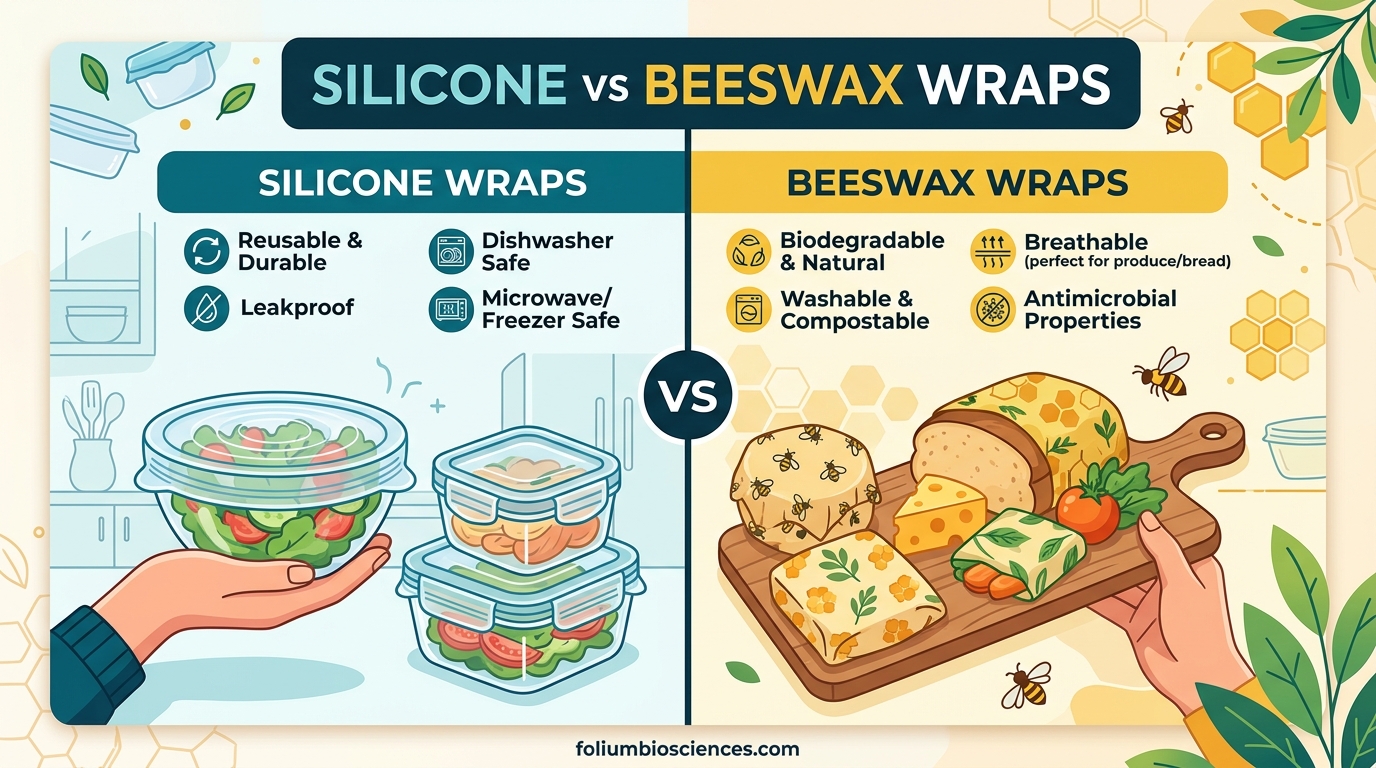
If you are trying to ditch single-use plastic wrap, you have probably narrowed it down to two popular alternatives: silicone wraps and beeswax wraps. Both are reusable, eco-friendly options that can cover bowls, wrap leftovers, and reduce kitchen waste. But when it comes to the question of silicone vs beeswax wraps and which food storage lasts longer and is safer, the answer depends on what you store, how often you use them, and what matters most to you.
Our team spent several months testing both types in a real kitchen. We covered bowls of leftover soup, wrapped sandwich halves, stored blocks of cheese, and froze portions of stew. We tracked how each wrap held up over time, whether flavors transferred, and how easy each one was to clean. This guide shares everything we learned so you can make the right call for your kitchen.
In this article, we break down the durability, safety, environmental impact, cleaning requirements, and best use cases for both silicone and beeswax food wraps. By the end, you will know exactly which type fits your habits, or whether the best answer is to keep both on hand.
Table of Contents
What Are Silicone Food Wraps?
Silicone food wraps are made from food-grade silicone, a synthetic material derived from silica (sand). Unlike plastic, silicone contains no petroleum-based polymers, BPA, or phthalates. The material is flexible, stretchy, and creates an airtight seal when pressed over the rim of a bowl, container, or piece of produce.
Silicone wraps come in several forms. Stretch lids are round covers in graduated sizes that snap over bowls and cups. Silicone bags function like zip-top bags but are thick and resealable. Flat silicone wraps work like large, flexible sheets that cling to surfaces. All three formats share the same core benefit: they are dishwasher-safe, freezer-safe, and heat-resistant up to about 400 degrees Fahrenheit.
One thing our team noticed right away is how easy silicone wraps are to use. You stretch a lid over a bowl, and it pops into place with a firm seal. No warmth from your hands required. No folding technique to master. That simplicity makes them a strong choice for busy weeknights when you just want to cover a pot of chili and move on.
What Are Beeswax Food Wraps?
Beeswax wraps are sheets of organic cotton fabric coated in a blend of beeswax, tree resin, and organic coconut oil. The coating makes the fabric slightly tacky and pliable. When you press a beeswax wrap around a piece of food or over a bowl, the warmth of your hands softens the wax just enough to mold it into shape. As it cools, it holds that shape and creates a breathable seal.
The breathable part is key. Unlike plastic wrap and silicone, which trap moisture, beeswax wraps allow a small amount of air exchange. This breathability helps certain foods stay fresh longer. Cheese, bread, and produce like avocados and lemons tend to do well with beeswax because they benefit from that slight airflow rather than suffocating in trapped humidity.
Beeswax wraps are fully biodegradable. When a wrap reaches the end of its usable life, you can cut it into strips and toss it into your compost bin, where it breaks down in about six months. That is a clear advantage if your primary goal is reducing what you send to a landfill.
Silicone vs Beeswax Wraps: Durability and Lifespan
Silicone wraps last significantly longer than beeswax wraps. A quality silicone stretch lid or bag can survive 2 to 5 years of regular use, and many users report their silicone wraps still going strong after 5 years. Beeswax wraps typically last 6 to 12 months with daily use before the wax coating wears thin and the wrap loses its stickiness.
The lifespan gap comes down to how each material handles repeated use. Silicone is fundamentally durable. It does not degrade from washing, freezing, or reheating. You can run a silicone lid through the dishwasher hundreds of times without noticeable wear. Beeswax, on the other hand, slowly sheds its coating with each use and wash. Hot water accelerates this process, which is why you must always wash beeswax wraps in cold water.
There is a workaround. You can refresh beeswax wraps by laying them on a baking sheet, sprinkling on extra beeswax pellets, and placing them in a low oven for a few minutes. This re-coating extends the life of the wrap, sometimes adding several more months. But it requires effort and supplies, and eventually the cotton fabric itself wears out.
From a cost perspective, one Reddit user in the r/ZeroWaste community put it plainly: a $15 set of beeswax wraps might last 8 months, while a $25 silicone bag can last up to 5 years. Over that 5-year window, you would replace beeswax wraps roughly 7 times, spending around $105 total. The silicone option costs $25 once. That makes silicone the clear winner on cost-per-year.
Another community member noted: “Wraps all the way. They can be refreshed over and over until the fabric dies. Silicone, however, lasts forever. It is the new plastic.” That comment captures the trade-off well. Beeswax has a shorter lifespan but feels more natural. Silicone lasts practically indefinitely but raises end-of-life questions.
Safety Comparison: Is Silicone or Beeswax Safer for Food?
Both silicone and beeswax wraps are safe for food storage, and both are significantly safer than conventional plastic wrap. Neither material contains BPA, phthalates, or the harmful chemical additives found in many single-use plastics. But there are nuances worth understanding.
Food-grade silicone is regulated by the FDA and has been extensively tested for food contact safety. It is inert, meaning it does not chemically react with food or beverages. Independent testing has consistently shown that high-quality silicone does not leach chemicals into food, even at high temperatures or when frozen. One common concern is whether silicone leaches into food when freezing. The short answer is no. Freezing temperatures do not cause silicone to break down or release any compounds into your food.
Beeswax wraps are made from natural ingredients: organic cotton, beeswax, tree resin, and coconut oil. None of these components contain microplastics. The wraps are free of synthetic chemicals, which gives them an edge for people who prioritize using only natural materials in contact with their food. Beeswax itself has natural antimicrobial properties thanks to propolis, a resin-like substance that bees use to seal their hives. Propolis has been shown to inhibit the growth of certain bacteria.
The main safety concern with beeswax wraps is moisture management. Because the cotton fabric can absorb water, beeswax wraps need to be dried thoroughly after washing. If stored damp, mold can develop on the fabric over time as the wax coating wears thin. This is not a safety issue with silicone, which is non-porous and does not absorb moisture.
For raw meat and poultry, neither type of wrap is recommended. Both the FDA and food safety experts advise using dedicated containers with tight lids for raw proteins. Silicone bags work for marinating meats since they can be thoroughly sanitized afterward, but you should avoid using the same silicone bag for raw meat and ready-to-eat foods.
Environmental Impact: Biodegradable vs Long-Lasting
The environmental comparison between silicone and beeswax wraps presents an interesting tension. Beeswax wraps are made from renewable, biodegradable materials and decompose in a compost pile within about 6 months. Silicone wraps are not biodegradable, but they can last for years, which means you generate far less waste over time.
Beeswax wraps biodegrade in compost in about 6 months, compared to over 1,000 years for conventional plastic wrap. That is a dramatic improvement. Every beeswax wrap you use replaces countless sheets of single-use plastic. And because the materials (cotton, beeswax, tree resin, coconut oil) are all natural, there is no concern about leaving microplastics behind in the soil.
Silicone occupies a middle ground. It is not derived from petroleum like plastic, but it is also not natural. It is made from silica, which is abundant, and the manufacturing process has a lower environmental impact than plastic production. The real environmental benefit of silicone is its longevity. One silicone lid that lasts 5 years replaces hundreds of sheets of plastic wrap that would otherwise end up in landfills.
The end-of-life question matters here. When a silicone wrap finally wears out, you cannot compost it. Some recycling centers accept silicone, but many do not. You may need to look for specialized silicone recycling programs. Beeswax wraps, by contrast, simply go into the compost bin.
Our take: if your top priority is zero waste at end of life, beeswax is the better choice. If your priority is minimizing total waste generated over time, silicone wins because you replace it far less often. Both are dramatically better than plastic wrap.
Cleaning and Maintenance for Both Wrap Types
Proper cleaning is the single biggest factor in how long your wraps last. Here is how to care for each type.
Beeswax wraps: Always wash in cold water. Use a mild dish soap and a soft sponge or your hands. Never use hot water, as it will melt the wax coating and ruin the wrap. After washing, drape the wrap over a dish rack or lay it flat to air dry completely before storing. Do not crumple or fold a damp wrap. Store your wraps flat or rolled in a cool, dry place away from direct sunlight.
A common mistake people make is using hot water on beeswax wraps. Even moderately warm water can start to soften the coating. If you notice your wrap losing its stickiness, you can refresh it by placing it on a parchment-lined baking sheet, adding a thin layer of beeswax pellets, and baking at 170 degrees Fahrenheit for about 5 minutes. Let it cool, and the wrap should regain its tack.
Silicone wraps: Toss them in the dishwasher. Silicone is dishwasher-safe and can handle high heat without damage. If you prefer to hand wash, use warm soapy water and rinse clean. For silicone bags, turn them inside out to clean the interior thoroughly. One occasional issue with silicone is odor absorption. Strong-smelling foods like garlic or curry can leave a scent behind. A soak in a mixture of warm water and baking soda for 30 minutes usually removes lingering odors.
The key difference in maintenance is simplicity. Silicone requires almost no special care. Beeswax wraps demand more attention: cold water only, thorough drying, and periodic re-waxing. If you are the type of person who wants a low-maintenance kitchen routine, silicone is the easier option.
Best Use Cases: When to Reach for Each Type
After months of testing, our team found that the two types of wraps actually complement each other better than they compete. Here is what works best with each one.
Reach for beeswax wraps when you are:
- Wrapping bread, muffins, or pastries to keep them fresh without trapping moisture
- Covering blocks of cheese (the breathable seal prevents sliminess)
- Packing sandwiches or wraps for lunch (the wraps mold nicely around the food)
- Storing cut produce like avocados, lemons, onions, or half-used vegetables
- Covering bowls of dry foods like salads, trail mix, or fruit at a picnic
Reach for silicone wraps when you are:
- Covering bowls of soup, stew, or other liquids (the airtight seal prevents spills)
- Freezing leftovers or meal-prep portions (silicone handles freezing without cracking)
- Reheating food in the microwave (silicone is microwave-safe; beeswax is not)
- Storing oily or wet foods that would stain or saturate beeswax wraps
- Covering containers of leftovers that will sit in the fridge for several days
One user from a zero-waste Facebook group summed it up well: “I love beeswax wraps for packing lunches and covering dry foods, and silicone covers for liquids, leftovers, and fridge storage.” That matches our experience almost exactly.
There are also foods you should avoid with each type. Beeswax wraps should not be used with raw meat, hot foods, or very wet items. The wax can melt on contact with heat, and the cotton can absorb liquids that lead to mold. Silicone wraps should not be used with very sharp objects that could puncture them, and some users report that strong-smelling foods leave lasting odors.
Head-to-Head Quick Comparison
Here is a side-by-side breakdown of the key differences between silicone and beeswax wraps to help you decide at a glance.
Lifespan: Silicone wins with 2 to 5+ years compared to 6 to 12 months for beeswax.
Safety: Both are safe and non-toxic. Silicone is inert and FDA-approved. Beeswax uses all-natural ingredients with no microplastics.
Maintenance: Silicone is dishwasher-safe and low effort. Beeswax requires cold-water washing and careful drying.
Freezer use: Silicone excels in the freezer. Beeswax can become brittle and crack at very low temperatures.
Microwave use: Silicone is microwave-safe. Beeswax is not (the wax melts).
Breathability: Beeswax allows airflow, which benefits cheese, bread, and some produce. Silicone creates an airtight seal.
End of life: Beeswax is fully compostable. Silicone is not biodegradable but some facilities accept it for recycling.
Cost over 5 years: Silicone costs roughly $25 total. Beeswax costs approximately $105 over the same period (replacing wraps 7 times).
Frequently Asked Questions
Does beeswax wrap have microplastics?
No, beeswax wraps do not contain microplastics. They are made from organic cotton fabric coated with beeswax, tree resin, and coconut oil. All of these ingredients are natural materials that break down without leaving synthetic particles behind.
Does silicone leach into food when freezing?
No, food-grade silicone does not leach chemicals into food at freezing temperatures. Silicone is an inert material that remains stable across a wide temperature range, from the freezer to the oven. Independent testing has confirmed that freezing does not cause silicone to release any compounds into food.
What are the disadvantages of beeswax wraps?
Beeswax wraps have several drawbacks: they last only 6 to 12 months before losing stickiness, cannot be used with hot foods or in the microwave, require cold-water washing only, are not suitable for raw meat or very wet foods, and can develop mold if not dried thoroughly after washing. They also become brittle in the freezer.
Is silicone safer for food storage?
Food-grade silicone is considered very safe for food storage. It is FDA-approved, inert (meaning it does not react with food), and free of BPA, phthalates, and other harmful chemicals found in plastic. It does not leach into food at any normal cooking or storage temperature. Both silicone and beeswax wraps are safer than conventional plastic wrap.
Can bacteria grow in beeswax?
Beeswax itself has natural antimicrobial properties thanks to propolis, which inhibits bacterial growth. However, the cotton fabric in beeswax wraps can harbor bacteria if the wrap is not washed and dried properly. If food residue is left on the wrap or if it is stored while damp, bacteria and mold can develop on the fabric over time. Proper cleaning and thorough drying prevent this issue.
Do beeswax wraps go moldy?
Yes, beeswax wraps can develop mold if they are not dried completely before storage. As the wax coating wears down over time, water can penetrate the cotton fabric, creating conditions where mold grows. To prevent mold, always wash your beeswax wraps in cold water, dry them thoroughly in a well-ventilated area, and store them flat in a dry location. If you spot mold, the wrap should be discarded or composted.
Final Verdict: Which Food Storage Wrap Should You Choose?
After comparing silicone vs beeswax wraps across durability, safety, environmental impact, and everyday practicality, our team reached a clear conclusion: both are excellent alternatives to plastic wrap, and the best choice depends on how you cook and store food.
Choose silicone wraps if you want a low-maintenance, long-lasting option that handles liquids, the freezer, and the microwave. A single set of silicone lids or bags can last 5 years or more, making them the most cost-effective and durable choice for everyday kitchen use.
Choose beeswax wraps if your priority is using natural, biodegradable materials and you mainly store dry foods like bread, cheese, and sandwiches. They are the better environmental choice at end of life, even though they require more care and need replacing more often.
The best approach for most kitchens? Keep both. Use beeswax wraps for dry foods and lunch-packing, and silicone wraps for liquids, leftovers, and freezer storage. Together, they cover every food-storage scenario without a single sheet of plastic wrap in sight.