
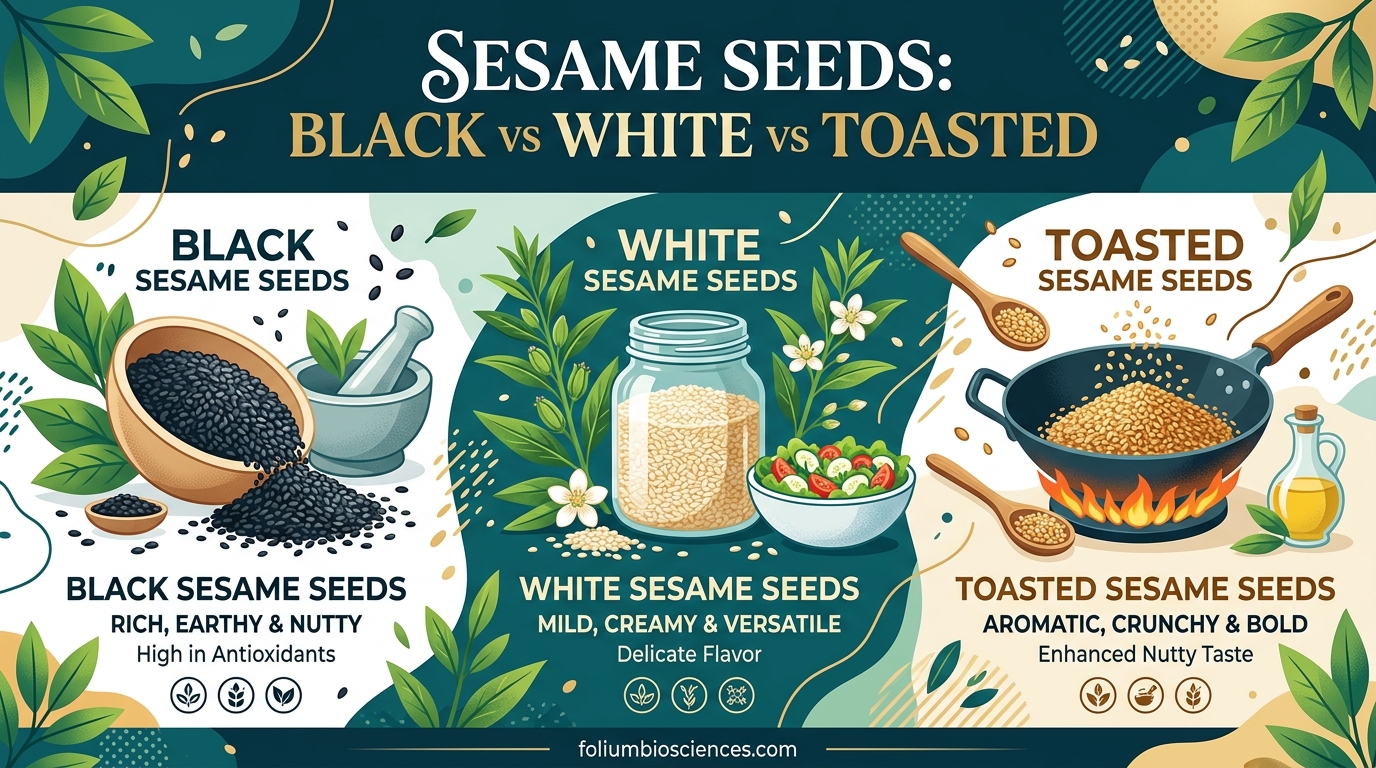
Sesame seeds are tiny powerhouse ingredients that have been cultivated for thousands of years across Asia, Africa, and the Middle East. Whether you are preparing a batch of homemade tahini, seasoning sushi rice, or adding crunch to fresh salads, understanding the differences between black, white, and toasted sesame seeds can elevate your cooking and help you make healthier choices.
These three varieties are not created equal when it comes to flavor, nutrition, and ideal culinary applications. Black sesame seeds retain their hull and offer a more intense, nutty flavor with superior nutritional content. White sesame seeds have had their hulls removed, creating a milder taste perfect for desserts and light dishes. Toasted sesame seeds, regardless of color, deliver an enhanced aromatic profile that can transform ordinary recipes into extraordinary meals.
Table of Contents
What Are Sesame Seeds? Understanding Hulled vs Unhulled
Sesame seeds come from the Sesamum indicum plant, one of the oldest oilseed crops cultivated by humanity. The primary distinction between black and white sesame seeds lies in the hull, the outer protective layer of the seed.
Black sesame seeds are unhulled, meaning they retain their dark outer hull. This hull is rich in fiber, minerals, and antioxidants, which is why black sesame is often considered the more nutritious variety. The hull also contributes to the slightly bitter undertone that black sesame is known for.
White sesame seeds have been mechanically hulled, removing the outer layer to reveal the creamy-white inner seed. This process creates a smoother texture and milder flavor, but it also strips away some of the nutrients found in the hull.
Toasted sesame seeds are not a separate variety but rather a preparation method applied to either black or white sesame seeds. Toasting enhances the natural oils in the seeds, deepening their flavor and creating that irresistible aromatic quality you smell in Asian kitchens.
Key Takeaway
The hull is the key differentiator: black sesame retains its hull for maximum nutrition, white sesame has the hull removed for milder flavor, and toasted refers to a preparation method that enhances aroma regardless of seed color.
Flavor Comparison: Black vs White vs Toasted Sesame Seeds
Understanding the flavor profiles of each sesame type helps you choose the right seed for your dish and know when to substitute one for another.
Black Sesame Seeds
Black sesame offers a bold, intense nutty flavor with subtle bitter undertones from the intact hull. The taste is more complex and robust compared to white sesame, with deeper earthiness that pairs exceptionally well with savory Asian dishes, rich sauces, and hearty grain bowls.
White Sesame Seeds
White sesame has a sweeter, creamier, and more delicate nutty flavor. Without the hull, the taste is less intense and slightly sweet, making white sesame the preferred choice for baking, desserts, and applications where a milder background flavor is desired.
Toasted Sesame Seeds
Toasting transforms any sesame seed into a more aromatic, rich, and deeply flavored ingredient. The heat releases natural oils, creating a nuttier, more pronounced taste with slightly caramelized notes. Toasted black sesame, in particular, delivers an intensely aromatic experience that can elevate simple dishes like rice, noodles, and salads.
As one home cook noted from forum discussions: “Black sesame is nuttier, white is milder — just different intensity levels. But when you toast either one, the flavor completely transforms.”
Texture and Appearance Differences
Beyond flavor, the visual and textural characteristics of each sesame type influence both cooking applications and final presentation.
| Characteristic | Black Sesame | White Sesame | Toasted Sesame |
|---|---|---|---|
| Color | Deep black to dark brown | Cream to off-white | Golden to dark brown (any color) |
| Size | Slightly smaller, hull visible | Smaller after hulling, smooth | Varies by starting type |
| Texture | Slightly rough from hull | Smooth, smaller | Crunchier, more fragile |
| Aroma | Subtle, earthy | Mild, slightly sweet | Intensely aromatic, nutty |
The visual impact matters in cooking: white sesame provides visual contrast on dark foods like burger buns or salads, while black sesame creates dramatic visual appeal in rice dishes, noodles, and desserts like black sesame ice cream.
Nutritional Comparison: Black vs White vs Toasted Sesame Seeds
When it comes to nutrition, the differences between these three types are significant, primarily due to the presence or absence of the hull. Here is a detailed comparison of key nutrients per 100 grams:
| Nutrient (per 100g) | Black Sesame | White Sesame | Toasted (Black) |
|---|---|---|---|
| Calories | 573 kcal | 582 kcal | 567 kcal |
| Protein | 17.7g | 18.3g | 17.0g |
| Fat | 49.7g | 50.4g | 48.5g |
| Carbohydrates | 23.4g | 23.4g | 23.4g |
| Dietary Fiber | 11.8g | 11.9g | 11.8g |
| Calcium | 975mg | 60mg | 960mg |
| Iron | 14.6mg | 3.8mg | 14.5mg |
| Magnesium | 345mg | 350mg | 340mg |
The most striking difference is in calcium content: black sesame contains approximately 975mg of calcium per 100g, compared to only 60mg in white sesame. This dramatic difference occurs because the hull, which is retained in black sesame, is where most of the plant’s calcium is concentrated.
Similarly, black sesame delivers nearly four times more iron than white sesame, making it particularly valuable for those following plant-based diets or managing iron deficiency.
Health Benefits: Which Type Is Best for You?
Each sesame type offers unique health advantages depending on your dietary needs and health goals.
Black Sesame Seeds
- Superior mineral content: With significantly higher calcium and iron, black sesame supports bone health and helps prevent anemia
- Rich in antioxidants: Contains anthocyanins (responsible for the dark color) which combat oxidative stress
- Contains sesamin and sesamolin: These unique lignans support cholesterol management and have anti-inflammatory properties
- High fiber content: Supports digestive health and helps maintain stable blood sugar levels
White Sesame Seeds
- Easier to digest: Without the hull, some people find white sesame gentler on the digestive system
- High in sesamin: A lignan unique to sesame that supports cardiovascular health
- Smooth texture: Ideal for making smooth tahini and hummus without bitter notes
- Versatile flavor: Works in sweet and savory applications without overpowering dishes
Toasted Sesame Seeds
- Enhanced nutrient absorption: Toasting helps break down anti-nutrients like phytates, making minerals more bioavailable
- Higher tocopherol content: Toasting increases vitamin E (tocopherol) levels, which act as antioxidants
- Better mineral absorption: Heat treatment improves calcium and iron absorption in the body
- Aromatic and satisfying: The enhanced flavor encourages use in everyday cooking, supporting consistent nutrient intake
Culinary Uses and Applications
Understanding the best uses for each type ensures you get the most flavor and nutrition from every dish.
Black Sesame Seeds
Black sesame shines in traditional Asian cuisine and savory applications where its bold flavor can stand up to strong ingredients:
- Seasoning for sushi rice and rice bowls
- Noodle dishes and sesame sauce
- Korean dishes like bibimbap and Korean sesame chicken
- Chinese soups and congee toppings
- Homemade black sesame tahini
- Asian desserts like black sesame soup (Tong Sui)
White Sesame Seeds
White sesame is the versatile all-purpose sesame for both sweet and savory cooking:
- Baking: hamburger buns, bread toppings, crackers
- Homemade tahini and hummus
- Salad dressings and vinaigrettes
- Hummus and dip garnishes
- Middle Eastern and Mediterranean dishes
- Candy and confectionery coatings
Toasted Sesame Seeds
Toasting brings out the best in any sesame variety. Use toasted sesame as a finishing touch:
- Stir-fry and noodle dish garnish
- Sushi bowl toppings
- Salad garnishes (especially for Asian-inspired salads)
- Soup toppings
- Rice bowl finishes
- Anywhere you want an aromatic crunch
Buying Guide: How to Choose Quality Sesame Seeds
Selecting high-quality sesame seeds ensures better flavor and maximum nutritional benefit. Here is what to look for:
What to Check When Buying
- Color consistency: Quality seeds should have uniform coloring without discolored or faded seeds
- No added oils: Avoid products that list oils or fats in the ingredients – pure sesame should only contain sesame seeds
- Organic options: Consider organic to avoid potential pesticide residues, especially for imported sesame
- Whole seeds: Avoid broken or crushed seeds when possible, as they oxidize faster
- Fresh scent: Quality sesame should have a mild, nutty aroma. Stale seeds indicate age and potential flavor loss
Storage Tips for Maximum Freshness
- Cool, dark location: Store in a cupboard away from heat sources and direct sunlight
- Airtight container: Use sealed glass jars or containers to prevent moisture and air exposure
- Refrigeration: For extended shelf life, store in the refrigerator – this is especially recommended for toasted sesame
- Shelf life: Unopened packages last 6-12 months; after opening, use within 2-3 months for best quality
- Freezer storage: For long-term storage, freezing in airtight containers preserves flavor for up to one year
Substitution Guide: Can You Swap Black for White?
The short answer is yes, you can substitute black sesame for white sesame (and vice versa) in most recipes. However, there are important considerations to keep in mind:
Substitution Ratio: 1:1
You can generally substitute black and white sesame seeds at a 1:1 ratio in most recipes. The key adjustments needed are for flavor intensity and visual appearance.
When Substituting Black for White
- The flavor will be more intense and slightly bitter
- Your dish will have a darker appearance
- Consider reducing quantity by 20-30% if you prefer milder flavor
- Ideal for savory dishes where the bold flavor complements other ingredients
When Substituting White for Black
- Expect a milder, sweeter flavor profile
- The visual appearance will be lighter
- You may need to add slightly more to achieve the desired sesame presence
- Best for baking, desserts, and light-colored dishes
Substituting Toasted Sesame
Toasted sesame can substitute for raw sesame of the same color at a 1:1 ratio. The flavor will be more pronounced and aromatic. If using toasted to replace raw, you may want to use slightly less to avoid overwhelming the dish with the toasted flavor.
Side Effects, Allergies, and Precautions
While sesame seeds are generally safe for most people, there are important precautions to consider.
Sesame Allergy Warning
Sesame is one of the top nine allergens recognized in the United States and must be declared on food labels. Sesame allergies can be severe and potentially life-threatening. If you have any sesame allergy, avoid all forms of sesame seeds and products containing sesame.
Who Should Be Cautious with Sesame Seeds
- Those with sesame allergies: Must avoid all sesame products completely
- People with kidney stones: Sesame contains oxalates which can contribute to calcium-oxalate stones – moderate intake recommended
- Those on blood thinners: Sesame contains vitamin K which can interfere with warfarin and similar medications – consult your healthcare provider
- Pregnant and nursing women: While sesame is nutritious, consult your doctor about any dietary concerns
- People new to sesame: Start with small amounts to gauge tolerance, especially with black sesame due to its stronger flavor
What is the healthiest form of sesame seeds?
Black sesame seeds are generally considered the healthiest form due to their intact hull, which contains higher levels of calcium, iron, fiber, and antioxidants. The hull also provides unique compounds like sesamin and sesamolin. However, white sesame seeds are easier to digest and still offer valuable nutrition, making both varieties worthwhile additions to a balanced diet.
Which is healthier, toasted or untoasted sesame seeds?
Toasted sesame seeds offer enhanced nutrient absorption because the toasting process helps break down anti-nutrients like phytates, making minerals more bioavailable. They also contain higher levels of certain antioxidants like tocopherols (vitamin E). However, untoasted sesame retains more of certain heat-sensitive nutrients. For maximum health benefits, consider using a mix of both in your cooking.
Is black sesame healthier than white sesame?
Yes, black sesame is generally more nutrient-dense than white sesame because the hull remains intact. Black sesame contains approximately 975mg of calcium per 100g compared to just 60mg in white sesame. It also provides nearly four times more iron (14.6mg vs 3.8mg) and contains unique antioxidants like anthocyanins that white sesame lacks. The hull contains most of the plant’s mineral content.
Who should not consume black sesame seeds?
People with sesame allergies should avoid all sesame seeds. Those with kidney stones or calcium-oxalate issues should moderate their intake due to the high calcium and oxalate content. People taking blood-thinning medications should consult their doctor because sesame contains vitamin K. Additionally, those with digestive sensitivity may want to start with small portions of black sesame due to its higher fiber content from the intact hull.
Conclusion: Making the Right Choice for Your Needs
Understanding the differences between black, white, and toasted sesame seeds empowers you to make better culinary and health decisions. Each variety has its place in a well-stocked kitchen.
Consider your health goals, the requirements of your dish, and your personal flavor preferences when selecting sesame seeds. With this knowledge, you can confidently choose the right sesame variety to enhance your cooking and support your wellbeing.