
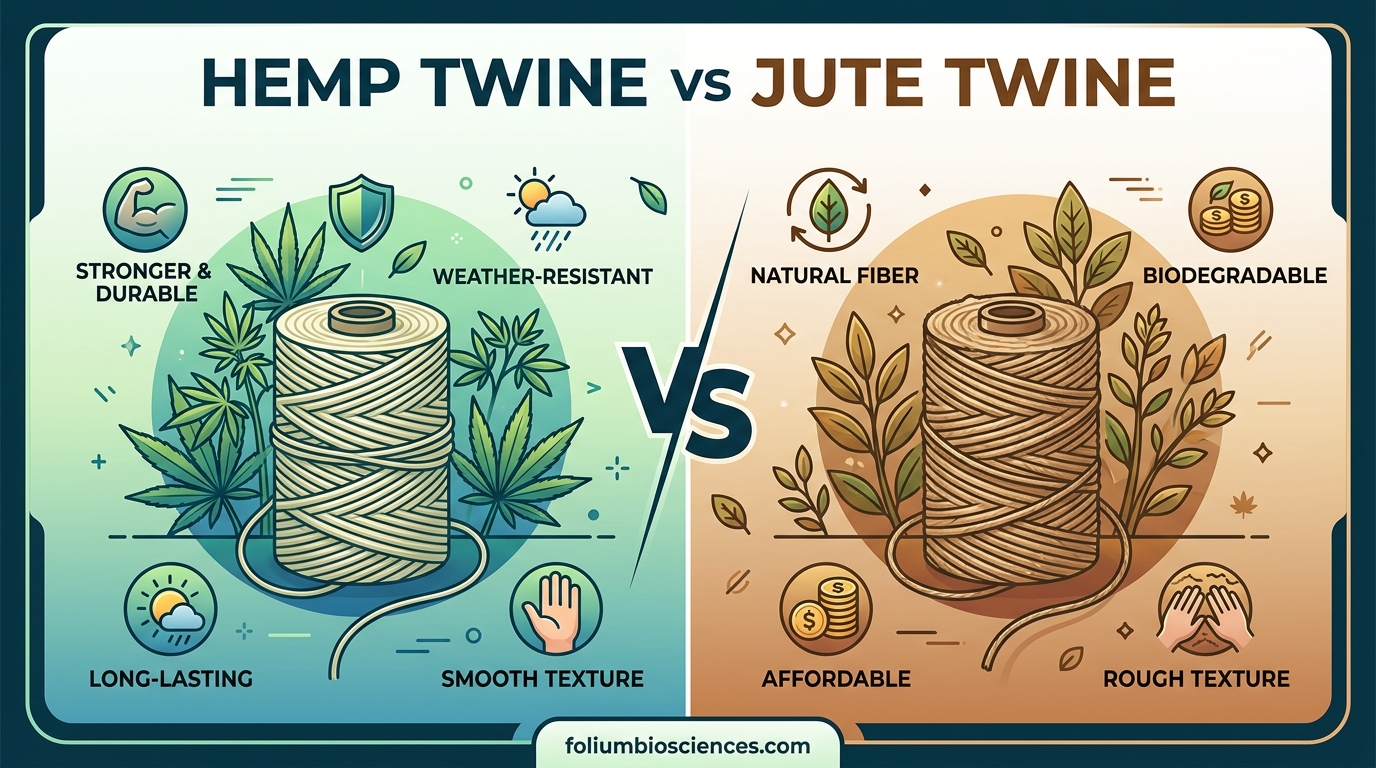
When it comes to supporting your plants naturally, the choice between hemp twine and jute twine can significantly impact your gardening success. Both are popular eco-friendly alternatives to synthetic twine, but they perform very differently under garden conditions. This comprehensive guide breaks down everything you need to know to make the right choice for your garden.
What Is Hemp Twine?
Hemp twine is a strong, durable natural fiber cord produced from the Cannabis sativa plant. Despite its association with marijuana, industrial hemp contains minimal THC and is legally cultivated for its versatile fibers. Hemp has been used for thousands of years in rope making, textile production, and paper manufacturing, and it remains one of the most sought-after natural fibers today.
For gardeners, hemp twine offers exceptional practical benefits. The fibers are naturally resistant to moisture, UV radiation, and microbial decay. Hemp twine typically features a tensile strength of approximately 250 MPa (megapascals), making it one of the strongest natural plant fibers available. When you handle hemp twine, you’ll notice its slightly rough texture and substantial feel, which provides excellent grip when tying plants.
The durability of hemp twine translates directly to garden applications. A single piece of quality hemp twine can last through multiple growing seasons when properly maintained. This longevity makes hemp twine particularly valuable for permanent installations like trellis systems, raised bed borders, and support structures for perennial plants. The fiber also softens slightly with exposure to moisture and handling, making it easier to work with while maintaining its structural integrity.
Hemp twine’s natural resistance to mold and mildew gives it a significant advantage in humid garden environments. Unlike synthetic ropes that accumulate these issues over time, hemp actually performs better in wet conditions. The fibers compact slightly when wet, increasing their density and strength. This characteristic makes hemp twine especially suitable for gardens in regions with frequent rainfall or high humidity levels.
What Is Jute Twine?
Jute twine is crafted from fibers of the Corchorus plant, which is native to regions across Asia and primarily grown in Bangladesh and India. Often called the “golden fiber” due to its shiny, golden-brown appearance, jute has been a cornerstone of the natural fiber industry for centuries. It appears in diverse products from burlap bags to carpet backing, and of course, gardening twine.
In terms of tensile strength, jute twine typically measures around 200 MPa, making it noticeably weaker than hemp. While this difference of 50 MPa might seem minor on paper, it becomes significant when supporting heavy plants or enduring the stress of wind and weather. Jute fibers are softer and more flexible than hemp, which makes them pleasant to work with but less capable of bearing heavy loads over extended periods.
The primary challenge with jute twine in garden applications is its high moisture absorption rate. Jute can absorb up to 25% of its weight in water without feeling damp, and this characteristic causes it to degrade faster in outdoor environments. When exposed to repeated wetting and drying cycles, jute fibers weaken and eventually break down. This moisture sensitivity means jute twine typically provides reliable service for only a single growing season in most outdoor garden settings.
Despite these limitations, jute twine remains popular among gardeners for several valid reasons. It is significantly more affordable than hemp, making it attractive for large garden projects or budget-conscious gardeners. Jute’s softer texture makes it ideal for delicate plants that might be damaged by harsher materials. Additionally, jute twine works excellently for indoor gardening applications, container plants, and short-term seasonal supports where longevity is less critical.
Quick Comparison: Hemp Twine vs Jute Twine
For those who want the key differences at a glance, here is a comprehensive comparison table summarizing the most important factors when choosing between hemp and jute twine for garden use:
| Feature | Hemp Twine | Jute Twine |
|---|---|---|
| Tensile Strength | 250 MPa | 200 MPa |
| Typical Garden Lifespan | 2-3 growing seasons | 1 growing season |
| Water Resistance | Excellent (naturally water-resistant) | Poor (absorbs moisture readily) |
| Mold/Mildew Resistance | High resistance | Low resistance |
| UV Resistance | Good | Moderate |
| Texture | Rougher, more substantial | Softer, more pliable |
| Cost | 20-40% higher than jute | More budget-friendly |
| Best For | Permanent supports, heavy plants, humid climates | Temporary supports, indoor plants, dry climates |
| Biodegradability | Fully biodegradable (6-12 months) | Fully biodegradable (6-12 months) |
| Grip Security | Excellent (holds knots securely) | Good (knots may slip slightly) |
Strength and Durability: The Technical Details
Understanding the technical specifications behind hemp twine and jute twine helps explain their practical performance differences in garden settings. Both fibers are classified as bast fibers, meaning they come from the inner phloem of plants, but their structural compositions differ in ways that affect strength and longevity.
Tensile Strength Comparison
Tensile strength measures how much pulling force a material can withstand before breaking. Hemp twine’s tensile strength of approximately 250 MPa places it among the strongest natural plant fibers available. By comparison, jute twine’s 200 MPa tensile strength represents a meaningful reduction in load-bearing capacity. This 25% difference in strength becomes particularly relevant when supporting heavy fruiting plants like tomatoes, cucumbers, or squash that require reliable support throughout the growing season.
In practical terms, hemp twine handles the weight of mature plants and wind stress far better than jute. Hemp maintains its integrity even when wet, whereas jute’s strength decreases more significantly with moisture exposure. This means hemp twine provides consistent support from spring planting through fall harvest and into subsequent seasons, while jute twine may need replacement mid-season or at the very least by the following spring.
Longevity in Garden Conditions
When considering how long each twine type lasts in outdoor garden conditions, the differences are substantial. Quality hemp twine typically remains functional for two to three growing seasons when used for plant support. Some gardeners report even longer service life in drier climates or when the twine is protected from direct weathering. This longevity means your initial investment in hemp twine spreads across multiple years of use, potentially making it more economical despite the higher upfront cost.
Jute twine, conversely, generally provides reliable service for a single growing season. By the end of one season, most jute twine shows visible signs of deterioration including fraying, color fading, and reduced strength. In particularly wet or humid conditions, jute may begin breaking down mid-season. This shorter lifespan means you will need to budget for replacement twine annually, adding to the long-term cost of using jute in your garden.
Real-World Performance Implications
Consider a tomato garden where you are supporting 20 plants on stakes. Using hemp twine, you might spend $30-40 on twine that serves you reliably for three seasons. With jute at $15-25 per season, your costs over three years would be $45-75, plus the labor of replacing all the twine each year. The hemp investment not only saves money but also reduces the time and effort spent on annual twine replacement.
Weather Resistance: How Each Handles the Elements
Garden twine faces constant exposure to weather extremes throughout the growing season and beyond. Rain, sun, temperature fluctuations, and humidity all affect how natural fiber twine performs. Understanding these effects helps you choose the right twine for your local climate and garden conditions.
Water and Moisture Performance
Hemp twine’s natural water resistance stems from its low moisture absorption rate and dense fiber structure. When hemp gets wet, the fibers actually compact slightly, which can increase the twine’s overall strength temporarily. This characteristic makes hemp twine ideal for gardens that receive regular rainfall, overhead irrigation, or morning dew. You can confidently use hemp twine in sprinkler systems without worrying about accelerated deterioration.
Jute twine absorbs water readily due to its porous fiber structure. While this absorption makes jute feel softer and more pliable initially, it also creates conditions favorable for mold growth, fiber decomposition, and physical weakening. In constantly moist environments, jute twine may begin degrading within weeks of exposure. This sensitivity to moisture limits jute’s effectiveness in humid climates, poorly drained garden areas, and any application involving regular water contact.
UV Radiation Effects
Both hemp and jute twine are affected by prolonged sun exposure, though hemp handles UV stress better. Extended sunlight causes natural fibers to gradually break down through a process called photodegradation. Hemp’s denser fiber structure and higher lignin content provide some natural UV protection, slowing this degradation process. Jute’s lighter, more porous fibers break down faster under strong sunlight, resulting in quicker fiber brittleness and reduced tensile strength.
For gardens in southern climates with intense summer sun, hemp twine’s superior UV resistance translates to longer functional lifespan. If you primarily garden in northern regions with milder sun exposure, both materials will perform adequately, though hemp still maintains its advantages in longevity.
Temperature Fluctuation Tolerance
Natural fiber twine performs well across typical garden temperature ranges. Both hemp and jute tolerate freeze-thaw cycles without significant damage when dry. However, moisture-saturated jute suffers more damage during freezing, as the expansion of water within the fibers causes physical breakage. Hemp’s lower moisture content even when wet means it generally survives winter conditions better, particularly if the twine is not bearing significant load during frozen periods.
Season-by-Season Performance
Spring: Both twines work well for initial plant support. Hemp’s stiffness may require slightly more effort to tie securely, while jute’s pliability makes it easy to work with in cooler temperatures.
Summer: Hemp maintains strength and grip despite heat and sun exposure. Jute may begin showing signs of UV degradation and moisture-related weakening, especially in humid regions.
Fall: Hemp continues performing reliably while jute approaches the end of its serviceable lifespan. Both materials handle harvest activities well.
Winter: Hemp survives freeze-thaw cycles better. If left on perennial plant supports, hemp will likely persist into spring while jute may need replacement.
Garden Applications: Where Each Twine Excels
The best twine for your garden depends heavily on what you are growing and how you plan to use it. Here is a detailed breakdown of optimal applications for each twine type to help you make the most appropriate choice for your specific gardening situation.
Best Uses for Hemp Twine
- Tomato plant support: Hemp’s strength handles the weight of mature tomato plants and their fruit without stretching or breaking. Use standard tie-and-stake method or create Florida weave trellising.
- Permanent trellis systems: Install hemp twine at the beginning of the season and trust it to last through multiple years of climbing plant growth.
- Heavy climbers: Plants like cucumbers, squash, and pole beans benefit from hemp’s superior grip and load-bearing capacity.
- Raised bed edges: Define bed boundaries or create support structures that will persist across seasons.
- Humid climate gardens: Hemp’s mold resistance makes it the clear choice for regions with high summer humidity or frequent rainfall.
- Perennial plant supports: Grape vines, berry canes, and other perennial plantings benefit from hemp’s long-term durability.
- Wind-exposed gardens: Hemp’s superior strength and UV resistance stand up to windy conditions better than jute.
Best Uses for Jute Twine
- Indoor plant support: Houseplants and greenhouse plants never face the weather extremes that shorten jute’s lifespan.
- Container gardens: Potted plants on patios and decks can use jute effectively since they may be moved to sheltered locations during harsh weather.
- Temporary seasonal marking: Mark plant rows or mark varieties without expecting the twine to last beyond the season.
- Delicate plant tying: The softer texture of jute is less likely to damage tender stems on fragile plants.
- Dry climate gardens: In arid regions with minimal rainfall, jute’s moisture sensitivity becomes less of an issue.
- Burying and composting: Jute breaks down readily, making it suitable for temporary applications where you want the twine to decompose into soil.
- Budget large projects: When you need twine for extensive areas and cost is the primary concern, jute provides an affordable option.
Plant-Specific Recommendations
Heavy Producers (tomatoes, peppers, eggplant): Hemp twine is strongly recommended due to the sustained weight of fruit these plants produce throughout the season.
Climbing Vegetables (pole beans, cucumbers, small squash): Either twine works, though hemp provides better long-term support while jute suffices for single-season gardens.
Lightweight Annuals (marigolds, zinnias, small herbs): Jute twine offers adequate support for these lighter plants while saving cost.
Perennial Vines (grapes, berries, passionflower): Hemp twine is essential for these long-term plantings that require durable support season after season.
Support Netting (peas, lightweight climbers): Either twine works when securing netting to posts or frames, with hemp preferred for its longer life.
Common Mistakes to Avoid
Using jute for heavy tomatoes: This is the most frequent error gardeners make. Jute stretches and breaks under the weight of mature tomato plants, especially after rain when the fruit becomes heavy.
Leaving jute on perennial plants over winter: Jute will deteriorate significantly through winter conditions, leaving you without support when spring growth begins.
Choosing based on cost alone: While jute costs less initially, the need for annual replacement increases long-term expense and labor compared to hemp’s multi-year service.
Underestimating weather exposure: Gardens in humid climates, coastal areas, or regions with intense summer sun should always choose hemp for reliable season-long and multi-season performance.
Cost Analysis: Short-Term vs Long-Term Value
Understanding the true cost of each twine option requires looking beyond the initial purchase price. The cost-per-use calculation reveals which twine actually represents the better value for your gardening situation.
Initial Cost Comparison
Hemp twine typically costs 20-40% more than comparable jute twine. For a typical 650-foot spool of natural twine, expect to pay approximately $15-20 for jute versus $20-30 for hemp. Larger spools and premium brands may vary, but the relative price difference remains consistent across the market.
This initial cost premium causes many gardeners to automatically reach for jute. However, considering hemp’s longer lifespan changes the equation considerably.
Cost-Per-Use Calculation
Imagine you are supporting 30 tomato plants and need approximately 200 feet of twine for the season:
Using Jute Twine:
- Year 1: $25 for jute twine
- Year 2: $25 for replacement twine
- Year 3: $25 for replacement twine
- Three-year total: $75
Using Hemp Twine:
- Year 1: $35 for hemp twine
- Year 2: $0 (same twine continues working)
- Year 3: $0 (same twine continues working)
- Three-year total: $35
In this scenario, hemp costs less than half the price of jute over three years while providing superior support throughout. The math becomes even more favorable to hemp when you factor in the labor cost of replacing all that twine annually.
When Jute Makes More Economic Sense
Despite hemp’s long-term cost advantage, jute remains the better choice in specific situations:
- Annual gardens with frequent redesign: If you completely reconfigure your garden layout each year, investing in long-lasting hemp makes less sense.
- Indoor and container gardening: Where weather degradation is minimal, jute’s shorter lifespan is less of a concern.
- Very small gardens: When the total twine cost is low regardless, the long-term savings matter less.
- Experimental plots: When you are trying new configurations and expect to change approaches, durable hemp becomes less valuable.
Budget Strategies for Large Gardens
For extensive garden installations where the upfront cost of hemp feels prohibitive, consider a hybrid approach. Use hemp twine for permanent structures like trellis frames, raised bed borders, and support for perennial plants. Reserve jute for temporary seasonal ties and areas where you expect to change plantings frequently. This approach captures hemp’s durability where it matters most while managing initial costs.
Sustainability and Environmental Impact
Both hemp and jute twine represent significant environmental improvements over synthetic alternatives like nylon or plastic twine. Understanding their ecological profiles helps you feel confident that your choice supports sustainable gardening practices.
Biodegradability and Decomposition
Both hemp and jute twine are fully biodegradable and compostable. When disposed of in appropriate conditions, both materials decompose within approximately six to twelve months, returning their organic matter to the soil. This stands in stark contrast to synthetic twine, which persists in landfills for centuries and gradually breaks into microplastics that contaminate soil and waterways.
After decomposition, both hemp and jute contribute beneficial organic matter to the soil. Gardeners who leave twine on perennial beds or incorporate spent annual plant material into compost return valuable fiber material that supports soil microbiology.
Cultivation and Environmental Footprint
Hemp cultivation requires minimal water compared to other fiber crops and grows densely without requiring pesticides or herbicides. Industrial hemp actually improves soil health through phytoremediation, helping to remove contaminants from the earth where it grows. The crop can be grown sustainably in rotation with food plants without depleting soil nutrients.
Jute is primarily grown in Bangladesh and India, where it has been cultivated for generations. Jute plants grow quickly and efficiently, requiring less land than cotton for equivalent fiber production. However, the environmental cost of shipping jute from Southeast Asia to other markets should be considered when calculating its overall footprint.
Alignment with Organic Gardening
Both hemp and jute twine meet the requirements for use in certified organic gardens. Neither material introduces synthetic chemicals or processing residues into your garden ecosystem. When you eventually dispose of the twine through composting, no harmful byproducts result.
For gardeners specifically focused on reducing their environmental footprint, hemp offers a locally growable option in many regions, potentially reducing transportation impacts. However, the practical performance differences discussed throughout this article should remain the primary factor in your decision.
How to Choose the Right Twine for Your Garden
Selecting the appropriate twine for your garden involves weighing several factors. Here is a practical decision framework to guide your choice.
Quick Decision Flowchart
1. Will this twine support heavy plants (tomatoes, squash, heavy vines)?
If YES: Choose hemp twine
If NO: Continue to question 2
2. Will this twine face regular moisture or humidity?
If YES: Choose hemp twine
If NO: Continue to question 3
3. Will this support need to last more than one season?
If YES: Choose hemp twine
If NO: Jute twine is acceptable
4. Is your primary concern budget, and is this a small-scale application?
If YES: Jute twine is a reasonable choice
If NO: Consider hemp for better long-term value
Consideration by Garden Type
Hot and Humid Climates: Hemp is strongly recommended. The combination of intense summer heat, frequent rainfall, and high humidity creates conditions where jute deteriorates rapidly. Invest in hemp for reliable season-long performance.
Arid and Dry Climates: Either twine performs adequately. If cost is the primary concern and rain exposure is minimal, jute works well. However, hemp still provides superior value through its longevity.
Northern Climates with Shorter Seasons: Hemp’s ability to survive winter freeze-thaw cycles makes it valuable even for gardens where plants are removed annually. Your hemp twine will persist from spring planting through multiple seasons.
Coastal and Salt-Air Environments: Hemp’s superior fiber density and natural resistance to environmental stress makes it the clear choice. Jute deteriorates faster in salt-air conditions.
Maintenance Tips for Extending Twine Life
Whether you choose hemp or jute, these practices help maximize twine lifespan:
- Store unused twine in a dry location away from direct sunlight
- Keep twine on its spool or loosely coiled to prevent kinking
- Apply twine with slight slack to accommodate plant growth without over-tightening
- Remove twine from annual plantings at season end to prevent overwintering degradation
- For perennial plants, inspect twine each spring and replace any weakened sections
What to Look for When Purchasing
Quality indicators for hemp twine:
- Consistent thickness throughout the spool
- No visible weak spots or thin sections
- Natural hemp color without artificial brightening
- Minimal shedding or dust from the fibers
Quality indicators for jute twine:
- Even, consistent twist throughout
- Shiny golden appearance indicating fresh fibers
- No musty odor suggesting old or improperly stored stock
- Clean fibers without visible debris
Frequently Asked Questions
What type of twine is best for gardening?
For most garden applications, hemp twine is the best choice due to its superior durability, water resistance, and multi-season lifespan. It handles heavy plants like tomatoes well, resists mold in humid conditions, and provides reliable support throughout the growing season and beyond. However, jute twine is suitable for indoor plants, container gardens, and temporary seasonal applications where longevity is less important than initial cost.
Which is better, jute or hemp?
Hemp is technically superior to jute in virtually every performance category relevant to gardening. Hemp offers higher tensile strength (250 MPa vs 200 MPa), better water and UV resistance, and significantly longer lifespan (2-3 seasons vs 1 season). Jute’s primary advantage is lower cost. If performance matters for your application, choose hemp. If budget is the primary constraint for a small-scale or short-term project, jute works adequately.
How long will hemp rope last outside?
Quality hemp twine used in garden applications typically lasts two to three growing seasons when properly installed. In drier climates or protected installations, hemp twine may last even longer. Hemp’s natural resistance to moisture, mold, and UV degradation contributes to this longevity. By contrast, jute twine generally provides reliable service for only a single growing season before showing significant deterioration.
What is the best string for a garden?
The best string for garden use depends on your specific needs, but hemp twine is the overall best choice for most gardeners. It provides the ideal combination of strength, durability, weather resistance, and eco-friendliness that garden applications demand. Hemp holds knots securely, supports heavy plants reliably, and survives multiple seasons of outdoor exposure. For organic gardens specifically, hemp meets certification requirements while providing performance that rivals synthetic alternatives without the environmental downside.
Can I use either twine for composting?
Yes, both hemp and jute twine are fully compostable and can be added to your compost pile or allowed to decompose in garden soil. Both materials break down within approximately six to twelve months under typical composting conditions. However, remove any metal ties or hardware attached to the twine before composting, as these do not decompose.
Is hemp twine safe for edible gardens?
Absolutely. Hemp twine is completely safe for use in vegetable gardens, herb gardens, and around any edible plants. Hemp contains no harmful chemicals or treatments that could leach into soil or plant tissue. As the twine eventually decomposes, it actually adds beneficial organic matter to the soil. Hemp twine meets organic certification standards and is widely used by organic farmers and gardeners growing food crops.
Conclusion
When evaluating hemp twine vs jute twine for garden use, hemp emerges as the clear winner for most applications. Its superior tensile strength of 250 MPa compared to jute’s 200 MPa translates to reliable support for heavy plants throughout the season. Hemp’s natural water resistance and mold tolerance make it suitable for humid climates and frequent irrigation, while its two to three season lifespan provides far better long-term value than jute’s single-season durability despite the higher initial investment.
However, jute twine maintains its place in the gardener’s toolkit for specific situations. Its lower cost makes it appropriate for budget-conscious gardeners, small-scale projects, indoor applications, and temporary seasonal uses where longevity is less critical. The softer texture of jute also provides advantages for delicate plants that might be damaged by harsher materials.
The choice ultimately depends on your specific garden situation. Consider the weight of plants you need to support, your local climate conditions, whether you are growing annuals or perennials, and your budget constraints. For most serious gardeners growing vegetables and fruits that require reliable support, hemp twine’s superior performance justifies the investment. For container gardeners, indoor plant enthusiasts, or those experimenting with garden layouts, jute provides a cost-effective entry point into natural fiber twine use.
Whatever you choose, both hemp and jute twine represent environmentally responsible alternatives to synthetic garden twine. Both are biodegradable, compostable, and aligned with organic gardening principles. By choosing natural fiber twine over synthetic options, you reduce your garden’s environmental footprint while supporting soil health and sustainable agriculture practices.