
Niacinamide has become one of the most popular skincare ingredients over the past few years, and for good reason. This water-soluble vitamin (also known as Vitamin B3) does everything from minimizing pores to balancing oil production, making it a versatile addition to nearly any routine. Our team spent three months reviewing skincare ingredient interactions and consulting dermatology literature to bring you this guide on what not to mix with niacinamide.
If you have been building a skincare routine with multiple actives, understanding which ingredients work together and which ones conflict is essential. Layering incompatible products can reduce effectiveness, cause irritation, or even trigger unwanted skin reactions. In this guide, you will learn exactly which ingredients to avoid combining with niacinamide, why these interactions happen, and how to layer your products safely for maximum benefit.
Table of Contents
What Is Niacinamide and Why Your Skin Loves It
Niacinamide is a form of Vitamin B3 that works with your skin’s natural processes. Unlike some actives that require a specific pH to function, niacinamide is gentle and compatible with most skin types. When applied topically, it supports several key functions that keep your skin looking healthy and balanced.
One of the primary benefits of niacinamide is its ability to strengthen the skin barrier. It does this by stimulating the production of ceramides, which are lipids that hold skin cells together. A stronger barrier means better moisture retention and less sensitivity to environmental triggers. This is why dermatologists often recommend niacinamide for people with compromised or easily irritated skin.
The ingredient also regulates oil production by affecting how much sebum your glands produce. Multiple studies have shown that consistent use of niacinamide can reduce shine and minimize the appearance of enlarged pores. For those with oily or combination skin, this oil-control benefit alone makes niacinamide worth using. Additionally, niacinamide has brightening properties that help fade dark spots and uneven skin tone over time.
Beyond these benefits, niacinamide offers anti-inflammatory effects that can calm redness and irritation. This makes it particularly valuable for people dealing with acne, rosacea, or general skin sensitivity. The ingredient is well-tolerated by most skin types, which is why it has become a staple in both beginner and advanced skincare routines.
Why Some Ingredient Combinations Do Not Work
Before diving into what not to mix with niacinamide, it helps to understand why certain combinations cause problems. The main issues come down to pH levels, chemical reactions between ingredients, and a process called niacin conversion.
The pH Factor
Your skin has a natural protective acid mantle with a pH around 4.5 to 5.5. Most skincare ingredients work best within specific pH ranges. When you layer products with conflicting pH requirements, one or both may become less effective. Niacinamide works optimally in the pH range of 5 to 7, which is close to your skin’s natural pH. Many exfoliating acids, however, require a much lower pH (around 3 to 4) to penetrate and exfoliate effectively. When you apply these two types of products together, the pH mismatch can compromise both ingredients.
Niacin Conversion Explained
Here is where things get chemically interesting. When niacinamide is mixed with certain acidic ingredients, a small percentage converts to niacin (nicotinic acid). Unlike niacinamide, niacin is a vasodilator, meaning it expands blood vessels. This can cause temporary flushing, redness, and warmth particularly on sensitive skin like the cheeks and neck. This reaction is more likely when products are mixed directly on the skin or applied too quickly in sequence without proper wait times.
The conversion rate depends on several factors, including product concentrations, pH levels, and individual skin chemistry. While not everyone experiences noticeable flushing, those with sensitive skin or conditions like rosacea should be especially cautious about combining niacinamide with low-pH acids.
What NOT to Mix with Niacinamide
Understanding which ingredients to avoid can save you from irritation, reduced efficacy, and wasted money on products that cancel each other out. Here are the main categories of ingredients that do not pair well with niacinamide in the same routine.
AHAs and BHAs (Exfoliating Acids)
Alpha-hydroxy acids (AHAs) like glycolic acid and lactic acid, along with beta-hydroxy acids (BHAs) like salicylic acid, are among the most problematic partners for niacinamide. These exfoliating acids work by dissolving the bonds between dead skin cells, revealing fresher skin underneath. To do this effectively, they require an acidic environment with a pH between 3 and 4.
Pairing niacinamide with exfoliating acids can occasionally lead to skin irritation, inflammation, and reactions, particularly in those with sensitive skin. The conflicting pH requirements mean both ingredients may not perform at their best. Beyond the pH issue, combining these actives can over-exfoliate your skin, damaging the protective barrier and leaving your skin vulnerable to environmental damage.
Many skincare enthusiasts ask whether they can use niacinamide with salicylic acid in the same routine. The answer is nuanced. While some formulations combine these ingredients successfully, using them separately in a skin cycling approach is often gentler and more effective. If you want to use both, consider applying niacinamide in the morning and salicylic acid in the evening, giving your skin time to recover between applications.
Vitamin C (Ascorbic Acid)
Vitamin C is another acidic active that conflicts with niacinamide. Pure L-ascorbic acid requires a low pH (typically 2.5 to 3.5) to penetrate the skin and deliver its antioxidant benefits. Niacinamide, as we discussed, works best at a higher pH. When combined, these ingredients can neutralize each other, reducing the effectiveness of both.
More concerning is the potential for niacin conversion when these two are mixed. The acidic environment of Vitamin C can trigger the conversion of niacinamide to niacin, potentially causing flushing and redness. Some users report that combining these ingredients makes their skin feel more irritated than using either alone.
The good news is that this combination can work with proper timing. Many dermatologists recommend using Vitamin C in the morning and niacinamide at night. This separates their application by about 12 hours, giving your skin time to process each active independently. Alternatively, you can use a product that contains both ingredients in a stabilized formulation designed to prevent this interaction.
Retinol and Retinoids
Retinol and prescription retinoids like tretinoin and adapalene are powerful anti-aging and acne-fighting ingredients. They work by accelerating cell turnover and stimulating collagen production. However, they are also known for causing dryness, peeling, and sensitivity, especially when first introduced to a routine.
Combining retinoids with niacinamide can be problematic for two reasons. First, both ingredients can cause irritation when overused, and layering them increases the risk of negative reactions. Second, retinoids are typically formulated at a lower pH, which again creates the potential for pH conflicts with niacinamide.
The question of whether you need niacinamide if you use tretinoin depends on your skin goals. Tretinoin addresses acne, wrinkles, and skin texture effectively. Niacinamide adds benefits that tretinoin does not provide, such as oil control and barrier strengthening. These ingredients can be complementary when used correctly. Many dermatologists recommend alternating them on different nights rather than applying them together.
If you want to use both, consider a simple approach. Apply tretinoin at night on clean, dry skin. Use niacinamide in your morning routine or on alternate evenings. This skin cycling approach gives each ingredient room to work without interference.
Benzoyl Peroxide
Benzoyl peroxide is an acne-fighting ingredient that works by introducing oxygen into pores to kill acne-causing bacteria. Like niacinamide, it is effective against breakouts, but these two ingredients do not play well together. Benzoyl peroxide is an oxidizing agent, meaning it can degrade niacinamide when they are combined in the same formulation or applied too closely together.
Using benzoyl peroxide with niacinamide may cause oxidation that reduces the effectiveness of both ingredients. Some formulations experience a color change or texture breakdown when these actives are combined. Additionally, layering multiple acne treatments increases the risk of dryness, peeling, and irritation.
For acne-prone skin, consider choosing one primary active. If you prefer benzoyl peroxide for bacterial acne, save niacinamide for a separate time of day or alternate days. Your skin will likely respond better to a streamlined approach than to layering multiple strong actives.
Alcohol-Based Toners and Harsh Actives
While not technically incompatible through chemical reactions, combining niacinamide with alcohol-based toners or harsh astringent ingredients is generally not recommended. Denatured alcohol gives products a lightweight, drying feel and is commonly found in pore-minimizing and oil-control toners. However, alcohol can strip your skin, disrupt the barrier, and increase oil production as a rebound effect.
When you layer alcohol-based products with niacinamide, you are essentially counteracting the barrier-strengthening benefits of niacinamide. The alcohol may cause temporary tightening but ultimately compromises skin health. For best results, choose alcohol-free formulations that support rather than undermine your skin barrier.
Ingredients That Pair Well with Niacinamide
Now for the good news. Niacinamide is compatible with many popular skincare ingredients, and combining it with the right partners can enhance your overall routine. Here are combinations that work well together.
Hyaluronic Acid
Hyaluronic acid is a humectant that draws moisture into the skin. It has a neutral pH and does not conflict with niacinamide. In fact, these two ingredients complement each other nicely. Hyaluronic acid provides hydration while niacinamide strengthens the barrier to lock that moisture in. Applying hyaluronic acid to damp skin followed by niacinamide can create a deeply hydrating effect.
Peptides
Peptides are small proteins that support collagen production and skin firmness. Like niacinamide, peptides are gentle and work well with most ingredients. They are particularly beneficial for anti-aging routines and do not compete with niacinamide’s effectiveness. A serum containing both niacinamide and peptides can address multiple skin concerns simultaneously.
Ceramides
Since niacinamide stimulates ceramide production, pairing it with topical ceramides reinforces the barrier-strengthening effect. This combination is especially helpful for dry, sensitive, or compromised skin. Together, these ingredients help restore and maintain a healthy skin barrier.
Sunscreen
Niacinamide works well with sunscreen and can actually enhance your sun protection routine. Some research suggests that niacinamide may provide additional photoprotection by reducing oxidative stress. Applying niacinamide under your SPF is a smart way to address multiple skin concerns while protecting against UV damage.
Coenzyme Q10
CoQ10 is an antioxidant that supports cellular energy and protects against environmental damage. Combining CoQ10 with niacinamide creates a powerful antioxidant pairing that addresses signs of aging and environmental stress. Both ingredients are gentle and well-tolerated by most skin types.
How to Layer Niacinamide Safely in Your Routine
Understanding the theory is one thing, but putting it into practice requires a practical approach. Here is how to incorporate niacinamide into your routine while avoiding problematic combinations.
Layering Order Matters
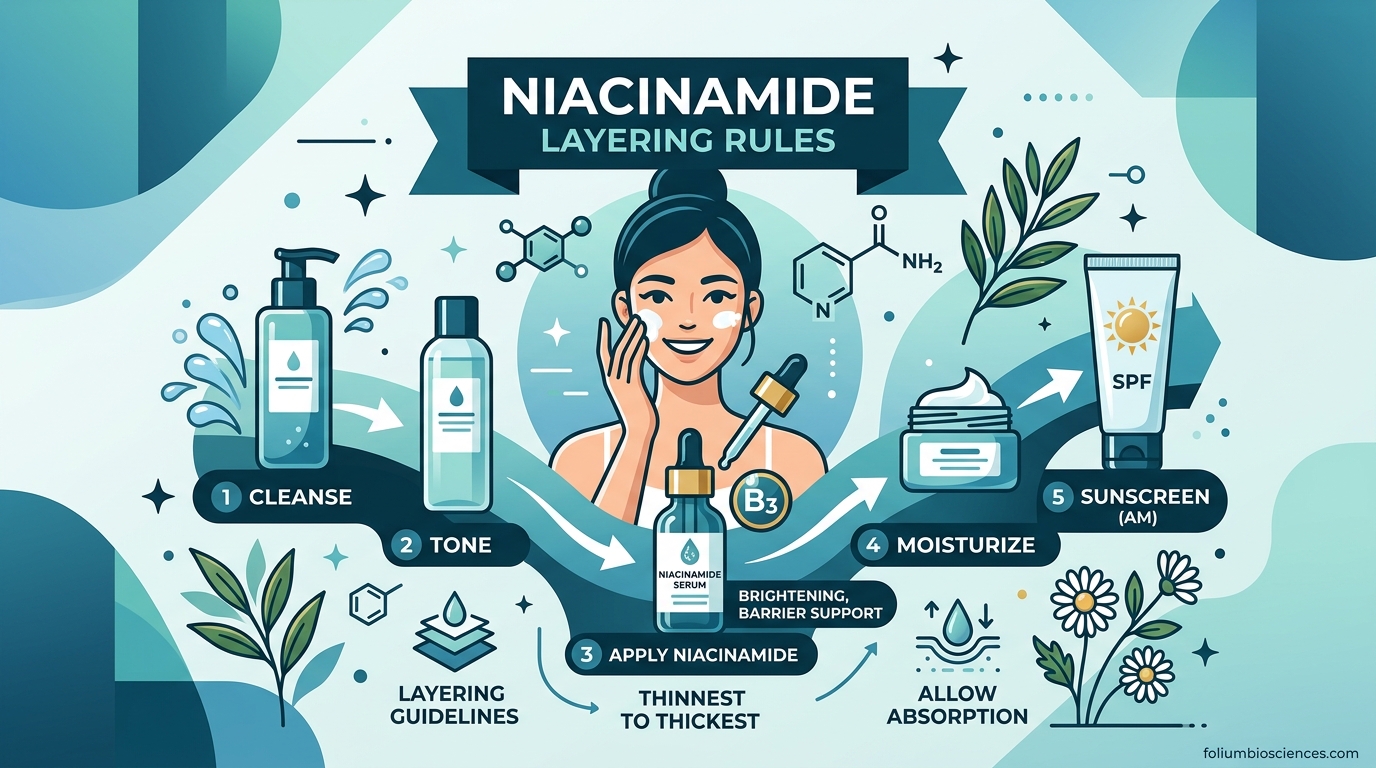
As a general rule, apply products in order from thinnest to thickest consistency. For daytime, a typical order might be: cleanser, toner (if used), hyaluronic acid, niacinamide serum, moisturizer, sunscreen. For evening, you might use cleanser, treatment product (on alternate nights), hyaluronic acid, niacinamide, and then a richer moisturizer or facial oil.
When using actives like exfoliating acids or retinoids, consider reserving niacinamide for a different time of day. Many people find success using Vitamin C in the morning and niacinamide at night, or using acid exfoliants and niacinamide on alternate evenings.
Wait Times Between Applications
If you do choose to use multiple active ingredients, giving each product time to absorb before applying the next can reduce interactions. A wait time of 30 to 60 seconds between applications allows the pH of each product to stabilize somewhat before the next layer. This simple practice can reduce the likelihood of ingredient conflicts.
Skin Cycling Approach
Skin cycling has gained popularity as a method for using active ingredients without overwhelming the skin. The concept is straightforward: divide your active ingredients into categories and rotate them on different nights. For example, night one might focus on exfoliation, night two on retinoids, night three on niacinamide, and night four on recovery with hydrating products only.
This approach works well because it gives your skin time to recover between strong active applications. You get the benefits of multiple ingredients without the irritation that can come from daily layering. Niacinamide fits easily into any skin cycling rotation, often working well on nights when you are not using stronger actives.
Concentration Guidance
Niacinamide is effective at concentrations between 2% and 10%. If you are new to the ingredient, start at the lower end of this range. Five percent is a common starting point that delivers noticeable benefits without significant risk of irritation. Higher concentrations are available and can provide more pronounced effects for oil control and brightening, but sensitivity increases at higher doses.
Signs You Are Overloading Your Skincare Routine
Even when using compatible ingredients, overdoing it with too many actives can cause problems. Your skin will give you signals when it is being overtaxed.
Signs of over-exfoliation include persistent redness, flaking or peeling that does not improve with moisturizing, a tight or stripped feeling, increased breakouts despite consistent use, and heightened sensitivity to products that previously did not irritate you. If you experience these symptoms, scale back your routine and focus on gentle, hydrating products until your skin recovers.
Barrier damage can manifest as persistent irritation, stingy when applying products, dull appearance, and compromised skin that reacts to everything. Niacinamide can actually help repair barrier damage, but only if you remove the source of the problem first.
Some people experience flushing when using niacinamide, particularly if they are sensitive to niacin conversion. This appears as redness, warmth, and sometimes itching, typically on the face and neck. If flushing occurs frequently, try a lower concentration, ensure proper wait times between products, or consider whether any of your other products contain acidic ingredients that might be triggering the conversion.
Frequently Asked Questions
What to never mix niacinamide with?
You should avoid mixing niacinamide with exfoliating acids (AHAs/BHAs), Vitamin C (ascorbic acid), retinoids (tretinoin, retinol), and benzoyl peroxide. These combinations can cause pH conflicts, reduce efficacy, or trigger niacin conversion leading to flushing and irritation.
What cancels out niacinamide?
Niacinamide can be compromised by low-pH ingredients that create an acidic environment. When the pH drops too low, niacinamide may convert to niacin, causing potential flushing. Ingredients like glycolic acid, salicylic acid, and ascorbic acid can all interfere with niacinamide stability and effectiveness when combined.
What not to combine with niacinamide serum?
Do not combine your niacinamide serum with other strong actives like Vitamin C, exfoliating acids, retinols, or benzoyl peroxide in the same application. If you want to use these ingredients, apply them at different times of day or on alternate nights to avoid conflicts.
Do I need niacinamide if I use tretinoin?
While tretinoin addresses acne and anti-aging effectively, niacinamide offers complementary benefits like oil control, barrier strengthening, and brightening that tretinoin does not provide. You do not need both, but they can work well together on alternate nights or at different times of day.
Conclusion
Understanding what not to mix with niacinamide is essential for building an effective skincare routine. While this ingredient offers remarkable benefits for most skin types, combining it with incompatible actives can undermine your efforts and cause irritation. Avoid pairing niacinamide with exfoliating acids, Vitamin C, retinoids, and benzoyl peroxide in the same application. Instead, use a skin cycling approach that gives each active room to work without interference.
The key to success with niacinamide lies in smart sequencing and patience. Separate your active ingredients by time of day or by alternating nights. Start with a lower concentration and increase gradually as your skin builds tolerance. When in doubt, less is often more. A streamlined routine with well-chosen ingredients will typically outperform a complex layering of conflicting products.
Niacinamide remains one of the most versatile and well-tolerated actives available. By respecting its pairing guidelines, you can enjoy smoother, clearer, more balanced skin. Apply this knowledge to your routine and give your skin the care it deserves.