
If you are dealing with chronic bloating, unpredictable bathroom trips, and abdominal discomfort that seems to flare up without warning, you have probably spent hours Googling your symptoms. Two terms keep showing up in your search results: leaky gut and IBS. Understanding the difference between leaky gut symptoms vs IBS is not just an academic exercise. It directly changes how you approach treatment, what you eat, and how quickly you can start feeling better.
I have spent months digging through the research, reading patient forums, and consulting gut health resources to break down these two conditions in plain language. In this guide, we will cover exactly what each condition is, how their symptoms overlap and differ, whether you can have both at the same time, and when you should stop guessing and see a doctor.
The tricky part is that leaky gut and irritable bowel syndrome share many of the same digestive complaints. Bloating, cramping, and irregular bowel habits show up in both. But the underlying mechanisms, the full symptom picture, and the most effective treatments are not the same. Let us walk through the differences so you can make sense of what your body is telling you.
Table of Contents
What Is Leaky Gut (Intestinal Permeability)?
Leaky gut, more accurately called increased intestinal permeability, describes a state where the lining of your small intestine becomes more porous than it should be. Your intestinal wall is made up of epithelial cells held together by structures called tight junctions. These tight junctions act like gatekeepers, allowing nutrients into your bloodstream while keeping out harmful substances like toxins, undigested food particles, and bacteria.
When those tight junctions become damaged or loose, the gut barrier becomes compromised. Larger molecules that would normally be blocked can slip through into your bloodstream. This triggers your immune system to react, which can lead to widespread inflammation throughout your body. A protein called zonulin plays a key role in regulating these tight junctions, and elevated zonulin levels have been linked to increased gut permeability.
It is important to note that leaky gut is not currently an official medical diagnosis. Many conventional gastroenterologists do not recognize it as a standalone condition. However, increased intestinal permeability is well-documented in scientific literature and has been associated with conditions like celiac disease, Crohn’s disease, and type 1 diabetes. The debate is not about whether intestinal permeability exists. The debate is about whether it is a cause of illness or a consequence of it.
Common triggers for increased intestinal permeability include chronic stress, poor diet high in processed foods and sugar, excessive alcohol consumption, frequent use of NSAIDs like ibuprofen, and an imbalanced gut microbiome. People in online forums frequently report that their symptoms developed after a period of high stress, a round of antibiotics, or a significant dietary change.
What Is Irritable Bowel Syndrome (IBS)?
Irritable bowel syndrome, or IBS, is one of the most common functional gastrointestinal disorders, affecting an estimated 10 to 15 percent of people worldwide. Unlike conditions that cause visible structural damage to your digestive tract, IBS is classified as a functional disorder. That means your gut looks normal on imaging and lab tests, but it does not function normally.
Doctors diagnose IBS using the Rome IV criteria, which requires recurrent abdominal pain at least one day per week for the past three months, associated with two or more of the following: pain related to defecation, a change in stool frequency, or a change in stool form or appearance. These symptoms must have started at least six months before diagnosis.
IBS is not a single condition. It comes in several subtypes based on your dominant bowel pattern. IBS-C involves mostly constipation. IBS-D involves mostly diarrhea. IBS-M, the mixed type, alternates between both. There is also IBS-U, the unsubtyped form, where bowel habits do not fit neatly into the other categories.
The gut-brain axis plays a central role in IBS. Your gut and your brain communicate through a network of nerves, hormones, and immune signals. In people with IBS, this communication becomes disrupted. The nerves in the gut become hypersensitive, amplifying normal digestive sensations into painful experiences. Stress, anxiety, and emotional trauma can all trigger or worsen IBS flare-ups through this gut-brain connection.
Research also points to gut microbiome imbalances, known as dysbiosis, as a contributing factor in IBS. Some studies have found that up to 80 percent of IBS patients show signs of altered gut bacteria compared to healthy individuals. Small intestinal bacterial overgrowth, or SIBO, is also found in a significant subset of IBS patients.
Leaky Gut Symptoms vs IBS: Side-by-Side Comparison
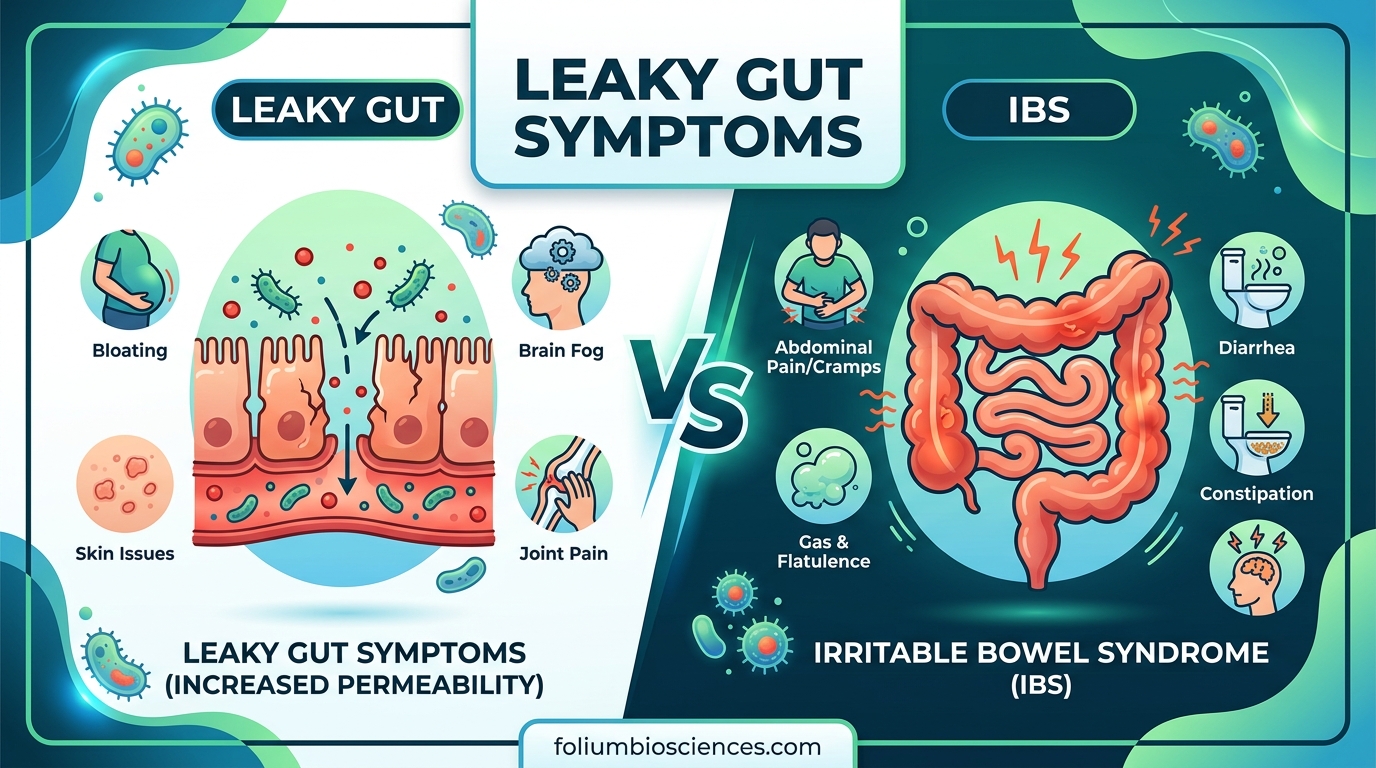
The short answer to what separates these two conditions is this: IBS primarily causes digestive symptoms that follow predictable patterns tied to bowel habits, while leaky gut produces a wider range of symptoms that extend well beyond the gut, including fatigue, joint pain, skin problems, and new food sensitivities.
Both conditions share a core set of digestive complaints. Bloating, abdominal pain, gas, and changes in bowel habits appear in both leaky gut and IBS. This overlap is exactly why so many people struggle to tell them apart. But if you look at the full symptom picture, distinct patterns emerge.
Symptoms Common to Both Conditions
Bloating and abdominal distension are hallmarks of both conditions. Cramping and gas after meals show up in both. Irregular bowel habits, including diarrhea and constipation, can occur with either one. Food intolerances that seem to develop or worsen over time are reported by patients with both leaky gut and IBS.
Symptoms More Typical of Leaky Gut
Leaky gut tends to produce symptoms outside the digestive tract because the underlying issue is not just gut dysfunction but also systemic inflammation. Here are five warning signs that point more toward leaky gut:
1. Chronic fatigue that does not improve with rest. When your immune system is constantly fighting particles that have leaked through your gut lining, your energy reserves take a hit. Many people with leaky gut report feeling exhausted even after a full night of sleep.
2. Joint pain and muscle aches without a clear injury. Systemic inflammation triggered by gut permeability can settle into joints and muscles, creating a general achy feeling that moves around the body.
3. Skin issues like acne, eczema, or rosacea. The skin-gut connection is well-established. When your gut barrier is compromised, inflammatory compounds can circulate and manifest as skin flare-ups.
4. New or worsening food sensitivities. If foods you used to tolerate without issue suddenly cause reactions, it may indicate that your gut barrier has become more permeable, allowing larger food particles into your bloodstream and triggering immune responses.
5. Brain fog, headaches, or difficulty concentrating. Inflammatory signals from a leaky gut can cross the blood-brain barrier, affecting cognitive function and mental clarity.
Symptoms More Typical of IBS
IBS symptoms tend to stay more localized to the digestive system and follow patterns linked to bowel function. Abdominal pain that improves or worsens after a bowel movement is a classic IBS sign. A change in stool frequency or consistency that follows a recognizable pattern, such as diarrhea-predominant or constipation-predominant, points toward IBS. Symptoms that are clearly triggered by stress, anxiety, or emotional events suggest the gut-brain axis dysfunction that characterizes IBS. Urgency to have a bowel movement, particularly after eating, is also more typical of IBS.
Key Differences Between Leaky Gut and IBS
Beyond symptoms, several fundamental distinctions separate these two conditions. Understanding these differences helps explain why they require different treatment approaches.
Medical Recognition and Diagnosis
IBS is an officially recognized medical condition with established diagnostic criteria. A gastroenterologist can diagnose IBS based on your symptoms using the Rome IV criteria, often without needing invasive testing. Leaky gut, on the other hand, has no universally accepted diagnostic standard. Most conventional doctors do not test for it, and there is no single test that definitively confirms increased intestinal permeability in clinical practice.
Some functional medicine practitioners use tests like the lactulose-mannitol test, which measures how much of these two sugars pass through your gut lining into your urine, as a proxy for permeability. Zonulin blood tests are also sometimes used. However, these tests are not widely accepted in mainstream medicine, and their reliability is debated among researchers.
Underlying Mechanism
IBS involves disordered communication between your gut and your brain, leading to abnormal muscle contractions and heightened nerve sensitivity in your digestive tract. Leaky gut involves physical changes to the gut barrier itself, where the tight junctions between intestinal cells become loose and allow substances to pass through that normally would not.
Scope of Impact
IBS is primarily a digestive condition. While it can certainly affect your quality of life, mood, and energy levels indirectly, its direct effects are mostly confined to the gastrointestinal system. Leaky gut, by allowing inflammatory compounds into your bloodstream, can potentially affect virtually any system in your body. This is why leaky gut has been linked to conditions ranging from autoimmune diseases to skin disorders to mental health issues.
Causes and Triggers
IBS triggers often include specific foods (particularly high-FODMAP foods), stress and anxiety, hormonal changes, and gut infections. Leaky gut triggers tend to focus more on factors that physically damage the gut lining, such as chronic alcohol use, NSAID overuse, poor diet, environmental toxins, and gut dysbiosis.
Can You Have Both Leaky Gut and IBS?
Yes, and many people do. The relationship between leaky gut and IBS is not either-or. It is more like a chicken-and-egg situation. Research has shown that a significant percentage of people with IBS also have increased intestinal permeability. One study found that up to 62 percent of IBS patients with diarrhea-predominant symptoms showed signs of increased gut permeability compared to healthy controls.
The connection works in both directions. IBS can contribute to leaky gut through chronic inflammation and altered gut motility, which changes the composition of your gut bacteria. Dysbiosis, in turn, can damage the gut barrier and increase permeability. On the flip side, if you already have a leaky gut, the systemic inflammation and immune activation it causes can disrupt your gut-brain axis and trigger IBS-like symptoms.
Users in online gut health communities frequently describe this frustrating loop. They start with IBS symptoms, which over time seem to evolve into broader health issues like fatigue, brain fog, and joint discomfort. Others report that fixing their gut barrier seemed to resolve digestive symptoms that looked like IBS. This interplay is exactly why working with a knowledgeable healthcare provider matters. Treating one without addressing the other often leads to incomplete recovery.
The microbiome sits at the center of this connection. Both conditions involve some degree of gut bacteria imbalance. When your microbiome is healthy and diverse, it supports both a strong gut barrier and normal gut-brain communication. When dysbiosis sets in, both systems can break down simultaneously.
Treatment Approaches for Each Condition
Because the underlying mechanisms differ, the treatment strategies for leaky gut and IBS are not identical, though they do share some common ground.
IBS Treatment Focus
The low FODMAP diet is the most well-researched dietary approach for IBS. FODMAPs are fermentable carbohydrates found in foods like wheat, onions, garlic, certain fruits, and dairy products. By temporarily removing high-FODMAP foods and then systematically reintroducing them, many people can identify their specific triggers. Studies show that around 75 percent of IBS patients experience symptom improvement on a low FODMAP diet.
Stress management is equally important for IBS because of the gut-brain connection. Cognitive behavioral therapy, gut-directed hypnotherapy, and mindfulness practices have all shown measurable benefits in clinical trials. Medications may also be prescribed depending on your specific IBS subtype, including antispasmodics, laxatives for IBS-C, or antidiarrheal agents for IBS-D.
Leaky Gut Treatment Focus
Healing leaky gut centers on repairing the gut barrier and removing the triggers that damaged it in the first place. This typically involves eliminating processed foods, refined sugar, alcohol, and unnecessary medications like NSAIDs. Some practitioners recommend specific supplements believed to support gut barrier repair, including L-glutamine (an amino acid that fuels intestinal cells), zinc carnosine, and deglycyrrhizinated licorice root.
Probiotics and prebiotics play a role in both conditions, but they are particularly emphasized in leaky gut protocols because restoring a healthy, diverse microbiome supports tighter junctions between intestinal cells. A diet rich in fiber, fermented foods, and polyphenol-rich plants feeds beneficial bacteria that produce short-chain fatty acids like butyrate, which directly nourish the gut lining.
Healing Timeline
People often ask how long it takes to heal a leaky gut. The honest answer is that it varies significantly depending on the severity of the damage, your overall health, and how consistently you follow a gut-supportive protocol. Some people report noticeable improvement within 4 to 6 weeks of making dietary and lifestyle changes. For others with more extensive gut barrier damage, it can take 3 to 6 months or longer. IBS management is typically an ongoing process rather than a cure, though many people achieve significant long-term symptom relief.
Warning Signs That Require Medical Attention
While both leaky gut and IBS can be managed with dietary and lifestyle changes, certain symptoms should prompt you to see a doctor immediately. These red flags could indicate a more serious condition that needs urgent evaluation.
Unexplained weight loss that happens without trying is not typical of either leaky gut or IBS and needs investigation.
Blood in your stool, whether bright red or dark and tarry, is never something to ignore or attribute to a functional gut issue without medical evaluation.
Severe abdominal pain that wakes you from sleep or is markedly different from your usual symptoms warrants urgent medical attention.
Fever accompanying digestive symptoms suggests infection or inflammation that goes beyond functional gut disorders.
Persistent anemia or iron deficiency without a clear cause could indicate bleeding or malabsorption that needs a proper workup.
Difficulty swallowing or a feeling that food gets stuck is not associated with either leaky gut or IBS and should be evaluated promptly.
If you experience any of these warning signs, do not try to manage them on your own. See a gastroenterologist or your primary care physician as soon as possible. Early evaluation can rule out conditions like inflammatory bowel disease, celiac disease, or colorectal cancer, all of which require specific medical treatment.
FAQ
Are IBS and leaky gut the same?
No, IBS and leaky gut are not the same condition. IBS (irritable bowel syndrome) is a recognized functional gastrointestinal disorder diagnosed through the Rome IV criteria, characterized by abdominal pain and altered bowel habits. Leaky gut refers to increased intestinal permeability, where the gut lining becomes more porous and allows substances to pass into the bloodstream. While they share digestive symptoms like bloating and irregular bowel habits, they have different underlying mechanisms and treatment approaches.
What are the 5 warning signs of a leaky gut?
The five most commonly reported warning signs of leaky gut are: (1) Chronic fatigue that does not improve with rest, caused by ongoing immune activation. (2) Joint pain and muscle aches resulting from systemic inflammation. (3) Skin problems like acne, eczema, or rosacea linked to the gut-skin axis. (4) New or rapidly worsening food sensitivities as larger food particles enter the bloodstream. (5) Brain fog, headaches, or difficulty concentrating due to inflammatory signals affecting neurological function.
How many poops a day is considered IBS?
There is no specific number of bowel movements that defines IBS. The Rome IV criteria focus on the pattern and associated symptoms rather than a fixed frequency. What matters is whether your bowel habits have changed from your personal baseline, whether you experience abdominal pain related to defecation, and whether your stool consistency has shifted toward diarrhea (loose or watery) or constipation (hard or lumpy). Generally, having fewer than three bowel movements per week or more than three per day, especially when accompanied by pain and urgency, may indicate IBS.
How can I test for a leaky gut at home?
There is no validated at-home test for leaky gut that is widely accepted in conventional medicine. Some functional medicine practitioners use at-home test kits that measure zonulin levels or perform the lactulose-mannitol urine test, which you collect after drinking a sugar solution. However, these tests are not FDA-approved for diagnosing intestinal permeability. A more practical approach is to track your symptoms: if you have chronic digestive issues alongside systemic symptoms like fatigue, joint pain, skin flare-ups, and food sensitivities, discuss intestinal permeability with a healthcare provider who can order appropriate testing.
Do people with IBS have leaky gut?
Research suggests that a significant number of people with IBS also have increased intestinal permeability, particularly those with diarrhea-predominant IBS. Studies have found that up to 62 percent of IBS-D patients show measurable increases in gut permeability. The relationship goes both directions: IBS-related inflammation and dysbiosis can damage the gut barrier, and increased permeability can worsen IBS symptoms by amplifying immune activation. Many people effectively have both conditions simultaneously.
How long does it take your gut to heal from a leaky gut?
Healing time for leaky gut varies based on the extent of gut barrier damage, your overall health, and how consistently you follow a gut-repair protocol. Some people notice improvements within 4 to 6 weeks of removing trigger foods, reducing stress, and supporting the gut lining with nutrients like L-glutamine and butyrate. More significant cases can take 3 to 6 months or longer. The intestinal lining regenerates rapidly (cells turnover every 3 to 5 days), but restoring tight junction integrity and a balanced microbiome takes sustained effort over months.
Bringing It All Together
Telling the difference between leaky gut symptoms vs IBS comes down to looking at the full picture, not just your digestive complaints. If your symptoms are mostly limited to bloating, cramping, and irregular bowel habits that follow a predictable pattern, IBS is the more likely explanation. If you are dealing with digestive issues alongside systemic symptoms like chronic fatigue, joint pain, skin flare-ups, and brain fog, leaky gut may be playing a larger role.
The most important takeaway is that these two conditions are not mutually exclusive. Many people have both, and the interplay between gut barrier dysfunction, microbiome imbalance, and gut-brain communication can create a cycle that keeps you feeling unwell. Breaking that cycle requires a comprehensive approach that addresses diet, stress, gut bacteria, and the integrity of your intestinal lining.
If your symptoms are persistent, worsening, or accompanied by any of the warning signs we discussed, please see a healthcare provider. Self-diagnosing based on internet research alone can delay proper treatment for conditions that need medical attention. A gastroenterologist or a functional medicine practitioner experienced in gut health can help you get the right diagnosis and build a targeted treatment plan.