
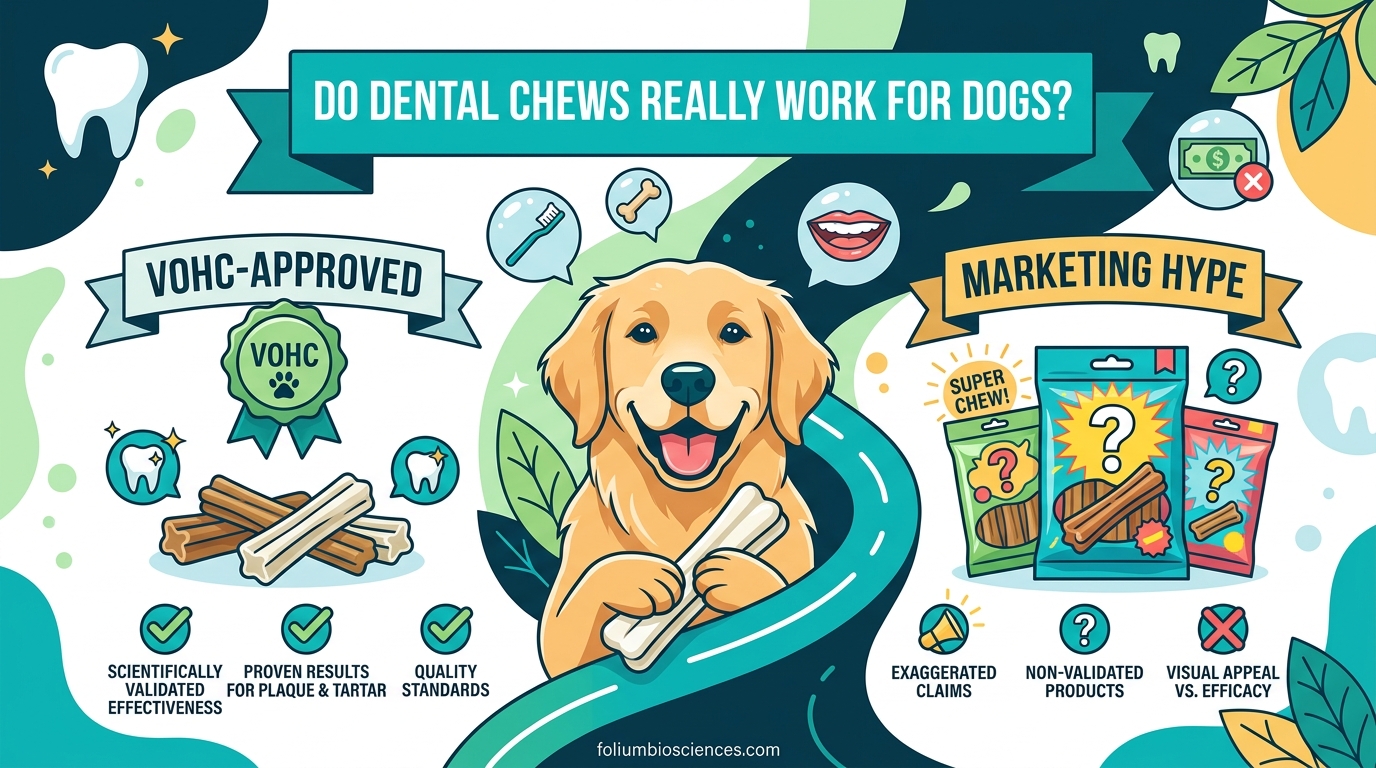
Yes, dental chews really work for dogs, but only when you choose products with proven effectiveness. The Veterinary Oral Health Council (VOHC) seal is the key differentiator between products that deliver actual results and those relying on marketing hype. Understanding this distinction can save you money and, more importantly, protect your dog from dental disease that affects an estimated 93% of dogs over age 3.
Dental disease is the most common health condition in adult dogs, yet it remains overlooked by many pet owners. Left untreated, plaque hardens into tartar, leading to gum inflammation, tooth decay, and potentially serious infections that can spread to the heart, liver, and kidneys. The question is not whether dental chews can help, but rather which ones actually work and how to use them correctly as part of a comprehensive dental care routine.
Table of Contents
What Is VOHC and Why It Matters for Your Dog
The Veterinary Oral Health Council (VOHC) was founded in 1997 to set rigorous standards for pet dental product efficacy. Before this organization existed, manufacturers could claim their products promoted dental health without any scientific proof. VOHC changed that by establishing a verification process requiring real clinical evidence.
The VOHC seal appears only on products that have demonstrated at least a 20% reduction in plaque or tartar accumulation during controlled trials. This threshold is not arbitrary. It represents the minimum level of effectiveness that researchers determined meaningful enough to actually benefit your dog’s oral health. Products without this seal have not been tested to the same standards, meaning their claims remain unverified.
When you see the VOHC seal on a dental chew, you know the manufacturer submitted the product for independent scientific evaluation. The testing protocols are transparent and available on vohc.org, so any pet owner can verify which products earned the distinction and under what criteria. This transparency builds trust and allows informed decisions.
How VOHC Approval Actually Works
VOHC approval is not a simple application fee or self-certification process. Manufacturers must submit their dental chews for independent clinical trials conducted by veterinary researchers. These trials use standardized protocols to measure whether the product actually reduces plaque or tartar compared to untreated control groups.
The trials employ specific scoring systems called mean mouth scores, where researchers examine multiple teeth in each dog’s mouth and calculate average plaque and tartar accumulation. Both cross-over trials (where dogs use the product then switch to control) and parallel trials (comparing treated dogs to untreated dogs simultaneously) provide robust data.
Products receive one of two designations: “Helps Control Plaque” or “Helps Control Tartar.” Some products earn dual designation by demonstrating effectiveness against both. This specific labeling helps pet owners choose products targeting their dog’s particular needs. The entire process typically takes months and requires repeated examinations by trained veterinary professionals.
The Evidence: Do Dental Chews Really Reduce Plaque and Tartar
VOHC-approved dental chews have demonstrated measurable reductions in both plaque and tartar accumulation. The clinical trials consistently show that dogs using these products as directed experience significantly less dental buildup compared to dogs receiving no dental care. This evidence is why veterinarians increasingly recommend VOHC-approved chews as part of preventive care.
Dental chews work through mechanical cleaning. When your dog chews, the texture scrapes against tooth surfaces, physically removing soft plaque before it hardens into tartar. The chewing action also stimulates saliva production, which naturally contains antibacterial compounds that help neutralize harmful oral bacteria.
However, the degree of effectiveness depends significantly on chew design, size appropriateness, and how vigorously your dog chews. Studies show that dogs who consume chews quickly without adequate chewing receive less cleaning benefit. Choosing the right size and texture for your dog’s breed, size, and chewing style matters for achieving optimal results.
What Dental Chews Cannot Do: Important Limitations
Dental chews are a preventive tool, not a cure. They cannot reverse existing dental disease, remove hardened tartar, or replace professional dental cleanings. If your dog already shows signs of gum disease, red or swollen gums, persistent bad breath, or visible tartar buildup, veterinary dental care is necessary before relying on chews alone.
The 20% reduction threshold that VOHC-approved products achieve is meaningful for prevention, but it represents a baseline level of effectiveness. This means dental chews should complement, not replace, regular tooth brushing if your dog tolerates it. Think of chews as one component of a comprehensive dental care routine rather than a standalone solution.
Results also vary among individual dogs. Factors like breed predisposition, age, jaw structure, and chewing behavior all influence how much benefit a dog receives from dental chews. Large breed dogs with wider mouths may clean teeth differently than small breeds with crowded teeth. Senior dogs may have reduced chewing effectiveness compared to younger dogs.
Safety Considerations When Using Dental Chews
Not all dental chews are safe for all dogs. Size matters enormously. A chew too small creates a choking hazard, while one too large may cause jaw fatigue or be rejected entirely. Manufacturers provide sizing guides based on dog weight, and following these recommendations protects your pet.
Hardness is a critical safety factor that many pet owners overlook. Bones, antlers, and overly hard dental chews can cause tooth fractures, which are painful and expensive to treat. VOHC-approved products have been evaluated for safety in addition to efficacy, making the seal a useful shortcut for identifying products that clean without causing damage.
Calorie content deserves attention as well. Many dental chews contain significant calories that contribute to weight gain when given daily. For dogs already managing their weight, this factor may require adjusting meal portions or choosing lower-calorie dental options. Some dogs also experience digestive upset from certain chew ingredients, particularly those containing novel proteins or high-fat formulations.
VOHC-Approved vs Marketing Hype: How to Tell the Difference
Marketing claims about dental health are everywhere, but without VOHC verification, they lack scientific backing. Phrases like “clinically proven,” “veterinarian recommended,” and “promotes dental health” appear on countless products that have never been independently tested. These claims are often meaningless from an efficacy standpoint.
The VOHC seal provides concrete verification you can trust. Every product bearing this seal has completed the approval process and can be verified on the VOHC website. If a product claims dental benefits but lacks the seal, ask yourself why the manufacturer did not pursue verification. The process is voluntary, so missing the seal often indicates the product could not demonstrate sufficient effectiveness.
Red flags include vague claims without specific metrics, testimonials instead of clinical data, and pressure tactics suggesting you must buy immediately for your dog’s health. Legitimate products with real evidence welcome scrutiny and provide detailed information about their testing methods. Trust products that transparently explain how they achieved their results rather than those relying on emotional appeals.
Frequently Asked Questions
Are there any dog dental chews that actually work?
Yes, VOHC-approved dental chews have clinical evidence demonstrating they reduce plaque and tartar by at least 20%. Products with the VOHC seal have been tested in controlled trials and proven effective. However, effectiveness varies by product and individual dog, and chews should be part of a comprehensive dental care routine.
What dental chews are approved by the VOHC for dogs?
VOHC maintains a complete list of approved products on vohc.org. Popular categories include dental treats, chews, and sticks bearing the VOHC seal. Products receive either a plaque control designation, tartar control designation, or both. Check the VOHC website for the most current list of approved dental chews for dogs.
Do vets recommend dental chews for dogs?
Many veterinarians recommend VOHC-approved dental chews as part of a preventive dental care routine. While they do not replace professional cleanings or tooth brushing, chews provide mechanical cleaning and saliva stimulation between veterinary visits. The key is choosing products with proven effectiveness rather than relying on marketing claims alone.
Is VOHC legitimate?
Yes, VOHC is a legitimate organization founded by veterinary dental specialists in 1997. The VOHC seal represents genuine scientific evaluation through controlled clinical trials. Every product bearing the seal has met the organization’s standards for at least 20% reduction in plaque or tartar. The testing protocols are transparent and the process is rigorous.
The Bottom Line on Dental Chews for Dogs
Dental chews really do work when you choose VOHC-approved products backed by clinical evidence. The VOHC seal is your shortcut to identifying effective products among countless options making unverified claims. Look for the seal, follow sizing guidelines, and remember that chews work best as part of a comprehensive dental care routine that includes regular veterinary dental exams.
No dental chew replaces professional cleaning when your dog already has periodontal disease. But for prevention and maintenance between vet visits, VOHC-approved dental chews provide meaningful mechanical cleaning and saliva stimulation that supports your dog’s oral health. The investment in quality products pays off through reduced risk of painful dental disease and costly veterinary treatments down the road.
Your dog’s dental health affects their entire wellbeing. Taking a proactive approach with proven products and regular veterinary care gives your companion the best chance at maintaining healthy teeth and gums throughout their life. Start with VOHC-approved options, monitor your dog’s response, and adjust your routine based on your veterinarian’s recommendations.