
A camera’s built-in meter reads the light bouncing back off your subject, and on film that can be a problem. A white shirt fools it into stopping down, a dark doorway fools it into opening up, and a backlit window makes it guess. An external light meter gives you a reading you can reason about instead, which is why so many film shooters carry one even when their camera has a working meter.
The reasons run deeper than accuracy. Plenty of the best film cameras were built before TTL metering existed or arrived with a selenium cell that has faded. Rangefinders, twin-lens reflexes, large format view cameras and many medium format bodies either have no meter at all or one that has drifted. A handheld meter fills that gap and gives you repeatable readings across a whole roll, which matters when you are shooting black and white at box speed or pushing a roll two stops.
We pulled ten meters that cover the realistic range of film shooting: pocket reflective meters that clamp to a cold shoe, full Sekonic bodies with incident domes and flash measurement, an analog dial meter that needs no battery, and a couple of specialty units with built-in viewfinders. Below is what each one is actually good at, where it stops being useful, and which body suits the camera in your bag. If you are still building out your film kit, our film scanner comparison covers the other end of the workflow.
2026 update: we re-checked ratings, specifications and owner feedback before publishing this roundup. Prices move constantly, so use the buttons below to see current listings rather than relying on figures quoted in older guides.
Table of Contents
Top 3 Light Meters for Film Photography

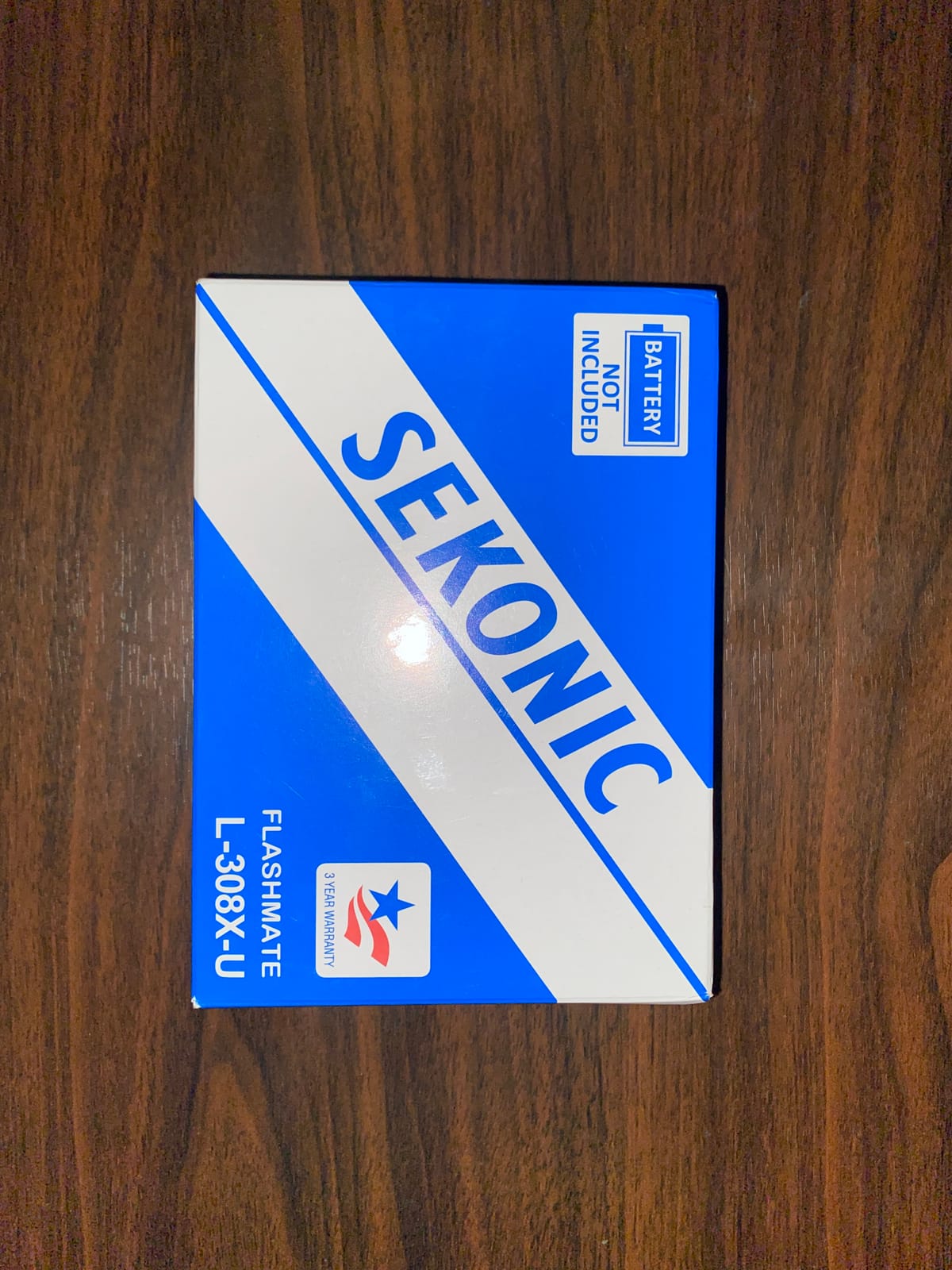
Sekonic L-308X-U Flashmate
- Incident
- reflected and flash metering
- Photo
- cine and HD cine modes
- Tenth-stop accuracy
- 3.52 ounce pocket body
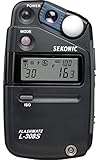
Sekonic L-308S Flashmate
- Incident
- reflected and flash measurement
- Single AA power
- Compact 4.3 x 2.5 inch body
- Large review base

Sekonic L-398A Studio Deluxe III
- Battery-free amorphous photocell
- Analog aperture and shutter dial
- Swivel head with lumisphere kit
- Incident and reflected capable
The L-308X-U takes the top slot because it covers every measurement mode most film shooters will ever use in a body you can fit in a jacket pocket. The L-308S is the same idea with a longer track record and a single AA battery. The L-398A is the one to buy when you want a dial and no battery at all.
All 10 Light Meters at a Glance
| Product | Specifications | Action |
|---|---|---|
| Sekonic L-308X-U Flashmate |
|
Check Latest Price |
 LightMate AirPro LightMate AirPro |
|
Check Latest Price |
| Sekonic L-308S Flashmate |
|
Check Latest Price |
| Sekonic L-398A Studio Deluxe III |
|
Check Latest Price |
 Sekonic L-858D-U Speedmaster Sekonic L-858D-U Speedmaster |
|
Check Latest Price |
 Sekonic LiteMaster Pro L-478D-U Sekonic LiteMaster Pro L-478D-U |
|
Check Latest Price |
 LightMate Lite 2R LightMate Lite 2R |
|
Check Latest Price |
 LightMate Area 2S LightMate Area 2S |
|
Check Latest Price |
 TTArtisan Light Meter II TTArtisan Light Meter II |
|
Check Latest Price |
 CHI L.D. Light Meter Pro CHI L.D. Light Meter Pro |
|
Check Latest Price |
What follows is the long version. Each section covers who the meter suits, what the specs actually mean on a film body, and where owners report problems after living with it.
1. Sekonic L-308X-U Flashmate: The Most Complete Pocket Meter
Sekonic L-308X-U Flashmate Light Meter, Compact Digital Incident & Reflected Exposure Meter with Photo, Cine & HD Cine Modes, LCD Auto Backlight, Illuminance Measurement, Pocket-Sized Design
Incident, reflected and flash metering
Photo, cine and HD cine modes
EV 0 to 19.9 at ISO 100
3.52 ounces, 2 AAA
Pros
- Accurate to a tenth of a stop in full-stop mode
- Covers photo
- cine and HD cine in one body
- Pocket-sized at 3.52 ounces
- Reads flash from f/1.0 to f/90.9
Cons
- Reflective capability is limited compared with Sekonic spot models
- Small LCD is harder to read in harsh daylight
This is the meter we hand to film shooters who want one tool and no menu diving. It measures incident light through the dome, reflected light from a card or the ground, and electronic flash, with readings accurate to a tenth of a stop in full-stop mode. The auto backlight handles dim interiors, and the whole thing runs on two AAA batteries.
The mode coverage is unusually broad for a body this size. Photo mode gives you shutter or aperture priority readouts for stills, Cine mode lets you dial in frame rates and shutter angles, and HD Cine mode handles the shutter speeds and frame rates mirrorless video uses. At ISO 100 the ambient EV range runs from 0 to 19.9, flash readings cover f/1.0 to f/90.9, and the shutter span stretches from 60 seconds down to 1/8000th, or 1 second to 1/500th for flash.

Owners consistently describe this as the meter that finally replaced the phone app in their bag. The recurring praise is accuracy, pocketability and a straightforward learning curve, with most ratings landing at five stars. For a Leica M, a Nikon FM2, or a Pentax 67 on manual settings, the combination of incident dome plus a reflected reading is enough to handle almost any lighting situation.
Our main reservation is reflective metering depth. Compared with Sekonic’s own spot-capable bodies, the reflective reading here is basic, so Zone System work at the level of individual zones is not the use case. It is also a meter that rewards practice: users report getting more confident after a roll or two of comparing readings against film results.
When the L-308X-U earns its place in your bag
It suits anyone who shoots a mixed bag of cameras and does not want to think about which metering mode a given body can handle. Photographers working strobes in a small studio get flash measurement without buying a second tool.
The tenth-stop accuracy claim matters most when you are rating a push, exposing for a bright window, or mixing flash with daylight. Owners comparing it against more expensive bodies report agreement rather than contradiction.
When to choose something else
If your Zone System practice depends on reading individual tones off a subject or a print, you need a meter with a narrow spot angle and the L-308X-U does not offer one. Cine shooters who need flash duration analysis should look at the Speedmaster instead.
Those who work in very low light at night on fast stock will find its 0 EV floor is not the limiting factor, the dome size and reflective cell are. A dedicated spot meter handles dim scenes more gracefully.
2. LightMate AirPro: Three Dials and a Metal Shell
LightMate AirPro Light Meter Photography, 35° Wide-Angle Reflective Digital Exposure Meter, Rechargeable 20H Battery Life, 3 Dials Retro Exposure Indicator, for Leica & Other Film Cameras, Black Metal
35 degree reflective cell at 0.1 EV accuracy
ISO 1 to 3200, 60s to 1/2000s
Three independent dials
USB-C rechargeable
Pros
- Tactile dials with audible detents
- Full metal body suits vintage cameras
- 35 degree cell reads well in low light
- Over 20 hours of battery life
- Customizable exposure indicators
Cons
- Reflective only
- no incident or flash measurement
- A and S labels mean Auto rather than priority modes
- Menu can show non-English characters
This meter takes a different approach from the Sekonic bodies. Instead of a screen and buttons, you get three independent dials for aperture, ISO and shutter speed, each with half-stop or 1/3 and 2/3 stop resolution and audible detents. For photographers who think in the exposure triangle, setting a reading by feel is faster than scrolling a menu.
The metering cell covers 35 degrees with plus or minus 0.1 EV accuracy, ISO runs from 1 to 3200, shutter speeds from 60 seconds to 1/2000th, and apertures from f/1 to f/28. Modes are labelled Aperture Auto, Shutter Auto, Manual and EV, which is a naming choice some people like because the dial logic is obvious and others find confusing since A and S mean Auto rather than priority.
Film shooters with dead or inaccurate built-in meters rate it highly for accuracy and readability. Reviewers cross-checked readings against Sekonic meters, a Leica M6 meter and a Nikon ZF, and found agreement within roughly a half to one stop, which is the expected gap between reflective and incident readings. The metal shell is a real advantage if you prefer your accessories to look like they belong next to a brass-and-leather rangefinder.
There is no incident dome and no flash measurement, so this is a daylight meter. The rechargeable battery runs beyond 20 hours of active use with over six months of standby, which in practice means you charge it occasionally rather than nightly.
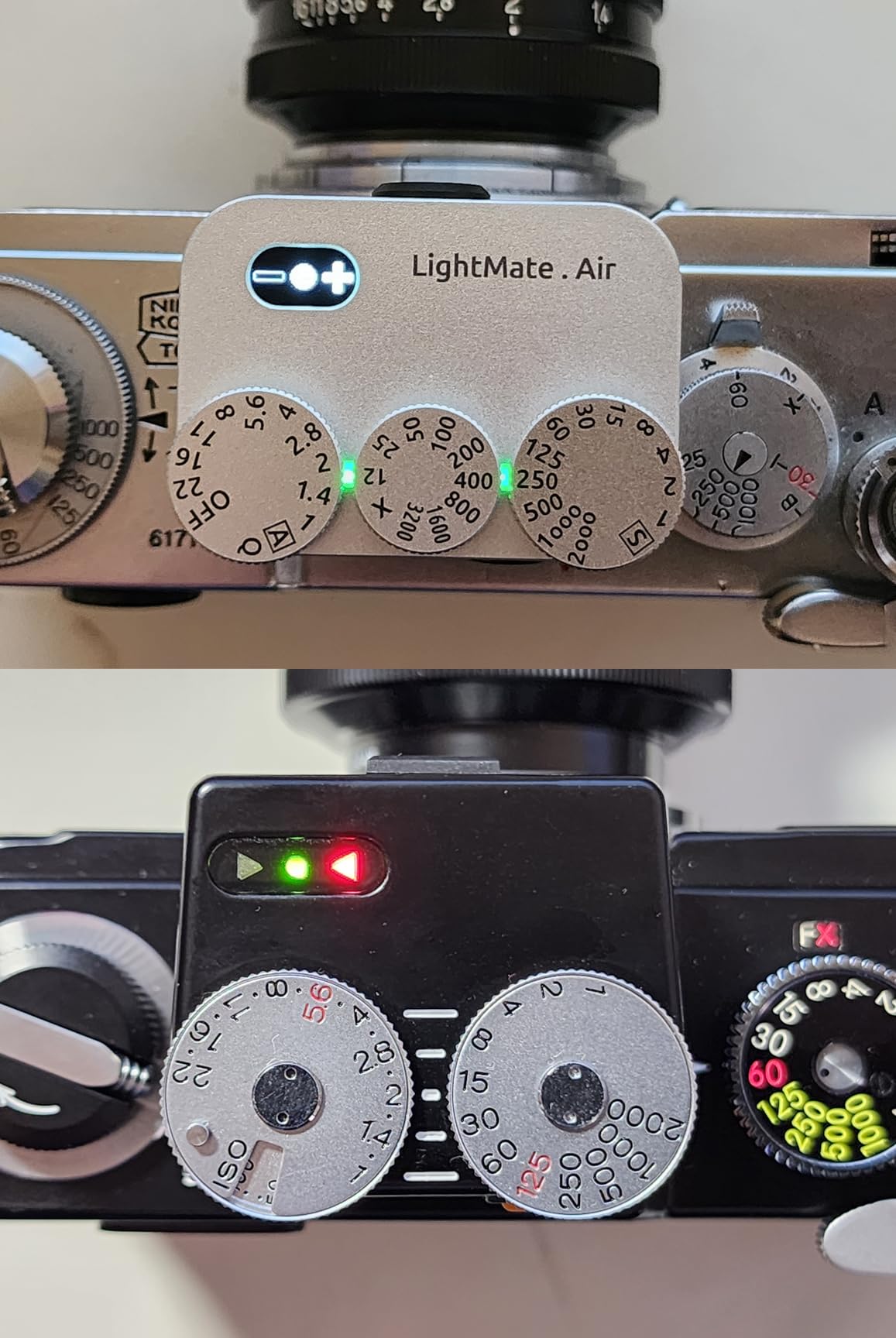
Why film shooters like the dial layout
Without a screen to wake up, the meter responds the moment you turn the dial. That matters when you are working fast on a street scene or changing settings between frames on a tripod.
Exposure indicators are configurable, including dual LED cardinal point lights and a five-stop deviation display, so you can set it up to suit how you read a scene rather than the manufacturer’s default.
Where it falls short
Reflective-only metering means backlit subjects need a card or your own judgement, and flash portraits are out of scope entirely. Several owners also note that a short calibration period of two or three attempts is sometimes needed before readings settle, and the exposed trigger button can drain the battery if it is held down in a bag.
If you shoot tungsten-balanced film by the light of lamps and want to know what you are getting, you will be reading an estimate rather than a measurement.
3. Sekonic L-308S Flashmate: The Long-Running Incumbent
Sekonic L-308S Flashmate Digital Incident, Reflected & Flash Light Meter
Digital incident, reflected and flash meter
Single AA battery
4.3 x 2.5 x 0.9 inch body
Pros
- Over 1170 ratings averaging 4.5 stars
- Covers incident
- reflected and flash in one body
- Simple interface new users can operate immediately
Cons
- Older generation design superseded by the L-308X-U
- Single AA battery with no USB-C option
- No cine frame rate or shutter angle support
The L-308S is the meter a lot of film photographers already own, often bought years ago and still in service. It does the three things that matter for a stills shooter: incident, reflected and flash measurement in a compact body, with a simple interface that needs no training.
The appeal is the review base. With more than 1170 ratings averaging 4.5 stars and roughly three-quarters of those at five stars, you have a large pool of owners reporting on long-term reliability. Dimensions match the newer Flashmate at 4.3 by 2.5 by 0.9 inches, though at 8.8 ounces it is heavier than the pocket model.
Sekonic’s own listing flags that a newer version exists with a three-year US warranty, which is why this variant tends to get chosen mainly on entry price. If you are buying fresh and the newer body is close in cost, the L-308X-U adds cine modes and a lighter profile.
Where the older model still makes sense
If you already own one, there is no reason to replace it. The measurement modes film photographers need have not changed, and used units are easy to find in working condition.
It is a sensible stopgap for a first dedicated meter, particularly for someone who wants flash capability without paying for cine features they will not use.
When the newer model wins
If you shoot video as well as stills, the absence of cine frame rate and shutter angle support is a real gap. The extra weight matters less than the missing modes for hybrid shooters.
Anyone starting out in 2026 should weigh the newer body unless the price difference is large, since both are compact and the newer one is noticeably lighter in a pocket.
4. Sekonic L-398A Studio Deluxe III: Analog With No Battery
Sekonic L-398A Studio Deluxe III Analog Light Meter, Battery-Free Incident & Reflected Ambient Meter with Amorphous Photocell, Swivel Head, Full Dial Readout for Photography & Cinematography
Battery-free amorphous photocell
Swivel head with lumisphere and disc
Analog aperture and shutter dial
2.3 x 4.4 x 1.3 inches
Pros
- Runs with no battery at all
- Full dial readout gives instant combinations
- Swivel head helps position the dome
- Accessory kit included
Cons
- No flash
- HSS
- cine frame rate or shutter angle
- Lower reading resolution than digital meters
- No exposure compensation or logging
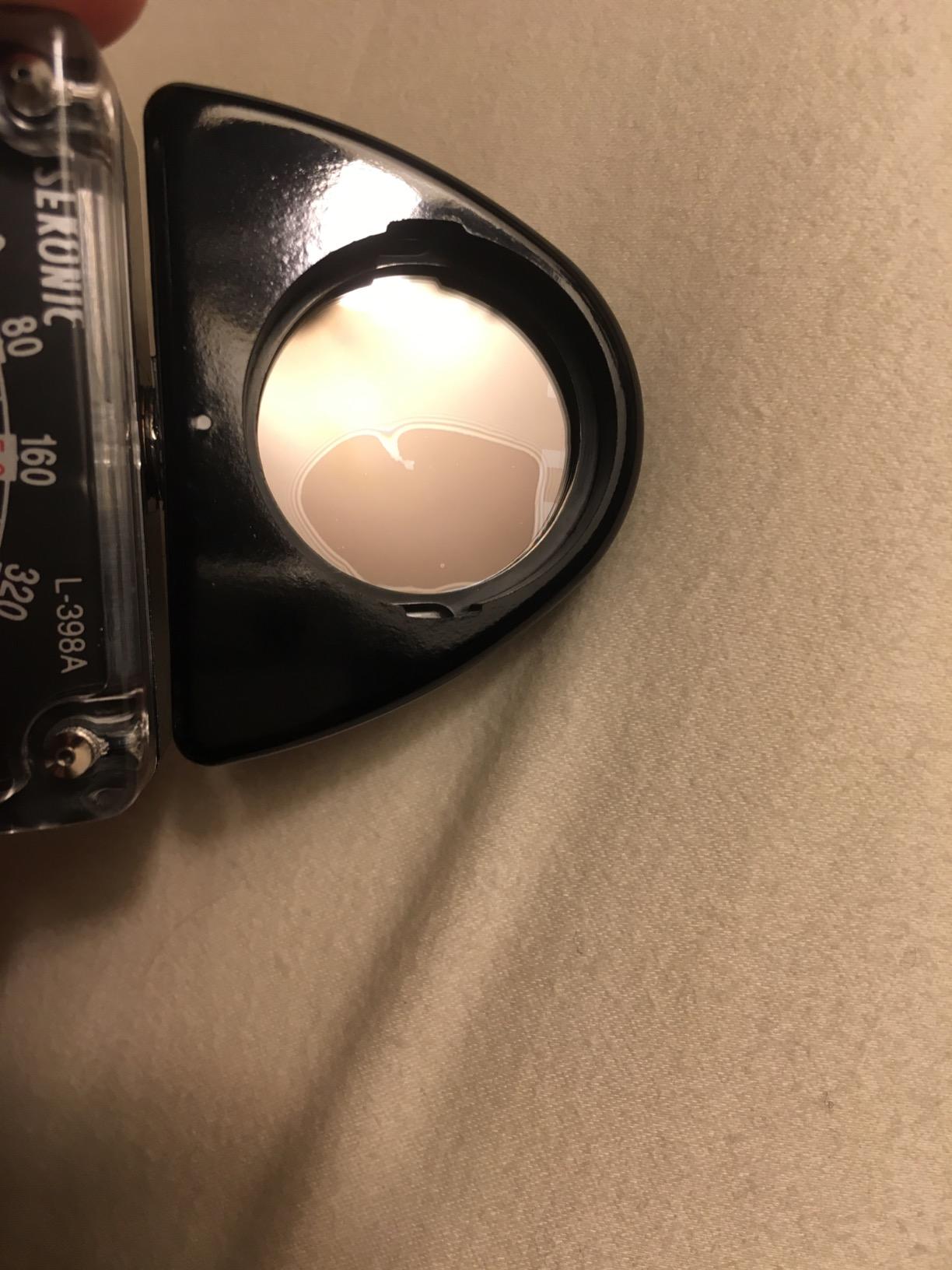
Everything about this meter is a deliberate step back. The photocell is amorphous silicon that generates its own power from ambient light, so there is no battery to corrode, no charging and nothing to fail at the worst possible moment on location. For anyone who has watched a battery leak inside a vintage Sekonic, that single design decision is worth more than any digital feature.
The reading comes off a full aperture and shutter calculator dial rather than a screen, which means exposure combinations are visible all at once instead of one value at a time. The swivel head lets you position the dome for complex setups while keeping the readout in view, and the kit includes a lumisphere, lumidisc, lumigrid, high slide, strap and soft case.
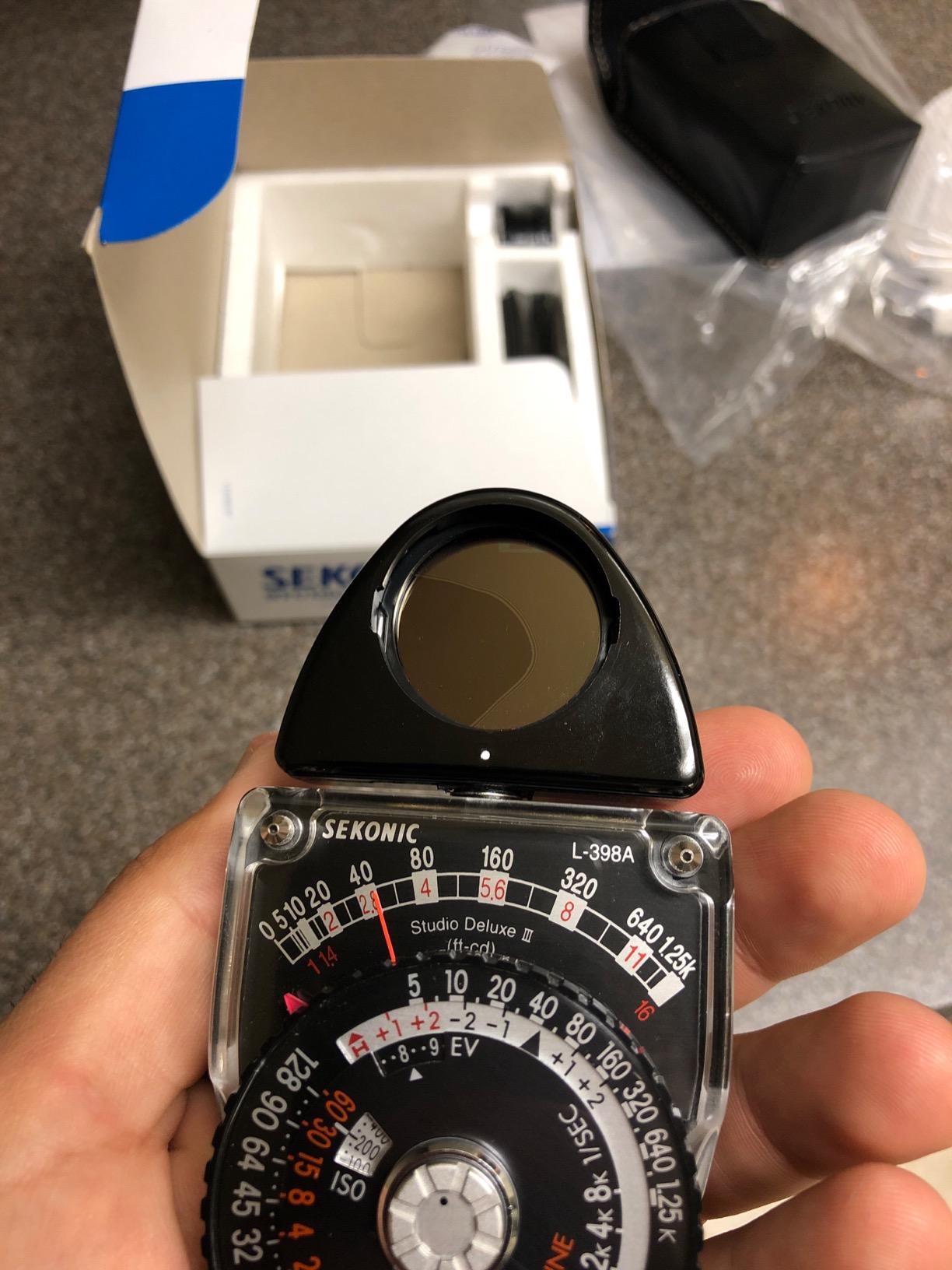
Owners treat it as a durable no-frills tool that simply works, and the four-plus ratings with more than four-fifths of buyers at five stars reflect that. A recurring comment is that the mechanical dial is faster than scrolling through screens, which is easy to understand once you have used one.
What you give up is everything electronic. There is no flash measurement, no HSS analysis, no cine frame rates or shutter angles, and the reading resolution is coarser than a tenth-stop digital display. Exposure compensation and logging are absent as well, so if you bracket extensively you will want to write values down.
Who should buy an analog meter
Photographers working location or set who want a meter that cannot fail because of a flat battery. Large format and studio users who like physical dials find the readout easy to read at a glance.
It pairs well with black and white film, where you are working from a zone placement and a development decision rather than chasing a frame with no latitude.
What you give up
If your work involves strobes, this meter cannot measure flash, and guessing flash exposure on negative film is expensive. Digital video work is out of scope for the same reason.
Anyone who wants to record readings for later comparison, or who reads half-stop precision off a needle in very dim light, will find a digital body easier to work with.
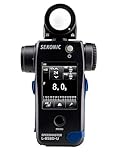
5. Sekonic L-858D-U Speedmaster: Spot Metering and Flash Duration
Sekonic L-858D-U Speedmaster Light Meter, Multi-Function Incident & 1∞ Spot Meter with Flash Duration Analysis, HSS Measurement & Wireless Radio Triggering Compatibility
Built-in 1 degree spot viewfinder
HSS flash duration analysis
EV -5 to 22.9 at ISO 100
8.8 ounces
Pros
- Purpose-built HSS flash duration measurement
- Integrated 1 degree spot metering
- Very wide EV range at ISO 100
- About a tenth of a stop accuracy
Cons
- Arcane menus with a steep learning curve
- No built-in radio
- radio modules cost extra
- Camera profile library lags some brands
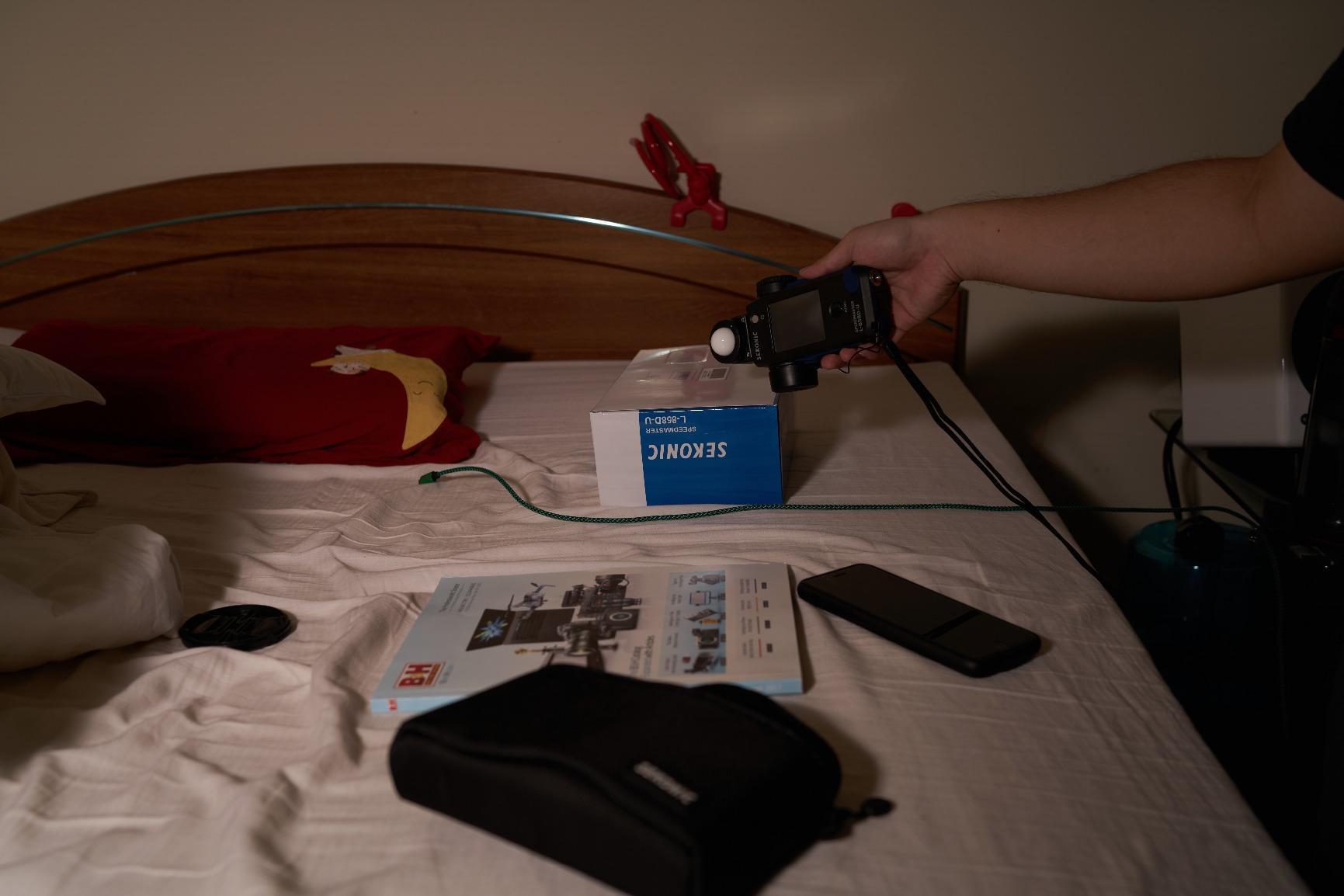
This is the meter professionals reach for when the job is not a single exposure. It combines incident ambient and flash metering with an integrated 1 degree spot viewfinder, and it measures flash duration including high-speed sync output, evaluating both t.1 and t.5 durations so you know exactly how long your strobe is firing and how hard it will smear motion.
The range is unusually broad at ISO 100, running from EV -5 to 22.9, which covers dim interiors through bright sources without changing modes. Flash duration analysis is the feature cheaper meters cannot do accurately, and owners in film, music video and stills work describe it as removing the guesswork when chimping. Optional radio modules for major lighting brands let the meter trigger and adjust power, though the radio itself is a separate purchase.
The 1 degree spot is the part Zone System photographers care about most. Reading a single tone off a subject, placing it on a zone and knowing the exposure relationship across the frame is the discipline the system was built for, and this is the meter that supports it natively rather than through an attachment.
Owners report accuracy to roughly a tenth of a stop and praise how much faster setups repeat day to day. The drawback cited most often is menu complexity, which is a fair warning for anyone who wants a meter they can operate without reading a manual.
When this meter earns its cost
Studio and portrait photographers running strobes where flash duration determines whether an image freezes motion cleanly. Gaffers and stills shooters matching a look across setups benefit from the repeatability.
Zone System practitioners who want precise shadow and highlight placement on a subject will find the 1 degree viewfinder is the reason to own this body.
Who should skip it
Photographers who mostly shoot available light on a single camera body will not use the spot, the flash duration analysis or the radio. The menus are the second reason, since they are arcane and take time to master.
Anyone who needs built-in wireless triggering should factor in the cost of an optional module before deciding, and note that the camera profile library does not always include the most requested brands right away.
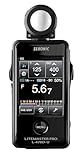
6. Sekonic LiteMaster Pro L-478D-U: Touchscreen With Flash Analysis
Sekonic LiteMaster Pro L-478D-U Light Meter, Touchscreen Incident & Reflected Meter with Flash Analyzing, Cine Frame Rate & Shutter Angle Control, Illuminance & Luminance Measurement
Touchscreen LCD with incident and flash modes
Flash analyzing function
Cine frame rate and shutter angle
8 ounces
Pros
- Intuitive touchscreen that is quick to adjust on set
- Strong in mixed strobe and continuous light
- Cine mode serves hybrid shooters well
- Illuminance and luminance modes
Cons
- 5 degree spot attachment sold separately
- No built-in radio triggering
- A minority report accuracy issues after calibration
- Large menu set takes time to learn
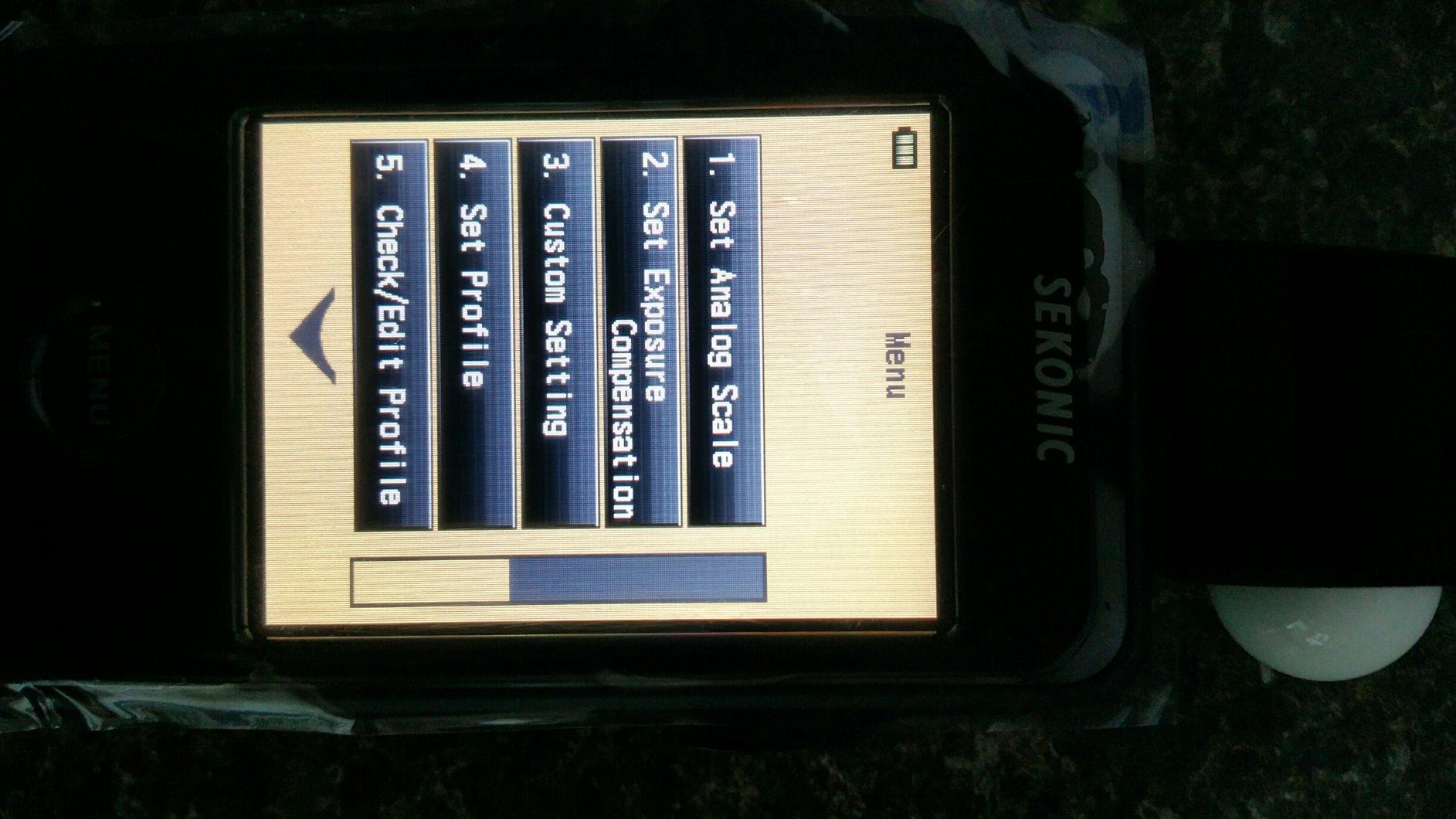
The LiteMaster Pro is the middle of the Sekonic range, and its selling point is a large color touchscreen with intuitive navigation. Photographers working on manual settings describe it as a precision tool that removes guesswork and frees attention for composition, which is the argument for any meter but is felt more strongly when you are not also reading a small screen in sunlight.
Beyond incident ambient and flash measurement, it offers a flash analyzing function to evaluate flash-to-ambient ratios and a cine mode covering frame rate and shutter angle for hybrid work. Illuminance and luminance modes extend it into technical lighting evaluation, and the retractable diffusion dome plus auto shutoff help with handling on set. Power is two AAA batteries, included.
What to watch is the spot metering. The 5 degree evaluative and spot capability requires a separately purchased attachment, and once you add that, the total approaches what the all-in-one models cost. There is no built-in radio connection either.
A small minority of users report readings that stay off even after calibrating against their camera, which is worth knowing if you are the type to cross-check. Most reviewers treat that as an isolated cluster rather than a pattern, and the flash-to-ambient analysis is consistently praised.

Best for mixed stills and video shooters
If you shoot film stills and also run a mirrorless or cinema setup, the cine mode with camera shutter speeds, angles and frame rate input handles both without a second meter. Users who move between the two describe it as the reason they stopped carrying two devices.
The touchscreen also makes exposure compensation and mode switching quick, which suits a photographer repositioning lights between setups.
Before you commit
Check whether the separately sold 5 degree attachment matters to your work. If you need spot metering, factoring it in changes the value comparison against meters that include it.
The menu set is large enough that you should budget time with it before a shoot, and calibrate against your camera’s own readings if precision matters to you.
7. LightMate Lite 2R: The Smallest Meter in the Group
LightMate Lite 2R Light Meter, 30°FOV High Precision Ambient Light Digital Exposure Meter, 0.96in Large OLED Screen, Ultra-Compact 1.24oz, Rechargeable 20H Battery Life, for Film Leica Cameras, Black
30 degree metering lens,0.96 inch OLED,1.24 ounces
USB-C rechargeable, 20 hour battery
Pros
- Extremely small at 26 g for a hot shoe
- Verified against a Leica M6 meter and a Nikon ZF
- Adjustable brightness on the OLED
- Simple button and dial controls
Cons
- Cannot be operated while charging
- No tightening mechanism on the shoe mount
- Some inconsistent auto mode readings
- Manual is not a downloadable document
At 26 grams this is the smallest meter here, small enough to sit on a vintage hot shoe and go unnoticed. The metering lens covers 30 degrees, which suits most situations, and the 0.96 inch OLED has adjustable brightness plus a flip display so you can read it from above on a tripod.
Modes cover aperture priority and shutter priority, along with single trigger, automatic trigger and average metering for steadier results in changing light. Exposure compensation, ND filter compensation and depth of field calculation are built in, and the cold shoe mount position adjusts for different camera bodies. Battery life runs past 20 hours on a USB-C charge.
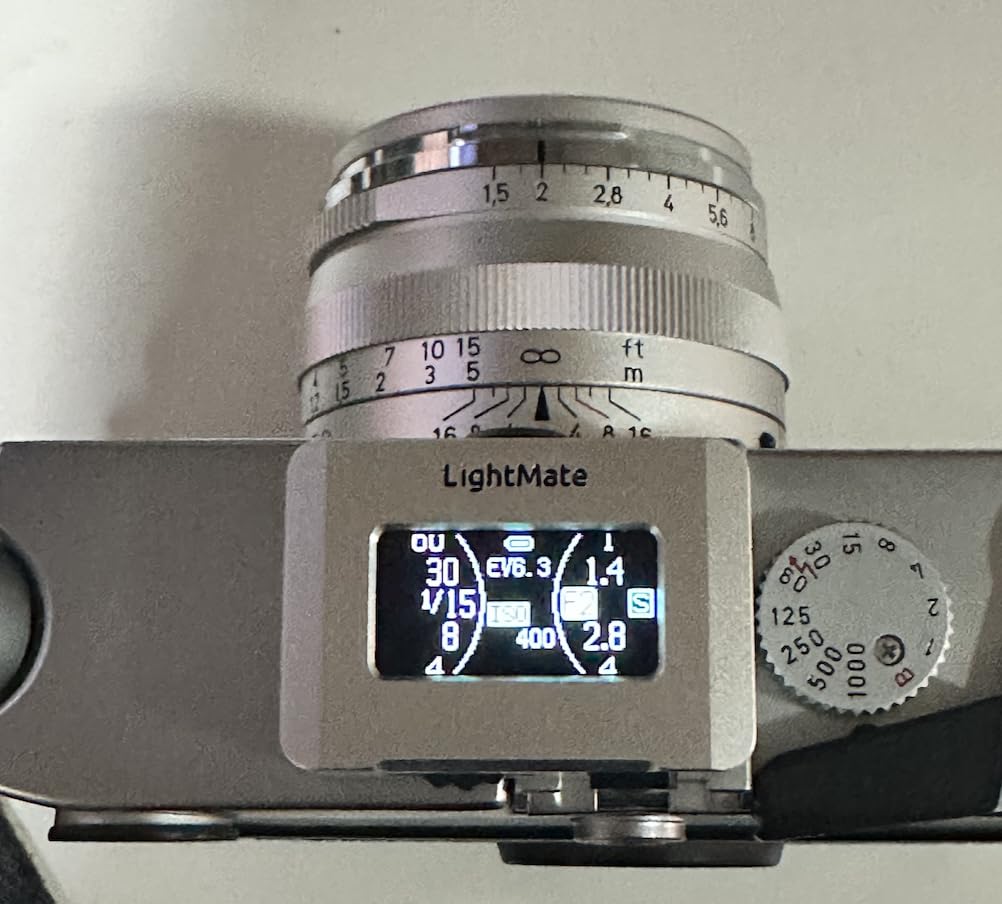
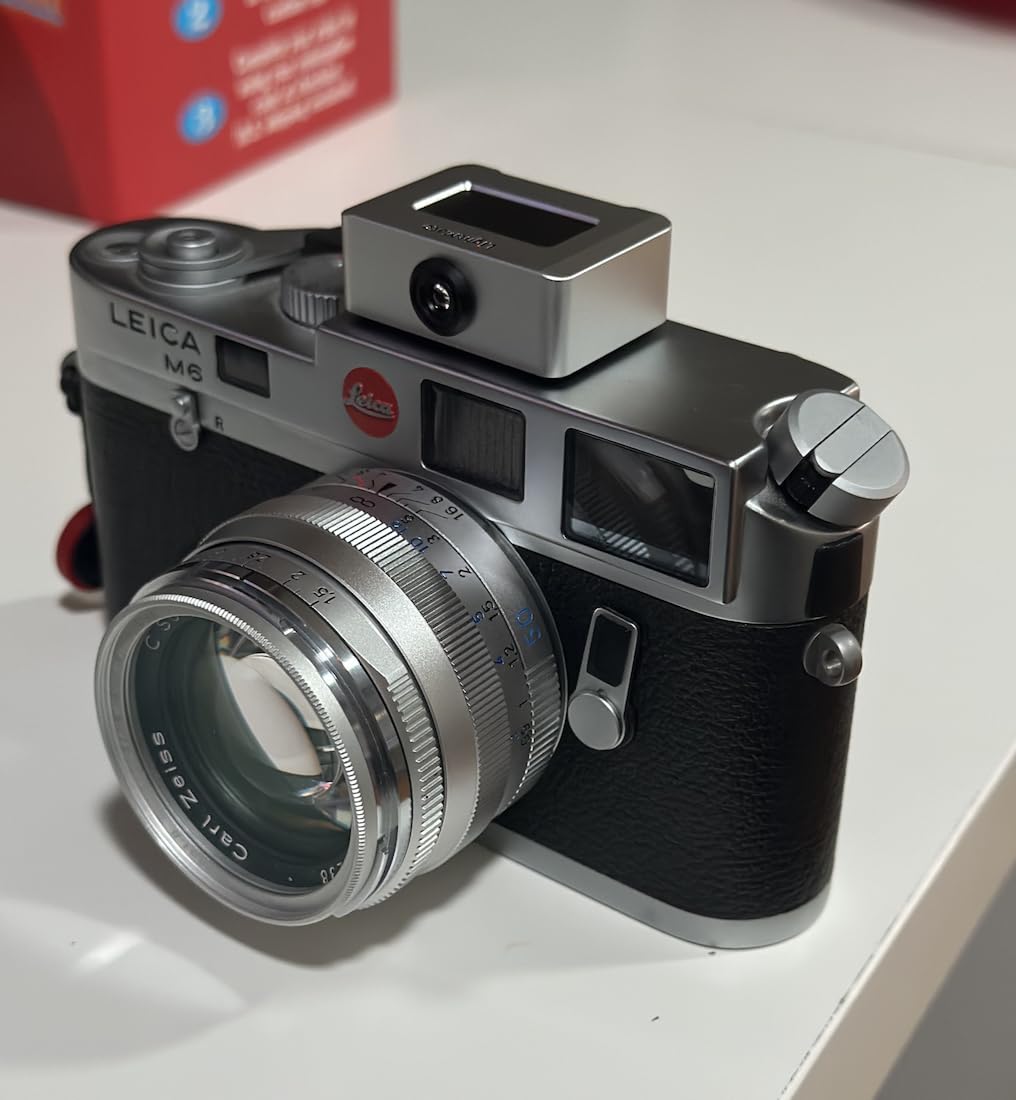
Several owners cross-checked readings against a Leica M6 meter and their own hot-shoe meters and report spot-on agreement, which is encouraging given the size. The 4.1 average comes from a cluster of low ratings focused on behaviour rather than optics, including a menu language that can revert away from English and a manual hosted behind a restricted document.
Two practical issues come up repeatedly. The device cannot be used while charging, so a top-up mid-shoot is not possible, and the shoe mount has no tightening mechanism, meaning it can loosen inside a cage or on a rig and needs checking.
Who will appreciate the size
Anyone who wants a meter present without adding bulk to a Leica, a compact rangefinder or a small TLR. It disappears into a pocket and stays there until you need a reading.
The depth of field calculator and ND compensation make it more than a bare exposure readout for photographers who shoot wide apertures or graduated filters.
Watch out for these
If you shoot on a rig or in a cage, the loose shoe mount is a genuine annoyance. Users on tight deadlines also report occasional inconsistent automatic mode readings that clear after a power cycle.
The small screen is tough for anyone with any vision impairment, and the reflected-only design means no incident or flash measurement.
8. LightMate Area 2S: Spot Metering Through a Finder
LightMate Area 2S Light Meter Photography & OV-X1 17° Retro Viewfinder, 0.96″ Large OLED Screen, Ultra-Compact, Rechargeable Battery, for Leica & Other Film Cameras, Black
OV-X1 17 degree optical viewfinder
0.96 inch OLED, 35 g
Aperture and shutter priority
Pros
- 17 degree finder enables subject and area metering
- Ultra-compact 35 g body
- Full and 1/3 stop step control
- Single
- continuous and average modes
Cons
- Reflective only with no incident or flash measurement
- 17 degree angle needs care in dim conditions
- Small screen is hard for some readers
- Only 17 ratings on record
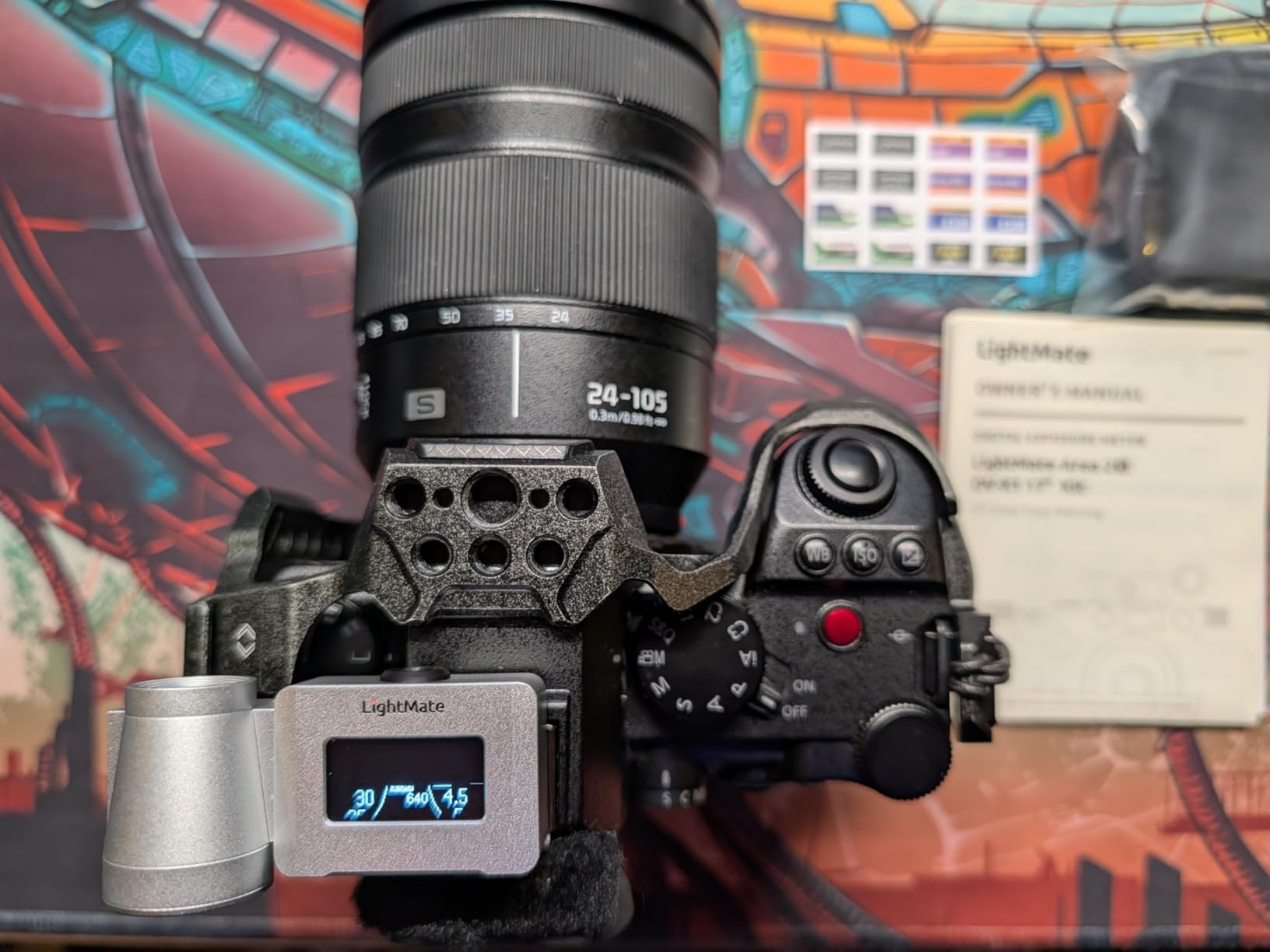
The distinguishing feature is the OV-X1 17 degree optical viewfinder, which mounts to the vfPort interface on the meter and lets you aim at a specific subject or area. On a camera with no built-in meter, that turns a generic ambient reading into something you can point deliberately, which is the closest thing to spot metering available in this size class.
Step values are adjustable, with aperture switching between full and X positions and shutter speed between full and 1/3 stop. Modes are changed with the M-button and work on any camera with manual aperture and shutter control, including twin-lens reflex bodies. Metering runs in single trigger, continuous and average modes, and the rechargeable battery exceeds 20 hours.
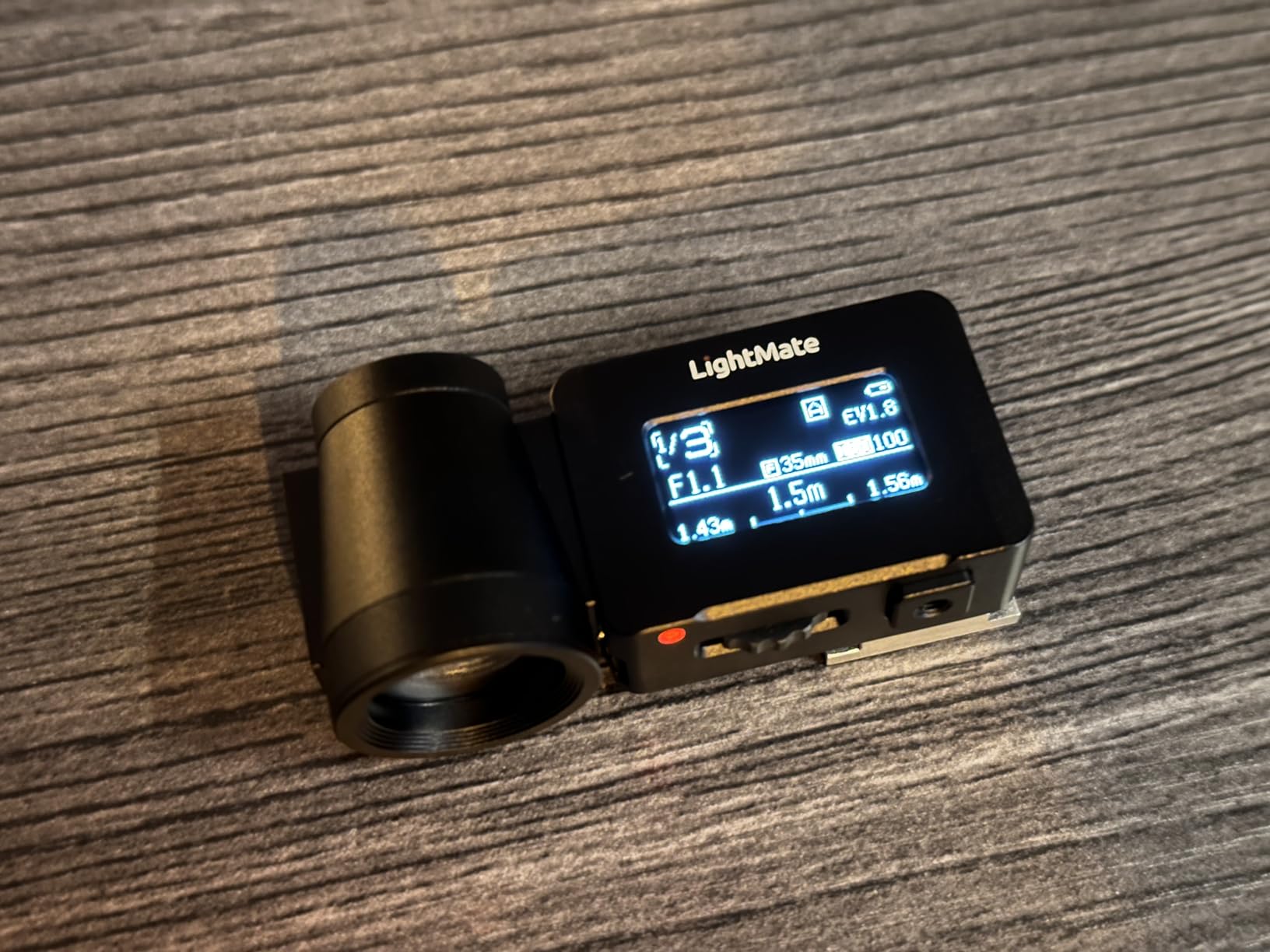
Reviewers single out the finder as the reason to buy, and the rating distribution reflects that, with no one or two star ratings among a small sample. Depth of field calculation using hyperfocal distance is included, which suits street work where you want to know your near limit quickly.
The tradeoff is the narrow 17 degree angle compared with the 30 and 35 degree cells in sibling meters. That is a feature for deliberate zone placement and a constraint in dim light, where you need steadier technique to land the beam on target.
When the finder changes how you work
Anyone placing a specific tone on a zone, or wanting to read the sky separately from the foreground, benefits from aiming rather than averaging. That discipline is the point of the device.
It also suits a camera body with no meter at all, where a wide reflective cell would force you to meter off a grey card in every situation.
Limitations to accept
There is no incident dome and no flash measurement, so studio and tungsten-balanced work is out of reach. In very dim scenes a 17 degree beam is harder to keep on target than a wide cell.
With only a handful of ratings on record, long-term reliability data is limited, which matters if you depend on one tool heavily.
9. TTArtisan Light Meter II: Two Dials and a Replaceable Battery
TTARTISAN Light Meter II Two Dial to Adjust ISO Compatible with Cold Shoe Mount for Speed ISO Photography (Black)
Two-dial ISO and exposure control
1.6 ounce body
Adjustable cold shoe mount
Pros
- Fastest no-menu layout for basic ambient metering
- Clickable dials with positive feedback
- User-replaceable battery
- Retro look suits old cameras
Cons
- Reflective only with no dome
- flash or viewfinder
- Two dials limit adjusting one variable at a time
- Smallest rating base in this group
The design is deliberately spare: two dials, one for ISO and one for the exposure parameter, with clickable feedback and indicator lights that confirm an adjustment. The dial gears were reworked to increase shutter speed positions from 12 to 23 and widen the iris range, which is a real improvement in resolution over earlier two-dial versions.
At 34 grams it sits on a cold shoe without adding weight, the mount position adjusts for older camera bodies, and silver or black finishes match vintage gear. The replaceable battery design is the detail we like most, because a sealed non-rechargeable cell eventually turns an otherwise working meter into scrap.
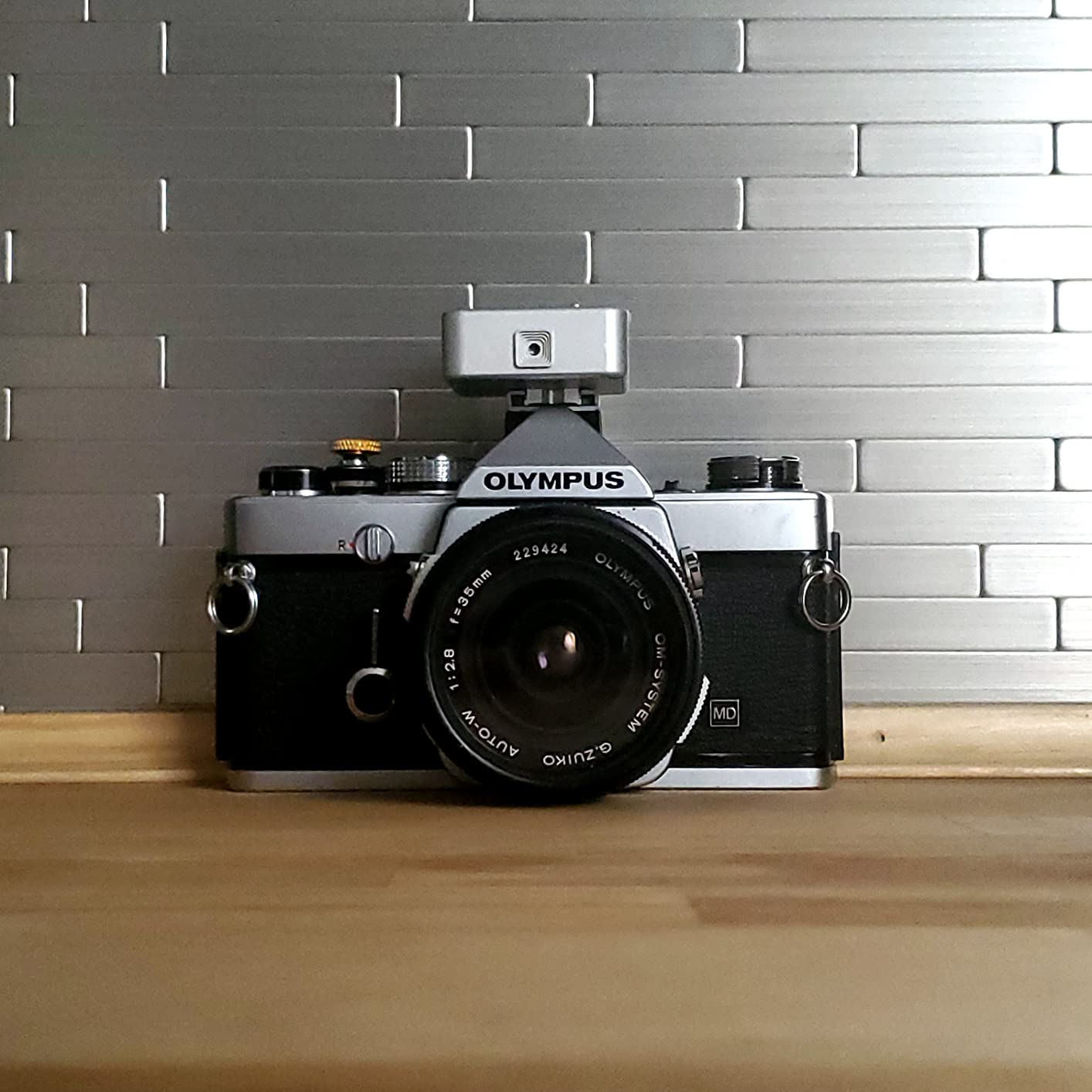
Enthusiasts shooting vintage cameras value the dial simplicity and the audible clicks that tell you a setting has taken. The rating split reflects the limits as much as the appeal: two-thirds of buyers give five stars while a notable share give one, which usually traces back to the same two complaints.
Because there are only two dials, you adjust one exposure variable at a time. Changing ISO means extra steps compared with a three-dial meter, and there is no exposure compensation or depth of field tool to lean on.
Where the two-dial layout wins
Fast ambient work where you set ISO and shutter speed, then dial the aperture on the lens. For street and documentary shooting the meters respond with no wake-up delay and no menu.
Anyone who has had a sealed-cell meter die on them will appreciate a cell they can swap out themselves.
Where two dials are not enough
There is no incident dome, no flash measurement and no viewfinder, so studio work and deliberate subject metering are simply not options. If you need to place a reading rather than average a scene, this is the wrong tool.
With the smallest review base in the group, long-term data is thin, which is worth factoring in for a tool you might rely on for years.
10. CHI L.D. Light Meter Pro: Meter and Rangefinder in One
CHI L.D. Light Meter Pro (Black) for Vintage Cameras and Film Photography
7 degree spot metering on the Pro model
Built-in laser rangefinder, 0.1 to 50 m
0.96 inch OLED
Rechargeable 370 mAh battery
Pros
- Metering and distance measurement in one device
- 7 degree spot gives pinpoint control
- Laser reads from 0.1 to 50 m in low light
- Reported to survive drops
Cons
- Does not lock to the hot shoe and can detach
- Readout faces front
- awkward in a shoe mount
- No incident or flash metering
This is the rarest thing in the group: a pocket light meter with a built-in laser rangefinder that calculates exposure and distance in one step. The Pro version adds 7 degree ultra narrow spot metering, which is genuinely tight for pinpoint exposure control, and the laser runs from 0.1 to 50 m in continuous mode, including in low light.
The 0.96 inch OLED shows ISO, shutter speed, aperture, distance and EV on one screen, and the rechargeable 370 mAh battery gives up to 90 days standby. Scale-focus and rangefinder collectors are the core audience, and owners report that the laser reads accurately indoors and in direct sun when cross-checked against two other digital meters.
One owner reports the unit surviving a fall from a third floor garage, and it can be adapted to twin-lens reflex cameras with an aftermarket cold shoe mount. Two flaws show up consistently in reviews: the shoe mount does not lock, so the meter can detach and be lost, and the readout faces the front of the device, which complicates close-up work from a hot shoe.
What makes it worth a dedicated spot meter
Anyone who focuses by distance rather than by eye benefits from having focus and exposure in the same instrument. Setting a spot reading on a face or a distant subject and confirming range in one motion speeds up the field work considerably.
The 7 degree angle is narrow enough for Zone System placement on individual tones, which few meters this compact manage.
Keep it secure
Because the mount does not lock, treat it as a handheld tool rather than something to leave permanently on a hot shoe. A retention strap or a cage with a friction fit is worth the small effort.
There is no incident dome and no flash measurement, and with only a small number of ratings on record, it is a specialized purchase rather than a universal one.
How to Choose a Light Meter for Film Photography
The first question is whether you need incident measurement at all. Incident metering puts a translucent dome at the subject and measures light falling on it, which is independent of how bright or dark that subject is. Reflective metering reads light bouncing back, like a camera’s own meter, which is easier to use and free, but it inherits the subject’s reflectivity. If you shoot portraits, backlit scenes or anything with flash, incident capability is the feature that removes argument from your exposures.
Next is spot metering and the Zone System. A 1 degree or 5 degree spot viewfinder lets you read a single tone and place it deliberately, which is what the Zone System requires. Meters with a narrow built-in spot, or meters that accept a spot attachment, open up tonal control that reflective averaging cannot reach. The trade-off is a beam that is harder to keep on target in dim light, so spot work demands technique.
Range and sensitivity matter more than most buyers expect. Note the EV range at your working ISO, not at ISO 100, because night and low light work pushes you to high ISO settings and the meter’s sensitivity at ISO 3200 is what determines whether you get a usable reading. Also check the ISO ceiling: several compact reflective meters stop at 3200, which rules them out for push-processed black and white without a calculator.
Power source is a reliability decision more than a convenience one. Rechargeable USB-C meters remove battery anxiety on long shoots and are common among newer compact bodies. Replaceable cells are better than sealed ones, and a photocell that generates power from ambient light, like the analog dial meter, needs nothing at all. Avoid anything where a corroded battery has ended the meter, which is a common failure with older electronic models.
Mounting style matters for camera fit. Cold shoe meters mount to a shoe without electrical contact and suit rangefinders and SLRs. Hot shoe mounted units may use contacts to trigger flash, which is a different feature set. Adjustable shoe positions help with bodies whose shoe geometry does not match. If you switch cameras often, a meter that lives in a pocket and gets used in the hand may suit you better than one that lives on the hot shoe.
Film choice shapes the decision as much as the camera does. Negative film has latitude, so meter the average tone and adjust for contrast. Slide film has almost none, so spot meter the brightest important area and the meter needs to be accurate and repeatable. Push-processed black and white needs enough sensitivity range and a body you can trust at low light. Tungsten-balanced film shot under mixed lighting raises a question about color temperature that most meters do not answer, so you are still working from judgement there.
Phone apps deserve a mention rather than dismissal. A reflective reading from a phone is often within a fraction of a stop of a dedicated meter in good light, and some include reciprocity calculators for long exposures. They cannot measure incident light, which is why they are a companion rather than a replacement when flash or studio work enters the picture.
On the used market, look for a reading that behaves rather than a listing that claims. Ask whether the response is immediate and consistent, whether the needle or display is smooth, and whether any corrosion has crept onto the contacts. A replacement cell or adapter restores most electronic meters, whereas a faded selenium cell changes the calibration and is harder to trust. If you want a broader take on buying film equipment responsibly, our guide to handling and processing negatives at home covers the other half of the cost of a roll.
Frequently Asked Questions
What is the best light meter for film photography?
The Sekonic L-308X-U Flashmate is the most complete choice for most film shooters because it measures incident, reflected and flash light, adds cine modes, and weighs 3.52 ounces. For analog work the Sekonic L-398A runs with no battery at all. Choose a model with a spot viewfinder, such as the L-858D-U, if you practise the Zone System.
Do professional photographers use light meters?
Yes. Studio, fashion, music video and gaffers regularly meter externally rather than trusting a camera reading, because flash duration, strobe ratios and repeatable setups matter when there is no latitude to recover. Landscape-style outdoor shooters often rely on the camera meter, but any setup with several light sources benefits from a dedicated instrument.
Which Sekonic light meter is considered the best?
For most film photographers the L-308X-U offers the best balance of measurement modes and pocketability. The L-398A is the choice for battery-free analog operation, the LiteMaster Pro L-478D-U suits hybrid stills and video shooters, and the L-858D-U is the pick for spot metering and high-speed sync flash duration analysis.
Are Sekonic light meters good for film photography?
Yes. The brand dominates dedicated light meters for stills film work, and owners of the L-308X, L-308X-U, L-398A and L-858D consistently report accurate readings for both ambient and electronic flash. The recurring criticism across owners is not accuracy but interface depth, since the more capable models have large menu sets.
Can I use my phone as a light meter for film?
A phone app gives an accurate reflective reading in good daylight, often within a fraction of a stop of a dedicated meter, and some include reciprocity calculators for long exposures. It cannot measure incident light, so it will not replace a handheld meter for flash, studio or backlit situations, and using a phone one-handed in the cold is awkward.
Is 200 or 400 film better for low light?
Speed is the tradeoff. ISO 200 film has finer grain and more shadow detail than ISO 400 in the same light, but you need a wider aperture or a slower shutter speed to expose it, which is harder to do in low light. ISO 400 is the usual choice for dim scenes because it buys a stop of light and forgives focus errors less than the slower stock would.
How do I meter for film without a built-in meter?
Use a handheld meter in incident mode for daylight work, placing the dome where your subject’s face will be and setting your ISO before reading. For flash or backlit scenes, attach the meter to a grey card held at the subject position and meter the card. Avoid pointing the camera at a bright sky and hoping the foreground works out.
The Meter to Buy First
For most people reading this, the answer is the Sekonic L-308X-U Flashmate. It measures incident, reflected and flash light, weighs 3.52 ounces and carries the strongest rating and review base in this roundup, so you are buying the most proven option rather than a gamble.
Buy the analog L-398A instead if you want a meter that can never die from a flat battery, and buy the L-858D-U if spot metering and flash duration analysis are central to how you shoot. Whatever you choose, our best light meters for film photography picks all read consistently across a roll, which is the real test.