
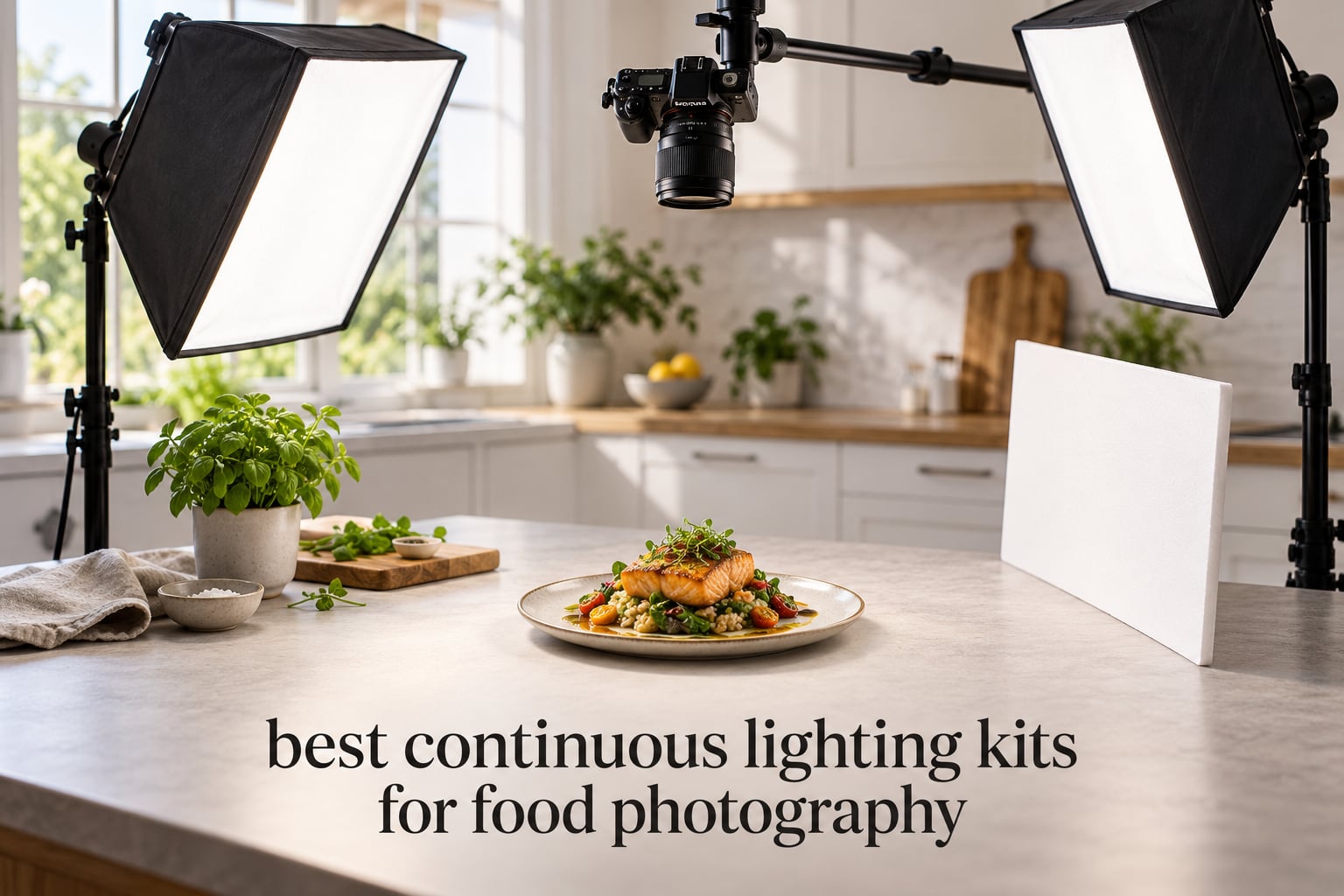
Food is a lighting problem before it is a styling problem. A steak that looks incredible under a north-facing window can turn muddy grey under a cheap panel, and a flat latte turns into a dull disc the moment you point a bare light straight at it. That is why the best continuous lighting kits for food photography are judged on color accuracy, softness and heat, not on raw brightness.
The short answer to the question everyone asks first: the best light setup for food photography is a large diffused key at roughly 45 degrees to one side of the dish, a fill on the opposite side running at about half the key output, and a back or rim light placed behind the subject to push steam, translucency and gloss back toward the camera. Add a white reflector or foam board on the shadow side if you want to lift the blacks without adding a second fixture.
That three-point arrangement works because food is a three-dimensional subject with a complicated surface. A flat overhead light kills every bit of texture in a croissant. A single hard side light carves out one side of the plate and leaves the rest in the dark. Two soft sources at a ratio of roughly 2:1 give you shape without drama, and a rim light behind separates the food from whatever it is sitting on.
We spent weeks putting ten continuous lighting kits through tabletop and flat-lay tests, scoring them on color rendering, output at working distances, modifier compatibility, how much heat they threw at the food, and how stable the included stands were. Specs on a listing page only tell you half the story. If you are still building out a home studio, our guide to photography lighting kits for beginners covers the general gear side. This one is specifically about food.
Top 3 Continuous Lighting Kits for Food Photography in 2026
These three cover the widest range of food work. One is the best all-round buy, one is the strongest when video is part of the job, and one solves the plated-dish problem from a completely different angle.

PULUZ Mini Light Box
- CRI 95 at 5500K
- 104 LED beads
- 10 inch folding cube
- 6 double-sided backgrounds


Every Kit at a Glance
All ten kits, side by side. Read across a row rather than down a column when you are deciding, because the specs that matter most for food change what kind of setup you can build.
| Product | Specifications | Action |
|---|---|---|
| PULUZ Mini Light Box 10 inch |
|
Check Latest Price |
| NEEWER NL660 Bi-Color 2-Pack |
|
Check Latest Price |
| DUCLUS 20 inch Light Box |
|
Check Latest Price |
 RaLeno 20 inch Softbox 2-Pack RaLeno 20 inch Softbox 2-Pack |
|
Check Latest Price |
 NiceVeedi 15W Bi-Color 2-Pack NiceVeedi 15W Bi-Color 2-Pack |
|
Check Latest Price |
 NEEWER NK100 Studio Kit with Backdrops NEEWER NK100 Studio Kit with Backdrops |
|
Check Latest Price |
 NiceVeedi 16 inch Softbox 2-Pack NiceVeedi 16 inch Softbox 2-Pack |
|
Check Latest Price |
 EMART 60 LED Panel 2-Pack EMART 60 LED Panel 2-Pack |
|
Check Latest Price |
 MOUNTDOG Softbox 2-Pack MOUNTDOG Softbox 2-Pack |
|
Check Latest Price |
 UBeesize LED Video Light 2-Pack UBeesize LED Video Light 2-Pack |
|
Check Latest Price |
How We Picked These Kits
Every kit here was judged on the same five things, using real food rather than a grey card wherever possible.
Color accuracy. We checked the stated CRI and, where the light was tunable, how far the color temperature could be pushed before food started to shift. Food is the harshest test of a light source because it is saturated everywhere: tomato, chili, spinach, egg yolk, browned butter.
Output at working distance. We measured against the distance you actually shoot from, not the headline wattage. A panel that is generous at 20 centimeters can be flat at a metre, and that difference decides whether a softbox is viable.
Modifier compatibility. We checked whether the light accepts standard softboxes and whether the mount is one you can keep using. Proprietary fittings lock you in for life.
Thermal behaviour. Continuous lights sit close to the subject for long stretches. We looked at how long a garnish and a plated dish could take before wilting, which is why metal-bodied fixtures scored well.
Stand and mount build. A cheap stand that drifts or a head that tilts out of position ruins more food shots than bad color does. The included hardware matters more than most listings suggest.
Our verdict, which matches what we hear in every photography community we checked: CRI below 95 is the one specification that reliably kills a shot. Below that threshold, saturated food looks flat and dead no matter how good the lighting angle is.
1. PULUZ Mini Light Box – The Best All-Round Continuous Kit for Food
PULUZ Mini Photo Studio Light Box, 10″x10″ Portable Folding Photography Lightbox with CRI >95 104pcs LED Light & 6 Kinds Double-Sided Color Backgrounds for Small Products
10x10x10 inch box
104 LEDs at 5500K
CRI 95
USB powered
Pros
- CRI 95 at 5500K for accurate food color
- Collapses flat and sets up in seconds
- Front
- side and top shooting windows
- Six double-sided PVC backgrounds included
- Long USB cable and diffuser cloth included
Cons
- 10 inch cube is tight for larger dishes
- Panel to cord connector works loose over time
- Fixed 5500K with no color temperature control
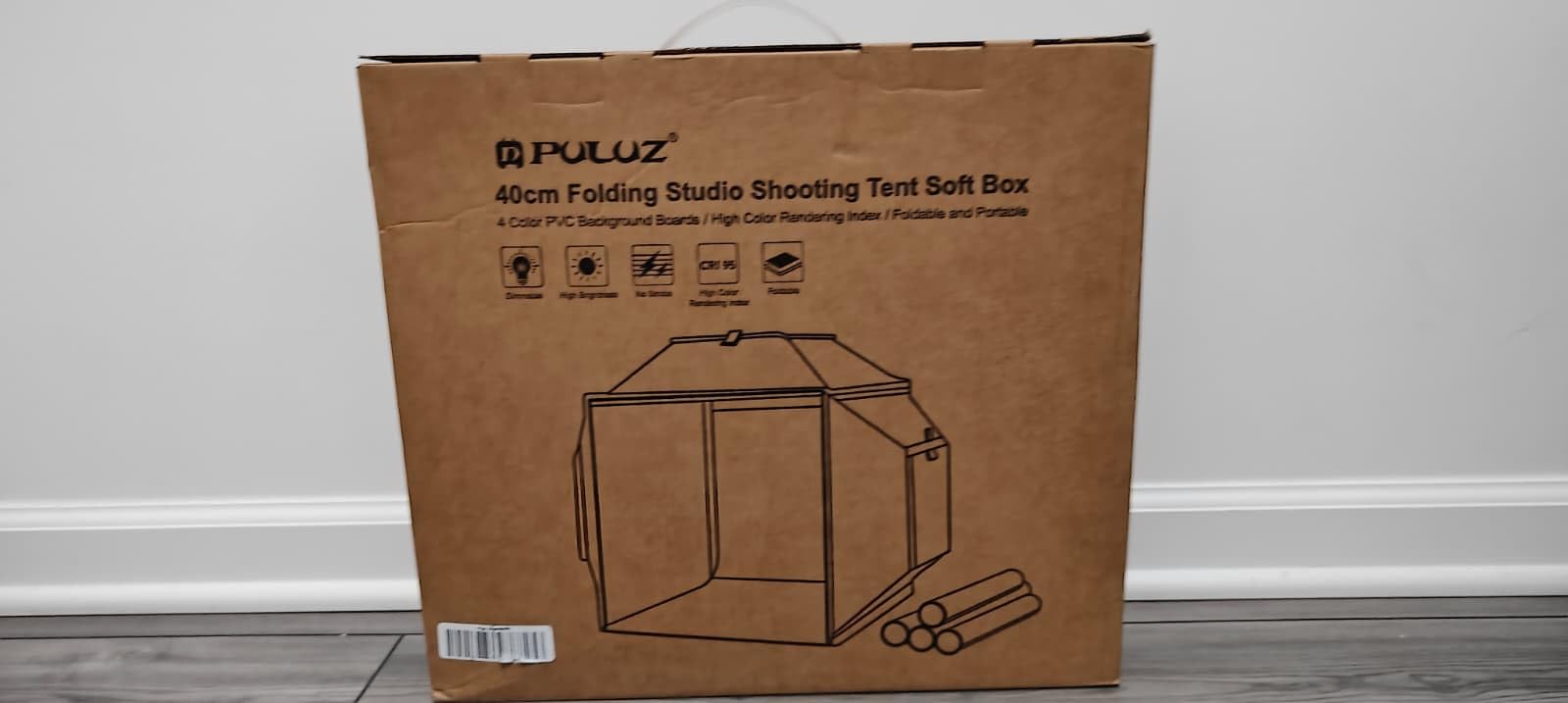
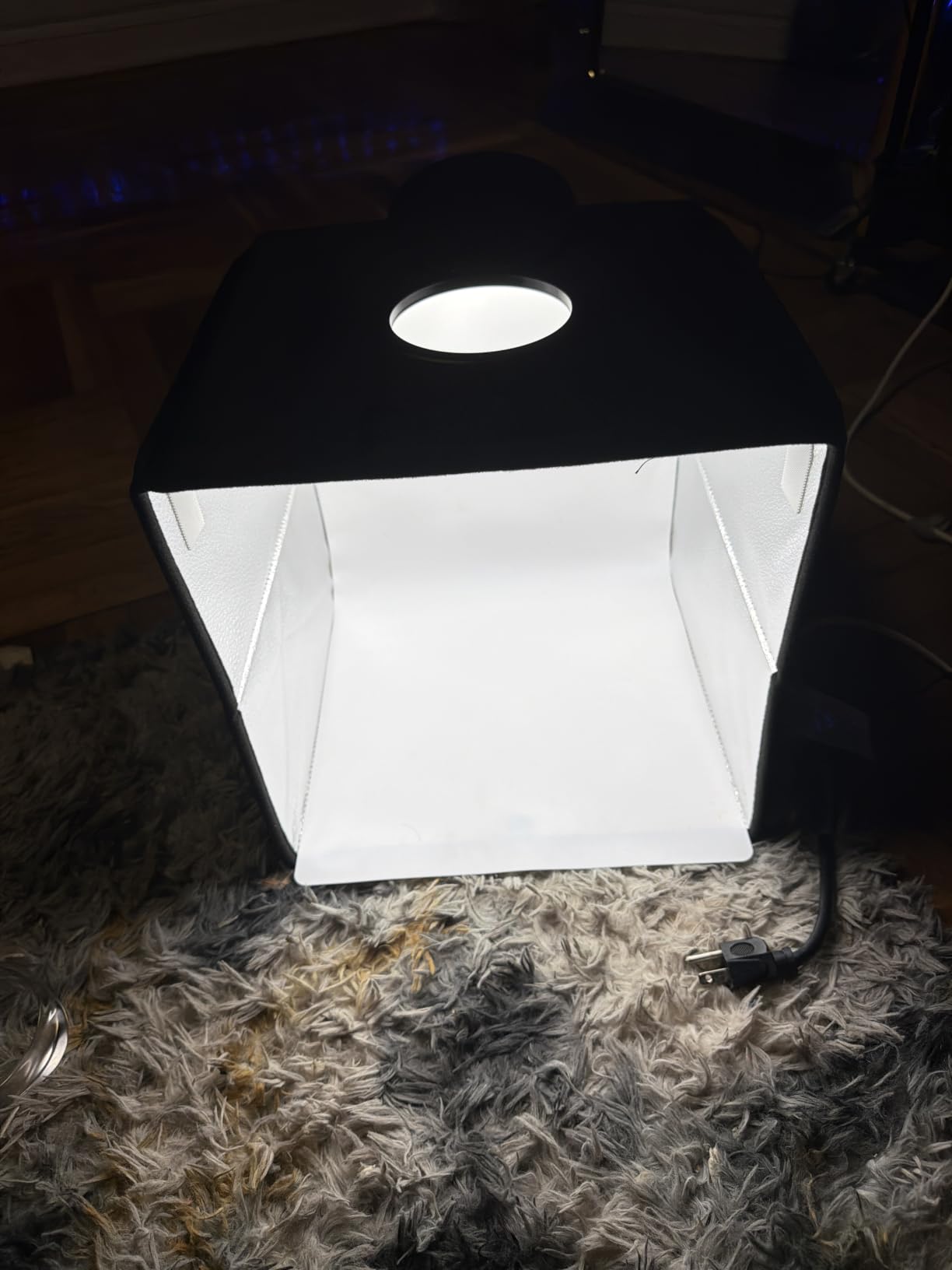
This is a light box rather than a pair of heads, and for food that difference is the whole point. Instead of shaping light with modifiers, you put the dish inside a white cube and let the light wrap around it from every direction, which is exactly what you want for a plated lunch, a stack of pancakes or a bowl of cereal.
The numbers hold up for the job. The 104 LED beads sit at 5500K with a CRI of 95, which is right at the threshold we treat as non-negotiable. Ten watts and USB power draw is modest, but inside a small enclosure that output goes nowhere useful, so the effective brightness on the subject is far higher than the wattage suggests.
 95 104pcs LED Light & 6 Kinds Double-Sided Color Backgrounds for Small Products customer photo 1″ class=”wp-image-customer”/>
It assembles in about three seconds and folds into a flat bag. That matters more than it sounds if you are a food blogger shooting on a kitchen table at odd hours rather than in a rented studio. The box is genuinely portable, and one background shoots a whole session.
Six double-sided PVC backgrounds are included, which covers the neutral sweep work most recipe and menu shots need without a trip for seamless paper. A diffuser cloth and a long USB cable round out the kit, so you can run it from a laptop or a wall adapter.
 95 104pcs LED Light & 6 Kinds Double-Sided Color Backgrounds for Small Products customer photo 2″ class=”wp-image-customer”/>
When this box is the right call
Reach for it when your subject is small enough to fit comfortably inside a 10 inch cube and your priority is clean, even, shadowless light rather than drama. Overhead flat lays, plated breakfasts, desserts and small-batch recipe photography all fall straight into that lane. There is almost no learning curve.
It is also the cheapest way to get consistent color on a repeatable set. Because the light source does not move and does not change with the weather, your results are the same in January and in July, which matters enormously when a brand is commissioning monthly content.
Where it will frustrate you
The 10 inch footprint is the hard limit. Once you try a large serving board, a tall cake or a wide flat lay of a whole spread, you will be cropping the edges or propping the lid open, which returns you to uneven light. The 12 inch version stretches this, but the design still is not a full studio.
Color temperature is fixed at 5500K with no tuning, so you cannot warm up a plated dish the way you would with a bi-color head. The panel-to-cord connector is a non-locking snap fit and it works loose for anyone who packs the box away daily. Budget a few minutes of troubleshooting after a long pack-and-shoot cycle.
2. NEEWER NL660 Bi-Color 2-Pack – Best for Food Video and Reels
NEEWER 2 Pack Bi Color 660 LED Video Light and Stand Kit, 3200-5600K
40W per head
CRI 96+
3200K-5600K
3300 lux at 1m
Pros
- CRI 96+ with 3200K-5600K bi-color range
- 3300 lux at 1m per head
- Aluminum body dissipates heat without a fan
- Barn doors plus 360 degree tilt U-bracket
- Battery or AC power for on-location work
Cons
- Small rear LCD screens are hard to read
- Barn doors can hit the bracket when tilted
- Batteries sold separately
This is the strongest rating in the group and the kit we would hand to someone shooting both stills and short-form video. The reason is simple: two independent heads mean you can build a real key and fill relationship instead of splitting one source across the whole table.
Each head carries 660 LED beads, 330 warm and 330 cool, running 40W at up to 3300 lux at one metre. The bi-color range from 3200K to 5600K is the useful part for food, because the warm end lets you push a golden tone into bread crust and pastry while the cool end neutralizes a dish shot under mixed household lighting.
CRI 96+ clears our threshold with room to spare, and dimming runs from 0 to 100 percent so you can dial a fill to roughly half the key without a second purchase. Barn doors on both heads plus the 360 degree U-bracket give you genuine control over spill, which is how you keep light off a distracting wall.
The metal construction is the sleeper feature. There is no fan, so nothing competes with your audio capture, and the body sheds heat rather than blowing it onto the dish. Reviewers report units still performing after years of heavy use, which is the ownership track record that matters most for a working kit.
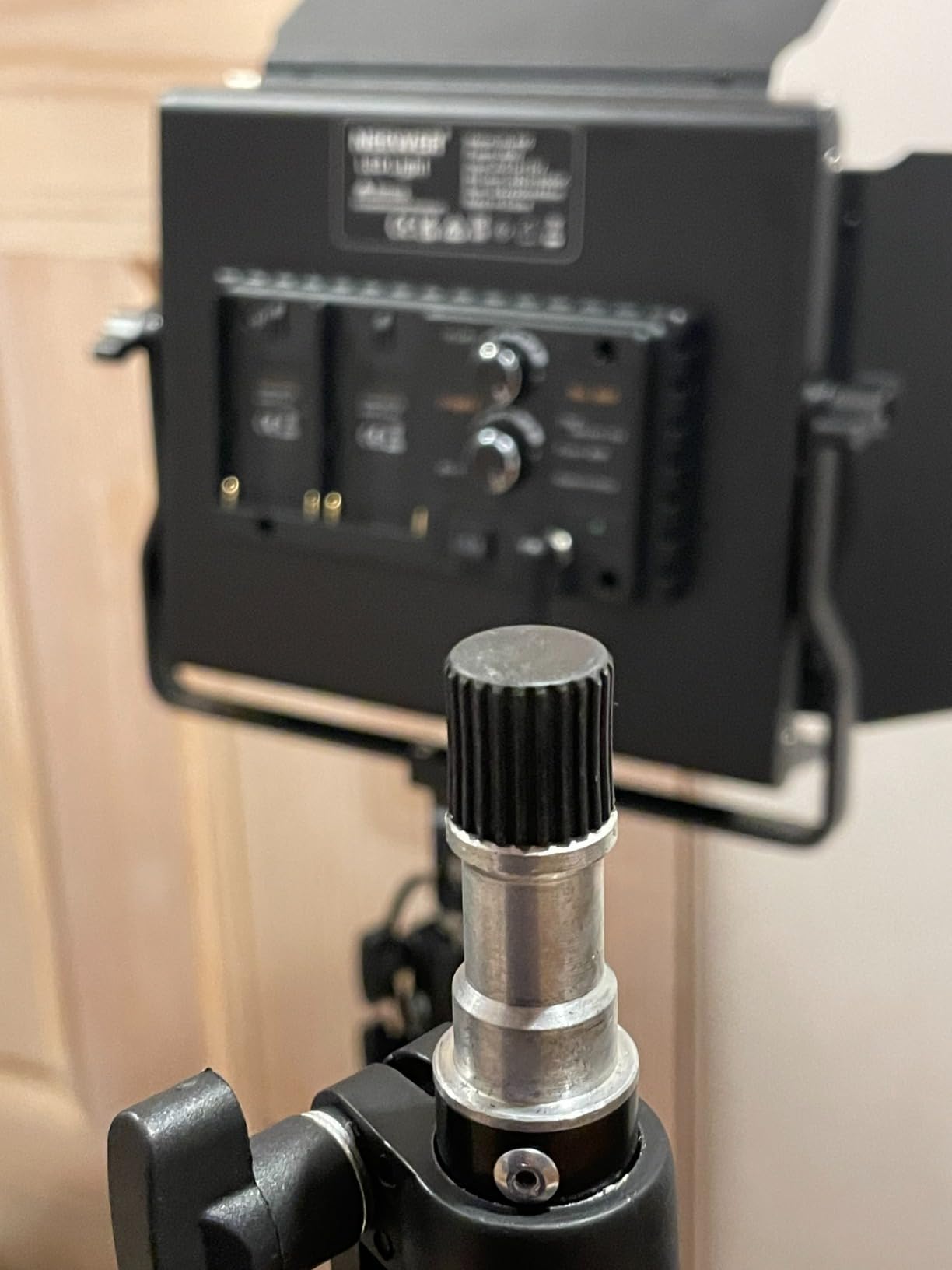
What makes it the video pick
The combination of bi-color control, 0 to 100 percent dimming and fanless metal construction covers the three things that ruin food video most often: a green cast when color temperature does not match, visible flicker when output is dialled down, and fan noise sitting in the audio track. This kit addresses all three.
You can also run each head from NP-F550 or NP-F970 batteries, so a restaurant shoot does not depend on finding a socket behind the pass. That flexibility is why restaurant and menu shooters gravitate to a pair like this.
Where it falls short
The ergonomics are dated rather than broken. The rear LCD panels are small and hard to read at a glance, and the color temperature and brightness knobs are continuous with no detents and no numeric readout, so matching two heads to the same setting takes patience.
The barn doors can collide with the U-bracket when the head is tilted, and the included aluminum tripods are lighter duty than the heads they carry. Batteries are not included, and the stands extend to 75 inches, which is fine for a table but low for a full-height overhead rig.
3. DUCLUS 20 inch Light Box – Best for Plated Dishes and Larger Props
DUCLUS Light Box Photography 20″ x 20″, Large Portable Photo Studio Light Tent kit, Professional Dimmable Photo Booth with 216 LED Lights & 6 Backdrops for Jewelry and Food Items Product Photography
20 inch cube
216 LEDs at CRI 95+
5500K
Dimmable
Pros
- 20 inch cube fits plated dishes and larger props
- 216 LEDs at CRI 95+ and 5500K
- Even shadowless light cuts editing time
- Three windows plus a top-down opening
- Waterproof PVC backgrounds wipe clean
Cons
- Frame tubes can be tight or loose in the corners
- Wiring harness is short so the controller hangs
- No color temperature adjustment
The step up from a 10 inch box is the 20 inch cube. That single dimension change is what lets a full dinner plate, a charcuterie board or a stack of pancakes sit inside without anyone improvising with a knife and a baking tray.
216 LEDs at CRI 95+ and 5500K fill the enclosure evenly, and a dimmer lets you control exposure on reflective items like a glossy glaze, a metal spoon or a wet cocktail glass. Even, near-shadowless output means less time in post, which for a food blogger producing weekly posts is the real return.
Three shooting windows plus a top-down opening cover the angles food photographers actually use: front-on for plated dishes, side for macro work on texture, and top for flat lays. Six wrinkle-free waterproof PVC backgrounds are included and wipe down after a splash of sauce or oil.
The two-year warranty is the longest here, and owners point out that support resolved a broken LED harness quickly under it. For anyone buying this once and expecting it to last several years, that coverage carries weight.
Why a tent beats two heads for plated work
Two softboxes at 45 degrees give you shape and falloff, which is right for a hero shot with a dramatic mood. A light tent gives you flat, even, controllable light, which is right for documentation-style images, menu boards and marketplace listings where every dish needs to look the same as the last.
If you shoot recipes where the reader needs to see exactly what went in the pan, the tent approach is faster. You place the dish, open a window, and shoot. There is no flagging, no bouncing and no meter matching between shots.
What to watch out for
The complaints cluster around the frame. On the larger sizes, tube ends can arrive miscut or too loose in the corner fittings, and some owners report sharp tube ends straight out of the box. Check the frame before a paid session and trim or file if needed.
The wiring harness is short, so the controller hangs rather than sits, and it runs warm enough to need airflow. There is also no color temperature adjustment at all, which means a dish shot under this light will look cooler than one shot under a warm kitchen. Many food stylists correct for that in post, but plan for it.
4. RaLeno 20 inch Softbox 2-Pack – Best for Color Accuracy You Can Tune
RALENO Softbox Photography Lighting Kit, 2Pack 20″x20″ Soft Box Light
CRI 97 bulbs
2500K-7500K tuning
50W per head
Remote control
Pros
- CRI 97 bulbs render saturated food colors well
- Tunable from 2500K to 7500K via remote
- Quick-release umbrella softbox heads open instantly
- Aluminum stands with solid locking stay steady
- Runs cool enough to light plated food closely
Cons
- Remote shipped without the two AAA batteries
- Bulb-based heads need E27 replacements
- Two heads need careful placement to avoid flat images
This is the kit we recommend to anyone whose food is genuinely saturated. Tomatoes, strawberries, cured salmon, herb sauces, egg yolks. CRI 97 bulbs hold those hues far better than the fixed 80-rated kits further down this list, and the consistency owners report is unusually high for the price.
The tuning range from 2500K to 7500K is the part that earns its place on a food set. At the warm end you can make bread crust and roasted vegetables look richer. At 5000K to 5500K you get a neutral, accurate read for recipe content. Control is via a 2.4G remote, so you can change brightness and color temperature without walking back to the stands mid-setup.
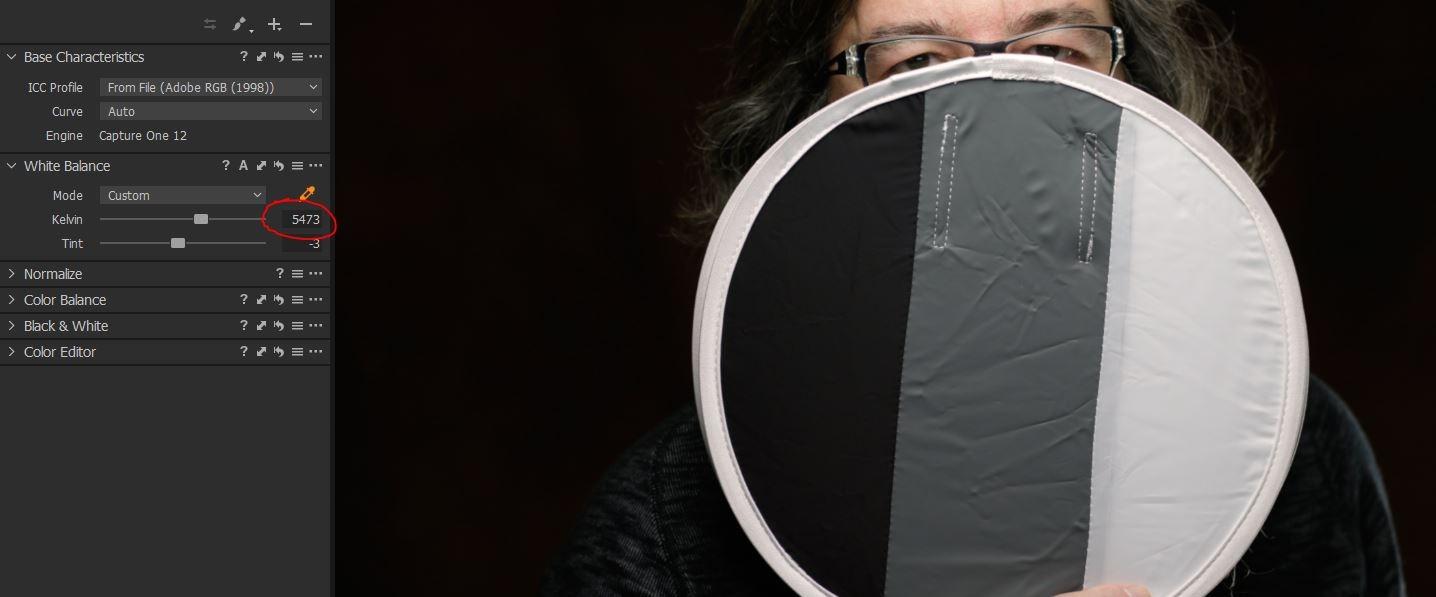
Two 20 inch square softboxes with silver reflective interiors give you a genuinely large source. That size is the reason shadows soften and the wraparound look appears, and it is the single most effective upgrade you can make to a food setup. Reviewers consistently point to the fast-opening umbrella-style heads, which pop open in seconds and collapse just as fast.
Each head takes a 50W LED bulb rated at roughly 8000 hours of service life. Because these are bulb-based, replacements are standard E27 items you can source anywhere, which is both a convenience and a running cost to plan for.
When this is the right kit
Choose it when color fidelity is the thing clients keep commenting on, and when you shoot both stills and video from the same rig. The tuning range means you can match ambient light in a restaurant without hunting for gels, and the CRI means the raw file already looks close to finished.
It is also a strong two-light kit for a home studio because both heads are identical. Matching two fixtures is trivial when the two fixtures are the same fixture, and there is no color cast to correct between key and fill.
What to keep in mind
The remote ships without its two AAA batteries, which is an annoying detail on the day you need it. And because the heads are bulb-based rather than integrated LED, spares cost extra over the life of the kit in a way that integrated panels never do.
A real risk with two softboxes is that inexperienced setups put both at equal power and end up with flat, lifeless images. Keep the fill at roughly half the key and the two heads will work as a pair rather than cancelling each other out.
5. NiceVeedi 15W Bi-Color Panel 2-Pack – Best for Small Tables and Tight Budgets
2-Pack LED Video Light Kit, NiceVeedi Studio Light, 2800-6500K Dimmable Photography Lighting Kit with Tripod Stand&Phone Holder, 73″ Stream Light for Video Recording, Game Streaming, YouTube
15W per panel
CRI 97+
2800K 4800K 6500K
Remote dimming
Pros
- CRI 97+ at three selectable color temperatures
- Dimming from 10 to 100 percent via remote
- Aluminum tripods extend to 60 inches
- USB-C power from laptop or power bank
- Thickened panel shell doubles as a diffuser
Cons
- 15W per panel is modest for large glossy setups
- No wall charger included
Two 10 by 7.8 inch panels on stands that reach 60 inches, with three color temperature settings and a CRI of 97+. That combination puts this kit ahead of far more expensive options on paper, and in a small kitchen it is one of the few two-light setups that will actually fit without rearranging the room.
The three presets at 2800K, 4800K and 6500K are the practical feature. They are not a continuous dial like the RaLeno kit, but they cover the three situations food photographers hit most: warm and comforting, neutral and accurate, and cool and fresh for drinks, ice cream and cold dishes.
Remote dimming from 10 to 100 percent lets you set a fill ratio without touching the stand, which speeds up a session noticeably. USB-C power means you can run both heads from a laptop, a power bank or a wall adapter, so there is no hunting for outlets in an unfamiliar kitchen.
The thickened panel shell doubles as a diffusion layer, so output is softer than a bare LED panel at the same wattage. That matters for food, where a bare panel produces a hard specular dot on a glossy glaze or a wet cocktail glass.
Where it earns its slot
Small kitchens and rental apartments. The stands fold to 17 inches and the whole kit fits in the included storage bag, which is exactly what a food blogger shooting at home needs. Two independent color settings also let you light a hero shot warm and a documentation shot neutral without rebalancing.
It is also a sensible first real lighting kit for someone moving up from built-in or phone lighting, because the jump in quality comes from the panel size and CRI rather than from expensive modifiers.
Its limits are power, not quality
Fifteen watts per panel is modest. It handles close-up and tabletop work well, especially in pairs, but it needs to be positioned close or supplemented if you are lighting a large spread, a tall subject or a glossy surface that throws specular highlights.
No wall charger is included, so you need a 5V 2A adapter or a power bank to run the kit. It is a small omission and it catches out first-time buyers who assume the box opens and runs.
6. NEEWER NK100 Studio Kit with Backdrops – Best All-in-One Home Studio
NEEWER Photography Lighting kit with Backdrops, 8.5x10ft Backdrop Stands, UL Certified 5700K 800W Equivalent 24W LED Umbrella Softbox Continuous Lighting, Photo Studio Equipment for Photo Video Shoot
Two heads with 24W bulbs
CRI 80
5700K
Backdrop system included
Pros
- Complete two-head lighting plus a full backdrop system
- Umbrellas and softboxes give very soft wraparound light
- Seven foot heavy-duty stands with single-action locks
- Four bulbs give spare or multi-head flexibility
- Carry bags included for both kits
Cons
- CRI 80 is below the accuracy food work needs
- Color temperature fixed at 5700K with no control
- Large footprint needs real floor space
- Polyester backdrops crease easily
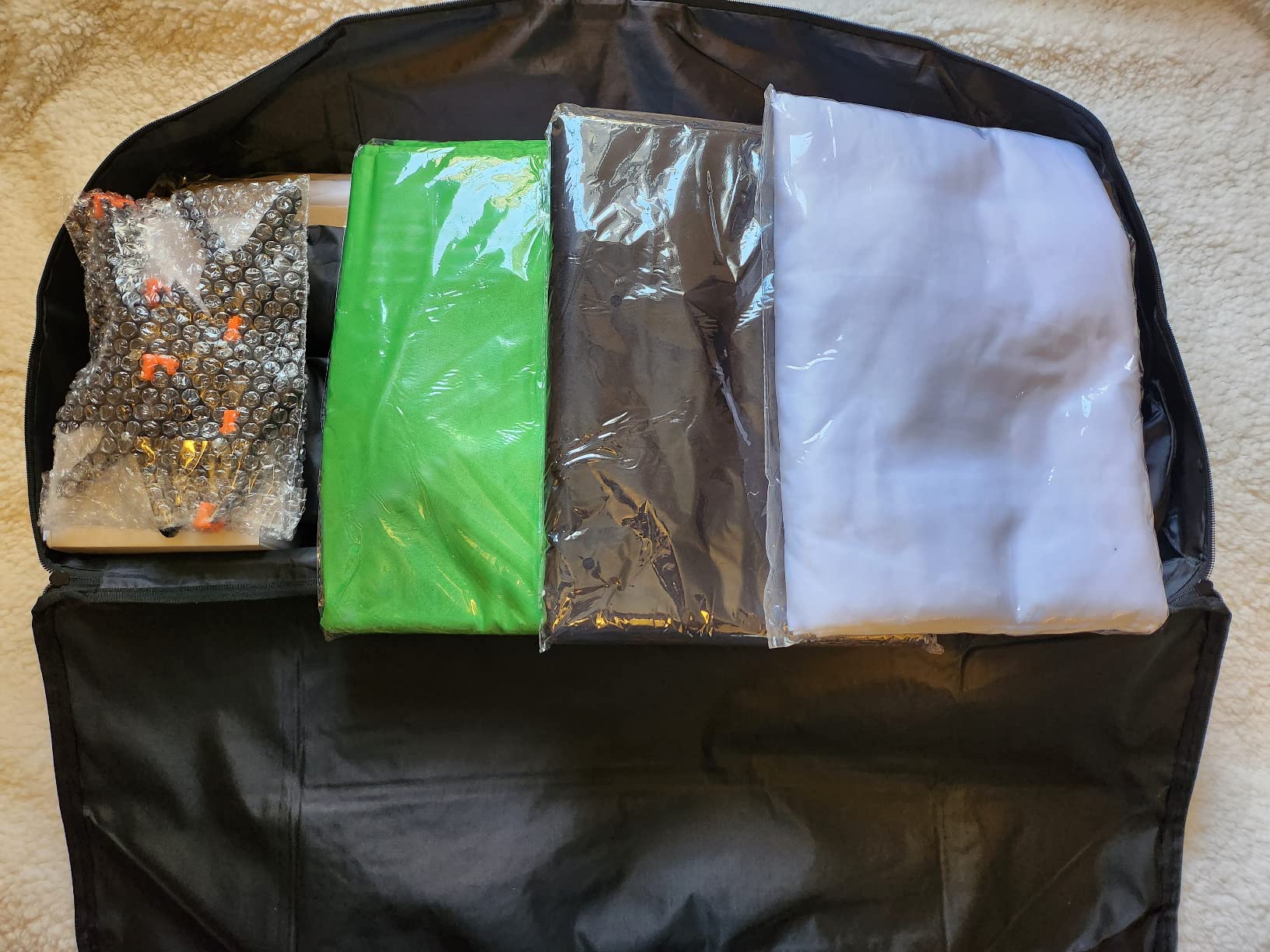
Nobody sells you the whole studio in one box more completely. Two single-head light holders, two 33 inch translucent umbrellas, two 24 inch softboxes, four 24W LED bulbs, four 7 foot heavy-duty stands, three polyester backdrops with clamps, and an 8.5 by 10 foot support system. Carry bags for both halves are included.
For someone starting from an empty room, this removes the shopping list entirely. The umbrella-plus-softbox combination gives very gentle, shadow-reducing illumination, and reviewers building a home studio regularly describe the output as flattering for product work.
The stands are the quiet strength. Four 7 foot heavy-duty tripods with single-action locks adjust quickly and hold position, which addresses one of the most common complaints about budget kits where the stand is the weak link.
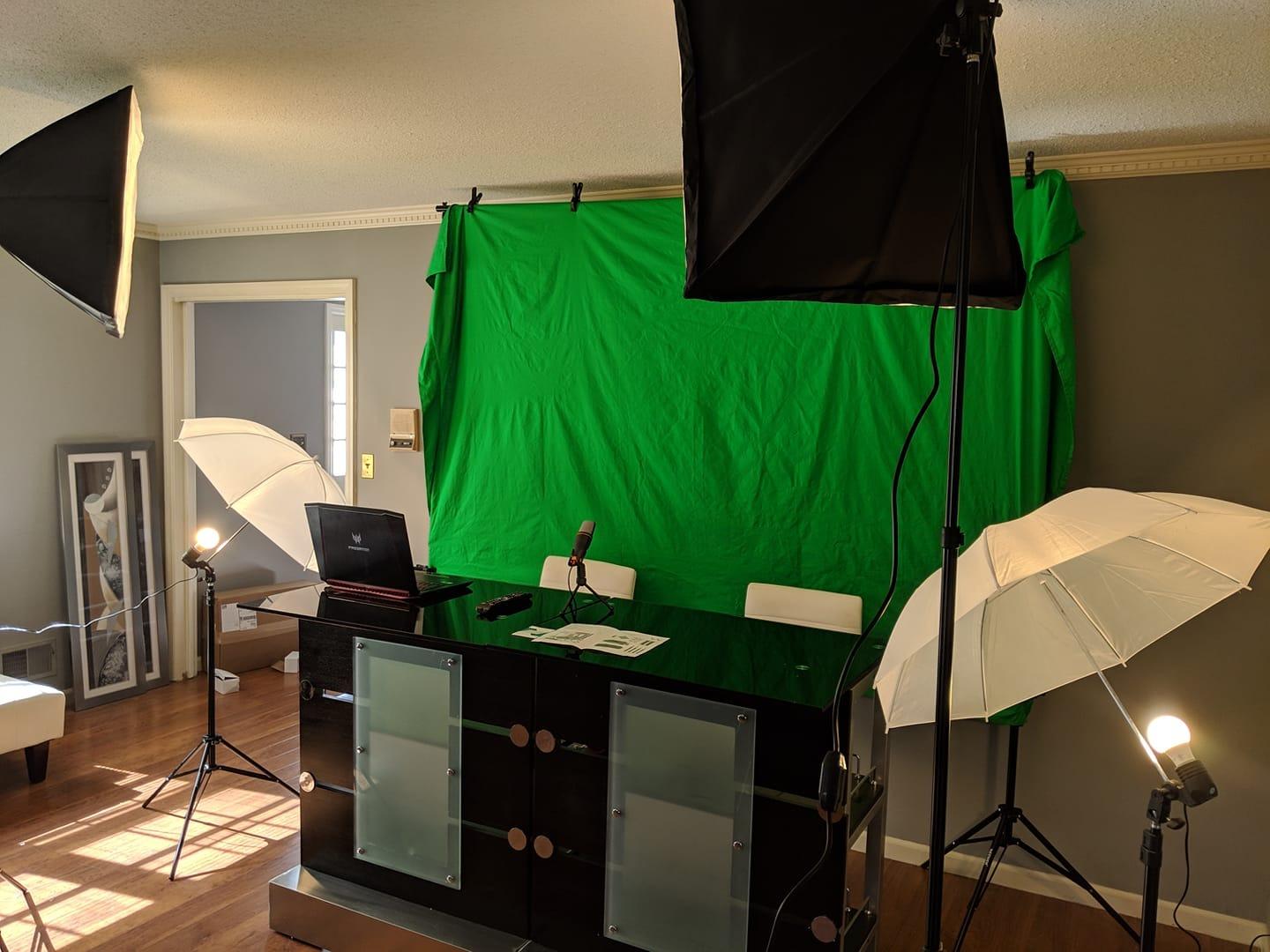
There is one hard stop for food work, and it is not a small one. The bulbs are rated CRI 80 at a fixed 5700K with no tuning whatsoever, which puts this kit below the threshold that experienced shooters treat as the minimum for saturated food. A tomato shot under CRI 80 looks noticeably duller than the same tomato under CRI 95.
You can correct some of it in post with white balance and saturation adjustments, but you are editing around a source error rather than fixing it, and highly saturated sauces still fall short.
When it still makes sense
If your work is product shots, crafts, or straightforward recipe documentation where the subject is pale and low in saturation, the soft wraparound light is pleasant and forgiving, and the complete kit will get you shooting on day one.
It is also the easiest way to get a permanent backdrop system alongside your lighting, which is the piece most beginners forget to budget for. The support system and clamps alone would be a separate purchase.
What to plan around
The footprint is the other issue. Multiple stands, a backdrop system and light heads need a real corner of a room and a clear path around them. In a small kitchen, a single panel on a boom or clamp often makes more sense than a full studio layout.
The polyester backdrops crease more readily than seamless paper, so budget time for steaming, and remember that CRI 80 plus a fixed 5700K means your white balance correction will be doing real work. If saturated color is central to your food style, spend the money on a high-CRI head instead and use this kit as a secondary source.
7. NiceVeedi 16 inch Softbox 2-Pack – Best for Flicker-Free Video Recording
Softbox Lighting Kit, NiceVeedi 2-Pack 16” x 16” Softbox Photography Lighting Kit with 63” Tripod Stand & 5400K 450W Equivalent LED Bulb, Continuous Lighting for Photography/Video Record
16 inch softboxes
50W bulbs
5400K
Anti-flicker rated
Pros
- Anti-flicker bulbs rated for 4K 60fps and 1080p 30fps
- Two 16 inch softboxes give soft even light
- Reverse-folding stands keep full 63 inch height reach
- Quick assembly with storage bag included
- Thicker tube diameter improves stability
Cons
- CRI 80 needs color correction in post
- Color temperature fixed at 5400K
- Stands are not heavy duty and tip easily
- Fabric and bag can carry a strong chemical odor
The specification that separates this kit from every other budget softbox set here is the anti-flicker rating. The bulbs are rated clean for 4K 60fps and 1080p 30fps recording, and flicker at dimmed settings is the single most common complaint that budget LED panels attract from video shooters.
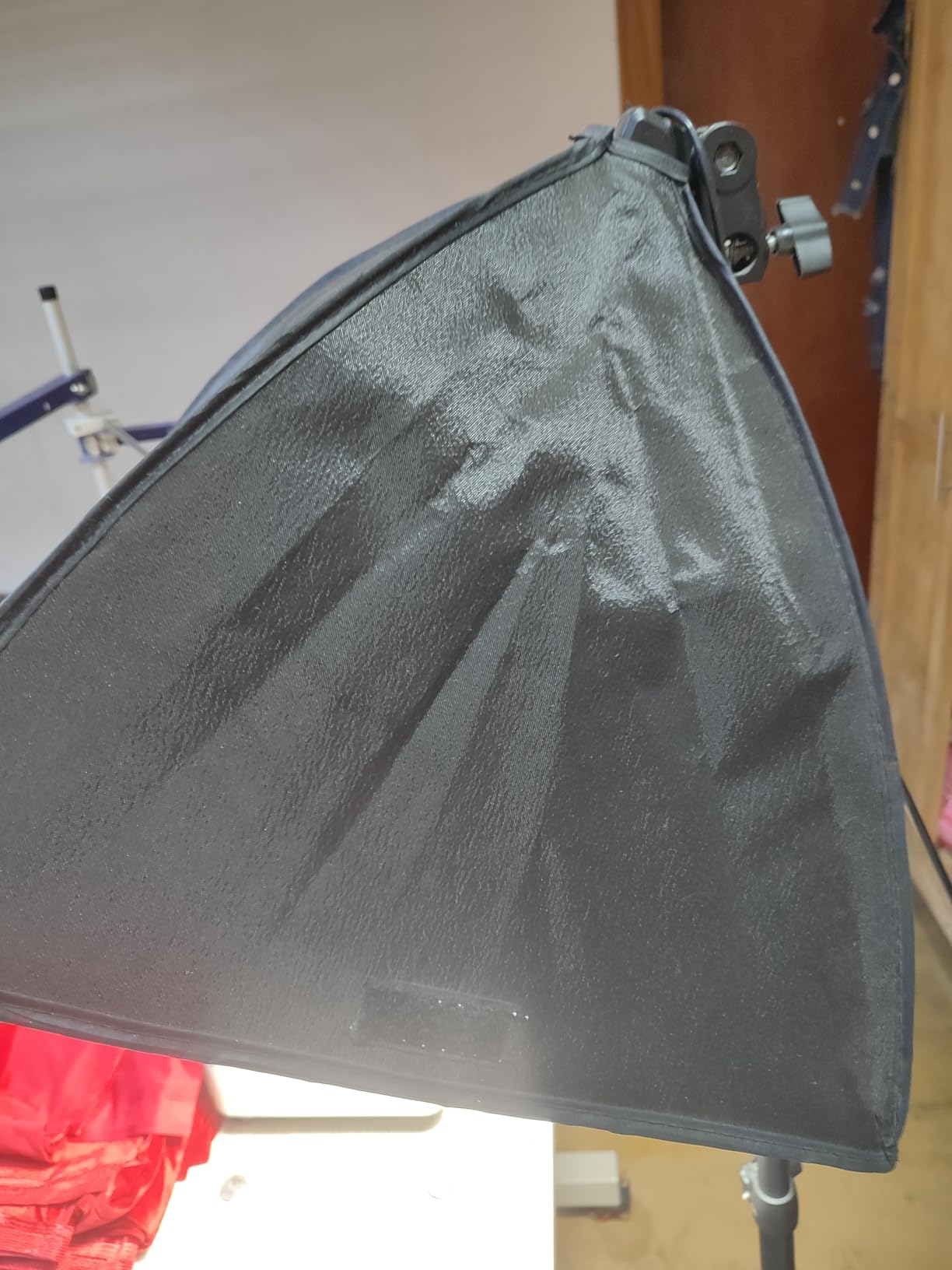
Two 16 inch softboxes give you a source large enough to actually soften light rather than just spread it slightly. On a tabletop dish that means the shadow under a bowl or a glass softens into a gradient rather than a hard black shape, and the texture of a crumb or a flaky pastry top survives.
The reverse-folding tripods are a genuinely thoughtful detail. They collapse to 15 inches while still reaching 63 inches when raised, which makes them much easier to fit in a car boot or a kitchen cupboard than a conventional tripod of the same height.
Assembly is quick and everything needed is in the box, including a storage bag. The thicker tube diameter in the legs is heavier than the usual budget tripod, and users notice the difference in stability while adjusting a head at full extension.
If you shoot on a phone or a mirrorless body and care about the video side of your food content, the flicker-free claim alone justifies this kit over a cheaper softbox set.
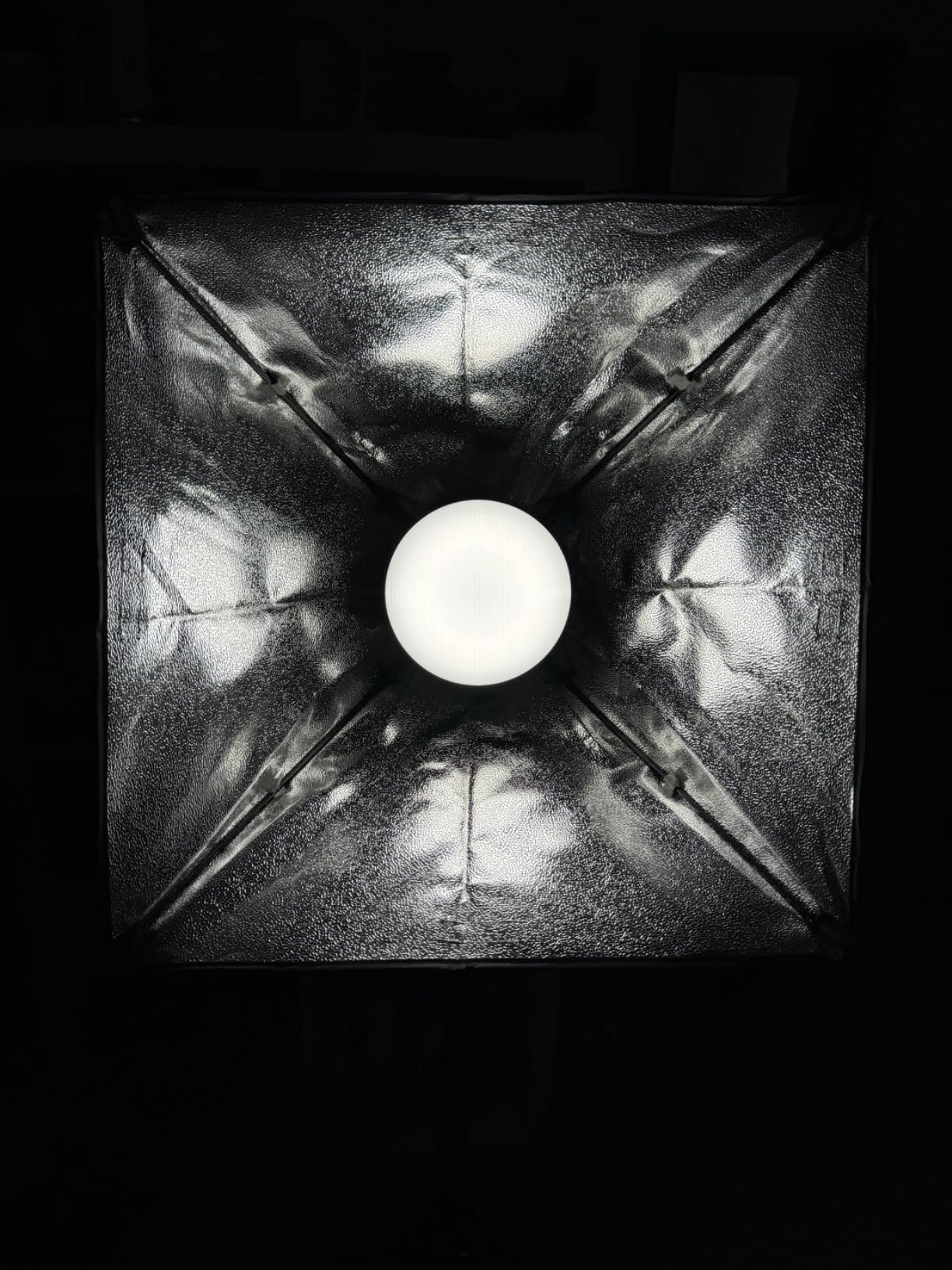
Best use case
Social-first food creators shooting short vertical clips and stills from the same setup. The anti-flicker rating protects the video side, and the soft diffusion protects the still side, which is a rare balance at this tier.
It is also a good two-light kit for a small subject, since two 16 inch sources at half power give a natural key and fill ratio without either head dominating the frame.
What holds it back
CRI 80 at a fixed 5400K is the main limitation, and it is the same limitation the NEEWER NK100 has. Highly saturated dishes will need correction in post, and there is no tuning to compensate. Treat the color correction step as part of the workflow rather than a surprise.
The softbox fabric and storage bag can arrive with a strong chemical odor that some buyers needed to air out for a day. The stands are not heavy duty and can be knocked over during setup, so assemble them before the food is plated rather than after.
8. EMART 60 LED Panel 2-Pack – Best Compact Fill Light
EMART 60 LED Portable Product Photography Light for Tabletop Photo,2-Pack
60 LEDs per panel
1400 lumens
90+ CRI
5500K
Pros
- 1400 lumens of 5500K daylight-balanced output
- 90+ CRI renders food colors naturally
- AC adapter design is brighter than similar USB panels
- 180 degree adjustable head on a mini tripod
- Nine color filters included
Cons
- Mini tripod tops out at 11 inches so it is tabletop height only
- 1400 lumens is modest for larger setups
Two 60 LED panels at 1400 lumens each, running at 15W on AC adapter power. The design detail that matters is the adapter rather than USB. Bulb-style panels powered through an AC adapter put out noticeably more usable light than comparably sized USB panels, and reviewers consistently note the difference on a tabletop.
Color rendering sits at 90+ CRI at 5500K. That is below the 95 threshold we treat as the floor for commercial food work, so we would not build a hero-shot career on it. For fill work, where the panel opens shadows rather than defining them, 90+ is entirely workable.
The head adjusts through 180 degrees, which is enough range to bounce off a ceiling or a white card when you need a softer, wider source. That single trick turns a hard panel into something closer to a large window.
Where it fits in a food setup
Fill light and background light. Two panels at reduced brightness on either side of the dish lift the shadow side of a plated meal without competing with the key. They are also useful for lighting a backdrop or a drinks board so the background reads as brighter than the subject.
Users working on stop motion, streaming and small product shoots appreciate the combination of a compact panel and stand that stores as one unit, since the whole thing is easy to move between setups.
Know the height limit before you buy
The retractable mini tripod reaches 11 inches, which means these panels light a table and nothing else. They cannot be raised above the subject, so they cannot act as a key light for a raised dish, a cake on a stand or an overhead flat lay.
Combined with 1400 lumens per panel, treat these as support lights rather than primary sources. If your budget stretches to one high-CRI head plus a pair of these, that is a genuinely sensible starter configuration.
9. MOUNTDOG Softbox 2-Pack – Best for Paired Softbox Work on a Budget
MOUNTDOG Softbox Lighting Kit, 2×19.7″x27.5″ Photography Continuous Lighting System with 2pcs 85W 5700K E27 Socket LED Bulbs and Remote for Portrait Product Fashion Photography
Two 19.7 x 27.5 inch softboxes
85W bulbs
5700K
Remote control
Pros
- Two softboxes working together soften light and cut shadows
- 85W E27 bulbs are bright and run cool
- 210 degree rotatable heads for precise placement
- Remote control avoids walking back to the stands
- High-reflectivity PET fabric holds output
Cons
- CRI 85 is low for accurate food color
- Color temperature fixed at 5700K with no mixing
- Softboxes are tall and narrow so coverage is directional
This is the most physically substantial softbox pair in the group relative to its tier. Each head is a 19.7 by 27.5 inch softbox driven by an 85W E27 LED bulb, and the high-reflectivity PET fabric holds brightness over time instead of yellowing the way cheap fabric does.
The thing reviewers praise most is that two softboxes working together visibly reduce shadows. A single softbox still gives you a defined source direction, but a matched pair at roughly a 2:1 ratio gives the softer, more even result that makes a glossy sauce or a polished ceramic plate look expensive.
The 85W bulbs run cool, which is a real advantage in food work where a hot tungsten-style source sitting close to a plated dish can wilt a herb garnish or soften butter during a long session. Remote control of the bulbs saves you walking back to the stands mid-setup.
What works well
The 210 degree rotatable heads make key and fill placement straightforward, and the three-section stands reach 78 inches, which is high enough to angle light down onto a tabletop without a boom arm. That height headroom is what separates this from the budget panel kits.
For someone who already understands key and fill and wants soft sources at a modest outlay, this is a sensible pair to start with. The bulb format means replacements are standard items.
The color problem to plan for
CRI 85 at a fixed 5700K is the specification to understand before committing. Saturated ingredients and sauces will not reproduce as vividly as they would under a high-CRI tunable light, and there is no mixing control to compensate. Expect to correct saturation and white balance in post.
Community photographers describe 85 CRI as the level that caused a client to reject an entire bread product shoot, and while that outcome is an extreme case, the reasoning is sound for anyone doing paid work with colorful food. Also note the softboxes are tall and narrow rather than square, so coverage is more directional and you will be angling them carefully.
10. UBeesize LED Video Light 2-Pack – Most Versatile for Stills and Streaming
UBeesize LED Video Light Kit, 2Pcs Dimmable Continuous Portable Photography Lighting with Adjustable Tripod Stand & 5 Color Filters for Tabletop/Low-Angle Shooting, for Zoom, Game Streaming, YouTube
Two dimmable panels
Tripod to 57.68 inch
USB powered
Four color filters
Pros
- Stepless 10 to 100 percent dimming with adjustable panel angle
- Retractable tripod covers tabletop to overhead angles
- USB powered so it runs from a laptop or power bank
- Everything assembles quickly in one kit
- Bright even output for video and stills
Cons
- Tripods wobble at full extension
- Legs only lock when fully open
- Fixed color with plastic filters only
- Onboard button membranes wear quickly
Two dimmable panels with retractable tripods that extend from 23.62 to 57.68 inches, powered over USB. For the money, the useful part is the range of height. A panel that clears a coffee table and reaches over a small set gives you more angles than a fixed desktop light, including a workable overhead position for flat lays.
Dimming is stepless from 10 to 100 percent, and the head adjusts through 180 degrees on a quarter-inch ball head. Between them, that is enough control to set a key and fill relationship from two identical units, which is the principle behind every good two-light food setup.
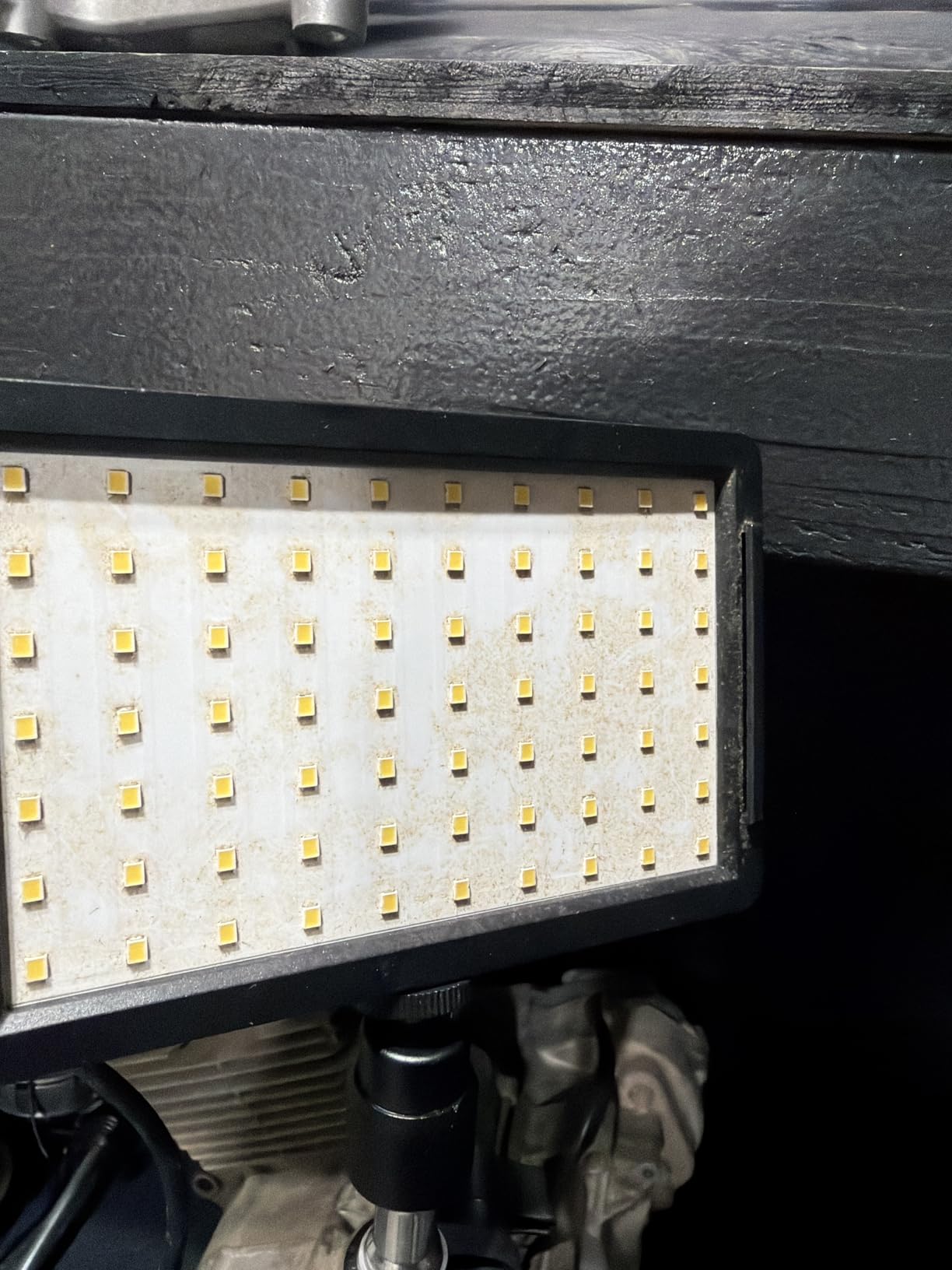
USB power means the kit runs from a laptop, a power bank or a wall adapter. That is genuinely useful for a food blogger working in a home kitchen where the nearest outlet is behind the fridge.
Four color filters are included for creative effects. Treat them as a styling tool rather than a color control, since gel-filtered light shifts the color of your food in ways you will correct later.
Why it still earns a place
At the entry point of this list, the combination of stepless dimming, real height range and USB power is hard to match. Product photographers report clean, professional results for close-up tabletop work, and the panels suit video, stills and streaming equally well.
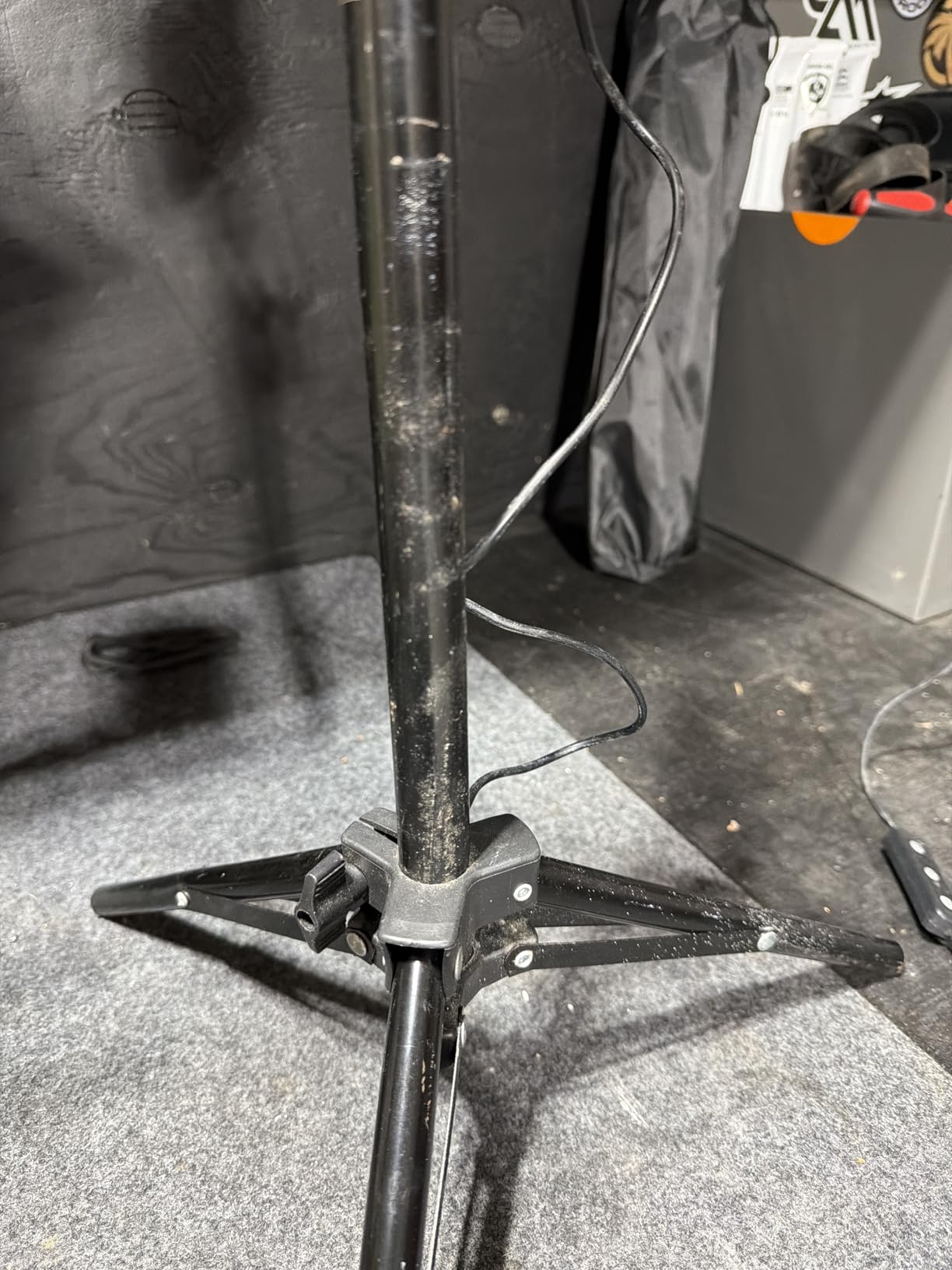
Build quality is the weak point. The recurring complaints are hardware rather than light quality. The tripods lose stability at full extension and can wobble at maximum height, and the legs only lock properly when fully open, which makes desktop placement awkward.
The small plastic gel filters overcast with heavy use and need trimming to fit, and the onboard button membranes wear out quickly. Treat the stands as temporary and add proper light stands with clamps before you rely on this for overhead work. It is a capable starter kit, not a long-term studio tool.
Buying Guide: CRI, Watts, and Modifiers for Food
Color accuracy: CRI, TLCI and R9
CRI, the Color Rendering Index, measures how accurately a light reproduces the colors of an object compared to a reference source. For food photography, treat anything below 95 as unusable for anything you get paid for. Saturated dishes are where a low-CRI source fails hardest, and the failure looks like dullness rather than an obvious color shift.
TLCI, the Television Lighting Consistency Index, is the video-oriented companion to CRI. It uses a more camera-realistic reference and tends to sit a little lower than the CRI figure on the same light, so a panel quoting TLCI 97 is generally very good.
R9 is the individual saturated-red score inside the CRI calculation, and for food it matters more than most buyers realize. Steak, tomato, strawberry, salmon, cured meat and even browned sugar depend on red rendering. A light can quote CRI 95 and still score poorly on R9, which is why reading the full CRI chart matters if your work is meat and fruit heavy.
Our rule of thumb: CRI 95 or above for commercial food work, CRI 97 or above if your subjects are heavily saturated, and check the red score rather than trusting the headline number alone.
How much power do you actually need?
Wattage is the least useful number on a listing, because it tells you nothing about distance, beam angle or modifier. Think about the room instead.
For a tabletop setup at arm’s length with a single dish, 30W to 40W per head with a diffuser is plenty. For a small kitchen where you want to light a whole counter or a person working, aim for 60W to 100W per head or a pair of panels. For a large spread with many dishes and props, you are looking at multiple sources rather than one bigger one, because a single large source flattens the very texture food photography depends on.
Two mid-sized sources almost always beat one large source. Modifiers lose less light than the wattage comparison suggests, and two heads give you control over ratio and direction.
Color temperature by food type
Color temperature changes how food reads, not just how bright it looks. Warm light around 2700K to 3200K brings out golden tones in bread, pastry and roasted meat. Neutral light around 5000K to 5600K gives the most accurate read for recipe and menu work. Cool light above 6000K makes drinks, ice cream and fresh green produce look crisp, though it can make warm dishes look unappetizing.
Daylight-balanced around 5500K is the safe default for most food, and it matches the white balance your camera expects. Bi-color heads let you move away from that default when a dish needs it.
Modifiers and mounts
A bare panel produces small, hard specular highlights that read as plastic on a glossy surface. Every food kit needs a modifier, and the options differ sharply.
Bowens mount monolights accept the widest range of standard softboxes, reflectors and grids, which is why photographers who shoot commercially prefer them despite the higher cost.
E27 softbox kits are simple, cheap and widely understood. You need bulbs that match, and spares are standard items.
Fixed panels are the most portable and often include their own diffusion shell. They cannot take a third-party softbox, so check the mount before you plan a larger modifier purchase.
Grid and honeycomb attachments give you control over spill, which matters in a kitchen where you do not want light hitting the cabinets. Barn doors are the cheaper alternative and work nearly as well on a single head.
Dimming, flicker and heat
If any video is part of your workflow, check that the dimming is described as flicker-free and that a rating exists for your frame rate. Flicker at low output is the most common video complaint about inexpensive LED panels.
Heat deserves a line of its own because food is heat-sensitive. A plated dish sitting under a hot source for an hour can wilt a garnish, soften butter or dry the surface of a sauce. Metal-bodied fixtures that dissipate heat without a fan are the safest choice for long tabletop sessions, and they have the added benefit of not adding fan noise to your audio.
Stands, boom arms and small rooms
Most budget kits include stands that are lighter than the heads they carry, and stands that drift are a genuine cause of failed shots. If you are buying in stages, replace the stands early. A weighted boom arm clamped to a counter or a wall lets you get a light overhead for flat lays without a floor stand taking up half the kitchen.
For general household lighting upgrades in the room you shoot in, our picks for recessed lighting kits and track lighting are a separate matter, but the same logic applies: consistent, high-color-rendering output beats raw brightness in any room you photograph in.
Where to Put the Lights for Food
Key light, 45 degrees to the side. Place the main source about 45 degrees to one side of the dish and slightly above it, angled down. This is the single most useful position in food photography because it rakes across the surface and reveals texture, flaking, crumb and gloss that a straight overhead light flattens completely. Keep the light high enough that the far edge of the plate still reads.
Fill, opposite side at about half output. Set the second light, or a reflector, on the opposite side at roughly half the key brightness. The goal is to open the shadows so they read as detail rather than black holes, not to eliminate them. A white foam board or a sheet of white card often does this job as well as a second fixture and costs nothing.
Rim or back light, behind the subject. Place a light low and behind the dish, pointed toward the camera and hidden from it. This separates the subject from the surface, makes steam and smoke visible, and lights the translucency in citrus slices, lettuce edges and thin pastry. Raise it a few inches for a brighter rim or drop it for a subtler glow.
Overhead for flat lays. For a straight-down layout, get the light as close to directly above the food as you can and diffuse it as large as possible. A bare panel straight overhead creates a hard specular dot in the middle of every glossy surface, so a diffuser cloth or a softbox between the light and the food is essential. If you shoot flat lays often, a clamp or boom that holds the camera and light in a fixed overhead position saves enormous time.
Negative fill. If a dish looks too flat, the answer is not more light. Add a black card just outside the frame edge to deepen the shadow side. It costs almost nothing and it is the quickest way to restore shape to a dish that went flat during styling.
Set your ratio before you start plating. Repositioning lights after the food is dressed and the props are placed is the most common wasted minute in any food session.
Frequently Asked Questions
What is the best light setup for food photography?
A large diffused key light at about 45 degrees to one side and slightly above the dish, a fill on the opposite side running at roughly half the key output, and a rim or back light placed low and behind the subject to separate it from the surface. Add a white foam board as negative fill to lift shadows without a second fixture.
Is CRI important for food photography?
Yes, and it is the one specification experienced food photographers treat as non-negotiable. Below CRI 95, saturated foods such as tomatoes, berries, egg yolks and cured meats look dull and greyish, because red and warm tones are the first to lose accuracy. For heavily saturated subjects, aim for CRI 97 or above.
How many watts do I need for food photography?
For a tabletop setup at arm’s length, 30W to 40W per head with a diffuser covers a single dish comfortably. A small kitchen where you want to light a full counter needs roughly 60W to 100W per head. For a large spread of dishes and props, use several sources rather than one larger light, because one big source flattens texture.
What color temperature is best for food photography?
Around 5000K to 5600K gives the most accurate, neutral result for recipe and menu work. Around 2700K to 3200K warms up bread, pastry and roasted meat, while light above 6000K makes drinks, ice cream and fresh green produce look crisp.
Do I need a softbox for food photography?
You need diffusion more than you need a specific brand of softbox. A bare LED panel creates small hard specular highlights that read as plastic on a glossy sauce or a wet glass. A softbox, diffuser cloth or shoot-through panel of any decent size solves the problem. Light boxes and tents achieve the same result with wraparound light instead of direction.
Are photo light boxes worth it for food photography?
For small subjects and documentation-style work they are very effective, because the enclosure gives even, near-shadowless light that needs far less correction in post. For hero shots with shape and dimension, a pair of softboxes at a 45 degree angle gives more control. Many working food photographers own both and use each for a different kind of image.
The Bottom Line
The best continuous lighting kits for food photography in 2026 come down to one non-negotiable rule and a handful of good options. The rule is CRI 95 or above, because below that threshold saturated food loses the color that makes people want to photograph it in the first place.
Our pick as the editor’s choice is the PULUZ Mini Light Box, because it delivers CRI 95 at 5500K in a package that sets up in seconds, folds flat and needs no modifier knowledge at all. For hero shots with shape, dimension and video capability, the NEEWER NL660 Bi-Color 2-Pack gives you a real key and fill relationship with a fanless metal build. For plated dishes and larger props, the DUCLUS 20 inch Light Box solves the size limit that stops most tents.
Whichever route you take, buy for CRI first, for a source large enough to soften, and for stands that hold their position. Add the modifiers and the overhead mount later. Your food will still be there, and so will the setup you build around it.