
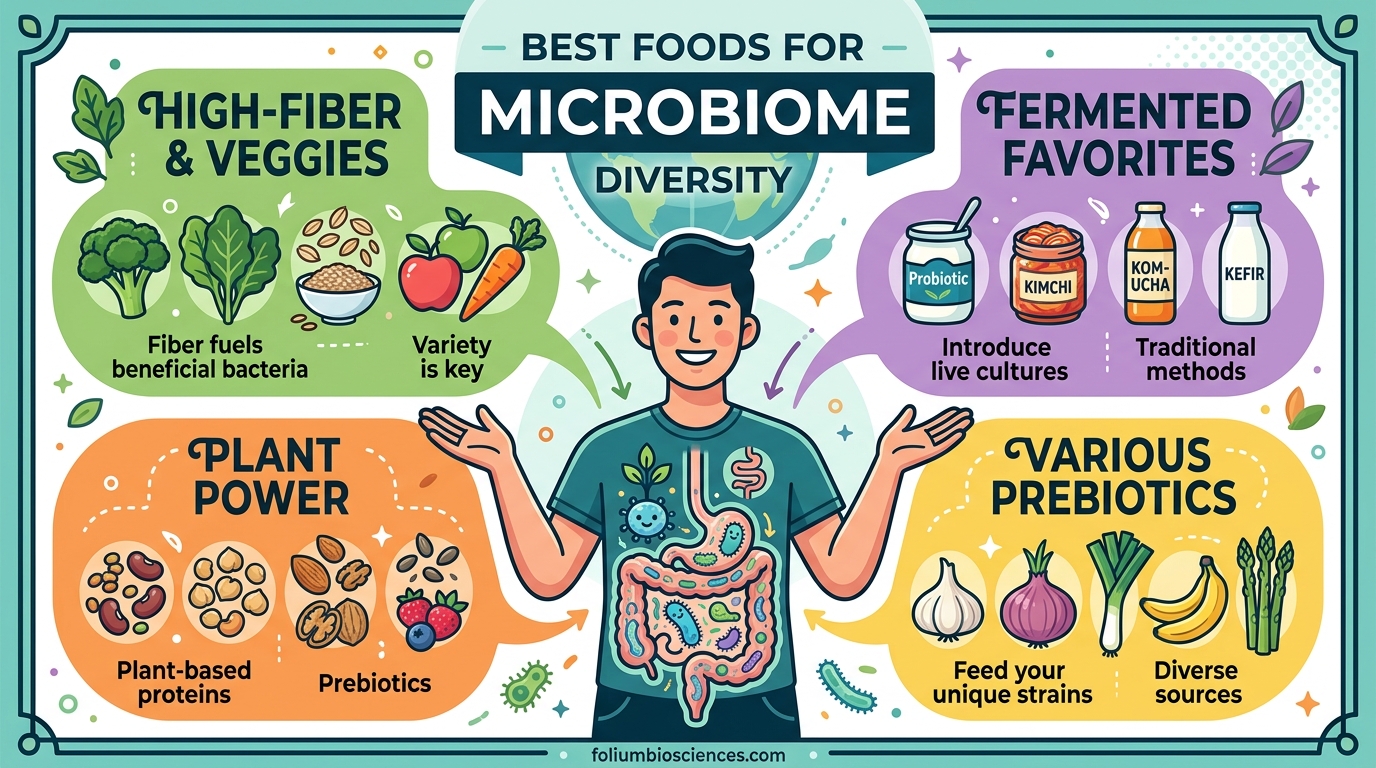
When most people think about gut health, they picture a cup of yogurt or a glass of kefir. Those are solid starting points, but they barely scratch the surface of what your microbiome actually needs. Your gut is home to trillions of bacteria from hundreds of different species, and keeping that community diverse requires a much wider range of foods for microbiome diversity than just fermented dairy.
I spent months digging into the research behind gut bacteria and testing different dietary approaches. What I found surprised me: the people with the healthiest, most diverse microbiomes are not the ones eating the most yogurt. They are the ones eating the widest variety of plants, fermented foods, and prebiotic fibers on a regular basis.
This guide goes beyond the usual yogurt-and-kefir recommendations. We will cover fermented foods you may have overlooked, prebiotic fibers that actually feed your beneficial bacteria, and a practical framework called the 30-plants-per-week rule that can transform your gut health in 2026.
Table of Contents
Why Microbiome Diversity Matters More Than You Think
Microbiome diversity refers to both the number of different bacterial species in your gut and how evenly they are distributed. Think of it like an ecosystem: a rainforest with thousands of species is more resilient than a monoculture farm with just one crop. Your gut works the same way.
Research published in the journal Cell in 2021 by Stanford Medicine researchers Wastyk and colleagues found that a diet rich in fermented foods increased microbiome diversity and reduced markers of inflammation over a 10-week period. Participants who ate fermented foods like kimchi, sauerkraut, and kombucha daily saw measurable improvements in their gut bacteria diversity and immune response markers.
Data from the American Gut Project, one of the largest citizen-science microbiome studies ever conducted, revealed another striking pattern. People who ate more than 30 different plant foods per week had significantly more diverse gut microbiota than those who ate fewer than 10. That finding has shaped how nutrition scientists talk about gut health ever since.
Why does this diversity matter? A more diverse microbiome is associated with stronger immune function, lower systemic inflammation, better digestion, improved mood through the gut-brain axis, and even healthier body weight maintenance. When diversity drops, whether from antibiotics, poor diet, or stress, the effects can ripple through your entire system.
Probiotics, Prebiotics, and Fermented Foods: What Is the Difference?
Before we get into specific foods, it helps to understand three terms that get thrown around interchangeably but mean very different things.
Probiotics are live microorganisms that provide a health benefit when consumed in adequate amounts. The most common strains you will see referenced are Lactobacillus and Bifidobacterium species. These are the beneficial bacteria you are trying to add to your gut.
Prebiotics are types of dietary fiber that your body cannot digest, but your gut bacteria can. They serve as food for the beneficial bacteria already living in your colon. Without prebiotics, probiotics have nothing to sustain them. Examples include inulin, resistant starch, and fructooligosaccharides found in foods like garlic, onions, and asparagus.
Fermented foods are foods that have been transformed by microorganisms through fermentation. Not all fermented foods contain live probiotics. For example, sourdough bread and beer are fermented, but the final products do not contain significant live cultures. The ones that do, like raw sauerkraut and unpasteurized kimchi, can introduce new bacterial strains directly into your system.
The key takeaway: you need all three categories working together. Probiotics add new bacteria. Prebiotics feed them. Fermented foods can deliver both, plus unique compounds like short-chain fatty acids that support the gut lining.
Best Fermented Foods for Microbiome Diversity (Beyond Yogurt and Kefir)
Here are seven fermented foods that bring unique bacterial strains and beneficial compounds to your gut. Each one offers something different from what you get in standard yogurt or kefir.
1. Raw Sauerkraut
Sauerkraut is finely shredded cabbage fermented by lactic acid bacteria. When made traditionally and sold raw (unpasteurized and refrigerated), it contains a wide range of Lactobacillus strains that are not typically found in dairy-based ferments. A single serving can contain billions of colony-forming units across multiple bacterial species.
The critical distinction is raw versus shelf-stable. Most sauerkraut in jars on unrefrigerated grocery store shelves has been pasteurized, which kills the live cultures. Look for sauerkraut in the refrigerated section that lists only cabbage and salt as ingredients. Store-bought brands with live cultures will often say “raw,” “unpasteurized,” or “live” on the label.
Start with a forkful or two alongside meals. It pairs well with eggs, sandwiches, grain bowls, and roasted meats. The tangy flavor mellows when mixed into dishes.
2. Kimchi
Kimchi is a Korean staple made from fermented vegetables, most commonly napa cabbage and Korean radishes, seasoned with chili flakes, garlic, ginger, and fish sauce or a vegan alternative. It is one of the most probiotic-rich foods studied, with research identifying dozens of bacterial strains in traditional preparations.
Kimchi introduces bacterial diversity beyond what you get from sauerkraut because the added garlic, ginger, and chili create a different fermentation environment. The combination of vegetables and aromatics supports a broader range of microorganisms. Studies have linked regular kimchi consumption to improved cholesterol levels and reduced inflammation markers.
Use kimchi as a side dish, stir it into fried rice or noodle bowls, or add it to scrambled eggs. A couple of tablespoons per day is enough to get meaningful probiotic benefits.
3. Kombucha
Kombucha is a fermented tea made using a symbiotic culture of bacteria and yeast, commonly called a SCOBY. The fermentation process produces acetic acid, lactic acid, and a range of beneficial organic acids that support gut health. The bacterial profile of kombucha differs from dairy ferments, making it a useful addition even if you already eat yogurt.
One important caveat: not all kombucha is created equal. Some commercial brands are pasteurized after fermentation, which eliminates the live cultures. Others contain high amounts of added sugar. Look for brands that are refrigerated, have minimal added sugar (ideally under 5 grams per serving), and list live cultures on the label.
If you are sensitive to caffeine or alcohol, note that kombucha contains trace amounts of both from the fermentation process. Most commercial varieties contain less than 0.5 percent alcohol.
4. Miso
Miso is a fermented soybean paste that has been a staple in Japanese cuisine for centuries. It is produced by inoculating cooked soybeans with a mold called Aspergillus oryzae (koji) along with salt and sometimes grains like rice or barley. The result is a deeply savory paste rich in beneficial bacteria and enzymes.
Miso contains Lactobacillus species and other lactic acid bacteria that develop during the long fermentation process, which can range from a few months to several years. Longer fermentation produces darker, more complex miso with a richer bacterial profile.
To preserve the live cultures, never boil miso. Add it to soups and sauces after removing them from heat, or dissolve it in warm (not hot) water. Miso also works well as a marinade for fish or vegetables, mixed into salad dressings, or stirred into grain bowls.
5. Tempeh
Tempeh is a fermented soybean cake originating from Indonesia. Unlike tofu, which is made from soy milk, tempeh uses whole soybeans fermented with a Rhizopus mold that binds them into a firm, nutty cake. This fermentation process not only introduces beneficial microorganisms but also breaks down anti-nutrients like phytic acid, making the soybeans easier to digest and their nutrients more bioavailable.
Tempeh is one of the best plant-based protein sources available, packing about 15 grams of protein per half-cup serving along with fiber, iron, and calcium. Its firm texture makes it an excellent meat substitute in stir-fries, sandwiches, and grilled dishes.
For maximum probiotic benefit, look for unpasteurized tempeh, which is typically found in the refrigerated section of health food stores. Most conventional grocery store tempeh has been lightly pasteurized but still retains some beneficial compounds from fermentation.
6. Natto
Natto is a traditional Japanese food made from soybeans fermented with Bacillus subtilis (natto). It has a distinctive sticky, stringy texture and strong aroma that can be off-putting at first, but it is one of the most potent probiotic foods on the planet. The Bacillus subtilis strain in natto is a spore-forming bacterium, meaning it can survive the acidic environment of the stomach much better than many other probiotic strains.
Natto is also the richest dietary source of vitamin K2 (as menaquinone-7), which plays a critical role in bone health and cardiovascular health. A single serving provides well over your daily vitamin K2 requirement.
Traditional preparation involves stirring natto vigorously until it becomes very sticky and stringy, then adding soy sauce and mustard. You can eat it over rice, mix it into scrambled eggs, or blend it into smoothies if the texture bothers you.
7. Naturally Fermented Pickles
Most pickles on grocery store shelves are made using vinegar and heat processing, which kills live bacteria. Naturally fermented pickles, on the other hand, are made by soaking cucumbers (or other vegetables) in a saltwater brine and allowing wild bacteria to ferment them. The result is a crunchy, tangy pickle teeming with live Lactobacillus species.
You can identify naturally fermented pickles by checking the ingredients: they should list cucumbers, water, salt, and perhaps garlic and dill, but not vinegar. They will always be found in the refrigerated section. Some brands will specifically mention “naturally fermented” or “probiotic” on the label.
Beyond cucumbers, you can find or make fermented carrots, radishes, jalapenos, and other vegetables using the same brine method. Each vegetable introduces slightly different bacterial strains, further diversifying your intake.
Prebiotic Foods That Feed Your Gut Bacteria
Eating fermented foods is only half the equation. Without prebiotic fiber to sustain them, many of those beneficial bacteria will not stick around. Here are the prebiotic foods I prioritize for feeding a diverse microbiome.
Garlic, Onions, and Leeks
These allium vegetables are rich in inulin and fructooligosaccharides, two of the most well-studied prebiotic fibers. Inulin passes through your upper digestive tract undigested and arrives in the colon, where bacteria ferment it into short-chain fatty acids like butyrate. Butyrate is a primary energy source for the cells lining your colon and plays a central role in maintaining gut barrier integrity.
Cooking does not destroy prebiotic fiber, so you can enjoy these foods raw or cooked. Raw garlic and onions deliver the highest prebiotic content per serving, but roasted, sauteed, or caramelized versions still provide substantial benefits.
Asparagus and Jerusalem Artichokes
Asparagus contains both inulin and a unique prebiotic fiber that feeds Bifidobacterium species specifically. Jerusalem artichokes (also called sunchokes) are even more concentrated sources of inulin. These vegetables are some of the highest natural prebiotic foods available.
Roast asparagus with olive oil, add Jerusalem artichokes to soups, or shave raw asparagus into salads. Both vegetables are versatile and pair well with the fermented foods discussed earlier.
Slightly Green Bananas
Bananas that are still slightly green contain high levels of resistant starch, a type of prebiotic fiber that resists digestion in the small intestine and feeds beneficial bacteria in the colon. As bananas ripen, resistant starch converts to sugar, so the prebiotic benefit decreases.
If fully green bananas are too astringent for your taste, look for bananas with just a hint of green at the stem. You can also blend slightly green bananas into smoothies where the texture is less noticeable.
Oats, Barley, and Whole Grains
Whole grains like oats and barley contain beta-glucan, a soluble fiber with well-documented prebiotic properties. Beta-glucan feeds beneficial bacteria while also helping regulate blood sugar and cholesterol levels. Steel-cut oats and barley provide the most fiber per serving since they are minimally processed.
Overnight oats topped with a fermented food like kimchi may sound unusual, but combining prebiotic grains with probiotic foods creates what researchers call a synbiotic meal, where the fiber and bacteria work together for maximum gut benefit.
The 30 Plants Per Week Rule for Gut Bacteria Diversity
One of the most actionable findings from the American Gut Project is the 30-plants-per-week threshold. Researchers found that people who ate 30 or more different plant foods each week had significantly more diverse gut microbiomes than those who ate fewer than 10. This connection between plant diversity and bacterial diversity is one of the most consistent findings in microbiome research.
The good news is that “plants” covers a much wider category than you might think. It includes:
- All vegetables (leafy greens, root vegetables, squashes, peppers)
- All fruits (fresh, frozen, and dried)
- Whole grains (oats, quinoa, brown rice, barley, farro)
- Legumes (beans, lentils, chickpeas, peas)
- Nuts and seeds (walnuts, almonds, flaxseeds, chia seeds, pumpkin seeds)
- Herbs and spices (basil, turmeric, cinnamon, rosemary, cumin)
- Tea and coffee (they count as plant foods)
When you count herbs and spices, hitting 30 becomes much more achievable than it sounds. Here is a practical approach I use: aim for 5 to 6 different plants per day across your meals. Keep a running tally for the week. Most people find they are already eating 15 to 20 without trying; the extra push to 30 simply requires a bit more intention.
Some easy ways to boost your plant count: use mixed frozen berries in your oatmeal (3 to 4 plants), add a handful of mixed greens and fresh herbs to lunch (2 to 3 plants), snack on trail mix with multiple nuts and seeds (4 to 5 plants), and cook dinner with 3 to 4 different vegetables.
How to Build a Microbiome-Friendly Diet in 2026
Knowing which foods support microbiome diversity is one thing. Building them into your daily routine is another. Here is a practical framework that I have found works well.
Step 1: Add One Fermented Food Per Day
Do not try to overhaul your entire diet overnight. Start by adding a single serving of one fermented food each day. This could be a forkful of sauerkraut with lunch, a small glass of kombucha in the afternoon, or a few tablespoons of kimchi with dinner.
After a week or two, add a second fermented food to your rotation. Variety matters more than quantity. Eating small amounts of five different fermented foods throughout the week is better for diversity than eating large amounts of the same one every day.
Step 2: Pair Prebiotic and Probiotic Foods
Synbiotic meals combine prebiotic fiber with probiotic bacteria in the same dish. Some easy combinations include: sauerkraut on a whole grain sandwich, kimchi alongside a bowl of oats and vegetables, miso soup with garlic and onions, or tempeh stir-fried with asparagus and leeks.
These combinations give beneficial bacteria both the organisms themselves and the food they need to thrive. Think of it as seeding your garden and fertilizing it at the same time.
Step 3: Rotate Your Plant Foods Weekly
Instead of buying the same vegetables, fruits, and grains every week, rotate your selections. Swap spinach for arugula one week. Try a new grain like farro or millet. Pick up a vegetable you have never cooked with before. Even small changes introduce new plant compounds and fibers that feed different bacterial species.
A farmer’s market is ideal for this because the selection changes with the seasons, naturally rotating your plant intake. But even in a regular grocery store, simply choosing a different apple variety or a new type of squash each week adds up over time.
Step 4: Shop Smart for Live Cultures
When buying fermented foods for their probiotic benefits, look for these indicators on labels:
- “Raw” or “unpasteurized” (pasteurization kills live cultures)
- Located in the refrigerated section
- Minimal ingredients (for sauerkraut: just cabbage and salt)
- “Contains live cultures” or “live and active cultures”
- No vinegar in the ingredient list for fermented vegetables
Also, be aware that heat kills live bacteria. If you cook fermented foods at high temperatures, you lose the probiotic benefit. Add fermented foods to dishes after cooking, or use them as toppings and condiments.
Foods That Harm Microbiome Diversity
Just as some foods support your microbiome, others actively damage it. Knowing what to limit is just as important as knowing what to eat.
Ultra-processed foods tend to be low in fiber and high in emulsifiers, preservatives, and artificial additives that can disrupt the gut lining and reduce bacterial diversity. Studies have linked diets high in ultra-processed foods to lower microbiome diversity and higher inflammation markers.
Artificial sweeteners like sucralose and saccharin may alter gut bacteria composition. Some research suggests they can reduce beneficial Bifidobacterium and Lactobacillus populations while promoting less desirable species.
Excessive added sugar feeds less beneficial bacteria and yeasts, potentially throwing off the balance of your microbiome. This does not mean you need to avoid all sugar, but keeping added sugar intake moderate supports a healthier bacterial balance.
Unnecessary antibiotics, whether from prescriptions or the food supply, can wipe out significant portions of your gut bacteria. When antibiotics are medically necessary, following up with a focused gut-recovery protocol that includes fermented foods and prebiotic fiber can help restore diversity.
FAQ
What are the top 10 microbiome foods?
The top 10 foods for microbiome diversity include raw sauerkraut, kimchi, kombucha, miso, tempeh, natto, naturally fermented pickles, garlic, onions, and asparagus. The first seven are fermented foods that introduce live beneficial bacteria, while garlic, onions, and asparagus are prebiotic foods that feed existing gut bacteria. Eating both categories together gives you the best results for building a diverse gut microbiome.
What are the super six gut foods?
The super six gut foods typically refer to six categories that support microbiome health: fermented foods (like sauerkraut and kimchi), prebiotic vegetables (like garlic and onions), high-fiber whole grains (like oats and barley), nuts and seeds (like flaxseeds and walnuts), polyphenol-rich foods (like berries and dark chocolate), and legumes (like lentils and chickpeas). Together, these six categories cover the main ways food supports gut bacteria diversity.
Can you rebuild microbiome diversity with food alone?
Yes, research shows that dietary changes can significantly improve microbiome diversity. The Stanford 2021 fermented food study demonstrated measurable increases in gut bacteria diversity and reductions in inflammation markers through diet alone over 10 weeks. Combining fermented foods with prebiotic fiber and a wide variety of plant foods (30 or more per week) provides the strongest dietary approach to rebuilding a diverse microbiome.
How long does it take to improve gut microbiome diversity?
Your gut microbiome begins responding to dietary changes within 24 to 48 hours. However, meaningful and lasting improvements in diversity typically take 4 to 12 weeks of consistent dietary changes. The Stanford fermented food study showed significant improvements at the 10-week mark. For people recovering from antibiotics, initial recolonization happens within weeks, but full diversity restoration can take several months of sustained dietary effort.
What can I eat instead of yogurt for probiotics?
There are many non-dairy probiotic alternatives to yogurt. Raw sauerkraut, kimchi, kombucha, miso, tempeh, natto, and naturally fermented pickles all provide live beneficial bacteria without any dairy. These foods offer different bacterial strains than yogurt, including species that survive stomach acid more effectively. Natto, for example, contains Bacillus subtilis, a spore-forming bacterium that reaches the gut intact.
Are probiotic supplements as effective as fermented foods?
Research suggests fermented foods may have an advantage over supplements for building microbiome diversity. The Stanford 2021 study found that fermented foods increased diversity and reduced inflammation more effectively than a high-fiber diet alone. Fermented foods provide a wider range of bacterial strains, beneficial metabolites like short-chain fatty acids, and enzymes that supplements typically cannot replicate. Supplements can still be useful for targeted support, but they work best alongside a diet rich in fermented and prebiotic foods.
Final Thoughts on Foods for Microbiome Diversity
Building a diverse gut microbiome takes more than a daily cup of yogurt. It requires a combination of fermented foods that introduce new bacterial strains, prebiotic fibers that feed those strains, and a wide variety of plant foods that support overall bacterial diversity. The seven fermented foods we covered, from sauerkraut to natto, each bring unique bacterial species that you will not find in standard dairy ferments.
The research is clear on two points: diversity in your diet drives diversity in your gut, and consistency matters more than perfection. You do not need to eat every food on this list every day. Start with one or two that appeal to you, build them into your routine, and gradually expand from there.
If you take one thing away from this guide, make it the 30-plants-per-week framework. It is the single most practical, research-backed approach to eating for microbiome diversity, and it works whether you are a committed omnivore, vegetarian, or following a fully plant-based diet. Your gut bacteria will thank you for the variety.