
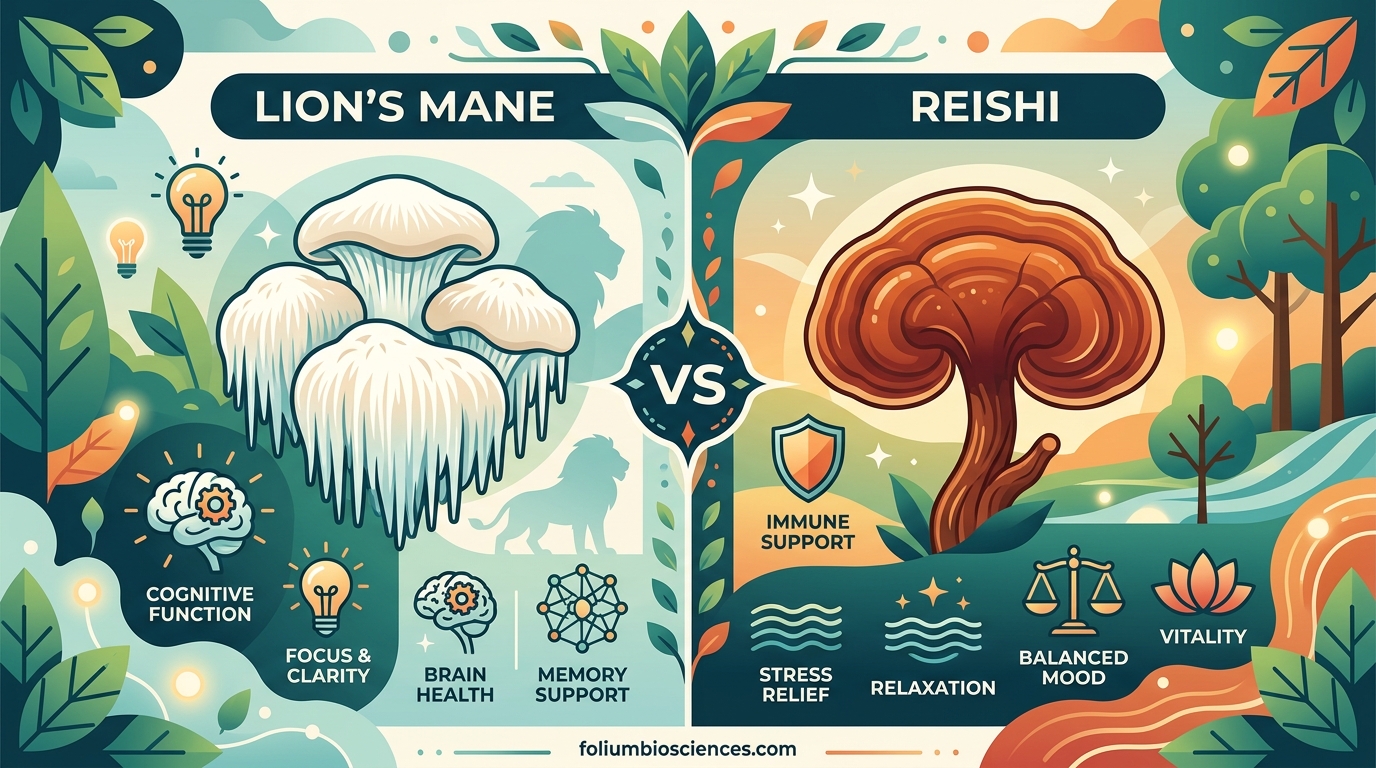
Both Lion’s Mane and Reishi are powerful functional mushrooms with distinct benefits that make them ideal for different times of day. Taking Lion’s Mane in the morning and Reishi at night represents the optimal protocol for most users seeking to maximize both cognitive performance and sleep quality.
Table of Contents
Understanding Lion’s Mane and Reishi: A Quick Overview
Lion’s Mane (Hericium erinaceus) and Reishi (Ganoderma lucidum) are two of the most extensively researched functional mushrooms in traditional and modern wellness practices. While both offer remarkable health benefits, they work through fundamentally different mechanisms and are best suited for opposite ends of your daily cycle.
Lion’s Mane is renowned for its neuroprotective and cognitive-enhancing properties, making it the preferred morning supplement for those seeking mental clarity, focus, and nerve growth support. Reishi, conversely, has earned its reputation as the sleep mushroom, with centuries of use in Traditional Chinese Medicine for promoting relaxation, reducing stress, and supporting restful sleep.
Key Takeaway
The simple answer: Lion’s Mane in the morning, Reishi at night. This timing strategy allows you to harness the unique strengths of each mushroom at the moment your body and mind can best utilize their compounds.
What is Lion’s Mane Mushroom?
Lion’s Mane is a distinctive-looking mushroom characterized by its cascading, hair-like spines that resemble a lion’s mane. Native to North America, Europe, and Asia, this mushroom has been used for centuries in traditional medicine, particularly in Chinese and Japanese healing practices.
The mushroom contains two key classes of bioactive compounds that drive its remarkable effects: hericenones and erinacines. These compounds are unique to Lion’s Mane and are responsible for stimulating nerve growth factor (NGF) synthesis in the brain.
Key Compounds in Lion’s Mane
- Hericenones A, B, C, D, and E: Aromatic compounds that trigger NGF production
- Erinacines A, B, C, D, E, F, G, H, I, J, and K: Cyathin-like diterpenoids that stimulate nerve regeneration
- Beta-glucans: Polysaccharides that support immune function
- Polysaccharide-Protein Complexes: Immunomodulatory compounds
Lion’s Mane Benefits
The cognitive benefits of Lion’s Mane are perhaps its most celebrated feature. Research published in the Journal of Agricultural and Food Chemistry found that Lion’s Mane extract significantly stimulates the synthesis of NGF, a protein essential for the survival and function of nerve cells. This mechanism underpins the mushroom’s ability to support memory, concentration, and overall brain health.
Users commonly report experiencing enhanced mental clarity within days to weeks of consistent supplementation. Unlike stimulants that provide temporary energy followed by crashes, Lion’s Mane promotes sustainable cognitive function without the jitteriness or dependency associated with caffeine or other nootropics.
The adaptogenic properties of Lion’s Mane also contribute to stress resilience, though this effect is more subtle than what Reishi provides. By supporting overall brain health and reducing oxidative stress in neural tissue, Lion’s Mane helps your nervous system better handle daily pressures.
What is Reishi Mushroom?
Reishi, known as Ganoderma lucidum in scientific nomenclature and “Ling Zhi” in Traditional Chinese Medicine, has been revered for over 4,000 years as the “Mushroom of Immortality.” Its distinctive kidney-shaped cap and woody texture set it apart from other functional mushrooms, and its glossy red-orange appearance has made it a symbol of health and longevity across Asian cultures.
Unlike Lion’s Mane, which targets cognitive function, Reishi works primarily on the nervous and immune systems through a different arsenal of bioactive compounds.
Key Compounds in Reishi
- Ganoderic Acids (A, B, C, D, and derivatives): Triterpenes that interact with GABA receptors
- Beta-glucans: Immunomodulatory polysaccharides
- Polysaccharides: Immune-supporting compounds
- Adenosine: A nucleoside that promotes relaxation
- Triterpenes: Anti-inflammatory and liver-protective compounds
Reishi Benefits
The sleep-supporting properties of Reishi are its most celebrated benefit, and the science backs this traditional use. Ganoderic acids in Reishi have been shown to bind to GABA receptors in the nervous system, producing a calming effect similar to that of certainrelaxation-promoting compounds. GABA is the primary inhibitory neurotransmitter in the brain, and enhancing its activity helps quiet mental chatter and prepare the body for sleep.
Research published in the Journal of Medicinal Food demonstrated that Reishi supplementation improved sleep quality and daytime energy in participants with neurasthenia. The participants reported falling asleep more easily, sleeping more deeply, and feeling more refreshed upon waking.
Beyond sleep support, Reishi serves as a powerful adaptogen that helps regulate the body’s stress response system. By modulating cortisol levels and supporting adrenal function, Reishi helps your body maintain equilibrium during periods of physical, emotional, or environmental stress.
The immune-modulating properties of Reishi are also significant. Beta-glucans and other polysaccharides in Reishi activate various immune cells, including macrophages, natural killer cells, and T-cells, supporting your body’s natural defense mechanisms without overstimulating the immune response.
Morning vs Night: The Optimal Timing for Each Mushroom
Understanding when to take Lion’s Mane versus Reishi comes down to aligning each mushroom’s unique properties with your body’s natural rhythms and daily needs. The following sections break down the optimal timing for each supplement based on their respective mechanisms of action.
The Best Time to Take Lion’s Mane: Morning
Best Time: 30-60 minutes before breakfast
Morning is the optimal time to take Lion’s Mane for several interconnected reasons. First, Lion’s Mane stimulates nerve growth factor synthesis, and NGF levels naturally fluctuate in response to your circadian rhythms. Peak NGF activity occurs during morning hours, making this the ideal window for supplementation.
Second, the cognitive-enhancing effects of Lion’s Mane are most beneficial when your brain is actively processing information, making decisions, and engaging in focused work. Morning supplementation during your peak cognitive hours allows you to leverage the mushroom’s ability to support mental clarity, concentration, and memory formation.
Third, taking Lion’s Mane in the morning supports healthy dopamine levels throughout the day. Dopamine is a neurotransmitter critical for motivation, reward processing, and executive function. By supporting dopamine pathways early in the day, Lion’s Mane helps set a positive tone for productivity and mental performance.
Finally, combining Lion’s Mane with your morning routine creates a sustainable habit that ensures consistent supplementation. Whether you take it with your morning beverage, during breakfast, or alongside your other morning supplements, establishing this timing helps you maintain the consistent use necessary for optimal results.
The Best Time to Take Reishi: Night
Best Time: 30-60 minutes before bedtime
Reishi should be taken in the evening, ideally 30 to 60 minutes before you plan to sleep. This timing allows the active compounds, particularly ganoderic acids and other triterpenes, to interact with GABA receptors and promote the relaxation response necessary for falling asleep and staying asleep.
The sedating properties of Reishi are gentler than those of pharmaceutical sleep aids, allowing you to wake feeling refreshed rather than groggy. Users typically report that Reishi helps quiet racing thoughts and reduces the mental chatter that often interferes with falling asleep naturally.
Taking Reishi at night also aligns with the mushroom’s adaptogenic properties. Your body’s stress response system follows a natural rhythm, with cortisol levels typically highest in the morning and lowest at night. Reishi’s ability to modulate cortisol and support adrenal function is most beneficial when your body is transitioning from the active daytime state to the restorative nighttime state.
For those with particularly sensitive systems, starting with a lower dose and gradually increasing can help assess individual tolerance while still capturing the sleep-supporting benefits. Some users find that taking Reishi 90 minutes before bed provides even more pronounced effects, as it allows additional time for the compounds to take effect.
Combined Protocol: The Morning-Night Strategy
For most users, the ideal daily protocol looks like this:
- Morning: 500-1000mg Lion’s Mane with breakfast or your morning beverage
- Evening: 500-1000mg Reishi 30-60 minutes before bedtime
This split protocol allows you to capture the cognitive benefits of Lion’s Mane during active hours while leveraging Reishi’s relaxation properties during your wind-down routine. Many users report that this combination provides better results than taking either mushroom alone, as the two supplements address different aspects of health and wellness throughout the day.
Lion’s Mane vs Reishi: Direct Comparison
To help you quickly understand the key differences between these two remarkable mushrooms, here is a comprehensive comparison table.
| Feature | Lion’s Mane | Reishi |
|---|---|---|
| Primary Benefits | Cognitive enhancement, memory support, nerve growth | Sleep support, stress relief, immune modulation |
| Key Compounds | Hericenones, Erinacines | Ganoderic acids, Triterpenes |
| Best Time to Take | Morning (30-60 min before breakfast) | Night (30-60 min before bedtime) |
| Mechanism of Action | Stimulates Nerve Growth Factor (NGF) synthesis | Binds to GABA receptors, modulates cortisol |
| Effects on Energy | Supports sustained mental energy without jitters | Promotes evening relaxation, does not cause drowsiness |
| Sleep Impact | Generally neutral, may improve sleep indirectly | Directly improves sleep quality and onset |
| Stress Response | Supports cognitive resilience over time | Modulates cortisol, promotes calmness |
| Typical Dosage | 500-1500mg daily | 500-1500mg daily |
| Taste Profile | Mild, slightly sweet, seafood-like | Bitter, earthy, woody |
| Traditional Use | Brain health, cognitive function | Longevity, spiritual cultivation, rest |
Synergistic Benefits of Taking Both Together
Many users find that combining Lion’s Mane and Reishi provides complementary benefits that address multiple aspects of health simultaneously. This combination is sometimes called the “focus and rest” stack, and it represents a holistic approach to wellness that supports both daytime productivity and nighttime recovery.
The synergistic relationship between these two mushrooms extends beyond their differing timing benefits. Both are adaptogens, which means they help your body maintain balance and adapt to various stressors. When used together, they create a comprehensive support system for your nervous system and immune function.
From a neurochemical perspective, Lion’s Mane supports acetylcholine production and dopamine pathway health during the day, while Reishi modulates GABA and cortisol levels at night. This creates a balanced neurotransmitter environment that supports healthy sleep-wake cycles and optimal cognitive function throughout your lifespan.
Users who follow the combined protocol often report experiencing improved focus and memory during the day, along with deeper, more restorative sleep at night. This combination can be particularly beneficial for those experiencing burnout, dealing with high-stress lifestyles, or seeking to optimize both cognitive performance and recovery.
For best results with combined supplementation, maintain consistent daily use for at least four to six weeks before evaluating effectiveness. Like most natural supplements, Lion’s Mane and Reishi work gradually, with cumulative benefits developing over time. The compounds need to build up in your system to produce their full effects on nerve growth factor, GABA receptors, and immune function.
Can You Take Lion’s Mane and Reishi Together?
Yes, you can and should take Lion’s Mane and Reishi together as part of your daily wellness routine. These two mushrooms do not compete with each other or cause negative interactions. In fact, their mechanisms of action are complementary rather than redundant, making them ideal partners in a comprehensive health protocol.
The only consideration when combining these supplements is timing. Since Lion’s Mane is best taken in the morning and Reishi at night, you would take them at different times of day rather than simultaneously. Some users prefer to take their morning Lion’s Mane with their breakfast and their evening Reishi with a light snack before bed.
Both mushrooms are generally well-tolerated and have safety profiles supporting long-term use. However, as with any supplement, it’s advisable to start with lower doses and gradually increase as your body adjusts. Some users with sensitive digestive systems may benefit from taking these supplements with food rather than on an empty stomach.
“I’ve been taking Lion’s Mane in the morning and Reishi at night for six months now. The difference in my mental clarity during work hours and my sleep quality at night is remarkable. It’s like having support for both halves of my day.” — A wellness practitioner who follows the combined protocol
If you are taking any medications, particularly immunosuppressants, sedatives, or blood pressure medications, consult with your healthcare provider before adding Lion’s Mane or Reishi to your routine. While significant interactions are rare, the immunomodulatory properties of these mushrooms may affect how certain medications work.
Safety, Side Effects, and Precautions
Both Lion’s Mane and Reishi are considered safe for most people when taken at recommended doses. However, understanding potential side effects and contraindications helps ensure a positive experience with these supplements.
Lion’s Mane Safety
Lion’s Mane is one of the better-tolerated functional mushrooms. The most commonly reported side effects are mild digestive discomfort, particularly when first starting supplementation. This typically resolves as your digestive system adjusts.
There have been rare reports of skin reactions in individuals with mushroom allergies. If you experience itching, rash, or other allergic symptoms after taking Lion’s Mane, discontinue use and consult a healthcare provider.
Because Lion’s Mane may stimulate nerve growth factor production, individuals with a history of nerve-related conditions, those taking medications that affect nerve function, or anyone with concerns about neurological health should discuss Lion’s Mane use with their healthcare provider before beginning supplementation.
Reishi Safety
Reishi is generally safe but has a few considerations worth noting. The most common side effects include digestive upset, dry mouth, and in rare cases, skin rashes. Some users report experiencing drowsiness, particularly when first beginning supplementation or when taking higher doses.
Reishi has mild blood-thinning properties, so individuals taking anticoagulant medications, those with bleeding disorders, or anyone scheduled for surgery should use caution and consult their healthcare provider before taking Reishi.
Due to Reishi’s immune-modulating effects, individuals who have received organ transplants, those taking immunosuppressant medications, or individuals with autoimmune conditions should discuss Reishi use with their healthcare provider before beginning supplementation.
Who Should Avoid These Mushrooms?
- Pregnant or breastfeeding women should consult their healthcare provider before use
- Individuals with known mushroom allergies should avoid both supplements
- Those taking specific medications should seek professional guidance
- Individuals with severe neurological conditions should consult their healthcare provider
Understanding the Science: How These Mushrooms Work
The growing scientific interest in functional mushrooms has produced a substantial body of research explaining how compounds in Lion’s Mane and Reishi produce their respective effects. Understanding this science can help you appreciate why timing matters for these supplements.
Lion’s Mane and Nerve Growth Factor
Lion’s Mane’s most distinctive mechanism involves the stimulation of nerve growth factor (NGF) synthesis. NGF is a protein essential for the survival, maintenance, and regeneration of certain neuronal populations in both the central and peripheral nervous systems. Without adequate NGF, nerve cells cannot function properly and may eventually die.
The hericenones and erinacines in Lion’s Mane cross the blood-brain barrier and stimulate the production of NGF in astroglial cells. This leads to increased neurotrophic activity in the brain, supporting the growth and survival of neurons involved in memory, cognition, and motor function.
Research published in the International Journal of Molecular Sciences has demonstrated that Lion’s Mane extracts promote neurite outgrowth and branching, which is critical for establishing new neural connections. This neuroplasticity support may explain the cognitive enhancement and memory improvement reported by users of Lion’s Mane supplements.
Reishi and the GABA Connection
Reishi’s sleep-promoting effects work primarily through the GABA neurotransmitter system. GABA is the primary inhibitory neurotransmitter in the brain, meaning it reduces the activity of neural circuits that promote alertness, anxiety, and stress responses. When GABA activity increases, the nervous system shifts toward a state of calm and relaxation.
The ganoderic acids in Reishi bind to GABA receptors, enhancing the neurotransmitter’s effect. This interaction produces a calming sensation without the sedation associated with pharmaceutical sleep aids. Users typically describe this as a gentle relaxation rather than drowsiness.
Additionally, Reishi’s triterpenes have been shown to modulate the hypothalamic-pituitary-adrenal (HPA) axis, the system responsible for the cortisol stress response. By helping regulate cortisol production, Reishi supports a more balanced stress response throughout the day and evening.
How Long Before Seeing Results?
One of the most common questions about functional mushrooms concerns the timeline for experiencing benefits. Understanding that natural supplements work gradually helps set realistic expectations and supports consistent use.
For Lion’s Mane, most users report noticing initial cognitive benefits within 2 to 4 weeks of consistent morning supplementation. These early effects typically manifest as improved mental clarity, better focus during work tasks, and enhanced memory retention. The full neuroprotective benefits, including nerve growth and regeneration, develop over 2 to 3 months of continued use.
For Reishi, sleep improvements are often noticeable within the first week of evening supplementation. Users commonly report falling asleep more easily and experiencing fewer nighttime awakenings. The adaptogenic effects on stress response typically develop over 4 to 6 weeks of consistent use.
When taken together following the morning-night protocol, many users report experiencing the cognitive benefits of Lion’s Mane within the first few weeks and the sleep-supporting benefits of Reishi within the first week or two. The combined protocol often produces synergistic effects, with improvements in daytime energy and focus complementing better nighttime recovery.
Consistency is the most critical factor in achieving results from Lion’s Mane and Reishi supplementation. Unlike pharmaceutical interventions that produce immediate effects, functional mushrooms work cumulatively. Taking your supplements daily, at the recommended times, will allow the bioactive compounds to build up in your system and produce their full range of benefits.
Frequently Asked Questions
Can I take Lion’s Mane in the morning and Reishi at night?
Yes, this is the ideal protocol for most people. Taking Lion’s Mane in the morning maximizes its cognitive-enhancing properties when you need focus and mental clarity, while taking Reishi at night leverages its sleep-supporting and relaxation benefits when you are preparing for rest. This timing strategy allows you to harness the unique strengths of each mushroom at the moment your body and mind can best utilize their compounds.
Is it better to take Reishi at night or morning?
Reishi is significantly better taken at night. The mushroom contains triterpenes that promote relaxation and calmness, which align with your body’s natural wind-down process. Taking Reishi 30-60 minutes before bed can improve sleep quality and help you achieve deeper, more restorative rest. Morning use of Reishi may cause drowsiness in some individuals due to its sedating properties.
Is Lion’s Mane or Reishi better for sleep?
Reishi is clearly superior for sleep support. It contains ganoderic acids and other triterpenes that interact with GABA receptors in the nervous system, promoting relaxation and reducing the time needed to fall asleep. Lion’s Mane, while generally well-tolerated, is not specifically designed for sleep and may even increase alertness in some users due to its cognitive-enhancing properties.
Should I take Reishi in the morning or at night?
You should take Reishi at night unless you have a specific reason requiring daytime relaxation support. The recommended timing is 30-60 minutes before bedtime for optimal sleep benefits. Morning use of Reishi is not harmful, but the cognitive benefits of Lion’s Mane make it the better choice for morning supplementation.
What is the recommended dosage for Lion’s Mane?
The typical Lion’s Mane dosage ranges from 500mg to 1500mg daily, divided into one or two doses. Most users find that 500-1000mg in the morning provides adequate cognitive support. Start with a lower dose and gradually increase if needed. Taking Lion’s Mane with food may reduce the likelihood of digestive discomfort in sensitive individuals.
What is the recommended dosage for Reishi?
Reishi supplementation typically ranges from 500mg to 1500mg daily. For sleep support, most users take their dose 30-60 minutes before bedtime. Starting with a lower dose and increasing gradually can help assess individual tolerance. Some people find that higher doses are more effective for sleep, while others respond well to moderate amounts.
How long does it take for Lion’s Mane and Reishi to work?
Lion’s Mane cognitive benefits typically become noticeable within 2-4 weeks of consistent use, with full neuroprotective effects developing over 2-3 months. Reishi sleep support is often experienced within the first week of evening supplementation. Combined protocol users generally see cognitive benefits within 2-4 weeks and sleep improvements within the first 1-2 weeks.
Can I take both Lion’s Mane and Reishi at the same time?
While you can technically take both supplements together, the better approach is to take them at different times of day. Lion’s Mane in the morning and Reishi at night allows you to optimize the timing benefits of each mushroom. Taking them simultaneously would miss the opportunity to leverage the unique properties of each supplement when your body can best utilize them.
Final Recommendations: Building Your Mushroom Routine
Creating an effective Lion’s Mane and Reishi supplementation routine comes down to consistency, timing, and listening to your body. Here are the key recommendations to optimize your experience with these remarkable functional mushrooms.
Start with one supplement at a time: If you are new to functional mushrooms, begin with either Lion’s Mane or Reishi alone for the first two weeks. This allows you to assess how your body responds to each supplement and identify any sensitivities or reactions before combining them.
Time your supplements correctly: Take Lion’s Mane in the morning, ideally 30-60 minutes before breakfast or your first caffeinated beverage. Take Reishi in the evening, 30-60 minutes before bed. This timing aligns with your body’s natural rhythms and maximizes the benefits of each mushroom.
Be patient with results: Functional mushrooms work cumulatively, and the full benefits develop over weeks to months of consistent use. Track your sleep quality, cognitive performance, and overall wellbeing over time to assess effectiveness. Many users find that keeping a simple journal during the first month of supplementation helps them notice subtle improvements.
Choose quality products: Look for supplements made from the fruiting body of these mushrooms, as these contain higher concentrations of the beneficial compounds. Third-party testing certifications can help ensure product purity and potency. Avoid products with unnecessary additives, fillers, or sugars.
Listen to your body: While general recommendations apply to most people, individual responses to supplements can vary. If you experience any adverse effects, adjust your dosage or timing accordingly. Some users find that taking Reishi earlier in the evening, rather than immediately before bed, works better for their sleep patterns.
The combination of Lion’s Mane in the morning and Reishi at night represents a powerful, evidence-based approach to supporting cognitive function and sleep quality simultaneously. By respecting the unique properties of each mushroom and aligning their use with your body’s natural rhythms, you can experience the full spectrum of benefits these remarkable fungi have to offer.