
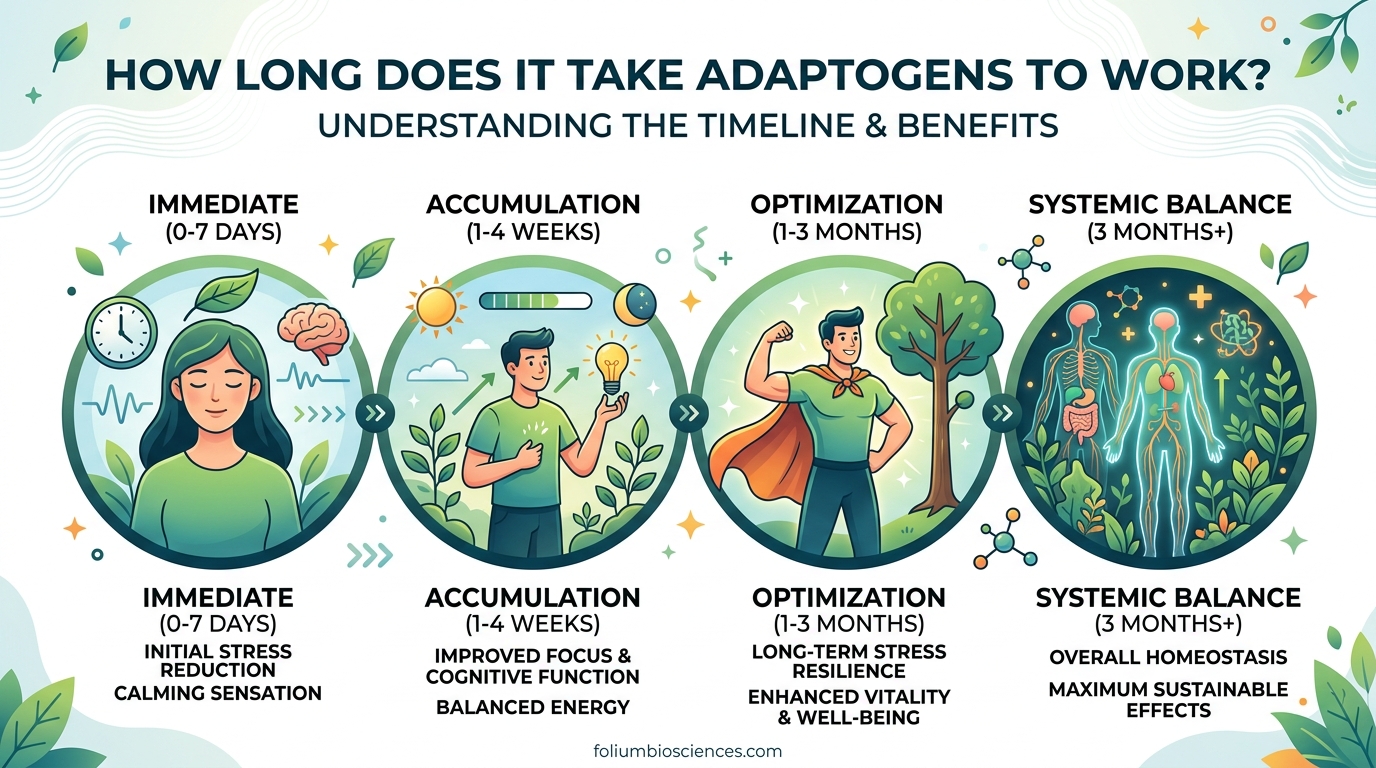
Most adaptogens take two to three weeks of consistent daily use before you will notice meaningful effects. Full benefits typically develop over eight to twelve weeks. However, every herb works differently, and your personal timeline depends on several factors including dosage, product quality, and your own biology.
Table of Contents
What Are Adaptogens and How Do They Work?
Adaptogens are a class of herbs and mushrooms that help your body resist and recover from physical, mental, and emotional stress. Unlike stimulants that force a temporary energy boost, adaptogens work by supporting your body’s innate ability to maintain balance, a state known as homeostasis.
The concept of adaptogens originates from Dr. Nikolai Lazarev, a Russian scientist who coined the term in 1947. He was searching for compounds that would help soldiers maintain performance under extreme stress without the crash that followed stimulant use.
Adaptogens work primarily through the Hypothalamic-Pituitary-Adrenal (HPA) axis, your body’s central stress response system. When you encounter stress, your HPA axis triggers the release of cortisol and other stress hormones. Chronic stress can keep this system in constant activation, leading to exhaustion and burnout.
Adaptogens help regulate this response through what’s called the General Adaptation Syndrome (GAS), a three-phase process:
- Alarm Phase: Your body recognizes stress and activates its defense systems. Adaptogens can help moderate this initial response.
- Resistance Phase: Your body adapts and resists the stress source. This is where adaptogens show their greatest effect, helping maintain equilibrium.
- Exhaustion Phase: Prolonged stress depletes resources. Adaptogens may help delay or reduce this phase.
The key to understanding how long adaptogens take to work lies in this mechanism. Adaptogens do not provide instant relief. Instead, they gradually strengthen your body’s resilience systems, much like how regular exercise gradually builds physical fitness.
General Timeline: When to Expect Effects
Based on clinical research and user reports, here is a general framework for adaptogen timelines:
| Timeframe | What to Expect | Examples |
|---|---|---|
| First 2-3 Weeks | Initial subtle changes. Many users notice improved sleep quality first, along with slightly better stress tolerance. These effects are often mild and gradual. | Sleep improvements, slight mood stabilization |
| 4-6 Weeks | More noticeable benefits emerge. Energy levels may improve, anxiety symptoms often decrease, and mental clarity becomes more apparent. | Reduced anxiety, better focus, sustained energy |
| 8-12 Weeks | Full therapeutic effects typically achieved. Cortisol regulation, cognitive improvements, and stress resilience reach their peak at this stage. | Full cognitive benefits, cortisol reduction, sustained resilience |
| 3+ Months | Long-term adaptation and cumulative benefits. Some adaptogens, particularly mushrooms like Lion’s Mane, continue to build effects over extended use. | Deep cognitive support, nerve growth factor activation |
It is important to note that these are general guidelines. Individual responses vary significantly based on factors we will discuss later. Some users feel subtle effects within days, while others may need the full timeline to experience meaningful changes.
Adaptogen Timelines by Specific Herb
Each adaptogen has its own unique timeline based on its active compounds and mechanism of action. Here is a detailed breakdown for seven of the most popular adaptogens.
Ashwagandha (Withania somnifera)
Ashwagandha is one of the most researched adaptogens, with numerous clinical trials supporting its benefits. As a root extract, it contains withanolides that influence GABA receptors and help regulate cortisol.
What to expect: During the first two to four weeks, many users report better sleep quality and a subtle reduction in morning anxiety. By week six to eight, improvements in energy, mood stability, and cognitive performance typically become more apparent. A landmark study published in the Indian Journal of Psychological Medicine found that 600mg daily of KSM-66 ashwagandha significantly reduced cortisol levels and improved stress scores after eight weeks.
There are two main extract types: KSM-66, which is root-only and better for stress and sleep, and Sensoril, which includes leaves and may be slightly faster-acting for energy. Both follow similar timelines to full effect.
Notable: Some users experience an initial increase in anxiety or restlessness in the first week before positive effects emerge. Starting with a lower dose and taking it with food can help minimize this adjustment period.
Rhodiola Rosea
Rhodiola is unique among adaptogens because some users report feeling its effects relatively quickly, within 30 to 90 minutes of taking it. This is likely due to its influence on dopamine and norepinephrine pathways.
What to expect: The initial lift in mood and reduction in fatigue can come quickly, often within the first week. Users commonly report improved mental clarity and a sense of calm energy within days. However, for the full adaptogenic benefits including stress resilience and cortisol regulation, plan for six to eight weeks of consistent use.
Rhodiola is particularly well-suited for people dealing with burnout, exhaustion, or afternoon energy slumps. Unlike stimulants, it typically does not cause a crash later. Research from a double-blind, placebo-controlled study showed significant reduction in fatigue symptoms after four weeks of daily Rhodiola supplementation.
Timing matters: Rhodiola is best taken in the morning or early afternoon, ideally 30 minutes before breakfast. Taking it later in the day can interfere with sleep for some users.
Lion’s Mane Mushroom (Hericium erinaceus)
Lion’s Mane is fundamentally different from herb-based adaptogens because it works through nerve growth factor (NGF) stimulation. This process takes considerably longer to manifest than the neurotransmitter-based effects of other adaptogens.
What to expect: Unlike faster-acting adaptogens, Lion’s Mane builds effects more gradually. Many users report noticing improved mental clarity and focus around week four to eight, with more significant cognitive improvements emerging after twelve weeks or longer. Some users describe it as analogous to the gradual improvement from physical training rather than the quicker effects of supplementation.
Studies on Lion’s Mane have shown promising results for cognitive function, with one Japanese study demonstrating significant improvement in cognitive test scores after eight weeks of supplementation. The hericenones and erinacines in Lion’s Mane stimulate NGF synthesis, which is responsible for nerve cell growth and repair.
Consistency is critical: Because Lion’s Mane works through NGF stimulation, skipping doses can reset your progress. Daily consistency is more important for this adaptogen than for almost any other.
Reishi (Ganoderma lucidum)
Reishi has been used in traditional Chinese medicine for thousands of years, primarily as a sleep aid and immune tonic. Its effects are distinct from stimulating adaptogens like Rhodiola.
What to expect: The most commonly reported first effect of Reishi is improved sleep quality, often noticed within one to three weeks. Users frequently describe falling asleep more easily, experiencing deeper sleep, and waking feeling more refreshed. Beyond sleep, Reishi supports immune function and stress resilience over the longer term.
The triterpenes in Reishi contribute to its calming effects and support for the immune system. Beta-glucans provide the immune-modulating benefits that develop more gradually over time.
Best timing: Reishi is best taken in the evening, ideally 30 to 60 minutes before bed. Some users prefer taking it on an empty stomach for faster absorption, while others with sensitive stomachs take it with food.
Eleuthero (Siberian Ginseng)
Despite its common name, Eleuthero is not a true ginseng. It contains eleutherosides, compounds that appear to support energy metabolism and immune function without the stimulating properties of Panax ginseng.
What to expect: Users typically notice improved energy and stamina within two to four weeks. Eleuthero is particularly valued for sustained energy without the jitters or crash associated with stimulants. Athletes often report improved exercise endurance and faster recovery after about six weeks of consistent use.
Eleuthero has a long history of use in Russian and Chinese sports programs for enhancing physical performance. Its effects on endurance and recovery are well-documented in the literature, though often less dramatic than pharmaceutical alternatives.
Cycling note: Some users report that Eleuthero effects diminish if taken continuously for more than eight to ten weeks. Periodic cycling, such as four weeks on and one week off, may help maintain its effectiveness.
Cordyceps
Cordyceps is a parasitic fungus traditionally used to support energy, particularly athletic performance. The cultivated CS-4 strain has been studied extensively for its effects on exercise capacity and ATP production.
What to expect: Among adaptogens, Cordyceps produces relatively quick energy effects. Many users notice improved exercise stamina and oxygen utilization within one to two weeks. Athletes commonly report better endurance, faster recovery between workouts, and improved anaerobic capacity within the first month of use.
Studies on Cordyceps militaris and CS-4 have shown improvements in VO2 max and time-to-exhaustion metrics. A study on older adults demonstrated significant exercise performance improvements after eight weeks of Cordyceps supplementation.
For athletes: Cordyceps pairs well with Eleuthero for endurance sports, as they work through complementary mechanisms. Start both at lower doses and increase gradually.
Holy Basil (Tulsi)
Holy Basil, known as Tulsi in India, is considered an adaptogen with a particular affinity for the mind and emotions. It has been used for over 3,000 years in Ayurvedic medicine for its calming and mood-balancing properties.
What to expect: Users commonly report reduced anxiety and a greater sense of calm within the first two weeks. Holy Basil appears to work partly through GABA pathways and cortisol modulation, which explains its relatively quick effects on anxiety and stress. Over six to eight weeks, many users experience improved mood stability and metabolic support.
Research supports Holy Basil’s traditional use for anxiety and mood. A double-blind crossover study found significant reductions in stress, anxiety, and depression scores after 60 days of Holy Basil supplementation.
Versatile timing: Holy Basil can be taken morning or evening. Morning use may provide calm, focused energy throughout the day, while evening use can support relaxation and prepare the body for restful sleep.
Factors That Affect How Quickly Adaptogens Work
Understanding why your timeline might differ from the averages above is crucial for setting realistic expectations. Several key factors influence adaptogen effectiveness and onset time.
Product Quality and Standardization
The quality of your adaptogen supplement matters enormously. Look for products that specify the amount of active compounds, such as withanolides for ashwagandha or beta-glucans for mushroom extracts. Third-party testing certifications like GMP, NSF, or USP provide assurance of purity and potency. Products from reputable suppliers with transparent labeling consistently outperform generic alternatives in both effectiveness and safety.
Dosage Accuracy
Taking too little may produce no noticeable effect, while starting too high can cause temporary side effects. Most clinical studies use standardized extracts at specific dosages. A common beginner mistake is purchasing low-potency products and expecting clinical-level results. Always check the extract strength and active compound content, not just the herb weight on the label.
Individual Biology and Metabolism
Your unique physiology plays a significant role in how you respond to adaptogens. Factors including gut health, liver enzyme activity, hormone levels, genetic variations in neurotransmitter pathways, and baseline stress levels all influence responsiveness. Some people are fast metabolizers and clear compounds quickly, while others accumulate them more slowly. There is also meaningful variation in receptor sensitivity, meaning the same compound can produce different effects in different people.
Consistency of Use
Adaptogens build effects cumulatively. Inconsistent use, such as taking several days off or missing doses, significantly delays or diminishes results. Some users make the mistake of taking a few doses, feeling nothing, and quitting before the compounds have had time to work through your system. Set a reminder to take your adaptogen at the same time each day for at least four weeks before evaluating effectiveness.
Timing of Day
Different adaptogens suit different times of day. Morning herbs like Rhodiola and Cordyceps provide energy, while evening herbs like Reishi support sleep. Taking stimulating adaptogens too late in the day can interfere with sleep, paradoxically slowing your overall adaptation process. Following natural rhythms enhances overall effectiveness.
Lifestyle Factors
Sleep quality, diet, exercise, and caffeine consumption all influence adaptogen effectiveness. Poor sleep, high sugar intake, sedentary lifestyle, and excessive stimulant use can all reduce how well adaptogens work. Think of adaptogens as amplifiers of healthy habits rather than substitutes for them.
How to Tell If Adaptogens Are Actually Working
Distinguishing real effects from placebo is one of the most common challenges adaptogen users face. Here is how to evaluate your experience honestly.
Real adaptogen effects tend to be subtle at first. Unlike the obvious impact of caffeine, adaptogens work more gradually, often described as a background improvement in how you feel. You might realize one day that your morning anxiety is less pronounced, or that you are handling work pressures more calmly than a month ago.
Keep a simple journal tracking energy, mood, sleep, and stress levels on a scale of one to ten. After four weeks, review your entries. A gradual upward trend in scores across multiple categories suggests your adaptogen is working. Single-category improvements, particularly if they coincide with other life changes, may indicate a placebo effect.
If you notice no difference after eight weeks at an appropriate dose, your current adaptogen may not be the right fit for your biology. This is not unusual. Some people respond well to Rhodiola but not Ashwagandha, or vice versa. Personal biochemistry determines which compounds resonate with your system.
Tips for Maximizing Adaptogen Effectiveness
Start Low, Go Slow
Begin with the lowest effective dose and increase gradually only if needed. This approach minimizes adjustment period side effects and allows you to find your personal optimal dose. For most adaptogens, this means starting at half the standard dose for the first week.
Be Patient and Consistent
Commit to at least four weeks of daily, consistent use before drawing conclusions. The cumulative nature of adaptogens means that sporadic use almost always fails to produce results. Treat your adaptogen routine with the same consistency as a daily vitamin.
Consider Cycling Protocols
Some users find that taking the same adaptogen continuously for more than eight to twelve weeks reduces its effectiveness. Common cycling approaches include:
- Six weeks on, two weeks off
- Rotating between two different adaptogens every four weeks
- Taking a break every three months for a reset period
Cycling is not universally necessary, but if you notice diminishing effects over time, it may help restore sensitivity.
Match Timing to Herb Properties
Take stimulating adaptogens in the morning and calming ones in the evening. This simple practice enhances the desired effects and prevents unnecessary sleep disruption. Rhodiola, Cordyceps, and Eleuthero suit morning use. Reishi and Ashwagandha often work best in the evening.
Use Standardized Extracts
Standardized extracts provide consistent active compound levels, making it easier to achieve and replicate results. Look for extracts standardized to specific marker compounds rather than whole herb powders, which have variable potency.
Stack Strategically
Combining adaptogens can address multiple pathways simultaneously. A common effective stack pairs a morning energizer like Rhodiola with an evening relaxer like Reishi. Some users add Lion’s Mane for long-term cognitive support while using faster-acting adaptogens for immediate stress relief. Start with one adaptogen, assess its effects, then add others gradually to understand how each affects you.
Frequently Asked Questions
Most adaptogens take two to three weeks of consistent daily use before noticeable effects appear. Some faster-acting adaptogens like Rhodiola may produce subtle effects within three to seven days, while slower-acting ones like Lion’s Mane typically require four to eight weeks for initial benefits. Full effects for most adaptogens develop over eight to twelve weeks.
No, adaptogens do not work instantly. Unlike caffeine or other stimulants that produce immediate effects, adaptogens work cumulatively by supporting your body’s natural stress response systems. The mechanisms through which adaptogens regulate cortisol, support the HPA axis, and stimulate nerve growth factor all require time to produce meaningful changes. Most users need a minimum of two to four weeks before noticing significant benefits.
Yes, several adaptogens have been clinically shown to reduce cortisol levels. Ashwagandha has demonstrated cortisol reductions of 23 to 30 percent in multiple studies after eight to twelve weeks of use. Rhodiola and Holy Basil also show cortisol-modulating effects in research. The degree of cortisol reduction varies by individual, baseline stress levels, and the specific adaptogen used.
Cycling can help prevent tolerance and maintain long-term effectiveness, but it is not universally necessary. Common cycling protocols include six to eight weeks on followed by two to four weeks off, or rotating between different adaptogens monthly. If you are responding well to an adaptogen and not experiencing tolerance, continuous use may be fine. Many users cycle naturally based on seasonal needs or life circumstances.
Some users experience increased anxiety, restlessness, or digestive discomfort in the first week of ashwagandha use. This is thought to be an initial physiological adjustment rather than a true side effect. Starting with a lower dose, taking it with food, or switching to a different extract form often resolves these temporary symptoms. If symptoms persist beyond two weeks, discontinue use and consult a healthcare provider.
Yes, combining adaptogens is common and can be effective when done thoughtfully. Many adaptogen stacks pair herbs with complementary mechanisms, such as an energizing morning adaptogen with a calming evening one. However, starting with multiple new adaptogens simultaneously makes it impossible to determine which one is working or causing side effects. Introduce one at a time and assess its effects over several weeks before adding another.
Setting Realistic Expectations: The Bottom Line
Understanding how long adaptogens take to work is essential for getting meaningful results from these powerful compounds. The typical trajectory looks like this:
- Immediate (Days 1-7): Possible subtle mood and energy shifts with faster-acting adaptogens like Rhodiola.
- Short-term (Weeks 2-4): Most users notice their first meaningful effects, particularly improved sleep and reduced anxiety.
- Medium-term (Weeks 6-8): More pronounced benefits emerge, including sustained energy, cognitive improvements, and better stress resilience.
- Long-term (Weeks 8-12+): Full therapeutic effects typically achieved. Some adaptogens, particularly Lion’s Mane, continue building beyond this window.
The most important factors for success are product quality, consistent daily use, appropriate dosage, and realistic expectations. Adaptogens are not pharmaceuticals. They work gradually, supporting your body’s natural resilience rather than overriding it. Approach them with the same patience you would bring to building physical fitness through exercise.
With consistent use over the recommended timeline, most healthy adults experience meaningful improvements in stress tolerance, sleep quality, energy levels, and cognitive function. If you have underlying health conditions or are taking medications, consult a healthcare provider before starting any adaptogen regimen.