
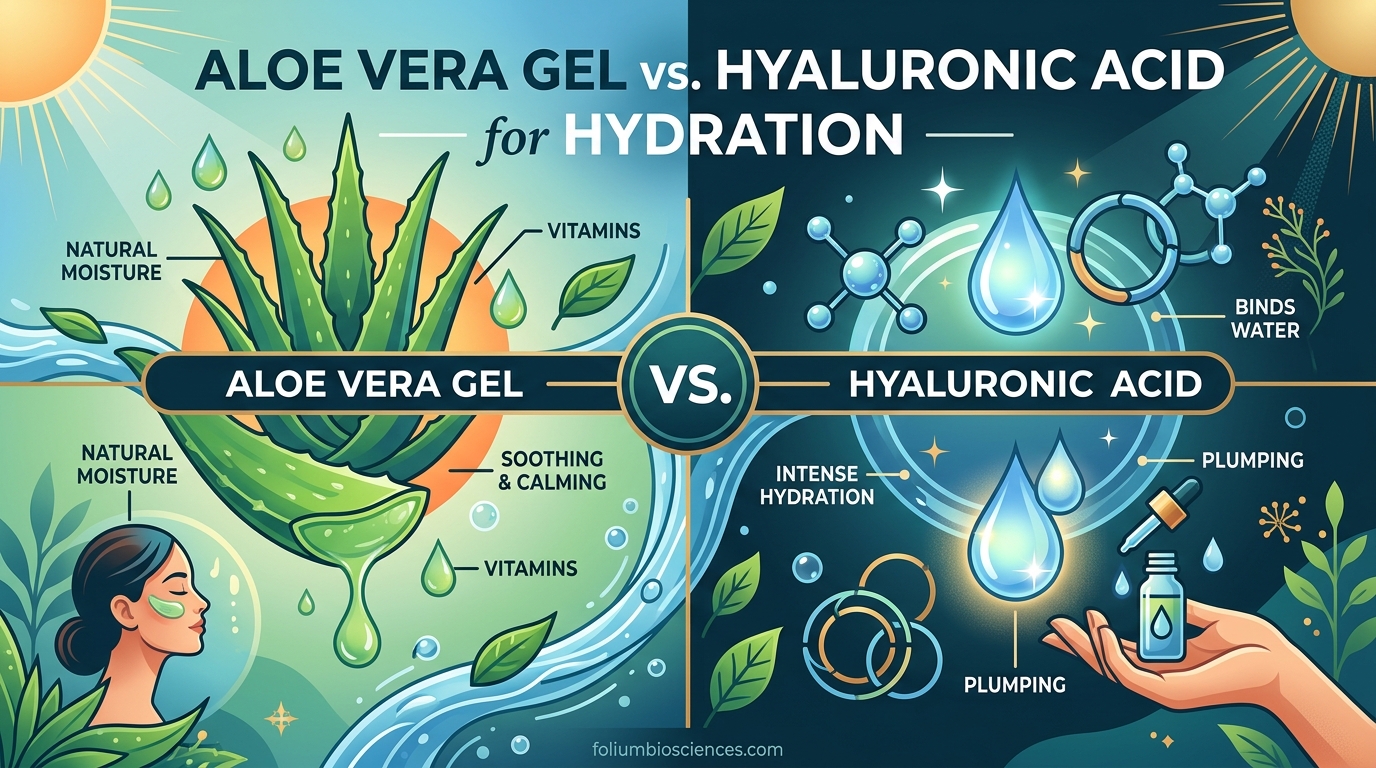
When it comes to keeping skin hydrated, two ingredients consistently come up in conversations: aloe vera gel and hyaluronic acid. Both are celebrated for their moisture-binding abilities, but they work in fundamentally different ways. If you have been wondering which one actually holds moisture longer, the answer is nuanced.
Hyaluronic acid generally holds moisture longer because it can penetrate deeper into the skin and bind water at the cellular level. Aloe vera gel provides excellent surface hydration and soothing benefits, but its moisture retention is more limited compared to hyaluronic acid. The key difference lies in depth: hyaluronic acid can hold 1000 times its weight in water, while aloe vera works primarily on the surface.
In this guide, I will break down exactly how each ingredient works, which one might be better for your skin type and climate, and how to use them together for maximum hydration. I spent time reviewing scientific research, user experiences from skincare forums, and practical application advice to give you a clear answer.
Table of Contents
How Aloe Vera Gel Works for Skin Hydration
Aloe vera gel comes from the leaves of the aloe plant and has been used for centuries as a natural skin remedy. The gel contains polysaccharides, which are long-chain carbohydrates that create a moisture-binding film on the skin’s surface.
When you apply aloe vera gel, it works by coating the outer layer of your skin (the epidermis). This coating helps lock in existing moisture and creates a protective barrier against environmental stressors. The polysaccharides in aloe vera have humectant properties, meaning they attract and hold water from the surrounding environment.
What makes aloe vera special is its cooling and soothing action. Users on skincare forums report that aloe vera feels refreshing and calming, especially for irritated or sun-exposed skin. One Reddit user described it as “a good humectant that is cheaper than hyaluronic acid” and noted it works well when combined with other products.
However, aloe vera primarily provides surface-level hydration. It does not penetrate into the deeper dermis layers where longer-term moisture storage occurs. This is why some users with deeply dehydrated skin find aloe vera alone insufficient for their needs.
How Hyaluronic Acid Works for Skin Hydration
Hyaluronic acid is a naturally occurring molecule already present in your skin, joints, and connective tissues. Its primary function is to retain water and keep tissues lubricated and hydrated. In skincare formulations, it is synthesized for use in serums and moisturizers.
The magic of hyaluronic acid lies in its water-binding capacity. A single molecule of hyaluronic acid can hold up to 1000 times its weight in water. This makes it one of the most powerful humectants available in skincare today. Scientific studies have confirmed that hyaluronic acid can be absorbed through the skin and deposit moisture where it is needed most.
Hyaluronic acid works differently based on molecular weight. Low molecular weight HA can penetrate deeper into the skin, while high molecular weight HA stays closer to the surface. This is important because deeper hydration means longer-lasting moisture retention.
Forum users with conditions like eczema have found hyaluronic acid particularly beneficial. The molecule draws water into the skin layers, creating a plumping effect that can last for hours. However, a common complaint is that hyaluronic acid can actually dry out skin in dry climates if not sealed properly with a moisturizer afterward.
Aloe Vera Gel vs Hyaluronic Acid: Side-by-Side Comparison
Understanding the key differences between these two ingredients helps you make an informed decision about which one to incorporate into your skincare routine.
Moisture Retention Duration: Hyaluronic acid holds moisture longer because it binds water at the cellular level in deeper skin layers. Aloe vera provides hydration that may feel comfortable initially but can evaporate more quickly since it stays on the surface.
Depth of Hydration: Aloe vera works on the epidermis (outer layer), creating a soothing film. Hyaluronic acid penetrates to the dermis (deeper layer), where it attracts and holds water from within.
Water-Binding Capacity: Aloe vera contains polysaccharides with moderate water-binding ability. Hyaluronic acid can bind 1000 times its weight in water, making it significantly more potent.
Skin Type Suitability: Aloe vera is ideal for sensitive, acne-prone, or irritated skin due to its gentle, anti-inflammatory properties. Hyaluronic acid works well for dry, dehydrated, or aging skin that needs deep plumping hydration.
Climate Dependence: Aloe vera is more dependent on ambient humidity since it relies on drawing water from the environment. Hyaluronic acid can draw water from deeper skin layers or from the environment, but in very dry climates, it may need to be sealed with an occlusive moisturizer.
Additional Benefits: Aloe vera offers anti-inflammatory, healing, and soothing benefits alongside hydration. Hyaluronic acid focuses primarily on hydration and plumping, though it also supports skin elasticity.
Deep Hydration vs Surface Hydration: What Is the Difference?
To understand which ingredient holds moisture longer, you need to understand where hydration happens in your skin. Your skin has two main layers involved in moisture retention: the epidermis (surface) and the dermis (deeper layer).
Surface hydration (what aloe vera primarily provides) keeps the outer skin layer soft, smooth, and comfortable. This is the layer you see and feel. Surface hydration is important for immediate comfort and protection, but it can evaporate more quickly, especially in dry conditions.
Deep hydration (what hyaluronic acid provides) reaches the dermis, where your skin’s actual moisture reserves are stored. When the dermis is well-hydrated, your skin maintains plumpness and elasticity for longer periods. This deeper hydration is what gives that “plumped up” appearance and helps reduce the appearance of fine lines.
The reason hyaluronic acid holds moisture longer is that it addresses both levels. It draws water into the deeper layers where moisture is stored more permanently, while also providing some surface hydration. Aloe vera, while effective at the surface level, does not contribute to these deeper moisture reserves in the same way.
For people with truly dehydrated skin (not just dry surface skin), deep hydration is essential. Forum users who struggled with dehydrated skin reported success using a combined approach: aloe vera for surface comfort, hyaluronic acid for deeper, longer-lasting hydration.
Skin Type Compatibility Guide
Who Should Use Aloe Vera Gel
Aloe vera gel is an excellent choice if you have sensitive skin that reacts easily to other products. The gentle, natural composition makes it unlikely to cause irritation. If you have acne-prone skin, aloe vera is non-comedogenic (does not clog pores) and has anti-inflammatory properties that can help calm breakouts.
People with oily skin often prefer aloe vera because it provides hydration without adding greasiness. The gel texture absorbs quickly and leaves a light, cooling finish. If you live in a humid climate, aloe vera can be an effective primary moisturizer without feeling heavy.
Aloe vera is also beneficial if you have recently sunburned or irritated skin. Its cooling and soothing properties provide relief while the hydration supports skin healing. Users with eczema and similar conditions have found aloe vera to be particularly effective for managing flare-ups.
Who Should Use Hyaluronic Acid
Hyaluronic acid is ideal if you have dry or dehydrated skin that craves deep, lasting hydration. If you are dealing with aging skin, hyaluronic acid can help restore plumpness and reduce the appearance of fine lines by filling the skin with moisture from within.
If you live in a dry climate (low humidity environments, winter weather, air-conditioned spaces), hyaluronic acid is more likely to deliver the deep hydration you need. However, you should always follow it with a moisturizer to seal the hydration in, otherwise the water it draws to the surface can evaporate and leave skin feeling tighter.
People with normal to combination skin who want that plumping, dewy look will benefit from hyaluronic acid. It works well under makeup, creating a smooth, hydrated base. Those dealing with dull, tired-looking skin can benefit from the luminosit that deep hydration provides.
Climate and Environmental Impact on Hydration
Your local climate plays a huge role in determining which ingredient will work better for you. Understanding this can save you from wasting money on products that will not perform well in your environment.
In humid climates, both aloe vera and hyaluronic acid tend to work well. The ambient moisture in the air helps both ingredients draw and retain water effectively. Aloe vera can be particularly satisfying in these conditions because the cooling effect is more pronounced when the air is already moist.
In dry climates, hyaluronic acid has a distinct advantage, but with an important caveat. When the air is dry, hyaluronic acid can actually pull moisture from deeper skin layers and evaporate it into the air if not properly sealed. This is why many forum users report experiencing tightness when using hyaluronic acid serums in dry conditions. The solution is to apply hyaluronic acid to slightly damp skin and immediately follow with a moisturizer or occlusive to lock it in.
For cold winter months or heated indoor environments (which are notoriously dry), layer your hydration approach. Apply hyaluronic acid first for deep hydration, then aloe vera for surface comfort and sealing, and finally a moisturizer to lock everything in. This combination approach addresses both the depth of hydration and the surface protection your skin needs.
In office environments with air conditioning, assume dry climate rules apply. Keep your hydration routine consistent regardless of outdoor conditions, since air conditioning creates artificial dryness that affects your skin just as much as winter weather.
How to Layer Aloe Vera and Hyaluronic Acid Together
You can absolutely use both ingredients together, and many skincare experts recommend this combination approach for maximum hydration. The layering order matters, and getting it right can make the difference between effective hydration and wasted product.
The correct order is: Apply hyaluronic acid first, directly to clean, slightly damp skin. This allows it to penetrate and draw moisture into the deeper skin layers. Wait a brief moment for it to absorb, then apply aloe vera gel on top. The aloe vera creates a protective film that helps prevent the moisture from the hyaluronic acid from evaporating.
Why this order matters: Applying aloe vera first would create a barrier that prevents hyaluronic acid from reaching the deeper skin layers. Some forum users report confusion about layering order, which leads to suboptimal results. Remember: deepest first, surface second.
Sealing the deal: After applying both layers, always finish with a moisturizer or facial oil. This occlusive layer prevents transepidermal water loss (TEWL) and ensures the hydration you just delivered stays in your skin. Without this step, especially in dry conditions, you may find that both ingredients seem to dry out your skin rather than hydrate it.
Timing tips: Apply your hydration layers immediately after cleansing while skin is still damp. This maximizes the water content available for both ingredients to draw from. In the morning, follow with sunscreen. At night, these layers work well as part of your evening skincare routine before heavier creams or sleep masks.
Frequently Asked Questions
Is aloe vera more hydrating than hyaluronic acid?
Hyaluronic acid is generally more hydrating than aloe vera because it can hold 1000 times its weight in water and penetrates deeper into the skin. Aloe vera provides excellent surface hydration and soothing, but hyaluronic acid delivers longer-lasting deep hydration at the cellular level.
Can I use aloe vera and hyaluronic acid together?
Yes, you can and should use both together for maximum hydration. Apply hyaluronic acid first to damp skin for deep hydration, then aloe vera gel on top for surface comfort and sealing. Finish with a moisturizer to lock everything in.
Which holds moisture longer in dry climates?
Hyaluronic acid holds moisture longer in dry climates, but it must be sealed with a moisturizer after application. Without sealing, hyaluronic acid can actually draw moisture from deeper skin layers and evaporate it into dry air. Always follow with an occlusive moisturizer.
How often should I apply these ingredients?
You can apply both aloe vera and hyaluronic acid twice daily, morning and evening, after cleansing. Consistency matters more than frequency for long-term skin hydration and barrier health.
Conclusion: Which Holds Moisture Longer?
When answering the question of which ingredient holds moisture longer, hyaluronic acid is the clear winner for deep, lasting hydration. Its unique ability to bind water at the cellular level in the deeper dermis layers makes it more effective at maintaining moisture over extended periods compared to the surface-level hydration that aloe vera provides.
However, aloe vera is not being dismissed here. It offers complementary benefits that hyaluronic acid cannot match, including soothing irritation, cooling inflamed skin, and providing comfortable surface hydration without heaviness. For sensitive or acne-prone skin types, aloe vera may be the better primary choice.
The most effective approach for most people is to use both together. Apply hyaluronic acid first for that deep, plumping hydration that lasts, then aloe vera for surface comfort and additional moisture-binding, and always seal with a moisturizer. This combination addresses both the depth and surface protection your skin needs to stay hydrated throughout the day.
Your specific skin type, climate, and personal preferences should guide your choice. If you need deep hydration and have dry or aging skin, prioritize hyaluronic acid. If you have sensitive, acne-prone skin that needs gentle hydration, aloe vera may be your better option. For ultimate hydration, layer them both and seal everything in with a quality moisturizer.